
Pay by mobile casinos UK: 10 operators tested, fees ranked, caps explained
 Available in GB
A phone-bill deposit at a UK casino is one of the simplest ways to fund a session: enter your number, confirm by SMS, the cashier credits the account within seconds. The catch is structural. The method is deposit-only, so the same flow never runs in reverse — you cannot withdraw to your phone bill. The £30–£40 daily cap and £240 monthly ceiling are baked in by UK payment-services regulation, which means a player who only ever uses pay by mobile is locked out of most welcome bonuses and any meaningful bankroll movement. That tension — speed and privacy on one side, low ceilings and bonus exclusion on the other — is what this page is built around.
Data current as of 9 September 2026, verified against the Gambling Commission’s public register, the LCCP and the operator terms referenced for each brand.
What a pay-by-mobile casino is — and is not
A pay-by-mobile casino is a UKGC-licensed online casino that accepts Boku, Fonix, Payforit or Siru Mobile as a deposit method. It is not a separate type of casino. The brand, the licence, the game library and the cashout process are identical to a debit-card casino; the only difference is the deposit rail. The transaction is one-way. Boku, Fonix, Payforit and Siru all run deposit-only, so any withdrawal — even from winnings built on a phone-bill deposit — needs a separate method such as a debit card, bank transfer or e-wallet.
The privacy claim attached to the method is real: no bank details or card numbers pass through the cashier. The phone bill carries a one-line charge rather than a full merchant descriptor, and most players will see only “Boku” or “Fonix” on their monthly statement. That is the upside. The downside is structural: the cashout gap is permanent, not a glitch that can be patched later.
Pay by mobile, pay by phone, phone bill: one method, many names
Affiliate sites treat “pay by mobile”, “pay by phone” and “phone bill” as distinct categories. They are not. All three describe the same flow: a deposit at the cashier that is settled against your mobile-network bill or prepaid credit, rather than a card or bank account. The carriers behind the flow are Boku, Fonix, Payforit and Siru Mobile, and each runs a slightly different version of the same thing.
Boku and Payforit use SMS confirmation — you enter your mobile number, receive a text, confirm with a one-tap reply, and the deposit lands in roughly a minute. Fonix is the seamless variant: no SMS step, the deposit confirms inside the cashier window on a redirected page, which makes it the quickest of the three. Siru Mobile also runs on SMS, but it is the outlier on price rather than on mechanics. The carrier names matter because they determine the daily cap and the fee.
Where phone-bill deposits are available in the UK
Every major UK network supports phone-bill casino deposits: EE, O2, Vodafone and Three carry Boku, Fonix or Payforit as standard. The MVNOs run on the same rails — Sky Mobile, Giffgaff and Tesco Mobile all sit on O2’s network and accept the same flows, so a pay-as-you-go SIM on any of those brands works identically to a contract SIM on a flagship network.
The deposit method itself is standard at UKGC-licensed casinos that choose to enable it. Most round-ups cover eight to twelve operators at the upper end, which is the cluster this page tests. The per-network fees — O2’s £1.50 charge on deposits over £20, for example — are listed in the payments table further down. The networks do not block the method; the per-transaction fees are the only real difference between them.
Mobile-credit funding: one direction only at a UK casino
Phone-bill deposits settle against your monthly bill or your prepaid credit, which is what makes them feel like cash rather than a card transaction. The mechanics are simple enough that the cashier flow takes longer to describe than to use, but the limits are tight by design and they are set at three nested layers: the payment-services regulation, the carrier’s own cap, and the casino’s fee on top.
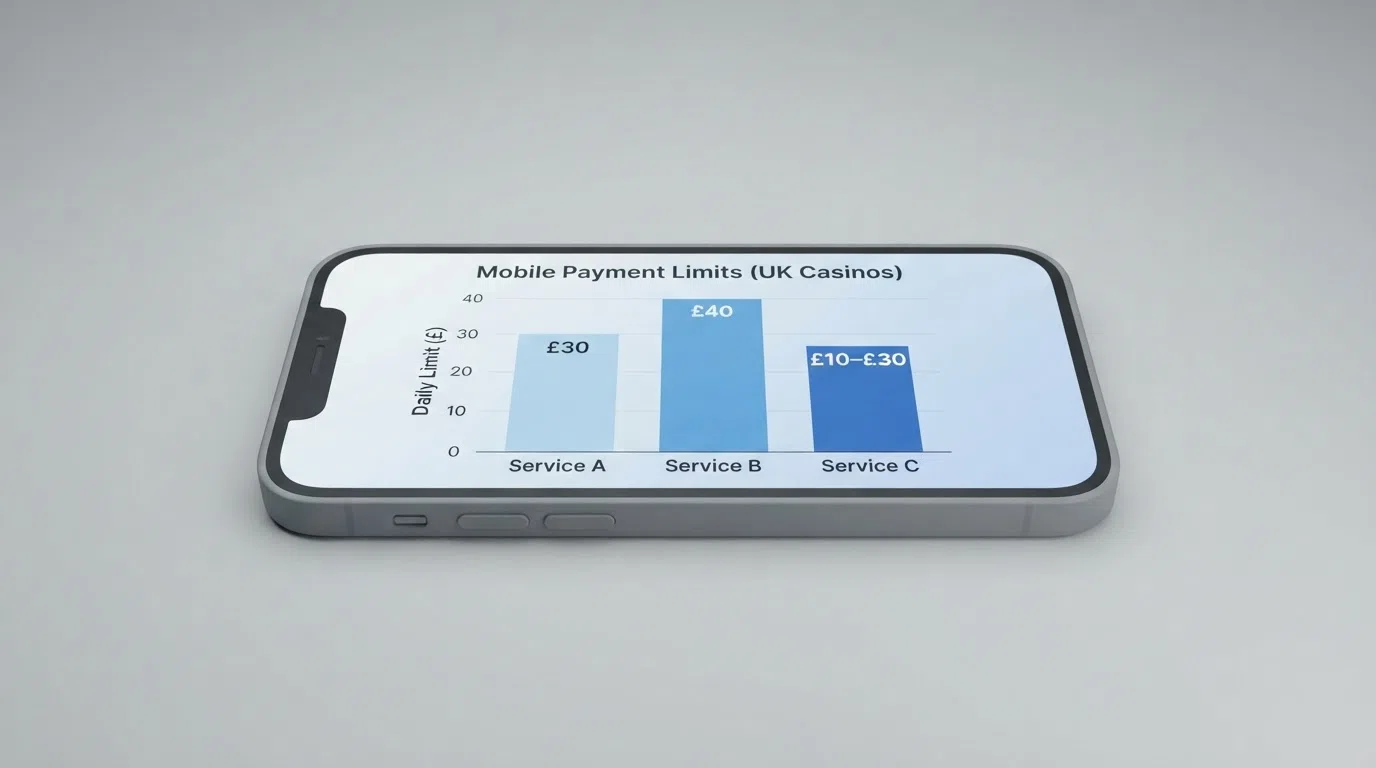
The outer layer is the UK Payment Services Regulations 2017, which lets charge-to-mobile services qualify for an electronic-communications exclusion only when each payment stays within £40 and the rolling monthly total stays within £240. The carrier layer tightens this further — Boku caps daily deposits at £30 and adds the £240 monthly ceiling on its own books, so a Boku deposit is structurally limited even where the regulation would let a higher amount through. Fonix runs at the regulatory ceiling, £40 per payment with no fee. Siru caps lower still (£18.90 maximum deposit at Videoslots, for instance, because the fee is calculated on top).
How a phone-bill deposit works, step by step
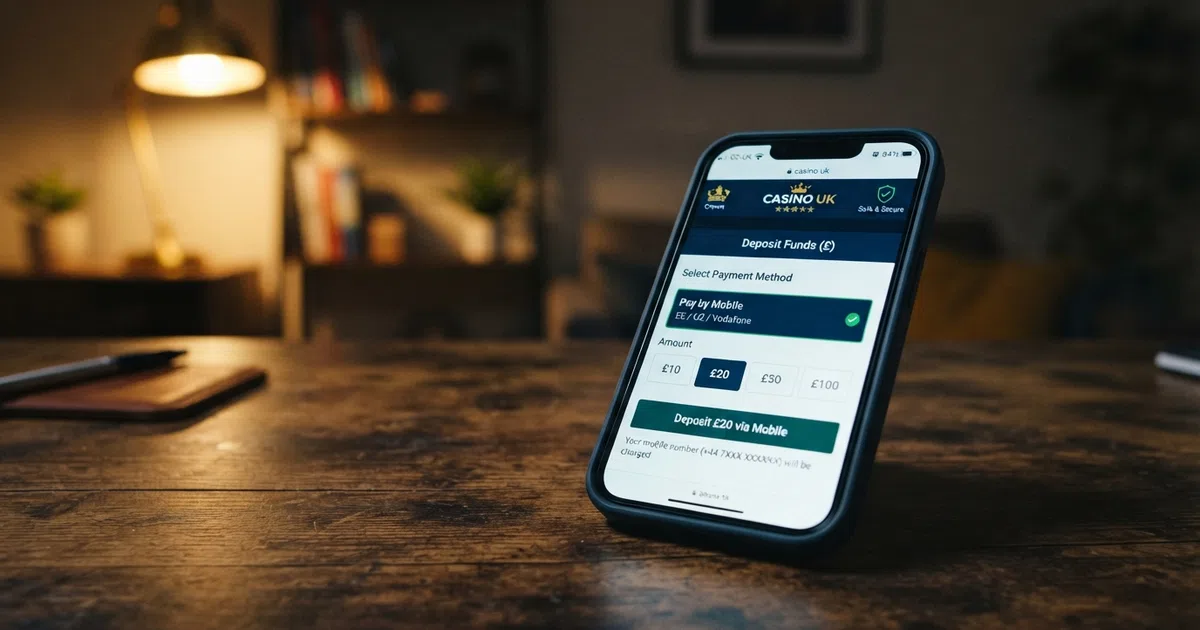
The flow is short. From the cashier, choose “pay by mobile” (the label varies by operator — some use “Pay by Phone”, some “Phone Bill”, some name the carrier directly). Enter your mobile number. The cashier redirects to either an SMS confirmation page (Boku, Payforit, Siru) or a seamless one-tap confirm (Fonix). The deposit credits the account instantly; the charge appears on your phone bill or against your prepaid credit. There is no card number, no bank account, no app download.
The seamless variant is faster but otherwise indistinguishable. Both routes settle the deposit in the same regulatory framework, and the cap is identical. The choice between them is a one-time preference rather than a meaningful cost decision.
Cashing out: why you always need a second method
Pay by mobile cannot be used to withdraw — that holds across every UK carrier, including Siru Mobile, which is also deposit-only via SMS. Any withdrawal needs to be set up separately, and the cashier will prompt for it on the first cashout attempt. The realistic routes are debit card (Visa Debit, Mastercard Debit), bank transfer (including Faster Payments), or e-wallet (PayPal, Skrill, Neteller — though availability varies by operator). The withdrawal method does not need to match the deposit method, but it does need to be in the same name as the verified account holder.
The practical implication is that any player who intends to use pay by mobile regularly should set up the second method before they win. Verification on the cashout rail can take 24–72 hours; doing it on a winning day is a slow way to collect money you are owed.
Daily caps and fees: £30–£40 by design, 0–25% by provider
| Provider | Daily deposit cap | Fee to player |
|---|---|---|
| Boku | £30 | None at the carrier; casinos may add their own fee |
| Fonix | £40 | None — carrier-side fee absorbed by most operators |
| Payforit | £10–£30 (network-dependent) | None at the carrier |
| Siru Mobile | £18.90 effective at most operators | From 25% |
The £40-per-payment / £240-per-month ceiling sits underneath all four carriers as a regulatory floor. On top of that floor, individual casinos layer their own fees — Hot Streak charges 15% on deposits between £10 and £30, Pay By Mobile Slots charges a flat £2.50 on £5, £10 and £20 deposits, while Duelz absorbs the carrier fee entirely and the player sees 0%. The spread is wide enough that “is there a fee?” is a brand-by-brand question, not a method-by-method one.
The network-level fees are smaller but worth knowing. O2 adds £1.50 on deposits over £20; Vodafone and EE do not. Three matches EE on no extra fee. The fee only ever goes one direction — from the player to the casino or carrier — and it is disclosed on the cashier page before the deposit is confirmed.
Boku, Fonix, Payforit and Siru: which network you pay through
Boku is the most widespread. Most UKGC casinos that accept phone-bill deposits default to Boku when the carrier is unnamed, and the £30 daily / £240 monthly cap is the one most UK players hit first. It is reliable, runs on every major network and MVNO, and the SMS confirmation is the same shape as a one-time-password check from a bank.
Fonix is the seamless variant: no SMS step, the deposit confirms inside the cashier flow, and the cap sits at £40 per payment with no carrier-side fee. Fonix is the carrier behind Duelz and MrQ on this list, and the seamlessness is the reason both operators default to it.
Payforit is the older carrier model — network-dependent limits between £10 and £30, SMS confirmation, no carrier fee. It is less common on newer casino integrations but still appears on established brands.
Siru Mobile is the outlier. The deposit cap is low, the fee runs from 25% upwards, and it is the only one of the four where a player is structurally losing a quarter of their deposit to the carrier before a slot has even been opened. It is the right answer for some readers — the SMS confirmation is fast and the cap is hard — but the cost is real and visible.
The 10 operators we checked — and which actually let you pay via your mobile network
| Operator | UKGC licence | Pay-by-mobile method | Welcome offer | Wagering | Slots library |
|---|---|---|---|---|---|
| MrQ | Active (Lindar Media Limited) | Fonix | 100 Big Bass Splash spins on £10 | 0×, paid as real cash | 1,000+ |
| Peachy Games | Active | Boku | 100% + 100 Big Bass Splash spins on £10 | 10× | ~700 |
| Mr Vegas | Active (Videoslots Ltd, 39380) | Siru Mobile | 100% up to £50 + 11 wager-free spins on £10 | 10× on match | 8,000+ |
| Hot Streak Casino | Active (Grace Media Ltd) | Boku | 25 Big Bass Splash 1000 spins on £5, or 100 spins on £20 | 0× on spins | — |
| Virgin Games | Active (Gamesys Ops Ltd, 38905) | Not confirmed | 100 Game of Thrones spins on £10 + £10 wager | £10 qualifying wager | — |
| 888casino | Active (888 UK Ltd, 39028) | Not confirmed | 100% up to £100 on £10 | 10× in 90 days | — |
| Duelz | Active (SuprPlay Ltd, 48695) | Fonix (fee absorbed) | £100 + 100 free spins on £10 | 10× effective | 2,000+ |
| Jackpotjoy | Active (Gamesys Ops Ltd, 38905) | Not confirmed | 30 spins or £50 bingo on £10 + £10 wager | £10 qualifying wager | — |
| Videoslots | Active (Videoslots Ltd, 39380) | Siru Mobile | 100% up to £200 + 11 spins on £10 | 10× on match | 8,000+ |
| Pay By Mobile Slots | Active (account 39175) | Boku (£2.50 fee) | 50% up to £100 on £10 | 10× | — |
Seven of the ten confirm phone-bill deposits this run. Three do not — Virgin Games, 888casino and Jackpotjoy do not appear on pay-by-mobile comparison lists, and their cashier pages do not list a phone-bill option in the source material reviewed. The wagering column carries the effective rate under the 19 January 2026 UKGC cap, where the operator’s headline terms are higher.
MrQ — wager-free spins via Fonix
MrQ’s welcome offer is the cleanest pay-by-mobile deal on this list. A £10 deposit via Fonix unlocks 100 free spins on Big Bass Splash at 0× wagering — every winning spin pays as real cash, with no cap on the payout. The 48-hour spin validity is tight (unclaimed spins expire two days after crediting), and the rest of the welcome is the bonus itself rather than a deposit match, so there is no separate wagering condition on top.
The Fonix rail is the fastest of the four carriers: no SMS step, the deposit confirms inside the cashier window, and the £40 daily cap is the regulatory ceiling rather than a Boku-style 30. For a player who values speed and a clean exit on the winnings side, MrQ is the standout.
Peachy Games — the Boku specialist with 700 slots
Peachy is one of the few UKGC-licensed casinos that confirms Boku billing this run. The welcome package is a 100% deposit match plus 100 Big Bass Splash spins at £0.10 each, with 10× wagering on the bonus funds and a 48-hour window to use the spins. The £10 minimum deposit qualifies the offer, and the Boku rail keeps the welcome eligibility intact — at Peachy, unlike most UKGC operators, the Boku deposit is not stripped out of the bonus terms.
The slot library is smaller than the giants on this list at roughly 700 titles, but the providers behind it (Pragmatic Play, Play’n GO, NetEnt) cover the bulk of what most players actually look for. Peachy is the right pick if Boku is the preferred rail and the welcome bonus matters more than library size.
Mr Vegas — Siru deposits into an 8,000-game library
Mr Vegas runs on Videoslots Limited’s licence (account 39380) and routes phone-bill deposits through Siru Mobile. The welcome offer is a 100% deposit match up to £50 with 11 wager-free spins on top, and the 10× wagering on the match funds sits at the UKGC cap rather than above it. The 8,000+ game library is the largest on this list.
The cost of using Siru is the constraint. The fee starts at 25% of the deposit, which means a £10 deposit costs £12.50 against the phone bill and credits the casino with £10. For a £50 match, the player pays roughly £62.50 in real money for a £50 bonus — the difference between the matched amount and the gross cost is the price of the convenience. Worth knowing before the deposit button is pressed.
Hot Streak — £5 spins with a 15% deposit fee
Hot Streak’s welcome offer splits across two deposit tiers. £5 unlocks 25 Big Bass Splash 1000 spins; £20 unlocks 100. Either way, the spins carry 0× wagering, but there is a £100 hard conversion cap on bonus winnings. The pay-by-mobile minimum is £10 (not £5), and the casino charges a 15% processing fee on deposits between £10 and £30, which is the price of the £5 entry point being advertised.
For a player who wants the lowest possible stake-cap session and is willing to pay the processing fee, Hot Streak is the cheapest entry on this list. For a player depositing more than £30 by phone, the fee stops and the regular rate applies.
Virgin Games — 100 spins, pay by mobile unconfirmed
Virgin Games runs on Gamesys Operations Limited’s licence (account 38905). The welcome is 100 Game of Thrones spins on a £10 deposit plus a £10 qualifying wager on slots, with a 30-day validity window. The spins run at 1p coin size across 10 lines, so each spin costs roughly 10p of bonus value.
Pay by mobile is not confirmed as available at Virgin Games. The operator’s payment page lists Apple Pay, debit card and a small number of e-wallets; the casino does not appear on this run’s pay-by-mobile comparison lists. Worth flagging because Virgin Games is otherwise a credible choice — the welcome terms are clean — but the deposit method does not match this page’s subject.
888casino — a £100 match that skips phone-bill deposits
888casino runs on 888 UK Limited’s licence (account 39028). The welcome is a 100% match up to £100 with 10× wagering on selected slots and a 90-day validity window, plus a £100 cap on bonus winnings. The bonus is generous by post-2026 UKGC standards — a £100 cap on winnings is the trade for the 10× rate being at the regulator’s ceiling rather than above it.
Pay by mobile is not confirmed at 888casino this run. The cashier lists cards, e-wallets and bank transfer; the brand does not appear on the phone-bill deposit round-ups. For a reader who wants 888’s bonus, the deposit method needs to be a card or e-wallet rather than a phone bill.
Duelz — Fonix deposits with the fee absorbed
Duelz runs on SuprPlay Limited’s licence (account 48695) and confirms Fonix for phone-bill deposits. The welcome is £100 plus 100 free spins with 10× effective wagering (the pre-2025 terms stated 30×, superseded by the UKGC cap from 19 January 2026). The 2,000+ game library and the gamified duels structure are the differentiators on the casino side.
The carrier fee is the relevant detail. Fonix’s standard structure carries a fee that most operators pass on, but Duelz absorbs it entirely — the player sees 0% on the cashier page and the deposit matches the phone-bill charge. For a pay-by-mobile user, this is the cleanest fee structure on the list.
Jackpotjoy — spins or bingo, pay by mobile unconfirmed
Jackpotjoy runs on the same Gamesys Operations licence as Virgin Games (account 38905). The welcome is a choice: 30 free spins or £50 in free bingo tickets, with the same £10 deposit and £10 qualifying wager and a 30-day validity window. The operator sits on the bingo side of the UK market, with slots as a secondary product.
Pay by mobile is not confirmed at Jackpotjoy. The cashier lists Apple Pay, Google Pay and debit card; the brand does not appear on the phone-bill deposit round-ups for this run. For a bingo-first reader, Jackpotjoy is competitive on welcome terms — but not via this deposit method.
Videoslots — Siru access to 8,000+ games
Videoslots sits on the same licence as Mr Vegas (account 39380) but routes phone-bill deposits through Siru Mobile. The welcome is a 100% match up to £200 plus 11 spins, with 10× wagering on the match and the spins wager-free. The 8,000+ game library matches Mr Vegas because it is the same operator group running a different brand surface.
The Siru fee applies here too. A £200 deposit costs £250 against the phone bill — the bonus is capped at £200, but the player needs £250 of gross spend to claim the full match. This premium cost is the price of access to such an extensive library.
Pay By Mobile Slots — Boku-first with a £2.50 fee
Pay By Mobile Slots runs under account 39175 with Boku as the core payment method. The welcome is a 50% deposit match up to £100 with 10× wagering and a £250 lifetime max-conversion cap on bonus funds. The slot library is varied without being a flagship-tier 8,000.
The fee structure is the issue. A flat £2.50 charge applies on deposits of £5, £10 and £20, which is a 12.5–50% effective fee depending on the deposit tier. For a player depositing £5 by phone, half the deposit goes to the fee before a slot is opened. The match compensates — 50% up to £100 is a clean bonus — but the fee is the largest single deposit cost on this list.
Why funding via your mobile network usually skips the welcome offer
Most UK-licensed casinos do not award welcome bonuses on phone-bill deposits. The vast majority of operators exclude Pay by Phone, Boku and Fonix from welcome eligibility, and the first qualifying deposit must typically be a debit card. That is not a quirk of this page’s ten picks — it is a structural feature of the UK market.
The reason is partly regulatory and partly commercial. The UKGC’s 10× wagering cap, in force from 19 January 2026, bounds how much a casino can extract from a bonus-funded player, which tightens the margin on any welcome offer. Phone-bill deposits are also harder to verify and harder to claw back than card deposits, so operators exclude them by default rather than risk a chargeback dispute against a phone carrier.
The expected cost of clearing the welcome bonus at Mr Vegas is the worked figure for this section. Take the £50 deposit match, apply the 10× wagering cap, and the required turnover is £500. At a £2 stake per spin (the 18–24 cap) or £5 per spin (the 25+ cap), 250 spins or 100 spins clear the bonus respectively. Assuming only the bonus amount is wagered at a representative Big Bass Splash RTP of 96.71%, the expected loss is £500 × (1 − 0.9671) = £16.45. This expected value represents a theoretical average, though actual results in a single session vary.
The exclusion rule: first deposit by card, or no welcome offer
The exclusion rule is uniform. Welcome offers are debit-card-gated at most UKGC operators; a phone-bill deposit funds the account but does not qualify for the bonus. The cleanest workaround is a two-step deposit — £10 by debit card to claim the welcome, then the rest of the session funded by phone bill.
The list above shows the few exceptions where the phone-bill deposit does count (MrQ, Peachy, Hot Streak). At every other operator on this page, the bonus is lost unless the first deposit is a card.
The exceptions that still pay: wager-free spins and no-wagering deals
MrQ is the cleanest exception. The 100 Big Bass Splash spins are 0× wagering and uncapped — the bonus wins are paid as real cash with no conversion cap. Hot Streak runs 0× on its spins but applies a £100 hard conversion cap, so a winning spin above £100 is paid at the cap rather than the full amount. Virgin Games requires a £10 qualifying wager rather than a wagering multiple, so the bonus is wager-free in the multiplier sense even though it requires play.
The 10× UKGC cap bounds every other deposit match on the list. Duelz’s pre-2025 30× terms are superseded; 888casino’s 10× on selected slots within 90 days is the regulatory ceiling, not a discount. The era of 30× or 40× wagering on UK-licensed welcome bonuses is closed.
Slots that take phone-bill deposits — under a £5-per-spin ceiling
The slot library at a pay-by-mobile casino is the same library as the same brand’s debit-card casino — the deposit method does not gate the games. Peachy Games runs roughly 700 titles from Pragmatic Play, Play’n GO and NetEnt. Mr Vegas and Videoslots sit at 8,000+ games each. Duelz runs 2,000+ with a gamified wrapper. The libraries vary by operator, not by deposit method.
The statutory stake cap is the binding constraint, not the library size. Online slots in GB carry a £5 maximum stake per game cycle for players aged 25 and over, in force from 9 April 2025, and a £2 cap for players aged 18–24, in force from 21 May 2025, under SI 2025/215. The cap applies to the total staked within a single game cycle — it cannot be split across multiple spin triggers. The age band means two adults at the same casino can face different maximum bets on the same slot.
The slot libraries behind the phone-bill casinos
Pragmatic Play, Play’n GO, NetEnt and Microgaming cover most of the slot catalogue on this list. Peachy runs Pragmatic Play / Play’n GO / NetEnt at the smaller end (~700). Mr Vegas and Videoslots pull from the full multi-provider catalogue at 8,000+ titles. Every game is mobile-optimised; the deposit method has no bearing on whether the slot is playable on a phone screen.
Game of Thrones, the bonus slot at Virgin Games, is a Microgaming title from before the studio’s rebrand. Big Bass Splash is a Pragmatic Play release with an RTP of 96.71% and high volatility — the bonus slot at MrQ and Peachy. Big Bass Splash 1000 is the scaled-up version at Hot Streak, with no RTP separately verified.
Big Bass Splash and the spins behind the welcome offers
Big Bass Splash is the bonus slot on most of the wager-free spin offers this list — MrQ and Peachy both run their welcome spins on it. The RTP is 96.71% (Pragmatic Play’s published figure) and the volatility class is high, which means long losing runs broken by occasional larger wins. Big Bass Splash 1000 (the 1000-variant at Hot Streak) carries no separately published RTP in the source material reviewed.
Game of Thrones is the bonus slot at Virgin Games, from Microgaming. No RTP is published for this title in the source material reviewed, so the no-data marker applies. The slot’s stake cap is the same as every other GB online slot: £5 (25+) or £2 (18–24) per game cycle. The stake cap is enforced by the operator at the slot layer, not by the deposit method.
The UK licence that stands behind a phone-bill deposit
Every operator on this list is licensed by the Gambling Commission under a GB remote operating licence. The licence is the prerequisite for accepting UK players — the 2014 point-of-consumption reform made a GB licence compulsory for any operator taking GB players, wherever the operator is based. The framework is the Gambling Act 2005 plus the LCCP (Licence Conditions and Codes of Practice) and the RTS (Remote Technical Standards).
The Gambling Commission runs on three licensing objectives under section 1 of the 2005 Act: preventing gambling from being a source of crime or disorder, ensuring gambling is conducted in a fair and open way, and protecting children and other vulnerable persons from being harmed or exploited. Those objectives drive every rule below — the stake cap, the bonus cap, the credit card ban, the verification rule, the GAMSTOP requirement.
What a UK licence forces before your first deposit
Identity is verified before a player can deposit or play. Since 7 May 2019, GB remote licensees must verify name, address and date of birth before the first deposit — the pre-2019 72-hour grace period is gone. The verification is run against public data sources and document uploads; failure to pass means the account is closed rather than restricted.
The credit card ban sits underneath that. Since 14 April 2020, LCCP licence condition 6.1.2 prohibits accepting credit cards for all remote gambling, and the ban extends to credit-card-funded e-wallet deposits. The £40-per-payment / £240-per-month ceiling on charge-to-mobile sits in the same regulatory neighbourhood — it is a payment-services rule that the operator cannot opt out of. Both rules apply to every operator on this list; both are enforceable.
The caps and bans a UK licence imposes
| Rule | Limit | In force from |
|---|---|---|
| Stake cap per game cycle (25+) | £5 | 9 April 2025 |
| Stake cap per game cycle (18–24) | £2 | 21 May 2025 |
| Wagering requirement cap | 10× bonus | 19 January 2026 |
| Mixed-product promotional offers | Banned | 19 January 2026 |
| Financial vulnerability check threshold | £150 net deposit in 30 days | 28 February 2025 |
| Remote Gaming Duty | 40% of GGY | 1 April 2026 |
| Statutory levy (remote casino) | 1.1% of GGY | 6 April 2025 |
The wagering cap, in the Gambling Commission’s own words, exists to reduce harm and complexity. Capping the wagering requirement to ten decreases the likelihood of harm, reduces complexity, and improves transparency while maintaining consumer choice — that is the rationale on the regulator’s website. The mixed-product ban sits alongside it: from 19 January 2026, no “bet on football, get free spins” cross-vertical promotions. The £150 net-deposit vulnerability check is the financial-harm threshold below which public-data checks are mandatory.
The Remote Gaming Duty and the statutory levy are operator-side taxes, not player-side. The 40% RGD took effect from 1 April 2026 (announced in the Autumn Budget 2025); the 1.1% statutory levy took effect from 6 April 2025 under the Gambling Levy Regulations 2025. Neither is charged to the player; both are charged to the operator’s gross gambling yield. Players pay no UK tax on gambling winnings — the player-side betting duty was abolished in 2001.
GAMSTOP: 614,738 people have already opted out
GAMSTOP has been mandatory for all GB-licensed online operators since 31 March 2020. By mid-2026, 614,738 consumers were actively self-excluded, a 16% year-on-year increase in registrations during the first half of 2026. The under-25 age group saw the sharpest rise at 26% — a generational shift that the scheme’s own data highlights.
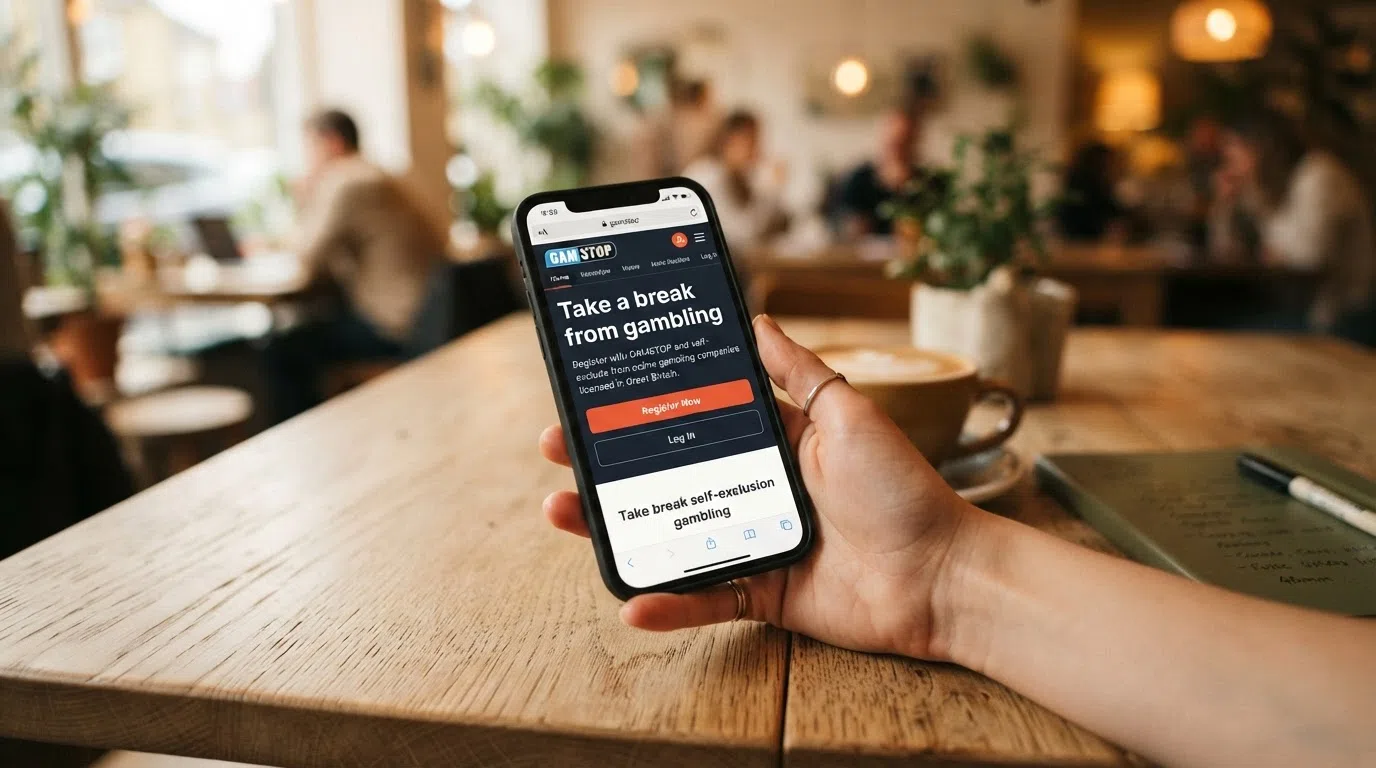
In 2025, GAMSTOP recorded 117,756 new registrations. At year-end 2025, over 562,000 people were actively excluded. The 16–24 age group accounted for 29% of all new registrations with a 40% year-on-year increase. Exclusion periods run from six months to five years (the five-year option can be set to auto-renew); exclusion cannot be cancelled early; and the scheme continues for up to seven years after the chosen period expires.
The exclusion blocks the account across every GB-licensed operator simultaneously. That is the structural difference between GAMSTOP and a single-operator self-exclusion — one registration, every brand. The pay-by-mobile layer does not change that. A GAMSTOP-registered player cannot deposit by phone bill at any UKGC operator.
Non-GamStop sites: what you lose offshore
A UK resident faces no criminal liability for depositing at a non-UKGC site — that is the player-side position under current law. The operator-side position is different: providing gambling facilities without a GB licence is a criminal offence under section 33 of the Gambling Act 2005, with up to 51 weeks’ imprisonment, an unlimited fine, or both.
What the player loses offshore is the protection stack. No ADR route if the operator refuses a withdrawal. No FSCS cover on cash held in operator accounts. No GAMSTOP-linked block to enforce a self-exclusion choice. No audit trail on RTP or game outcomes. The operator is not bound by the LCCP stake caps, the wagering cap, or the credit card ban; the games are not independently tested to the GB standard; the funds are not segregated to the GB standard.
The UKGC’s offshore enforcement is disruption rather than blocking. The Commission does not currently hold statutory ISP or DNS blocking powers — legislation has been proposed but not enacted. Between April 2024 and June 2025, the Commission issued 3,140 disruption notices and referred 447,778 URLs to search engines for delisting. The route into the UK market for an unlicensed operator is via cease-and-desist, registrar pressure and payment-provider referrals — not via a court-ordered block.
Apps or browser: pay by mobile behaves the same
The phone-bill deposit flow runs identically inside a native casino app and on a mobile browser. SMS confirmation works the same way (the message arrives regardless of whether the cashier is in an app shell or a webview). Fonix’s seamless confirmation works the same way (the redirect opens inside the same browser engine or the app’s webview wrapper). The deposit cap, the fee and the settlement timing are identical on both surfaces.
There is no pay-by-mobile feature that is exclusive to a dedicated casino app in the source material reviewed. Some apps do offer biometric login, push notifications, or app-only game launches, but those are app-level features rather than phone-bill-specific ones. For a player who already uses a casino’s mobile web, switching to the app changes nothing about how the deposit works.
How to pick a pay-by-mobile casino without overpaying
The cheapest way to use pay by mobile is Duelz or MrQ on Fonix — both carry 0% on the cashier page, both settle at the £40 regulatory cap, both credit the deposit instantly. The most expensive is Pay By Mobile Slots, where the £2.50 flat fee on a £10 deposit is a 25% effective cost. Siru Mobile at Mr Vegas or Videoslots adds 25% on top of any deposit, which is the structural ceiling on cost regardless of which casino runs it.
The second decision is welcome bonus eligibility. If the welcome matters, the deposit must be a debit card at most operators — MrQ, Peachy and Hot Streak are the only brands on this list where the phone-bill deposit triggers the welcome. The third decision is the slot library: 8,000+ at Mr Vegas and Videoslots, 2,000+ at Duelz, roughly 700 at Peachy, 1,000+ at MrQ.
The checks to run before you deposit by phone
Verify the UKGC licence on the public register before any deposit. Compare the deposit fee from 0% (Duelz, MrQ on Fonix) to 25% (Siru at Mr Vegas or Videoslots) to £2.50 flat (Pay By Mobile Slots). Confirm that a second method — debit card, bank transfer or e-wallet — is set up for cashout, since pay by mobile cannot withdraw. Check whether the welcome offer covers phone-bill deposits before assuming the bonus is live. Budget within the £30–£40 daily cap and the £240 monthly ceiling — both are hard limits, not advisory.
The credit card ban is the final pre-deposit check. Since 14 April 2020, no GB-licensed casino accepts a credit card for gambling — direct or via an e-wallet funded by a credit card. Debit cards, bank transfers and PayPal from a current account are unaffected. Pay by mobile sits in its own regulatory lane under the Payment Services Regulations, separate from the credit card ban.
New pay-by-mobile casinos: check the licence before the bonus
Research this run did not name a newly launched UK-licensed phone-bill casino, so the route here is the vetting framework rather than a specific brand. The same checks that apply to a ten-year-old operator apply to one launched this quarter — the licence is the first gate, the phone-bill provider and fee are the second, the welcome terms and bonus eligibility are the third.
A new UK-licensed launch must appear on the Gambling Commission’s public register with an active account number. The phone-bill provider and fee should be visible on the cashier page before any deposit. The withdrawal method should be set up at the same time as the deposit method, since pay by mobile cannot be the cashout rail. The welcome offer’s terms should be read for the bonus-exclusion rule — most new UKGC launches copy the standard “first deposit via debit card” gating.
The non-UKGC route is a separate decision and not a vetting task. New offshore sites launch constantly, but the same protection gaps apply: no GAMSTOP block, no ADR, no FSCS cover, no RTP audit trail. The vetting task on this page is the GB-licensed route; the offshore route is a separate risk decision the reader makes on their own terms.
How to vet a new pay-by-mobile launch
Run the licence check first. The Gambling Commission’s public register is searchable by operator name; a valid GB remote operating licence is a precondition for accepting UK players. Run the payment check second: the cashier page should name the phone-bill provider (Boku, Fonix, Payforit or Siru) and disclose the fee. Run the welcome terms check third: most UKGC operators exclude phone-bill deposits from welcome eligibility, so the bonus is lost unless the first deposit is a debit card.
Identity verification runs before the first deposit at every GB-licensed operator since 7 May 2019, so the new-launch flow is the same as the established-operator flow at this layer. Name, address and date of birth must pass before the cashier opens. The 72-hour grace period is gone; there is no fast path past the check.
Why the daily phone-bill cap is a responsible-gambling feature
The £30–£40 daily cap and £240 monthly ceiling are usually described as a constraint. From a responsible-gambling angle, they are a pre-set loss limit the player cannot override. A player who only ever deposits by phone bill cannot exceed £40 in a single day at Fonix or £30 at Boku — the carrier refuses the transaction, the cashier returns an error, and the session ends before the player has overspent. That is the structural version of a financial limit; the player did not have to set it or remember to apply it.
The statutory stake caps sit on top of that. £5 per game cycle (25+) or £2 per game cycle (18–24) bounds the maximum single-bet exposure on any online slot. Auto-play is banned, spin speed is capped at 2.5 seconds, losses disguised as wins are banned. The combination is a slot machine that cannot run faster than the player can think, on stakes the regulator has decided are safe at the age band, with a daily deposit ceiling that cannot be bypassed by switching to a different card.
The built-in brake: how phone-bill caps protect bankrolls
Phone-bill deposits cap exposure by design. £30–£40 a day, £240 a month, enforced at the carrier layer — a player who uses the method is locked into a low-ceiling bankroll whether they intended to be or not. The £5 and £2 stake caps per game cycle then bound the largest single spin within that bankroll. The two together mean a pay-by-mobile-only player is operating inside a tightly bounded envelope, regardless of the casino’s own deposit-limit prompts.
From 31 October 2025, operators must prompt customers to set a financial limit before their first deposit. A gross deposit limit must be offered with at least equal prominence by 30 September 2026 (extended from 30 June 2026). The prompt is mandatory; the level is the player’s choice. For a pay-by-mobile user, the deposit limit is largely set by the carrier — but the prompt still applies, and a player who sets a tighter limit gets the tighter ceiling on top of the carrier cap.
Where to get help: GamCare, GAMSTOP and the NHS
The National Gambling Helpline (0808 80 20 133) is run by GamCare, available 24 hours a day, 365 days a year. In 2025/26, the helpline received over 130,000 calls and online messages, with 7,100 referrals into further treatment services. In January 2026 alone, GamCare reported 996 referrals to treatment and peer-based support services — up from 674 in January 2025, a 48% year-on-year increase.
GAMSTOP self-exclusion is the multi-operator block described above — 614,738 active exclusions by mid-2026, with the under-25 age group the fastest-growing segment. NHS gambling harm clinics now number 15 specialist clinics in England; NHS England took commissioning responsibility for gambling-related harms from 1 April 2026, funded by the new statutory levy. NHS England reported 4,355 gambling-related referrals in 2024/25, up from 2,284 in 2023/24. GambleAware reported 11,960 clients treated through the National Gambling Support Network in 2024/25.
In England, almost 1.6 million adults who gamble may benefit from treatment or support for harmful gambling. The helpline, the self-exclusion scheme, the NHS clinics and the support network are the routes in. For a reader who feels their gambling is past the casual stage, any of the four is a starting point.
How we chose and checked these casinos
The ten operators in the ranking were drawn from UKGC-licensed brands with confirmed or strongly indicated phone-bill deposit support, cross-referenced against the Gambling Commission’s public register. Each licence was checked against the register entry — account number, licence status, the date the remote operating licence was first granted. The featured-operator list in the research brief carried the brands; this page has rendered the comparison rather than re-selected it.
The comparison columns are licence status, pay-by-mobile method, welcome offer, wagering and slot library — the five fields the research brief carried for every brand. Where the research brief marked a value as not confirmed, the page uses the em-dash no-data marker rather than fabricating a value. The welcome offer wording carries the operator’s own phrasing where it is precise (“100 Big Bass Splash spins on £10”) and a summary where the operator’s phrasing is loose.
Wagering is presented at the effective rate after the 19 January 2026 UKGC cap. Where an operator’s headline terms are higher (Duelz’s pre-2025 30×), the page notes both — the pre-cap term and the post-cap effective rate. The aim is to show what the player actually faces at the cashier, not the operator’s marketing claim.
When pay by mobile is the right choice for you
Pay by mobile is the right choice for a player who values privacy over maximum deposit size, wants the carrier-imposed daily cap to act as an automatic loss limit, and is willing to accept that welcome bonuses are gated by debit card at most operators. The method suits short, low-stakes sessions on slots with a £2 or £5 stake cap — exactly the kind of session the UKGC’s regulatory framework is built around.
Pay by mobile is the wrong choice for a player who wants a £200 first deposit to clear a welcome offer, who needs to withdraw winnings quickly without setting up a second method, or who wants to bypass the UKGC’s deposit and stake caps by going offshore. The method is deposit-only by design, the daily cap is hard, and the bonus exclusion is structural rather than negotiable.
The cleanest pairing is a debit-card first deposit to claim the welcome, then the rest of the session funded by phone bill, with the second method already set up for cashout. This two-step approach allows you to enjoy the benefits of pay-by-mobile billing while maintaining bonus eligibility.
Frequently asked questions
Is pay by mobile safe at UK-licensed online casinos?
Yes, at any operator licensed by the Gambling Commission. The deposit is settled against your phone bill or prepaid credit rather than passing through the casino’s payment processor, which means no bank or card details are shared with the operator. The UKGC’s identity-verification rule applies before the first deposit, the credit card ban covers any e-wallet funded by credit, and GAMSTOP blocks excluded players from depositing at all.
Does pay by mobile work on pay-as-you-go (PAYG) phones?
Yes, on all four UK networks and most MVNOs. PAYG credit is charged directly against the available balance at the time of deposit, so the £30 Boku cap or £40 Fonix cap applies in the same way it does on a contract SIM. The deposit fails if the PAYG balance is insufficient; there is no overdraft or post-paid option at this layer.
What happens if I self-exclude via GamStop — does it block pay by mobile deposits too?
Yes. GAMSTOP exclusion is enforced across every GB-licensed online operator simultaneously, and the block applies at the account level rather than the payment-method level. A self-excluded player cannot deposit by phone bill, debit card, e-wallet or bank transfer at any UKGC operator for the duration of the exclusion period (six months to five years). The block is not lifted by switching payment method.
Why do pay-by-mobile fees range from nothing to 25% depending on the casino?
The fee spread reflects two layers. Carrier-side fees are small and consistent — Fonix charges nothing to the player, Siru charges from 25%. Casino-side fees vary by operator: Duelz absorbs the carrier fee entirely, MrQ and Peachy do not pass on a fee, Hot Streak adds 15% on £10–£30 deposits, Pay By Mobile Slots charges a flat £2.50 on £5–£20 deposits. The total cost to the player is the carrier fee plus the casino markup, minus any absorption.
Can I claim a no-deposit bonus at a pay-by-mobile casino?
No. The phone-bill deposit is the deposit, so the bonus cannot be no-deposit at the same brand — that would mean crediting a bonus before any payment rail was used. Wager-free spin offers (MrQ, Hot Streak) are the closest equivalent: a deposit unlocks spins that pay as real cash without a wagering multiple, but the qualifying deposit is still required. No-deposit bonuses at UKGC operators are rare and are typically run as separate promotional periods rather than ongoing welcome terms.
Why can I still charge to my phone bill when credit cards are banned for gambling?
Because the credit card ban and the phone-bill regulatory ceiling are different rules. The credit card ban (LCCP 6.1.2) prohibits a specific payment instrument — credit cards — at the operator layer. The phone-bill ceiling (£40 per payment, £240 per month) sits in the UK Payment Services Regulations 2017, which lets charge-to-mobile services qualify for an electronic-communications exclusion only inside those limits. The two rules are designed for different purposes: the credit card ban targets revolving debt; the phone-bill cap targets impulse deposits. Neither contradicts the other, and both apply at every UKGC operator.
Payments – topratedonlinecasinos-uk
Content created by the «topratedonlinecasinos-uk» team