
Google Pay casinos in the UK: which ones still take it, and which offers are actually worth a £10 deposit
 Available in GB
Google Pay is a top-up wallet, not a withdrawal route. That single sentence decides almost every question a UK player arrives with — why the casino never sees a card number, why the bonus terms sometimes quietly exclude the deposit, why the winnings always leave through a bank account. A player who understands the shape of the wallet in advance spends the first ten minutes on a casino site playing rather than reading help-centre articles explaining what the cashier is doing.
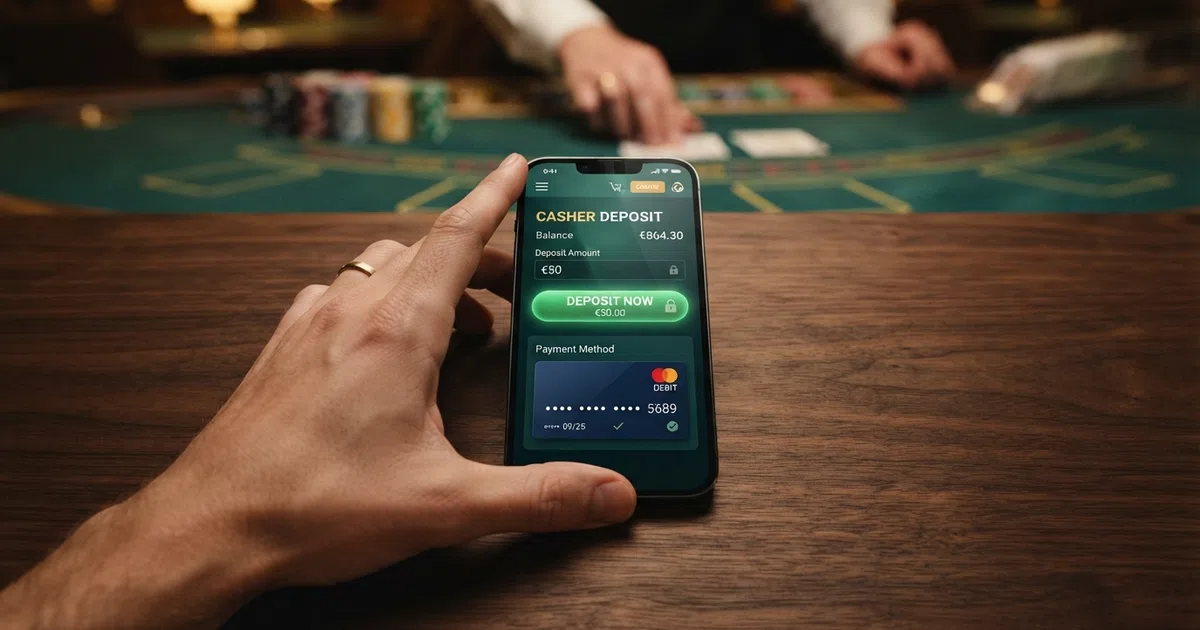
This page ranks the ten UK-licensed casinos that matter to a Google Pay player in 2026, the bonus each one is offering, the licence status that makes the offer enforceable, and the limits and rules that frame every spin once the deposit lands. It is built around the payment method rather than around the casino brand, because the question on most readers’ minds is which operators still let a Google Pay deposit trigger a welcome offer, and what that offer is actually worth once the wagering and the slot stake caps are taken into account.
*Data current as of 9 September 2026; UK Gambling Commission public register and operator help centres were the verification sources.*
Google Pay casinos explained: a top-up wallet, not a withdrawal route
A “Google Pay casino” is a UK-licensed online casino that lists Google Pay in its cashier as a deposit method. The casino does not receive the player’s debit-card number at any point in the transaction. Instead, the linked card sits inside Google Wallet on the player’s phone, and a one-time token — a numeric stand-in — is sent to the casino to authorise the deposit. The card number, the expiry date and the CVV never leave the wallet. From the casino’s side, the deposit looks like any other card payment; from the player’s side, the deposit is confirmed with a fingerprint or a PIN inside the wallet rather than by typing the card details into a form.
That tokenisation is the part of Google Pay the marketing tends to skip past, because it does not produce a headline. The headline it does produce — “deposit instantly with Google Pay” — is accurate but incomplete. The completion is that the casino can take the deposit but cannot send the withdrawal back through the same pipe. UK casinos generally route withdrawals to a bank account in the player’s name, and that closed-loop rule is the reason every help-centre article on the subject says the same thing in different words.
The platform side of the wallet matters too. Google Pay runs through Google Wallet on Android 5.0 and above, and through the Chrome browser on desktop. The Google Pay API’s Acceptable Use Policy permits gambling integrations from operators licensed in the UK, which is the technical reason the method appears at licensed brands and not at offshore ones. Outside that licence and that platform, Google Pay as a casino deposit method does not exist in any practical sense.
The rest of this guide goes through the operator picture, the deposit flow, the bonuses the method unlocks, the games and stake limits a deposit reveals, the legal and safety framing, and the self-exclusion net. The thread through it all is the same: deposits in through the wallet, withdrawals out through the bank, every offer governed by a 10× wagering ceiling that only came into force in late 2025.
What a Google Pay casino is — and how tokenisation hides your card number
Google Pay is a wallet layer that sits between the player’s debit card and the casino’s cashier. When a player adds a debit card to Google Wallet, the wallet requests a token from the card network — a Visa token or a Mastercard token — that is good for that one merchant category or for a defined set of transactions. The token is what the casino receives. If the token is ever intercepted, it is useless at any other merchant and cannot be reversed back into the card number.
The practical effect for the player is that the casino never sees the long card number, never sees the CVV, and never stores it. The deposit is confirmed inside the wallet, usually with a fingerprint on a phone or a PIN in a browser, and the casino’s records show only a tokenised authorisation and a last-four-digit reference. The card details live in one place — the wallet — and the casino’s database holds nothing worth stealing.
That is also why Google Pay is debit-only in practice at UK casinos. The UKGC’s credit-card ban, in force since 14 April 2020, extends to credit cards routed through e-wallets and digital wallets, and the payment processors enforce the ban at their end. A credit card linked to Google Pay is rejected automatically; a debit card linked to the same wallet sails through. The wallet does not know the difference at the point of linking; the gambling merchant’s processor does at the point of authorisation.
Which UK casinos still take Google Pay — and which have dropped it
Not every UK-licensed casino lists Google Pay, and the list is not stable. Bet365, Virgin Games, Ladbrokes, Betfred and Casushi all take Google Pay at the time of writing — that is the confirmed half of the picture. The other half is the set of operators where Google Pay acceptance is not confirmed in research and has to be checked on the cashier, which includes PlayOJO and LeoVegas. The picture is also the set of operators that have removed or never took the method: Sky Bet and Sky Vegas have removed Google Pay (alongside PayPal) across all Sky Betting & Gaming brands, and Paddy Power does not accept Google Pay at all.
The reason the picture is uneven is partly product and partly commercial. Sky Betting & Gaming has published a method change but no reason, and the surviving options there are debit card and Apple Pay. Paddy Power, similarly, points players to Apple Pay and debit card as the mobile-friendly routes. Where the casino has not made a public statement, the cashier is the only source, and a Google Pay button that does not appear at the deposit step is the answer regardless of what a comparison page said six months ago.
For a player comparing operators on this single criterion, the practical move is to use the table further down this page as a starting point and confirm at the cashier before committing a deposit, particularly at the brands where the table’s column reads “n/a”.
Why Sky Bet and Sky Vegas removed Google Pay
The Sky Betting & Gaming brands — Sky Bet, Sky Vegas, Sky Bingo, Sky Casino — removed Google Pay and PayPal in a single method change that the operator’s help centre documents but does not explain. The brands kept debit card and Apple Pay. Sky Vegas’s welcome offer, which is the most generous no-deposit offer among the featured set, is now reachable only through those two methods.
For a player who deposited at Sky Vegas via Google Pay before the change, the closed-loop policy means withdrawals still go to a bank account in their name, exactly as they would have before. There is no public statement on whether the change was driven by cost, by processing friction, by the Flutter group’s wider payment stack, or by something else; the help centre just says the methods are no longer accepted. The honest reading is that the operator is the source for what it accepts today and that no further explanation is owed.
Sky Vegas is still in the ranking below, because its no-deposit offer is the cleanest comparison point in the market, and a player reading the table needs to see what they would be giving up by choosing it over a Google Pay-accepting brand. It is the page’s own subject that cuts against it; the operator write-up below names the mismatch in one sentence and shows the reader which side of it the offer is on.
Google Pay casino pros and cons
- Deposits land instantly — confirmed at Bet365 and Virgin Games, with no fee from either the casino or the wallet.
- Card details stay inside the wallet; the casino never sees the long card number, the CVV or the expiry date, and a stolen token is useless elsewhere.
- Biometric confirmation on a phone replaces typing card details into a cashier form, which removes a phishing surface that plain card payments leave open.
- No withdrawal route — winnings leave through a bank account in the player’s name, which adds a step to the first cashout and locks the casino to one bank per player.
- Debit-only — credit cards linked inside the wallet are blocked by the payment processor, so a credit-card-only player has to add a debit card or switch method.
- Android-and-Chrome-only — the wallet does not exist on iOS, and an iPhone player reaches for Apple Pay or a debit card instead.
The best Google Pay casinos in 2026, ordered by what the bonus is genuinely worth
The ranking below starts with the operators whose welcome offers are confirmed eligible via Google Pay, then the wager-free spin packages that work whatever the deposit method, then the deposit match and the sports free-bet bundles where Google Pay’s bonus status is partial or unconfirmed. Sky Vegas is included despite the Google Pay removal because its no-deposit offer is the cleanest no-deposit offer in the set and the table is honest about which side of the method question it lands on. The full eligibility picture is in the table; the write-ups below the table add the detail the columns cannot carry.
| Operator | GB licence | Google Pay acceptance | Welcome offer | Wagering | Bonus validity |
|---|---|---|---|---|---|
| Bet365 | Yes | Confirmed | Up to 500 free spins over 10 days (prize reveal, 5–50 per day), 0× wagering on winnings, £0.10 per spin | 0× | 7 days per daily allocation |
| Sky Vegas | Yes | Removed (debit card or Apple Pay only) | 50 no-deposit free spins (opt in) + 200 free spins on depositing and spending £10, 0× wagering on winnings | 0× | 7 days (spins); 30 days to deposit and spend |
| Virgin Games | Yes | Confirmed | Deposit and wager £10 on slots, 100 free spins, 0× wagering, £0.10 per spin | 0× | 30 days |
| Ladbrokes | Yes | Confirmed (eligible for welcome offer) | Bet £5 at min odds 1/2, 6×£5 free bets (stake not returned) | n/a | 7 days |
| Betfred | Yes | Confirmed but often excluded from welcome offer | Stake £10, 200 wager-free spins | 0× | 14 days to qualify |
| 888casino | Yes | Confirmed (deposit only) | 100% deposit match up to £100 on £10+ first deposit | 10× on selected slots | 90 days |
| Betfair | Yes | Not confirmed for welcome bonus | £50 in free bets on a £10 bet at 2.0+ | n/a | 30 days |
| PlayOJO | Yes | Not confirmed — verify on site | 50 free spins on Big Bass Bonanza, 0× wagering, no max-win cap | 0× | n/a |
| LeoVegas | Yes | Not confirmed — verify on site | 50 wager-free spins on Big Bass Splash, 0× wagering on winnings | 0× | 7 days from credit |
| Casushi | Yes | Confirmed (FruitySlots) | 100 free spins, 0× wagering | 0× | n/a |
The wagering column is dominated by zeros because eight of the ten offers are wager-free spins. The 888casino entry is the only deposit match in the set, and its 10× wagering is now the legal maximum — the same ceiling that took effect on 19 December 2025 under the Social Responsibility Code 5.1.1. The two sports offers carry no wagering figure in the table because the free bets are paid as stake-not-returned, which is the sports product’s normal settlement.
The Google Pay acceptance column is where the table earns its keep. Six of the ten confirm the method; two are explicit about the method being absent or removed; two more have not been confirmed in either direction and are flagged as “verify on site”. The blanks the columns leave are not gaps to be filled; they are the answer.
Bet365 — up to 500 wager-free spins for a £10 deposit
Bet365’s welcome offer is the largest spin package in the featured set and the one most easily reached through Google Pay. A £10 deposit — within the casino’s £5 minimum to £5,000 maximum Google Pay range — triggers a 10-day prize-reveal mechanic: each day, the player opens a panel that reveals between 5 and 50 free spins, with a 500-spin ceiling across the run. Spins are worth £0.10 each and are valid for 7 days from the day they are revealed. Winnings carry no wagering requirement, which puts the offer at the wager-free end of the bonus market.
The eligible games are four bet365 Originals — Book of Horus, Curse of the Bayou, Magic Forge and Wrath of the Deep. The provider-listed RTPs of those titles are not confirmed in the research; a player who wants to size a session against a published return has to look at the in-game information panel once the spins are credited. Deposits are instant, fee-free and confirmed as Google Pay-eligible; the offer is a clean match between method and bonus.
For a player whose main question is how many spins a £10 deposit actually buys at a method-friendly operator, Bet365 is the most direct answer in the ranking.
Sky Vegas — the no-deposit spins, minus Google Pay
Sky Vegas runs the only no-deposit free-spins offer in the featured set: 50 spins on opt-in, no deposit required, plus 200 more once the player has deposited and spent £10. All 250 carry no wagering on winnings. The catch for this page’s subject is that Sky Vegas removed Google Pay, and the qualifying deposit has to be debit card or Apple Pay. A Google Pay player cannot reach this offer at all.
Sky Vegas is in the ranking because the offer is the cleanest no-deposit reference point in the market and the comparison is what gives the rest of the table its shape. A player who prizes the no-deposit key reads Sky Vegas first and then the method-friendly wager-free alternatives — Bet365’s 500, Virgin Games’s 100, Betfred’s 200, Casushi’s 100. The match is exact on the no-deposit axis and broken on the method axis, and the write-up admits it in one sentence rather than burying it.
The bonus validity is split: the spins themselves expire after 7 days, and the deposit-and-spend requirement has a 30-day window. The free-spins titles rotate and are not fixed in the source.
Virgin Games — 100 no-wagering spins on a £10 deposit
Virgin Games takes a Google Pay deposit between £10 and £5,000, processes it instantly and charges no fee. The welcome offer is the deposit-and-wager version: a £10 deposit plus a £10 wager on slots unlocks 100 free spins at £0.10 each, with no wagering on the winnings. The offer expires 30 days after credit, which is the longest validity in the wager-free part of the table.
The featured slot in the current rotation is Game of Thrones (Microgaming); the title rotates periodically, and the RTP for the rotating featured slot is not confirmed in research. Players who care about a published return need to look at the in-game information panel once the offer is loaded.
Check the cashier first if you are aiming for this welcome package; it offers one of the longest validity windows for wager-free spins currently available in the UK.
Ladbrokes — the welcome offer that explicitly accepts Google Pay
Ladbrokes is the operator in the featured set that names Google Pay as a welcome-offer-eligible deposit method. The current sports welcome offer is a £5 qualifying bet at minimum odds of 1/2, which returns 6 free bets of £5 each (stake not returned), valid for 7 days. Deposits via Visa or Mastercard debit, Apple Pay or Google Pay all qualify.
Ladbrokes runs a separate casino welcome offer that is not detailed in the research for this run. A player whose preference is the casino product should check the Ladbrokes casino welcome page directly for the current terms; a player whose preference is the sports offer gets the cleanest method-eligibility statement in the table.
Betfred — 200 wager-free spins, but often not via Google Pay
Betfred’s casino welcome offer is 200 wager-free spins in exchange for a £10 stake, with a 14-day qualification window from registration. Google Pay is in the cashier, but the welcome offer often excludes Google Pay deposits — the brand’s own help centre recommends a debit card for bonus qualification. A player who arrives via Google Pay should expect to confirm eligibility at the offer’s opt-in step before staking, because the default reading is that the method is not bonus-qualifying.
The research does not name the slot for the 200 spins or the value per spin; the offer is sized by the spin count and the wager-free status rather than by a published RTP.
If you prioritize 200 spins over method-specific ease, you might consider using a debit card temporarily to secure this offer. Otherwise, expect to confirm eligibility directly within the app before making your deposit.
888casino — the 100% match, capped at 10× wagering
888casino is the only deposit-match offer in the featured set. A first deposit of £10 or more is matched 100% up to £100, with wagering of 10× the bonus on selected slots within 90 days. The 10× figure is now the legal maximum under the Social Responsibility Code 5.1.1 that came into force on 19 December 2025 — 888’s offer sits exactly at the ceiling rather than below it.
Skrill and NETELLER are excluded from the offer. Google Pay is not on the exclusion list in the research, and the brand’s deposit methods include Google Pay; the offer’s eligibility for a Google Pay deposit is not explicitly stated in the source and should be confirmed on the 888 bonus page before opting in. 888 also runs a separate 100-free-spins variant (deposit £10, wager £10 on slots) with winnings capped at £300, which is a different shape from the 100% match and stacks on different terms.
This match offer is distinct in the market due to its longer 90-day wagering window. Its 10× requirement sits right at the statutory maximum, making it an option for those who prefer extended time to clear bonus funds.
Betfair — free bets, with Google Pay unconfirmed
Betfair’s welcome offer is sports-side: £50 in free bets on placing a £10 bet at minimum odds of 2.0, with 30 days to qualify and the free bets themselves expiring within 30 days of credit. Only debit card or Apple Pay deposits are confirmed as qualifying for the welcome bonus; Google Pay is not confirmed either way. A Google Pay player should expect to confirm at the offer’s opt-in before staking, because the default reading is that the deposit is not bonus-qualifying.
For a player who wants a £50 free-bet bundle and is willing to deposit by debit card or Apple Pay, Betfair is a credible sports-side match. For a player who wants the deposit in via Google Pay, the offer is unconfirmed.
PlayOJO — 50 spins on Big Bass Bonanza (96.71% RTP)
PlayOJO runs a 50-free-spin welcome offer on Big Bass Bonanza (Pragmatic Play) for a £10 deposit, with £0.10 per spin, no wagering on winnings and no maximum-cashout cap on the offer. Big Bass Bonanza has a published RTP of 96.71% and is classed as high volatility. The wager-free status combined with a published RTP and a no-cap payout is the most analytically clean offer in the table for a player who wants to know what the spin package is worth before committing.
Google Pay acceptance is not explicitly confirmed in the research for this run; the cashier is the only reliable source. A player who wants PlayOJO’s 50 spins on Big Bass Bonanza should confirm the method before depositing, as official confirmation was not available at the time of writing.
Verify the payment menu manually to avoid any disappointment regarding bonus activation. PlayOJO’s wager-free status on this offer makes it a robust choice if your preferred method is accepted at the cashier.
LeoVegas — 50 wager-free spins on Big Bass Splash (96.71% RTP)
LeoVegas’s welcome offer is 50 wager-free spins on Big Bass Splash (Pragmatic Play) for a £10 deposit plus a 1× wager on eligible games. Spins are worth £0.10 each, winnings carry no wagering, and the offer expires 7 days from credit with a separate 7-day window to wager the qualifying deposit. Big Bass Splash has a published RTP of 96.71% and is high volatility. Bonus funds do not count toward the 1× wagering requirement.
Google Pay acceptance is not confirmed in the research; the cashier is the verification step. The shape of the offer — a small wagering step to reach a wager-free spin package on a published-RTP slot — is similar to PlayOJO’s, with a shorter validity and a wagering-on-deposit step that the research flags as not counting bonus funds toward the requirement.
Casushi — 100 no-wagering spins, Google Pay confirmed
Casushi’s welcome offer is 100 free spins with no wagering, and the research confirms Google Pay acceptance through FruitySlots: minimum deposit £10, minimum withdrawal £10, processing instant. The value per spin and the eligible title are not named in the source, and the bonus validity is not specified; the offer is sized by the spin count and the wager-free status rather than by a published RTP.
For a player whose first filter is “Google Pay confirmed at the cashier and a wager-free spin package on the welcome page”, Casushi is the cleanest match in the table. The lack of a published RTP for the bonus slot is the only analytical gap in the offer; everything else is on the page.
Moving money with Google Pay: instant in, bank out
The deposit flow at a UK Google Pay casino is the same in shape across the featured set: a player opens the cashier, picks Google Pay, chooses a debit card from the wallet, confirms the tokenised payment inside Google Wallet with a fingerprint or PIN, and the casino balance updates within seconds. The withdrawal flow is the part that surprises first-time Google Pay players: there is no Google Pay option in the withdrawal menu, and the winnings go to a bank account in the player’s name instead.
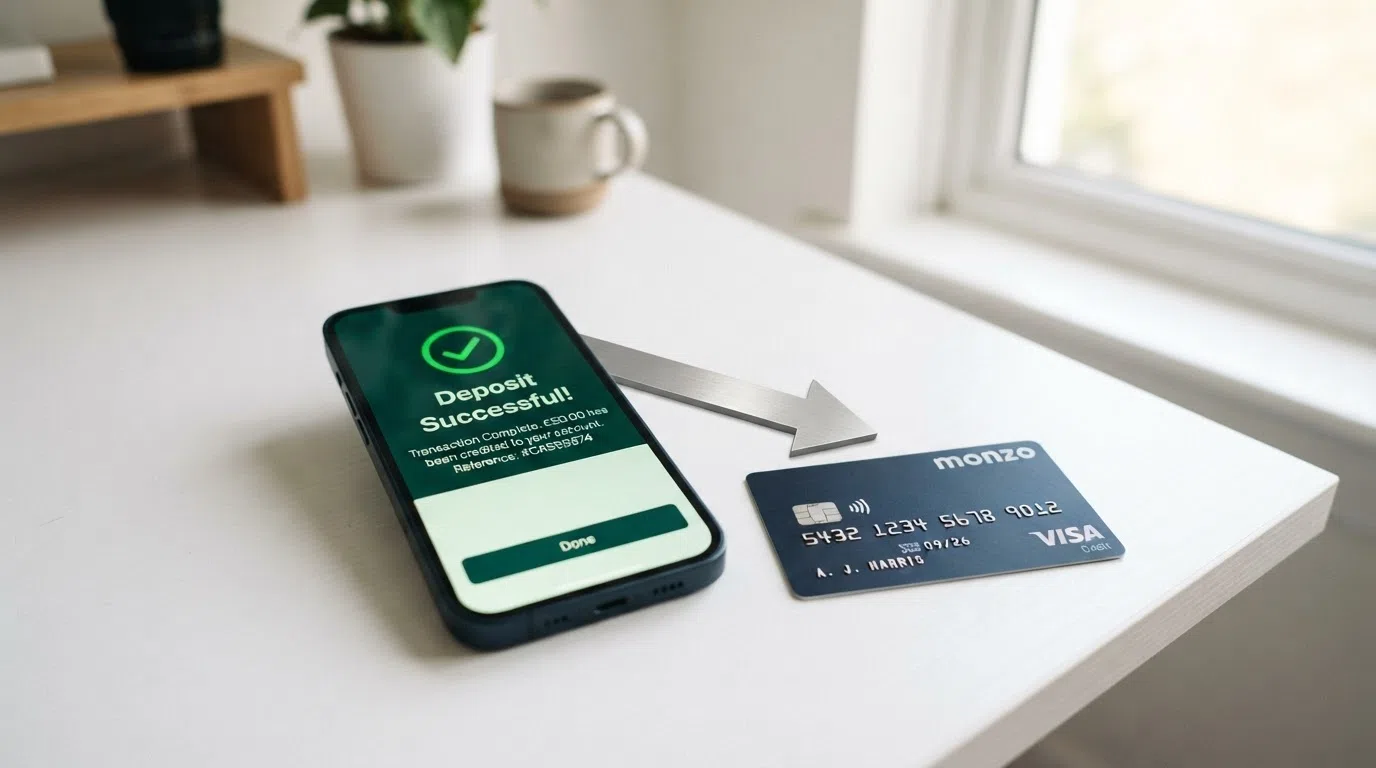
The asymmetry is the closed-loop policy that every UKGC-licensed operator follows. The Jackpotjoy Help Centre puts it plainly: “Withdrawals cannot be sent directly to Google Pay. If you deposited using Google Pay, your withdrawal will be paid to a bank account registered in your name, in line with our closed loop policy.” Other operators phrase it differently but mean the same thing — the deposit method is a wallet, the withdrawal method is a bank, and the bank has to be in the player’s name.
The practical consequence is that the first withdrawal at a new casino is slower than the deposit, because the casino has to verify the bank account in addition to the identity it already verified at registration. After the first withdrawal, subsequent cashouts are faster — the bank is on file, the closed-loop check is satisfied, and the only wait is the operator’s processing time plus the bank’s clearing time. None of that wait is in Google Pay’s hands.
How to deposit with Google Pay, step by step
- Open the casino’s cashier on desktop or in the app, choose Deposit, and pick Google Pay from the list of payment methods. On Android, the wallet prompt appears in the app or in a browser overlay; on desktop, the same prompt appears inside Chrome.
- Confirm the debit card to be used. The wallet shows the last four digits of every card on file; the player picks one and confirms. The long card number never appears in the cashier at any point.
- Enter the deposit amount, keeping it within the casino’s published minimum and maximum. For Bet365 the range is £5 to £5,000; for Virgin Games, £10 to £5,000; for Casushi, £10 minimum.
- Authorise the payment inside Google Wallet. On a phone this is a fingerprint or face match; in a browser it is the device PIN. The tokenised authorisation travels from the wallet to the card network to the casino’s processor.
- The casino balance updates within seconds. The cashier shows a confirmed deposit and a reference; the wallet’s transaction log shows the same deposit, attributed to the casino’s merchant name. The card details stay inside the wallet.
Your winnings cannot go back to Google Pay — they go to your bank
The closed-loop rule is not a Google Pay-specific quirk; it is the standard UK casino settlement rule applied to every e-wallet deposit. When a player deposits with a wallet, the operator is required to pay any winnings back through a method that identifies the recipient, and Google Pay is not structured to receive funds in the same way it sends them. The wallet is a payment-initiation rail, not a payout rail, and the licensed operators do not route withdrawals through it.
What the player sees in the cashier is a withdrawal menu with a bank transfer option, possibly alongside Visa Fast Funds or an e-wallet that does support payouts. The bank transfer has to be to an account in the player’s name, which the operator verifies against the name on the account at registration. A bank account in someone else’s name is rejected; a bank account in a joint name is reviewed case by case.
The consequence for the player’s first cashout is a small delay — the bank account is verified before the first withdrawal, and the verification can take a working day or two on top of the operator’s pending period. The consequence for every cashout after that is a normal bank-transfer wait, which is hours to a couple of days depending on the operator and the bank.
How much you can put in: minimums and maximums at the featured casinos
The published Google Pay deposit limits are tight at the bottom and wide at the top. Bet365 sets a £5 minimum and a £5,000 maximum; Virgin Games sets a £10 minimum and a £5,000 maximum; 888casino’s welcome offer is gated at a £10 minimum first deposit; Casushi sits at £10 minimum for both deposit and withdrawal, with the deposit itself instant. For the other featured operators, the cashier is the source — the research did not surface a Google Pay-specific deposit range for every brand.
The £5 floor at Bet365 is the lowest in the featured set and the lowest most players will find at a UK-licensed brand. The £10 floor elsewhere matches the welcome-offer gating at every wager-free spin offer in the table. The £5,000 ceiling is not a market-wide number; it is what the two operators with published Google Pay ranges have set, and other operators set their own ceilings, sometimes lower for new accounts and higher once the account is established.
A separate set of limits sits on the slots side, not the deposit side. The £5 stake cap for players aged 25 and over, and the £2 cap for 18–24s, are stake limits, not deposit limits — they bound how much can be wagered on a single game cycle, not how much can be put into the account. A player who funds the account with a £500 Google Pay deposit and wants to play it across 100 spins at the £5 cap is well within the deposit and the stake rules; a player who wants to play it across 25 spins at £20 each is over the stake rule from the first spin.
Fees: Google Pay deposits cost nothing at the featured casinos
Bet365 and Virgin Games both publish no-fee Google Pay deposits, and the wallet itself does not charge the casino deposit. There is no transaction percentage taken by Google, no foreign-exchange margin on a GBP deposit, and no card-network surcharge surfaced at the cashier. The deposit amount the player enters is the amount the casino balance increases by, less any bonus credit the casino adds on top.
Where a charge could surface is the bank’s own handling of the gambling merchant category. A small number of UK banks treat gambling transactions as a flag for a spending-category notification or a block, and the deposit may need to be approved in the banking app. That is the bank’s behaviour, not Google Pay’s, and it is more common at challenger banks with strict merchant filters than at the high-street brands.
Credit cards inside Google Pay are blocked — debit only
The UKGC’s credit-card ban took effect on 14 April 2020 under LCCP licence condition 6.1.2, and the ban’s wording is broad enough to reach credit cards routed through e-wallets and digital wallets. A credit card linked inside Google Pay is rejected by the gambling merchant’s payment processor at the point of authorisation, and the player sees the deposit fail. The wallet does not refuse the link at the time the card is added; the gambling merchant’s processor refuses the transaction when the deposit is attempted.
A player whose only card in the wallet is a credit card has to add a debit card before they can deposit, or switch to a different method. There is no workaround at the wallet level and no opt-out at the operator level — the block is in the rule, not in the casino’s settings.
When Google Pay is not an option: the backup routes that still work
A Google Pay player who hits a wall — a brand that removed the method, a card that the processor blocked, an iPhone that does not run the wallet — falls back to two routes that work at every UK-licensed casino: Apple Pay and the plain debit card. Both are already the default at the brands where Google Pay is gone, and both work at the brands where Google Pay is in the cashier.
The reason these two are the substitutes is the shape of the underlying rails. Apple Pay is a tokenised wallet on iOS that mirrors Google Pay’s flow on Android; the plain debit card is the rail that backs both wallets. A player who carries an iPhone and a Visa debit card has, in practice, the same payment surface as a Google Pay player on Android — token in, bank out — and the same closed-loop rule on the way back.
Apple Pay and debit cards — the closest substitutes
Apple Pay is the wallet equivalent on iOS and the substitute the Sky Betting & Gaming brands point to after removing Google Pay. The deposit flow mirrors the Android version: tokenised debit-card authorisation, biometric confirmation, instant credit to the casino balance. The eligibility question — whether a deposit via Apple Pay triggers the welcome offer — is answered the same way it is for Google Pay, by reading the offer’s small print or asking the cashier’s help icon.
The plain debit card is the universal fallback. Every UK-licensed casino takes Visa and Mastercard debit, and the deposit clears in seconds. The downside versus a wallet is that the card number, expiry and CVV are typed into the cashier form, which is a phishing surface that the wallet removes. The upside is that the deposit is unblocked at every operator, qualifies for every welcome offer that does not exclude e-wallets, and the player is not dependent on the operator continuing to list the wallet in the cashier.
When to switch away from Google Pay (and what you give up)
The switch is forced in three cases. The first is the operator: Sky Bet, Sky Vegas, Sky Bingo and Sky Casino have removed Google Pay, and Paddy Power never took it. The second is the card: a credit card in the wallet is blocked at the merchant’s processor, and the player has to add a debit card or switch method. The third is the platform: an iPhone does not run Google Pay, and the substitute is Apple Pay or a debit card.
What a player gives up on switching is the tokenised layer. Apple Pay preserves the wallet — a token still stands in for the card number, and a biometric still confirms the transaction. A plain debit card deposit types the card details into the cashier, removes the biometric step, and exposes the long card number to the casino’s payment form. The risk surface is the standard card-not-present risk, which the player’s bank and the casino’s processor manage between them, and which is the surface that Google Pay was built to remove.
Why your 2026 welcome offer is smaller than it looks
The headline on a UK welcome offer is the spin count, the bonus amount or the free-bet bundle. The number the marketing copy does not lead with is the wagering multiplier — and since 19 December 2025, that number has a statutory ceiling of 10× the bonus value, set by LCCP Social Responsibility Code 5.1.1. Every welcome offer in the featured set sits at or below that ceiling, and eight of the ten sit at 0×, which is the wager-free end of the market.
The other shape that shrinks the headline is bonus eligibility. Some operators count a Google Pay deposit toward the welcome offer; some exclude it; some are silent. The eligibility split is where two players looking at the same offer can end up with very different outcomes, and it is the question to ask the cashier before opting in.
Welcome bonuses: which featured casinos let a Google Pay deposit trigger them
Ladbrokes names Google Pay as welcome-offer-eligible alongside Visa/Mastercard debit and Apple Pay. Betfred accepts Google Pay in the cashier but often excludes it from the welcome offer, and the brand’s help centre recommends a debit card for bonus qualification. 888casino’s exclusion list names Skrill and NETELLER and is silent on Google Pay; the cashier’s opt-in step is the verification. Virgin Games’s offer is reached by a £10 deposit and a £10 wager, with no method exclusion stated. Betfair’s sports offer is confirmed for debit card and Apple Pay only; Google Pay is unconfirmed. Sky Vegas’s offer is debit card or Apple Pay only.
A player who arrives with a Google Pay deposit and finds the welcome offer’s opt-in step refuses the trigger has not lost the deposit — the deposit itself is in the balance and playable. The player has lost the bonus, and the recovery is to check the small print before the next deposit, or to switch to a method the offer treats as eligible.
The no-deposit spins that survive — but not for Google Pay players
Sky Vegas runs the only no-deposit welcome offer in the featured set: 50 free spins on opt-in, no deposit required. The deposit-and-spend part of the same offer unlocks 200 more spins at a £10 threshold. The catch is that Sky Vegas removed Google Pay, and the qualifying deposit for the 200-spin tranche is debit card or Apple Pay only.
For a Google Pay player, the no-deposit key is empty in the featured set. The wager-free-spin key is not, and the wager-free offers at Bet365, Virgin Games, Betfred, PlayOJO, LeoVegas and Casushi are the substitute.
Wager-free spins: keeping everything the reels pay out
Wager-free spins are free spins whose winnings carry no wagering requirement — what the reels pay out is the player’s, in cash, withdrawable. The 0× wagering offers at Bet365 (up to 500 spins), Virgin Games (100 spins), Betfred (200 spins), Sky Vegas (50 no-deposit plus 200 on deposit), PlayOJO (50 spins on Big Bass Bonanza), LeoVegas (50 spins on Big Bass Splash) and Casushi (100 spins) are all on this end of the market. The 10× wagering ceiling that took effect on 19 December 2025 makes 0× the better end by definition, and the spread between 0× and 10× is the spread between cash-equivalent and bonus-credit offers.
For a player who reads the small print, 0× is the only number that does not need a calculator. Every 10× offer requires a turnover calculation; every 0× offer does not.
The deposit match and the 10× wagering cap that now applies
888casino is the only deposit match in the table: 100% up to £100 on a £10+ first deposit, with 10× wagering on selected slots within 90 days. The 10× is the legal maximum under the Social Responsibility Code 5.1.1, in force 19 December 2025. The eligible games are a selected-slots list, not the full slots lobby, and the 90-day window is the longest validity in the table. Skrill and NETELLER are excluded; Google Pay’s bonus status is not explicitly stated in the research and the cashier’s opt-in is the verification step.
For a player who wants a match offer rather than a spin package, 888 is the only choice in the featured set. The 10× wagering is at the ceiling, the window is long, and the eligible games are a curated list — a player who treats the offer as a single big spin rather than a wide-audience match will see it differently from a player who plans to spread the wagering across 90 days.
What a Google Pay deposit unlocks: games and their limits
A Google Pay deposit lands in the same casino balance as any other deposit method, and the games behind that balance are the same games any other deposit unlocks. What the deposit does not unlock is a different set of slot stake rules or a different RTP — the rules sit on the games, not on the funding rail.
The slot stake caps are the first thing to know. A game cycle is the period from initiation to when all money staked is lost or all winnings delivered; in plain English, it is one spin. The cap is £5 per cycle for players aged 25 and over, in force 9 April 2025, and £2 per cycle for players aged 18 to 24, in force 21 May 2025. The age banding is enforced by the operator, and the operator is required to verify age before play. No published UKGC stake cap applies to live dealer, table games or sports betting.
Slots: the £5 and £2 stake caps on every spin
A player aged 25 or over who wants to stake £10 on a single spin of an online slot will find the casino refuses the wager. The £5 cap is the maximum per game cycle, and the cap applies to the stake that initiates the cycle, not to the cumulative stake across a session. A player who wants to play through £100 at £5 per spin runs 20 game cycles; a player who tries to do it in one cycle by staking £100 breaks the rule.
The £2 cap for 18-to-24-year-olds tightens the same logic to a smaller number. The age banding is not a recommendation; it is a statutory limit imposed by SI 2025/215, and the operator’s payment system blocks stakes above the cap at the cashier level.
The companion game-design rules — auto-play banned, minimum spin speed 2.5 seconds, turbo and slam-stop features banned, losses disguised as wins banned — are in force since 31 October 2021 under RTS 8 and RTS 14. They frame the slot product in a way that no payment method changes, and a Google Pay player experiences the same spin-speed minimums and the same auto-play block as a debit-card player.
Bonus-eligible slots with researched RTPs
The only bonus slots in the featured set with a published RTP in the research are Big Bass Bonanza (PlayOJO’s 50 spins) and Big Bass Splash (LeoVegas’s 50 spins), both at 96.71% and both classed as high volatility. The bet365 Originals titles — Book of Horus, Curse of the Bayou, Magic Forge and Wrath of the Deep — do not have a provider-listed RTP in the research and need an in-game check. The Game of Thrones slot featured at Virgin Games also lacks a confirmed RTP in the research for this run.
A 96.71% RTP is a 3.29% house edge per spin, and that is the figure to size a session against. An illustrative 100-spin session at the £5 stake cap for a 25+ player, at 96.71% RTP, carries an expected loss of £5 × 100 × (1 − 0.9671), or about £16.45. The number is an average over many spins under the stated assumptions — it is not a guaranteed loss for any single session, and it is not a prediction of what any individual player walks away with. It is the cost of the session in the same way the price of a lottery ticket is the cost of the ticket: a known outlay against an unknown outcome.
Live dealer and table games after a Google Pay deposit
The live-dealer and table-game product at the featured operators is the same product any other deposit method unlocks. The providers shared across the set include Evolution and NetEnt, with Playtech, IGT and Pragmatic Play appearing at several of the brands. The live tables are blackjack, roulette, baccarat, game-show formats and the network’s branded exclusives; the RNG tables are the same games in a non-live format.
There is no statutory stake cap on products other than online slots, and the per-game RTP for live and table games is set by the provider and visible in the in-game information panel. Players who want a published return on a blackjack hand or a roulette spin read it from the game’s own paytable rather than from a regulator’s published list.
Google Pay on your phone: the Android-only reality
Google Pay runs on Android 5.0 and above, and in the Chrome browser on any platform that supports it. It does not run on iOS, and there is no iPhone version of the wallet for casino deposits. The substitute on an iPhone is Apple Pay, which is a separate wallet with the same tokenised-debit model, or a plain debit card deposit through the cashier.
The Android limitation is not a casino-side choice; it is the wallet’s own platform support. A player with an iPhone and a UKGC-licensed casino app sees Apple Pay in the cashier, not Google Pay, and the deposit flow is the same shape under a different name. A player with an Android phone and a UKGC-licensed casino app sees Google Pay in the cashier alongside the debit card and the bank transfer, and the deposit flow is the tokenised version described earlier in this page.
Android and Chrome only — what iPhone users should know
An iPhone player looking for a Google Pay deposit at a UK casino is looking for a product that does not exist. Apple Pay is the iOS-side equivalent, and the substitution is mechanical: a tokenised debit card held in the wallet, a biometric confirmation, an instant credit to the casino balance. The closed-loop rule applies in the same direction: withdrawals go to a bank account in the player’s name, not back to Apple Pay.
A desktop player on a Mac sees the same absence; the wallet does not run in Safari, and a desktop player who wants a tokenised deposit has to use Chrome with Google Pay or switch to a debit card. The cashier is the verification step either way.
Casino apps and mobile play with Google Pay
Inside a UK-licensed casino app on Android, the cashier flow for Google Pay is the same as in a desktop browser: pick Google Pay, choose a card from the wallet, confirm with a fingerprint or face match, see the balance update instantly. The casino app does not add a step; the wallet handles the authorisation and the casino’s processor handles the credit.
The in-app experience is the part where Google Pay’s biometric step earns its place. A player who would otherwise type a 16-digit card number into a phone keyboard at a casino app replaces that step with a thumb on the fingerprint sensor, and the card details stay in the wallet. The phishing surface that a desktop cashier form leaves open — a spoofed casino site, a keylogger, a screen capture — does not exist for a tokenised wallet deposit.
Crypto and no-verification play: two Google Pay myths
Two claims turn up in Google Pay casino searches that do not survive contact with the UK market. The first is that Google Pay deposits are a route into crypto gambling; the second is that there is such a thing as a no-verification or no-registration Google Pay casino. Neither holds up.
Google Pay is a debit-card token layer. The wallet authorises a payment from a linked debit card; the card network processes the payment; the casino receives the funds. There is no cryptocurrency rail in the chain, and no confirmed UK rule either permitting or prohibiting crypto deposits at licensed operators — the absence of a rule is not the same as permission, and no featured operator in this run is documented as pairing Google Pay with a crypto product.
The no-verification claim is harder to refute because the verification it claims does not exist is not optional. UKGC-licensed operators have been required to verify a player’s identity before the first deposit since 7 May 2019. The check is at registration, before the cashier ever opens, and there is no licensed operator in the featured set that lets a player deposit without it.
Crypto deposits and Google Pay — no confirmed UK rule either way
No specific UK rule on cryptocurrency deposits at licensed casinos is confirmed in the current research, and no featured operator is documented as accepting crypto. Google Pay is a debit-card token rail — the wallet authorises a payment from a linked debit card, the funds move through the card network, and the casino receives pounds sterling. The crypto claims that appear around Google Pay casinos are not about a wallet feature; they are about a separate product the wallet does not offer.
A player who wants a crypto deposit at a UK-licensed casino is looking for an operator that the research does not name and that the UK register does not document in the form the search implies. The honest answer is that the rule is unstated, the product is undocumented, and the player’s safer move is to read the cashier for the methods the operator actually lists.
No-verification play does not exist: ID is checked before your first deposit
Identity verification has been a pre-deposit requirement at UK-licensed online casinos since 7 May 2019. The check happens at registration, before the cashier is reached, and a player who cannot pass it cannot deposit. The no-verification and no-registration claims that surface in the search results describe a product that has not existed in the UKGC-licensed market for the better part of a decade.
A Google Pay player experiences the check at the same point as any other player. The wallet is the deposit method, not the verification method; the casino still needs the player’s name, address, date of birth and a documentary proof of identity and address before the first Google Pay deposit clears. The tokenised card details do not stand in for the identity check, and the wallet does not provide any of the information the operator is required to collect.
New Google Pay casinos: what “new” really signifies in 2026
“New” in a Google Pay casino search is a marketing word rather than a register entry. The ten operators in this ranking are all long-standing GB licensees, and the Gambling Commission’s public register — consulted in August 2026, with 2,661+ licensed businesses listed — does not surface a newly licensed Google Pay casino in this run. A player who sees a “new Google Pay casino UK” headline should treat the claim as a pitch and the register as the answer.
The register is the single verification source. A licence number, a trading name and a status line (licensed, suspended, revoked) are the three things the register publishes, and any operator that asks for a deposit without appearing on the register is operating outside the GB licensing system. That is the test the rest of the page’s safety case rests on.
How to verify a “new” Google Pay casino against the UKGC register
Open the Gambling Commission’s public register, search the trading name the operator markets under, and confirm three things: the licence status reads “Licensed”, the licence type covers remote gambling, and the trading name matches the domain in the cashier. Any of those three not lining up is a reason to stop, and the absence of a register entry is a complete answer in itself.
A Curaçao, Maltese or Gibraltar licence is not a substitute for a GB licence. A “new” Google Pay casino with one of those licences and no GB entry is operating outside the GB licensing system, and the player loses GAMSTOP protection, the Commission’s complaints route, alternative dispute resolution (ADR) access and British consumer redress. The next section goes through the legal frame the register entry unlocks.
Legal and safe: what a UK Google Pay casino must prove
The licence frame around a Google Pay casino in the UK is the Gambling Act 2005 as extended to remote operators by the Gambling (Licensing and Advertising) Act 2014. The Gambling Commission is the single statutory regulator, and every operator that takes a Google Pay deposit from a player in Great Britain has to hold a Commission licence — the point-of-consumption reform closed the loophole where an overseas licence was enough.

The licence unlocks a set of statutory protections the player does not have at an unlicensed site. The credit-card ban, the age-banded slot stake caps, the 10× wagering ceiling, the GAMSTOP self-exclusion scheme, the financial-vulnerability checks and the game-design rules all sit on top of the licence. The protection the player gives up by going to an unlicensed site is not the absence of a regulator; it is the absence of every protection the regulator enforces.
| Measure | The cap or rule | In force |
|---|---|---|
| Online slots stake cap (25+) | £5 per game cycle | 9 April 2025 |
| Online slots stake cap (18–24) | £2 per game cycle | 21 May 2025 |
| Bonus wagering ceiling | 10× the bonus value | 19 December 2025 |
| Credit cards at gambling (including e-wallets) | Banned | 14 April 2020 |
| Auto-play on online slots | Banned | 31 October 2021 |
| Minimum spin speed | 2.5 seconds per game cycle | 31 October 2021 |
| Turbo / quick spin / slam stop | Banned | 31 October 2021 |
| Losses disguised as wins | Banned | 31 October 2021 |
| Reverse withdrawals | Banned | 31 October 2021 |
| Identity verification before first deposit | Required | 7 May 2019 |
| GAMSTOP participation | Mandatory for all GB-licensed online operators | 31 March 2020 |
| Mixed-product promotional offers | Banned | 2025 |
| Statutory levy (remote casino) | 1.1% of GGY | 6 April 2025 |
| Remote Gaming Duty | 40% (up from 21%) | 1 April 2026 |
The table is the policy the rest of the page’s mechanics sit on. The slot stake caps shape every spin; the 10× ceiling shapes every bonus; the credit-card ban shapes the cards the wallet will accept; the GAMSTOP mandate shapes the self-exclusion net; the verification requirement shapes the registration flow.
The UKGC licence every legal Google Pay casino must hold
The Gambling Commission licenses operators, key personnel and software under the Gambling Act 2005. The Act’s three licensing objectives are preventing gambling from being a source of crime, ensuring fairness and openness, and protecting children and other vulnerable persons. The minimum age is 18. The Commission’s public register is the single source for confirming a licence is live and GB-facing.
The licensing objectives are not aspirational; they are the criteria the Commission uses to grant, review and revoke licences. An operator that fails to meet them loses the licence, and an operator without a licence cannot lawfully accept a Google Pay deposit from a player in Great Britain. The closed-loop rule, the credit-card ban, the stake caps, the wagering ceiling and the GAMSTOP mandate are all licence conditions, not voluntary commitments.
Safety: tokenised payments and the ID check before your first deposit
The two layers that make a licensed Google Pay deposit safe are independent. The first is the tokenised payment: the card number never leaves the wallet, the casino receives only a token, and a stolen token is useless at any other merchant. The second is the identity check: the operator verifies name, address, date of birth and documentary proof of identity and address before the first deposit clears, and the check is required by the licence conditions.
The credit-card ban adds a third layer. A credit card linked to the wallet is blocked at the merchant’s processor, which means a player cannot accidentally use borrowed money to fund a session. The block is in the rule, not in the wallet, and the player experiences it as a deposit failure rather than a wallet warning.
These protocols combined create a robust safety structure for every user. The tokenisation minimizes exposure of your card data, while strict verification ensures financial transparency, effectively insulating your transaction from common risks.
Unlicensed and offshore casinos: the penalties, and what you lose
Unlicensed operation is a criminal offence under section 33 of the Gambling Act 2005. The penalty is up to 51 weeks’ imprisonment (six months in Scotland), an unlimited fine, or both. The Commission’s enforcement model is disruption rather than prosecution in most cases — cease-and-desist notices, search-engine delisting, domain suspension, payment-provider referrals — and the numbers from April 2024 to June 2025 are 3,140 disruption notices, 447,778 URLs referred, and 287,961 URLs removed. There is no current ISP or DNS blocking power; that proposal is in front of Parliament, not enacted.
There is no penalty traced for the player who gambles on an unlicensed site. The loss is the protection: no GAMSTOP coverage, no Commission complaints route, no ADR access, no British consumer redress, and no guarantee that the operator will pay out at all. A Curaçao, Maltese or Gibraltar licence is not a substitute for a GB licence, because the GB protections are not portable to a non-GB regulator’s framework. The non-Gamstop pitch is the marketing of that loss.
GAMSTOP and Google Pay: what self-exclusion means for your deposits
GAMSTOP is the national multi-operator self-exclusion scheme for Great Britain, and every GB-licensed online operator has been required to participate since 31 March 2020. A player who signs up is barred from opening new accounts, depositing and accessing existing accounts at every participating operator for the chosen exclusion period — six months, one year, five years, or five years with auto-renewal. The exclusion cannot be cancelled early, and it does not cover unlicensed sites.
For a Google Pay player, GAMSTOP does not change the deposit method. The wallet still works at the cashier; the operator’s GAMSTOP integration is what stops the deposit from being accepted, and the player’s experience is a refusal at the registration or the deposit step rather than a wallet-side block. The exclusion sits on the operator, not on the method.
GAMSTOP: how self-exclusion affects your deposits
If a player is on GAMSTOP and tries to deposit at a GB-licensed casino with Google Pay, the operator’s system refuses the deposit at the source. The wallet confirmation goes through, the tokenised authorisation is sent, and the merchant’s processor accepts the payment — but the operator’s own risk system blocks the credit to the balance because the player is on the GAMSTOP list. The player sees the deposit fail and the session terminate.
The exclusion period starts at registration and runs to its end. A six-month exclusion is the shortest; a five-year exclusion with auto-renewal is the longest. The exclusion cannot be reduced, paused or cancelled, and the operator cannot lift it on request. The only route back to play after an exclusion is to wait it out or to go to an unlicensed site — which the next subsection addresses.
Non-Gamstop casinos accepting Google Pay: the protection you give up
A non-Gamstop casino is, by definition, an operator that is not part of the GAMSTOP scheme. In practice that means an unlicensed operator — there is no GB-licensed online casino that is not on GAMSTOP, because participation has been mandatory since 31 March 2020. The marketing pitch of a non-Gamstop casino is the same as the marketing pitch of an unlicensed casino: fewer frictions, faster signup, no exclusion check. The cost is the protections that go with the licence.
A Google Pay player who chooses a non-Gamstop casino loses GAMSTOP coverage, the Commission’s complaints route, ADR access and British consumer redress. The deposit still goes through the wallet, and the tokenisation still hides the card number, but the safety frame around the operator is gone. The closed-loop rule, the credit-card ban, the 10× wagering cap and the slot stake caps are licence conditions; at an unlicensed site they are the operator’s choice, and the operator’s choice is not enforceable by the player.
Where to get help: the GamCare helpline and the numbers behind problem gambling
The National Gambling Helpline, run by GamCare, is free, 24/7 and available on 0808 8020 133 by phone or live chat. It is the single number to call when gambling stops being a choice and starts being a problem, and it is the first line of the support network rather than the last.
The numbers behind the helpline frame the demand. 0.4% of adults in England experienced problem gambling (PGSI score 8+) according to the Adult Psychiatric Morbidity Survey 2023–24. The National Gambling Support Network treated 11,960 clients in Great Britain between April 2024 and March 2025, an 11% year-on-year increase. GamCare made 996 referrals to treatment and peer-based support services in January 2026, up from 674 in January 2025 — a 48% year-on-year increase at the start of the year that this guide covers.
The funding side sits on the statutory levy that took effect on 6 April 2025 — 1.1% of gross gambling yield for remote casino, bingo, betting and software licences, split 50% to treatment, 30% to prevention and 20% to research. The levy is the mechanism that pays for the network the helpline sits at the front of, and the rising referral numbers are the case for the levy to be sustained.
Frequently asked questions
Can I deposit at UK online casinos using Google Pay?
Yes, many UK-licensed casinos accept Google Pay as a deposit method. When you use it, your card details remain securely inside your digital wallet, and the casino receives a tokenised payment rather than your sensitive card data, providing an extra layer of protection against phishing.
Are there any fees for using Google Pay at online casinos in the UK?
No, Google Pay deposits are typically free. Neither the casino nor the wallet provider charges a fee for the transaction itself. However, it is always worth checking your own bank’s policies, as some challenger banks may treat gambling deposits as a merchant category that triggers spending notifications.
What is the minimum deposit amount when using Google Pay at a UK casino?
The minimum deposit varies by operator, with many setting a £10 threshold to match their welcome offer requirements. Some operators, like Bet365, allow deposits from as little as £5. Always check the cashier at your chosen casino for the exact deposit limits applicable to your account.
Is it safe to use Google Pay at UK-licensed online casinos?
Yes, it is safe. Google Pay adds a security layer by using tokenisation, meaning your actual debit card details are never shared with the casino. Licensed casinos in the UK are also required to follow strict safety protocols, including mandatory identity verification and the protection of player funds.
What are the new UK wagering limits on casino bonuses?
As of 19 December 2025, wagering requirements on bonuses at UK-licensed casinos are capped at 10× the bonus value, per LCCP Social Responsibility Code 5.1.1. Many top-tier operators offer wager-free bonuses, effectively setting this figure at 0× and ensuring winnings are paid out as withdrawable cash.
Are there slots stake limits when playing at UK casinos with Google Pay?
Yes, statutory stake caps apply to all online slots in the UK. Players aged 25 and over are limited to a maximum stake of £5 per game cycle, while players aged 18 to 24 face a £2 cap per game cycle, as established by the Online Slots Stake Limit Guidance.
How we ranked these Google Pay casinos
The ranking is built from the payment-method guide perspective rather than from a casino-review perspective, and the criteria are the ones that matter to a Google Pay player rather than to a generic slots player. The first filter is the UKGC register: every operator in the ranking is on the public register of licence holders, confirmed at the time of writing. The second filter is the cashier: a Google Pay deposit option is in the cashier, with the partial exceptions of Sky Vegas (where the method has been removed) and PlayOJO and LeoVegas (where acceptance is not explicitly confirmed in the research and the cashier is the verification step). The third filter is the welcome offer: the size, the wagering and the validity, with the wagering read against the 10× statutory ceiling and the bonus-eligibility for Google Pay read against the offer’s small print.
The sources behind the operator write-ups are the operator help centres (Bet365, Virgin Games, Ladbrokes, Sky Vegas, Betfair, 888casino, PlayOJO, LeoVegas, Casushi, Betfred) and platforms such as BettingLounge and BritishGambler that track cashier details and bonus terms. The analysis identified the key factors that define this market: the 10× wagering ceiling, age-banded stake caps, payment method changes, the credit-card-wallet block, and the responsible-gambling infrastructure. The ranking reflects these criteria rather than using a weighted scoring formula.
Your Google Pay casino decision: what to actually do next
The four moves that close the page are the four moves the research actually supports. Accept that Google Pay is deposit-only and that winnings will leave through a bank account in the player’s name. Make sure the debit card inside the wallet is a debit card and not a credit card, because the merchant’s processor will block a credit-card deposit at the point of authorisation. Confirm at the cashier’s opt-in step that the welcome offer treats a Google Pay deposit as eligible, because the small print varies — Ladbrokes says yes, Betfred often says no, 888 is silent. Keep the 10× wagering ceiling in mind when comparing the deposit match at 888casino against the wager-free spin offers at the rest of the featured set, because 0× is the better end of the market the ceiling defines.
Stay inside the licensed market. The register is the verification step, the protections are the licence conditions, and the offshore pitch is the marketing of the loss of those protections. A “new Google Pay casino” that is not on the register is a pitch the register contradicts, and the contradiction is the answer.
Payments – topratedonlinecasinos-uk
Content created by the «topratedonlinecasinos-uk» team