
Finding a Genuinely Trustworthy UK Online Casino in 2026
 Available in GB
Trust at a UK online casino is not a feeling. It is a series of boxes a regulator ticks on your behalf, and the operator either has them ticked or does not. The boxes are sharp: a Gambling Commission licence on the public register, RNG outputs that an independent laboratory has signed off, mandatory ID verification before the first deposit, a stake cap written into law, and a wagering ceiling that stops bonus terms from running into the dozens. A casino with those boxes ticked in 2026 is not a safer casino than it was five years ago by accident — it is safer because the statutory floor under it has been raised in stages, most recently in December 2025.
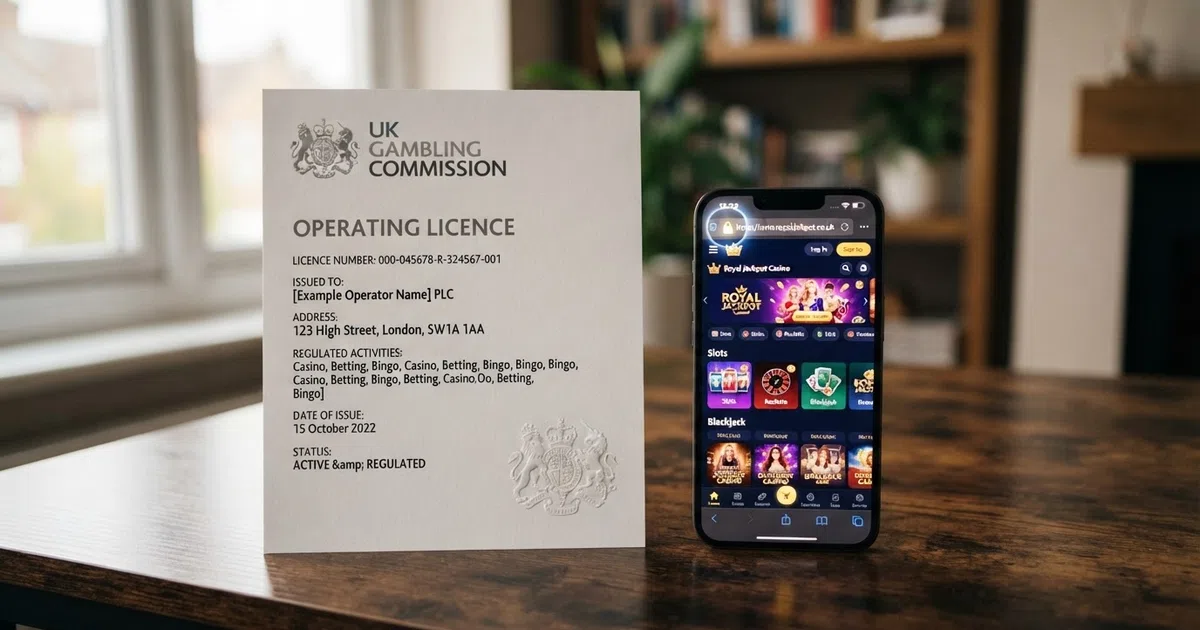
This page ranks ten GB-licensed operators against that trust floor. Every brand listed holds an active UKGC licence; the differences between them sit in the welcome offer, the wagering terms and the game-provider depth. Where a brand sits on the list reflects how cleanly the offer reads against the post-2025 rules, not the size of the headline number.
Data current as of 9 September 2026, verified against the Gambling Commission’s public register.
What Makes an Online Casino Truly Trustworthy in the UK
Trustworthy, in the UK online-gambling sense, is a defined term rather than a marketing one. Four pillars are non-negotiable. Drop any one and the operator falls outside what the regulator itself treats as safe.
The first pillar is the licence. The Gambling Commission is the single statutory regulator for Great Britain, sponsored by the Department for Culture, Media and Sport, and it administers the Gambling Act 2005 through the Licence Conditions and Codes of Practice and the Remote Technical Standards. The public register is searchable by standard identifying details, including company name, trading name, or specific account number. Any operator serving GB customers at the point of consumption needs a GB licence — point-of-consumption licensing has applied since 2014 — and an MGA, Gibraltar or Curaçao licence is not a substitute.
The second pillar is randomness. RTS 7 requires that RNG outputs be demonstrably random to a high degree of confidence using generally accepted statistical tests, and it bans adaptive or compensated game behaviour — a game cannot tighten payouts because a player has been winning. Testing bodies like eCOGRA, iTech Labs, and a testing laboratory (Gaming Labs International) run those tests… and the difference between a casino that claims fair games and one that proves fair games is the difference between marketing copy and a certification.
The third pillar is identity. Since 7 May 2019, age and identity verification is mandatory before any deposit, gambling or bonus — including free-to-play offers. The pre-2019 72-hour grace period no longer exists. A licensed GB site is, by design, anonymous play’s opposite: every account is tied to a verified name, address and date of birth.
The fourth pillar is the design of the games themselves. Five game-design rules have applied since 31 October 2021: auto-play is banned, spin speed may not exceed 2.5 seconds per game cycle, features that speed up play are banned, losses disguised as wins are banned, and reverse withdrawals are permanently banned. Add the age-banded stake cap from 2025 (£5 for players aged 25 and over; £2 for 18–24) and the 10× wagering cap from December 2025, and the slot experience a GB-licensed casino is allowed to offer has narrowed considerably. Casino.org’s UK review desk puts the proposition flatly: “We only recommend casinos licensed by the UK Gambling Commission — meaning they operate within the safety framework the regulator demands.”
Regulation and Safety Features
| Protection | Regulatory Requirement | Impact |
|---|---|---|
| Licence | Gambling Commission | Statutory UKGC oversight |
| Wagering | 10× cap (bonus funds) | Prevents runaway requirements |
| Stake | £2–£5 age-banded cap | Limits loss per cycle |
| Exclusion | GAMSTOP integration | Universal self-exclusion |
| Deposit Prompt | Mandatory financial limit | Pre-deposit safety check |
A UKGC licence is the single most important check. The Gambling Act 2005 sets three licensing objectives: preventing gambling from being a source of crime or disorder, ensuring gambling is conducted in a fair and open way, and protecting children and other vulnerable persons from harm or exploitation. Every licence condition and code of practice flows back to one of those three.
Since the Gambling (Licensing and Advertising) Act 2014, point-of-consumption licensing has applied. The Act’s effect is mechanical: a casino holding a Curaçao or Malta licence but serving GB customers without a GB licence is operating unlawfully in Great Britain, irrespective of where it is incorporated. The Commission’s public register is the definitive yes/no — searchable by business name, trading name, domain name or account number, and free to use. A brand is either on it or it is not.
Independent Testing — How RNG Fairness Is Actually Verified
A casino that claims “fair games” without naming a testing laboratory is asking the player to take the claim on faith. Testing bodies such as eCOGRA or a testing laboratory (Gaming Labs International) are the industry standard for audit verification. RTS 7 is the technical standard the Commission sets, and it does two things at once: it requires randomness to a high degree of confidence, and it forbids the adaptive or compensated behaviour that some legacy slots used to deploy.
The distinction matters more than it looks. A casino that has paid an accredited lab to test its RNG has had its outputs measured against statistical expectations on a defined sample. A casino that has not has its own word. Casino.org’s review desk states the proposition in plain terms: “We only recommend casinos licensed by the UK Gambling Commission — meaning they operate within the safety framework the regulator demands.” A UKGC licence guarantees strict player protection, covering everything from fair gaming and secure payments to identity checks, data security, and responsible gambling tools. A licence is the foundation; the testing lab is the proof the foundation actually holds weight.
Security, ID Checks and Your Money — The Non-Negotiables
Since 7 May 2019, the regulator has closed the door on anonymous play. Every licensed GB casino must verify a customer’s name, address and date of birth before any deposit, gambling or bonus — the pre-2019 72-hour grace period no longer exists. SSL/TLS encryption is the industry baseline for data in transit; the bigger security shift has been on the payments side.
Credit cards have been banned for all remote gambling since 14 April 2020 under LCCP licence condition 6.1.2, and the ban extends to credit-card-funded e-wallet payments — Skrill, Neteller, PayPal cannot launder a credit card into a gambling account. The mechanism matters: it cuts off the credit-funded loss spiral that produces the worst harm outcomes, and it forces deposits through debit rails where the customer is spending money they already hold. The Money Laundering Regulations apply at higher spend levels, which means even at a licensed casino the identity trail is long before the bet is placed.
The Rules That Keep UK Slots Honest
Two waves of design rules have reshaped what a UK slot may do. The first wave landed on 31 October 2021 and banned auto-play, capped spin speed at 2.5 seconds, banned features that speed up play, banned losses disguised as wins, and banned reverse withdrawals permanently. The second wave is more recent.
SI 2025/215 imposed an age-banded maximum stake per game cycle: £5 for players aged 25 and over (in force 9 April 2025) and £2 for players aged 18 to 24 (in force 21 May 2025). A game cycle is the period from initiation to when all money staked is lost or all winnings delivered; the cap applies to total staked within that cycle. From 19 December 2025, LCCP Social Responsibility Code 5.1.1 imposed a 10× hard ceiling on wagering requirements and banned mixed-product promotional offers. From 31 October 2025, every operator must prompt the customer to set a financial limit before the first deposit; a standardised gross deposit limit under RTS 12 follows on 30 September 2026.
These rules take options off the table. A UK slot cannot auto-spin, cannot reverse a withdrawal, cannot dangle a near-miss as a win, and cannot demand 60× playthrough on a bonus. The result is a slot product that is, by legal design, narrower than what the offshore market offers.
The 10 UK Casinos We Rate Most Trustworthy in 2026
All ten operators hold an active UKGC licence and have been checked against the public register. The table ranks them on the trust criteria that distinguish one licensed casino from another — wagering transparency, deposit trigger, game-provider depth and the post-2025 alignment of the welcome offer. Bonus size alone is a poor sort key, because the post-December 2025 10× wagering cap has reset what a clean offer looks like. Two offers with the same headline number can sit on opposite sides of the cap depending on how the wagering is structured.
| Operator | UKGC Licence | Welcome Offer | Wagering on Bonus | Game Providers (count) |
|---|---|---|---|---|
| bet365 | GB-licensed (39563) | Up to 500 free spins | Standard post-cap terms apply | 9 |
| Sky Vegas | GB-licensed (Flutter) | 200 free spins | 0× | 8 |
| William Hill | GB-licensed (evoke/888) | 200 free spins on Big Bass Splash | 10× | 8 |
| 888 Casino | GB-licensed (evoke) | 100% deposit match up to £100 | 10× | 8 |
| Ladbrokes | GB-licensed (Entain) | 100 free spins | 10× | 8 |
| Paddy Power | GB-licensed (Flutter) | 60 no-deposit + 100 deposit spins | 0× | 8 |
| Coral | GB-licensed (Entain) | 100 free spins + £10 bonus | 0× spins / 10× bonus | 8 |
| Betfair | GB-licensed (Flutter) | 50 no-deposit + 100 deposit spins | 0× | 8 |
| 32Red | GB-licensed (Kindred) | 320 free spins on Big Bass Splash | 10× | 7 |
| Virgin Games | GB-licensed (Gamesys/Bally’s) | 30 free spins on Double Bubble | 0× | 7 |
The wagering column splits cleanly into two camps. The Flutter and Gamesys brands sit at 0× on their spin offers, which means any winnings are withdrawable immediately. The evoke and Entain brands apply the post-cap 10× multiple, which means free-spin winnings must be wagered once before withdrawal. Both sit comfortably under the December 2025 ceiling — the previous norm of 40× or 60× on bonus funds has gone.
The provider-count column tells a quieter story. Nine providers at bet365 spans NetEnt, Microgaming, Playtech, Pragmatic Play, Play’n GO, Evolution, IGT, Red Tiger and Blueprint — the widest stack of independently audited studios on this list. Seven providers at Virgin Games covers Gamesys’s in-house studio alongside NetEnt, Evolution, Pragmatic Play, IGT, Red Tiger and Blueprint. The midpoint is a stack large enough that no single studio outage changes the playable catalogue.
A note on the calculation behind the comparison. Expected loss is the statistical cost of clearing a bonus at the slots it funds, computed as required turnover multiplied by one minus the slot’s RTP. For the 888 Casino offer at the maximum bonus (£100 matched at 100%, with 10× wagering) played on a slot with the published Big Bass Splash RTP of 96.71%, the expected loss over the clearing play is £32.90. That figure is the bonus’s real cost — the value the player gives up to extract the bonus balance — under the assumption that only the bonus amount is wagered. As an estimate over many spins, it carries no guarantee for any single session.
bet365 — 500 Free Spins From the UK’s Biggest Operator
bet365 holds UKGC account number 39563 and operates the widest game-provider stack on this list — nine studios from NetEnt and Microgaming through Playtech, Pragmatic Play, Play’n GO, Evolution, IGT, Red Tiger and Blueprint. The welcome offer awards up to 500 free spins across ten selections (Book of Horus, Curse of the Bayou, Magic Forge, Wrath of the Deep among them) when the customer has built up a minimum of £10 in lifetime deposits. Selections happen at 24-hour intervals within a 30-day claim window from registration, so the full 500 are reachable within the 20-day selection window.
The trust reading is straightforward. bet365 is the largest UK gambling brand by handle and one of the longest-established GB-licensed operators. Standard post-cap wagering applies to free-spin winnings, which sits inside the December 2025 ceiling. The deposit trigger is token-low at £10 lifetime deposits rather than a single fresh deposit, which softens the entry condition for a player returning to the brand. The provider depth is the standout: a stack of nine independently audited studios is the most extensive on this page, and it is the closest a player gets to a one-stop catalogue without leaving the GB-licensed list.
Sky Vegas — Zero Wagering on Every Free Spin Win
Sky Vegas is one of the Flutter Entertainment brands operating under a GB licence, and its welcome offer is the cleanest no-wager structure on this list: 200 free spins loaded on the first eligible game after the customer has deposited and staked £10 within 30 days of registration, with 0× wagering on the winnings. Spins expire 7 days after credit.
The Flutter group covers Sky Vegas, Paddy Power and Betfair on this page, and each of them leans on the 0× wagering structure as the trust-signal differentiator. The underlying arithmetic makes the difference legible: a free spin with 10× wagering forces the player to wager the winnings ten times before they become withdrawable cash; a free spin with 0× wagering pays out as cash the moment the spin settles. The former can lose value to variance on the playthrough; the latter cannot. Eight game providers sit under the licence — NetEnt, Playtech, IGT, Blueprint, Evolution, Pragmatic Play, Red Tiger and Big Time Gaming — which is one shy of bet365 and one ahead of the seven-provider floor at 32Red and Virgin Games.
William Hill — 200 Spins With Full RTP Transparency
William Hill is the only operator on this list that publishes the RTP of its bonus slot in the same sentence as the offer: 200 free spins at £0.10 each on Big Bass Splash, with a stated default RTP of 96.71% and operator-configurable alternatives at 95.67% and 94.60%. The trigger is a £10 deposit and stake, wagering on free-spin winnings is 10×, spins expire 72 hours from credit, and the offer runs until 31 December 2026. The evoke/888 Holdings group provides the licence.
That RTP transparency is what sets William Hill apart on this page. The Big Bass Splash default at 96.71% is the figure research surfaced, and it is materially higher than the 94–95% floor many older UK slots were configured at. A reader who wants to know the expected loss on the bonus wagering can read it off the published number: turnover of the bonus multiplied by (1 − 0.9671) is the statistical cost. Eight major providers — NetEnt, Playtech, Evolution, Pragmatic Play, IGT, Blueprint, Red Tiger and Microgaming — round out the catalogue.
888 Casino — The Only 100% Deposit Match on This List
888 Casino is the only operator here running a pure deposit match rather than a free-spin welcome. The headline offer is a 100% match up to £100 on the first deposit, with no free spins attached. Wagering is 10× on the bonus funds on selected Slots within 90 days of credit, and the offer must be claimed within 48 hours of the deposit. The minimum first-time deposit is £10. The evoke group provides the licence.
The 10× cap matters here in a way it does not on the spin offers. On a free-spin offer, the bonus is the spin winnings — small and bounded. On a deposit match, the bonus is £100 of operator funds sitting on top of a £100 deposit, and the £1,000 of required turnover is the work the player has to do before withdrawal. At 96.71% RTP — the figure research surfaced for the same Big Bass Splash game that other operators use — the expected loss on that £1,000 of turnover is £32.90, which is the bonus’s statistical cost under the assumption that only the bonus amount is wagered. Eight game studios — NetEnt, Evolution, Playtech, Pragmatic Play, Red Tiger, Blueprint, Microgaming and Play’n GO — ensure 888 Casino remains highly competitive in game depth.
Ladbrokes — 100 Free Spins at a High-Street Stalwart
Ladbrokes sits under the Entain group alongside Coral, with a 100-free-spin welcome worth £0.10 each on Big Bass Bonanza (or a rotating featured slot) after a £10 deposit and spend on slots. Wagering on the spin winnings is 10×, the claim window is 48 hours from credit and the spin validity is 7 days. A separate £50 casino bonus offer runs alongside it, and Racing Post has surfaced legacy 40× terms on that bonus — a number from before the December 2025 cap that the writer flags because it sits above the current ceiling.
Eight providers — NetEnt, Evolution, Playtech, Pragmatic Play, IGT, Blueprint, Red Tiger and Microgaming — form the catalogue. The trust read is mixed: the spin offer is post-cap clean; the separate £50 bonus carries terms that pre-date the cap and a reader comparing offers needs to know both numbers exist. The 40× figure on the £50 bonus is the kind of historical condition that has been displaced by the LCCP SR Code 5.1.1 ceiling — it is the shape of the world the cap has ended rather than the shape of the world the player now meets.
Paddy Power — 60 Spins With No Deposit Needed
Paddy Power is the only operator on this page running a genuinely no-deposit entry point alongside a deposit-triggered offer: 60 free spins awarded without any deposit requirement, then 100 additional spins on a £10 deposit and spend, totalling up to 160. Wagering is 0× on all spin winnings. The spins expire 7 days from credit and run on rotating eligible slots. The Flutter group provides the licence.
The no-deposit structure is unusual in the GB-licensed market and it is the trust differentiator for this brand. A no-deposit offer costs the operator the spin value upfront and exposes the player to the bonus only — no deposit, no wagering, no exposure beyond the offer’s own envelope. The £10 deposit-and-spend trigger for the additional 100 spins mirrors the Sky Vegas and Betfair structure, and the eight-provider roster (NetEnt, Playtech, Evolution, Pragmatic Play, IGT, Blueprint, Red Tiger, Big Time Gaming) is the standard Flutter eight.
Coral — Free Spins and a Cash Bonus, Both With Low Barriers
Coral runs the cleanest two-component welcome on this page: 100 free spins at £0.10 each plus a £10 casino bonus after a £10 deposit and wager on slots. Wagering is 0× on the spin winnings and 10× on the £10 bonus. The acceptance window is 48 hours, spins are valid for 7 days and the bonus is valid for 30 days. The Entain group provides the licence.
The £10 bonus with 10× wagering means a player has to wager £100 of bonus funds before the £10 becomes withdrawable. At a 96.71% RTP — the Big Bass Splash figure research surfaced — the expected loss on that £100 of turnover is £3.29. That is the bonus’s real cost under the assumption that only the bonus amount is wagered, and it is small enough that the £10 bonus functions more as a low-stakes trial than as a meaningful bankroll top-up. The game roster — NetEnt, Evolution, Playtech, Pragmatic Play, IGT, Blueprint, Red Tiger and Microgaming — provides a solid foundation for the casino’s core offerings.
Betfair — 50 No-Deposit Spins on Jackpot King Slots
Betfair runs the same Flutter no-deposit-plus-deposit structure as Paddy Power, on a Jackpot King catalogue: 50 free spins with no deposit required plus 100 additional spins on a £10 deposit and play. Wagering is 0× throughout. Spins are valid on Crabbin’ For Cash Extra Big Catch Jackpot King and selected Jackpot King titles, and the spin value is £0.10. Spins expire 7 days from credit.
The Playtech Origins provider entry in Betfair’s eight — NetEnt, Playtech, Evolution, Pragmatic Play, IGT, Blueprint, Red Tiger and Playtech Origins — is the line that distinguishes Betfair from the other Flutter brands on this page. Jackpot King is Playtech’s progressive jackpot network, and it gives Betfair a distinctive slot family within the Flutter catalogue. The trust read is the same as Paddy Power and Sky Vegas: clean 0× wagering, low deposit trigger, GB-licensed under a long-established group.
32Red — 320 Free Spins, the Biggest Spin Count Here
32Red holds a Kindred Group GB licence and runs the largest spin count on this page: 320 free spins at £0.10 each on Big Bass Splash, after a £30 deposit and stake on slots. The default Big Bass Splash RTP is 96.71%. Wagering on free-spin winnings is 10× per the FPLBET surfaced figure, which aligns with the December 2025 cap — though 32Red’s own site states 0× on the offer, and the writer flags that discrepancy so the reader sees the conflict. The spins must be claimed within 7 days of registration and expire 48 hours after claim.
The seven-provider roster is the smallest count on this page, and it shapes the catalogue. Microgaming, NetEnt, Evolution, Pragmatic Play, IGT, Red Tiger and Blueprint cover the main UK slot families, but the absence of Playtech or Big Time Gaming means 32Red’s progressive and mechanic-heavy libraries are narrower than the Flutter and evoke brands. The trade-off reads as scale-for-variety: more spins on a narrower set versus fewer spins on a wider one.
Virgin Games — 30 No-Wagering Spins on Double Bubble
Virgin Games closes the list with the smallest spin count and the longest expiry. The offer is 30 free spins on Double Bubble after a £10 deposit and play, with 0× wagering on both the free spins and the alternative £50 in bingo tickets. Spins expire 30 days from credit — the longest validity window on this page.
The Gamesys/Bally’s licence and the in-house Gamesys studio give Virgin Games a stack of seven providers — Gamesys, NetEnt, Evolution, Pragmatic Play, IGT, Red Tiger and Blueprint — that runs one provider short of the eight-provider Flutter and evoke brands and matches 32Red’s seven. The trust reading is that Virgin Games is the cleanest no-wager, longest-expiry offer on the list, with the smallest spin count and a narrower catalogue. The player choosing Virgin Games is choosing expiry length and zero playthrough over headline spin count.
UK Gambling Law — Your Protections in Black and White
The UK’s regulatory infrastructure is statute first, codes second. The Gambling Act 2005 sets the framework; the Gambling Commission administers it; the LCCP and RTS carry the operational detail. Three licensing objectives sit at the top of the framework: preventing gambling from being a source of crime or disorder, ensuring gambling is conducted in a fair and open way, and protecting children and other vulnerable persons from harm or exploitation.

Enforcement runs through the Commission rather than the courts. Between April 2024 and June 2025, the Commission issued 3,140 disruption notices, referred 447,778 URLs to search engines and saw 287,961 URLs removed, with an average 32% fall in engagement across 160 disrupted sites. The mechanism is disruption rather than blocking: cease-and-desist notices, delisting referrals, payment-provider pressure and registrar/host engagement. Legislation for statutory ISP/DNS blocking has been proposed but not enacted, and the Commission does not currently hold those powers.
GAMSTOP is the self-exclusion layer every GB online licence must carry. It has been mandatory since 31 March 2020, and exclusion periods run six months, one year, five years, or five years with auto-renewal. Exclusion cannot be cancelled early, and at expiry the registration continues for up to seven further years unless the person contacts GAMSTOP to opt back in. GAMSTOP covers GB-licensed sites only — it has no reach over unlicensed operators, which is why it sits at the centre of every discussion of offshore play.
The Gambling Act 2005 — Three Objectives, One Regulator
The Gambling Commission is an executive non-departmental public body sponsored by DCMS. The Gambling Act 2005 sets the three licensing objectives, and the 2014 Act extended them to remote operators through point-of-consumption licensing. Day-to-day obligations sit in the Licence Conditions and Codes of Practice and the Remote Technical Standards; both are updated as the Commission tightens or loosens the rules. Britain cites sections of an Act and codes, not symbols — and the framework applies to Great Britain (England, Scotland and Wales) but not to Northern Ireland, which runs on separate, older law.
The register is the verification route. The public register is searchable by identifying details like the trading or registered business name. A brand is either on it or it is not, and the Commission’s own compliance action targets unlicensed operators advertising to GB customers regardless of where the operator is incorporated.
GAMSTOP — Self-Exclusion That Cannot Be Cancelled Early
GAMSTOP became a mandatory condition of every UKGC online operating licence on 31 March 2020. The four exclusion periods — six months, one year, five years, or five years with auto-renewal — are the only options, and none can be cancelled early. The rule that the exclusion continues for up to seven further years after expiry unless the person actively contacts GAMSTOP matters because it prevents the silent switch-off pattern that some self-exclusion schemes historically allowed.
GAMSTOP’s reach is licence-bound. It covers every GB-licensed online operator and no others. A player who has self-excluded and then opens an account at an offshore casino that does not carry a UKGC licence has stepped outside the scheme. The next subsection sets out what that step costs.
Casinos Outside GAMSTOP — What You Actually Risk
A GB licence is compulsory at the point of consumption. A Malta, Gibraltar or Curaçao licence is not a substitute for serving GB customers, and the operator side of an unlicensed casino commits a criminal offence under section 33 of the Gambling Act 2005 — up to 51 weeks’ imprisonment, an unlimited fine, or both. The player side carries no criminal penalty. What the player loses is the entire layer of protection a GB licence provides: no GAMSTOP coverage, no ADR route, no complaint mechanism, no statutory redress if funds are withheld.
The Commission’s enforcement record is real. Between April 2024 and June 2025, 3,140 disruption notices went out, 447,778 URLs were referred to search engines, and 287,961 URLs were removed. The average engagement fall across 160 disrupted sites was 32%. Those numbers describe the pressure on unlicensed operators, not the experience of a player who has already deposited at one. Once funds are at an unlicensed site, the protection layer is gone and recovery is not guaranteed.
Why the UK’s Safer Gambling Tools Are Tougher Than Most Players Realise
The safer-gambling layer at a GB-licensed casino is not the customer choosing to set a deposit limit. It is the regulator requiring that the prompt to set one come up before the customer can deposit at all. From 31 October 2025, every operator must prompt the customer to set a financial limit before the first deposit. From 30 September 2026, the standardised gross deposit limit under RTS 12 becomes the only form that can be called a “deposit limit”. Reality checks, time-outs and deposit limits have been mandatory account-level tools for years, and financial vulnerability checks under LCCP 3.4.4 became mandatory on 28 February 2025 at a £150 net deposit threshold in a rolling 30-day period, using only public data — CCJs, IVAs, DROs and bankruptcy orders.
Behind those tools sits a statutory funding mechanism. From 6 April 2025, the statutory levy replaced voluntary contributions at 1.1% of gross gambling yield for remote casino licences, with a 50/30/20 split across treatment, prevention and research. The levy funds GamCare, GambleAware and the National Gambling Support Network directly, and the help outcomes — over 52,000 calls to the National Gambling Helpline in 2024/25, with nine in 10 treatment completions seeing improvement — are the measurable output of that funding.
The prevalence figure frames why the tools matter. The GSGB Wave 4 (September 2025 to January 2026) found 47% of adults had gambled in the past four weeks and 37% had gambled online. GambleAware’s 2024 Annual Treatment and Support Survey classified 13.1% of adults who gamble — approximately 6.8 million GB adults — as experiencing some level of gambling problem (PGSI 1+). The help infrastructure exists because the demand for it is documented at scale.
Mandatory Tools — Deposit Limits, Reality Checks and Financial Safeguards
The October 2025 financial-limit prompt is the most visible shift. Before 31 October 2025, a customer could deposit without ever being asked to set a limit; from that date, the prompt arrives in the deposit flow itself. The standardised gross deposit limit follows on 30 September 2026 under RTS 12, and from then only that form can be marketed as a “deposit limit”. Reality checks and time-outs have been mandatory at the account level for years — they are not new — but the financial-limit prompt changes the entry condition rather than the operating condition.
Financial vulnerability checks under LCCP 3.4.4 are the second shift. From 28 February 2025, operators must run a vulnerability check at £150 net deposits in a rolling 30-day period, using publicly available data only — CCJs, IVAs, DROs and bankruptcy orders. The check is not a credit check, and it runs only on data the operator can pull from public registers. Financial risk assessments — the more detailed affordability checks that were piloted and found 97% completion frictionlessly — were confirmed on 7 July 2026 for a staged rollout, with Stage 1 thresholds of £5,000 net deposits in 24 hours (25+) and £2,500 (under 25), and final thresholds of £1,000 to £3,000 (25+) and £750 to £2,000 (under 25). The start date for financial risk assessments remains to be confirmed via consultation.
Where to Get Help — Helplines, Clinics and Real Outcomes
The National Gambling Helpline (0808 8020 133) is free, confidential and 24/7, and is operated by GamCare. GamCare also runs online chat and counselling services. GambleAware hosts self-assessment tools and treatment referral at begambleaware.org. NHS gambling harm clinics operate in England, Scotland and Wales. GAMSTOP registration at gamstop.co.uk is the self-exclusion route for every GB-licensed online operator.
The treatment outcome data sits behind those services. Over 52,000 calls were made to the National Gambling Helpline in 2024/25, and among those who completed treatment through the National Gambling Support Network, nine in 10 saw improvement. The prevalence figure gives the demand side: 13.1% of adults who gamble — approximately 6.8 million GB adults — experience some level of gambling problem, per the PGSI 1+ classification. Help exists because the data justifies it.
How We Chose the Most Trustworthy Casinos on This Page
Every operator on this page was checked against the Gambling Commission’s public register of gambling businesses — the same register any member of the public can search by business name, trading name, domain name or account number. A brand that does not appear on the register is not GB-licensed, and a non-GB-licensed brand is not eligible for this ranking regardless of its other features.
The trust criteria applied to each operator are: UKGC licence status (the primary filter), independent testing-body certification (the proof behind the licence’s RNG requirements), game-provider roster depth (a proxy for independently audited game variety, since each provider on the list carries its own certifications), responsible-gambling tool availability (the mandatory LCCP and RTS layers), and bonus transparency — wagering multiple stated explicitly, validity window stated explicitly, deposit trigger stated explicitly. Where research surfaced a wagering discrepancy — for example, 32Red’s 10× figure from one source versus 0× from another — the discrepancy is flagged rather than silently picked.
The sources drawn on are the Gambling Commission’s own publications, operator websites, the LCCP and RTS, and established industry-review datasets. No brand has been ranked by bonus size alone. No brand has been ranked by reader popularity alone. The trust criteria are the only sort key.
What This Means for Your Next Casino Choice
A GB-licensed casino in 2026 is safer by design than at any previous point in the UK market’s history. The design layer is statute: a Gambling Act 2005 framework, a Commission that administers it, an LCCP and RTS that carry the operational detail, and a public register that lets any player verify a licence in seconds. The post-2025 design layer is what the regulator has added on top: an age-banded stake cap, a 10× wagering ceiling, a mandatory deposit-limit prompt, financial vulnerability checks at a £150 threshold, and a statutory levy funding treatment, prevention and research at 1.1% of gross gambling yield.
The reader’s checklist is short. Confirm the brand appears on the Gambling Commission public register. Confirm independent testing certification (eCOGRA, iTech Labs, Gaming Labs International or equivalent). Read the wagering terms — the 10× cap means they will be simpler than the historical 40× or 60× offers that still circulate in legacy material. Verify GAMSTOP integration is on the site. Look for the mandatory safer-gambling tools. Each of these checks is free, public and takes minutes.
A GB-licensed casino is not a safer casino because the operator promises it is. It is a safer casino because the regulator requires it and the audit infrastructure verifies it. The next step is the player’s own — running the checks rather than trusting the brand’s claim.
Frequently Asked Questions
How do I check if a casino is licensed on the Gambling Commission register?
Search the public register at the Gambling Commission’s website by business name, trading name, domain name or account number. The register contains 2,663 records and is free to use. A brand that does not appear on the register is not GB-licensed and is not eligible for the trust framework this page applies.
Do I pay tax on gambling winnings in the UK?
No. UK player-side gambling duty was abolished in 2001. Winnings sit outside income tax and capital gains tax for the player. Operators pay Remote Gaming Duty, which rose from 21% to 40% on 1 April 2026, but that is the operator’s tax, not the player’s.
What happens if I play at an unlicensed casino from the UK?
The player commits no criminal offence. Every sanction under section 33 of the Gambling Act 2005 targets operators, advertisers and intermediaries — not the player. What the player loses is the entire protection layer a GB licence provides: no GAMSTOP coverage, no ADR route, no complaints mechanism, no statutory redress if funds are withheld.
Can an MGA-licensed casino legally accept UK players?
No. Point-of-consumption licensing has applied since the 2014 Act, and a GB licence is compulsory for any operator serving GB customers. A Malta, Gibraltar or Curaçao licence does not substitute. An MGA-licensed casino accepting GB players without a GB licence is operating unlawfully in Great Britain, irrespective of its Maltese status.
What is the 10× wagering cap and when did it come into effect?
LCCP Social Responsibility Code 5.1.1 imposed a 10× hard ceiling on wagering requirements from 19 December 2025. Before the cap, offers with requirements as high as 60× were being applied. The cap applies to bonus funds and covers all GB-licensed operators.
What responsible gambling tools must UK casinos offer by law?
Mandatory account-level tools include deposit limits, reality checks and time-outs. From 31 October 2025, every operator must prompt customers to set a financial limit before their first deposit; from 28 February 2025, financial vulnerability checks have been mandatory at a £150 net deposit threshold in a rolling 30-day period. GAMSTOP has been mandatory since 31 March 2020.
What About Crypto and Offshore Casinos?
Bitcoin casinos occupy a regulatory gap the UKGC has not licensed into. No GB-licensed casino currently accepts cryptocurrency as a primary payment rail, and no crypto-specific GB regulation exists. The trade-off is direct: a crypto casino offers a payment rail that does not run through UK-issued debit instruments, and in exchange the player gives up GAMSTOP coverage, ADR access, complaint routes and the redress mechanism that a GB licence provides if funds are withheld. Crypto anonymity is the feature on offer; UKGC protection is the price.
That is not a recommendation either way. It is the shape of the trade-off the player makes when stepping off the GB-licensed list. The next section covers what the enforcement record looks like for that step.
Casinos – topratedonlinecasinos-uk
Content created by the «topratedonlinecasinos-uk» team