
Ten Pound Minimum Deposit Casinos in the UK
 Available in GB
Current as of 9 September 2026 · Verified against the UK Gambling Commission’s public register of remote operating licence holders
Frequently Asked Questions
What is the minimum age to gamble at a £10 deposit casino in the UK?
The minimum age to gamble at any UK-licensed casino is 18. However, age-based online slots stake caps, introduced in 2025, differentiate between players aged 18 to 24 and those 25 and over. Ensure you verify your identity with the operator before you attempt to make your first deposit.
Do £10 deposit casino bonuses have wagering requirements?
Not necessarily. While some operators apply wagering requirements, the post-2025 regulatory cap limits them to 10×. Many casinos in the UK market have moved to zero-wagering policies, meaning your winnings from free spins are paid out as cash immediately, with no need to play through your bonus before withdrawal.
Can I use PayPal to deposit £10 at an online casino?
Yes, PayPal is widely accepted at most £10 minimum deposit casinos in the UK. It is a popular, fast, and secure payment method. Before depositing, always check the operator’s terms and conditions, as some casinos may exclude certain e-wallet deposits from triggering their welcome bonus or promotional offers.
Can I play at £10 minimum deposit casinos on my mobile phone?
Absolutely. Every UK-licensed online casino is built on responsive technology, allowing you to play directly through your mobile browser without downloading an app. The gaming experience, welcome bonuses, and account features remain consistent across desktop and mobile devices, and the same deposit and stake rules apply universally.
What payment methods can I use to deposit £10 at an online casino?
You have several options beyond debit cards, including PayPal, Apple Pay, Google Pay, and bank transfers. Some operators also support pay-by-mobile services like PayViaPhone or Boku, which charge your phone bill. Always confirm the available methods on the site before signing up to ensure they meet your preferences.

A £10 minimum deposit sits at the floor of the UK online casino market. Nothing genuinely goes lower right now — every UKGC-licensed operator has settled on this threshold or higher, and the economics of the post-2025 market make a sub-£10 entry point commercially unworkable. That is not a guess; it is what the published deposit minimums across the licensed market show, and it shapes every comparison on this page. Nine of the ten operators reviewed below give you free spins with zero wagering on the winnings, and eight of the ten cap nothing on what you can cash out. The tenth, Ladbrokes, is the only one that asks you to roll your bonus ten times before withdrawing. That ten times is no accident either: it is the exact ceiling the UK Gambling Commission imposed from 19 December 2025, and it has changed what a £10 deposit is worth in a way no affiliate review has caught up to.
The regulatory overhaul of late 2025 — stake caps in April and May, the wagering ceiling in December, the financial vulnerability check earlier that year — has compressed the gap between the cheap-deposit end of the market and the expensive end. A £10 deposit unlocks the same UKGC protections, the same identity checks, the same GAMSTOP coverage, and broadly the same free-spin welcome offers as a £100 deposit at the same operator. What it does not unlock is the ability to play table games at serious stakes, or to grind through a high-wagering bonus without running out of money. The arithmetic is what it is: at the standard £0.10 free-spin value, £10 buys you 100 spins on a slot with a 96.71% return-to-player. That is enough play to feel the game out, and not enough to chase a meaningful return.
Why £10 Is the Floor — and Why That Matters
Three forces keep £10 as the effective minimum. The first is compliance: a UKGC-licensed operator must verify identity (name, address, date of birth) before accepting a single deposit, run GAMSTOP checks, and from 31 October 2025 prompt every customer to set a financial limit before their first deposit. Those steps have a fixed cost per customer, and a £5 deposit does not cover them. The second is the tax regime: Remote Gaming Duty rose from 21% to 40% on 1 April 2026, and the statutory levy added another 1.1% of gross gambling yield from 6 April 2025, split across treatment, prevention and research. Together that is a 41.1% effective tax on operator gross yield before a single bonus pound is paid. A £5 deposit would need to clear that tax, the payment-processing fee, the identity-verification cost, and still leave the operator enough margin to offer a welcome bonus. The third is the bonus structure: a free-spin welcome offer is the standard acquisition tool, and at the typical £0.10 spin value, anything below ten spins is not worth the marketing spend to advertise.
Higher-deposit casinos exist, of course, and they offer their own welcome packages — matched deposit bonuses, larger free-spin counts, and occasionally cashback on first-week losses. But the move from £10 to £20 or £50 rarely unlocks a fundamentally different offer. What changes is the size of the free-spin bundle, and whether the operator can absorb the cost of a more generous match. At the £10 tier, free spins with zero wagering have become the default because they cost the operator less, convert better, and satisfy the Commission’s new rules on bonus transparency.
The practical consequence is that £10 is the lowest barrier to entry for a UK player who wants a licensed, regulated casino experience. Anyone advertising a £5 or £1 minimum deposit at a “UK casino” is either running a non-licensed operation or running a licensed one with a hidden catch — a verification fee, a minimum withdrawal that exceeds the deposit, or bonus terms that make the deposit worthless until further funds are added. The £10 floor is not a marketing line; it is the outcome of the economics of compliance and taxation in the current market.
What You Can (and Cannot) Play With a £10 Deposit
A £10 deposit buys entry to a UKGC-licensed casino, not a long session on the games that define high-stakes play. Live-dealer tables have minimum bets that start at £0.50 and climb to £5 or £10 per hand; a £10 deposit on a live blackjack table might cover a single hand at the higher limits, and the variance is severe. High-roller slots, where the maximum bet can run into hundreds of pounds per spin, are technically playable with a £10 balance but the bankroll will not survive the first losing streak. What a £10 deposit is actually for is online slots at the lower end of the stake range.
The statutory stake caps under SI 2025/215 set a maximum of £5 per game cycle for players aged 25 and over (in force from 9 April 2025) and £2 for players aged 18 to 24 (in force from 21 May 2025). At the maximum, a £10 deposit funds as few as two spins for a 25-plus player and five spins for an 18-to-24 player. At the standard free-spin value of £0.10, the same £10 funds one hundred spins for any age — the cap is on the stake, not on the number of spins. That is the whole logic of the £0.10 bonus spin: it gives the operator a headline-grabbing spin count and gives the player enough volume to feel the game out without burning through the deposit in three clicks.
Game types that are effectively ruled out at the £10 level include live-dealer tables, progressive jackpot slots with minimum bets above £1, and any game where a single round costs more than 10% of the bankroll. What a £10 budget realistically opens up is slot play at stakes between £0.01 and £1 per spin, and that is exactly the range where the free-spin welcome offers in the table below are calibrated to land.
Are £10 Minimum Deposit Casinos Safe and Legitimate?
The deposit size tells you nothing about safety. A £10 deposit at a UKGC-licensed casino and a £10 deposit at an unlicensed “not on GamStop” site are not the same transaction, even if the headline looks identical. The UKGC licence is the only meaningful indicator of player protection, and it carries a specific set of obligations that apply regardless of how much you deposit.
Every UKGC online operating licence has required GAMSTOP integration since 31 March 2020. That means if you have self-excluded through GAMSTOP, no licensed operator can accept your deposit, your registration, or your play — the system checks at the point of sign-up. Credit cards have been banned for all remote gambling since 14 April 2020 under LCCP licence condition 6.1.2, and the ban extends to credit-card-funded e-wallet deposits, so the payment methods available to you are debit cards, bank transfers, and a defined list of e-wallets and pay-by-mobile services. Identity verification — name, address, date of birth — has been mandatory before any deposit or gambling since 7 May 2019. Anonymous play is not possible at any licensed operator, and a site that claims otherwise is either unlicensed or lying.
The financial vulnerability check under LCCP SR Code 3.4.4 triggers at a net deposit threshold of £150 in a rolling 30-day period (from 28 February 2025). Below that threshold, the operator has no obligation to run a vulnerability check, which means a £10 deposit sits in a zone where the player is verified but not yet assessed for financial distress. Once cumulative net deposits cross £150 in 30 days, the operator must run a check using publicly available data — county court judgments, individual voluntary arrangements, bankruptcy orders — not income verification. The £150 trigger is not a £10-deposit concern, but a player who intends to make repeat deposits should know it exists.
A low deposit does not mean low protection. The same licence obligations, the same ADR route, the same Commission complaints process, and the same GAMSTOP coverage apply at every deposit level. The only thing the deposit size changes is how much you can lose.
The Best £10 Minimum Deposit Casinos We Reviewed — Almost Every Offer Is Wager-Free in 2026
| Casino | UKGC Licence | Welcome Offer | Free Spins | Wagering | Max Cashout | Featured Slot |
|---|---|---|---|---|---|---|
| bet365 Games | bet365 group (Stoke-on-Trent) | Up to 500 Free Spins (daily pick) | Up to 500 | 0× | No cap | Rotating eligible games |
| Ladbrokes Casino | Entain group | Bet £10, Get 100 Free Spins + 300 LadBucks | 100 | 10× | — | Big Bass Bonanza / Sweet Bonanza / Starburst |
| Sky Vegas | Flutter group (Sky Betting & Gaming) | 50 No-Deposit Spins + 200 on £10 Deposit | 250 | 0× | No cap | First eligible game loaded |
| PlayOJO | Skill on Net Ltd | 50–80 Wager-Free Free Spins | 50–80 | 0× | No cap | Big Bass Bonanza / Book of Dead |
| LeoVegas | LeoVegas Gaming plc (MGM Resorts) | 50 Wager-Free Free Spins | 50 | 0× | No cap | Big Bass Splash |
| MrQ | Lindar Media Ltd | 100 Free Spins | 100 | 0× | No cap | Big Bass Splash |
| Casushi | Dazzletag Entertainment Ltd (39358) | 100 Free Spins | 100 | 0× | £250 | Big Bass Splash |
| Betfred Casino | Petfre (Gibraltar) Ltd (39544) | 200 Free Spins | 200 | 0× | No cap | Selected titles |
| Paddy Power Games | Flutter group | 60 No-Deposit Spins + 200 on £10 Deposit | 260 | 0× | No cap | Eligible slot games |
| Virgin Games | Gamesys (Bally’s group) | 100 Free Spins | 100 | 0× | No cap | Big Bass Splash |
Nine of the ten offer zero wagering on free-spin winnings. Eight of the ten cap nothing on cashout. The two exceptions are the ones to look at first: Ladbrokes is the only operator at the regulatory 10× cap, and Casushi is the only operator with an explicit £250 maximum cashout on the welcome offer. Everything else converts free-spin winnings straight to withdrawable cash.

bet365 Games — Up to 500 Free Spins With Zero Wagering
bet365 Games runs the highest free-spin ceiling in the featured set: up to 500 spins, allocated as a random daily pick of 5, 10, 20 or 50 across a ten-day window. Every spin carries zero wagering, and there is no cashout cap on what those spins win. The 30-day claim window is generous, but each daily batch expires 24 hours after credit, so missing a day costs you that day’s allocation permanently. Each spin is valued at £0.10. Users have 30 days to claim, with a 24-hour expiry on daily batches. The operator is licensed by the UKGC under the bet365 group. The verdict: if you want the most spins and do not mind a daily login habit, this is the headline offer in the set. The expiry mechanics punish inattention, so set a reminder.
Ladbrokes Casino — Bet £10, Get 100 Free Spins + 300 LadBucks
Ladbrokes is the one operator in the table whose bonus carries wagering — 10× on the bonus, which is the exact ceiling the UKGC imposed from 19 December 2025. The welcome offer is a £10 deposit and spend on slots, after which you receive 100 free spins on selected qualifying slots (Big Bass Bonanza, Sweet Bonanza, and Starburst are among the current titles) plus 300 LadBucks, which is the operator’s loyalty currency redeemable in the Ladbrokes shop. The free spins carry the standard £0.10 value; 48 hours to accept them and 7 days to use them, with a 30-day bonus expiry. Maximum cashout from the offer is not specified in the current terms. The casino features a 2,000-title catalogue covering top developers like Playtech and NetEnt. It operates under a UKGC remote casino licence held by the Entain group. The verdict: if you prefer a loyalty program that rewards spend with redeemable currency, Ladbrokes’ LadBucks system adds value beyond the bonus. While the 10× wagering requirement is steeper than the zero-wagering alternatives, it sits at the current regulatory ceiling and provides clear terms for players seeking a structured experience.
Sky Vegas — 50 No-Deposit Spins + 200 More on a £10 Deposit
Sky Vegas splits the welcome offer in two: 50 free spins genuinely require no deposit, and 200 more spin credit on a £10 deposit and spend. All 250 spins carry zero wagering and no cashout cap, with a 7-day expiry on the full bundle. Each spin is worth £0.10, and the eligible game is whatever the first eligible title loaded into the lobby is at the time of credit. The site provides a 2,000-game library featuring titles from providers such as Pragmatic Play and Blueprint Gaming. It maintains a UKGC remote casino operating licence via the Flutter group. The verdict: 50 free spins before you spend a penny is the cleanest “try before you buy” in the set, and the 200-spin top-up matches the deposit-triggered offers at competitors. The 7-day window on both batches is tight — you need to claim and use within a week.
PlayOJO — 50–80 Wager-Free Spins and Zero Wagering Across the Board
PlayOJO’s defining feature is that zero wagering is a site-wide policy, not a welcome-offer quirk. Every bonus and every free-spin payout is paid as cash, with no cashout cap. The welcome offer runs to 50 or 80 Wager-Free Free Spins on Big Bass Bonanza or Book of Dead, depending on the current promotion, at the standard £0.10 spin value, typically with a 48-hour use window. The offer is deposit-triggered: a minimum £10 deposit and a 1× wager on eligible games unlocks the spins. The games library runs to over 2,000 titles from NetEnt, Microgaming, Pragmatic Play, Play’n GO, and Evolution. PlayOJO holds a UKGC remote casino operating licence under Skill on Net Ltd. The verdict: if you want a casino where the no-wagering promise is structural rather than promotional, PlayOJO is the one. The spin count is lower than some competitors, but the absence of any hidden playthrough on anything, ever, is the point.
LeoVegas — 50 Wager-Free Spins on Big Bass Splash
LeoVegas runs a tight 50-spin welcome on Big Bass Splash, which operates with a 96.71% RTP and zero wagering requirements. The spin value is the standard £0.10. The mechanics are deposit-triggered: a minimum £10 deposit and a 1× wager on the deposit unlocks the spins, with 7 days to complete the trigger wager and 3 days to use the spins after they are credited. The games library runs to over 3,000 titles from NetEnt, Pragmatic Play, Evolution, Play’n GO, and Microgaming — the largest in the featured set. LeoVegas holds a UKGC remote casino operating licence under LeoVegas Gaming plc, part of MGM Resorts. The verdict: 50 spins on the defining bonus slot of the £10 deposit tier, at the largest games library in the comparison. The 3-day post-credit window is the shortest use window in the set, so plan to play the spins soon after they land.
MrQ — 100 Free Spins on Big Bass Splash, Zero Wagering
MrQ offers 100 free spins on Big Bass Splash (Pragmatic Play, RTP 96.71%), with zero wagering and no cashout cap. Spins are valued at the standard industry rate, with 48 hours provided from credit to use them. The offer is deposit-triggered with a £10 minimum deposit. The operator’s catalogue includes 1,200 titles from providers like Pragmatic Play and Red Tiger. MrQ is licensed by Lindar Media Ltd. The verdict: 100 spins, no wagering, no cap, 17 minutes. The cleanest offer in the set on the slot that defines the tier. The smaller games library is the trade-off.
Casushi — 100 Free Spins on Big Bass Splash, £250 Cashout Cap
Casushi offers 100 free spins on Big Bass Splash (Pragmatic Play, RTP 96.71%), with zero wagering on the winnings, but a £250 maximum cashout. That is the only explicit cashout ceiling on a welcome offer in the featured set. Every spin carries a £0.10 value, and you have 48 hours from deposit to use them. The offer is deposit-triggered: deposit £10 and stake £10 on eligible slots. The games library runs to over 1,000 titles from Pragmatic Play, NetEnt, Microgaming, and Red Tiger. Casushi holds a UKGC remote casino operating licence under Dazzletag Entertainment Ltd (licence 39358). The verdict: the £250 cap is a distinct ceiling that separates Casushi from the uncapped offers in this set. While Big Bass Splash remains a popular choice, the potential for a capped win means players seeking maximum payout potential should review the other wager-free entries. It is a solid choice for those comfortable with the limit.
Betfred Casino — 200 Free Spins With No Wagering
Betfred runs 200 free spins on selected titles with zero wagering and no cashout cap. The spin value is the standard £0.10, and you have 7 days to use the spins once credited. The qualifying window is 14 days from registration, and the offer is deposit-triggered: a debit card deposit of £10 and a stake are required. The games library runs to over 1,500 titles from Playtech, NetEnt, Pragmatic Play, and IGT. Betfred holds a UKGC remote casino operating licence under Petfre (Gibraltar) Ltd (licence 39544). The verdict: 200 spins at zero wagering and no cap, with a two-week window to qualify. The debit-card-only trigger rules out e-wallet and pay-by-mobile depositors, so check the payment method before signing up.
Paddy Power Games — 60 No-Deposit Spins + 200 More on a £10 Deposit
Paddy Power Games runs the highest no-deposit spin count in the featured set: 60 free spins genuinely require no deposit, and 200 more spin credit on a £10 deposit via debit card or Apple Pay. All 260 spins carry zero wagering and no cashout cap, with a 7-day expiry. The spin value is the standard £0.10, and the eligible games rotate. The games library runs to over 1,500 titles from Playtech, NetEnt, Pragmatic Play, and Blueprint. Paddy Power Games holds a UKGC remote casino operating licence under the Flutter group. The verdict: 60 free spins before you pay anything, plus 200 more on deposit. The combined 260 is the largest total spin count in the set, and the 7-day window is the standard. The payment-method restriction on the deposit-triggered 200 (debit card or Apple Pay only) is narrower than the free-spin side.
Virgin Games — 100 Free Spins on Big Bass Splash at 1p Per Spin
Virgin Games offers 100 free spins on Big Bass Splash (Pragmatic Play, RTP 96.71%) at a lower spin value than the rest of the set: 1p per spin on 10 lines, which works out to £0.01 per spin, not the standard £0.10. The winnings are paid as cash with no wagering and no cashout cap, and the 30-day use window is the longest in the featured set. The offer is deposit-triggered: a minimum £10 deposit and a £10 wager on slots. The games library runs to over 1,000 titles including Gamesys exclusives, NetEnt, Pragmatic Play, and IGT. Virgin Games holds a UKGC remote casino operating licence under Gamesys, part of the Bally’s group. The verdict: 100 spins at 1p each is a different shape from 100 spins at 10p each. The effective spin cost is a tenth of the standard, so a £10 deposit funds a vastly longer play session on the same slot. The catch is that the per-spin return scales with the per-spin cost, so the absolute payout ceiling is lower. For a player who wants maximum playtime on a single deposit, this stretches further than any other offer in the table.
Why Your 2026 £10 Deposit Bonus Is Better Than It Looks
A decade ago, a £10 deposit bonus was a trap. Wagering requirements of 40×, 50×, even 60× on a small deposit meant the player had to grind through hundreds of pounds of turnover before seeing a penny of winnings, and most players never got there. The bonus was a marketing hook, and the terms were designed to ensure the operator kept the deposit. The UK Gambling Commission’s decision to cap all wagering requirements at 10× from 19 December 2025, under LCCP Social Responsibility Code 5.1.1, has ended that era. A 10× ceiling on the bonus means a £10 bonus now requires £100 of qualifying turnover before withdrawal — manageable in a single session on slots. Before the cap, that same bonus might have required £500 or £600 of turnover, which would have wiped the deposit and the bonus before the playthrough was complete.
The cap has not made every offer good. It has made the average offer fair. Nine of the ten operators reviewed above carry 0× wagering, meaning no playthrough at all — the bonus is paid as cash, the player withdraws when they choose. The tenth, Ladbrokes, operates at the 10× ceiling and is transparent about the cost. The post-2025 landscape is one where a £10 deposit plus a free-spin welcome is a genuine value exchange rather than a marketing device, and that is a structural change in what a £10 deposit is worth.
The ban on mixed-product promotional offers from the same date has tightened the bonus landscape further. An operator can no longer condition a casino bonus on the player also betting on sports or playing bingo — the offer must stand on its own. That removes a class of conditional promotions that used to lock players into products they had not asked for.
The Welcome Offers a £10 Deposit Unlocks — Free Spins, Not Cash Matches
Every featured operator structures its welcome offer around free spins, and no operator in the set runs a percentage-match cash bonus at the £10 tier. That is a deliberate market shape: free spins are cheaper to deliver, they qualify cleanly under the new wagering cap, and they map onto the slots that the operator wants to promote. The free-spin counts range from 50 (PlayOJO, LeoVegas) to 500 (bet365 Games), with spin values of £0.10 standard across the set and £0.01 at Virgin Games. Two operators — Sky Vegas and Paddy Power Games — offer genuinely deposit-free spins before any deposit, at 50 and 60 spins respectively.
The distinction between deposit-free and deposit-triggered spins is the one that matters at the point of sign-up. A deposit-free spin is yours for the cost of registration and identity verification; a deposit-triggered spin requires you to deposit and, in some cases, stake a specified amount before the spins credit. At Sky Vegas and Paddy Power Games, the no-deposit portion is genuinely free. At every other operator, the welcome spins are locked behind a £10 deposit and, in several cases, an additional £10 stake on eligible slots. The terms are clear, but the difference between “free” and “free after you spend £20” is the difference between trying a casino and committing to one.
The End of Sky-High Wagering — How the 10× Cap Changed Everything
Before the cap, a £10 deposit bonus at a typical UK casino might have carried a 35× or 50× wagering requirement, which on a £10 bonus would mean £350 or £500 of qualifying turnover before withdrawal. At an average slot RTP of 96%, that turnover would have produced an expected loss of £14 to £20, on top of the £10 deposit — the player would have lost more in expected value than they deposited, and the bonus would not have changed that. The 10× cap reduces the turnover burden to £100 for a £10 bonus, an expected loss of around £4, and the player can clear the playthrough in a fraction of the time.
In the featured set, the 10× cap is relevant only to Ladbrokes. The other nine operators have gone further and eliminated wagering entirely. The 10× ceiling is the regulatory floor, and most operators have chosen to sit well above it. The shift from 40× and 50× offers to 0× offers is the most visible change in the £10 deposit bonus market, and it is a direct consequence of the cap.
No-Deposit Spins — Free Play Before You Pay
Two operators in the set let you spin before you deposit. Sky Vegas credits 50 free spins on registration, with no deposit required, and Paddy Power Games credits 60. Both expire after 7 days, and both carry zero wagering and no cashout cap. The spins are a genuine free trial of the operator’s platform and slot catalogue, and they are the only welcome offers in the set that cost nothing to claim.
The other eight operators require a £10 deposit first, and several also require an additional £10 stake on eligible slots before the spins credit. None of those eight offers a genuinely free component. The difference is material for a player who wants to test a casino before committing funds: Sky Vegas and Paddy Power Games are the only two that let you do so.
How to Pay £10 and Get Playing — Fast
The £10 minimum deposit is supported across the full range of UKGC-licensed payment methods. Debit cards (Visa, Mastercard) are the universal fallback, with instant processing and no fees on the operator side. PayPal is available at most of the featured operators, with instant deposits and typically same-day withdrawals once verified. Apple Pay and Google Pay work at operators that support mobile-wallet deposits, with the same instant processing as debit cards. Bank transfer is available everywhere but is the slowest method, typically taking one to three working days to clear.
Pay-by-mobile services — PayViaPhone and Boku — accept a £10 minimum deposit and charge the amount to the player’s phone bill or prepaid credit. These are the only mobile-native deposit methods, and they are the closest thing to an SMS deposit in the UK market. Paysafecard, the prepaid voucher system, is accepted at several operators at the £10 level, and e-wallets Skrill and Neteller are available at most sites as well. Credit cards are banned for all remote gambling, and the ban extends to credit-card-funded e-wallet deposits — funding a Skrill account with a credit card and then depositing to a casino is not permitted under LCCP 6.1.2.
PayPal, Debit Cards and the Payment Methods That Accept £10
PayPal works at the £10 level across the featured set, and it is the fastest withdrawal method for most players — once the account is verified, PayPal withdrawals typically clear within hours, compared to one to three working days for debit cards. The trade-off is that some operators exclude PayPal deposits from welcome-offer eligibility; check the terms before depositing if the welcome offer is the reason you chose the operator.
Debit cards are the universal fallback. Every featured operator accepts Visa and Mastercard debit at the £10 minimum, and deposits land instantly. Withdrawals to a debit card take one to three working days after the operator’s internal processing, which itself can take up to 72 hours. The combined timeline is three to six days from withdrawal request to funds in the bank account.
Pay-by-mobile is the most distinctive option. PayViaPhone and Boku both accept a £10 minimum deposit, and the charge appears on the player’s monthly phone bill or is deducted from prepaid credit. Deposits are instant, but withdrawals cannot be made back to a phone bill — you need a separate withdrawal method, typically a debit card or bank account. The £10 phone-bill deposit is a one-way payment method.
How Fast Your Money Moves — Deposits and Withdrawals at Low-Stakes Casinos
Deposits at £10 minimum deposit casinos are effectively instant across all major methods. The money is in your casino balance within seconds of confirmation, and you can begin playing immediately. The bottleneck is not the deposit; it is the withdrawal, and the gap between the two is where most player frustration lives.
Withdrawal timing depends on three factors: the operator’s internal processing time (typically 24 to 72 hours), the payment method (PayPal fastest, debit card and bank transfer slower), and the verification status of the account. A first-time withdrawal triggers a more thorough verification check, which can add days. The financial vulnerability check at £150 net deposit in a rolling 30-day period does not apply below that threshold, so a £10 deposit and a £10 withdrawal sit outside the vulnerability-check process entirely. The relevant compliance step at the £10 level is identity verification, which must be completed before the first deposit, not before the first withdrawal.
In practice, a verified player withdrawing via PayPal from a UKGC-licensed operator should expect the funds within 24 hours of requesting the withdrawal. Debit card and bank transfer withdrawals take longer, typically three to five working days end-to-end. The operator’s processing time is the variable, and it is worth checking before you sign up.
£10 Deposit Casinos on Your Phone — What Works and What Doesn’t
Every UKGC-licensed casino in the featured set works on a mobile browser. The sites are built on responsive HTML5 frameworks, and the games libraries run on the same providers’ mobile platforms. There is no requirement to download an app, and the mobile-browser experience is functionally identical to the desktop experience — same games, same account, same payment methods. The £5 and £2 stake caps apply identically on mobile and desktop; the regulation is on the game, not the platform.
Dedicated apps exist at some operators (bet365, Sky Vegas, Paddy Power, Betfred, Ladbrokes all offer native apps for iOS and Android), and they offer a marginally faster load time and push notifications for promotions. The games library and the welcome offer are identical between the app and the browser. Whether the app is worth the download is a matter of preference; the casino does not gate features behind the app.
Apps, Browsers and the Mobile Experience at the £10 Level
The mobile-browser experience at the £10 level is the same as the desktop experience, which is the same as the app experience, where an app exists. A £10 deposit from a phone browser credits the same account balance as a £10 deposit from a laptop. Free spins credit identically across platforms, and the wagering requirements — or the absence of them — apply on every device.
What the mobile format does change is the practical session length. A £10 deposit at the standard £0.10 per spin funds 100 spins, and a slot spin takes roughly 5 to 10 seconds on a phone. That is 8 to 17 minutes of play at a steady pace, which is a shorter session than the same deposit would fund on a desktop. The £10 deposit is the same number of pounds; the device changes the shape of the session, not its length in pounds.
Pay-by-SMS Casino Deposits on Mobile
Pay-by-mobile — specifically PayViaPhone and Boku — is the only deposit method that is native to the phone. You enter your mobile number, confirm the deposit via SMS, and the £10 is added to your phone bill or deducted from your prepaid credit. No debit card, no e-wallet, no app download. The deposit is instant, and the charge appears on your next phone bill.
The limitation is that pay-by-mobile deposits are one-way. You cannot withdraw back to a phone bill, and not all operators support pay-by-mobile for welcome-offer eligibility. At most UKGC-licensed casinos, a pay-by-mobile deposit will not trigger the free-spin welcome offer; a debit card or e-wallet deposit is required. Check the terms before depositing if the welcome offer is the reason you chose the operator. For a player who wants a quick, card-free top-up after the welcome offer is spent, pay-by-mobile is the simplest option.
The Slots You Can Actually Play With a £10 Deposit — and What the Stake Cap Means
The £10 deposit tier is defined by a small number of slots, and Big Bass Splash (Pragmatic Play, RTP 96.71%) is the dominant title. It appears as the bonus slot in four of the ten welcome offers reviewed above — LeoVegas, MrQ, Casushi, and Virgin Games. Book of Dead (Play’n GO) appears at PlayOJO, and Big Bass Bonanza (Pragmatic Play) appears at Ladbrokes and PlayOJO. Starburst (NetEnt) and Sweet Bonanza (Pragmatic Play) appear as qualifying slots at Ladbrokes. The rotating eligible games at bet365, Sky Vegas, Betfred, and Paddy Power Games change with the current promotion but are drawn from the same provider pool.
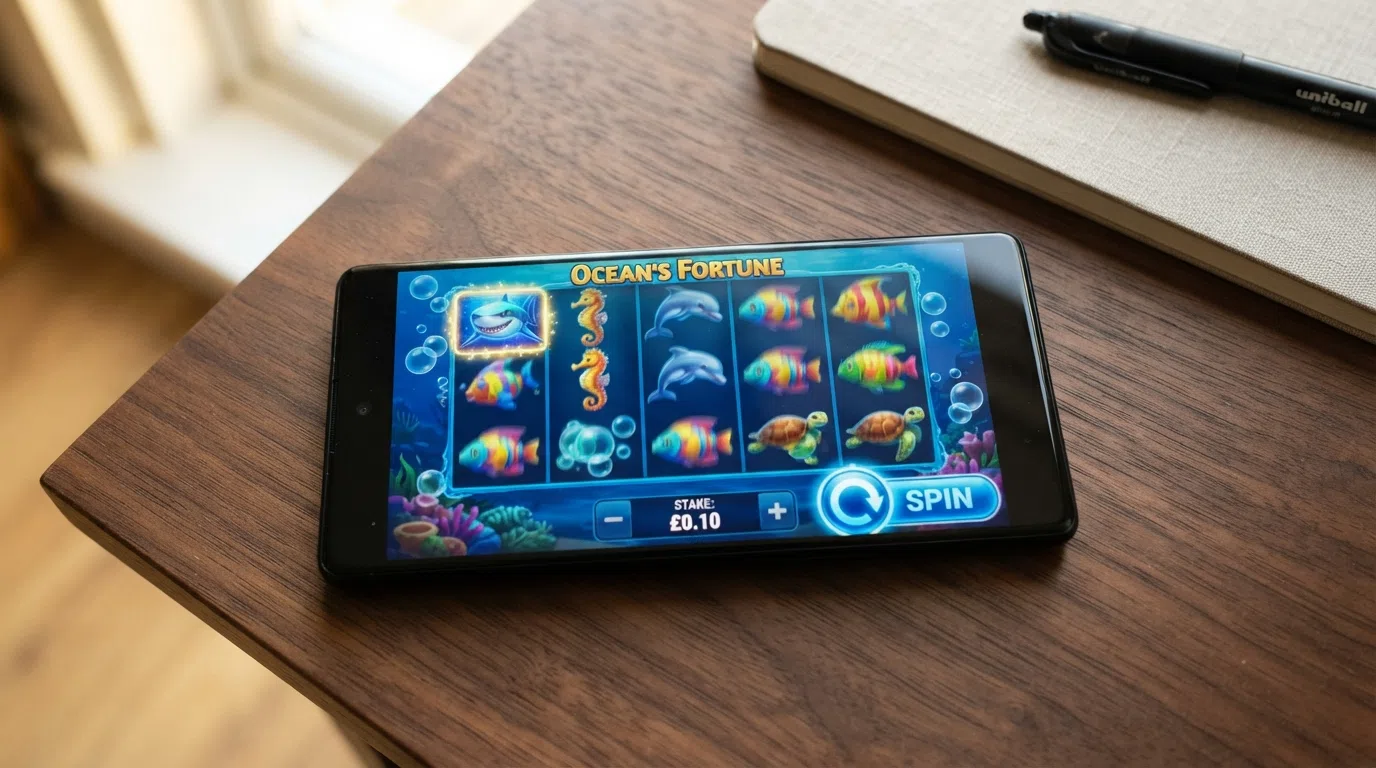
The provider landscape at the £10 deposit tier is concentrated. Pragmatic Play supplies Big Bass Splash, Big Bass Bonanza, and Sweet Bonanza. NetEnt supplies Starburst and contributes to most of the featured operators’ broader libraries. Play’n GO supplies Book of Dead. Playtech and Blueprint Gaming round out the catalogue at the larger operators. These are not the highest-volatility slots in the market, nor the lowest; they sit in the middle of the volatility range, which is deliberate, because middle-volatility slots produce a steady drip of small wins and occasional larger hits — the pattern that keeps a £10 deposit entertaining for 100 spins.
Big Bass Splash and the Slots That Define the £10 Deposit Tier
Big Bass Splash is the slot that the £10 deposit tier has standardised on, and the reason is mechanical. Its 96.71% RTP is at the higher end of the medium-volatility range, its free-spin round is straightforward, and its theme — fishing for cash prizes — is broadly accessible. At the £0.10 spin value, 100 spins cost £10, which matches the minimum deposit exactly, and the free-spin round can pay out 10× to 50× the triggering bet. That is the calculation the operators have made: a £10 deposit funds exactly one session on the defining slot of the tier, and the welcome offer doubles the spin count.
Book of Dead, Big Bass Bonanza, Starburst, and Sweet Bonanza serve the same function at the operators that prefer a different title. Book of Dead (Play’n GO) has a slightly higher volatility than Big Bass Splash, which means longer dry stretches between wins, but a higher ceiling on the free-spin round. Starburst (NetEnt) is a low-volatility slot with frequent small wins — a different session shape from the Big Bass games, and one that some players prefer at the £10 level because the bankroll lasts longer.
How the £5 Stake Cap Changes What Your £10 Can Do
The statutory maximum stake of £5 per game cycle for players aged 25 and over (from 9 April 2025) and £2 for players aged 18 to 24 (from 21 May 2025), imposed by SI 2025/215, is the sharpest constraint on what a £10 deposit can do at the top end. At the maximum stake, a £10 deposit funds as few as two spins for a 25-plus player and five spins for an 18-to-24 player. The cap is per game cycle, not per deposit or per session — it limits the size of each individual spin, not the total amount you can wager. A player who bets £1 per spin on a £10 deposit gets 10 spins; a player who bets the maximum gets two or five. The number of deposits is uncapped; the size of each spin is.
The practical consequence at the £10 deposit tier is that almost no one plays at the maximum stake. Free-spin welcome offers are calibrated to £0.10 per spin, which is 2% of the £5 cap and 5% of the £2 cap. A player who deposits £10 and plays at the bonus spin value gets 100 spins regardless of age. The stake cap is a guardrail for high-stakes play, and it is largely irrelevant at the £0.10 to £0.50 stake range that a £10 bankroll supports.
RTP and Volatility at Low Stakes — Why They Matter More With a Small Deposit
RTP — return to player — is the percentage of total wagered money that a slot returns to players over a large number of spins. Big Bass Splash at 96.71% RTP returns, on average, 96.71p for every £1 wagered across millions of spins. The remaining 3.29p per £1 is the house edge. For a £10 deposit at £0.10 per spin, the total wagered is £10, and the expected return is £9.67 — an expected loss of £0.33. That is the average over 100 spins; any individual session will deviate from it, sometimes dramatically, because slots are volatile.
Volatility is the pattern of wins and losses around the RTP average. A high-volatility slot pays out less frequently but in larger amounts; a low-volatility slot pays out more frequently but in smaller amounts. At a £10 deposit, volatility matters more than RTP in practice, because the bankroll cannot absorb a long dry stretch. A high-volatility slot can wipe a £10 deposit in 20 spins with no return; a low-volatility slot will keep the balance above zero for longer, even if the average return is the same. Big Bass Splash is a medium-volatility slot, which is why it dominates the £10 deposit tier — it is the volatility band where a £10 bankroll lasts long enough to trigger the free-spin round, where the larger payouts live.
At £0.10 per spin on Big Bass Splash for a full £10 deposit — 100 spins — the expected session loss works out to roughly £0.33. That figure is a statistical average across many such sessions, not a guarantee for any individual session. In practice, most 100-spin sessions on a 96.71% RTP slot will return between £2 and £18, with a small number of sessions returning nothing and a smaller number returning significantly more. The house edge is the price of admission, and at 3.29% on a £10 deposit, it costs about 33 pence per session in expectation. That is the real cost of an hour on the slots at the £10 level, and it is a number most players never calculate.
New £10 Minimum Deposit Casinos in 2026 — Worth the Hype?
The UKGC-licensed market turns over slowly. A new operator must obtain a remote casino operating licence, which involves a full application process, fit-and-proper checks on directors and key personnel, and compliance sign-off on game software, payment systems, and player-protection procedures. The timeline from application to launch typically runs from six months to over a year, and the capital requirement is substantial. The result is that genuinely new UKGC-licensed casinos enter the market at a rate of a handful per year, and most of them launch at deposit minimums of £10 or £20.
The trade-off with a new operator is straightforward. New casinos compete on welcome offers, and a fresh entrant at the £10 tier typically offers a generous free-spin bundle — 100 to 200 spins with zero wagering is now the standard acquisition offer, and a new operator may sweeten it further with no-deposit spins or a higher spin count. The game library is usually smaller, drawing from a few major providers rather than the dozen-plus that established operators carry. The track record is zero — there is no payout history, no complaint record, and no reputation to weigh. Every other criterion (UKGC licence status, wagering terms, cashout caps, game RTP) is verifiable from the public register and the operator’s terms before you deposit.
The Newest Launches at the £10 Deposit Level
The current generation of new UKGC-licensed operators accepting £10 minimum deposits includes recent launches that compete directly with the established set on welcome offers. The common pattern is a 100-to-200-spin wager-free welcome, a focused game library of 500 to 1,500 titles, and payment coverage across debit cards, PayPal, and Apple Pay. The 10× wagering cap and the GAMSTOP integration apply to new entrants on the same terms as established operators, and the regulatory floor is the same.
A new operator’s edge is the welcome offer and the freshness of the game library. While they lack the long-term payout history of established names, their regulatory obligations remain identical. For those who prioritize novelty and modern interface design, a new launch is a worthwhile destination. It is best to start small to verify the platform’s performance.
How to Evaluate a New £10 Deposit Casino Before You Sign Up
The checklist for a new operator is the same as for an established one. First, verify the UKGC licence on the Commission’s public register — every licensed operator is listed by name, with the licence type, the operating companies, and any conditions attached to the licence. Second, read the bonus terms: wagering multiplier, bonus validity, maximum cashout, eligible games, and the deposit method required to trigger the offer. Third, check the payment methods and the withdrawal policy — the processing time, the verification requirements, and the withdrawal limits. Fourth, verify the ADR provider and the Commission complaints route, both of which are mandatory for UKGC licensees.
The absence of a track record is not a red flag in itself; it is a reason for a smaller first deposit. A £10 deposit at a new operator tests the platform, the game performance, the payment processing, and the withdrawal flow without committing more than the minimum. If the operator passes that test, the subsequent deposits can scale. If it does not, the £10 is the cost of the lesson.
The Rules That Protect Your £10 — UK Gambling Law Explained
The Gambling Commission (UKGC) is the regulator, and the Gambling Act 2005 is the statute. The Commission is an executive non-departmental public body sponsored by the Department for Culture, Media and Sport (DCMS). It licenses operators, personnel, and software, and it publishes a public register of every licence holder. The Gambling (Licensing and Advertising) Act 2014 extended the regime to remote operators serving GB customers, which is the point-of-consumption reform that makes a GB licence compulsory for any operator taking GB players, wherever the operator is based.
Section 1 of the Gambling Act 2005 sets three licensing objectives: preventing gambling from being a source of crime or disorder, ensuring gambling is conducted in a fair and open way, and protecting children and other vulnerable persons from being harmed or exploited. Every licence condition, every social responsibility code, and every advertising rule traces back to those three objectives. The £10 deposit floor, the stake caps, the wagering ceiling, the GAMSTOP integration, the credit card ban — all of them are regulatory expressions of those three objectives.
Providing gambling without the required licence is a criminal offence under section 33 of the Gambling Act 2005, carrying up to 51 weeks’ imprisonment, an unlimited fine, or both. The penalty applies to the operator, not the player. No criminal liability is traced to a UK resident who gambles on an unlicensed site, but the player loses all consumer protections — no GAMSTOP coverage, no UKGC-approved ADR, no Commission complaints route.
What a UKGC Licence Actually Means for Your Money
A UKGC licence is not a rubber stamp. It requires the operator to verify every customer’s identity (name, address, date of birth) before accepting a deposit or allowing any gambling, a rule in force since 7 May 2019. It requires GAMSTOP integration, which has been mandatory for all online operating licences since 31 March 2020. It requires an approved ADR (alternative dispute resolution) provider and a clear Commission complaints route. It bans credit card deposits (since 14 April 2020, under LCCP 6.1.2) and bans mixed-product promotional offers (since 19 December 2025). It caps wagering requirements at 10× (since 19 December 2025, under LCCP SR Code 5.1.1). It enforces the online slots stake caps (£5 for 25+, £2 for 18–24) under SI 2025/215. It requires operators to prompt every customer to set a financial limit before their first deposit (since 31 October 2025).
For a £10 deposit player, the practical consequence is that the money sits behind the same compliance perimeter as any other deposit. The identity check, the GAMSTOP check, the deposit-limit prompt, the ADR access, and the complaints route all apply at £10 exactly as they apply at £1,000. The only thing that scales with the deposit size is the financial vulnerability check at £150 net deposit in a rolling 30-day period, which is a check on the operator, not a protection for the player below the threshold.
Statutory Limits at a Glance — What the UK Rules Cap and When
| Regulation | What It Sets | Effective Date | Who It Applies To |
|---|---|---|---|
| Online slots stake cap (SI 2025/215) | £5 max stake per game cycle (25+); £2 max stake (18–24) | 9 April 2025 / 21 May 2025 | All UKGC-licensed online operators |
| Wagering requirement cap (LCCP SR 5.1.1) | Max 10× wagering on bonuses | 19 December 2025 | All UKGC-licensed online operators |
| Mixed-product offer ban (LCCP SR 5.1.1) | No conditioning bonuses on different product types | 19 December 2025 | All UKGC-licensed online operators |
| Financial vulnerability check (LCCP SR 3.4.4) | Mandatory check at £150 net deposit in 30 days | 28 February 2025 | All UKGC-licensed online operators |
| Credit card ban (LCCP 6.1.2) | No credit cards for remote gambling | 14 April 2020 | All UKGC-licensed online operators |
| Deposit-limit prompt | Operators must prompt to set a financial limit before first deposit | 31 October 2025 | All UKGC-licensed online operators |
| RTS 12 deposit-limit naming | Only a gross deposit limit may be called a “deposit limit” | 30 September 2026 | All UKGC-licensed online operators |
| Remote Gaming Duty | Operator-side tax at 40% (up from 21%) | 1 April 2026 | All UKGC-licensed remote operators |
| Statutory levy | 1.1% of GGY for remote casino operators | 6 April 2025 | All UKGC-licensed remote operators |
The “Not on GamStop” Question — What You Actually Risk
“Not on GamStop” is a marketing label, not a safety signal. A casino that is not on GAMSTOP is by definition not UKGC-licensed, because GAMSTOP integration has been a mandatory condition of every UKGC online operating licence since 31 March 2020. The label is used by offshore operators to attract players who have self-excluded through GAMSTOP and want to bypass the exclusion, or by players who believe the UKGC regulations are too restrictive.
The protections lost at a non-GAMSTOP casino are specific and material. There is no GAMSTOP coverage, so a self-excluded player can register and deposit. There is no UKGC-approved ADR provider, so disputes have no regulatory escalation route. There is no Commission complaints process. Wagering requirements of 40× to 50× are common at offshore casinos, and there is no regulatory cap. The UKGC’s enforcement model against unlicensed operators is disruption — 3,140 disruption notices and 447,778 URLs referred to search engines between April 2024 and June 2025 — not ISP blocking, so the site may remain accessible even after enforcement action. The player is not committing a criminal offence by gambling on an unlicensed site, but every consumer protection that applies at a UKGC-licensed casino is absent.
Playing Safe With £10 — Tools, Limits and Where to Get Help
The responsible-gambling infrastructure in the UK is extensive, and it is accessible at every deposit level, including £10. The tools are operator-provided (deposit limits, reality checks, time-outs, self-exclusion) and externally provided (GAMSTOP, GamBan, the National Gambling Helpline, the National Gambling Support Network). The legal framework is the UKGC’s social responsibility codes and the Gambling Act 2005’s licensing objectives. The prevalence data is published by the NHS and the Gambling Commission, and the trend is toward higher rates of online gambling and higher demand for treatment.
Deposit Limits as Your First Line of Defence
Since 31 October 2025, every UKGC-licensed operator must prompt a customer to set a financial limit before their first deposit. The prompt is mandatory, and the customer can accept or decline, but the prompt must appear. Decreases to a deposit limit must be actioned immediately — a player who lowers their limit from £100 to £10 sees the new limit in their account within minutes. Increases carry a 24-hour cooling-off period, which is the regulator’s acknowledgment that a player asking to deposit more money in the heat of the moment is not the same as a player who has thought about it overnight.
From 30 September 2026, only a gross deposit limit may be called a “deposit limit” (RTS 12). The change is a clarification rather than a new restriction — the term “deposit limit” is being defined to mean the total amount deposited, not the net amount after withdrawals, so that players are not confused by two operators using the same label for different quantities. The practical effect on a £10 deposit player is minimal; the change is in the language operators use, not in how the limit works.
Deposit limits matter at the £10 level because the £10 floor itself is a form of limit. A player who deposits £10 at a time and sets a weekly limit of £30 cannot exceed that limit without waiting for the cooling-off period. The combination of the regulatory floor and the customer-set limit is a layered protection: the floor prevents accidental over-depositing at a single transaction, and the customer-set limit prevents cumulative over-depositing over time.
The Numbers Behind Problem Gambling in the UK
The most recent Gambling Survey for Great Britain (Annual Report 2025) and the NHS Adult Psychiatric Morbidity Survey 2023–24 provide the prevalence data. Forty-seven per cent of adults in Great Britain had gambled in the past four weeks, a figure that drops to 27% when the National Lottery is excluded. One point six per cent of adults experience at least moderate risk gambling (PGSI 3+), and zero point four per cent experience problem gambling (PGSI 8+). The absolute numbers are large: 0.4% of the adult population of England is roughly 180,000 people, and 1.6% is roughly 720,000.
The trend in treatment-seeking is upward. Eighty-one point five per cent of National Gambling Helpline contacts in 2026 disclosed online forms of gambling, up from 72.9% in 2022 — a five-year high. GamCare’s National Gambling Helpline handled over 52,000 calls in the past year, and January 2026 alone saw 996 referrals to treatment and peer-based support services, up 48% year-on-year from 674 in January 2025. An estimated 7% of the British population are negatively affected by someone else’s gambling — a figure that captures the wider social cost beyond the gambler themselves.
The data matters at the £10 level because the £10 deposit is often the entry point for a player who is new to online gambling, and the early sessions are where harm-prevention tools have the most leverage. A player who sets a deposit limit on their first session, who is prompted by the operator to do so, and who knows where to find help if they need it is a player who has a better chance of staying in control than one who does not.
Where to Get Help — Helplines, Tools and Support
The National Gambling Helpline, run by GamCare, is free and available 24 hours a day, seven days a week, on 0808 8020 133. The helpline offers call, live chat, and WhatsApp contact, and it handled over 52,000 calls in the past year. Referrals to treatment and peer-based support are made from the helpline, with 996 referrals in January 2026 alone. The helpline is the single most direct route to confidential help for anyone affected by gambling harm in Great Britain.
GambleAware, which now operates the National Gambling Support Network (NGSN), provides free, confidential early intervention and treatment across Great Britain. NHS gambling harm clinics operate in England, Scotland, and Wales, offering specialist treatment for gambling disorder. Gamblers Anonymous runs peer-support groups in person and online. GAMSTOP self-exclusion is available to any UK resident, with exclusion periods of six months, one year, five years, or five years with auto-renewal — and crucially, the exclusion cannot be cancelled early, which is the point. GamBan is a blocking software that restricts access to gambling websites and can be installed independently of any operator.
How We Chose and Ranked These £10 Minimum Deposit Casinos
The ranking criteria, in order of weight, are: UKGC licence status (mandatory for inclusion), welcome-offer value and wagering terms, free-spin count and cashout conditions, bonus-slot quality and RTP, game-provider breadth, and operator track record. Every operator in the table holds an active UKGC remote casino operating licence, verified against the Commission’s public register. The welcome offers were verified against the operators’ own terms and conditions pages and against independent affiliate reviews from British Gambler, Bookies.com, Casino Buddies, Casino.org UK, GambleGuru, SlotGamer, SlotMachines.uk.com, and talkSPORT.
Excluded from the ranking are brands without an active UKGC remote casino operating licence (no offshore or “not on GamStop” operators) and brands whose minimum deposit exceeds £10. Brands whose welcome offer does not include free spins or a comparable casino bonus were deprioritised but are not necessarily excluded if they meet the other criteria. The ranking is not a recommendation to play; it is a comparison of what each operator offers, presented so that a reader can make their own decision.
The sources consulted for each operator entry are listed in the operator profile above. The statutory facts are drawn from the Gambling Commission’s published social responsibility codes, the Gambling Act 2005, secondary legislation (SI 2025/215, SI 2025/213), and the responsible-gambling prevalence data from the NHS and the Gambling Survey for Great Britain. The £10-floor figure is drawn from British Gambler’s published minimum-deposit survey, and the wagering-cap figure is drawn from Casino Buddies’ regulatory analysis and the LCCP itself.
What Your £10 Should Actually Go Towards — and What It Shouldn’t
The arithmetic favours wager-free offers, and nine of the ten featured operators deliver exactly that. A free-spin welcome at 0× wagering with no cashout cap converts a £10 deposit into a genuine chance to win withdrawable cash, and the only cost is the house edge on the spins themselves. At the standard £0.10 spin value on a 96.71% RTP slot, 100 free spins have an expected return of £9.67 against a spin cost of £10 — the house takes its 3.29% and the player keeps the rest. The welcome spins double that to 200 or more, and the expected loss on the full bundle is still under £1.
The one exception in the set is Ladbrokes, where the 10× wagering requirement on the bonus means the free-spin winnings must be rolled over ten times before withdrawal. The wagering applies to the bonus value, not the deposit, so the actual cost depends on the bonus structure. A player who values the LadBucks loyalty currency will see the 10× as a fair exchange; a player who wants a clean cash payout will prefer the wager-free offers elsewhere.
The £0.10 spin value at nine of the ten operators stretches the deposit to 100 spins, and the £0.01 spin value at Virgin Games stretches it to 1,000. The per-spin return scales with the per-spin cost, so a 1p spin on a 96.71% RTP slot returns an average of 0.967p, compared to 9.67p on a 10p spin. The absolute payout ceiling is lower at Virgin Games, but the session length is ten times longer, which is a different shape of entertainment. For a player who values playtime, Virgin Games is the strongest offer in the set. For a player who values payout potential, the 10p-spin offers at the other nine operators are stronger.
A £10 deposit buys the same UKGC protections as a £100 deposit. The licence, the identity check, the GAMSTOP coverage, the ADR route, the complaints process — all of these apply identically. The deposit size does not change the safety perimeter. What the deposit size changes is the scale of the entertainment: 100 spins on a medium-volatility slot, with the chance of a free-spin round that pays out 10× to 50× the triggering bet. That is the value of a £10 deposit, and the wager-free welcome offers in the table above are the most efficient way to capture it.
Limits – topratedonlinecasinos-uk
Content created by the «topratedonlinecasinos-uk» team