
Casinos That Accept Ripple XRP: What UK Players Can Actually Use
 Available in GB
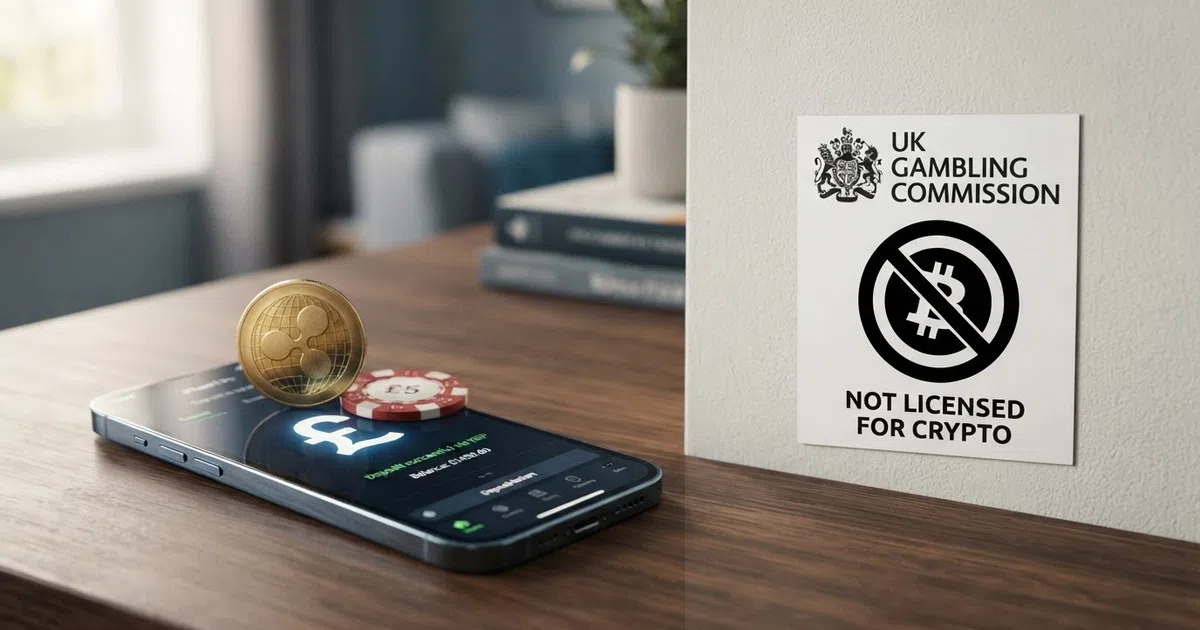
The phrase “casinos that accept Ripple XRP UK” promises a category that barely exists. XRP settles on its own ledger in three to five seconds, costs fractions of a penny to move, and has been pitched as a gambling rail for half a decade. The catch is that no Gambling Commission-licensed operator accepts it, and has not for some time, so every site a UK player can actually use sits outside the system that protects them. This page is a working map of those sites, the bonuses they advertise, the speed of the payments in practice, and the protections the player forfeits on the way in.
Current as of 9 September 2026 · Licence and operator claims verified against the UKGC public register, operator T&Cs and Curaçao GCB/CGA filings
What an XRP casino is, and why every UK-facing one is offshore
An XRP casino is an online gambling site that accepts the Ripple token as a deposit and withdrawal method. The token travels on the XRP Ledger (XRPL), a public blockchain that finalises transactions in roughly three to five seconds for a fee of about 0.00001 XRP, which is a tiny fraction of a penny at any plausible price. That combination of speed and near-zero cost is the reason crypto-friendly casinos have bothered to integrate it: the cashier flow looks and feels like a card payment, with none of the card-rail delay or the interchange fee.
The integration, however, does not change the regulatory geography. The UK Gambling Commission holds the sole statutory authority over gambling in Great Britain, and a point-of-consumption licence has been compulsory for any operator serving GB customers since 2014. As of 2026, no UKGC-licensed casino accepts cryptocurrency deposits of any kind. The Commission’s source-of-funds, anti-money-laundering and LCCP requirements make direct crypto deposits effectively impossible at a legally operating GB site, as GamblingPedia.co.uk has noted. XRP is a payment method, not a legal status; whether a player can gamble at a given site is a question about jurisdiction, and the coin being deposited does not move the answer.
The practical result is a clean split. The familiar UKGC-licensed names (Sky Vegas, bet365 Casino, 888, Paddy Power, LeoVegas) do not appear on any XRP cashier. The names that do accept XRP (Rolletto, CasinOK, Vave, Kaasino, Mega Dice, FortuneJack, Casinopunkz, SpinDog, Emperia) all hold offshore licences and operate in the territory the UKGC calls “unlicensed.” The two most prominent crypto brands, Stake and BC.Game, used to serve some UK traffic and now block it.
How an XRP casino payment actually moves
The XRP Ledger is the settlement rail, nothing more. A deposit begins when the casino assigns a unique XRP address and, crucially, a destination tag — a numeric identifier that tells the casino which player account the incoming payment should be credited to. The player copies both into their XRP wallet or exchange, sends the amount, and waits roughly three to five seconds. The XRPL closes a ledger, the transaction is final, and the casino’s payment processor reads the incoming payment and credits the account.
The “three to five seconds” figure is the network time. The casino-side processing sits on top of it, and that is where the published speed advantage either holds or dissolves. At a casino that processes payments automatically, the balance appears within minutes of the ledger closing. At one that batches withdrawals or runs manual review on first cashouts, the same three-second network settlement gets buried under hours of queue. The XRP payment itself is fast; the casino is the variable.
A withdrawal reverses the path. The player requests a cashout in XRP, the casino debits the account, and an XRP transaction is broadcast to the address the player supplies. Network settlement is the same three to five seconds; the time before settlement is what separates the operators in practice.
XRP versus Bitcoin and the other cryptocurrencies at casinos
XRP’s pitch is straightforward: it is the fastest of the gambling-relevant cryptocurrencies, and the cheapest. Bitcoin confirmations in practice run ten minutes to an hour depending on fee and congestion, and the network fee fluctuates with that congestion. Ethereum has improved with layer-2 scaling but still carries meaningful gas costs and confirmation times measured in minutes. Stablecoins (USDT, USDC) sit on top of those networks and inherit their cost. XRP keeps its cost as close to zero as the network gets and its finality inside a single digit of seconds.
Adoption is the offsetting weakness. The XRP wallet ecosystem is smaller than Bitcoin’s, the on-ramps (exchanges where GBP can be swapped for XRP) are fewer, and the casino selection is narrower. Bitcoin and Ethereum are the only two cryptocurrencies effectively guaranteed to be on a given crypto casino’s cashier; XRP is a “supported” coin at the brands that have made a point of listing it, and absent elsewhere. A player who already holds XRP, or who values the speed enough to buy it, will find a workable selection. A player choosing a crypto for the first time and looking for the widest casino coverage will find more sites on Bitcoin.
The honest pros and cons of gambling with XRP
The advantages are real: deposits land in seconds, the network fee is sub-cent, and the cashier experience is cleaner than anything on a bank-rail or even most e-wallets. XRP’s price volatility, however, is the offset that no offshore casino will mention. A winning session paid out in XRP is worth more or less in pounds by the time the player converts back, and that movement is not symmetrical: a session’s gains can be clawed back by a falling token price before they reach an exchange. A player who treats their XRP balance as a stablecoin balance is mistaken.
The structural trade-off, repeated on every page of this site, is the absence of UKGC protection. No GAMSTOP coverage. No Commission complaints route. No approved alternative dispute resolution. No mandatory deposit limits, no financial vulnerability checks, no statutory £5/£2 maximum slot stake, no auto-play ban, no minimum spin speed. The bonus figures are larger, and the rules that constrain them are looser, and those are the same fact read two ways.
Key limits at XRP casinos
| Operator | Minimum Deposit | Withdrawal Caps |
|---|---|---|
| Rolletto | £20 | £7,500/week, £15,000/month |
| CasinOK | €20 | Not specified |
| Vave | Not specified | Not specified |
| Kaasino | £30 | Not specified |
| Mega Dice | 20 USDT | Not specified |
| Casinopunkz | Not specified | £45,000/month |
| SpinDog | £20 | £4,000/day, £8,000/week, £30,000/month |
The visible brand movement over the last eighteen months tells the story. Stake surrendered its UKGC licence in March 2025 and now blocks UK players entirely. BC.Game and Cloudbet also block UK access. FortuneJack restricts UK players in its terms, even if its IP enforcement is not aggressive. Cloudbet’s welcome package — zero-wagering rakeback plus cash drops over thirty days — is unavailable to a UK player regardless, because the registration is blocked at the door.
The operators that still accept UK registrations in practice hold a range of offshore licences: Rolletto, CasinOK, Vave, Kaasino, Mega Dice, Casinopunkz, SpinDog and Emperia. None of them hold a GB licence, and the UKGC’s enforcement reach is the disruption-based model that yielded 3,140 disruption notices and 447,778 URL referrals between April 2024 and June 2025, with an average 32% engagement fall across 160 disrupted sites. The Commission cannot switch off a Curaçao server. It can make a site harder to find, which is what the figures show it doing.
How XRP casino payments work in practice, and where they go wrong
The deposit walkthrough reads simply on paper. In the player’s actual session, the friction lives in two places: the destination tag and the casino-side queue.
A destination tag is a numeric identifier the casino uses to route an incoming payment to a specific account. XRP addresses can be reused, which is a privacy feature of the ledger, and that reuse is why destination tags exist — without one, a casino receiving XRP from many players on a single hot-wallet address cannot tell who paid what. The player must copy both the address and the tag into the sending wallet. A missing tag, a wrong tag, or a tag from a previous deposit leaves the payment credited to the wrong account or, more often, uncredited at all. The XRP does not vanish — it sits in the casino’s hot wallet — but recovering it requires a support ticket that can run for days.
A withdrawal reverses the pattern. The casino debits the account and broadcasts an XRP transaction to the player’s wallet address. The network settles in seconds. The delay, when there is one, is almost always casino-side: a KYC review on a first withdrawal, a manual approval queue, a bonus-wagering check, or a payment-processor batch. Rolletto publishes a maximum of £7,500 per week and £15,000 per month; a player whose weekly winnings exceed that ceiling waits for the next cycle regardless of how fast the network would have moved the funds.
What is needed before making an XRP deposit
A working XRP wallet comes first, and that is the larger of the two setup steps for a UK player. The choices split between a self-custody wallet (a hardware or software wallet the player holds the keys to) and a custodial exchange account. The former gives control; the latter gives a GBP on-ramp. For a UK consumer the practical on-ramp is an FCA-registered exchange — the FCA’s new cryptoasset regime is expected to come into force on 25 October 2027, and the interim expectation is registration on the existing financial promotions regime.
The deposit itself follows a familiar pattern: the player opens the casino cashier, selects XRP, and is given a deposit address and a destination tag. The address and tag are copied into the wallet, the amount is entered, and the transaction is sent. The network confirms in three to five seconds. The casino credits the balance somewhere between instantly (the most aggressive operators) and a few minutes later (the median). The player is now playing.
Withdrawing winnings back to XRP
The withdrawal flow is the test that separates the brands, because the deposit is easy to get right and the withdrawal is where the structural safeguards sit. A first withdrawal is almost always gated by KYC: the casino asks for a photo ID and a proof of address before processing, and that review can run from a few hours to a few days depending on the operator. Subsequent withdrawals usually clear faster, but every operator reserves the right to re-trigger the review.
The published withdrawal times at the featured operators range from near-instant to 24 hours. Kaasino publishes crypto withdrawals clearing within an hour. Mega Dice publishes most withdrawals landing in 1–10 minutes. SpinDog publishes a 0–24 hour window for Ripple withdrawals. Rolletto’s weekly and monthly caps mean the network speed is moot for any player whose week lands above £7,500 in winnings.
The minimum withdrawal threshold is a quieter trap. A player who leaves a small balance in their account and tries to withdraw it will find the casino’s minimum — typically £20 or its XRP equivalent — sitting in front of the request. The balance has to grow to the threshold before the cashier will release it. The XRP itself is not stuck; the cashier is.
Minimum deposits, withdrawal caps and what they cost
The headline numbers from the featured set: minimum deposits range from £20 (Rolletto, SpinDog) to €20 (CasinOK) to 20 USDT (Mega Dice) to £30 (Kaasino). Maximum withdrawals range from £4,000 per day, £8,000 per week and £30,000 per month at SpinDog, to £7,500 per week and £15,000 per month at Rolletto, to £45,000 per month at Casinopunkz. The XRP network fee is sub-cent and ignorable; the casino-side fees, where they exist, are a different matter and should be read in the cashier’s small print before a deposit.
The interaction between a casino’s withdrawal cap and its bonus max-cashout term is where the arithmetic turns unfriendly. Vave caps total bonus winnings at 10,000 USDT across all bonus types. CasinOK caps cashout at 5x the bonus amount. A player who hits a lucky run on a bonus at either brand can find their withdrawal request reduced to the cap before it ever leaves the cashier. The network is fast enough; the ceiling is the bottleneck.
Which XRP casinos accept UK players in 2026
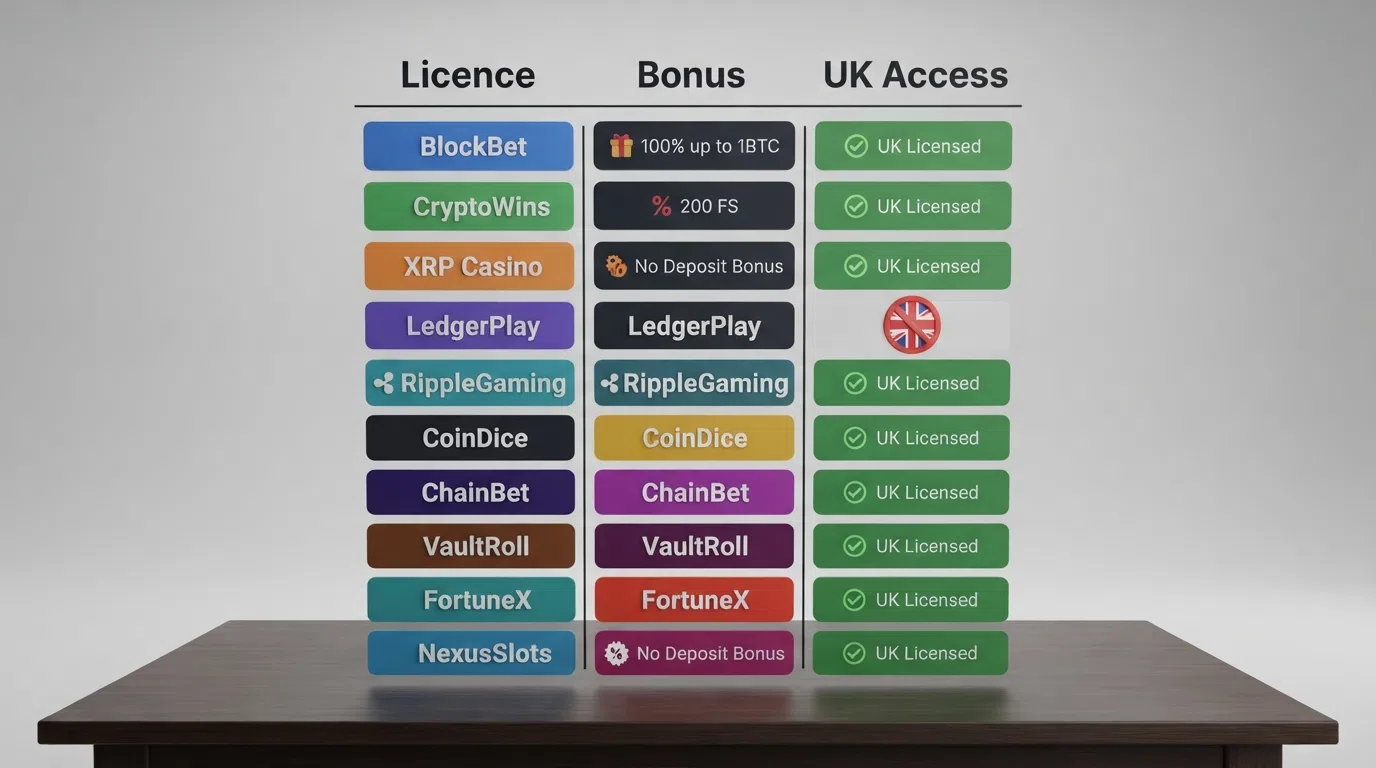
The selection is narrow by design. Every operator below is reviewed against the same four filters: a current licence (any jurisdiction), a working XRP cashier, a stated welcome bonus, and confirmed UK accessibility in 2026. A brand that does not clear all four is not on the list. The table that follows the write-ups is the comparison; the write-ups are the texture.
Rolletto
A Curaçao-licensed all-rounder whose welcome package is the largest among the featured operators: up to £5,500 spread across three deposits, with 30x wagering on the bonus amount and a 30-day validity window. The minimum deposit is £20, and the maximum withdrawal is £7,500 per week and £15,000 per month. Rolletto accepts eleven cryptocurrencies including XRP, and the bonus terms carry a 10x bonus-amount max cashout for standard players (higher or uncapped at VIP tier).
The package is generous by the standards of the table, and the wagering multiple is the lowest in the featured set. The weekly withdrawal ceiling is the trade: a player running hot at slots can find a winning week queued behind a cap that is one-third of what some other offshore brands allow. Rolletto is the right pick for a player who values the bonus size and is not chasing six-figure wins.
CasinOK
A 2025-launched Curaçao CGA casino from Ryker B.V., offering a 300% match up to €6,000 plus 200 free spins across the first three deposits, with 35x wagering within 30 days and a €20 minimum deposit. The headline match percentage is the highest in the featured set, and the 5x bonus-amount maximum cashout is the smallest ceiling — a player who runs a bonus balance to a significant win will see the cashier trim the withdrawal before it ships.
CasinOK is a brand worth watching rather than a brand with a track record, having launched in 2025. The bonus math rewards short, sharp play that converts the match into withdrawable cash inside the 5x ceiling; longer sessions that build a balance above the cap will leave money on the table.
Vave
A high-roller-facing crypto casino offering up to 4 BTC across four deposits (150% up to 1.5 BTC plus 100 free spins on the first, scaling down to 25% up to 0.5 BTC on the fourth), with 50x wagering on bonus funds and 40x on free-spin winnings. The 10,000 USDT maximum win cap across all bonus types is the most aggressive ceiling in the featured set, and the wagering multiple is the highest. The provider list is a cut above most offshore brands: Pragmatic Play, Evolution Gaming, NetEnt, BGaming, Hacksaw Gaming, Play’n GO, Relax Gaming, NoLimit City.
Vave is the right fit for a player who values the game catalogue over the bonus terms, and who is not optimising the welcome package. The wagering multiple makes a bonus run expensive in expected play, and the 10,000 USDT ceiling will cap most meaningful wins well before the bonus balance is exhausted.
Kaasino
A Costa Rica-licensed casino with a 100% match up to £2,500 spread across four deposits plus 500 free spins, 40x wagering, and a £30 minimum deposit. The published payment speed is the headline: crypto withdrawals are near-instant, usually clearing in under an hour, which is the fastest in the featured set. The bonus is smaller per deposit than Rolletto’s or CasinOK’s, but the spread across four deposits stretches the playtime and the free-spin count is the largest in the table.
Kaasino suits a player for whom withdrawal speed is the deciding factor. The Costa Rica licence is the offset: a data-processing registration rather than a gambling regulator, with no ADR, no consumer guarantee, and no route back to a GB authority if a withdrawal stalls.
Mega Dice
A Curaçao-licensed, crypto-only casino with a 200% welcome bonus up to 1 BTC plus 50 free spins, most withdrawals landing in 1–10 minutes, a 20 USDT minimum deposit and a 14-day bonus validity. The bonus structure is unusual: 6x deposit wagering to release 10% of the bonus incrementally, which is a softer requirement per release but a longer path to the full match. Crypto-only payments keep the cashier clean and the withdrawals fast.
Mega Dice is the closest the featured set comes to a crypto-native operator, and the 14-day window is the shortest validity in the table. Those aiming for a short, focused bonus run will appreciate the structure; however, players wanting to stretch the match over several weeks should be aware of the tighter validity.
FortuneJack
A veteran Curaçao-licensed crypto casino with a 500% welcome package across four deposit missions (100%, 150%, 100%, 150%) restricted to slots and the Aviator game, with a 14-day clearing window. The headline percentage is the largest in the featured set and the restriction to slots and Aviator is the largest in scope. FortuneJack restricts UK players in its terms and conditions, though its IP blocking is not aggressive in practice.
The slots-and-Aviator-only restriction is the trade for the headline percentage. A table-game player or live-casino player cannot use the welcome package at all. The 14-day clearing window is short, and the UK restriction in the T&Cs is a real caveat: a UK player can register, but the brand’s terms say it does not serve them, and that asymmetry is the kind of fact a dispute resolution will hold against the player.
Casinopunkz
A 2024-established crypto casino supporting nine major cryptocurrencies including XRP, operating outside UKGC, with a welcome bonus up to €5,000 (or crypto equivalent) and a £45,000 monthly withdrawal limit. The monthly ceiling is the largest in the featured set by a clear margin, and the brand’s 2024 vintage means it is newer than Rolletto or FortuneJack but older than CasinOK.
Casinopunkz is the right pick for a high-volume player whose withdrawal needs will hit the weekly caps at Rolletto or SpinDog. The bonus specifics are less documented than the larger brands, and a player should read the current T&Cs before depositing.
SpinDog
An XRP-compatible casino with Ripple deposits clearing instantly to 24 hours and withdrawals 0–24 hours, a £20 minimum deposit and minimum withdrawal, and a structured cashout ceiling of £4,000 per day, £8,000 per week and £30,000 per month. The licence is not confirmed in this research run, which is itself the relevant fact: a player cannot verify the regulator, the registration number, or the dispute route before depositing.
SpinDog (licence not confirmed this run) suits a player who is comfortable reading the T&Cs for the licence footnote themselves. The absence of a confirmed regulator is the offset, and the section on practical checks later in this page covers how to verify a licence independently.
BC.Game
A major Curaçao-licensed crypto casino with a four-deposit welcome package (180% first, 50% second, 40% third, plus a fourth) totalling up to $4,000 and 400 free spins, 40x wagering, and 60 no-deposit free spins available for account verification at 40x on winnings. The bonus is competitive; the access is not. BC.Game has blocked UK players since March 2025, and a UK player cannot register without a VPN. A UK resident using a VPN to bypass the block accepts the additional risk that the block, once detected, extends to the account and the balance.
BC.Game is included here for completeness because it is named in the comparison conversation, and the page’s own subject — finding an XRP casino from the UK — cuts directly against it. The block is the relevant fact. Any UK-resident reader who reaches BC.Game’s site is being told, by the site itself, that it is not serving them.
Emperia Casino
A multi-currency casino accepting Ripple alongside ecoPayz, Neteller, Revolut, Litecoin, Google Pay and Astropay. The licence is not confirmed in this research run, and the bonus specifics — welcome offer, free spins, wagering, validity, minimum deposit, maximum cashout — are not documented. The payment-method breadth is the most diverse in the featured set and the documented terms are the thinnest.
Emperia is the operator a player should verify themselves before depositing, and the section on practical checks lays out the steps. The limited research depth on this brand is itself the warning: a casino whose bonus and licence details are not findable in standard review channels is a casino to approach with a small test deposit rather than a committed bankroll.
XRP casino comparison at a glance
| Operator | Licence | UK Access | Welcome Bonus | Wagering | Free Spins |
|---|---|---|---|---|---|
| Rolletto | Curaçao GCB | Open | Up to £5,500 (3 deposits) | 30x bonus | — |
| CasinOK | Curaçao CGA | Open | 300% up to €6,000 (3 deposits) | 35x bonus | 200 |
| Vave | Not confirmed | Open | Up to 4 BTC (4 deposits) | 50x bonus / 40x FS | 100 |
| Kaasino | Costa Rica | Open | 100% up to £2,500 (4 deposits) | 40x bonus | 500 |
| Mega Dice | Curaçao | Open | 200% up to 1 BTC | 6x deposit (incremental) | 50 |
| FortuneJack | Curaçao | Restricted in T&Cs | 500% (4 missions, slots/Aviator) | — | 15 (4th mission) |
| Casinopunkz | Outside UKGC | Open | Up to €5,000 | — | — |
| SpinDog | Not confirmed | Open | — | — | — |
| BC.Game | Curaçao | Blocked since March 2025 | Up to $4,000 (4 deposits) | 40x | 400 |
| Emperia Casino | Not confirmed | Open | — | — | — |
The em-dash cells are operators whose research did not document a number for that column, and the table has been left honest rather than padded. The wagering column is the most important read across this set: a 10x bonus, which is the GB-licensed ceiling since 19 December 2025, would be £1,000 of turnover on a £100 bonus; a 50x bonus at Vave is £5,000 of turnover on the same starting stake, and the player carries the variance for all of it.
Why XRP casino bonuses look bigger than they really are
The marketing headline on a Curaçao-licensed welcome package can hit 500% or more. The number that matters is the wagering multiple, because that is the volume of play the player must fund before a withdrawal clears. A £100 bonus at 30x wagering demands £3,000 in turnover; at 50x it demands £5,000. The headline percentage tells the player how big the bonus is. The wagering multiple tells them what it costs to convert into cash.
The comparison to the GB standard sharpens the picture. Wagering requirements on GB-licensed casino bonuses are capped at 10x from 19 December 2025 under LCCP SR Code 5.1.1. A 30x offshore requirement is three times the UK ceiling; a 50x requirement is five times. A player who finds the 30x ceiling tight at a UK brand will find the offshore 50x ceiling punishing. The headline match percentage reads as a gift; the wagering multiple reads as the invoice.
The max-cashout term is the second mechanism that compresses the realised value. CasinOK caps cashout at 5x the bonus amount; a player who converts the €6,000 match package into a €30,000 balance will see the cashier trim the withdrawal to €30,000 before it ships. Vave caps total bonus winnings at 10,000 USDT across all bonus types, which is the most aggressive ceiling in the featured set. The bonus did not change; the ceiling did, and the ceiling determines what leaves the building.
The game restrictions tighten the noose further. FortuneJack’s 500% package is restricted to slots and Aviator, and a player who prefers live dealer or table games cannot use it. The 100% match at Kaasino carries 500 free spins, but free-spin winnings are typically converted into bonus funds and wagered again before withdrawal — the free spin is a marketing number, not a cash number, and the conversion is in the small print.
Welcome bonuses at XRP casinos, and what the numbers mean
The featured set sits between a £2,500 ceiling at Kaasino and a £5,500 ceiling at Rolletto, with CasinOK’s 300% match and Vave’s 4 BTC package pushing higher in headline terms. The wagering multiple runs from 30x (Rolletto) to 50x (Vave), with Mega Dice’s 6x deposit incremental release sitting outside the bonus-only multiple and CasinOK’s 35x and Kaasino’s 40x in between. The validity window runs from 14 days (Mega Dice, FortuneJack) to 30 days (Rolletto, CasinOK, Vave), and the window matters more than the multiple for a player who plans a casual schedule.
The multi-deposit structure is the third mechanism. A package “up to £5,500 across three deposits” means the player must deposit three times to unlock the full figure, and each deposit typically carries its own match percentage and wagering requirement. Those depositing only the first tranche should expect to receive the bonus associated with that single deposit rather than the full headline amount.
Free spins and no-deposit offers for XRP players
The free-spin count in the featured set ranges from 50 (Mega Dice) to 500 (Kaasino), with 100 (Vave), 200 (CasinOK), 400 (BC.Game) and 15 (FortuneJack’s fourth mission) in between. Free-spin winnings are typically converted into bonus funds and carry their own wagering requirement, often 40x, and the realised value is a fraction of the headline free-spin count once the wagering and the max-cashout are accounted for.
The only researched no-deposit offer is BC.Game’s 60 free spins for account verification, with 40x wagering on winnings — and BC.Game blocks UK players. A UK player looking for a genuine no-deposit offer at an XRP-accepting casino is, in practice, looking for a category that does not exist in the featured set. The free spins that do exist are deposit-gated, and the gap is structural.
Wagering requirements: why 30x is nothing like the UK’s 10x cap
The maths gap is the whole story. The GB-licensed standard since 19 December 2025 is 10x. A £100 bonus at 10x demands £1,000 in turnover. The same £100 bonus at 30x demands £3,000; at 40x it demands £4,000; at 50x it demands £5,000. Every spin on every slot carries the same house edge, and the house edge is multiplied by the wagering volume. A 5x larger turnover is not a 5x larger cost — it is a 5x larger expected loss, all of which the player carries.
The comparison the marketing does not invite is the one to make: a 30x bonus is, in expected-cost terms, three times more expensive to clear than the same bonus at the GB-licensed 10x ceiling. The “free” in “free bonus” is a category error at any wagering multiple, and the higher the multiple, the larger the error.
What you can actually play at an XRP casino
The game catalogue at an offshore XRP casino is, in the largest brands, comparable to a GB-licensed casino on raw volume. Slots number in the thousands, live dealer runs from Evolution and Pragmatic Play Live, and table games cover the standard spread. The differences live in what is missing rather than what is present.
The slot catalogue at XRP casinos
The provider list at Vave — Pragmatic Play, Evolution Gaming, NetEnt, BGaming, Hacksaw Gaming, Play’n GO, Relax Gaming, NoLimit City — is a list of recognisable names. A player who has played at a UK-licensed casino will not find unfamiliar slots; they will find the same slots, served under different rules. The 2.5-second minimum spin speed mandated in the UK does not apply offshore. The ban on auto-play does not apply offshore. The statutory maximum stake of £5 (for players 25+) and £2 (for players 18–24) does not apply offshore; offshore, a player can stake whatever the casino accepts, which is often £20, £50 or more per spin.
The absence of the UK stake limit is the most consequential difference for a slot player. The £5 ceiling on a single spin in the UK is a structural brake on the speed at which a bankroll can drain; offshore, that brake is not fitted. A player who values the higher ceiling is a player the offshore model is built for, and a player who values the brake is a player the UK model is built for, and the two sets do not overlap.
Live dealer and table games with XRP
The live-dealer offering at the featured operators draws from Evolution Gaming and Pragmatic Play Live, the same studios that supply the GB-licensed market. The games — blackjack, roulette, baccarat, game-show titles — are the same games. The framework is not. A live-dealer session at an offshore casino has no UK-mandated time-out, no enforced reality check, and no complaint route back to a GB regulator if a dispute arises. The dealing is the same. The protection is not.
Who makes the games, and what that means
The major providers confirmed at the featured operators are the same studios that supply the regulated market. Pragmatic Play, Evolution, NetEnt, Play’n GO, Hacksaw, Relax, NoLimit City and BGaming all publish return-to-player (RTP) figures for their games, and a player can check the RTP on a specific title on the provider’s own site or in the game’s information panel. What an offshore casino does not provide is an independent RTP audit enforced by a domestic regulator; a GB-licensed casino’s RTP figures are independently tested, and an offshore casino’s are typically tested by a private lab on a voluntary basis.
Provably fair is the crypto-native answer to the trust gap. A provably fair game lets the player verify, after each round, that the outcome was determined by a commit-reveal scheme the casino could not have manipulated. The feature is most common on crash games, dice and simple table games; it is rare on branded slots from major providers, where the outcome is the provider’s and the casino is a downstream reseller.
XRP casino gaming on your phone
The mobile experience at an offshore XRP casino is, in most cases, a mobile-optimised browser site rather than a native app. The split is the inverse of the GB-licensed market, where many brands have invested in dedicated apps on the Apple App Store and Google Play.
Mobile browser versus dedicated casino apps
A mobile browser is the universal access method at the featured operators. The cashier, the game lobby, the live dealer tables and the bonus activation all run in a mobile browser without a separate download. The friction is the URL — a player has to type the casino’s address or use a bookmark, and the absence of an app-store presence means there is no search-and-install path.
A dedicated app, where one exists, is typically an Android APK sideloaded from the casino’s own site. The Apple App Store and Google Play restrict gambling apps by jurisdiction, and an offshore casino serving the UK does not have a path through either store. APK sideloading on Android works; it requires the player to allow installs from unknown sources, which is a meaningful security decision, and the app itself is functionally identical to the browser site in most cases.
The research did not confirm a dedicated mobile app at any of the featured operators. The default is the browser, and the feature gap between an app and a browser at an offshore casino is, in practice, none.
How the mobile payment flow works with XRP
The deposit flow on mobile is the same flow on a smaller screen. The player opens the cashier, copies the XRP address and destination tag into a mobile wallet, sends the amount, and the network confirms in the same three to five seconds. QR-code deposit flows are supported at some brands — the casino displays a QR code that encodes address and tag, the wallet scans it, and the player confirms. The steps collapse into a single tap on a phone.
A mobile withdrawal reverses the pattern. The player requests a cashout, the casino processes it, and the XRP arrives at the mobile wallet in the same 0–24 hour window a desktop player would see. The screen size changes; the network speed does not.
New XRP casinos that opened in 2026
Two of the featured operators are recent enough to count as new. CasinOK launched in 2025 with a Curaçao CGA licence from Ryker B.V., and the offering is structured to attract new players: a 300% match plus 200 free spins, a 5x bonus-amount max cashout, and the marketing weight of a brand that is still building its reputation. Casinopunkz was established in 2024 and is one step further into the curve, with a 2024-vintage operator profile and a £45,000 monthly withdrawal limit that is the highest in the featured set.
A new casino offers what an established brand cannot: a more aggressive welcome package, a higher free-spin count, and a marketing budget aimed at acquiring first-time depositors. The offset is the track record. A new operator has no public history of withdrawal disputes, no long tail of player reviews, and no regulator-supplied enforcement record. The verification steps in the next section of this page matter more at a new casino than at an established one.
The pattern in the offshore market is that newer brands push more generous welcome packages because the package is the acquisition tool, and established brands can afford to push tighter terms because the brand is the acquisition tool. A player who values the bonus is well-served at a new casino; a player who values the track record is well-served at an established one.
The legal reality of using an XRP casino from the UK
Every XRP casino a UK player can use in 2026 operates without a UKGC licence. The structure is not ambiguous, and the consequences for the player are specific.
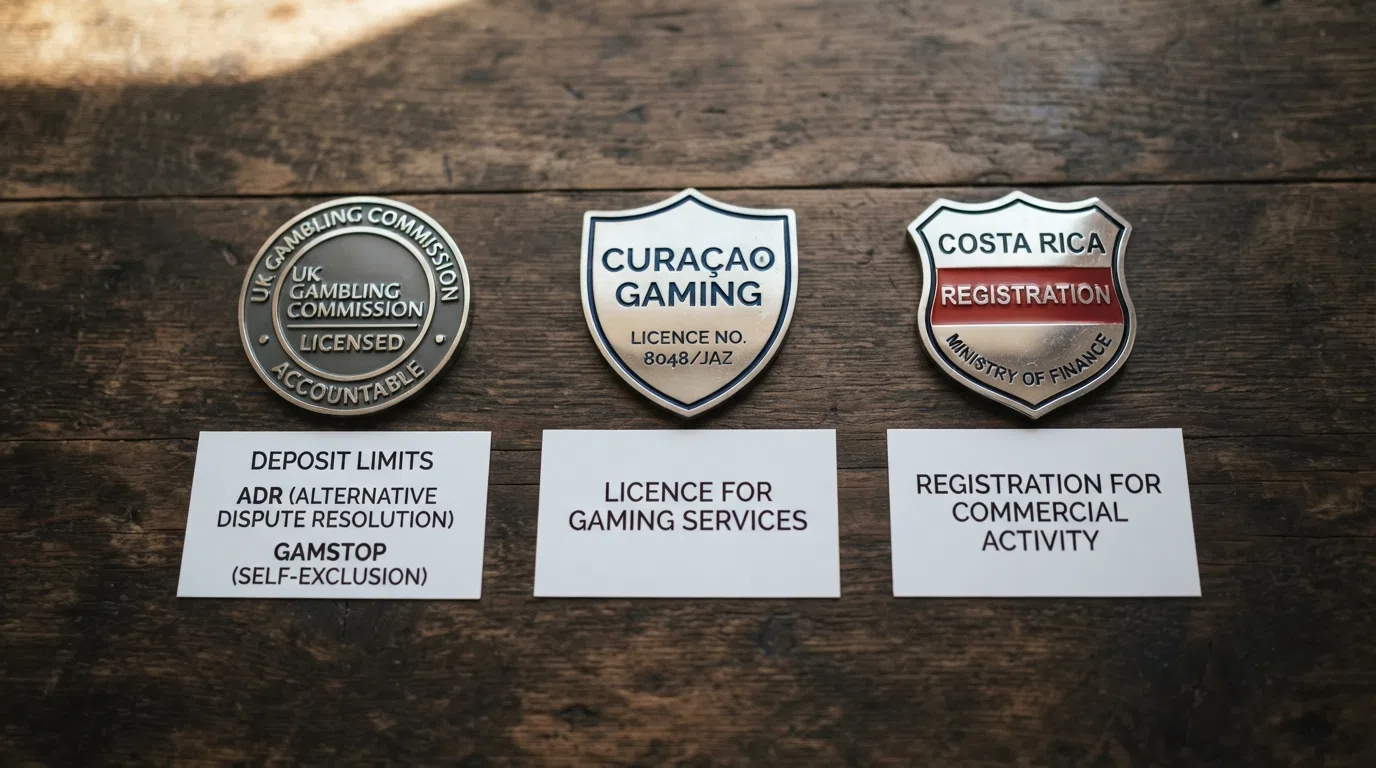
The UK Gambling Commission holds the sole statutory authority over gambling in Great Britain under the Gambling Act 2005, and the Gambling (Licensing and Advertising) Act 2014 made a point-of-consumption licence compulsory for any operator serving GB customers regardless of where the operator is based. The Commission has not established any specific rule permitting cryptocurrency deposits at GB-licensed operators, and in practice no GB-licensed casino accepts them. The Commission’s source-of-funds, AML and LCCP requirements make direct crypto deposits effectively impossible at a legally operating GB site. XRP is a payment method, not a legal status. The jurisdiction determines whether the player can gamble, not the coin they deposit.
A UK player using an offshore XRP casino is not committing a criminal offence. The penalties under section 33 of the Gambling Act 2005 — up to 51 weeks’ imprisonment and/or unlimited fine — apply to the operator, not the player. The player forfeits, however, every protection the GB system provides.
Why no UKGC-licensed casino accepts XRP, and when that might change
The barrier is structural. The UKGC’s source-of-funds and AML requirements demand that a licensee trace the origin of customer funds, verify them, and demonstrate that trace to the Commission on demand. A bank deposit leaves a paper trail; a crypto deposit from a self-custody wallet does not, and the gap is the gap the Commission has been unwilling to bridge. The LCCP reinforces the position: licensees must satisfy themselves and the Commission that they can meet their AML obligations, and the Commission’s published view is that no GB licensee has yet demonstrated a workable crypto model.
The Commission’s February 2026 statement, delivered by Executive Director Tim Miller at the Betting and Gaming Council AGM, is the first official engagement with the question. The Commission has asked its Industry Forum to explore what a “sensible” pathway might look like for allowing cryptoassets as a consumer payment option for licensed gambling in Great Britain. The framing was a “tentative first step” with no timetable. The Commission’s position has moved from “not on the agenda” to “exploring”; it has not moved to “permitting.”
The FCA’s new cryptoasset regime is the second leg. The Financial Services and Markets Act 2000 (Cryptoassets) Regulations 2026 received Royal Assent on 4 February 2026, the FCA published final rules and guidance on 30 June 2026, and the new regime is expected to come into force on 25 October 2027. The regime creates a regulated category of cryptoasset activity, and a gambling firm seeking to take crypto deposits in future would, in principle, be able to obtain the necessary FCA authorisation under the new rules. The 25 October 2027 date is the earliest plausible inflection point; nothing before that date changes a GB licensee’s ability to accept crypto.
The structural disincentive is the Remote Gaming Duty. RGD rose from 21% to 40% with effect from 1 April 2026, announced at the Autumn Budget 2025, and the 1.1% statutory levy on gross gambling yield for remote casino licences adds further operator cost. A GB operator adding crypto deposits would pay the 40% duty on the GBP equivalent of every crypto stake settled, and the economic case for absorbing that cost in pursuit of a marginal player segment is unfavourable. The duty rate is the reason a GB operator has not, to date, integrated crypto at scale, and the October 2027 regime does not change the duty.
Offshore licensing: what Curaçao, Costa Rica and the rest actually mean
A Curaçao GCB or CGA licence is the most common badge in the featured set, and it is the badge most often misread. Curaçao’s regulatory framework is a business-registration regime: the operator is licensed to conduct gambling business from Curaçao, and the licence carries operational requirements around anti-money-laundering, payment processing and corporate reporting. The licence does not, however, deliver consumer protection. There is no independent dispute resolution scheme, no deposit guarantee, no segregated player-funds regime, and no route back to a GB authority. A player who has a complaint against a Curaçao-licensed casino is, in practice, complaining to the casino.
Costa Rica is a data-processing licence rather than a gambling regulator. The country does not issue gambling licences; it issues business registrations for companies that process data, and the gambling activity is conducted outside Costa Rican regulatory oversight. Kaasino is the featured operator carrying a Costa Rica registration, and the registration tells the player where the company is incorporated, not where the gambling is regulated. The label on the footer is the answer to a different question.
The featured list does not include Anjouan-licensed brands, but this is a result of the selection process rather than a deliberate exclusion. Emerging offshore jurisdictions like Anjouan are increasingly active in the market, though they operate with varying levels of oversight.
The structural fact is that an offshore licence is a business registration, not a consumer guarantee. A Curaçao licence tells the player the casino is registered in Curaçao. A Costa Rica registration tells the player the company is incorporated there. Neither tells the player what happens if the casino refuses a withdrawal, and neither provides a complaint route that ends in a binding decision against the operator.
What a UK player loses by stepping outside the GB system
The list is specific because the GB system is specific.
No GAMSTOP coverage. GAMSTOP has been mandatory for every GB-licensed online operating licence since 31 March 2020, with exclusion periods of six months, one year, five years, or five years with auto-renewal. A player who has self-excluded through GAMSTOP and then opens an account at an offshore casino is in breach of the GAMSTOP terms, and the offshore casino has no way to know. The protection is a UK-only system, and the offshore casino is outside it.
No UKGC complaints route. A dispute with a GB-licensed casino can be escalated to the Commission, referred to an approved ADR provider, and (in the most serious cases) result in licence condition action. A dispute with an offshore casino is a dispute with the casino. The Commission’s published enforcement figures for April 2024 to June 2025 — 3,140 disruption notices, 447,778 URLs referred for delisting, 287,961 URLs removed, and an average 32% fall in engagement across 160 disrupted sites — show the disruption model in action. None of that enforcement yields a refund for an individual player.
No mandatory deposit limits or financial vulnerability checks. A GB-licensed casino must offer a deposit limit at registration and run a financial vulnerability check at a £150 net deposit threshold in a rolling 30-day period. Offshore casinos offer limits where they choose to, and the offer is a marketing feature rather than a regulatory obligation. The check does not exist.
Wagering uncapped. A 30x offshore requirement is three times the GB-licensed 10x ceiling. A 50x requirement is five times. The bonus is larger; the cost of clearing it is correspondingly larger; the protection that constrains the cost in the UK is absent offshore.
No £5/£2 statutory slot stake limit. The maximum stake at a GB-licensed online slot is £5 per game cycle for players 25 and over (in force 9 April 2025) and £2 for players 18 to 24 (in force 21 May 2025), imposed by SI 2025/215. Offshore, the maximum stake is whatever the casino accepts, which is often substantially higher.
No auto-play ban, no 2.5-second minimum spin speed, no reverse-withdrawal ban, no ban on losses disguised as wins. Every UK-mandated slot protection is absent offshore. The slots are the same slots; the friction the UK system places on the spin is missing.
No credit-card gambling ban enforcement. Credit cards have been banned for gambling at GB-licensed operators since 14 April 2020 under LCCP licence condition 6.1.2, and the ban extends to credit-card-funded e-wallet payments. Offshore, a credit card deposit may or may not be accepted depending on the operator’s payment stack. The ban is a GB ban, and it does not travel.
The list is the trade. The bonus is larger, the game selection is wider, the wagering is heavier, the stake limit is higher, and the protection is gone. A player who values the bonus and the catalogue has found their market; a player who values the protection has not.
Staying safer: practical checks before signing up to an XRP casino
The licence badge on a casino’s footer is a starting point, not a verification. The actual check is the regulator’s own public register.
For a Curaçao-licensed operator, the verification is the Curaçao GCB or CGA public register. The operator’s licence number should be on the casino’s footer; the register should return a match; the licence status should be active. A number that does not resolve, or a licence that has been surrendered, is a hard stop. Rolletto publishes its Curaçao GCB licence; CasinOK publishes its Curaçao CGA licence from Ryker B.V. Mega Dice, FortuneJack and BC.Game publish Curaçao numbers as well. The verification is the player’s, not the casino’s, to run.
For a Costa Rica-registered operator, the verification is the company registry. The registration tells the player where the company is incorporated and who its directors are, and that is the answer the jurisdiction provides. A Costa Rica registration is not a gambling licence.
For a brand where research did not confirm a licence (SpinDog, Emperia Casino), the player’s own search is the relevant fact. The footer should carry a regulator name and a licence number; the regulator’s register should resolve; the licence should be active. A brand whose licence details are not findable is a brand to test with a small deposit rather than a committed bankroll.
Community and review-site reports are the second line of evidence. A pattern of withdrawal complaints on independent forums, a history of delayed payments, a record of confiscated bonus winnings — these are the signals a casino’s own marketing will not surface. The audit is partial, because the casinos curate their own review sites, but the signals that repeat across multiple independent sources are worth weighting.
The bonus T&Cs are the third check. Before depositing, a player should read the wagering multiple, the validity window, the max-cashout cap, the game restrictions, and the minimum deposit. A 50x wagering requirement with a 10,000 USDT max win cap on a 30-day window is a different offer from a 30x requirement with no cap on a 60-day window, and the headline match percentage does not distinguish them.
The small-deposit test is the final check. Before committing a bankroll, a player should test the withdrawal flow with a small amount. A casino that pays a £50 withdrawal in 10 minutes is a casino the player can trust with a £500 withdrawal; a casino that stalls a £50 withdrawal is a casino the player should not trust with a £5,000 one. The test is cheap. The information it returns is not.
Responsible gambling tools and where to get help in the UK
The UK safer-gambling infrastructure is the strongest part of the regulated market, and it remains available to a player who has stepped outside the regulated market. The National Gambling Helpline is 0808 8020 133, free, confidential and 24 hours a day, run by GamCare. GamCare also offers online self-assessment, live chat and one-to-one counselling. GambleAware publishes treatment and support information at gambleaware.org. NHS gambling harm clinics operate in England, Scotland and Wales, and Gamblers Anonymous UK runs peer-support meetings in person and online.
The scale of harm the infrastructure responds to is large and growing. GamCare’s National Gambling Helpline made 996 referrals to treatment and peer-based support services in January 2026, up 48% from January 2025. 13.1% of GB adults — approximately 6.8 million people — were classified as experiencing any level of gambling problems in GambleAware’s 2024 survey, rising to 15.6% in the most recent data. 81.5% of helpline contacts in 2026 disclosed online gambling as their primary form, a five-year high. The Gambling Survey for Great Britain found 47% of adults gambled in the past four weeks in the most recent wave.
The figures are the context for a player reading a page that compares welcome bonuses and wagering multiples. The house edge is the same on every spin at every casino, and the people who call the helpline are the people for whom the house edge compounds faster than they can manage. The support services are free, confidential and available to anyone who needs them, regardless of where they play.
How we evaluated and ranked these XRP casinos
The selection is built on four filters, applied in order. The operator must hold a current licence in some jurisdiction (a Curaçao, Costa Rica or other offshore licence qualifies; a lapsed licence does not). The operator must accept XRP at the cashier. The operator must publish a stated welcome bonus or a documented payment offering. The operator must either accept UK registrations in practice or be known to block them. Operators that pass all four are ranked; operators that fail any one are excluded.
The verification work ran against the official UKGC public register, the Curaçao GCB and CGA public registers where accessible, and the operator’s own terms and conditions. Bonus terms were compared on wagering multiple, validity window, max-cashout cap and game restrictions. UK-access status was confirmed against operator T&Cs and community reports, and the enforcement picture was read against the UKGC’s published disruption figures for April 2024 to June 2025.
The ranking prioritises transparency of terms, withdrawal reliability and UK accessibility. It does not measure personal experience, customer-support responsiveness under load, or the operator’s reputation in jurisdictions outside the UK. A player whose priority is a different variable — the largest free-spin count, the lowest minimum deposit, the most aggressive match percentage — will weight the table differently.
Your money, your risk: what UK players should do about XRP casinos
The structural fact, restated once because it is the one that matters: every XRP casino a UK player can use in 2026 operates without a UKGC licence. The bonus is larger, the catalogue is wider, the wagering is heavier, the stake limit is higher, and the protection is gone. The 3–5 second deposit and the sub-cent fee are real. The absence of GAMSTOP, ADR and the 10x wagering ceiling is also real. The choice the player is making is the choice between the two.
The numbers in the comparison table are the size of the trade. A £100 bonus at Rolletto’s 30x wagering demands £3,000 in turnover, and the player carries the house edge across that volume. The same £100 bonus at the GB-licensed 10x ceiling would demand £1,000. The £5 maximum stake per spin at a GB-licensed casino is a brake on the speed at which a bankroll can drain; the offshore stake limit is whatever the casino accepts, which is often £20 or more. The offshore bonus is the gift the wagering pays for, and the offshore stake ceiling is the room the brake would have occupied.
The practical takeaway, if a player decides to proceed: verify the licence on the regulator’s own register; read the T&Cs for the max-cashout cap and the game restrictions; test the withdrawal with a small deposit before committing a bankroll; and use the safer-gambling tools (deposit limits, time-outs, GAMSTOP) at the GB-licensed site the player would otherwise use, because the offshore casino will not. The National Gambling Helpline is 0808 8020 133, free, confidential, 24/7.
The licensing landscape may shift after October 2027, when the FCA’s new cryptoasset regime is expected to come into force. The shift is not a certainty — the UKGC’s February 2026 announcement was a “tentative first step” with no timetable, and the 40% Remote Gaming Duty is a structural disincentive that does not change with the FCA regime. Today’s player gets none of the protections a post-2027 player might get. The choice, in 2026, is the choice between a larger bonus in an unprotected market and a smaller bonus in a protected one.
Frequently asked questions about XRP casinos in the UK
What happens if I use an XRP casino that is not on GamStop?
The casino is outside the UK system, and your self-exclusion does not travel. You will be able to register, deposit, and play; nothing in the casino’s process checks GamStop. The protection you set up at a UK-licensed site covers only UK-licensed sites. If you have self-excluded, an offshore casino will not honour it, and the responsibility for sticking to your decision is yours alone. GamCare’s National Gambling Helpline (0808 8020 133) is free, confidential and 24/7.
Are there any fees for using XRP at online casinos?
The XRP Ledger itself charges about 0.00001 XRP per transaction, a fraction of a penny at any plausible price, and that fee is negligible. The casino may add its own deposit or withdrawal fee, and that fee is in the cashier’s small print. Most of the featured operators do not charge a deposit fee on XRP; some charge a small percentage on withdrawals, particularly below a minimum threshold. Read the cashier page before depositing.
How safe are offshore XRP casinos for UK players?
The safety question has two parts. The platform safety (encryption, RNG certification, payment processing) at the major offshore brands is broadly comparable to the regulated market, and the provider list (Pragmatic Play, Evolution, NetEnt, Play’n GO) is the same. The consumer safety (licence enforcement, ADR, dispute resolution, player-fund segregation) is not comparable to a UKGC-licensed site. A player at an offshore casino has no UKGC complaints route, no approved ADR, and no British consumer redress. The speed and the bonus are real; the protection is not.
Do XRP casinos offer no-deposit bonuses?
The featured set offers almost none. BC.Game’s 60 no-deposit free spins for account verification is the only researched example, and BC.Game blocks UK players. The free spins that do exist at the featured operators (CasinOK 200, Kaasino 500, Vave 100, BC.Game 400, Mega Dice 50) are deposit-gated and carry wagering requirements, typically 40x on winnings. A genuine no-deposit offer is rare in the XRP-accepting segment.
Can I play live dealer games with XRP?
Yes. The featured operators run live dealer tables from Evolution Gaming and Pragmatic Play Live, the same studios that supply the GB-licensed market, and the cashier accepts XRP for both deposits and withdrawals. The games are the same; the regulatory framework is not. A live-dealer session at an offshore casino has no UK-mandated time-out, no enforced reality check, and no complaint route back to a GB regulator.
How do I deposit XRP at an online casino?
Open the casino cashier, select XRP, and copy the deposit address and destination tag. Open your XRP wallet or exchange account, paste both, enter the amount, and send. The XRP Ledger confirms in three to five seconds and the casino credits the balance within minutes at the faster operators and within an hour at the rest. The destination tag is the part most often got wrong; a missing or incorrect tag leaves the payment uncredited and the support ticket can take days to resolve.
Payments – topratedonlinecasinos-uk
Content created by the «topratedonlinecasinos-uk» team