
Non-UK Registered Casinos: What a British Player Is Actually Choosing
 Available in GB
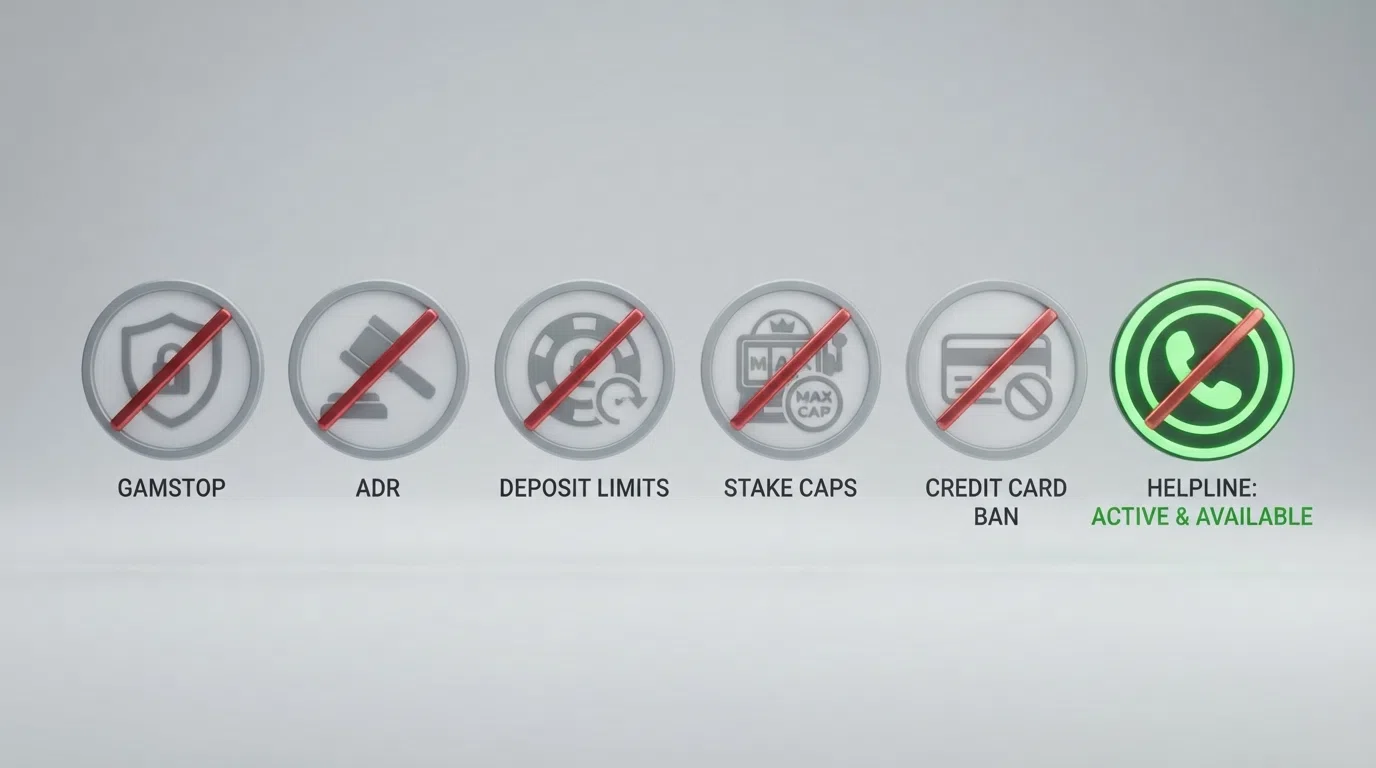
A “non-UK registered casino” is an online casino that accepts British players while holding its licence outside the United Kingdom. The UK Gambling Commission has no authority over such a site, and the operator is under no obligation to join GamStop, follow the £5/£2 slot stake caps, run financial vulnerability checks, or accept any of the other safety rails that Great Britain’s licensing regime has spent fifteen years building. That is the whole trade-off, and it is the one a British player needs to understand before opening an account anywhere not on the Gambling Commission’s public register.
The register itself is not a technicality. As of 29 July 2026 it lists 2,663 licensed gambling businesses, and every one of them is a site the Commission polices on a British player’s behalf. None of the ten operators on this page appears there. The next ten pages explain what that absence means, and what it costs.
*Data current as of 9 September 2026; licence claims cross-checked against the UK Gambling Commission’s public register and the Curaçao Gaming Authority register at cga.cw.*
What a “Non-UK Registered Casino” Actually Means for a British Player
The term does a lot of work, and the work is mostly about exclusion. A non-UK-registered casino is one that is *not* on the Gambling Commission’s public register of GB operating licence holders. It is also typically described in search results as “non-GamStop” or “not on GamStop,” because the absence of a GB licence is precisely the absence of a GamStop requirement. Three words do most of the definitional lifting: licence jurisdiction determines registration status. A casino that holds a Curaçao GCB licence, an Anjouan permit, an MGA credential, or a Gibraltar authorisation is not, on those grounds, registered in the United Kingdom.
Under section 33 of the Gambling Act 2005, providing facilities for gambling without the required GB licence is a criminal offence — the operator faces up to 51 weeks’ imprisonment and an unlimited fine, and the legal risk sits squarely with the operator, not with the player. The player who opens an account at an offshore casino is not, in the words of the regulator’s own enforcement record, the target. But the player is also not the beneficiary of any British protection, and that is the more practical point to grasp before reading the rest of this page.
The UKGC-Registered Baseline: What a Licensed British Casino Looks Like
The Gambling Commission is the single statutory regulator for Great Britain, and it operates a public register in which every licensed operator must appear. A GB licence is compulsory at the point of consumption under the Gambling (Licensing and Advertising) Act 2014, so the licence requirement applies to any operator taking GB customers, whatever jurisdiction the operator is otherwise based in. The 2,663 records on the public register, last refreshed on 29 July 2026, are the practical answer to “is this site registered in the UK?” — if the brand is not on the register, the premise changes.
What that licence buys the player is a defined set of obligations. The operator must verify name, address and date of birth before any deposit, must participate in GAMSTOP, must offer access to an approved alternative dispute resolution (ADR) provider, and must meet the Gambling Commission’s licensing objectives: preventing gambling from being a source of crime or disorder, ensuring it is conducted fairly and openly, and protecting children and other vulnerable persons from harm. These are the conditions a UK-registered casino meets by default. None of them travels to the offshore site.
“Licensed” vs “Registered”: Why the Words Matter
“Licensed” is the broader word. A casino that holds a Curaçao OGL is licensed — it has a regulator’s permission, the regulator’s framework of rules, and a register entry that can be checked. “UK-registered” is the narrower and more specific word. It means the casino appears on the Gambling Commission’s public register of GB operating licence holders, and the only way a casino can be UK-registered is by holding a GB operating licence. A Curaçao-licensed casino is therefore not UK-registered, and the Curaçao licence is not a substitute for the British one. The two terms do not describe overlapping categories of the same set — they describe different sets with a small intersection that this page does not feature.
The practical consequence is what matters. Only UK-registered casinos are required to follow UKGC player-protection rules, and only UK-registered casinos must accept the limits, checks and caps that the Commission has built into its licence conditions. A casino licensed elsewhere is free to set its own, and the differences — on stake caps, on credit cards, on payment methods, on self-exclusion — are the substance of the next several sections.
Mobile Access: Non-UK-Registered Casinos on Your Phone
All ten featured operators offer mobile browser access with no download required, and the experience is functionally identical to the desktop product. Dedicated casino apps are rare at offshore operators, partly because the major app stores apply the same regulator-approval logic that the casinos themselves cannot meet for GB, and partly because a mobile web app built for cross-device play is the more straightforward delivery model. The game catalogue and the payment options are the same on a phone as on a laptop, and the absence of UKGC mobile-specific rules — reality-check prompts, session time-outs, deposit-limit prompts — applies the same way the desktop rules do not.
That last point is worth holding onto. The offshore mobile experience is not a watered-down version of the UKGC one. It is a different product, governed by different rules, and the thing the player gives up by playing on it is not convenience but protection.
The Legal Reality: Offshore Casinos and UK Law in 2026
The legal position of a British player who uses an offshore casino is well-defined, and it is not the one the marketing copy usually suggests. Under section 33 of the Gambling Act 2005, providing unlicensed gambling facilities is a criminal offence, with the maximum sentence of up to 51 weeks’ imprisonment and an unlimited fine. The liability sits with the operator — not with the player. No UK player has ever been prosecuted for using an offshore casino, and the regulator’s enforcement record shows every sanction aimed at operators, advertisers and intermediaries, not at the people depositing at the other end. What a UK player loses by going offshore is not liberty but protection, and the distinction is the one that should govern the rest of the decision.
The Commission’s enforcement approach is disruption rather than blocking. Across April 2024 to June 2025 it issued 3,140 disruption notices, referred 447,778 URLs to search engines and saw 287,961 of them removed, with engagement falling by an average 32% across 160 disrupted sites. The number is large and the engagement fall is real, but the activity does not eliminate supply, and the Commission does not currently hold statutory ISP or DNS blocking powers — legislation to grant those powers has been proposed but not enacted. So the British player who sets out to find a non-UK-registered casino in 2026 can still find one. The regulator is pushing supply down, not closing the door.
Two 2026 regulatory shifts frame the rest of this picture. Remote Gaming Duty rose from 21% to 40% on 1 April 2026 under Finance Act 2026, a cost borne by GB-licensed operators that is pushing some marginal operators toward offshore-only models. The Commission’s financial risk assessment thresholds were confirmed by the Board on 7 July 2026 but are not yet in force; when enacted, they will add another layer of friction at UKGC sites that offshore casinos will not be required to match. The practical cost of using an offshore site, in other words, is higher in the UK than in many other jurisdictions — not because the player commits a criminal offence, but because the protections simply do not exist on unlicensed platforms.
What GamStop Is — and What “Not Registered with GamStop” Really Means
GAMSTOP has been a mandatory condition of every Gambling Commission online operating licence since 31 March 2020. The scheme is not optional for UKGC-licensed casinos, and the regulator considers the obligation core. Self-exclusion periods are six months, one year, five years, or five years with auto-renewal, and none of them can be cancelled early — once a player registers, the clock runs to the end of the chosen term. The scheme is operator-level: a registration blocks the player from every GB-licensed online gambling site for the duration of the exclusion.
A casino not registered with GamStop is, in operational terms, a casino that is not UKGC-licensed — because every UKGC-licensed casino is registered with GamStop. The three-word test applies: licence jurisdiction determines registration status, and the registration language (“on GamStop,” “not registered with GamStop,” “to GamStop”) all describes the same condition, which is the presence or absence of a GB licence. Gamban is a separate device-level tool that works differently, and the difference is the next point.
Gamban vs GamStop: Two Different Tools, Two Different Jobs
The two schemes are routinely conflated, and conflating them leads to the wrong conclusion about what protection a player actually has. GamStop is operator-level: it blocks the player from every UKGC-licensed gambling site but has no reach over offshore casinos. A player registered with GamStop can still open an account at every casino on this page, because the scheme has no jurisdiction to stop them. Gamban is device-level: it blocks gambling websites and apps on the player’s phone, laptop and tablet regardless of where the casino is licensed. The two tools cover different ground, and a player who wants offshore coverage needs Gamban, not GamStop.
Gamban is also a paid subscription service, not a free scheme like GamStop. Neither tool covers every offshore casino comprehensively, but Gamban’s device-level approach gives broader offshore coverage than GamStop’s regulator-anchored scope. The two are not substitutes; they are complements, and the right pairing depends on the boundary the player is trying to draw.
Curaçao-Licensed Offshore Casinos and the LOK Reform
Curaçao has been the default offshore licensing jurisdiction for most non-GamStop casinos, and the reason is mostly historical. The legacy system ran through master licences under the JAZ framework, with sub-licences sold to operators below the master holder, and the result was a large, lightly supervised market that any operator could join quickly and cheaply. The LOK reform, running through 2025 and 2026, transitions the system to direct OGL licences issued by the Curaçao Gaming Authority itself, and the change is structural: a casino that holds a direct OGL has passed a direct regulatory review that a legacy sub-licensee has not.
The CGA register at cga.cw is the authoritative source. A casino still citing only a legacy /JAZ seal in 2026 may be operating under a sub-licence that does not survive the transition, and a footer badge is not the same thing as a register entry. MyStake, Velobet, Donbet, Goldenbet and a handful of related brands were previously licensed in Curaçao through Santeda International B.V.; the parent has since moved those brands to a new entity, GTW B.V., with direct OGL licence OGL/2024/250/0115, and the move is the kind of detail that separates a current licence from a stale one.
Malta-Registered and European Casinos Outside UK Jurisdiction
An MGA licence is the highest-tier offshore credential available to a UK player, in the sense that Malta imposes stronger regulatory obligations than Curaçao or Anjouan: stricter player fund segregation, named ADR access, and a regulator with a track record of enforcement. But an MGA-licensed casino is still not UK-registered, and the MGA credential does not bring GamStop, does not bring UKGC ADR, and does not bring British consumer law. Gibraltar and other European jurisdictions sit between MGA and Curaçao on player-protection strength, and the same caveat applies at every level: a non-GB licence means a non-GB set of protections, and a UK player has to decide which protections matter before sorting by tier.
The decision that follows is whether the tier matters more than the jurisdiction. An MGA-licensed casino is answerable to a regulator with enforcement teeth, and that is genuinely worth more than a Curaçao sub-licence; but the enforcement happens in Malta, not in Britain, and a UK player pursuing a complaint does so through Maltese processes rather than British ones.
How to Verify an Offshore Casino’s Licence in Five Minutes
The footer badge on the casino’s homepage is not enough. Five checks will take ten minutes and separate the credible operators from the opaque ones:
- Check the regulator’s own public register, not the casino’s footer. For Curaçao licensees, that is the CGA register at cga.cw; for Anjouan, the Anjouan Gaming Authority register. The casino’s badge is marketing; the register is the source of truth.
- Cross-reference the licence number against the register entry. The number on the casino’s site must match an active record on the register — not just any record, an *active* one, with the operating company name in the body of the entry.
- Verify the operating company name on the register matches the name in the casino’s terms and conditions. A licence held by a different entity than the one in the T&Cs is a sign that the operator has changed since the licence was issued, which is information in itself.
- For Curaçao, confirm the licence is a direct OGL, not a legacy sub-licence. A /JAZ reference in 2026 is a red flag, not a credential.
- Confirm the casino is absent from the UKGC public register. If it appears there, it is UK-registered and the whole premise of this page changes. The register has 2,663 records, last refreshed on 29 July 2026, and a quick search is enough.
A casino that cannot pass these five checks is not necessarily fraudulent, but the burden of evidence has shifted: at that point the player is trusting the operator’s word, and the operator’s word is not what the regulator is for.
The 2026 Offshore Landscape: What Changed
Three regulatory and market shifts shape the offshore landscape a British player meets in 2026. Remote Gaming Duty rose from 21% to 40% from 1 April 2026, a doubling of the most significant tax cost on GB-licensed operators, and the change is large enough to push marginal operators toward offshore-only models. The Curaçao LOK reform continues through 2026 with more operators transitioning to direct OGL licences, and the gap between a direct-OGL operator and a legacy sub-licensee is now large enough to be a real distinction. UKGC disruption activity through mid-2025 shows the enforcement approach is working at scale — 3,140 notices, 447,778 URLs, a 32% engagement fall — but the same data shows the approach is not eliminating supply.
The financial risk assessment thresholds confirmed by the Commission Board on 7 July 2026 are not yet in force. When they commence, they will add a further layer of friction at UKGC sites that offshore casinos will not be required to match. The combined effect is that the gap between a UK-registered casino and a non-UK-registered one is wider in 2026 than it was two years ago, and the gap is closing on the UK side rather than the offshore side.
10 Non-UK-Registered Casinos Accepting UK Players — Compared
All ten operators below are offshore — none holds a GB operating licence, and the page’s first check, against the UKGC public register as last refreshed on 29 July 2026, confirms that. The ranking reflects UK search prominence and market presence among British players searching for non-UK-registered casinos, and the comparison table distils the licence tier and the headline bonus terms. Each operator also gets its own write-up below the table, and the write-ups read against the table, not as a substitute for it.

| Operator | Licence | Welcome Bonus | Free Spins | Wagering |
|---|---|---|---|---|
| MyStake | Curaçao OGL/2024/250/0115 | 150% up to £750 (total £1,500 across 3 deposits) | 30 no-deposit | 30× (deposit + bonus) |
| Goldenbet | Curaçao GCB | 300% up to £1,500 across 3 deposits | 100 | 35× (bonus) |
| Freshbet | Curaçao | 100% up to £500 | 25 no-deposit | 30× (bonus only) |
| Rolletto | Curaçao | 150% up to £500 | 200 | 30× (bonus) + 30× on FS winnings |
| Donbet | Curaçao OGL/2024/250/0115 | 150% up to £750 | 50 + 15 no-deposit | 30× (deposit + bonus) |
| Velobet | Curaçao GCB | 150% up to £500 / 100% up to £1,000 | 70 | 30× standard / 35× crypto track |
| Cosmobet | Curaçao OGL/2024/1798/1048 | 100% up to €500 | 250 | — |
| Fortune Clock | Curaçao OGL/2024/1060/0472 | 225% | 225 | — |
| WinSpirit | Curaçao OGL/2024/923/0383 | 100% match | 100 + 20 no-deposit | — |
| BassBet | Anjouan | Casino match + sportsbook free bets | Not specified | 35× |
Nine of the ten hold a Curaçao licence; one — BassBet — holds an Anjouan licence, the weakest regulatory tier represented. The spread is the real shape of the offshore market available to UK players in 2026, and the operator write-ups that follow rank the operators within that spread rather than against an ideal that none of them reach.
MyStake
MyStake is the most-searched non-UK-registered casino among UK players, and the search prominence shows in the offer: a 150% match up to £750 on the first deposit, with a total welcome package of up to £1,500 across three deposits, and 30 free spins with no deposit required to claim them. The wagering requirement is 30× on deposit plus bonus, with a 30-day validity window. The licence is Curaçao OGL/2024/250/0115 under GTW B.V., which places MyStake on the direct-OGL side of the Curaçao reform rather than the legacy sub-licence side. Crypto withdrawals have been tested at 1–3 hours for Bitcoin, and the game catalogue runs to 90+ providers including Pragmatic Play, NetEnt, Play’n GO and Evolution. The minimum deposit is £20.
The headline number is the 30 no-deposit free spins, and the reason it is the headline is that no-deposit spins let a player test the platform before committing a deposit. The wagering is on the heavier side: 30× on deposit *plus* bonus, not on the bonus alone, and the multiplier is on the side of the set that makes the clearing time longer than the Freshbet 30×-on-bonus-only offer. The 30-day validity is short for the turnover required, and a player who does not clear inside the window loses the bonus. The recommendation follows for players who want to test the platform before depositing and require a direct-OGL licence.
Donbet
Donbet is the sister brand to MyStake under the same Curaçao OGL — licence OGL/2024/250/0115 under GTW B.V. — and the catalogue is the largest in the featured set: roughly 5,500 slot titles and 120+ live dealer tables, served by 60+ providers. The welcome offer is 150% up to £750 with 50 free spins on the first deposit, plus 15 no-deposit free spins, all at 30× wagering on deposit plus bonus. The free-spin winnings are capped at £100, which is a real ceiling and a more common ceiling than the marketing suggests.
The headline number is the game count. ~5,500 slot titles is a wider catalogue than a typical UKGC-licensed casino carries, and the breadth comes from the absence of UKGC game-design restrictions — providers can offer their full international catalogue rather than the UK-compliant subset. The £100 free-spin cashout cap is the trade-off: a player who hits a 100× or higher multiplier on a free spin keeps £100, not the headline amount. Donbet offers a deep catalogue for players who prioritise variety, but the cashout ceiling is a real trade-off.
Velobet
Velobet’s welcome offer is split: 150% up to £500 plus 70 free spins on deposits under £500, or 100% up to £1,000 plus 70 free spins on deposits of £500 or more, with a separate crypto track at 160% up to €1,000 at 35× wagering. The standard bonus carries 30× on the bonus amount, the crypto track carries 35×, and the free-spin winnings are capped at £100. The licence is Curaçao GCB, and the maximum bet during an active bonus is £5 per spin or hand.
The headline number is the tiering. A £500 deposit and a £1,000 deposit produce two different bonus structures, and a crypto deposit produces a third. The reader who wants the higher match rate at a lower tier or the larger match at a higher tier has both options laid out. The £5 maximum bet during a bonus is a real constraint: a bonus-clearing player who bets above £5 voids the bonus at most Curaçao-licensed operators, and Velobet is not an exception. Consider this site if you need a flexible bonus structure and a dedicated crypto pathway.
Goldenbet
Goldenbet carries the highest headline match rate in the featured set at 300%, distributed across three deposits up to £1,500, with 100 free spins. The wagering requirement is 35× on the bonus funds — higher than the 30× common across the rest of the set — and the maximum cashout from the bonus is 10× the bonus amount. The licence is Curaçao GCB, the minimum deposit is £20, and the payment methods include Visa, Mastercard, Skrill, Neteller and crypto.
The headline number is the 300%. A 300% match on a £500 deposit is a £1,500 bonus, and on the first deposit alone the headline looks like the most generous offer in the set. The 10× bonus cashout cap is the trade-off: a player who clears the 35× wagering and wins on a high-multiplier spin keeps 10× the bonus amount, not the full balance. The 35× wagering is on the bonus funds only, not on deposit plus bonus, which makes the total turnover lower than a 30× on deposit-plus-bonus offer at the same match rate. You should verify the cap if you are looking for a high-value single-deposit bonus.
Freshbet
Freshbet is the only operator in the set applying 30× wagering to the bonus alone, not to deposit plus bonus, and that detail changes the clearing arithmetic. The welcome offer is 100% up to £500 on the first deposit with 25 no-deposit free spins. Eight-plus cryptocurrencies are accepted — Monero, XRP, Dash and Litecoin alongside Bitcoin, Ethereum and Tether — and crypto withdrawals have been tested at 24 hours. The licence is Curaçao, the minimum deposit is £20, and the payment-method list is one of the longer ones in the set.
The headline number is the bonus-only wagering. A £500 deposit at 100% produces a £500 bonus, and 30× on the bonus alone is £15,000 of required turnover, against £30,000 at 30× on deposit plus bonus. The clearing time at the same £1 stake-per-spin benchmark is half as long. Freshbet is the right fit for the crypto-first reader who values the bonus-only wagering, the 25 no-deposit free spins, and the broader coin range.
Rolletto
Rolletto carries the largest total welcome package in the set at up to £5,500 across subsequent deposits, with 150% up to £500 and 200 free spins on the first deposit. The wagering is 30× on the bonus amount plus a separate 30× on free-spin winnings, and the bonus validity is 30 days — one of only two operators in the set specifying a clear expiry. The minimum deposit is £10, the lowest in the featured set, and the maximum bet during a bonus is £5 per spin or hand. The licence is Curaçao.
The headline number is the £10 minimum. A reader testing the platform with a small bankroll can deposit less at Rolletto than at any other operator on this page, and the low entry point is paired with the longest total package in the set. The separate 30× on free-spin winnings is the trade-off: a player who clears the deposit-bonus wagering still has a second wagering ladder to climb on the free spins, and the combined turnover is heavier than the headline suggests. This site is a solid option for anyone who wants a low entry barrier.
Cosmobet
Cosmobet offers 100% up to €500 plus 250 free spins, the largest free-spin offer in the set, with 96 game providers including Novomatic, Play’n GO, Blueprint, Pragmatic Play, Yggdrasil, Betsoft and Evolution. The licence is Curaçao OGL/2024/1798/1048, and a separate crypto welcome track runs at 380% across three deposits. Payment methods include Bitcoin, Ethereum, Tether, Visa, Mastercard, Skrill and Neteller.
The headline number is the 250 free spins. That is more free-spin volume than any other operator on the page, and the spin count is what the marketing leads with. The wagering multiplier is not specified in the available source, and that absence is information: a player who claims the offer before checking the multiplier is taking the wagering on faith. The 380% crypto track is the second headline. Cosmobet is a strong contender for players who prioritize large spin counts and a broad provider selection, provided they verify the specific wagering terms before signing up.
Fortune Clock
Fortune Clock was established in 2020 — one of the longer track records in the featured set — and the welcome offer is 225% plus 225 free spins under Curaçao OGL/2024/1060/0472, with the operating company Atlantic Management B.V. named in the licence record. The catalogue runs to 1,000+ games, and the payment methods include Visa, Mastercard, crypto and e-wallets. The wagering multiplier is not specified in the available source.
The headline number is the track record. A 2020 launch means a casino has processed deposits and withdrawals for five years, which is a longer player-feedback history than most of the rest of the set can offer. The 225% match and 225 free spins are the second headline. The wagering is the gap, and the recommendation is for the reader who values the established operating history, the named company on the licence, and accepts the verification step on the wagering terms.
WinSpirit
WinSpirit is the only operator in the set listing Apple Pay as a payment method, alongside 11 cryptocurrencies. The welcome offer is a 100% match plus 100 free spins, with an additional 20 no-deposit free spins. The licence is Curaçao OGL/2024/923/0383. Crypto and e-wallet withdrawals are advertised at 0–24 hours — the fastest window in the featured set — and card and bank-wire withdrawals take 3–7 days. The wagering multiplier is not specified in the available source.
The headline number is the withdrawal speed. 0–24 hours for crypto and e-wallets is faster than the 1–3 hours of MyStake’s tested Bitcoin withdrawal, and faster than the 24-hour Freshbet figure, on the marketing claim rather than the test. The 11-coin range and the Apple Pay option are the second headline, and they are the answer to the reader whose payment method is the first filter. The wagering is the gap, and the recommendation is for the reader who values the payment breadth, the speed claim, and accepts the verification step on the wagering terms.
BassBet
BassBet is the only Anjouan-licensed operator in the featured set, and the difference from the Curaçao set is the headline. The licence is held by Dreamline Ventures SRL, and the model is a casino-and-sportsbook hybrid — the welcome package includes separate sportsbook free bets alongside the casino match and free spins. Wagering is 35×, and ten named game providers are listed: NetEnt, Microgaming, Betsoft, Habanero, Play’n GO, Pragmatic Play, QuickSpin, Thunderkick, Yggdrasil and Evolution Gaming. Payment methods and the exact free-spin count are not specified in the available source.
The headline number is the licence tier. Anjouan is the lowest regulatory tier represented on this page, and the implication for recourse is real: minimal player-protection obligations and limited enforcement capability. The sportsbook hybrid is the second headline, and it is the reason BassBet is on a page about non-UK-registered casinos at all — the reader who wants casino and sportsbook in one account has a narrower shortlist once the CGB-only restriction applies. BassBet is a suitable alternative for those seeking a hybrid casino and sportsbook model, provided they accept the lowest regulatory tier and verify payment requirements independently.
How to Pick a Non-GamStop Casino You Can Actually Trust
No offshore casino carries UKGC protections, so the question a British player is actually asking is not “is this casino safe” in absolute terms but “how do I compare safety within a set where no operator carries the UKGC package.” The comparison is relative, and the ranking engine is licence tier. MGA is the highest tier represented in the broader offshore market; Curaçao OGL sits below MGA but above the legacy Curaçao sub-licence; Anjouan is the lowest tier. The split within Curaçao is the one that matters most for a player evaluating the set on this page, because the LOK reform has created a real divide between operators who have cleared the direct-OGL hurdle and those still operating under legacy sub-licences.
Reputation is built on payout history and aggregated player reports across multiple forums, not on affiliate rankings or the casino’s own marketing. The “best” casino for a slots-first player may be the wrong one for a live-dealer or crypto-only player, and there is no single answer. The choice depends on the boundary the player is drawing, and the next sections help the reader draw it.
Safety Signals: What to Check Before You Deposit
Five verification points take ten minutes and separate the credible operators from the opaque ones:
- Verify the licence on the regulator’s own public register. Never trust a footer badge alone — the CGA register at cga.cw is the verification tool for Curaçao licensees, and the Anjouan register covers the rest.
- Check that the operating company is named, searchable and matches the licence record. An operator that hides the company name in the T&Cs is hiding something else.
- Look for player complaint patterns across multiple forums and review sites. Isolated gripes are noise; patterns are signal.
- Confirm the casino has been operating for at least twelve months. New casinos have no withdrawal track record, and the absence of one is information.
- Read the terms and conditions in full. Vague, missing or contradictory T&Cs are the single strongest red flag on the page.
Why Licence Quality Is the Ranking Engine Here
The licence determines whether a player has any recourse if the casino withholds funds, and a 300% bonus means nothing if the player cannot withdraw. The Curaçao LOK reform has created a split within Curaçao-licensed casinos: an OGL holder has passed a direct regulatory review that a legacy sub-licensee has not, and the practical difference is in the regulator’s reach if the operator behaves badly. An MGA licence means the operator is answerable to a regulator with enforcement history and player-protection requirements that approach UKGC standards, and the Anjouan licence held by BassBet is the weakest regulatory tier in the set.
The ranking on this page weights licence tier above bonus size for that reason. A direct-OGL Curaçao operator with a 150% match ranks above a legacy-sub-licence operator with a 300% match, because the regulator’s reach is the more important variable when the bonus clears and the withdrawal question begins.
Best for 2026: What the Current Landscape Rewards
The RGD rise to 40% is pushing some operators toward offshore-only models, which means more supply in the non-UK-registered set but not all of it reputable. Curaçao OGL holders have cleared a meaningful regulatory hurdle that legacy sub-licensees have not, and the gap between the best-run offshore casino and the worst is wider in 2026 than it was two years ago. The word “best” means different things to different player profiles: a slots-first player reads game count and provider quality; a live-dealer player reads table count and studio variety; a crypto-only player reads withdrawal speed and coin range. The recommendation that follows is the one the page can support with research — the player-specific recommendation is the reader’s, not the page’s.
The Games You Get at Offshore Casinos — and What You Do Not
Offshore casinos carry the same major studio providers as UKGC sites: Pragmatic Play, NetEnt, Play’n GO and Evolution appear across nearly the entire featured set, and the games themselves are the games a UK player already recognises. The difference is in what the regulator requires the operator to do with those games, and the catalogue a UK player meets at a non-UK-registered casino is broader partly because the operator is not bound by the UKGC’s game-design rules. There is no £5/£2 slot stake cap, no auto-play ban, no 2.5-second minimum spin speed, no ban on losses disguised as wins, no mandatory reality-check prompts. The trade-off is real: more gameplay freedom in exchange for zero UKGC fairness and safety enforcement.
That trade-off is the substance of the next two sections.
Slots at Non-GamStop Casinos: What Changes
The UK slot stake caps of £5 (25+) and £2 (18–24) per game cycle do not apply, and a player can bet above £5 per spin at every featured operator. Auto-play is available at most offshore casinos, having been banned at UKGC sites since October 2021, and the 2.5-second minimum spin speed does not apply either. Some operators carry 5,500-plus slot titles — Donbet is the example on this page — and the catalogue depth is genuinely wider than a typical UKGC casino.
What the player gives up is independent verification. Return-to-player percentages at offshore casinos are not independently verified to UK Remote Technical Standards, and the number on the game information sheet is the provider’s claim, not a regulator’s measurement. The slot library is broader and the stake caps are gone, but the fairness verification the UKGC provides does not travel to the offshore site.
Live Dealer and Table Games: The Offshore Advantage
Live casino at non-UK-registered casinos uses the same Evolution, Pragmatic Play Live and other major studios that serve UKGC sites, and the streaming quality and game variety are identical. No UKGC-imposed game-cycle restrictions apply to live dealer games offshore, and some operators offer 120-plus live dealer tables — Donbet again is the example — a broader catalogue than many UKGC-licensed casinos because providers can offer their full international catalogue.
The trade-off is the same one the slot section names. The dealer and the stream are the same; the platform behind them is not regulated to British standards. The variety is real, the broader catalogue is real, and the absence of UKGC oversight of the platform running the games is also real.
Paying and Cashing Out at a Non-UK Casino
The payment landscape at a non-UK-registered casino is not the same as the one a UK player is used to, and three of the four usual British payment methods are either unavailable or restricted. Cryptocurrency is the dominant deposit and withdrawal method across the featured set — Bitcoin, Ethereum and Tether appear at almost every operator — and e-wallets (Skrill, Neteller, MiFinity) are widely available for both directions. Card payments (Visa, Mastercard) work for deposits, but withdrawals are slow at 3–7 days. Credit cards are accepted at offshore casinos, and they have been banned at UKGC sites since April 2020. PayPal is structurally unavailable for reasons that have nothing to do with the casinos themselves.
The reason PayPal is missing is worth its own section.
Why PayPal Is Almost Never an Option at Non-GamStop Casinos
PayPal restricts gambling-related payments to operators holding licences from a short list of approved regulators — UKGC, MGA, Gibraltar, and a handful of others. Curaçao and Anjouan are not on PayPal’s approved-regulator list, so PayPal is almost never available at non-GamStop sites. This is PayPal’s own policy decision, not a UK law or a Gambling Commission rule, and a non-GamStop casino that claims to accept PayPal is usually routing the payment through an intermediary or misrepresenting its payment options. The practical result is straightforward: if PayPal is the reader’s only payment method, the reader cannot play at a non-UK-registered casino.
Boku and Pay-by-Mobile: Deposit-Only with a Withdrawal Headache
Boku is available at some non-GamStop casinos as a deposit method, charged to the mobile phone bill, and the convenience is real. Boku is deposit-only, however, and withdrawals must be handled through an entirely separate method such as an e-wallet, bank transfer or cryptocurrency. Pay-by-mobile deposit caps are lower than card or crypto limits — typically £30 per day — and the convenience of mobile billing comes with a real friction: the player pays in one way and must cash out another. The second method has to be set up before the first deposit, and that ordering is the part most players learn after they have already deposited.
New Non-GamStop Casinos in 2026: What Is Different This Year
The Curaçao LOK reform means genuinely new casinos now launch under direct OGL licences rather than legacy sub-licences, and the change is structural rather than cosmetic. The RGD rise to 40% from April 2026 may push more operators toward offshore-only models, and the supply of non-UK-registered casinos is likely to grow through the rest of 2026. “New” does not mean “better,” and the absence of a withdrawal track record is information, not a feature. None of the ten featured operators on this page is flagged as newly launched in 2026 — the set represents established offshore brands with at least twelve months of operating history.
What to Ask Before Joining a Brand-New Offshore Casino
A new entrant has no player history to consult, so the questions a reader asks have to be sharper. Verify the licence is a direct OGL on the CGA register, not a legacy sub-licence reference. Check that the operating company name is published and matches the licence record. Look for a published complaints procedure and a named ADR provider — their absence at a new casino is a red flag, not a minor. Confirm withdrawal methods and timeframes are stated before the deposit, not disclosed only after the player wins. Test customer support responsiveness with a pre-deposit query, because a support team that is slow before the player pays will be slower after.
Staying in Control: Responsible Gambling When GamStop Is Not There
The safety net the UKGC builds is absent offshore, so the player has to build the net themselves. GamStop does not cover offshore casinos, for the reasons set out in the legality section: it is operator-level, it covers UKGC-licensed sites only, and the casino not registered with GamStop is precisely the casino not registered with the UKGC. Device-level blocking via Gamban works across all casinos regardless of licence jurisdiction, and the UK’s help infrastructure — GamCare, NHS gambling clinics, the National Gambling Helpline — is available to any UK resident regardless of where they gamble. The services treat the person, not the platform, and that distinction is the substance of this section.
The prevalence data is not abstract. 0.4% of adults experience problem gambling on the PGSI 8+ measure, and 1.6% experience at least moderate risk. NHS gambling treatment services received 4,355 total referrals in 2024/25, up from 2,284 the year before, and 11,960 clients were treated, an 11% year-on-year increase. GamCare’s National Gambling Helpline made 996 referrals in January 2026 alone, up 48% year-on-year, and 81.5% of contacts to the helpline in 2026 cited online forms of gambling — a five-year high. The numbers are rising, the online share is rising, and the safety net the UK builds is the part a non-UK-registered casino player has to engage with most deliberately.
Setting Your Own Limits When the Platform Will Not
A player at a non-UK-registered casino has to set the limits the UKGC would otherwise require the platform to set. Set a deposit budget before opening the site and stick to it, because no pop-up will remind the player. Use e-wallet or crypto wallet caps as a proxy deposit limit — load only what the player intends to spend. Set a session time limit via a phone timer or app, because no reality-check prompt will appear after 60 minutes. The UKGC’s mandatory deposit-limit prompt, due to be standardised under RTS 12B from 30 September 2026, does not exist offshore, and the £150 net-deposit financial vulnerability check trigger does not apply either. No automated flag will catch escalating deposits, and the player is the only flag.
Where to Get Help: UK Resources That Work Regardless of Where You Gambled
The platform does not matter; the person does. The National Gambling Helpline on 0808 80 20 133 is a GamCare service, free, 24 hours a day, 365 days a year. NHS gambling treatment clinics — 15 specialist clinics across England, Scotland and Wales — saw service use up 130% year-on-year, and 50% of clients had their first appointment within six days. GamCare offers self-test and counselling at gamcare.org.uk. Gamblers Anonymous runs peer-support meetings across the UK. GAMSTOP registration at gamstop.co.uk registers the player for future UKGC-site blocking even if the player currently plays offshore. 93% of clients completing NHS treatment saw improvement, and the services are available regardless of which casino the player used.
How We Evaluated These Casinos
The ten operators were identified by UK search prominence and market presence among British players searching for non-UK-registered casinos, and every operator was checked against the UKGC public register — last updated 29 July 2026, 2,663 records — and none appears. Licence details were verified against the relevant regulator’s own register: the Curaçao Gaming Authority at cga.cw for the nine Curaçao licensees, and the Anjouan registry for BassBet. The ranking weights licence quality above bonus size, and an operator with a direct Curaçao OGL ranks above one with a legacy sub-licence or a weaker jurisdiction.
The evaluation criteria are: licence tier and regulatory status; operator transparency (named company, published T&Cs, complaints procedure); game provider quality and catalogue breadth; payment-method range and withdrawal timeframes; and aggregated player feedback across forums and review sites. The limitations are also part of the methodology: no hands-on deposit or withdrawal testing was conducted beyond the figures research supplies, bonus terms change and should be re-verified on the operator’s site before claiming, and the page does not recommend any single operator — it equips the reader to compare.
Offshore Casinos and the British Player: What You Should Actually Do
The core trade-off, restated: non-UK-registered casinos offer bigger bonuses, higher or no stake caps, auto-play and a broader game catalogue, but they carry zero UKGC protection. A player who values the UKGC safety net — GamStop, ADR, deposit-limit prompts, financial vulnerability checks, the £5/£2 stake caps — should stay within the UK-registered market, and the page does not say otherwise. A player who chooses to play offshore must treat licence verification as non-negotiable, and the check has to happen before the deposit, not after.
Three non-negotiables follow. Verify the licence on the regulator’s own website, not on the casino’s footer. Set a deposit cap before opening the site, because the platform will not set one. Know the National Gambling Helpline number — 0808 80 20 133 — and use it if the spend starts to drift. The page does not recommend one operator over another; every casino on this page is offshore and carries the same fundamental protection gap, and the decision belongs to the player alone, made with the trade-off in view.
Operator Payment Comparison
| Operator | Withdrawal Speed (Crypto) | Min Deposit |
|---|---|---|
| MyStake | 1–3 hours | £20 |
| Freshbet | 24 hours | £20 |
| WinSpirit | 0–24 hours | Not specified |
| Rolletto | Not specified | £10 |
| BassBet | Not specified | Not specified |
Frequently Asked Questions
What protections do I lose when playing at a non-UK-registered casino?
A non-UK-registered casino does not provide GAMSTOP coverage, no UKGC complaints route, no approved alternative dispute resolution provider, no British consumer redress if funds are withheld, no £5/£2 slot stake caps, no financial vulnerability checks at the £150 net-deposit threshold, no mandatory deposit-limit prompt, no wagering cap, and no credit card ban. The full UKGC safety net — the package that takes fifteen years of statute and licence conditions to build — does not follow the player offshore, and the player is the only safety net at an unlicensed site.
Can I use PayPal or Boku at a non-GamStop casino?
PayPal is almost never available at non-GamStop casinos because PayPal’s acceptable-use policy restricts gambling payments to operators holding licences from a short list of approved regulators — UKGC, MGA, Gibraltar and a handful of others. Curaçao and Anjouan do not make the list, so a non-GamStop casino that claims to accept PayPal is usually routing through an intermediary. Boku is available at some non-GamStop casinos as a deposit method, charged to the mobile phone bill, but Boku is deposit-only and withdrawals must be handled through a separate method such as an e-wallet, bank transfer or cryptocurrency.
Which licence gives better player protection — Curaçao or MGA?
An MGA licence provides stronger player protection than a Curaçao licence. Malta imposes stricter player fund segregation, named ADR access, and a regulator with a track record of enforcement. Within Curaçao, a direct OGL licence under the LOK reform provides stronger protection than a legacy sub-licence, because the OGL holder has passed a direct regulatory review. Anjouan is the weakest regulatory tier represented on this page, with minimal player-protection obligations and limited enforcement capability.
How does GAMSTOP work, and can offshore casinos bypass it?
GAMSTOP is the UK’s national multi-operator self-exclusion scheme, mandatory for every GB online operating licence since 31 March 2020. Exclusion periods are six months, one year, five years, or five years with auto-renewal, and none can be cancelled early. Offshore casinos are not on GAMSTOP, and “bypass” is the wrong word for what is happening — the scheme has no jurisdiction to reach them in the first place. A player registered with GAMSTOP can still open an account at any non-UK-registered casino, and the device-level tool Gamban is the one that adds offshore coverage.
Do offshore casinos carry the same slot titles as UK-licensed sites?
Yes, and often a wider range. The major studio providers — Pragmatic Play, NetEnt, Play’n GO, Evolution — serve both UKGC and offshore casinos, and at an offshore casino the same provider catalogue is offered without the UKGC’s game-design restrictions. Some offshore operators carry 5,500-plus slot titles, broader than a typical UKGC casino, because providers offer their full international catalogue rather than the UK-compliant subset. Return-to-player percentages at offshore casinos, however, are not independently verified to UK Remote Technical Standards.
Are non-GamStop casinos safe for UK players in 2026?
The honest answer is that “safe” depends on what the player means by it. No non-UK-registered casino carries UKGC protections, so a British player who values the UKGC safety net — GamStop, ADR, deposit-limit prompts, financial vulnerability checks, stake caps, the credit card ban — should stay within the UK-registered market. A player who chooses to play offshore can reduce the risk by verifying the licence on the regulator’s own register, by preferring a direct Curaçao OGL over a legacy sub-licence, and by setting personal deposit and session limits the platform will not set. The protection gap is real either way, and the trade-off is the player’s to make.
Account – topratedonlinecasinos-uk
Content created by the «topratedonlinecasinos-uk» team