
Non-UK Regulated Casinos Compared to UK-Licensed Sites: A 2026 Reader's Guide
 Available in GB
A non-UK regulated casino is a gambling site licensed somewhere other than the United Kingdom. Most carry a Curaçao GCB licence; a smaller group hold a Malta Gaming Authority permit; Gibraltar shows up on competitor pages in the same breath. The licence is real, in the sense that a regulator issued it and the operator can be looked up. What it is not is authorisation to serve British customers under British rules. The UK Gambling Commission is the only body that grants that, and its public register decides which protections follow a player’s money. Going offshore trades the British licence, the British self-exclusion register, and the British complaints route for a Curaçao badge that does not authorise supply to its own residents, let alone to anyone in Great Britain.
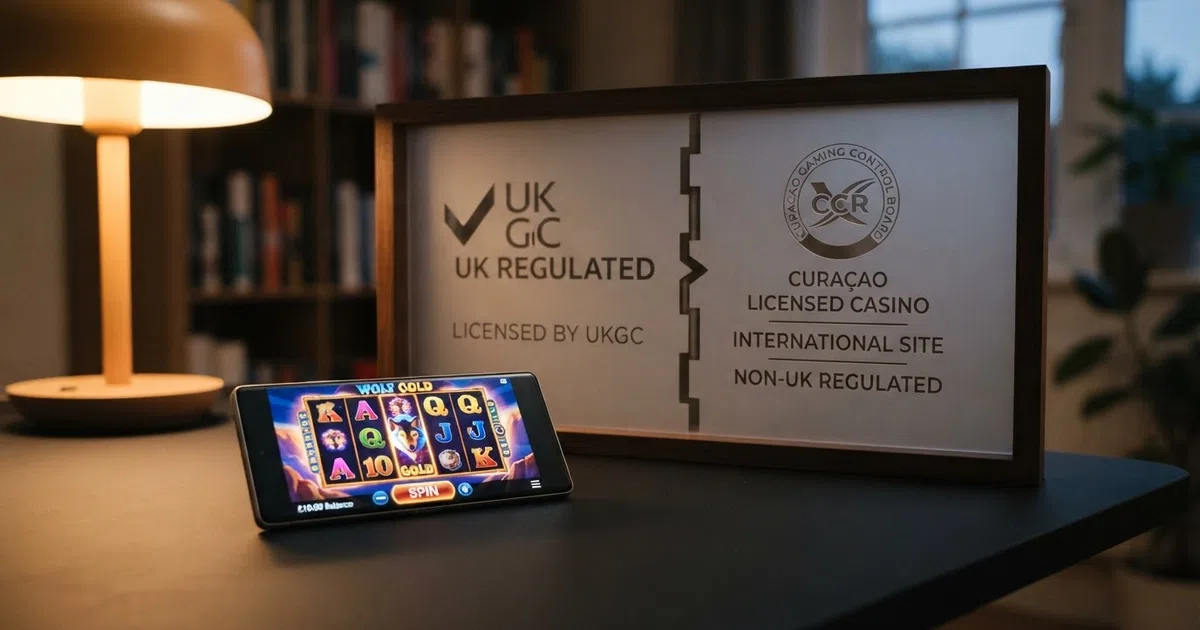
That trade is the heart of this page. UK players are not committing a criminal act by opening an offshore account, but the moment they do, every UKGC obligation stops being their safety net. The rest of the page works out what that means in practice — which bonus terms the offshore brands attach, which payments work, which protections disappear, and which of the ten featured operators offer what.
Data current as of 9 September 2026, cross-checked against the UK Gambling Commission’s public register of gambling businesses (last updated 29 July 2026).
The UKGC gate: what the regulator exists to enforce
The UKGC runs a public register of licensed businesses, searchable by name, trading name, domain or account number. That register is the gate. Every rule the Gambling Act 2005 sets in motion — fair and open gambling, prevention of crime, protection of children and the vulnerable — reaches a player only because the casino they are using is on the register. Step outside the register and the gate closes behind you.
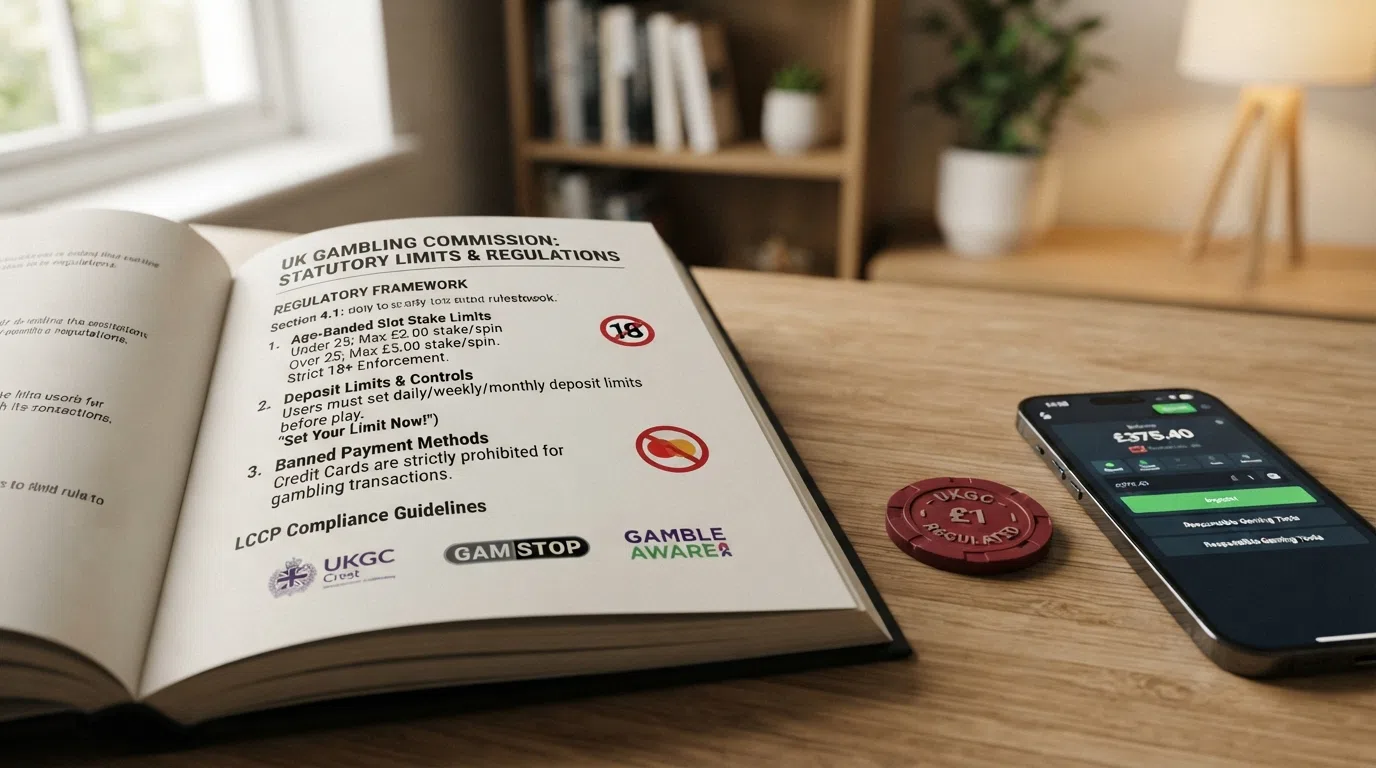
The rules that follow from being inside the gate are concrete and dated. Credit cards have been banned for gambling since 14 April 2020, including credit-card-funded e-wallet top-ups. Online slot stakes carry age-banded caps. A deposit-limit prompt must fire before the first deposit. These are the conditions the licensed column of the comparison table rests on, and the dates sit in the regulation section below. They bind UKGC licensees. They do not bind an offshore operator on a Curaçao permit.
Curaçao, Malta and Gibraltar: what an offshore licence is actually worth
A Curaçao B2C licence is a paper shield for the operator, not a passport for British customers. The licence is issued with a list of jurisdictions the operator must block, and GB is one of them in spirit if not always in name. The licence says: you may serve customers in markets we have not told you to refuse. The comparison material the research draws on is explicit: Curaçao/B2C licensing does not authorise GB supply and still requires local licensing in player jurisdictions.
A Malta Gaming Authority licence is a stronger badge in the European sense, but the research flags it the same way: an MGA licence is not a substitute for GB licensing when serving GB customers. There is no MGA pass that covers a British player. Gibraltar appears in competitor pages in the same list and is a third offshore badge. The research carries no specific Gibraltar condition for this run, so the honest read is that it is another non-UK badge with its own scope, not a GB pass and not a guarantee of British complaint handling.
The clean summary: any of these licences makes the operator legal somewhere. None of them makes the operator regulated in Great Britain. The protections a UK player expects — GAMSTOP, ADR via an alternative dispute resolution body, GB consumer redress — are tied to the GB licence, not to any offshore one.
Why non-GamStop access is the real draw — and the real risk
GAMSTOP is the self-exclusion register that every GB-licensed remote operator must check from 31 March 2020. A player sets an exclusion of six months, one year, or five years; the exclusion cannot be cancelled early. The register is mandatory, which is why it works: every site a British player might otherwise try is on it.
A Curaçao-licensed operator is not on that register. MyStake, for instance, is reviewed as accepting UK accounts without touching the GamStop register. That is the practical draw of the offshore column, and it is worth naming plainly. A self-excluded player who wants to keep playing can open an offshore account, deposit, and play. The protection is gone because the operator was never part of the net. The safer-play section below works through what replaces it, which is mostly nothing. The hook and the risk are the same mechanism.
Depositing, withdrawing and playing from the UK without a VPN
There is no need for a VPN, no clever routing, and no special browser. A UK player opens the offshore site, registers with an email and password, deposits in pounds or crypto, and plays. The friction arrives later and in two places: KYC and withdrawal.
Offshore operators typically defer identity checks to the withdrawal moment, not the registration moment. The threshold is often cumulative: deposits and withdrawals adding up to between £2,000 and £3,000 trigger a full document check. Some conservative operators run the check on the first withdrawal regardless of size. Either way, the player passes KYC before any meaningful payout, not before staking.
Payment rails differ from the UK-licensed norm. Crypto is near-instant once the network confirms; e-wallets land in 12 to 24 hours; UK debit card withdrawals are the slowest, typically one to three business days, and they are the rail the UK-licensed market uses as a default. A UK debit card is not banned for offshore play the way credit cards are banned for UKGC-licensed play. The acceptance, the speed, and the absence of a credit-card ban are three separate things the offshore column offers the player.
The UK-licensed alternative: what you give up the moment you go offshore
A UKGC licence buys a specific bundle. Going offshore drops that bundle. The list is worth reading once and remembering: GAMSTOP coverage, the alternative dispute resolution route via an ADR body, the Commission complaints route, GB consumer redress, age-banded slot stake caps, the deposit-limit regime, and the credit-card ban all sit on the licensed side of the line. None of them follows the player offshore.
The full side-by-side lives in the comparison table further down. The shape of the trade is the point of this section: the offshore offers headline bigger numbers, and they cost the player every safety net the UK side would have provided.
10 casinos, one split: offshore vs UKGC-licensed, name by name
The ten featured operators split cleanly in two. Six are offshore, licensed in Curaçao, and not on the UKGC register. Four are UKGC-licensed, with verifiable account numbers on the public register. The split is the page’s central tension: the offshore column shows the bigger bonus percentages, and the UK column shows the protections the offshore column does not provide. Reading the two side by side is the work of this section.

| Operator | Licence / UK legal status | GAMSTOP / UK register | Welcome bonus | Wagering | Bonus validity |
|---|---|---|---|---|---|
| MyStake | Curaçao GCB; not on UKGC register | Not on GAMSTOP | 150% up to £750 | 30x | 30 days |
| Goldenbet | Curaçao GCB; not on UKGC register | Not on GAMSTOP | 300% up to £1,500 + 100 spins across 3 deposits | 35x | — |
| Velobet | Curaçao (Santeda International B.V.); not on UKGC register | Not on GAMSTOP | — | — | — |
| Freshbet | Curaçao, OGL/2024/1800/1049; not on UKGC register | Not on GAMSTOP | 300% up to £3,000 + 200 spins | 40x | — |
| Rolletto | Offshore / Curaçao; not on UKGC register | Not on GAMSTOP | Up to £5,500 package | 30x | 30 days |
| BetOnRed | Curaçao eGaming; not on UKGC register | Not on GAMSTOP | — | 35x–40x | 7–14 days |
| JeffBet | UKGC-regulated | On GAMSTOP | 100% up to £100 + 50 spins on Rainbow Riches Megaways | 10x bonus / 10x free-spin winnings | 30 days bonus / 7 days spins |
| Duelz | UKGC-licensed (welcome terms unverified) | On GAMSTOP | — | — | — |
| Casumo | UKGC account 61549 | On GAMSTOP | 50% up to £100 | 10x | 7 days |
| Videoslots | UKGC account 39380; Casino Remote active 1 Nov 2014 | On GAMSTOP | — | 20x | — |
The takeaway from the table is the wagering column. The offshore offers sit at 30x to 40x. The UKGC-licensed offers sit at 10x or 20x. That gap is the cost of the bigger headline bonus, and the bonus-cost calculation below turns it into a number a reader can use.
How we ordered the list: licence, games, payments and trust
Operators are ordered on licence quality first, then game selection, payment reach and trust. The licence sort splits the list before anything else: six Curaçao-licensed brands on one side, four UKGC-licensed brands on the other. Game and payment specifics are documented for only a handful of operators, so the ordering leans on licence status and bonus terms where research is thin. Several offshore reviews on the wider market lean on reputation sentiment without primary-source licence verification, and the current page marks every Curaçao brand as “not on the UKGC register in this run” rather than treating a review as a substitute for a register search. Where the UKGC register search returned an account number, the number is in the table; where it did not, the entry is marked as UKGC-licensed per the reviewed source without a captured number.
MyStake: a 150% first-deposit match behind a Curaçao licence
MyStake is reviewed as accepting UK accounts without touching the GamStop register, and as Curaçao-licensed via Santeda International B.V. — the same operator behind Velobet. The headline offer is 150% up to £750 on the first deposit, with 30x wagering and a 30-day validity. The bonus-cost calculation at the foot of this section works out what clearing that bonus actually takes in spin-time. The 30-day validity is generous by offshore standards, where seven to fourteen days is the typical ceiling; a month gives the player a real chance to pace the wagering, but the cost of the wagering itself does not shrink.
The verdict in one line: a UK account that has been self-excluded can play here, and the 30x wagering is at the lower end of the offshore set. The 150% match is smaller than Goldenbet’s or Freshbet’s headline, which is why the wagering is too.
Goldenbet: 300% up to £1,500 plus 100 spins across three deposits
Goldenbet is the biggest percentage headline in the set, and the wagering sits a step above the lower-risk offshore offers: 300% up to £1,500 across three deposits, 100 bonus spins, 35x on bonus funds, with a £20 minimum deposit. The three-deposit structure is worth pausing on, because the wagering runs across the whole bonus, not per deposit: a player who lands the full £1,500 has £52,500 of bonus turnover to clear. That is not a casual afternoon of play. The 100 spins are an additional layer, and the wagering on those spins is the question the research did not pin down — the comparison page carries the bonus-funds figure but leaves the spin wagering unspecified. Treat the spin wagering as unverified rather than absent.
The verdict: the biggest bonus number on the page and the second-heaviest wagering. A reader who wants the most bonus money to grind through finds it here; a reader who wants the cheapest bonus to clear does not.
Velobet: the Santeda-run sibling with fast e-wallet payouts
Velobet shares an operator with MyStake — Santeda International B.V. — and a Curaçao licence sits behind it. The comparison research describes the headline bonus amount as not clearly given in the checked result. Where Velobet does register clearly is on payment speed: e-wallet and crypto payouts are described as the fastest rails for UK players, faster than the UK debit card rails the licensed market runs on.
The verdict: same operator, same licence, and a payment-rail story that beats the licensed market on speed. The bonus side is the gap — readers choosing between MyStake and Velobet are choosing between a known 150% match and an unverified package. The payment case is the reason to look at Velobet, not the bonus.
Freshbet: 63+ providers behind a 40x rollover
Freshbet carries a Curaçao licence referenced in the research with operator licence number OGL/2024/1800/1049, and the operator’s own site claims 63+ game providers — the widest provider mix in the featured set. The welcome is 300% up to £3,000 across first deposits with 200 spins, and the wagering is 40x, the heaviest single multiplier in the top six.
The number 40x is the centre of the trade. A £3,000 bonus at 40x is £120,000 of turnover before withdrawal, and the 200 spins are an additional wagering layer the research does not quantify. The provider breadth is real, and the bonus is large; the wagering is the largest bill in the set.
The verdict: a serious provider catalogue and a serious rollover. The bonus is for a player who plans to grind a heavy wagering requirement across a wide game mix, not for someone who wants the cheapest way through.
Rolletto: a £5,500 package cleared in 30 days
Rolletto’s headline is the largest single package in the featured set, listed at up to £5,500. The wagering is 30x with 30 days to complete. The 30-day window is the same as MyStake’s, which is the offshore ceiling rather than the floor. A £5,500 bonus at 30x is £165,000 of turnover, and the cost of that turnover is what the expected-loss calculation would surface — research carries the headline terms but not the bonus slot, so the calculation is illustrative rather than exact.
The verdict: the largest package number on the page and a moderate 30x wagering. A reader who wants the biggest possible bonus pool, and who can pace the wagering over a month, finds it here.
BetOnRed: Curaçao eGaming with 7–14-day bonus terms
BetOnRed is reviewed as Curaçao eGaming, and the wagering is commonly reported in the 35x to 40x range with bonus validity of 7 to 14 days. The 7 to 14-day window is the tightest in the set, and the wagering is in the heavier half. The headline bonus amount is not clearly stated in the checked result, so the comparison has to lean on the wagering and the validity window as the meaningful variables.
The verdict: short window, heavy wagering, and a bonus amount the research did not pin down. A reader who has a specific bonus size in mind is not served by this entry; a reader who wants to see how tight offshore bonus terms can get, is.
JeffBet: a UK licence, 2,000+ slots and a £100 match
JeffBet is the first UKGC-licensed entry in the ranked set, and the contrast lands hard. The welcome is 100% up to £100 plus 50 free spins on Rainbow Riches Megaways, with 10x wagering on the bonus and 10x on free-spin winnings. The bonus validity is 30 days on the cash portion and 7 days on the spins, and the free-spin winnings carry a £500 max conversion. The catalogue is 2,000+ slots, and the operator sits inside the UKGC framework, which means GAMSTOP, the deposit-limit prompt, the credit-card ban and the ADR route all apply.
The verdict: the small bonus with the small wagering. £100 at 10x is £1,000 of turnover, an order of magnitude below the offshore offers, and the £500 cap on free-spin winnings is the kind of small print a player reads on the licensed side. JeffBet is what a regulated welcome looks like; the rest of the column is the comparison.
Duelz: UKGC-licensed with unverified welcome terms
Duelz is reviewed as UKGC-licensed, and the welcome terms the research could check did not pin down a current offer. The honest read is to mark the entry as licensed and leave the bonus amount, wagering and validity as unknown. The page does not invent a number to fill the cell. What is known is the regulatory side: Duelz sits on the UKGC register, runs inside the deposit-limit regime, is connected to GAMSTOP, and accepts only the payment methods the licensed market allows.
The verdict: a licensed brand a reader is hearing about, with welcome terms the current data does not capture. Pick it for the licence and the protections, not for any specific bonus the page has named.
Casumo: account 61549 and a 50% welcome up to £100
Casumo’s UKGC licence is verifiable on the public register under account 61549, and the welcome is 50% up to £100 with 10x wagering and a 7-day validity. A 7-day window is tighter than JeffBet’s 30 days on the cash portion, and the 50% match is smaller. The wagering is in the same 10x band as the rest of the UKGC-licensed set, and the 7-day validity is the shortest in the licensed column. A £100 bonus at 10x is £1,000 of turnover, a small number by offshore standards and a manageable one by any standard.
The verdict: the smallest welcome in the licensed column and the tightest 7-day window. The wagering is light, the account is verified, and a player who wants to clear a bonus inside a week has a path.
Videoslots: account 39380, live in the UK since 2014
Videoslots Limited holds UKGC account 39380 with Casino Remote active from 1 November 2014, which is the longest-verified licence in the featured set. The catalogue is implied to be wide; the research did not pin down a current welcome offer or a specific provider list. The wagering norm is 20x per the reviewed source, which sits between the 10x UK norm and the 30x to 40x offshore norm.
The verdict: the longest-running licence in the set and a wagering rate the licensed column does not match anywhere else. A reader who values tenure on the UK register finds it here, and the 20x sits in the middle of the comparison.
Offshore vs UKGC-licensed: what each side actually delivers
| Player protection | UKGC-licensed | Non-UK regulated (offshore) |
|---|---|---|
| GAMSTOP coverage | Mandatory for all GB-licensed remote operators; six-month, one-year, five-year exclusions, no early cancellation | Not in the GAMSTOP net; an offshore account opens regardless of UK self-exclusion status |
| Alternative dispute resolution / Commission complaints route | Available via approved ADR body and onward to the Commission | Operator-side ADR standards vary; no Commission route, no GB consumer redress |
| Slot stake caps | Age-banded: £5 (25+) from 9 April 2025, £2 (18–24) from 21 May 2025 | No equivalent cap; the offshore site sets its own stake ceiling |
| Credit-card gambling | Banned since 14 April 2020, including credit-card-funded e-wallet top-ups | No equivalent ban; credit cards may be accepted at the operator’s discretion |
| Deposit-limit regime | Mandatory prompt before first deposit from 31 October 2025; standardised gross deposit limit, RTS 12, extended to 30 September 2026 | No equivalent obligation; default limits are operator policy, not regulator policy |
| Identity verification | Required before first deposit, gambling or free-bet play since 7 May 2019 | KYC typically runs at withdrawal, often past cumulative £2,000–£3,000 |
| Session-loss display, reality checks, time-outs | Mandatory under UKGC rules | No equivalent obligation |
| Wagering requirement cap | 10x since 19 December 2025 | 30x–40x on the featured offers; 7x–40x on adjacent Curaçao sites |
The table is the page’s clearest summary. The licensed column runs an obligation per row; the offshore column carries a gap per row. That is the trade, in one view.
The licensed comparators not in the ranked top ten still belong on the page. 32Red’s GB site is licensed under account 45322, with 150% up to £250 at 10x wagering. 888casino is licensed under account 39028, with Casino Remote active from 1 November 2014, a £20 minimum deposit, a £500 cap on bonus wins and 30x wagering across 90 days. BetVictor, Betway and Coral are UKGC-registered brands with no current specific terms the research captured; they sit on the licensed side of the column and inherit every UKGC obligation by default.
The licence that changes everything: UK regulation vs the offshore grey zone
The Gambling Act 2005 set the licensing objectives: prevent crime and disorder, ensure fair and open gambling, and protect children and the vulnerable. The Gambling (Licensing and Advertising) Act 2014 extended those objectives to remote operators serving GB customers. A GB licence is compulsory at the point of consumption; an MGA, Curaçao or Gibraltar licence is not a substitute. The market-mechanics numbers — stake caps, deposit-limit regime, Remote Gaming Duty — sit in the regulation table below. The player-side exposure is operator-focused rather than criminal, which is the point the rest of this section is built on.
The UKGC landscape: what licensed casinos must do and offer
A GB licence is not a marketing badge. It is a set of obligations that runs from the first deposit onward. Remote licensees verify name, address and date of birth before first deposit, first gamble or first free-bet play — that has been the case since 7 May 2019. Anonymous play is not available on a licensed site. The catalogue is constrained: online slots carry age-banded stake caps, and the licensed game-design rules ban autoplay, set a 2.5-second minimum spin speed, ban features that speed up play, ban losses disguised as wins and ban reverse withdrawals. The four UK-licensed operators in the ranked top ten — JeffBet, Duelz, Casumo and Videoslots — sit inside all of that. The 32Red, 888casino, BetVictor, Betway and Coral entries in the licensed comparator set inherit the same obligations by default.
How UK casino regulation actually works — licences, rules and enforcement
| Rule | Limit or requirement | Effective date |
|---|---|---|
| Online slot stake cap (25+) | £5 per spin | 9 April 2025 |
| Online slot stake cap (18–24) | £2 per spin | 21 May 2025 |
| Credit-card gambling ban | Banned for all UKGC-licensed gambling, including credit-card-funded e-wallet top-ups | 14 April 2020 |
| Deposit-limit prompt | Operator must prompt before first deposit; decrease requests actioned immediately | 31 October 2025 |
| Standardised deposit limit (RTS 12) | Gross deposit limit based solely on money paid in over a set period | Originally 30 June 2026, extended to 30 September 2026 |
| Game-design rules | Autoplay banned; minimum 2.5-second spin cycle; speed-up features banned; losses disguised as wins banned; reverse withdrawals banned; session losses/wins and time played must be displayed | 31 October 2021 |
| Identity verification | Name, address and date of birth verified before first deposit, first gamble or first free-bet play | 7 May 2019 |
| Financial vulnerability check | Light-touch check at £150 net deposit in a rolling 30-day period | 28 February 2025 |
| Financial risk assessment | Stage 1 thresholds £5,000 (25+) / £2,500 (under 25) in rolling 24 hours; final thresholds £1,000/£3,000 (25+) / £750/£2,000 (under 25); staged rollout confirmed July 2026 | Announced; staged rollout in progress |
| Wagering requirement cap | 10x on casino bonuses | 19 December 2025 |
| Mixed-product promotional offers | Banned | 19 December 2025 |
| Direct marketing opt-in | Per product, per channel | 1 May 2025 |
| Strong-appeal advertising test | Tightened; no under-25s in gambling ads | 1 October 2022 |
| GAMSTOP coverage | Mandatory for all GB-licensed remote operators; six-month / one-year / five-year exclusions, no early cancellation | 31 March 2020 |
| Statutory gambling levy | Applies to licensed operators | From April 2025 |
| Remote Gaming Duty | 21% rising to 40% on accounting periods beginning on or after the date | From April 2026 |
| Operating without a GB licence | Section 33 offence: up to 51 weeks’ imprisonment, unlimited level-5 fine, or both | Gambling Act 2005 |
Enforcement under the UKGC is disruption-led rather than ISP-blocking. The Commission’s tools are cease-and-desist notices to the operator, search-engine URL referrals that pull offending sites out of UK search results, pressure on registrars and hosts, payment-provider referrals that cut the operator off from UK rails, and affiliate pressure. Blocking at the ISP layer is not the model. The model is to make the offshore site harder to find, harder to host, harder to pay and harder to advertise from inside the UK.
How to verify a UKGC licence in under a minute
- Search the UKGC public register by business name, trading name, domain or account number; the register was last updated 29 July 2026.
- Confirm the account number the operator claims on its site matches the register entry; the four UK-licensed operators in the ranked set are tied to a real account number in the table above.
- Treat a missing or mismatched entry as “not verified”, not as evidence of a licence.
Unregulated casinos: the risks the offshore badge hides
The risk on the offshore side is not a player penalty. The section 33 offence under the Gambling Act 2005 targets the operator, with up to 51 weeks’ imprisonment and an unlimited level-5 fine. The player instead loses UKGC protections, GAMSTOP coverage, the alternative dispute resolution route, the Commission complaints route and GB consumer redress. The dispute-leverage gap is the load-bearing loss: when a withdrawal stalls, when a bonus term is read two ways, when a maximum-cashout clause is enforced mid-play, the UK player has nowhere the UKGC will back them. A licensed operator has the ADR and the Commission on the back end; the offshore operator has its own house rules and its own customer-service team.
Crypto sharpens the trade. Crypto/offshore banking is faster than UK debit rails, but the dispute leverage is weaker. A payment provider under UKGC pressure can be leaned on; a crypto transfer to a Curaçao operator cannot be reversed in the same way. The speed is real. The recourse is not.
Slots and crypto: two verticals with very different rulebooks
Online slots on a UKGC-licensed site are age-banded at £5 for players 25 and over and £2 for players 18 to 24, in force since 9 April 2025 and 21 May 2025 respectively. The licensed game-design rules also fix a 2.5-second minimum spin cycle, ban autoplay, ban losses disguised as wins and ban reverse withdrawals. The slot experience on a UKGC site is the most heavily rule-bound in the market.
Crypto casinos sit outside the UKGC framework altogether. They are not UKGC-regulated, the crypto/offshore route trades speed for weaker dispute leverage, and the protections of the licensed market — stake caps, autoplay ban, deposit-limit prompt, GAMSTOP — do not follow the player across. A reader comparing the two is comparing a slow, rule-bound experience with a fast, lightly-ruled one. Both are real. The first has the regulator; the second has the rails.
What responsible-gambling tools offshore casinos actually offer
UKGC licensees must prompt a deposit limit before first deposit and action decrease requests immediately. The standardised “deposit limit” sits in RTS 12, originally 30 June 2026 and extended to 30 September 2026, and is a gross deposit limit based solely on money paid into the account over a set period. Offshore operators carry no equivalent obligation in the research. The operator may offer a deposit-limit widget, a reality-check toggle, a session timer and a self-exclusion switch; nothing requires any of them, and none of them is backed by UK redress if it fails to fire. A reader who relies on a deposit-limit prompt to set the day’s spend is, on the licensed side, relying on a regulator; on the offshore side, relying on the operator.
Self-exclusion outside the UK: GAMSTOP’s limits and the alternatives
GAMSTOP is the UK net. It is mandatory for every GB-licensed remote operator from 31 March 2020, with exclusion periods of six months, one year, five years, or five years with auto-renewal. The exclusion cannot be cancelled early. That is the strength of the register, and it is also the limit: GAMSTOP only covers operators the regulator can reach. A Curaçao-licensed site is not bound to integrate, and the research confirms that operators like MyStake accept UK accounts without hitting the GamStop register at all.
The alternatives outside the UK are not a UK-wide net. Some offshore operators run their own self-exclusion schemes, and a player can ask the operator directly; the scheme sits inside the operator’s own policy, with no UK oversight. There is no equivalent of GAMSTOP for the offshore column. The practical consequence is what the opening section said: a self-excluded UK player can still open an offshore account, deposit, and play.
Deposit limits, reality checks and spotting the signs early
A gross deposit limit counts only money paid into the account over a set period, and is the variable the RTS 12 rule standardises. Reality checks and session-loss display are licensed-site obligations. Two practical screening tools sit on top of the rules: GambleAware’s gambling harms self-assessment — answer 7 quick questions — and the NHS gambling problem score, with a threshold of 8 or higher as the point at which further support is recommended. The concrete resource if a reader in Great Britain is at that point is the National Gambling Helpline, run by GamCare, at 0808 8020 133, free and confidential, 24 hours a day. GamCare operates the helpline; NHS specialist gambling treatment clinics in England are the in-person path the NHS routes to.
How we checked every casino on this page
Licence status was checked against the UKGC public register, last updated 29 July 2026, with account numbers captured where the register search returned them — 61549 for Casumo, 39380 for Videoslots, 45322 for 32Red, 39028 for 888casino. Offshore operators were marked “not on the UKGC register in this run” and their Curaçao licences noted from review sources, including the operator licence number OGL/2024/1800/1049 for Freshbet and the Santeda International B.V. operator link between MyStake and Velobet. Operators were ordered on licence quality first, then bonus terms, game selection and payments. This run did not verify every operator’s live licence page individually, and the UK-regulated picks were checked against register entries where the search returned a number. The five UKGC-licensed comparators without a captured welcome — BetVictor, Betway, Coral — are listed as UKGC-registered brands with no current specific terms this run.
What offshore access actually costs you — and what to do next
The headline numbers on the offshore side are larger. 300% up to £1,500 at Goldenbet. Up to £3,000 at Freshbet. Up to £5,500 at Rolletto. The wagering that follows is heavier, sitting at 30x to 40x. The number that travels with the bonus is the turnover: a £1,500 bonus at 35x is £52,500 of stakes to clear. The same £1,500 at 10x on the licensed side is £15,000. The bonus is larger offshore, and so is the bill to clear it.
The number that sits next to the wagering is the protection. A UKGC licence buys GAMSTOP coverage, an ADR route, a Commission complaints route, GB consumer redress, age-banded stake caps, the deposit-limit regime and the credit-card ban. The offshore column carries none of these by default. The player’s call is whether the larger bonus number is worth the missing safety net. The protections are the heavier side of the scale on this page, and the calculation below is the part of the cost a reader can work through before depositing anywhere.
The concrete next step: verify the licence on the UKGC register, set a deposit limit before the first deposit, and read the bonus terms in full. No operator on this page is recommended as a place to play; each is described for what it offers, and the comparison is the reader’s to make.
What clearing a 30x offshore bonus actually takes
The headline bonus number is one thing. The cost of clearing it is another. Take MyStake as the worked example: the headline is 150% up to £750 with 30x wagering, valid for 30 days. The required turnover is £750 multiplied by 30, which is £22,500. At a £1 stake per spin, that is 22,500 spins. A five-second interval between spins turns that into 2,500 seconds of play, which is 42 minutes of continuous spinning. The 30-day validity gives the player room to pace it, but the volume is the volume: clearing the £750 bonus takes 31 hours of play on the stated assumptions, and that is before the house edge takes its own cut over those 22,500 spins.
Frequently asked questions
Is it legal for UK residents to play at casinos not licensed by the UK Gambling Commission?
It is not a criminal offence for a UK player to access an offshore casino, per Publicasity’s framing. The section 33 offence under the Gambling Act 2005 sits with the operator running the site without a GB licence, not with the customer. What the player does lose is every UKGC protection that would otherwise apply: GAMSTOP coverage, the alternative dispute resolution route, the Commission complaints route, GB consumer redress, age-banded stake caps, the deposit-limit regime and the credit-card ban. The access is legal. The safety net is not.
Do non-GamStop casinos accept UK players and GBP deposits?
Yes on both counts. Curaçao-licensed operators reviewed in the research — MyStake, Goldenbet, Velobet, Freshbet, Rolletto, BetOnRed — accept UK accounts and take deposits in pounds. The catch is that the same operators do not consult the GAMSTOP register on the way in, so a player who has set a UK self-exclusion can still open an account. That is the practical meaning of “non-GamStop” in the offshore column: access without the UK self-exclusion net.
Are crypto casinos legal and regulated for UK players?
Crypto casinos are accessible to UK players but are not UKGC-regulated. The crypto/offshore route is faster than UK debit rails on the payment side — near-instant settlement on the network, 12 to 24 hours on e-wallets — but the dispute leverage is weaker. A crypto transfer to a Curaçao operator cannot be reversed through a UK-licensed payment provider; the operator’s own customer service is the route. The licensed market stays on UK debit rails with slower withdrawals and a regulator on the back end.
What is the current online slots stake limit in the UK?
The UK online slots stake limit is age-banded: £5 per spin for players aged 25 and over, in force from 9 April 2025; £2 per spin for players aged 18 to 24, in force from 21 May 2025. The cap applies to online slots on UKGC-licensed sites. Offshore operators are not bound by the cap, and the per-spin ceiling on a Curaçao site is set by the operator.
How can I verify whether an online casino holds a UKGC licence?
Search the UKGC public register by business name, trading name, domain or account number; the register was last updated 29 July 2026. Confirm the account number the operator claims on its site matches the register entry. Treat a missing or mismatched entry as “not verified”, not as evidence of a licence. The four UK-licensed operators in the ranked top ten are tied to a real account number in the table.
Who should I contact in Great Britain if gambling becomes a problem?
The National Gambling Helpline, run by GamCare, is 0808 8020 133 — free, confidential, 24 hours a day. The NHS problem-gambling score threshold is 8 or higher as the point at which further support is recommended. GambleAware’s gambling harms self-assessment is the seven-question screening tool, and NHS specialist gambling treatment clinics in England are the in-person path the NHS routes to. GamCare operates the helpline; the NHS provides the clinics.
Account – topratedonlinecasinos-uk
Content created by the «topratedonlinecasinos-uk» team