
No Account Casino UK: How 'No Account' Plays Out Under a GB Licence
 Available in GB
Every casino licensed in Great Britain has to know who is depositing before the first pound goes in. That single rule decides what “no account casino UK” can mean here, and it is the reason this page exists. The label travels from markets where the bank acts as the identity provider and the operator never runs a separate check. In Britain the bank can assist, but it cannot replace, the operator’s KYC. What a UK reader actually gets under that label is faster sign-up, not absent checks, and the rest of the page is about how that distinction plays out in the offers, the speed and the rules.
The numbers in this article are current as of 9 September 2026, verified against the UK Gambling Commission’s public register.
Why the ‘no account’ label overpromises in the UK
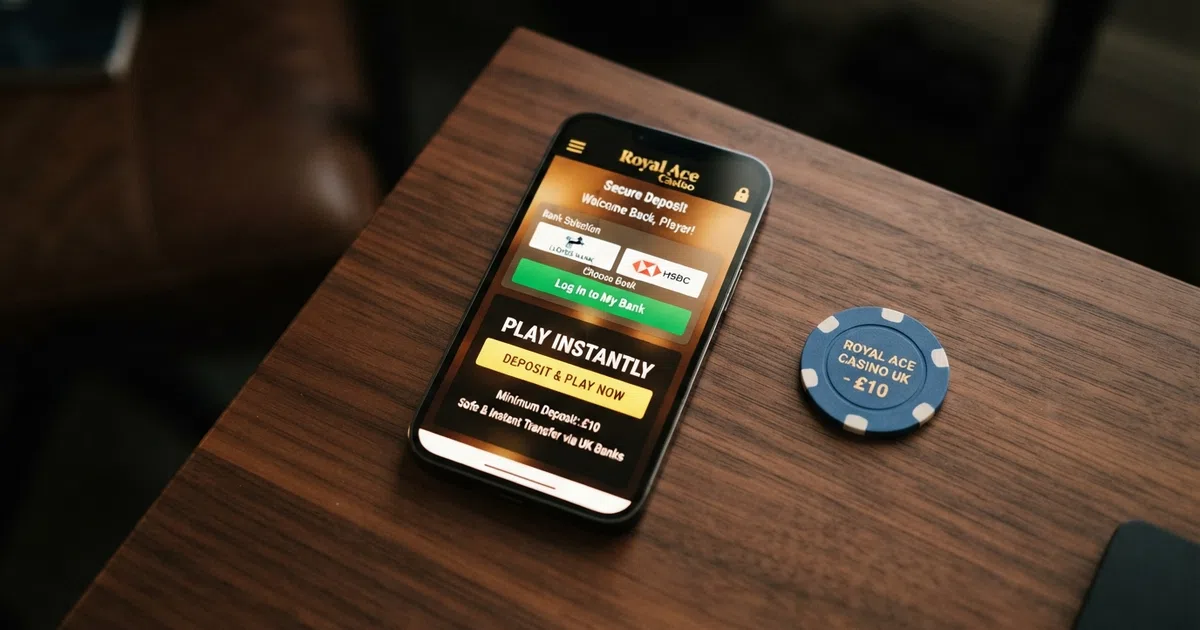
The phrase “no account” is borrowed from Scandinavian Pay N Play, where a bank login really does stand in for a registration form. Britain has its own version — Pay by Bank, built on open banking — and it works fast, but it stops short of replacing the operator’s identity check. The two models look identical from the deposit screen and behave differently once the operator needs to know who is at the other end. That gap is the entire subject of this section.
What Pay N Play actually is — and the six steps that make it instant
Pay N Play is the marketing name for a flow where the bank handles sign-in, deposit and identity confirmation in the same request. The player sees six steps: choose an amount, pick a bank, authenticate through the bank’s app or strong-customer-authentication step, consent to sharing the data the operator needs, fund the deposit from the nominated account, and land in the casino lobby with a session ready to play. Industry reporting puts the full sequence at under sixty seconds; Trustly benchmarks both directions of the payment at under six seconds. The flow is the entire selling point, and the speed is real — measured against the same bank’s own app rather than against a wall-clock promise.
The bank sits in the middle of the exchange, not at the end of it. It confirms the player’s name, address and date of birth, and it returns that data alongside the deposit confirmation. The casino provisions an account against the verified identity in the same request. What it leaves out is anything the bank does not hold — affordability checks, source-of-funds evidence, exclusions through GAMSTOP. Those stay with the operator, and they are what turns a Scandinavian Pay N Play into a British Pay by Bank. The bank login replaces a registration form; it does not replace the operator’s obligations.
Why the UK version still checks who you are
Britain abolished the seventy-two-hour grace period in 2019. Before that change, a customer could deposit, play and only later be asked for proof of identity and address. The current rule is that every GB-licensed operator must verify name, address and date of birth before the first deposit, and the UK Gambling Commission’s public guidance is explicit: proof of age and identity is required prior to gambling. The Trustly data can expedite the check — the bank has already confirmed the essentials — but the operator still runs its own KYC and is on the hook if that data turns out to be wrong.
A second check now precedes the first spin. From 31 October 2025 every operator has to prompt a customer to set a financial limit before accepting the first deposit. The rule is part of the wider safer-gambling package that arrived with the 2025/2026 rule changes, and it means the no-account flow ends not in the lobby but in a limit prompt — the same one any registered customer would see, presented before the deposit lands. That step is the visible proof that the licence still applies, even when the registration form does not.
Where to find them — sites, lists and what to learn first
The search results for this term are dominated by affiliate listicles and editorial review pages. They tend to list eight to fifteen operators and rank them on bonus size or deposit speed, then add a “how it works” section that often copies the Scandinavian flow wholesale. Few of them state the GB caveat that this page opens with, which is that no GB-licensed casino can skip verification. The honest reading of a list is therefore: it is a starting point for a shortlist, not a final answer, and every brand on it still verifies.
A reader comparing lists should look first for the UKGC licence status of each name, then for the welcome offer in plain money terms, then for the payment methods that actually work in Britain. The ranked shortlist on this page sits further down — ten brands, all GB-licensed, ordered for fast, low-friction sign-up rather than for bonus headline size. The listicle does the same job less rigorously; the shortlist does it with the caveat already baked in.
What the 2026 rule changes mean for new casinos
The package of changes arriving through 2025 and into 2026 reshapes what a new UK casino looks like at onboarding, not just what its bonus page advertises. Three of the changes touch the no-account flow directly.
From 30 June 2026 — extended to 30 September 2026 — only a gross deposit limit based on money paid into the account may be called a “deposit limit”. Net-deposit limits and any limit expressed after bonus credits or withdrawals are no longer permitted under that label. The change is small in wording and large in practice: it makes the limit the player sets the gross money they actually spend, not a net figure that the casino’s own accounting can move around. From 31 October 2025 the prompt that asks the player to set a financial limit sits before the first deposit, which is the moment a no-account flow normally disappears into the lobby. The limit now arrives earlier.
Remote Gaming Duty rises from 21% to 40% from 1 April 2026, and the statutory levy that replaced the voluntary contributions system sits at 1.1% of gross gambling yield for remote casino licences from April 2025. Both are operator costs and neither changes the headline offer a player sees, but both raise the stakes of running an unlicensed brand inside the GB market — and that is what the rest of the article, on offshore risk, returns to.
Mobile and app play — the same model on a phone
The no-account flow is identical on a phone. The bank authentication step runs inside the banking app, the deposit confirmation returns to the casino, and the session is provisioned in the same request. Nothing about the phone changes the KYC obligation or the limit prompt — those arrive at the same point in the flow as on a desktop. A dedicated app is not required for the model to work; the browser carries the deposit screen and the bank’s app carries the authentication. Where a casino does ship a native app, it tends to be a wrapper for the same flow rather than a parallel sign-in path.
The slots, RTP and free-play side of no account play
The games these casinos stock are familiar. Big Bass Splash from Pragmatic Play carries a 96.71% RTP, very high volatility and a 5,000× maximum win; Big Bass Bonanza from Pragmatic Play / Reel Kingdom sits at 96.71% RTP, medium-high volatility and a 2,100× max win. Book of Dead from Play’n GO is at 96.21% RTP, high volatility and 5,000× max win. Sugar Rush from Pragmatic Play is at 96.50%, high volatility and 5,000× max win. Aztec Gems from Pragmatic Play is the lower-volatility outlier at 96.52% RTP and a 375× max win. These are the titles the welcome spins on this page’s shortlist actually unlock.
The stake the player can place per spin is the surprise. Online slots carry a statutory maximum stake per game cycle: £5 for players aged 25 and over, £2 for players aged 18 to 24, imposed by SI 2025/215. Two adults at the same casino on the same game can face different maximum bets — the British age band is the distinctive feature of the rule. Auto-play is banned and the minimum spin speed is 2.5 seconds; both have been in force since 31 October 2021. The spin ceiling is set in regulation, not chosen by the casino, and no welcome offer can lift it.
A worked example puts the cost in plain terms. Take a player aged 25 or over, on Big Bass Splash at the £5 statutory stake, running through a hundred spins in a session. Stake × spins gives £500 wagered across the session. RTP of 96.71% returns £483.55 in expectation. The expected loss for the session is £16.45 — a statistical estimate over many spins under the stated assumptions, not a promise for any single session. Free-play and demo modes are available across the licensed set but never waive the stake cap; the cap travels with the game, not with the player’s balance.
How to judge an instant-play casino
The order in which a reader checks a brand decides whether the comparison is any good. Licence first, offer terms second, payment speed third, in that order, with the rest of the criteria layered after. Each step rules out a category of mistake before the next one is even considered. Reversing the order — chasing speed first, finding the licence later — produces exactly the kind of choice that the offshore section of this page warns against.
What “best” really means when the site can’t skip checks
“Best” cannot mean “no checks” in Britain, because no GB-licensed site can offer that. The ranking therefore moves to what survives the rules: a current GB licence, offer terms that comply with the 10× wagering ceiling, and an honest description of how verification actually happens. The wagering ceiling arrived on 19 December 2025 as a hard cap rather than a guideline; mixed-product promotional offers were banned in the same package. An offer above 10× wagering is no longer legal at a GB-licensed brand, regardless of how the marketing presents it.
Honesty about verification is itself a quality signal. A brand that describes the bank-assisted check in plain language is signalling that it knows the rule and is not relying on the older “no account” framing to imply the check does not exist. The ten operators reviewed further down all carry active GB licences and all verify before the first deposit, and the table that follows is the cleanest way to see where they differ.
Top-ranked picks and UK recommendations
The ranking on this page is a shortlist of ten operators, not a market sweep. “Top” means the ten reviewed — every one GB-licensed, every one still verifying, ordered for fast, low-friction sign-up and honest offer terms. The comparison table further down sets them side by side, and the operator write-ups below the table read the rows back into prose for each brand.
Reading reviews and player feedback
Affiliate reviews and editorial reviews can tell a reader what an offer looks like in plain language and can sometimes compare it against competitors. What they cannot verify is the licence itself — that information comes from the UK Gambling Commission’s public register, last updated 29 July 2026, and a reader who wants certainty should look there directly. Player feedback on community forums tends to be louder on withdrawal problems than on licensing questions; the latter is the one that decides whether a brand is even legal to play at. The register is the right place to settle that question, and it carries every brand that has held a GB licence, not just the ones featured on any single page.
Ten GB-licensed casinos reviewed for fast sign-up
Every operator below holds an active GB licence, which means every one of them verifies before the first deposit. The table orders them by licence account number, not by bonus size, and the operator write-ups read each row back into prose. Eight of the ten offers are wager-free; one carries the 10× ceiling and no free spins; one carries 10× on winnings with a £30 cap.
| Operator | Licence status | Welcome offer | Wagering | Offer validity | Game providers |
|---|---|---|---|---|---|
| bet365 | Active (acct 38721) | Up to 500 wager-free spins, £10 minimum lifetime deposit; spins of 5/10/20/50 over 10 days | 0× | 30 days from registration | Microgaming, Playtech, NetEnt, Pragmatic Play, IGT |
| Sky Vegas | Active (licence 065519-R-339675-002) | 50 no-deposit spins + 200 spins after £10 spend | 0× | 7 days for spins; £10 spend within 30 days | NetEnt, IGT, Pragmatic Play, Playtech, Blueprint |
| 888casino | Active (acct 39028) | 100% deposit match up to £100 | 10× on selected slots | 90 days from credit | NetEnt, Playtech, Microgaming, IGT, Red Tiger |
| LeoVegas | Active (acct 39198, since 1 Nov 2014) | Deposit £10, wager 1× for 50 wager-free Big Bass Splash spins at £0.10 | 0× | 7 days to deposit and wager; 3 days to use spins | NetEnt, Microgaming, Play’n GO, Pragmatic Play, Evolution |
| Paddy Power | Active (acct 39439) | 60 no-deposit spins + 200 spins after £10 deposit | 0× | 7 days from credit | Playtech, NetEnt, Pragmatic Play, Red Tiger |
| William Hill | Active (acct 39225) | 200 Big Bass Splash spins at £0.10 for a £10 deposit and stake; winnings capped at £30 | 10× on winnings | 72 hours from credit | Playtech, NetEnt, Pragmatic Play, Evolution, IGT |
| Betfred | Active (acct 39544) | 200 wager-free spins for a £10+ deposit and stake | 0× | 7 days from credit | Playtech, IGT, Pragmatic Play, Red Tiger, Blueprint |
| Virgin Games | Active (acct 54310, since 21 May 2019) | Play £10 for 30 spins (1p coin, 10 lines on Game of Thrones) or £50 in bingo tickets | 0× | 30 days from registration | NetEnt, IGT, Microgaming, Evolution |
| MrQ | GB-licensed (verify current status at register) | 100 wager-free Big Bass Splash spins at £0.10 for a £10 deposit; winnings uncapped | 0× | 48 hours from qualifying deposit | Pragmatic Play, Play’n GO, NetEnt, Hacksaw Gaming |
| Betfair | Active (acct 39435) | 50 no-deposit spins + 100 spins after £10 deposit | 0× | 7 days from credit | Playtech, NetEnt, Pragmatic Play, IGT, Red Tiger |
bet365
bet365 holds an active Casino Remote licence under UKGC account 38721, trading as Hillside (UK Gaming) ENC. The welcome package is the biggest spins batch in the set: up to 500 wager-free spins on selected slots, unlocked by a £10 minimum lifetime deposit and parceled out across ten days in batches of 5, 10, 20 and 50, with twenty-four hours between each release. Winnings are paid as cash with no wagering. Validity runs thirty days from registration, which gives the full schedule room to land. The bigger batch is real value, but the slow release means a player has to keep coming back to claim each tranche, and the wager-free treatment of the winnings is what makes the slow drip worth tolerating. A reader who wants to fund once and walk away with cash winnings should look at this row; a reader who wants a single deposit-and-go experience should look elsewhere.
Sky Vegas
Sky Vegas is the Flutter Entertainment brand on UKGC licence 065519-R-339675-002, active in Casino Remote. The welcome shape is the deepest no-deposit spins offer of the set: 50 spins land on registration, and a further 200 arrive once the player has spent £10 on the site. Each spin is worth £0.10 and the seven-day expiry is short. The £10 spend condition has to be hit within thirty days. There is no wagering on the winnings, so anything the spins return is cash from the moment it lands. The short expiry on a no-deposit batch is the trade-off; the second tranche is gated by a real spend, which the marketing copy tends to bury.
888casino
888casino holds an active Casino Remote licence under account 39028. It is the only percentage match on this page — 100% up to £100 — and the only 10× wagering in plain money terms. The wagering applies to selected slots and runs for ninety days from credit. There are no free spins in the standard welcome. A reader who prefers a deposit match over a spins bundle has one option here, and that option is the legal ceiling on wagering: nothing above 10× is permitted under the current rule. The shape is familiar to anyone who has played at a UK-licensed casino in the last decade; the wagering at the ceiling is what marks it as the older style of welcome that survives in one corner of a market that has otherwise moved to wager-free spins.
LeoVegas
LeoVegas has held an active Casino Remote licence since 1 November 2014, the longest-licensed brand in this shortlist. The welcome is deposit £10, wager the deposit once, and receive 50 wager-free spins on Big Bass Splash at £0.10 per spin. The two-stage validity window is the practical constraint: seven days to make the qualifying deposit and the qualifying wager, then three days to use the spins once they credit. Winnings are withdrawable cash from the moment the spins settle. The deposit-and-wager-once trigger is a smaller commitment than most spins offers, but the three-day window on the spins themselves is tight enough that a reader who misses it loses the batch. LeoVegas is the most patient fit for a player who already plays slots and wants the longest licence history on the page.
Paddy Power
Paddy Power is the Flutter brand on UKGC account 39439, active in Casino Remote. The welcome gives 60 no-deposit spins on registration and 200 more after a £10 deposit. The wagering is zero and the seven-day validity covers both tranches. It is the biggest no-deposit batch of the Flutter names on this shortlist, and the deposit-gated top-up is generous. The expiry is the constraint: a player who delays the £10 deposit past seven days loses the second batch. Paddy Power fits a reader who wants a chunky spins total without the spend condition that Sky Vegas imposes — but it asks for a deposit rather than a spend, which is a more honest trigger.
William Hill
William Hill, under evoke, holds an active Casino Remote licence on account 39225. The welcome gives 200 Big Bass Splash spins at £0.10 each for a £10 deposit and a £10 stake. The wagering is 10× on the winnings, the winnings are capped at £30, and the offer has to be used inside seventy-two hours from credit. The cap is the single most distinctive feature of this row: a player who hits a 5,000×-stake payout on the spins is paid £30, not the headline figure, and the 10× wagering sits on top of that ceiling. The offer is the cheapest deposit requirement on the page at £10, but the winnings cap is the real cost, and a reader who wants uncapped wager-free value should look at MrQ or LeoVegas instead.
Betfred
Betfred holds an active Casino Remote licence on account 39544. The welcome is 200 wager-free spins for a £10+ deposit and stake, no wagering on the winnings, and a seven-day validity. The shape is plain: a deposit, a stake, a spins bundle, no cap on the winnings. It is the most straightforward spins offer on the page — nothing to claim in tranches, no qualifying spend, no no-deposit stage. A reader who wants the simplest version of the wager-free welcome has one obvious row to look at, and this is it.
Virgin Games
Virgin Games, also under evoke, has held an active Casino Remote licence since 21 May 2019 on account 54310. The welcome offers a choice: play £10 on slots and receive 30 free spins — 1p coin, 10 lines on Game of Thrones — or take £50 in bingo tickets. The wagering is zero on either option and the qualifying requirements have to be completed inside thirty days. The choice is the defining feature: a player who wants spins is not also getting bingo credit, and the bingo ticket is a real-money bonus tied to the bingo product. Virgin Games fits a reader who wants either of those two products and prefers a thirty-day window to claim them.
MrQ
MrQ is GB-licensed and widely cited as UKGC-compliant, though readers should verify the current licence status directly on the public register. The welcome is 100 wager-free spins on Big Bass Splash at £0.10 each for a £10 first deposit, with all winnings uncapped and credited to the real-money balance, and a 48-hour validity. The uncapped winnings are the distinctive feature: there is no £30 ceiling, no 10× wagering, and the spins have no further conditions beyond the deposit trigger. The 48-hour window is short. MrQ is the cleanest wager-free offer on the page for a reader who wants uncapped slot winnings and is willing to move quickly on the validity.
Betfair
Betfair, the Flutter brand on UKGC account 39435, gives 50 no-deposit spins on registration and 100 more after a £10 deposit. Wagering is zero and the seven-day validity covers both tranches. It is the smallest no-deposit batch on the page after Sky Vegas and Paddy Power, and the deposit-gated top-up is the lowest of the Flutter names. The trade-off is similar to those two: a short window on a small no-deposit tranche, and a real-money deposit trigger for the larger one. Betfair is the right Flutter row for a reader who wants a no-deposit stage and a smaller deposit-gated top-up.
Why wager-free is becoming the UK bonus norm
Eight of the ten offers on the table pay winnings as cash, and the rule that landed on 19 December 2025 makes that the dominant shape rather than a generous exception. The 10× wagering ceiling is now a hard cap and mixed-product promotional offers are banned; what sits above 10× is no longer legal at a GB-licensed brand. The market response is visible in the table above: most welcomes are spins, most spins are wager-free, and only one brand still carries a percentage match at the ceiling.
Welcome and deposit bonuses — what the ten actually offer
Nine of the ten welcomes are spins-only. The lone exception is 888casino’s 100% match up to £100, which carries the 10× wagering ceiling and no free spins in the standard offer. The other nine split between deposit-gated spins (the majority) and no-deposit-then-deposit-gated structures (Sky Vegas, Paddy Power, Betfair). The deposit-gated model is the dominant shape: pay £10, get a spins bundle, no wagering on the winnings. The no-deposit stage is a marketing surface, not a value driver — the larger bundles always sit behind a real-money trigger.
Free spins and no deposit bonuses
The no-deposit batches are small and short-lived. Sky Vegas offers 50, Paddy Power 60 and Betfair 50 — none of them valid longer than seven days, and the spin values where stated sit at £0.10. The deposit-gated top-ups are larger and unlock the real value of the welcome, but they require either a deposit (Paddy Power, Betfair, LeoVegas, William Hill, Betfred, MrQ, Virgin Games) or a spend (Sky Vegas). The wagering cap of 10× is the ceiling on the few offers that still carry wagering at all.
Wagering, the 10× cap and what wager-free means
Wager-free means the winnings from a spins offer are paid as cash from the moment they credit. The player can withdraw them straight away, or use them on another game, without first running the winnings through a multiple of the bonus or the deposit. The 10× cap, in force since 19 December 2025, is what stops anything above that ceiling from appearing in a GB-licensed welcome. The two offers in this shortlist that still carry wagering — 888casino at 10× in plain terms and William Hill at 10× on winnings capped at £30 — sit at the legal ceiling rather than above it.
How quickly money reaches your account
Instant deposits are real in the licensed GB market; withdrawal speed is the part of the promise worth checking. Trustly, where it is supported, completes both directions of the payment in under six seconds. Prepaid cards work as a budget tool but never as a withdrawal route. Crypto sits outside the GB market by design rather than by accident.
Trustly, Pay N Play and how fast money moves
Trustly deposits complete in under six seconds and withdrawals back to the player’s bank account in under six seconds, against the industry’s own benchmark rather than a marketing promise. The six-step Pay N Play flow that wraps the payment resolves in under sixty seconds from the deposit screen to the lobby, with the bank returning verified identity data alongside the deposit confirmation. What Trustly does not do is replace the operator’s KYC — the GB version of the flow is Pay by Bank, not Pay N Play in the Scandinavian sense. The bank assists the check; the operator still runs it.
Paysafecard and prepaid cards
Prepaid vouchers work as a spending-cap tool. A player who wants to fix a weekly budget can buy a Paysafecard and burn through it without touching a bank account. They cannot withdraw winnings back to a Paysafecard, which is the trade-off. Credit cards are banned for all remote gambling since 14 April 2020, and the ban extends to credit-card-funded payments through e-wallets, so the credit-funded route into a UK casino does not exist in any form.
Bitcoin and crypto — and why they sit offshore
Crypto play in GB lives outside the licence. A GB-licensed casino cannot operate a crypto-only deposit flow without falling foul of the AML and source-of-funds rules, and the licensed brands on this page all run on pounds, not tokens. The crypto “no account” casinos that genuinely skip verification are operating illegally inside GB. They carry no GAMSTOP, no ADR route and no Commission complaints process. The Commission reported 208,088 enforcement actions on illegal online gambling between October 2024 and September 2025, with 3,140 disruption notices and 447,778 URLs referred to search engines between April 2024 and June 2025. The enforcement scale is the answer to why the offshore crypto brand that promises no checks is not really a competitor to the licensed set on this page.
What a UK licence really requires — checks, caps and costs
The GB licence is the entire story behind “no account” in Britain — and it costs the operator. The statutory table below sets out the rules a GB licence imposes, the dates they came into force and the trade-off each one represents. The offshore alternative that “no account” branding often invites leaves a player without every line in the table.

| Rule | What it sets or caps | In force since |
|---|---|---|
| Pre-deposit identity verification | Name, address and date of birth verified before deposit or gambling; 72-hour grace period abolished | 2019 |
| Online slot stake cap | £5 per game cycle for players aged 25+; £2 for players aged 18–24 | 9 April 2025 / 21 May 2025 |
| Bonus wagering ceiling | Wagering capped at 10×; mixed-product promotional offers banned | 19 December 2025 |
| Credit card ban | All remote gambling payments by credit card banned, including via e-wallets | 14 April 2020 |
| Game-design rules | Auto-play banned; spin speed ≥2.5 seconds; losses disguised as wins banned; reverse withdrawals banned | 31 October 2021 |
| Financial vulnerability check | Mandatory at £150 net deposit in a rolling 30-day period | 28 February 2025 |
| Pre-first-deposit limit prompt | Operator must prompt a customer to set a financial limit before first deposit | 31 October 2025 |
| Gross deposit limit rule | Only a gross deposit limit based on money paid in may be called a “deposit limit” | 30 June 2026 (extended to 30 September 2026) |
| Remote Gaming Duty | Operator tax on gross gaming yield, raised from 21% to 40% | 1 April 2026 |
| Statutory levy | 1.1% of gross gambling yield for remote casino licences | April 2025 |
UKGC licensing and what it protects
The UK Gambling Commission is the statutory regulator for Great Britain, sponsored by the Department for Culture, Media and Sport. The governing statute is the Gambling Act 2005, extended to remote operators by the Gambling (Licensing and Advertising) Act 2014 — the point-of-consumption reform that made a GB licence compulsory for any operator taking GB players, wherever it is based. Three licensing objectives sit at the top of the regime: preventing gambling from being a source of crime or disorder, ensuring gambling is conducted in a fair and open way, and protecting children and other vulnerable persons from being harmed or exploited.
The Commission enforces against the unlicensed through disruption rather than ISP blocking. The 208,088 enforcement actions reported between October 2024 and September 2025, with 3,140 disruption notices and 447,778 URLs referred to search engines between April 2024 and June 2025, are the visible scale of that work. The penalty for unlicensed operation under section 33 of the Gambling Act 2005 is up to fifty-one weeks’ imprisonment, an unlimited fine, or both. A GB licence is what puts a brand on the right side of those numbers.
KYC and identity verification — the step the UK never drops
Every GB-licensed casino verifies name, address and date of birth before the first deposit. The 2019 abolition of the seventy-two-hour grace period removed the earlier tolerance of post-deposit verification, and the Commission’s public guidance is explicit: proof of age and identity is required prior to gambling. Trustly or any other open banking payment can expedite that step — the bank confirms the essentials in the same request as the deposit — but the operator still runs its own KYC and is on the hook if the data turns out to be wrong.
A second check follows at a financial threshold. From 28 February 2025 operators must run a financial vulnerability check at £150 net deposit in a rolling thirty-day period, using publicly available data only — bankruptcy registers, county court judgments, IVAs, DROs. The check is automated and silent for most players; it surfaces only where the data flags a risk. The two layers — identity before deposit, vulnerability after a modest spend — are what the GB licence adds on top of any Pay by Bank flow.
Staying in control when a deposit takes seconds
Instant deposits demand tools that are just as instant. The deposit-limit prompt, the gross-limit rule, the GAMSTOP net and the help line under it are the four pieces of infrastructure a UK player falls back on when the speed of the flow starts to work against them.
Deposit limits, session controls and the new limit rules
The limit rules arrive at the same speed as the deposit. From 31 October 2025 the operator has to prompt the customer to set a financial limit before the first deposit and action any decrease immediately. From 30 June 2026 — extended to 30 September 2026 — only a gross deposit limit based on money paid into the account may be called a “deposit limit”; net figures and bonus-adjusted limits no longer fit the label. The minimum spin speed sits at 2.5 seconds and auto-play is banned, both in force since 31 October 2021, and the £150 vulnerability check in a rolling thirty-day period sits one tier above the limit prompt.
GamStop and self-exclusion
GAMSTOP is mandatory for every UKGC online operating licence since 31 March 2020. A player registers once and is excluded across every GB-licensed online operator at once, for six months, one year, five years, or five years with auto-renewal. The exclusion cannot be cancelled early. GAMSTOP does not cover unlicensed sites — a player who moves to an offshore brand after self-excluding has stepped outside the net, and the offshore section above is the place to read what that costs.
Where to get help when play stops being fun
The help infrastructure is free, national and under-used. The GamCare National Gambling Helpline — 0808 8020 133 — runs twenty-four hours a day, free, and takes over 52,000 calls a year with treatment waiting times under two weeks from initial referral. GambleAware funds research and commissions treatment. The NHS runs gambling harm clinics in England, Scotland and Wales. Gamblers Anonymous runs peer support groups. The scale of the problem is what makes the infrastructure matter: the UK Gambling Commission’s 2024 participation data shows 2.7% of adults scoring PGSI 8+ (problem gambling); GambleAware’s 2023 Treatment and Support Survey found 13.1% of adults at any level of gambling problems — roughly 6.8 million GB adults. A player who recognises themselves in either number has a free line to call.
How we selected and verified every casino here
The ten operators on the comparison table were chosen from the broader UK-licensed set on three criteria: their casino/slots relevance, their UK market presence, and the availability of fast-deposit or “instant play” features relevant to the no-account search theme. Every brand was then checked against the UK Gambling Commission’s public register — last updated 29 July 2026 — for current licence status and account number. One brand, MrQ, is GB-licensed but readers should verify the current licence status directly before depositing. The remaining nine are all active Casino Remote licences, with the dates and account numbers carried in the table above.
Licence status and offer terms are the two ranking criteria; speed is layered after, against the Trustly benchmark for brands that support it. The criterion for offer terms is the legal ceiling on wagering rather than any preference between spins and deposit matches, which is why eight wager-free spins offers and one 10× percentage match sit on the same table. The criterion for licence status is current activity on the GB register rather than historic standing, which is why a brand like MrQ carries a footnote even though it is widely cited as UKGC-compliant.
Before you deposit — what this actually means for you
The single decision this page points to is whether to treat “no account” as the absence of checks or as the absence of a registration form. The first reading is wrong under a GB licence. The second reading is right: a UK no-account casino verifies before the first deposit through a bank-assisted flow that resolves in under a minute, sets a financial limit before that deposit lands, and pays winnings out as cash on the wagering-free offers that now dominate the market. Speed is real; checks are not optional.
The verification step that this page opened with is the one that decides whether a brand is worth playing at. A reader who skips the register check and goes straight to the bonus headline will end up at an offshore brand — no GAMSTOP, no ADR, no Commission complaints route — without ever realising the trade-off was made. A reader who checks the register first, picks a brand from the table above, and reads the welcome offer in plain money terms will end up with one of the simpler propositions on the UK licensed market. That is the trade-off, and it is the only one the page is making.
Frequently asked questions
Can a no account casino operate legally in Britain?
Yes — provided it holds a Gambling Commission licence and verifies the customer’s identity before the first deposit. A brand without a GB licence is operating illegally in GB regardless of how fast its sign-up is. The ten operators in the comparison table above all hold active GB licences.
Can I play at a no account casino without verifying my identity?
No. Every GB-licensed casino must verify name, address and date of birth before the first deposit or any gambling. The pre-2019 seventy-two-hour grace period was abolished, and the Commission’s public guidance is explicit on proof of age and identity prior to gambling. Pay by Bank can expedite the check but never replaces it.
Is Trustly the same as Pay N Play for UK casinos?
Not exactly. Trustly provides the underlying payment rail and benchmarks deposits and withdrawals at under six seconds each. Pay N Play is the broader flow that wraps the payment in a six-step sign-in-and-deposit process. In Scandinavia the bank acts as the identity provider; in Britain the bank assists but does not replace the operator’s KYC, so the GB version is Pay by Bank rather than Pay N Play.
What are the risks of playing at offshore no account casinos?
Offshore no-account casinos without a UKGC licence operate illegally in GB. They carry no GAMSTOP self-exclusion, no alternative dispute resolution route, and no Commission complaints process. Players have no recourse to the GB regulator if a withdrawal is refused or a bonus term is changed. The Commission’s 208,088 enforcement actions on illegal gambling between October 2024 and September 2025 mark the scale of the issue.
How does GAMSTOP self-exclusion work at a no account casino?
GAMSTOP is mandatory for every UKGC online operating licence since 31 March 2020, including the no-account brands. A single registration excludes the player across every GB-licensed online operator at once, for six months, one year, five years, or five years with auto-renewal. The exclusion cannot be cancelled early and does not cover unlicensed offshore brands.
What is the maximum I can stake per spin at a UK casino?
Online slots carry a statutory maximum stake per game cycle of £5 for players aged 25 and over, and £2 for players aged 18 to 24, imposed by SI 2025/215. The cap applies to the total staked within a single game cycle and is set in regulation rather than by the casino. Two adults at the same casino can face different maximum bets.
How quickly can I withdraw my winnings from a no account casino?
Trustly withdrawals to a player’s bank account complete in under six seconds against the industry benchmark. Other payment methods carry their own timings — debit card withdrawals typically take longer, prepaid cards cannot receive withdrawals at all, and crypto sits outside the GB licensed market. The wagering-free status of most offers on this page means winnings can be withdrawn as cash from the moment they credit.
Account – topratedonlinecasinos-uk
Content created by the «topratedonlinecasinos-uk» team