
The Best UK Casino Sites That Accept ecoPayz and Payz in 2026
 Available in GB
Current as of 9 September 2026 against the UK Gambling Commission’s public licence register and operator terms pages.
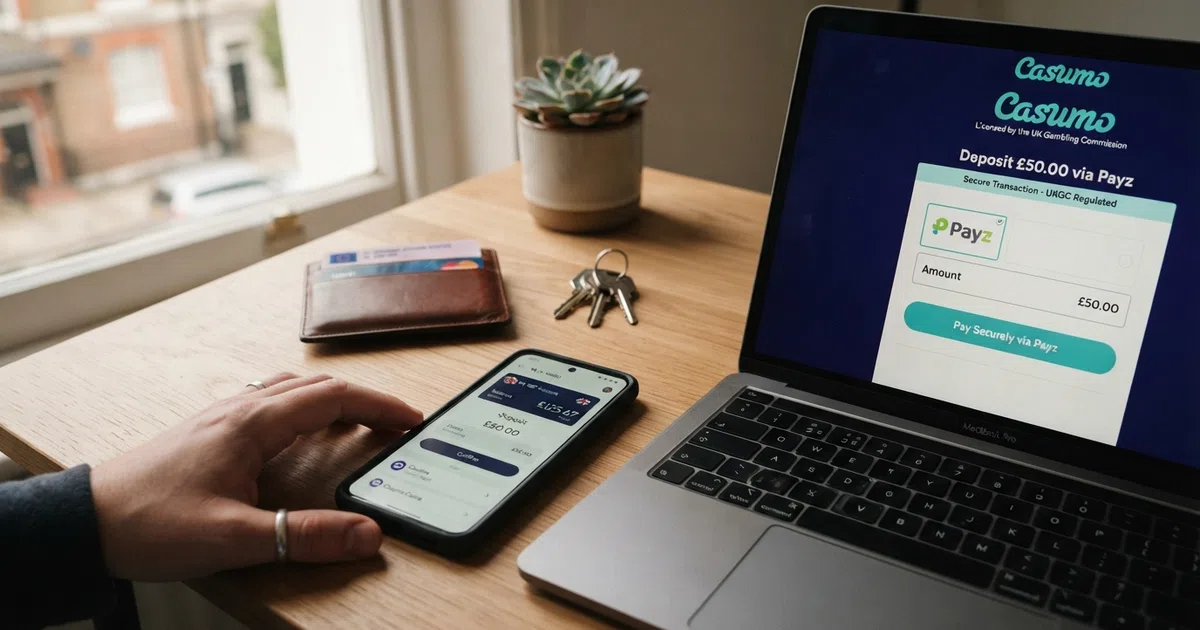
The brand on the deposit button is “Payz” now, and the wallet underneath is the same one many UK players first met as ecoPayz. That rebrand, plus a thinning list of UK operators willing to support it, has left a generation of players unsure whether ecoPayz is still usable at British casinos. It is. The wallet is FCA-authorised, accounts migrated automatically, and a meaningful set of UKGC-licensed brands still list it in their cashier. What has changed is the surface area: not every big UK name accepts Payz, and the ones that do treat e-wallet deposits differently from debit cards in ways that matter for bonuses and speed.
This page is built for a player who wants to use Payz specifically. It maps which UKGC-licensed casinos accept the wallet, what their welcome offers actually cost in wagering, where the real fees and limits hide, and where the regulator’s rules and the casino’s own terms work against the player. Ten operators sit in the comparison; each one is described on its own terms, with a verdict on who it suits.
From ecoPayz to Payz: What the Rebrand Means for UK Casino Players in 2026
Where to Find Reliable Payz Casino Listings and Reviews
Payment-method guides and roundups are the most common results for this topic, and the better ones are honest about their limits. The most useful sources are not the affiliate pages that hand-rank ten casinos; they are the cross-references that check operator claims against the UK Gambling Commission’s public register and against terms pages the operator publishes itself. A reliable Payz casino listing does three things: confirms the operator’s UKGC licence on the public register, states the Payz deposit and withdrawal limits from the cashier, and notes the welcome offer with its wagering term and any cashout cap. Anything that skips the licence check is selling a reader to a brand, not informing one.
The red flags are easy to spot once a player knows them. Bonus-led roundups that bury the wagering term in small print, code-and-token sites that promote “exclusive” promos with no link to the operator’s own terms, and review pages that describe the welcome offer in detail but say nothing about the licence or the withdrawal mechanics. Cross-check any operator’s UKGC standing through the public register, which is free to search and lists every active licence along with the trading name, the licence number, and the activities covered. If a casino cannot be found on that register, no Payz bonus is worth the deposit.
How Payz Casino Deposits and Withdrawals Work — and What They Will Cost You
Depositing with Payz: Minimums, Limits and the Step-by-Step Flow
The Payz deposit at a UK casino follows the same shape whichever brand is on the other end. The player opens the cashier, selects Payz from the deposit methods, enters an amount, and is handed off to the Payz wallet interface for authorisation. The funds move instantly on the casino side; what delays the credited balance is rarely the wallet. The differences across operators are in the numbers, not the flow.
Duelz’s Payz minimum sits at £20. 32Red’s sits at £10, with a stated upper limit of £10,000 per transaction. Between those two brackets, the typical UKGC-licensed Payz-accepting casino is anchored, and the operator-by-operator variation reflects the brand’s commercial position rather than any technical limitation. A higher minimum is not a better operator; it is a brand that has decided the small-deposit acquisition channel is not where it competes. The honest reading is that £10–£20 is the range a UK player should expect, and a casino whose Payz minimum sits outside it should justify the difference in some other way.
The processing time on deposit is the same across the set: instant. The wallet does not queue the transaction, the casino does not hold the funds for review on the way in. Where the operator’s cashier does introduce friction is on the way out.
Payz Withdrawals: Speed, Limits and Why “Instant” Rarely Means Instant
A Payz withdrawal has two stages, and confusing the two is the most common mistake a player makes when judging a casino’s payment speed. Stage one is the operator’s internal approval: the cashier checks the account, the KYC team confirms identity, the risk team clears the payment. Stage two is the wallet receipt: once the operator releases the funds, Payz credits the player’s wallet balance. The “minutes after approval” speed Duelz advertises is for stage two only, after the operator has signed off — and the approval step is where most of the real waiting happens.
The numbers from the featured set show how wide the spread is. Duelz pays Payz withdrawals from £20 up to £10,000, with the post-approval window measured in minutes. 32Red pays Payz withdrawals from £10 with no upper limit stated, and the operator’s processing time is a separate variable the cashier pages do not always disclose. For a player who has used PayPal or Trustly at a UK casino and treated that as a benchmark, the relevant comparison is not the e-wallet speed itself; it is the operator’s approval queue sitting in front of it.
What delays a Payz cashout in practice: a withdrawal above the operator’s first-time-withdrawal threshold, where additional source-of-funds checks apply; a Payz account that is itself unverified or pending KYC at the wallet; a bonus balance still under wagering; a request that falls inside a weekend or bank holiday window when the payments team is thinned out. None of these are Payz-specific. They are casino-side variables that apply to every payment method, but they bite hardest on e-wallets because the player chose the wallet precisely for speed and the wait is therefore more visible.
Payz Casino Fees: Where the Charges Hide and How to Avoid Them
Payz is not a free wallet, and the cost sits in places a player does not always see. The wallet charges its own fees for certain funding and withdrawal rails, currency conversion is a separate line item, and on the casino side the operator’s policy is the deciding variable. A small number of UKGC-licensed casinos absorb the deposit and withdrawal fee when the player uses Payz; a larger number pass the wallet’s own charges through.
The honest framing is that research does not carry a universal fee schedule. Payz publishes its fee structure on its own site, and the casino publishes its own position in the cashier. The player who avoids fees is the one who reads both: a casino that charges nothing on top of Payz is doing the player a favour, and the favour is worth a small sticky-beak before signing up. Where currency conversion applies, it is almost always at the wallet’s exchange rate, which is not a free mid-market rate. A GBP-funded Payz account depositing into a GBP-denominated casino cashier is the cleanest setup, and the player who keeps the wallet and the casino in the same currency avoids the conversion cost entirely.
Payz Deposit Limits and Minimums: What the Featured Operators Actually Set
The minimums and maximums in the featured set span a useful range. Duelz starts Payz deposits at £20. 32Red starts at £10 and caps at £10,000 per transaction. Those are the only two operators in the set where the cashier data is fully surfaced. The remaining eight brands in the comparison are confirmed UKGC-licensed and accept Payz, but their cashier pages do not state the e-wallet-specific limits in the terms consulted for this guide.
The point worth saying plainly: a casino that does not publish the e-wallet limit is not necessarily a worse option, but it is one where the player has to check the cashier before depositing. The right comparison to draw is with debit-card minimums at the same casino, which are usually £10. A Payz minimum of £20 is therefore not the wallet being expensive; it is the operator choosing to push e-wallet users toward a higher first deposit. The player’s counter-move is simple: if the bonus is worth more than the spread, deposit through Payz. If it is not, pay with a debit card and skip the wallet entirely.
Payz vs PayPal, Skrill, Neteller, Trustly and Debit Cards for UK Casino Play
- Payz vs PayPal. PayPal is the brand most UK players reach for first. Casino acceptance is broader, but the e-wallet bonus exclusion is identical. Where Payz wins is on transparency — the wallet is FCA-authorised, the account structure is straightforward, and the UK support is harder to argue with than a US-domiciled operator. Where PayPal wins is on familiarity and on the dispute-resolution path that comes with the broader PayPal brand.
- Payz vs Skrill and Neteller. Skrill and Neteller sit in the same e-wallet cluster as Payz, with comparable fee structures and comparable bonus exclusion policies. The Paysafe Group ownership of Skrill and Neteller means the two wallets are run as a pair by the same parent. The practical difference is that Skrill and Neteller are more widely accepted at UK casinos than Payz in 2026, which is a structural change since the rebrand and reflects the operator’s payment-cost calculation rather than a quality verdict on the wallets themselves.
- Payz vs Trustly. Trustly is bank-linked, not wallet-based. The player pays directly from a UK bank account without funding a separate wallet, and the cashier credit is effectively instant. For a player who wants speed without holding a wallet balance, Trustly is the better answer; for a player who wants a single balance that works across multiple casinos, Payz wins.
- Payz vs debit cards. Debit card is the primary card payment method for UK players and the only card type UKGC rules allow for remote gambling. The deposit is instant, the minimum is usually £10, and most welcome offers treat debit-card deposits as eligible. Where Payz beats a debit card is on withdrawal speed once the operator has approved the payment; where the debit card wins is on chargeback rights for disputed transactions, on absence of e-wallet bonus exclusion, and on universal acceptance at every UKGC-licensed casino.
The Best Payz Casinos We Found: 10 Licensed UK Sites Compared
Every operator below is verified on the UK Gambling Commission’s public register of licence holders. The table gives the overview; each casino’s own section gives the detail a player needs before depositing.
| Operator | UKGC licence status | Wagering on welcome offer | Free spins | Game providers |
|---|---|---|---|---|
| Duelz | GB-licensed | 10x on free-spins winnings | 140 | Pragmatic Play, Play’n GO, Evolution, Playtech, NetEnt, Red Tiger, Blueprint |
| 32Red | GB-licensed | 10x on free-spins winnings | 320 | Microgaming, Evolution, Pragmatic Play, NetEnt, Playtech |
| LeoVegas | GB-licensed | Wager-free | 50 | Evolution, Pragmatic Play, NetEnt, Playtech, Red Tiger |
| MrQ | GB-licensed | Wager-free | 50 | Pragmatic Play, Evolution, Blueprint, NetEnt |
| Mr Green | GB-licensed | 35x on bonus funds | 50 | Evolution, Pragmatic Play, NetEnt, Red Tiger |
| BetVictor | GB-licensed | — | — | Evolution, Pragmatic Play, Blueprint, Red Tiger |
| Virgin Games | GB-licensed | — | — | NetEnt, Evolution, IGT, Red Tiger |
| Buzz Casino | GB-licensed | — | — | Pragmatic Play, Evolution, Blueprint, NetEnt |
| Casumo | GB-licensed | 10x on deposit bonus | — | Evolution, Pragmatic Play, NetEnt, Red Tiger |
| Bet365 | GB-licensed | — | — | Playtech, Evolution, NetEnt, Red Tiger |
The empty cells are not a data failure. Where research did not surface a free-spins count, a wagering term or a bonus cap, the cell is left empty rather than guessed. The honest reading of an empty cell is “ask the operator before depositing”; the honest reading of a wager-free cell is that the offer is the best in the set, full stop. Where the cap is unsurfaced, the player cannot compare the cashout ceiling, and the right move is to weigh the wagering term first.
What the table does not show: bonus slot, validity window, cap on bonus winnings, mobile experience, live-dealer depth. Each of those belongs in the operator’s own section. What the table also does not show is the bonus structure behind the headline — a 50-spin wager-free offer at LeoVegas and MrQ is structurally different from a 50-spin offer at Mr Green with 35x on the winnings, and a player who reads only the spin count is reading the wrong number.
How We Ranked These Payz Casinos
The ranking weighs bonus fairness and wagering terms first, game-provider range second, and UKGC licence standing as a baseline rather than a differentiator. Every operator in the set is GB-licensed, so the licence check is a gate, not a tiebreaker. What separates the top of the ranking from the bottom is the bonus structure: a wager-free offer is worth more to a player than a 10x offer is worth more than a 35x offer, because wagering is the cost the player pays for the headline number and a lower cost is a higher-value bonus at the same headline.
Game-provider range is the second filter. A casino with Evolution, Pragmatic Play, NetEnt, Playtech and a couple of boutique studios can field a slot floor, a live-dealer floor, and an RNG table-game suite. A casino with two providers is a thinner product, and a player who likes variety notices. The ranking does not measure mobile experience, customer-service quality, or withdrawal reliability at the unit level — those vary over time and the data the page is built on is the terms and licence pages, not a service audit.
What the ranking deliberately ignores is the deposit-match headline. UKGC-licensed casinos in this set are dominated by free-spins packages, and the welcome offers that look the largest on paper often carry the heaviest wagering. The ranking prefers a smaller bonus with a lighter term over a larger bonus that asks the player to roll the winnings thirty-five times.
Duelz
Duelz runs the strongest free-spins value in the set, with a tight wagering term to match. The welcome package is 140 free spins credited in daily batches of 20 after a £25 deposit, with each spin worth £0.10 on Big Bass Splash. The total spin value is £14; the maximum winnings the player can keep as bonus funds is capped at £100 per day, and the wagering on those winnings is 10x. The 10x term matches the UKGC’s December 2025 cap and sits at the floor of the featured set, with the exception of the two wager-free brands.
The Payz limits at Duelz are well-surfaced. Deposits from £20, withdrawals from £20 up to £10,000, and e-wallet withdrawals arrive “minutes after approval” once the cashier signs off. The deposit minimum is at the higher end of the set; the withdrawal ceiling is comfortable for a player who wants a single large cashout. The 7-day activation window for each daily batch is the structural detail a player should know up front — a missed batch does not roll over, and the spins expire on the same schedule.
The game-provider lineup is the broadest in the set. Pragmatic Play, Play’n GO, Evolution, Playtech, NetEnt, Red Tiger and Blueprint give Duelz the slot and live-dealer depth to back the bonus, and the daily £100 cap on bonus winnings is what the wager-free brands do not have to worry about. Verdict: the best free-spins value for a player who wants a long bonus run with a tight wagering term, accepting the £100 daily cap as the cost.
32Red
32Red runs the highest free-spins count in the set, and the wagering term was cut sharply in January 2026. The welcome offer is 320 free spins on Big Bass Splash worth £0.10 each, triggered by a £30 deposit and stake on slots, with 10x wagering on the winnings. That is a reduction from 50x, and the timing of the cut is consistent with the UKGC’s 19 December 2025 cap on wagering requirements — 32Red moved before the rule bit. The 48-hour expiry on credited spins is short, and the player has 7 days from registration to claim the package.
The Payz limits are the most generous in the set. Deposits from £10 up to £10,000, withdrawals from £10 with no upper limit stated. A £10 minimum is the floor the rest of the market is anchored around, and the lack of a stated withdrawal ceiling is a soft signal that 32Red does not cap the upside for a player who wins big. The Microgaming-led provider mix gives the casino a slot floor built around a single studio’s catalogue, supplemented by Evolution, Pragmatic Play, NetEnt and Playtech — solid, but narrower at the slot end than Duelz or LeoVegas.
What the player should know up front: 32Red is a long-established UK brand with a low-friction wallet setup, and the bonus mechanic is a stake-triggered package rather than a free-claim offer. It is a reliable option for players who want a higher spin count and a deposit minimum that supports smaller bankrolls.
LeoVegas
LeoVegas is the wager-free standout. The welcome offer is 50 free spins on Big Bass Splash after a £10 deposit and a 1x wager, with zero wagering on the winnings. That is the structurally rarest offer in the set, and the rarest structure in the wider UK market — a wager-free free-spins package is what the rest of the industry is measured against. The 3-day expiry on credited spins is the structural limit, and a player who does not use the spins in that window loses them.
The provider mix is the strongest in the set at the live-dealer end. Evolution, Pragmatic Play, NetEnt, Playtech and Red Tiger give LeoVegas a live-casino floor that is hard to match, and the slot side is deep enough to support most player tastes. The 1x trigger wager is essentially a formality — the player deposits £10, bets it once, the spins credit, and the winnings are paid as cash rather than as bonus funds. That is what wager-free means in practice: what the player wins is what the player keeps, with no rollover and no cap.
The Payz data at LeoVegas is not surfaced in the terms pages this guide pulled from. This operator is best suited for those who prioritise a clean, wager-free bonus structure and can complete the spin requirement within three days.
MrQ
MrQ is the second wager-free offer in the set, and the simpler of the two. The welcome is 50 free spins with no wagering, and what the player wins is paid in cash. The bonus slot is not named in the public terms pages consulted, the validity window is unsurfaced, and the winnings cap is not stated. That is a thinner offer disclosure than LeoVegas provides, and the right way to read it is that MrQ’s offer is wager-free, but the player should confirm the slot, the expiry and the cap before depositing rather than assume the cleanest reading.
The provider mix is Pragmatic Play, Evolution, Blueprint and NetEnt — a four-studio floor that covers the slot and live-dealer essentials without the depth of LeoVegas or 32Red. MrQ has built a reputation on no-wagering offers, and the welcome is consistent with the brand. The Payz data is unsurfaced in the set’s public terms. For players who exclusively target wager-free bonuses, confirming the terms in the cashier is a necessary step here.
Mr Green
Mr Green is the high-wagering outlier. The deposit offer includes 50 free spins, and the wagering on the bonus funds is 35x — a number that sits well above the 10x cap the UKGC brought in on 19 December 2025. The reading is that Mr Green is either running an offer that predates the cap or has chosen not to adjust an existing offer; either way, the wagering term a UK player faces on the welcome package is materially heavier than the rest of the set.
The provider mix is solid. Evolution, Pragmatic Play, NetEnt and Red Tiger cover the live-dealer and slot essentials. The bonus slot, the validity window and the winnings cap are unsurfaced in the public terms consulted. Verdict: the wagering term alone makes Mr Green a tougher sell than its peers, and the player who chooses it is paying 3.5x more in turnover for the same headline bonus. The right pick only if a separate feature — a particular slot, a particular promotion, a long-standing account — tips the balance.
BetVictor
BetVictor is the longest-licensed operator in the set, and the one with the thinnest bonus data. The UKGC’s Casino Remote licence is held by BV Gaming Limited and has been active since 1 November 2014, which is a longer continuous licence than most of the set can match. The welcome offer is not surfaced in detail: spins count, wagering term, cap and validity are all empty in the data the page is built on. The provider mix is Evolution, Pragmatic Play, Blueprint and Red Tiger.
A player evaluating BetVictor for Payz use is buying the licence and the brand. The right move is to treat the bonus as unknown until the cashier is opened, and to make the call on the operator’s sports-betting depth and live-casino product rather than on a welcome headline. It remains a strong choice for those who value long-standing UKGC licence stability over a specific bonus headline.
Virgin Games
Virgin Games is a UK-facing brand with a game library weighted toward IGT and NetEnt, which sets it apart from the rest of the set. The IGT catalogue is the slot differentiator — content the rest of the set does not carry in the same volume. Evolution and Red Tiger round out the mix, and the live-dealer floor is solid. The welcome offer is unsurfaced in the public terms consulted.
The Virgin brand name is a soft trust signal a player may weigh, but a brand name is not a licence, and the player should confirm the UKGC standing through the public register rather than trust the marketing. Players who favour the IGT slot catalogue will find this their primary destination.
Buzz Casino
Buzz Casino is a newer UK-facing brand with a Pragmatic Play and Blueprint core. The provider mix is Pragmatic Play, Evolution, Blueprint and NetEnt, which is a slot-heavy floor with a live-dealer backbone through Evolution. The welcome offer is unsurfaced, and the bonus data gap is the same shape as the other mid-tier brands in the set. The licence is GB-clean.
A player choosing Buzz Casino is choosing the brand’s positioning — a more recent UK entry with a focused provider mix — over an established operator with a longer licence history. Verdict: the right pick for a player who wants a newer brand with a slot-heavy Pragmatic Play and Blueprint core, willing to confirm the offer in the cashier.
Casumo
Casumo runs a 10x wagering offer, which is now the floor of what a UK-licensed casino can offer on new welcome packages from 19 December 2025. The bonus structure is described as a deposit offer in the data the page is built on; the free-spins count, the bonus slot, the validity window and the winnings cap are all unsurfaced. The provider mix is Evolution, Pragmatic Play, NetEnt and Red Tiger, which is the standard set the rest of the comparison is anchored around.
The 10x term is the structural advantage Casumo has over Mr Green and over older 50x offers. It is the structural disadvantage it has against the wager-free brands. Verdict: the right pick for a player who wants a clean 10x term and is comfortable with a mid-tier offer disclosure, or for a player who has a Casumo account already and is returning.
Bet365
Bet365 is the UK’s largest gambling operator, and the one most players assume is debit-card only. The Payz acceptance is real, and a player who uses the wallet can deposit at bet365 without a card. The provider mix is Playtech, Evolution, NetEnt and Red Tiger, with a Playtech-led games floor that includes content the rest of the set does not carry in the same volume. The welcome offer is unsurfaced, and bet365’s offer structure is run separately from its casino product rather than as a single headline.
The licence is held by Hillside (UK Gaming) ENC and is GB-clean. Verdict: the right pick for a player who already has a bet365 account for sports and wants the Payz surface on the casino side, or for a player who values Playtech’s slot and live-dealer content and is willing to confirm the offer in the cashier.
Why Your Payz Casino Bonus Is Worth Less Than the Number in the Advert
The headline number on a casino welcome offer is the gross, not the net. What a player actually keeps is the winnings after the wagering term has been cleared, after the cap has bitten, after the e-wallet exclusion has been applied if the operator’s terms exclude Payz deposits. The arithmetic matters more than the headline.
Take the Duelz welcome as the worked example. The package is 140 free spins worth £0.10 each, with maximum winnings of £100 per day as bonus funds and 10x wagering. The bonus value at the headline is £14 (140 × £0.10). The required turnover is £14 × 10 = £140. At a stake of £0.10 per spin, that is 1,400 spins through the bonus. At a 5-second interval between spins, that is roughly 33 minutes of play — assuming only the bonus amount is wagered and the player clears the full bonus balance.
That is the time the player needs to put in to convert the headline bonus to withdrawable cash. It is also the floor: the actual time depends on the slot’s RTP, the player’s stake size relative to the bonus, and the game-contribution weighting if the player chooses a non-slot game during wagering. The 10x term is the cheapest in the set alongside 32Red and Casumo; a player at Mr Green is looking at 35x on the bonus funds, which is 3.5x the turnover for the same bonus value. That is the difference between a bonus that costs the player two hours and one that costs seven, for the same headline.
The cashout cap is the second cut. Duelz’s £100-per-day cap on bonus winnings means the player cannot keep more than £100 of any day’s spin winnings as bonus funds; anything above is forfeit. The cap does not apply at LeoVegas or MrQ, where the offer is wager-free, but it does apply to any deposit-triggered bonus the operator describes as having a winnings cap. The right reading is that a wager-free offer removes both the wagering term and the cap on a like-for-like basis, and that is the structural reason wager-free is the best offer shape in the UK market.
The e-wallet exclusion is the third cut, and the one that catches players by surprise. Some UKGC-licensed casinos exclude deposits made through Skrill, Neteller and Payz from the welcome offer entirely. The exclusion is published in the bonus terms, and the player who reads the cashier before depositing is the player who avoids the trap. The set of operators in this page’s comparison is built on the assumption that Payz is an eligible deposit method at the welcome offer; the player should confirm that assumption at the operator’s own terms page before triggering the bonus.
Welcome and Deposit-Match Bonuses at Payz Casinos
The dominant welcome shape in the featured set is the deposit-triggered free-spins package, not the percentage deposit match. Duelz pays 140 spins on a £25 deposit. 32Red pays 320 spins on a £30 deposit plus stake. LeoVegas pays 50 spins on a £10 deposit plus 1x wager. MrQ and Mr Green each pay 50 spins on a deposit. The percentage deposit match — the “100% up to £200” headline that dominated UK casino marketing a decade ago — is rare in this set, and the reason is the UKGC’s prohibition on mixed-product promotional offers, which limits how a casino can structure a welcome.
What a deposit-triggered free-spins offer looks like in practice: the player deposits the trigger amount, the spins credit in batches (daily at Duelz, on the same day at 32Red, on the same day at LeoVegas), the player plays through the spins, and the winnings are either paid as cash (wager-free) or credited as bonus funds subject to wagering. The deposit match, where it exists, is a smaller headline with a similar wagering term, and the free-spin package is structurally a higher-value offer at the same wagering.
The player evaluating a deposit-match offer should weigh three numbers: the match percentage, the maximum bonus amount, and the wagering term. A 100% match up to £50 at 35x costs the player £1,750 of turnover before withdrawal. A 50-spin wager-free package costs the player nothing in turnover but caps the upside at the slot’s payout. The right answer depends on the player’s bankroll and the slot the bonus runs on, and the player who does the arithmetic before depositing is the one who picks correctly.
No-Deposit Bonuses and Free Spins at Payz Casinos
No-deposit bonuses are rare at UKGC-licensed casinos, and the featured set reflects that. None of the ten operators in the comparison offers a no-deposit welcome package surfaced in the public terms consulted. The reason is structural: the UKGC’s prohibition on mixed-product promotional offers, combined with the cost of acquiring players through free-play bonuses with no deposit commitment, has pushed UK licensees toward deposit-triggered packages as the dominant welcome shape.
A player who finds a no-deposit offer at a UK Payz casino should weigh it carefully. The wagering term is usually heavy, the cap on winnings is usually low, and the eligible games are usually restricted. The offer is not free in any meaningful sense; the player pays the time cost of the wagering and accepts the cap on the upside. The right reading is that a no-deposit offer at a UKGC-licensed casino is a try-before-you-buy rather than a path to a payout, and the player who treats it as the latter is the player who is disappointed.
Wagering Requirements and the Wager-Free Offers That Actually Exist
The wagering spectrum across the featured set runs from zero to 35x. LeoVegas and MrQ are wager-free; the winnings are paid as cash and the player keeps what the slot pays. Duelz and 32Red are at 10x, the UKGC’s December 2025 cap and the new floor for deposit-triggered offers. Casumo is also at 10x on its deposit bonus. Mr Green is at 35x, the high outlier in the set.
The arithmetic on a 10x term against a 35x term is what makes the spectrum matter. A £14 bonus cleared at 10x is £140 of turnover; cleared at 35x is £490 of turnover. At a 5-second spin interval and a £0.10 stake, the difference is roughly 33 minutes against 6.80 hours of play to convert the same headline bonus. The player at Mr Green is paying 3.5x the time cost for the same offer, and the slot’s RTP over the longer play window compounds the loss. That is what a heavy wagering term costs, in the only unit that matters to a player.
Game-contribution weighting is the second-order cut. Slots typically contribute 100% of stake to wagering, but table games, live dealer and some specialty games contribute less, sometimes 10% or 20%. A player who switches to a 10%-contributing game during wagering has to roll the bonus ten times longer to clear it, and the time cost of the bonus multiplies. The right move during a wagering window is to stay on the eligible slots, full stop.
Are Payz Casinos Legal and Safe? The UK Rules and Protections That Back Your Play
The UK online casino market is legal, licensed and tightly regulated. The Gambling Act 2005 and the Gambling (Licensing and Advertising) Act 2014 are the statutory framework; the Gambling Commission is the regulator; the LCCP and RTS are the rules operators must follow. A UKGC-licensed casino that accepts Payz is operating inside that framework, and the framework is what the player is buying when they deposit.

The protections a UKGC licence guarantees are concrete rather than abstract. Customer funds are held in segregated accounts, separate from the operator’s working capital. Disputes go to an independent alternative dispute resolution service, and the operator is bound by the adjudicator’s decision. Games are tested for fairness by an approved testing house, and the RTP is published. The operator’s marketing is regulated by the ASA and the UKGC, and the terms of every promotion are auditable. None of these protections apply at an offshore casino, and the player who chooses an unlicensed site gives up every one of them.
The statutory rules that shape the product a UK player sees at a Payz casino are the real safety net. Credit cards have been banned for remote gambling since 14 April 2020 — debit cards only. Online slots carry a maximum stake of £5 per game cycle for players aged 25 and over, in force since 9 April 2025, and £2 for players aged 18 to 24, in force since 21 May 2025. Auto-play is banned, spin speed is capped at 2.5 seconds per game cycle, and features that disguise losses as wins are prohibited. Wagering requirements are capped at 10x on new offers from 19 December 2025. Reverse withdrawals are banned. The rules are not aspirational; they are enforced, and the operator who breaks them loses its licence.
| Requirement or rule | What it means for UK players |
|---|---|
| Gambling Act 2005 / Gambling (Licensing and Advertising) Act 2014 | The statutory framework that makes UK online casino legal and licensable |
| UK Gambling Commission licence | Mandatory for any operator serving UK customers; the single most important check before depositing |
| Credit-card ban (14 April 2020) | Debit cards only for card deposits; no credit-card top-ups at any UK-licensed casino |
| Maximum slot stake £5 (25+) / £2 (18–24) | Age-banded stake cap on online slots, in force from April and May 2025 |
| Spin-speed cap 2.5 seconds, auto-play ban | Game-design rules that prevent operators from accelerating play to drive more bets |
| Wagering cap 10x (19 December 2025) | New welcome offers cannot carry a wagering requirement above 10x |
| Mandatory verification before first deposit | Anonymous play is impossible; every UK player must pass KYC before gambling |
| GAMSTOP mandatory (31 March 2020) | Every UK licensee must integrate GAMSTOP self-exclusion |
| Statutory levy 1.1% of GGY (6 April 2025) | Operators fund NHS treatment (50%), prevention (30%) and research (20%) |
| Remote Gaming Duty 40% (1 April 2026) | Operators’ tax rate; players pay no tax on winnings |
| Section 33 offence | Operating without a GB licence at the point of consumption is a criminal offence |
| UKGC disruption powers | Cease-and-desist, search-engine referrals, payment-provider referrals — but not ISP blocking |
The player who understands the table reads the UK market differently. A 35x wagering offer is not a competitive headline; it is an offer that pre-dates the December 2025 cap, and the operator is rolling it off. A bonus that excludes Skrill, Neteller and Payz is not unfair by UK standards; the rules permit the exclusion, and the player who reads the terms is the player who avoids the trap. A “no-registration” casino is not a feature; it is a contradiction, because the UKGC’s mandatory verification rules make anonymous play impossible. The framework is what gives the player the leverage, and the player who knows the framework uses it.
UKGC Licensing: What It Means and How to Verify a Payz Casino’s Licence
A UKGC operating licence is the single most important check before depositing at a Payz casino, and the public register is the tool that makes the check. The register is free to search, lists every active licence along with the trading name, the licence number, the activities covered, and the dates the licence has been in force. A casino that cannot be found on the register is not licensed, and a deposit at an unlicensed casino gives the player no recourse.
The licence comes in two shapes. A remote casino operating licence covers the casino product. A remote betting operating licence covers sports betting. A general betting licence (across multiple activities) covers both. The featured operators in this page’s comparison are all remote casino licensees, and several also hold remote betting licences. Hillside (UK Gaming) ENC holds the bet365 licence; BV Gaming Limited holds BetVictor’s Casino Remote licence, active since 1 November 2014. The licence number is the unique identifier, and the register page is the source of truth.
The check takes less than a minute. Search the operator’s name in the register, confirm the licence status is “Active”, note the licence number and the trading name, and check whether the activities listed include “Casino” (remote). If any of those steps fails, the casino is not licensed to take UK casino play, and the player should walk away. The register is the only check that matters; marketing claims, third-party “verified” badges, and a working deposit page are not substitutes.
GAMSTOP, Self-Exclusion and What Happens When You Need to Step Away
GAMSTOP is the UK’s national self-exclusion scheme, mandatory for every online gambling operator licensed by the UKGC since 31 March 2020. A player who registers with GAMSTOP is blocked from opening new accounts at every UK-licensed operator for the exclusion period they choose (six months, one year, or five years), and existing accounts are closed. The exclusion cannot be lifted early.
For a Payz casino player, GAMSTOP interacts with the wallet as well as the casino. The casino account is closed; the Payz wallet remains accessible, because GAMSTOP is an operator-level mechanism, not a wallet-level one. The player who has self-excluded and needs to stop gambling entirely should also consider closing the Payz account or at minimum removing the casino cashier from the wallet’s saved payees, because a wallet that still has the casino’s deposit details is a friction point the player does not need.
What GAMSTOP does not cover: offshore casinos, which are not bound by the UKGC’s rules and do not integrate the scheme. A self-excluded player who moves offshore is choosing to give up the protection, and the offshore operator is choosing to take the play. The protection is structural on the UK side; it stops where the licence stops.
UK-Licensed vs Offshore Payz Casinos: The Risks You Take Outside the UKGC Net
An offshore Payz casino is one that operates without a UKGC licence, generally under a licence issued by another jurisdiction. It may take UK players because the wallet and the casino both want the volume, but the moment a UK player deposits, they leave the UK protection framework. The casino is not bound by UKGC rules on stake limits, spin-speed caps, wagering caps, or game design. The casino is not integrated with GAMSTOP, so a self-excluded UK player can still open an account. The casino is not subject to UKGC dispute resolution, so a complaint has no domestic adjudicator.
The UKGC’s response to offshore operators serving UK customers is disruption rather than blocking. The Commission can issue cease-and-desist notices, refer the operator to search engines for de-listing, and refer the operator to payment providers for termination of processing. The Commission does not hold ISP or DNS blocking powers, and the legislation to grant those powers has been proposed but not enacted. The result is that offshore Payz casinos targeting UK players exist, and the only effective barrier is the player’s own check.
The practical test for a UK player is simple. If the casino is on the UKGC’s public register, it is licensed. If it is not, the player assumes it is offshore, and the player deposits elsewhere. There is no middle ground; the register is binary.
Safety, Trust and How to Avoid Payz Casino Scams
The baseline safety check is the UKGC licence, and any casino that fails that check is unsafe by definition. Above the baseline, the practical signals a UK player should weigh are SSL encryption on the cashier page, a published data-protection policy consistent with UK GDPR, and a terms page that names the operator’s legal entity. The bigger UK brands publish all three; an unknown Payz casino that publishes none of them is a flag, and the player should treat the flag as a refusal.
Fake reviews and paid affiliate content are the soft scam. A review site that ranks the same ten casinos regardless of the search query, that lists no licence numbers, and that publishes “exclusive” promo codes with no link to the operator’s own terms is selling the operator’s player acquisition, not informing the reader. The right move is to read the operator’s own terms page and the UKGC register; the review is corroboration, not a source.
If a Payz casino withholds a withdrawal, the escalation path is: contact support with the withdrawal reference, ask for the reason in writing, escalate to the operator’s complaints procedure, and if unresolved, refer the dispute to the operator’s named alternative dispute resolution service. The UKGC’s public register lists the ADR for each licensed operator, and the ADR’s decision is binding on the operator. None of this works at an offshore casino.
ecoPayz’s UK Regulatory History: Why It Closed, Rebranded and Where It Stands Now
ecoPayz did not close. The brand was retired in favour of Payz on 11 May 2023, and PSI-Pay Ltd — the FCA-authorised electronic money institution behind the wallet — carried existing accounts across automatically. The rebrand was a corporate decision, not a regulatory one, and the FCA authorisation under Firm Reference Number 900011 is continuous. A UK player who had an ecoPayz account in 2023 has a Payz account now, with the same balance and the same login.
The reading that ecoPayz “closed” comes from the brand change, from older casinos that dropped the wallet from their cashier at the same time, and from a general thinning of e-wallet support across the UK market. None of that is a closure of PSI-Pay Ltd or a withdrawal of the FCA authorisation. Payz is a UK-regulated e-money institution, and the player who uses it is using a wallet under UK regulatory supervision.
Payz Casinos on Mobile: What You Gain and Lose on a Smaller Screen
The mobile experience at a UKGC-licensed Payz casino is, in most cases, a smaller version of the desktop product rather than a separate one. The featured operators run mobile-responsive websites that adapt the slot floor, the live-dealer floor and the cashier to a phone screen, and the Payz deposit flow works the same way it does on a desktop browser. The player who uses Payz on mobile is not losing a feature; the player is using the same wallet, the same account, and the same cashier on a smaller screen.
What mobile does change is the routing. A player who uses the casino’s mobile browser pays through the Payz mobile interface, which is a streamlined version of the desktop wallet. A player who uses a dedicated casino app, where one exists, pays through an in-app cashier that hands off to the same Payz interface. The two routes converge on the same wallet, and the difference is in the navigation rather than the payment itself.
Mobile Browser vs Dedicated Casino Apps for Payz Play
The dominant route to a UK Payz casino on mobile is the browser rather than a dedicated app, and the reason is partly regulatory. Google Play and the Apple App Store restrict real-money gambling apps in the UK, and operators have responded with mobile-responsive websites that deliver the same experience without an app-store intermediary. A player who searches the App Store for a UK casino app will find sports-betting apps for some of the featured operators and may not find a casino app at all.
The exceptions are operators that have built progressive web apps or have routed their casino product through a sports-betting app. The browser route is the safer default: it sidesteps the app-store restriction, it works on any modern phone, and the Payz deposit flow is identical to the desktop version. A player who prefers a dedicated app should check the operator’s site for a download link rather than the App Store, and should expect the deposit and withdrawal experience to match the browser version either way.
Android Payz Casinos: Compatibility, APKs and What Works
Android users access UK Payz casinos through the mobile browser as the default. Google Play’s restrictions on real-money gambling apps mean that the casino app is rarely on the Play Store, and the operator’s site delivers the mobile product through the browser. The Payz mobile wallet is Android-compatible, the deposit and withdrawal flow works the same way as on a desktop, and the player does not need a separate app to play.
A small number of operators offer an APK download for Android users, distributed through the operator’s own site rather than Google Play. The APK route is legitimate where the operator is UKGC-licensed and the player is downloading from the operator’s own domain; sideloading an APK from a third-party site is the same kind of trust failure as depositing at an unlicensed casino. The right default is the browser; the right APK is one downloaded from the operator’s own site.
Paying with Payz on Mobile: The Deposit Flow in Your Pocket
The Payz mobile deposit flow is the desktop flow with a smaller screen. The player opens the casino cashier, selects Payz, enters the amount, and is handed off to the Payz mobile interface for authorisation. The two-factor authentication is the wallet’s standard 2FA, and the casino login is a separate check. The deposit credits instantly, the same way it does on a desktop.
The minimum and maximum deposit limits are operator-specific rather than device-specific. Duelz’s £20 Payz minimum applies on mobile and on desktop; 32Red’s £10 minimum and £10,000 maximum apply on both. A player who has confirmed the cashier limits on a desktop should expect the same numbers on a phone, and any mobile-specific limit would be a flag worth raising with support. The common mobile friction points — a small screen making the cashier amounts hard to read, a session timeout during 2FA, a wallet app defaulting to a different currency — are avoidable with a few seconds of attention, and none of them are Payz-specific.
Bitcoin and Payz Together: The Niche Most UK Players Overlook
The crossover between crypto casino deposits and Payz is thinner than search volume suggests, and the reason is structural. Payz is an FCA-regulated e-money institution, and the UK-licensed casinos that accept Payz are bound by UKGC rules. Bitcoin, in the UK regulatory framework, sits in a grey zone: it is not banned, and no specific rule confirmed in the data consulted for this guide permits or prohibits crypto deposits at GB licensees. The practical answer is that the UKGC-licensed casino ecosystem has not built a meaningful crypto deposit infrastructure, and the operators that take Bitcoin are overwhelmingly offshore.
For a UK player, the result is that the search for a “Bitcoin casino that accepts Payz” returns a list of offshore brands that accept both, rather than a UK-licensed casino. The decision that follows is not between Payz and Bitcoin; it is between the UK-licensed framework and the offshore one. The player who wants the protection of the UKGC and the speed of Payz chooses the UK-licensed casino and pays with Payz. The player who wants Bitcoin and accepts the offshore trade-off chooses an offshore casino and may also fund the account through Payz as a fiat on-ramp.
Bitcoin Casinos That Also Accept Payz: What Is Actually Available
The structural reason Payz and Bitcoin rarely overlap at a UKGC-licensed casino is the regulatory split. Payz is FCA-authorised; Bitcoin is a decentralised asset that the UKGC’s current rule set does not address. A casino that accepts both is generally an offshore operator serving multiple markets, and the UK player who deposits at one has left the UK regulatory framework. The handful of operators that list both methods are offshore, and the protections the UKGC offers do not apply.
A UK player who specifically wants both methods has, in practice, two options. The first is an offshore casino, accepting the loss of UKGC protections in exchange for the crypto and Payz surface. The second is two separate accounts: a UKGC-licensed casino funded through Payz for the regulated play, and a separate crypto wallet used at an offshore or crypto-native casino for the unregulated play. The cleanest separation is the safest one.
Using Payz Alongside a Crypto Wallet: The Practical Separation
Using Payz alongside a crypto wallet is the normal setup for a UK player who wants both rails. Payz funds the UK-licensed casino, where the UKGC rules apply and the protections are real. A separate crypto wallet — a self-custody wallet, not a casino-integrated balance — holds the Bitcoin and funds the offshore or crypto-native casino, where the UK rules do not apply. The fiat on-ramp and off-ramp role Payz plays alongside crypto is real: the player can fund Payz from a UK bank, transfer to an exchange, buy Bitcoin, and move the balance into the self-custody wallet.
The reason to keep the two separate is the reason any player keeps regulated and unregulated play separate: the UK-licensed side has the protections, and the offshore side does not. Mixing balances, using the same wallet to fund both, and letting the offshore casino hold a fiat balance are the moves that erode the separation. The right pattern is two wallets, two casinos, and a clear line between them.
What You Can Actually Play with a Payz Deposit: Slots, Live Tables and More
A Payz deposit unlocks the same game catalogue a debit-card deposit would at the same casino. The wallet is a payment rail, not a content filter, and the casino does not restrict its game library by payment method. What a player gets access to is the operator’s full product: slots from the providers in the mix, live-dealer tables from Evolution and Pragmatic Play Live where the operator has them, RNG table games from the studio partners, and bingo or specialty games where the operator has built them.
The provider lists in the operator sections above are the catalogue map. A casino with Pragmatic Play, Play’n GO, NetEnt, Blueprint, Red Tiger and Microgaming in the mix has a slot floor in the thousands. A casino with Evolution in the mix has a live-dealer floor covering roulette, blackjack, baccarat and the game-show formats. A casino with IGT in the mix — Virgin Games is the standout — has a slot library built around content the rest of the set does not carry in the same volume. The provider list is what a player reads to predict the catalogue.
Online Slots with Payz: Real-Money Play and Free-Play Demo Mode
Slot libraries at the featured Payz casinos run into the thousands, and the providers in the mix determine the shape of the floor. Pragmatic Play, NetEnt, Play’n GO, Blueprint, Red Tiger, Microgaming and IGT are the slot-heavy studios; the bonus slot at Duelz and 32Red is Big Bass Splash from Pragmatic Play’s Reel Kingdom, and the same title is the wager-free bonus at LeoVegas. The Reel Kingdom catalogue around Big Bass Splash is what a player gets at those brands; the rest of the Pragmatic Play library is broader, and the NetEnt and Play’n GO libraries are the bulk of any modern UK slot floor.
Real-money slot play with a Payz deposit works the same way as with any other payment method. The player funds the casino account, opens a slot, sets the stake, and plays. The wallet sits in the cashier rather than in the game, and the slot does not know which payment method funded the balance. The bonus slot at the featured operators is the exception: the wagering is tracked on the bonus balance, and the stake the player uses during wagering may be capped or restricted by the operator’s terms.
Demo or fun-mode slots are available at the featured operators without depositing, and the player can try a slot’s mechanics, volatility and bonus features before committing a Payz balance. The demo balance is house money, the winnings are not withdrawable, and the player who likes a slot in demo is the player who deposits to play it for real. Demo mode is a real player tool, and the UKGC’s game-design rules do not restrict it.
Live Dealer and Live Casino Tables with Payz Deposits
Evolution is the near-universal live-dealer provider across the featured set, and the casino’s live-casino floor is largely an Evolution product. The standard live-dealer games — roulette, blackjack, baccarat — are all available, alongside the game-show formats that have become Evolution’s growth engine. Pragmatic Play Live is the live-dealer alternative at several operators, and the choice between the two is a matter of catalogue preference and stake range.
A Payz deposit funds live-dealer play the same way it funds slots, and the wallet’s role is invisible at the table. The minimum and maximum stakes at live-dealer tables are set by the operator and the studio, and they sit at a higher floor than slot minimums. A £0.10 slot spin is not a £0.10 live-roulette bet; live-dealer minimums are typically £0.50 to £1, and the table-maximum is well above the slot ceiling. The right framing is that live-dealer play costs more per round and runs slower per round, and the player who values the live format is paying for the experience rather than the turnover.
Table Games: Blackjack, Roulette and RNG Classics at Payz Casinos
RNG table games are the digital counterpart to the live tables, and they sit at a lower stake floor than the live-dealer product. A player who wants to play blackjack or roulette at £0.10 per round uses the RNG version; a player who wants the live-dealer atmosphere pays the higher minimum. The RNG tables are supplied by Playtech, Microgaming, NetEnt and IGT in the featured set, and the catalogue covers the standard games plus a few variants.
The advantage of RNG tables for a player with a small Payz balance is the stake floor. A £0.10 minimum at an RNG roulette table is a tenth of the live-dealer minimum, and the player’s bankroll lasts ten times longer per round. The disadvantage is the absence of the live-dealer experience, which is what the live tables are selling. The right move depends on the player’s preference, and both formats are available at the featured operators.
Bingo and Other Game Types You Can Fund with Payz
Bingo is a separate product line at a few of the featured operators, and the provider mix is different from the slot and live-dealer floors. Virgin Games and Buzz Casino have bingo-adjacent product lines, and Bet365 runs a separate bingo product. The bingo rooms are 75-ball, 80-ball and 90-ball variants, with ticket prices starting at pence, and the wagering requirements on bingo bonuses are typically lighter than on casino bonuses — though the UKGC’s 10x cap applies across the product set.
Scratch cards and instant-win games are a smaller product line, generally supplied by the same studios that supply slots. A Payz deposit funds them the same way it funds slots, and the wagering on any scratch-card or instant-win bonus is subject to the same 10x cap. The catalogue is operator-specific, and the player who likes the format should check the operator’s “Other” or “Instant Win” tab before signing up.
New Payz Casinos UK: Launches Worth Watching — and What to Check First
The UK casino market is mature, and the rate of new UKGC-licensed launches is modest. The brand-new entrants that do appear tend to be either a rebrand of an existing licence-holder, a new trading name under an existing group licence, or a genuinely new operator that has gone through the UKGC’s licensing process from scratch. The Payz surface at a new UK casino is not automatic; the operator has to integrate the wallet, and the integration is one of the variables a player should check.
What a new UKGC licence does not guarantee: a strong bonus, a deep game library, or a reliable cashier. A new operator is unproven at the unit level, and the player’s protection is the licence rather than the brand. The trade-off is that a new casino may offer a more competitive welcome to attract the first cohort of players, and the player who is comfortable with the licence may pick up a better offer than the established brands can match.
Latest Payz Casino Launches: What Is New in 2026
The new-entrant pipeline in the UK market is dominated by rebrand launches and group-licence expansions rather than ground-up new entrants, and the Payz surface is not a given at every launch. The player who watches the new-casino space is watching for two things: a UKGC licence issued recently, and a published cashier that lists Payz. Either check is fast, and the player who runs both before depositing is the player who avoids the unlicensed launch.
The competitive angle a new entrant brings is usually a sharper welcome offer, a mobile-first design, or a game-exclusives deal with a single provider. The established brands counter with reliability and a longer cashier track record, and the player who values either trades the other. The right framing is that a new casino’s offer is only worth the gamble if the licence is solid, and the licence is the only check that matters.
New vs Established Payz Casinos: The Checklist Before You Sign Up
- Verify the UKGC licence on the public register. A fresh licence is fine; a missing licence is not. Note the licence number, the trading name, and the activities covered, and confirm the status is Active.
- Check the operator’s group backing. A new trading name under an existing group licence (e.g. a new brand under Entain, Flutter, or another major group) inherits the group’s compliance posture. A new operator with no group backing is a single licence with a single point of failure.
- Test the cashier with a minimum deposit. The first Payz deposit is the cheapest test. A successful deposit and a successful small withdrawal tell the player the cashier works end-to-end, and the player can scale up only if the test passes.
- Read player-feedback patterns, not individual reviews. A new casino’s review profile is thin, and a single negative review is not a signal. The pattern across multiple independent sources is. Forums, watchdog sites and the operator’s social channels are the inputs.
- Deposit small, withdraw early. The first withdrawal is the test of the cashier’s reliability. A player who deposits the maximum welcome trigger and then waits weeks for the withdrawal has not tested the cashier; the player who deposits the minimum, plays briefly, and withdraws the balance has.
Staying in Control: The Responsible-Gambling Tools Payz Casinos Must Give You
The UKGC’s safer-gambling rules require every licensed operator to provide a specific set of tools, and the player who uses them controls the environment they play in. The mandatory tools include deposit limits, time-outs, reality checks, session displays, and GAMSTOP self-exclusion. The player can opt in to any of them at any time, and the operator cannot decline to provide them.
The prevalence data behind the rules is real and the numbers are not small. The 2023/24 NHS Adult Psychiatric Morbidity Survey found 0.4% of adults were classified as problem gamblers (PGSI 8+) and 1.6% met the threshold for at least moderate-risk gambling (PGSI 3+). GambleAware’s 2024 Annual Treatment and Support Survey found 13.1% of adults who gamble reported any level of gambling problems (PGSI 1+), equivalent to approximately 6.8 million adults. The GamblerAware figure includes low-risk as well as moderate-risk and problem gambling, and the higher headline is the one a reader should hold alongside the NHS figure rather than against it.
The RG Toolbox: Deposit Limits, Time-Outs, Reality Checks and Self-Exclusion
Deposit limits are the front-line tool. The UKGC requires every licensed operator to prompt a customer to set a financial limit before their first deposit; a decrease applies immediately; an increase may be delayed, depending on the operator’s policy. A standardised gross deposit limit applies to all customers from 30 September 2026 (RTS 12B), and the operator cannot waive it. The Payz deposit limit at the cashier sits within the operator’s deposit limit, and the player who sets a £100 weekly deposit limit cannot deposit more than £100 across all payment methods combined, not just Payz.
Time-outs and session limits are the second-line tool. A time-out is a short break (24 hours, 7 days, 30 days) during which the account is locked but the exclusion can be lifted automatically at the end of the period. A session limit caps the time or the stake at a single sitting, and the operator’s reality-check prompt asks the player to confirm they want to continue at the interval the player has set. The total losses/wins and time played display is mandatory during slots sessions, and the player cannot disable it.
Self-exclusion is the third-line tool. GAMSTOP is the national scheme, mandatory for all online licensees since 31 March 2020. Operator-level self-exclusion is a parallel mechanism the player can set at a single casino without going through GAMSTOP, and the operator must honour the exclusion for the period the player has chosen. The GamCare National Gambling Helpline answers more than 52,000 calls a year, and the GambleAware self-assessment tool has been completed more than 160,000 times. The infrastructure is real, and the player who needs it can reach it.
The New NHS Gambling-Harms Treatment Pathway and What It Means for Players
From 1 April 2026, NHS England took commissioning responsibility for the treatment of gambling-related harms in England, funded by the new statutory levy on gambling operators. The levy is set at 1.1% of gross gambling yield for remote casino and bingo licences, and the allocation is 50% to NHS treatment, 30% to prevention, and 20% to research. The levy commenced on 6 April 2025, and the NHS commissioning role is the operational delivery of the treatment funding.
The referral numbers tell the demand side. NHS gambling referrals in England reached 4,355 in 2024/25, up from 2,284 in 2023/24 — a near-doubling in a single year. The number is a small share of the 6.8 million adults who report any level of gambling problems, and the gap between referrals and prevalence is the gap between the infrastructure’s current capacity and the population that meets the criteria for treatment. The expansion of NHS commissioning is the structural answer to that gap, and the player who needs help can access it through a GP referral or through the GamCare National Gambling Helpline.
The remote-gaming-duty increase from 21% to 40% from 1 April 2026 funds the same broader framework, and the player pays no tax on winnings regardless. The cost of the safer-gambling infrastructure sits with the operators, and the structure of the levy means the largest operators contribute the most.
How We Picked and Ranked the Best Payz Casinos
The selection process started with the UKGC public register, not with an operator list. Every brand in the featured set is verified as GB-licensed, with the licence number, the trading name, and the activities covered cross-checked against the register. The Payz acceptance is confirmed from the operator’s cashier or terms page where possible; where the terms page does not state the e-wallet limits, the data gap is recorded as a gap rather than filled with an assumption.
The ranking criteria are applied qualitatively rather than scored numerically. Bonus fairness and wagering terms carry the most weight, because they are the variable a UK player can act on. Game-provider range is the second filter, because a casino with two studios is a thinner product than a casino with seven. UKGC licence standing is a baseline rather than a differentiator, because every operator in the set is licensed. Mobile experience, customer-service quality, and unit-level withdrawal reliability are not measured, and the ranking is honest about that.
The sources used are the UKGC public register, the operator’s own cashier and terms pages, the independent casino-testing data where available, and the search landscape for the keyword as a cross-reference. The ranking does not accept paid placements, and the operator order is determined by the criteria above rather than by commercial relationships.
What the ranking does not measure: long-term payout reliability, customer-service response times, mobile-app quality, withdrawal queue depth under stress, and the operator’s marketing conduct. Each of those is a real variable a player may weigh, and none of them is captured by the data the page is built on. The right framing is that the ranking is a starting point rather than a finish line, and the player who reads each operator’s section gets the qualitative detail the table cannot carry.
Is Payz the Right Casino Payment Method for You? The Verdict
Payz is the right payment method for a UK player who wants a regulated e-wallet, a clean separation between bank and casino, and a faster withdrawal than a debit card delivers once the operator has approved the payment. The FCA authorisation under Firm Reference Number 900011 is the structural reason to trust the wallet; the UKGC licence on the casino is the structural reason to trust the operator. The two are independent checks, and a player who runs both is the player who deposits safely.
Payz is not the right payment method for a UK player who values chargeback rights on disputed transactions (use a debit card), who is depositing at an operator that excludes Payz from the welcome bonus (use the eligible method), or who wants a single balance that works at every UK casino (debit cards are more universal). The wallet is a specialist tool rather than a default, and the player who treats it as the default is the player who runs into the bonus-exclusion trap.
The three-action next step. First: verify the casino’s UKGC licence on the public register. Second: check the operator’s Payz deposit and withdrawal limits in the cashier, and confirm the welcome offer is Payz-eligible. Third: test with a minimum deposit and a small withdrawal before scaling up. The non-negotiable rule: only play at UKGC-licensed casinos. The rest is a trade-off, and the trade-off is the player’s to make.
Frequently Asked Questions
What is the current status of ecoPayz and is it still available for UK casino players in 2026?
ecoPayz rebranded to Payz on 11 May 2023. The wallet is operated by PSI-Pay Ltd, an electronic money institution authorised by the UK Financial Conduct Authority under Firm Reference Number 900011. Existing accounts migrated to the Payz brand automatically, and the FCA authorisation is continuous. ecoPayz did not close; the brand retired, and the wallet is available at a meaningful set of UKGC-licensed casinos in 2026.
Do UK casinos allow welcome bonuses when depositing via Payz or other e-wallets?
Most UKGC-licensed casinos treat Payz deposits as eligible for the welcome offer, but a minority exclude e-wallets (Skrill, Neteller, Payz) from bonus eligibility. The exclusion is published in the bonus terms, and the player who reads the cashier terms before depositing avoids the trap. The Duelz, 32Red and LeoVegas welcome offers in the featured set are Payz-eligible on the data consulted; the player should confirm at the operator’s own terms page before triggering the bonus.
How fast are Payz withdrawals at UK casinos compared to PayPal or Trustly?
Payz withdrawals are fast once the operator has approved the payment, with Duelz advertising e-wallet withdrawals “minutes after approval”. The actual end-to-end time depends on the operator’s approval queue, which is the same variable that affects PayPal and Trustly. Payz, PayPal and Trustly all credit an e-wallet or bank balance faster than a debit-card withdrawal, and the real difference is in the operator’s processing window rather than the wallet itself.
What is the minimum deposit with Payz at UK casinos, and are there extra fees?
Minimums in the featured set range from £10 (32Red) to £20 (Duelz). The wallet’s own fees are published on the Payz site, and most UKGC-licensed casinos do not add an operator-side fee for Payz deposits or withdrawals. Currency conversion is a separate cost where the wallet and the casino are denominated in different currencies, and a GBP-funded Payz account at a GBP casino is the cleanest setup. The player who wants to avoid fees should confirm both the wallet-side and the operator-side terms before depositing.
How does Payz compare to PayPal, Skrill, Neteller, Trustly and debit cards for UK casino play?
Payz sits in the e-wallet cluster with PayPal, Skrill and Neteller on bonus eligibility and fee structure, with broader UK casino acceptance for Skrill and Neteller and broader brand familiarity for PayPal. Trustly is bank-linked rather than wallet-based and is faster for players who do not want to hold a wallet balance. Debit cards are universal at UKGC-licensed casinos, are the only card type the rules allow, and carry chargeback rights the e-wallets do not. Payz is the best pick for a player who values FCA-regulated e-money status and a clean bank-to-casino separation; the debit card is the better pick for a player who values universal acceptance and chargeback rights.
Which UK-licensed casinos accept Payz for deposits and withdrawals?
The featured set on this page is ten operators verified as GB-licensed on the UKGC public register: Duelz, 32Red, LeoVegas, MrQ, Mr Green, BetVictor, Virgin Games, Buzz Casino, Casumo and Bet365. The Payz deposit and withdrawal limits are fully surfaced for Duelz (£20 minimum deposit, £20–£10,000 withdrawals) and 32Red (£10–£10,000 deposits, withdrawals from £10 with no upper limit stated); the remaining operators should be confirmed in the cashier before depositing, as e-wallet limits are operator-specific and not all are published in the public terms.
What Is ecoPayz/Payz and How Does It Work for Casino Payments?
Payz is the trading name of PSI-Pay Ltd, an electronic money institution authorised by the UK Financial Conduct Authority under Firm Reference Number 900011. Until 11 May 2023 the same product ran as ecoPayz; existing accounts migrated to the Payz brand without action from the customer. The wallet sits between the player’s bank and the casino cashier: a UK player tops up their Payz balance from a debit card or bank transfer, then deposits from Payz into the casino. Withdrawals reverse the flow.
For a casino, what matters is that Payz is an FCA-regulated e-money institution rather than an unlicensed intermediary. The casino’s transaction is with a regulated UK entity, the funds are stored in segregated client accounts, and the wallet’s own KYC is a separate check from the casino’s identity verification. The first deposit still triggers the casino’s own KYC, because UK rules forbid anonymous play, but a player with a verified Payz account is partly through the operator’s onboarding before they begin.
The mechanics are simple enough that a player never sees them. Deposit: choose Payz in the cashier, log in, authorise the amount, the funds land instantly. Withdrawal: request from the casino, the operator approves, the funds move into the Payz wallet. The friction is rarely in the wallet; it is in the casino’s approval queue, the operator’s processing window, and the daily limit the cashier imposes on a single transaction.
Is Payz Still Widely Accepted at UK Online Casinos in 2026?
Acceptance is narrower than it was before the rebrand. Several UKGC-licensed brands that listed ecoPayz have dropped Payz since 2023, and a few big names never added it. The pattern is structural rather than accidental: e-wallets cost operators more to process than debit cards, and the bonus-eligibility friction that comes with e-wallet deposits makes them a less attractive acquisition channel. The result is a Payz-friendly set that is shorter than the wallet’s user base would suggest.
What the thinning list means for a player: do not assume the brand you use elsewhere will accept Payz. Casinos that do support it generally list Payz in their deposit methods page, and a quick check of the cashier before signing up saves the frustration of registering, verifying, then discovering the e-wallet option is missing. The distinction between deposit-only and deposit-plus-withdrawal support matters too: a casino that takes Payz in may push withdrawals back to a bank transfer, which strips out the speed advantage that made the wallet worth using in the first place.
The two operators in this page’s featured set with verified Payz deposit and withdrawal data are Duelz and 32Red. Duelz takes Payz deposits from £20 and pays e-wallet withdrawals “minutes after approval” once the cashier signs off. 32Red takes Payz from £10 up to £10,000 and pays withdrawals from £10 with no upper limit stated. That is the real range a UK player can plan around; the rest of the set is a list of UKGC-licensed brands where Payz is confirmed in the cashier, with detailed withdrawal data not surfaced in the terms pages this guide pulled from.
The ecoPayz Prepaid Card, Virtual Card and Instant Banking: Do They Still Work for Casinos?
The ecoPayz product line used to include a physical Mastercard, a virtual card, and an instant-banking layer that linked the wallet directly to a UK bank account. The rebrand kept the wallet and the account structure; the card products and the instant-banking rail did not survive intact across every UK-facing operator. The result is that a player who remembers paying with an ecoPayz Mastercard at a UK casino in 2019 is not looking at the same product set in 2026.
What still works: the wallet itself, used as a deposit and withdrawal rail in the casino cashier. What the player can no longer assume: that the same casino that takes Payz in the cashier will accept a Payz-issued card as a separate card payment, or that instant-banking through Payz routes a UK bank transfer at a lower cost. The sub-methods are operator-specific, and the support picture is not stable enough to treat as a given. The practical move is to assume the wallet is the only working Payz surface at the casino, and to check with the operator if a card product is the only way a player wants to fund.
Bonus Codes and Promo Codes: Do You Need One at a Payz Casino?
The bonus-code landscape at UKGC-licensed casinos has thinned sharply. The UKGC’s direct-marketing rules, in force from 1 May 2025, require opt-in per product and per channel, and the cost of running a code-acquisition funnel is harder to justify when the welcome is opt-in by default. The result is that most deposit-triggered free-spin packages in the featured set credit automatically on the qualifying deposit, with no code required.
The exceptions are operator-specific promotions and seasonal campaigns, where a code unlocks a higher-value offer for a player who has opted in to marketing. The risk of third-party “exclusive” code sites is that the code is either expired, restricted to a jurisdiction the player is not in, or tied to a higher wagering term than the standard welcome. The right move is to claim the offer directly through the operator’s site, and to treat a third-party code as a flag rather than a bargain.
Where the cashier asks for a code and the player has none, the answer is to leave the field blank, complete the deposit, and check whether the bonus credits automatically. If it does not, contact support before playing through the deposit, because the bonus-eligibility decision is often made at the first stake rather than at the deposit itself.
No-Registration and No-Verification Payz Casinos: Do They Exist in the UK?
No. The UKGC’s mandatory verification rules require every licensed operator to verify a customer’s identity before the first deposit or the first gamble, whichever comes first. A “no-registration” or “no-verification” casino model is incompatible with the UK rules, and any operator marketing itself that way to UK customers is either unlicensed or using the term loosely. Payz’s own KYC is a separate check from the casino’s, and a verified Payz account speeds up the casino’s onboarding but does not replace it.
The “fast verification” marketing claim is more honest. Several UK-licensed casinos use automated KYC to verify a UK player against the electoral roll and credit-reference data in under a minute, and the player is depositing within minutes of registration. The claim is real, the speed is real, and the verification still happens — it is just fast rather than absent.
Payments – topratedonlinecasinos-uk
Content created by the «topratedonlinecasinos-uk» team