
Where Ukash Went — and How UKGC Casinos Treat Prepaid Vouchers Now
 Available in GB
The “Ukash casino” results page in 2026 is a small time capsule. Ukash, the UK cash voucher that once funded a casino account without a bank card, was retired a decade ago — and the search term survives because former users remember the brand, not because anything is being sold. No UKGC-licensed casino has accepted Ukash since 31 October 2015, and any site claiming otherwise today is either out of date or not licensed to serve British customers. What has replaced it is Paysafecard, the same retail-bought 16-digit PIN model, but the welcome-bonus landscape has shifted under prepaid depositors in ways the marketing pages tend to gloss over.
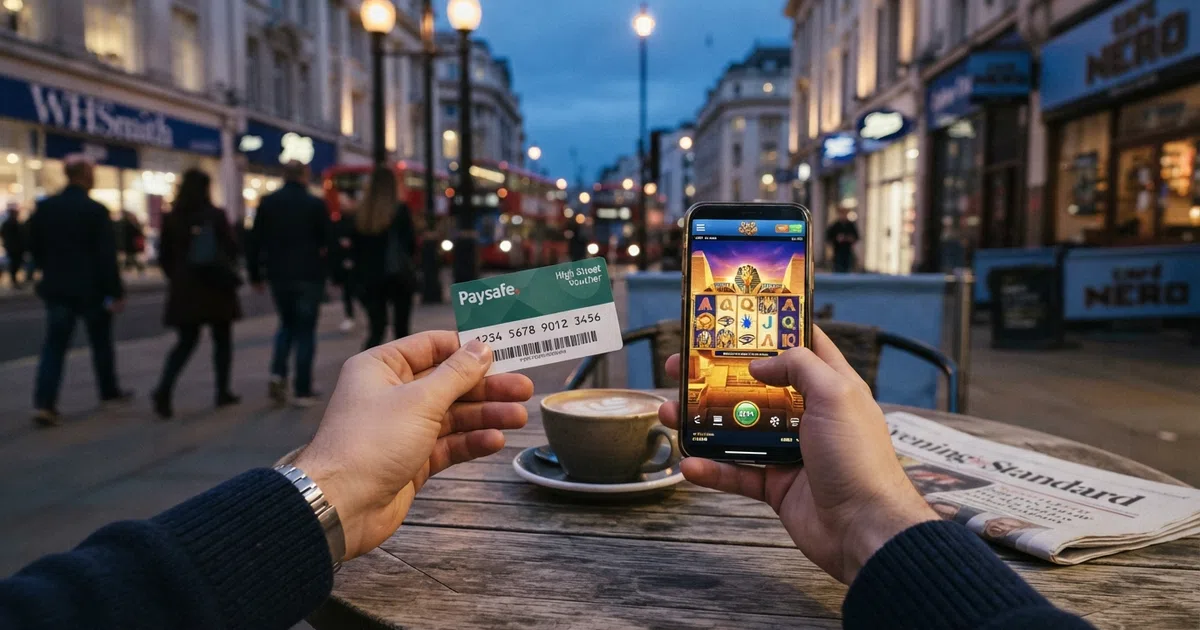
Verified as of 9 September 2026 against the UK Gambling Commission’s public register of licence holders and each operator’s published terms.
What “UKASH Casino UK” Actually Means in 2026
A reader typing that phrase into a search engine is doing one of two things. They are either remembering a brand they used to see at the corner shop and wondering whether it still exists, or they are looking for the modern equivalent — a prepaid voucher that lets them deposit without sharing a bank card with a gambling site. Both readers sit at the same page, and both deserve the same first paragraph: Ukash is gone, Paysafecard is what replaced it, and the rest of this guide works out which UK casinos accept the replacement and what that choice costs them.
The Short Answer: Ukash Was Discontinued in 2015
Skrill Group acquired Ukash in April 2015 and folded the brand into paysafecard rather than run two voucher products side by side. Paysafecard vouchers replaced Ukash at UK retailers from 31 August 2015, and every existing Ukash voucher expired after 31 October 2015. That is the vanishing point. No UK Gambling Commission-licensed casino has accepted Ukash since that date, and the consumer-facing Ukash product has not been revived.
The phrase survives in search because the brand was a household name in UK online gambling before its disappearance. People who used it remember the 19-digit code, the corner shop, the privacy of buying a casino credit with cash. They do not remember the corporate consolidation that ended it. The honest answer to “what is a Ukash casino in the UK?” is therefore: there is no such thing any more, and the rest of the question becomes a question about what to use instead.
How Ukash Casino Deposits Used to Work
A Ukash deposit was a deliberately simple piece of kit. The buyer walked into a PayPoint retail location — corner shops, newsagents, petrol stations — and exchanged cash for a 19-digit code printed on a paper receipt. They took that code to the casino cashier, entered it, and the funds appeared in their account balance within seconds. No bank card was involved, no card statement would later carry a casino name, and no e-wallet registration was needed.
The appeal was twofold. For players without a debit card — younger players, players rebuilding credit, players whose bank blocked gambling transactions — Ukash was a path into the cashier that did not require a bank account. For privacy-conscious players, it kept a casino deposit off a statement that a partner, a parent or an accountant might one day read. The voucher was the whole product: cash in, code out, code entered, balance credited. That mechanical simplicity is exactly what the modern replacements try to imitate.
What This Guide Covers Instead
This is not a ghost page listing dead casinos. It is a working replacement guide built around the prepaid-voucher casino landscape that has taken Ukash’s place. The three things it sets out to do: explain what happened to Ukash and why, walk through Paysafecard and the smaller alternatives as the modern equivalents, and rank the UKGC-licensed brands that accept prepaid deposits — paying close attention to which brands welcome prepaid depositors with a bonus and which quietly freeze them out of the welcome offer.
The regulatory side is treated in full rather than left as a footnote. The UK Gambling Commission’s role, the credit card ban, the KYC and AML obligations, the GAMSTOP self-exclusion scheme, the gross deposit-limit rules and the affordability-check framework all constrain how a prepaid voucher can be used at a licensed British casino. The same section that explains what a player gains by depositing a voucher also explains what a player loses by depositing at an unlicensed site instead — and the answer is not a small thing.
Ukash Disappeared — Here Is What Replaced It and Why Your Bonus Looks Different
The headline story for a reader searching this phrase is the migration itself. Ukash is dead; Paysafecard is the direct successor; the deposit mechanics are familiar; the welcome-bonus picture is not. Six of the ten operators reviewed on this page accept Paysafecard deposits but explicitly exclude them from the welcome offer. A player who reads only the marketing page at the top of the search results would never know that.
What Ukash Was and Why It Mattered to Casino Players
Ukash was a UK-based electronic money system that turned cash into a digital code, sold at the kinds of small retail outlets where most people in Britain already shop. PayPoint terminals, the tills at newsagents, the cash desks at petrol stations — these were the distribution points. The buyer paid cash, the till printed a 19-digit code, and the code became the money. There was no app, no signup, no bank account, no credit check. The product was the slip of paper.
To a casino player, that meant three things they could not necessarily get from a debit card. A deposit that did not appear on a bank statement. A deposit that could be made without sharing card details with a gambling site. A deposit that could not exceed the value of the voucher the buyer had chosen to purchase — a hard ceiling set by the cash in their wallet. None of these advantages are unique to Ukash, but Ukash was the first product to package them into a single brand.
Why Ukash Was Discontinued
The corporate story is straightforward. Skrill Group, the e-money company behind Skrill and Neteller, bought Ukash in April 2015 and chose to merge the brand into paysafecard — another voucher product in the same corporate family — rather than maintain two competing brands at the same retail tills. The transition was timed: paysafecard vouchers replaced Ukash at UK retailers from 31 August 2015, and any unredeemed Ukash balance expired after 31 October 2015. The reasoning was consolidation. The result, for the player, was a single dominant prepaid brand rather than a small choice of two.
From a consumer perspective, the practical effect was almost nil. The mechanic was the same: cash in, code out, code entered at the cashier. The new product used a 16-digit PIN instead of a 19-digit code, and the brand on the slip changed. That is the whole technical difference. Everything else — the retail network, the deposit speed, the lack of a bank account requirement — was inherited unchanged.
Is Ukash Still Available at UK Casinos? The Definitive Answer
No. Not at any UKGC-licensed operator, and not in any legitimate form anywhere. The voucher ceased to exist ten years ago, and no successor product has reused the Ukash name. A site that advertises “Ukash accepted” in 2026 is making one of three claims: that it is a licensed casino that has not updated its banking page since 2015, that it is a licensed casino using “Ukash” as a vague synonym for any prepaid voucher, or that it is not licensed at all and is happy to print the word. None of those should reassure a reader, and the safer assumption is that the offer does not exist.
The search volume persists because the brand was well-known. Ukash was advertised on UK high-street windows, on the side of payment-method icons at online casinos, and in print ads through the late 2000s and early 2010s. People who last played online a decade ago and are returning to the market now may search for the brand they used to see. The honest response is: Ukash is gone, here is what replaced it, and here is what that replacement is worth at the casino.
What Replaced Ukash: Paysafecard, Neosurf and the New Prepaid Landscape
Paysafecard has the prepaid voucher market almost to itself in the UK. The product is the same model Ukash used — a 16-digit PIN bought at retail for cash, entered at the casino cashier for instant credit — and the brand is accepted at virtually every major UKGC-licensed casino. A Paysafecard deposit clears within seconds, requires no bank account, and carries a face-value cap that the buyer chooses at the till. For most players who used Ukash, it is the direct one-for-one replacement.
Neosurf is the second-tier alternative. A smaller prepaid voucher brand, it is accepted at a handful of UK casino sites — generally those running on European-facing platforms — and it operates the same way: cash in, voucher code out, code entered at the cashier. It is not as widely accepted as Paysafecard at UK-licensed brands, and the retail footprint in Britain is much smaller, but it does exist as a parallel option for players who have found it at a local outlet or prefer the brand. Beyond Paysafecard and Neosurf, the prepaid voucher market in the UK is essentially empty — and that is the practical answer to “what replaced Ukash.”
The Best Ukash Alternatives for Casino Deposits Today
For a player who wants Ukash’s exact mechanic, four options cover the ground in practice:
- Paysafecard — the closest match. Prepaid, retail-bought, no bank account required, accepted at almost every UKGC-licensed casino. The single biggest compromise is that it is deposit-only; withdrawals need a separate method.
- Debit card — the practical all-rounder. Instant deposits, bonus-eligible at every featured operator on this page, and handles withdrawals natively. The only thing it does not give you is bank-statement privacy.
- E-wallets (PayPal, Trustly, Apple Pay, Google Pay, Skrill, Neteller) — fast, widely accepted, and most handle withdrawals. The credit card ban means e-wallets funded by a credit card are blocked; an e-wallet funded from a current account is fine.
- Open banking — direct bank transfer initiated from the casino cashier. Gaining ground at UK sites, instant on the deposit side, and increasingly accepted for withdrawals too.
Where a player lands on that list depends on what they are trying to optimise. Privacy from a bank statement points to Paysafecard. Bonus eligibility and a clean withdrawal path point to a debit card. The middle ground is an e-wallet.
Why Your Welcome Bonus Excludes Prepaid Vouchers at Most UK Casinos
The single sharpest commercial fact on this page is the welcome-bonus exclusion. At bet365, William Hill, Ladbrokes, Paddy Power, Betfred and Coral — six of the ten operators reviewed in detail below — Paysafecard deposits are explicitly excluded from the welcome offer. The qualifying deposit method is almost always a debit card or Apple Pay, sometimes Google Pay. At Betfair and Sky Vegas, the same exclusion is not stated in published terms, and at Gala Bingo the brand sits in a documented grey area. The marketing materials do not stress this. The small print does.
The rationale the operators give is bonus-abuse prevention. A welcome offer tied to a verified bank card is harder to claim repeatedly across multiple accounts than a welcome offer tied to a cash voucher that anyone can buy at a corner shop. Whatever the reason, the practical effect for a prepaid-only player is that the headline free-spin counts at the affected brands are visible but not reachable. A player who wants the bonus needs a debit card for the qualifying deposit, regardless of how they intend to fund the account after that.
Prepaid Voucher Casinos in the UK: How Paysafecard Works Today
The mechanical walkthrough is short. A buyer walks into a PayPoint outlet — a WHSmith, an ASDA, a petrol station, a newsagent — and asks for a Paysafecard, choosing a denomination from £5 up to £200 for a standard paper voucher (higher-value “Paysafecard Mastercard” variants exist but work differently). They pay cash, the till prints the 16-digit PIN, and the buyer leaves the shop. At the casino cashier they select Paysafecard, enter the PIN, and the funds appear in their account balance within seconds. No bank card is involved, no personal data is shared with the casino beyond what the account already holds, and the deposit is anonymous to the bank.

The two hard limits to understand before the first deposit. A Paysafecard is deposit-only — winnings cannot be returned to the PIN, and a withdrawal will require a separate method such as a debit card or PayPal. And welcome bonuses at most major UK brands are unavailable to Paysafecard depositors, as set out in the section above. These are not quirks of one brand; they are the standard pattern across the featured set, and the mechanical clarity of the deposit should not hide the commercial cost of choosing it.
Using Prepaid Vouchers Across Slots, Mobile and Live Dealer
Once the deposit has cleared, the payment method is irrelevant. The casino wallet has a balance, and the balance spends at every product the operator offers — slots, table games, live dealer, slingo, scratch cards, crash games — on desktop and mobile alike. There is no product-specific restriction on what a Paysafecard-funded account can play. The restriction sits entirely on the operator’s bonus terms, not on the games themselves.
In practice that means a prepaid voucher depositor slots straight into the same product catalogue as a debit card depositor. The same mobile lobby, the same live-dealer tables, the same progressive jackpot slots. The only friction is on the bonus side: some promotions are gated behind a qualifying deposit method, and some game-specific bonuses carry their own minimum-deposit rules. These are operator-level terms, not payment-method limits, and they apply identically regardless of how the wallet was funded.
Deposit Speed, Limits and the Withdrawal Problem With Prepaid Methods
Paysafecard deposits clear instantly — the funds show in the account balance within seconds of the 16-digit PIN being entered at the cashier. The minimum deposit at most UK brands sits between £5 and £10, and the maximum per transaction ranges from £200 for a standard voucher up to £1,000 where the operator permits higher-value vouchers. There is no fee on the deposit side from the operator’s perspective, and the only cost is the retail markup built into the voucher’s face value at the till.
The withdrawal problem is the catch. A Paysafecard cannot receive a withdrawal — the PIN is a one-way token, not a bank account — and the casino will not credit winnings back to it. To cash out, the player must register a debit card, PayPal, Trustly or a bank account through which the operator can return funds. Some operators also require that the chosen withdrawal method has been used for at least one deposit, so the practical pattern for a prepaid-first player is one voucher deposit, one debit card deposit to satisfy the withdrawal-ownership rule, and then a normal withdrawal path. It is workable, but it is a step a debit card user never has to take.
Top 10 UK Casino Brands Rated for Prepaid Voucher Deposits in 2026
The featured set is a ranked, ranked-by-stated-criteria shortlist of UKGC-licensed casinos that accept prepaid voucher deposits. The licence status of every brand was checked against the UKGC public register — a searchable list of 2,663 gambling business records, queryable by business name, trading name, domain name or account number. The welcome-bonus terms were read for the prepaid-exclusion language. The ranking therefore separates cleanly into two groups: brands that welcome prepaid depositors with a bonus (or do not explicitly exclude them) and brands that require a debit card, Apple Pay or Google Pay for the welcome offer.
How We Compared These Casinos
The entry requirement for the ranking is a UKGC operating licence. No offshore brand, no Curaçao-only operator, no Maltese-licensed casino without a GB point-of-consumption licence appears anywhere in the set. A licence check is a binary requirement: present, or out. The differentiators above that line are bonus eligibility for prepaid depositors, game selection, payout reputation and mobile experience. Each criterion is examined in qualitative terms — the research does not assign numerical weightings, and the ranking does not pretend to manufacture them.
The bonus-eligibility split is the single most important differentiator and it is the axis on which the ranking separates. Where a brand explicitly excludes Paysafecard from the welcome offer, that is a hard fact and is recorded as such. Where a brand accepts Paysafecard and does not exclude it from the bonus in published terms, that is also a hard fact and is recorded as such. Where a brand sits in a grey area — terms not unambiguously clear from a single reading — that is stated as a grey area rather than smoothed into a false certainty.
UKGC-Licensed vs Offshore: Why the Licence Matters for Prepaid Deposits
A UKGC operating licence is the only thing that puts a British consumer-protection framework behind a casino deposit. The Gambling Commission publishes a register of 2,663 licensed businesses covering around 5,000 individual operating licences, and every brand on this page appears on it. The protections that flow from registration are specific: GAMSTOP coverage, the Commission’s complaints route, ADR access, mandatory identity verification before play, financial vulnerability checks at the £150 net deposit threshold, and the deposit-limit rules that came into force on 31 October 2025.
An offshore casino — licensed in Curaçao, Malta, or Gibraltar without a UKGC operating licence — offers none of these. The voucher funds can be accepted, the account can be opened, and the games can be played, but if the operator decides to withhold a withdrawal, the player has no Commission to complain to, no ADR to escalate to, and no British consumer redress. The Commission’s disruption model removed 287,961 URLs from search results between April 2024 and June 2025, having referred 447,778 URLs for delisting in the same period — but an unlicensed site can reappear under a new domain overnight. The arithmetic for a player is simple: a prepaid voucher deposited at an unlicensed site buys zero protection.
Prepaid Voucher Friendliness: Which Casinos Make It Easy
The headline split in the table below is the welcome-bonus eligibility column. Two brands in the featured set accept Paysafecard and do not explicitly exclude it from the welcome offer in published terms: Sky Vegas and Betfair. Two brands sit in a grey area: Gala Bingo (where exclusion may apply per third-party reporting) and 32Red (where acceptance and bonus terms were not confirmed in the source material reviewed). The remaining six — bet365, William Hill, Ladbrokes, Paddy Power, Betfred and Coral — all exclude Paysafecard from the welcome offer, with a debit card or Apple Pay required as the qualifying deposit method.
The practical takeaway for a prepaid-only player is narrow. From the ten brands reviewed, the number of confirmed bonus-eligible prepaid choices is closer to two than to ten. The neighbour brands that accept Paysafecard but require a debit card for the bonus are still usable for repeat-deposit play, but the headline spin offer at the top of the bonus page is not reachable without a card payment. The table below sets the comparison out in full.
| Casino | UKGC Licence | Paysafecard Deposits | Welcome Offer | Paysafecard Eligible for Bonus? |
|---|---|---|---|---|
| bet365 | Hillside (UK Gaming) ENC, 38721 | Yes (£5 min / £2,000 max) | Up to 500 free spins, £0.10 each, 0× wagering | No — debit card or Apple Pay required |
| William Hill | William Hill Organization Ltd, 2752 | Yes | Bet £10 get 200 free spins, £0.10 each, 0× wagering | No — debit card required |
| Sky Vegas | Bonne Terre Gaming Ltd, 38718/65519 | Yes | Up to 200 free spins, 0× wagering | Not explicitly excluded in published terms |
| Ladbrokes | Entain group | Yes | Play £10 get 100 free spins, £0.10 each, + 300 Ladbucks, 0× wagering | No — non-prepaid deposit required |
| Paddy Power | Flutter Entertainment group | Yes | 50 free spins no deposit + deposit £10 get 100 more free spins, 0× wagering | No — debit card or Apple Pay required for the deposit-spin bundle |
| Betfred | UKGC licensed | Yes | Stake £10 get up to 200 free spins, £0.10 each, 0× wagering | No — debit card required; e-wallets also excluded |
| Gala Bingo | Entain group | Yes | Deposit £10 + spend £10 on slots get 100 free spins, £0.10 each, 0× wagering | May be excluded — verify at cashier |
| Betfair | Flutter Entertainment group | Yes | 50 free spins no deposit + deposit £10 get 100 free spins | Not explicitly excluded in published terms |
| Coral | Entain group | Yes (£5 min / £2,000 max) | Play £5 get 100 free spins, £0.10 each, + £10 bonus at 10× wagering | No — debit card, Apple Pay or Google Pay required |
| 32Red | Kindred group | Not confirmed | Not confirmed | Not confirmed |
bet365
bet365 is the largest online casino in Britain by some margin, and the welcome offer reflects it: up to 500 free spins at £0.10 each, 0× wagering, released in daily batches of 5 to 50 spins over 10 reveals. The free-spin selections are theme-led — Book of Horus, Curse of the Bayou, Magic Forge, Wrath of the Deep — and the spin winnings are paid as cash with no playthrough attached. The Hillside (UK Gaming) ENC operating licence sits on the UKGC public register under account 38721, with a second Hillside (UK Sports) ENC account at 55149 covering the sportsbook.
The catch is the payment-method filter. Paysafecard deposits are accepted with a £5 minimum and a £2,000 maximum, and the funds clear instantly — but the welcome offer is gated behind a £10 debit card or Apple Pay deposit. A Paysafecard depositor can play every game on the site, can deposit again, can withdraw via a registered debit card, and can keep the winnings from cash play. The 500 free spins are simply not reachable through the voucher. For a player who wants the headline bonus, bet365 is a debit card or Apple Pay proposition that happens to also accept Paysafecard.
William Hill
William Hill is the high-street name most recognised on the list, and the online casino operation is run by William Hill Organization Limited under UKGC account 2752. The welcome offer is bet £10 get 200 free spins at £0.10 each, with 0× wagering on the free-spin winnings and a 7-day validity window. The game-provider mix is broad — Playtech, Microgaming, NetEnt, Evolution, IGT — and the live-dealer floor is one of the deeper ones in the UK market.
Paysafecard is accepted for deposits. The bonus is not. The qualifying £10 deposit must come through a debit card, and a Paysafecard deposit will not unlock the 200-spin bundle. The same deposit-after-bonus pattern that applies at bet365 applies here: a voucher can fund the account for regular play, but the headline offer is unreachable without a card. The William Hill value proposition is the brand name and the product depth, not the prepaid story.
Sky Vegas
Sky Vegas is the strongest match on this page for the reader who came in asking about prepaid voucher casinos in the UK. Bonne Terre Gaming Limited operates the brand under UKGC accounts 38718 and 65519, the welcome offer is up to 200 free spins with 0× wagering, and Paysafecard deposits are accepted without an explicit welcome-bonus exclusion in published terms. The proprietary game studio plus the standard NetEnt, IGT and Evolution suppliers gives the lobby a varied feel, and the mobile experience is one of the better-polished UK skins.
The published terms do not contain the “debit card only” language that appears at several of the bigger brands. Whether that is a deliberate policy decision or an omission in the small print is not stated, and a player should always verify at the cashier before committing to the qualifying deposit. As the article stands, Sky Vegas is the highest-conviction match between a Paysafecard depositor and a no-wagering free-spin offer among the ten featured brands.
Ladbrokes
Ladbrokes is part of the Entain group, and the welcome bundle is two-part: play £10 get 100 free spins at £0.10 each plus 300 Ladbucks, with 0× wagering on the free-spin winnings. The Ladbucks are a site-specific bonus currency usable on selected games, and the free spins are valid for 7 days with a 48-hour acceptance window. The game-provider roster is broad — Playtech, Microgaming, NetEnt, Evolution — and the live-dealer floor is shared across the Entain estate.
Paysafecard is accepted for deposits. The £10 qualifying deposit must be made through a non-prepaid method. The “Ladbucks” component is a soft currency that reduces the headline value of the spin bundle — the spins are worth £10 in cash terms, but the Ladbucks portion is site-credit play rather than withdrawable cash. For a prepaid-only player, the offer is unreachable on the bonus side, and the regular-play proposition is the same as any other Entain site.
Paddy Power
Paddy Power belongs to the Flutter Entertainment group, and the welcome offer is unusual for the bonus split it contains: 50 free spins with no deposit required, plus a further 100 free spins unlocked by a £10 deposit. The deposit-free spins are available regardless of payment method, so a Paysafecard depositor will receive the 50 — but the additional 100 require a debit card or Apple Pay. The free-spin winnings carry 0× wagering across the bundle, and the validity window is 7 days.
For a player who wants the no-deposit half of the offer, Paddy Power is reachable with a Paysafecard — the 50 spins are credited on registration. For the deposit half, the card is required. The Flutter game-provider mix covers Playtech, NetEnt, IGT and Evolution, and the live-dealer floor is shared across the Flutter estate. Paddy Power is therefore a “partial package” for a prepaid player: part of the offer is reachable, part is not, and the small print is the division.
Betfred
Betfred is one of the more aggressive prepaid exclusions in the featured set. The welcome offer is stake £10 get up to 200 free spins at £0.10 each, with 0× wagering on the spin winnings and a 7-day validity window. Both Paysafecard and e-wallet deposits are excluded from the welcome offer — the qualifying method must be a debit card. The brand is UKGC-licensed, and the game-provider mix covers Playtech, Microgaming, IGT and a Betfred-led selection of proprietary slots.
The scope of the exclusion is the relevant detail. A visa-only player who plans to play through a single casino deposit and walk away might find Betfred’s exclusion tolerable; the offer is simply not on the table. A player who intends to use a Paysafecard for ongoing deposit budgeting will find that Betfred’s welcome offer is unreachable in the same way it is at bet365 and William Hill. The brand’s reputation for sports and racing runs deeper than its casino story, and that is reflected in the welcome design.
Gala Bingo
Gala Bingo is the only bingo-led brand in the featured set, and the welcome offer is calibrated to that niche: deposit £10 and spend £10 on slots to receive 100 free spins at £0.10 each, with 0× wagering on the spin winnings and a 7-day window. The Entain parent puts the same game-provider mix — Playtech, NetEnt, Microgaming — behind the lobby, and the bingo product is the Entain estate’s main community offering.
The bonus eligibility question for Paysafecard is the grey zone. The brand accepts Paysafecard for deposits, and the Entain-group standard pattern is a debit card or Apple Pay requirement for the welcome offer. Third-party reporting has flagged Paysafecard as a likely exclusion at the cashier, but the published terms reviewed here are not unambiguous. A player should verify at the Gala Bingo cashier before committing. The smoke test is straightforward: if the deposit with voucher credits the deposit-£10-and-spend-£10 path, the offer is on; if not, the payment method has to change.
Betfair
Betfair is the Flutter group sister-brand to Paddy Power, and the welcome offer is structurally similar: 50 free spins no deposit plus 100 free spins on a £10 deposit. The no-deposit spins are payment-method-agnostic; the deposit spins require a qualifying deposit. Paysafecard withdrawals are not available, in line with the standard deposit-only restriction that applies to vouchers across the UK market. The game-provider mix is shared across Flutter — Playtech, NetEnt, IGT, Evolution.
The published terms reviewed here do not contain an explicit Paysafecard exclusion from the welcome offer. That is the same position as Sky Vegas, and it is the second of the two brands in the featured set where a Paysafecard depositor may find the headline offer reachable. The Flutter Cash Out exchange product is the brand’s distinguishing feature on the sports side, and the casino operation runs as a conventional UKGC-licensed skin alongside it.
Coral
Coral sits in the Entain group and offers the lowest qualifying deposit in the featured set — play £5 get 100 free spins at £0.10 each, plus a £10 bonus at 10× wagering. The bonus portion is one of the few in the ranked set that still carries a wagering requirement, and the 10× cap is the legal maximum under the new UKGC bonus rules that came in on 19 January 2026. The free-spin winnings are paid in cash with no playthrough attached. The 7-day validity is the standard for the Entain estate.
The payment-method filter is the usual one. Paysafecard deposits are accepted with a £5 minimum and a £2,000 maximum, and the deposit clears instantly — but the £5 qualifying deposit must come through a debit card, Apple Pay or Google Pay. The maximum stake per spin during the bonus period is £2, age-banded, to comply with the wider UKGC online slot stake cap. For a player who meets the card requirement, Coral’s £5 entry-level offer is the cheapest door into a free-spin welcome bundle in the featured set.
32Red
32Red is the long-established Kindred-group brand on the list, and the inclusion in the ranking is on the strength of the UKGC licence, the Microgaming-heavy game library, and the long market presence rather than on confirmed prepaid details. The source material reviewed for this article did not confirm Paysafecard acceptance at the cashier and did not confirm the current welcome offer in specific terms. The licence status is confirmed on the UKGC public register.
The stop-the-presses position is appropriate here. A player interested in 32Red as a prepaid voucher option should treat the published sources as a snapshot and verify directly at the cashier before depositing. The brand’s reputation for table games and live dealer is the strongest selling point, and the Kindred acquisition by Flutter announced in 2024 is unlikely to have changed the product offering in the short term. The verifying step is the difference between an informed choice and a guess.
Is It Legal to Fund a UK Casino Account With Paysafecard?
Yes, and the regulatory framework treats prepaid vouchers as a standard deposit method. The Gambling Commission does not ban or restrict Paysafecard at UKGC-licensed casinos — the operator must be licensed, and the operator must verify the player’s identity before any deposit or any gambling, but the choice of payment rail is the player’s. The same regulatory framework also constrains what the player can do with the voucher once the account is open: the statutory deposit-limit rules apply, the credit card ban does not affect prepaid vouchers, and the GAMSTOP self-exclusion scheme covers the account whatever the funding method.
UK Gambling Commission Licensing and Prepaid Payment Methods
The rules sit in the Gambling Act 2005 and the Gambling (Licensing and Advertising) Act 2014. The 2014 Act made a GB operating licence compulsory for any operator serving GB customers, at the point of consumption, regardless of where the operator is incorporated. The day-to-day obligations sit in the Licence Conditions and Codes of Practice (LCCP) and the Remote Technical Standards (RTS). None of these instruments ban or restrict prepaid vouchers — the framework regulates the operator, and the payment method is the player’s choice.
The credit card ban sits in LCCP condition 6.1.2 and came into force on 14 April 2020. It prohibits GB-licensed remote gambling operators from accepting credit card payments, and the ban extends to credit-card-funded payments routed through e-wallets such as Skrill, Neteller or PayPal. A Paysafecard bought with cash is not a credit card transaction, and the ban does not touch it. A Paysafecard Mastercard funded from a credit card would fall within the ban. The distinction is the credit card, not the voucher.
GAMSTOP Self-Exclusion and Prepaid Deposits: What You Need to Know
GAMSTOP is the mandatory national multi-operator online self-exclusion scheme for Great Britain. Since 31 March 2020, participation has been a mandatory condition of every UKGC online operating licence, and the scheme is free for the player. Registration locks the player out of every UKGC-licensed online operator for the chosen exclusion period — six months, one year, five years, or five years with auto-renewal. The exclusion cannot be cancelled early. The block is on the player account, not on the payment rail: a self-excluded player cannot deposit with a voucher any more than they can deposit with a debit card.
A critical limitation sits in the scheme’s coverage. GAMSTOP covers every UKGC-licensed operator — and that includes every brand on this page. It does not cover offshore sites licensed only in Curaçao, Malta or Gibraltar. A self-excluded player who switches to an unlicensed casino in search of a workaround is not protected by any UK-level intervention, has no Commission complaints route, and has no ADR access if funds are withheld. The self-exclusion is only as strong as the licence boundary.
KYC and Anti-Money Laundering Rules for Voucher-Based Deposits
Since 7 May 2019, UKGC remote licensees must verify a player’s name, address and date of birth before any deposit or any gambling. The rule applies to every payment method equally. A Paysafecard depositor goes through the same checks as a debit card depositor — the casino must verify identity before the first deposit is accepted, and the verification must be against authoritative sources (passport, driving licence, utility bill, credit-reference data). The voucher hides the transaction from a bank statement but not from the operator, and the operator cannot accept a deposit from an unverified player.
The financial vulnerability check at the £150 net deposit threshold (rolling 30 days, from 28 February 2025) applies regardless of payment method. So does the player-set deposit limit that every operator must offer prompt-before-first-deposit from 31 October 2025. The prepaid voucher is, in regulatory terms, just another rail into the same account — and the same regulatory perimeter applies to it.
What a Player Loses Depositing at an Unlicensed Casino
A prepaid voucher clears, the account opens, the games play. The player experience at a Curaçao, Maltese or Gibraltar-licensed casino without a UKGC operating licence feels identical to the licensed equivalent in the first session. The loss is in what happens when something goes wrong. There is no Commission complaints route, no Gambling Commission enforcement backstop, no ADR access, and no recourse under British consumer protection if the operator declines to process a withdrawal. A voucher that clears instantly at the deposit end can sit for weeks at the withdrawal end with no escalation path.

The Commission’s enforcement record is large — 3,140 disruption notices issued and 447,778 URLs referred to search engines between April 2024 and June 2025, with 287,961 URLs removed — but the model is disruption, not blocking. An unlicensed site can reappear under a new domain overnight, and the player has no UK-side enforcement to appeal to if the operator disappears with the balance. The legal risk of operating without a licence sits with the operator (section 33 of the Gambling Act 2005, a criminal offence carrying up to 51 weeks’ imprisonment and an unlimited fine). There is no established penalty for the player who simply gambles there.
| Rule or Protection | What It Means for Prepaid Players | In Force Since |
|---|---|---|
| UKGC operating licence required at point of consumption | Any casino serving GB customers must be on the UKGC public register | 2014 (Gambling (Licensing and Advertising) Act 2014) |
| Identity verification before first deposit | Voucher funding does not bypass KYC; the casino must verify name, address and date of birth before any deposit clears | 7 May 2019 |
| Credit card ban (LCCP 6.1.2) | Bans credit-card-funded payments; a Paysafecard bought with cash is unaffected | 14 April 2020 |
| GAMSTOP mandatory | A self-excluded player cannot deposit with a voucher any more than with a debit card | 31 March 2020 |
| Financial vulnerability check at £150 net deposit | Triggers regardless of payment method | 28 February 2025 |
| Statutory online slot stake cap | £5 per game cycle for players aged 25 and over; £2 for players aged 18 to 24 | 9 April 2025 / 21 May 2025 |
| Mandatory deposit-limit prompt | Every customer must be prompted to set a financial limit before first deposit | 31 October 2025 |
| Bonus wagering requirement capped at 10× | Applies to any bonus at a UKGC-licensed casino including free-spin bundles | 19 January 2026 |
| Gross deposit limit standardisation (RTS 12) | Deposit limits set on money paid into the account only | 30 September 2026 |
Responsible Gambling With Prepaid Vouchers: The Tools Most Players Overlook
A prepaid voucher carries a built-in spending ceiling: the value of the slip. That is a feature, not a regulatory requirement, and it is one most players register without naming it. The UKGC’s mandatory safer-gambling infrastructure adds formal layers on top of that — the deposit-limit prompt, the gross deposit limit, the time-out, the self-exclusion, the financial vulnerability check — and most voucher users never interact with any of them. The marketing pages for welcome offers do not draw attention to them. This section does.
Deposit Limits With Prepaid Vouchers: How the New Rules Work
From 31 October 2025, every UKGC-licensed operator must prompt every customer to set a financial deposit limit before the first deposit. A limit decrease takes effect immediately. A limit increase carries a 24-hour cooling-off period by default (operator T&Cs may extend it). The rule applies regardless of payment method, and a Paysafecard depositor is subject to the same prompt as a debit card depositor. The limit is the operator’s contractual cap on the player; the voucher’s face value is the player’s natural ceiling; the two are independent layers.
The incoming RTS 12 standardisation tightens this further. Implementation is due by 30 September 2026, and the new rule defines the limit as a “gross deposit limit” — money paid into the account, not net of withdrawals. For a voucher user, the implication is that the limit binds on the sum of voucher deposits alone, and a player who has also added a debit card funding source sees the limit bind across both. The operator’s prompt is the first step; the standardisation is the legal floor.
Time-Out and Self-Exclusion Tools Available to Every UK Player
Two tool tiers are available at every UKGC-licensed casino. A time-out is a short, operator-level pause — 24 hours to six weeks — that locks the account without closing it. A self-exclusion is a longer, operator-level lock — minimum six months — that closes the account for the chosen period. GAMSTOP is the third tier: a national multi-operator self-exclusion that locks the player out of every UKGC-licensed online operator simultaneously, with the same six-month, one-year, five-year, or five-year-with-auto-renewal terms. The TalkBanStop partnership, which linked the helpline, GAMSTOP and blocking software, formally concluded in March 2026 as harm services transitioned to statutory-levy commissioning.
The payment method is irrelevant to every tier. A voucher-funded account, a debit card-funded account, and an e-wallet-funded account are all locked at the same level. The block is on the player account, not on the funding source. The practical implication for a player who wants to stop: a short break is a time-out, a longer break is GAMSTOP, and either is reachable from the responsible-gambling page of any featured operator.
Self-Assessment: Spotting the Signs Early
The standardised screening tool used by the Gambling Survey for Great Britain is the Problem Gambling Severity Index (PGSI). The GSGB Year 3 survey, published in 2025, found 2.4% of adults aged 18 and over scoring PGSI 8 or more — the “problem gambling” threshold — with the rate stable across the three years of the survey (2.5% in Year 1, 2.7% in Year 2, 2.4% in Year 3). A further 3.5% scored in the moderate-risk band (PGSI 3–7) and 7.8% in the low-risk band (PGSI 1–2). A player who recognises the eight PGSI questions in their own behaviour is reading the same screening tool the regulator uses.
The PGSI questions are available on the GamCare and GambleAware websites. The nine screening items cover chasing losses, feeling guilty about gambling, financial stress from gambling, and similar territory. A self-administered screening is not a diagnosis, but a score at the moderate or higher end is a clear signal to engage with the help infrastructure before the next session.
GamCare, BeGambleAware and the National Gambling Helpline
The National Gambling Helpline, run by GamCare, is free on 0808 80 20 133, available 24 hours a day, 365 days a year, with live chat and WhatsApp channels also available. GamCare itself runs counselling, self-exclusion guidance, and local support services across Britain. BeGambleAware funds prevention and treatment, including blocking-software guidance. NHS gambling harm clinics operate in England, Scotland and Wales, and Gamblers Anonymous UK runs peer support groups. The statutory levy, set at 1.1% of gross gambling yield for remote casino licences and in force from 6 April 2025, now funds these services — split 50% to treatment, 30% to prevention, 20% to research.
The single number to save is 0808 80 20 133. The single website to bookmark is GamCare. The infrastructure is free, confidential, and built around the principle that a player who needs help should not have to find it during a crisis.
How We Selected and Ranked These Prepaid Voucher Casinos
The UKGC public register, with 2,663 gambling business records searchable by business name, trading name, domain name or account number, was the starting point for every operator on this list. Each was searched individually; the account numbers above link back to that register. Welcome-bonus terms were reviewed for the prepaid-exclusion language that drives the eligibility split. The Paysafecard acceptance status was cross-referenced across multiple affiliate sources to weed out single-source errors.
The ranking does not assign numerical weightings. The research does not carry them, and manufacturing them would invent numbers the page does not have. The differentiators are stated qualitatively: licence status, Paysafecard acceptance, welcome-bonus eligibility for prepaid depositors, game-provider mix, payout reputation, mobile experience. The final order — bet365, William Hill, Sky Vegas, Ladbrokes, Paddy Power, Betfred, Gala Bingo, Betfair, Coral, 32Red — reflects the practical prepaid-voucher angle with the broader UK market context layered over it. A reader who cares only about the bonus-eligible subset will read the table column rather than the overall order.
Prepaid Voucher or Debit Card — What Your Casino Deposit Choice Really Costs You
The voucher buys two things the card does not. It keeps a casino transaction off a bank statement, which matters for players who share an account, who manage a family budget against a statement, or who simply do not want a gambling brand name in their transaction history. It enforces a hard spending ceiling equal to the voucher’s face value, which matters for players who want the spending limit to be physical, set in cash, and decided at the supermarket till. Neither benefit is imaginary. Neither is unique to gaming. Both have analogues in plain cash budgeting.
The card buys three things the voucher does not. It qualifies for every welcome bonus at every brand reviewed, with the single Sky Vegas/Betfair ambiguity aside. It handles withdrawals natively, so the registration of a separate withdrawal method — the debit card, the PayPal account, the bank transfer — is unnecessary. And it costs nothing extra to use, where the voucher carries a small retail markup baked into the face value. The card is the default for almost every serious player in the UK market, and the regulatory framework treats it as the standard payment rail.
The decision comes down to a single question: is the bank-statement privacy worth giving up the welcome bonus, adding a withdrawal step, and paying the small voucher markup? For most players the answer is no, and a debit card is the right choice. For a smaller subset — players rebuilding credit, players whose bank blocks gambling transactions, players who want a hard cash ceiling set in the till — the voucher is the right tool, and the cost of the bonus loss is the price of the privacy. The reader knows their own situation. The reader knows which side of that trade-off they sit on.
Frequently Asked Questions
Can you withdraw casino winnings to a Paysafecard voucher?
No. Paysafecard is a deposit-only method at every UKGC-licensed casino. The 16-digit PIN is a one-way token: it carries money in, but it cannot receive a withdrawal. To cash out, you must register a debit card, PayPal, Trustly or a bank account for the withdrawal, and the operator may require that method to be used for at least one deposit first to verify ownership. The practical pattern is one voucher deposit plus one card deposit, then a normal withdrawal.
What is the minimum deposit with Paysafecard at UK casinos?
The minimum is typically £5 to £10 at the featured brands, with most operators sitting at £10 and the smaller-hurdle brands like Coral sitting at £5. The maximum per transaction ranges from £200 on a standard paper voucher up to £1,000 where the operator permits higher-value vouchers. The deposit clears instantly on PIN entry at the casino cashier.
Do prepaid voucher casinos still require you to verify your identity?
Yes. Since 7 May 2019, UKGC-licensed casinos must verify your name, address and date of birth before any deposit or any gambling, regardless of payment method. A Paysafecard-funded account goes through the same KYC process as a debit-card account. The voucher hides the transaction from your bank statement but not from the operator, and the operator cannot accept your first deposit until the check is passed.
Which British casino sites take both Paysafecard and Neosurf?
The combination is rare in the UK-licensed market. Paysafecard is accepted at virtually every major UKGC-licensed casino — including every brand on this page. Neosurf is accepted at a smaller subset of UK-facing sites, mostly on European-platform skins, and the overlap with a UKGC operating licence is narrow. The safer assumption is that a UKGC-licensed operator accepts Paysafecard; the Neosurf side is the variable that needs checking at the cashier.
Do prepaid deposits qualify for the casino sign-up offer?
At six of the ten operators reviewed on this page — bet365, William Hill, Ladbrokes, Paddy Power, Betfred and Coral — Paysafecard deposits are explicitly excluded from the welcome offer, and a debit card or Apple Pay is required as the qualifying deposit method. At Sky Vegas and Betfair, the published terms reviewed do not contain a Paysafecard exclusion. At Gala Bingo, the position is ambiguous on published evidence and you should verify at the cashier. Paddy Power offers 50 free spins with no deposit required, which are reachable regardless of payment method.
Payments – topratedonlinecasinos-uk
Content created by the «topratedonlinecasinos-uk» team