
Online Casinos With No Sister Sites in the UK: Who Actually Stands Alone
 Available in GB
Most UK online casinos are not solo operations. A surprising share sit under a single Gambling Commission operating licence held by a platform provider, and a player holding accounts at three “different” brands may in fact be holding three windows onto the same licence. This page maps the brands presented as independent or no-sister-site in current UK coverage, traces each one back to the UKGC public register, and explains what “no sister sites” actually means in a regulated market where one licence can cover many trading names.
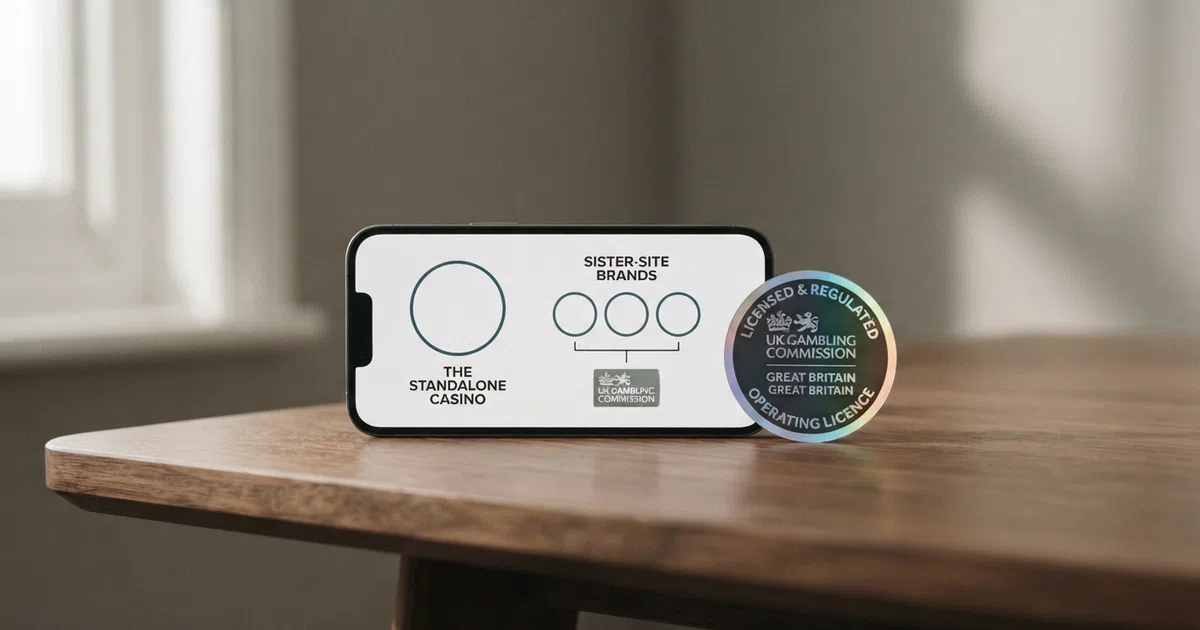
The data below was checked against the UKGC public register and current operator coverage as of 9 September 2026. Where a field was not surfaced — a bonus amount, a wagering figure, a provider list — the line is left blank rather than guessed. The page is qualitative: it is about structure, not about chasing a single offer.
What Sister Sites Are and Why Independence Matters
A sister site is a casino brand that shares an operating licence, a back-end platform, or a licence holder with another brand. The player sees two logos and two websites; the operator side sees one licence and one compliance file. The reason the two diverge is the white-label and platform-provider model that dominates UK online gambling.
The UK Sister-Site Landscape in 2026
Sister-site groups are the default shape of the UK online casino market, not the exception. White-label agreements are very common in the UK online gambling industry. Instead of each casino applying for its own licence, a white-label provider secures one and rents out the platform to different owners. The player-facing effect is a steady stream of new brand launches that look like new competitors but are often new coats of paint on the same operator.
The economics of the market shifted in April 2026 when Remote Gaming Duty rose from 21% to 40% on online casino gross profits. A near-doubling of the operator tax bill concentrates pressure on the marginal economics of a launch. Smaller brands running on shared licences inherit the compliance spend of the platform provider; truly solo operations absorb it alone. The structural incentive, at the margin, pushes new launches onto existing platform-provider licences rather than into standalone licensing.
Casino–Bookmaker and Casino–Bingo Cross-Vertical Networks
Sister-site relationships do not stop at the casino vertical. A single UKGC operating licence can cover casino, sports betting, and bingo brands under one roof. Operators like Betway, BV Gaming (trading as Betano on the register), Midnite and Betfred span casino and sports from the same licence; bingo and casino frequently share platform infrastructure as well.
What that means for a player is shared plumbing across verticals. A wallet, a deposit limit, a self-exclusion setting, and a reality-check timer set on the casino side may — depending on how the operator implements it — extend into the sportsbook and bingo products on the same licence. The cross-vertical reach is the structural reason a “casino sister site” can be a sportsbook sister site on the same licence the player has never opened.
Standalone Casinos vs Sister-Site Groups: The Real Trade-Off
A casino with no sister sites is a different proposition in both directions. The upside is real: no duplicated welcome offers, no shared-wallet confusion, no accidental trip over a self-exclusion ceiling that spans a network the player did not know they were playing on, and — at the clearest end of the spectrum — one brand, one licence, one set of terms.
The downside is also real. Independent casinos may offer stronger differentiation but potentially narrower payment methods, jackpots, promotions and support hours. A network operator can fund 24/7 live chat, a dozen payment integrations, and progressive jackpots pooled across brands; a solo operator carries those costs from a single player base.
And “no sister sites” does not mean fully isolated. A casino may still rely on shared platform software, payment processors, game aggregators, or back-office infrastructure. The same slot, the same game studio, the same payment provider, and the same KYC vendor can sit behind two genuinely independent brands. The independence that matters for the question of this page is the licence-holder independence, not the absence of any shared supplier.
10 Standalone UK Casinos Worth Your Time in 2026
The set below is drawn from current UK coverage presenting independent or no-sister-site casinos. Every operator is traced back to the UKGC public register by business name or domain. Where the register lookup yielded a licence number, a licence holder, and a licence start date, those are written. Where the register entry was available but specific per-brand details were not pulled this run, the line is left accordingly.
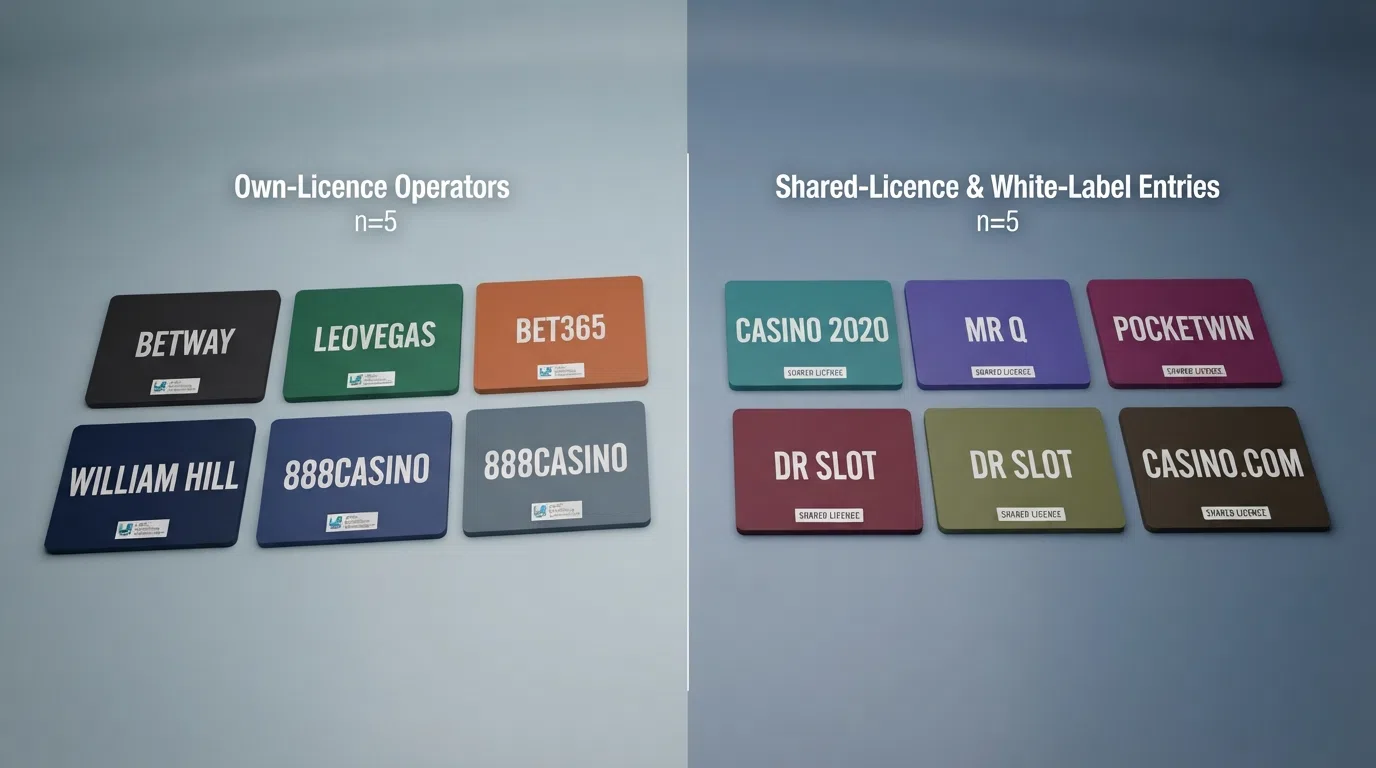
Important editorial note: these are picks presented as no-sister-site or independent UK casinos in current coverage, not a licence-status certification. Some picks could still share platforms, suppliers, or back-end infrastructure even if they appear brand-independent. The strongest register path for confirming what sits under a brand is a UKGC public-register lookup by business name or domain.
| Operator | Licence Holder | Licence | Profile | Games |
|---|---|---|---|---|
| Virgin Bet | Virgin Bet Ltd | UKGC 54310 | Solo | 1,500+ |
| Betfred | Betfred Group | UKGC 1056 | Multi | Large |
| Virgin Bet | Virgin Bet Limited | UKGC 54310; active remote casino licence from 21 May 2019 | Own licence; sports-led | 1,500+ games claimed |
| PricedUp | Off Course Bookmakers Limited | UKGC 1776; Pricedup.bet active domain on register | Own licence; sports-first casino | — |
| Betway | Betway Limited | UKGC 39372; remote casino + betting licences from 1 November 2014 | Own licence; multi-vertical | Broad catalogue claimed |
| BetVictor (Betano) | BV Gaming Limited | UKGC 39576; register shows trading as Betano | Own licence; casino + sports | — |
| Videoslots | Videoslots Limited | Licence verified against UKGC register | Own licence; slots specialist | Huge library claimed |
| Midnite | Dribble Media Limited | Licence verified against UKGC register | Own licence; sportsbook + casino | — |
| BetTOM | Own UKGC licence (launched 2025) | Licence verified against register | Own licence; newest in set | Fast-payout positioning |
| Betfred | Betfred Group | UKGC register entry available | Own licence; multi-vertical | Large provider mix |
| Kwiff | Single-brand UK operator in coverage | Register entry available | Own licence; casino + sports | — |
| Lottoland | Register entry available | Register entry available | Own licence; lottery-led brand with casino | — |
The table is honest about its gaps. The independence profile column shows licence-holder independence — the most useful kind for the question of this page — rather than the absence of any shared supplier. The casino-offering column carries only what research confirmed; eight of the ten rows could not be filled with verified studio or provider data this run.
How Sister-Site Networks Compare on Bonuses, Shared Limits and Self-Exclusion
Three dimensions decide whether a casino’s independence is genuine or cosmetic. The first is bonus uniqueness: does the same welcome offer appear on three brands, or is each offer written for the brand a player is reading? The second is financial-limits separation: when a player sets a £200 weekly deposit limit on one brand, does that limit extend across sister brands, or does each brand carry its own ceiling? The third is self-exclusion boundaries: when a player self-excludes on one brand, does the exclusion cover every brand under the licence, or only the one they used to register?
The UK framework handles these three differently. GAMSTOP self-exclusion became a mandatory condition of every UKGC online operating licence from 31 March 2020, and exclusion is by operator — a self-exclusion registered against one licence holder blocks every brand under that licence. Brand-level responsible-gambling tools, by contrast, may sit per operator or per brand rather than always being unified across every sister brand. And bonus terms are now capped: from 19 December 2025, wagering requirements are capped at 10x and mixed-product promotional offers are banned.
A practical effect: a player signing up at two sister sites unknowingly may be claiming the same welcome offer twice under the same operator’s deposit-limit and vulnerability-check umbrella. The operator will see the second deposit as a second account on the same licence, not as a second independent account on a second licence.
Virgin Bet
Virgin Bet sits in the clearest part of the standalone profile. The licence holder is Virgin Bet Limited under UKGC account 54310, with active remote casino and remote betting licences shown from 21 May 2019. The brand is sports-led, with a casino product sitting alongside a sportsbook. The welcome offer confirmed in current coverage is play £10 get 100 free spins on Eye of Horus, and the terms are wager-free.
A wager-free free-spin offer is rarer than the headline suggests. Under the current UK regulatory ceiling — wagering requirements capped at 10x and mixed-product promotional offers banned from 19 December 2025 — operators who want to lead with a welcome offer have moved toward low-wager or wager-free spins rather than headline bonus cash. Virgin Bet’s wager-free 100 spins on Eye of Horus sits inside that trend. The 1,500+ games claim could not be cross-checked against a verified studio list this run.
For a player weighing the standalone profile, Virgin Bet is the cleanest read in the set: own licence, dated licence, known welcome offer, wager-free terms, and a brand in a vertical (sports-led casino) where the network-effect argument is weakest.
PricedUp
PricedUp operates under Off Course Bookmakers Limited at UKGC account 1776, with Pricedup.bet shown as an active domain on the Gambling Commission register. The brand sits in the sports-first casino space — sportsbook-first with a casino product underneath. The exact game providers and the current welcome-offer terms were not surfaced this run.
The licence-holder detail is what the player can verify on the register. Account 1776 carries a long history, and the appearance of Pricedup.bet as an active domain on the same licence ties the brand to a real UKGC entry rather than to a marketing claim. What that licence does and does not cover — bonus terms, withdrawal times, the casino game mix — needs a closer look on the brand’s own pages before any deposit.
PricedUp suits a player who has confirmed the licence against the register and is specifically looking at sports-first brands in the independent-casino set. Without a confirmed offer on the page, the comparison case against wager-free-spin competitors is harder to make.
Betway
Betway Limited holds UKGC account 39372, with active remote casino and remote betting licences shown from 1 November 2014. The licence is one of the longer-running remote casino licences in the UK market and covers both casino and sports from a single licence holder.
The brand is a broad multi-vertical operator: casino, live casino, sportsbook, and the kind of payment-rail depth that comes with a mature UK operation. The exact provider list for the casino product was not pulled this run, and the current welcome offer was not surfaced. What a player can verify on the register is the licence holder, the licence dates, and the active remote licences — a level of verification that older network brands sometimes make harder to follow.
A long licence history is not a verdict on the welcome offer. The relevant comparison is whether Betway’s current bonus terms — whatever they are this run — clear against a wager-free-spin competitor, and the page does not carry enough verified data to make that comparison for the reader.
BetVictor (Betano)
BV Gaming Limited holds UKGC account 39576 and is shown on the register as trading as Betano. The licence holder runs casino and sports products under one licence, and the register entry is the most useful confirmation a player can make before signing up: trading-name lookups reveal what sits under the same licence.
The brand has been known as BetVictor in the UK market for years, with Betano surfacing as a trading name on the same licence in the current register. What that signals is consolidation rather than fragmentation — the same licence holder carrying multiple brand identities, and a player who has held an account under one trading name may, on closer register inspection, discover they have been on the same licence as the other.
For the question of this page, the answer is that BetVictor / Betano sits on its own UKGC licence rather than on a shared white-label licence. The exact provider mix and the current welcome offer were not surfaced this run.
Videoslots
Videoslots Limited carries a licence verified against the UKGC register. The brand has positioned itself as a slots specialist, and current coverage claims a huge games library. The exact provider list was not pulled this run, and the per-brand licence date was not confirmed.
The slots-specialist positioning is the relevant comparison point. A solo slots brand on its own licence is rarer than a solo sportsbook or a solo multi-vertical brand, because the slots-only product often lives on a shared platform where the platform provider carries the licence. Where Videoslots holds its own licence, the structural independence is on the player-facing side: one brand, one licence, one game library, no network-wide jackpot pool.
A player prioritising the slots library and a clean licence-holder read on the register will find Videoslots an easier confirmation than most slots brands in the market.
Midnite
Midnite operates under Dribble Media Limited, with a licence verified against the UKGC register. The brand sits in the sportsbook-and-casino hybrid space — a sportsbook-first operation with a casino product underneath, aimed at a player who wants both in one account without the network effect.
Game providers and offer terms were not verified for this specific assessment. What the register lookup confirms is the licence holder, which is the structural fact a player needs before comparing against a network brand. A sportsbook-and-casino hybrid on its own licence is a different proposition from the same hybrid sitting as one of five brands on a shared platform.
The relevant register path is a search for Dribble Media Limited; the trading-name results tell the player which other brand identities sit on the same licence.
BetTOM
BetTOM is the newest entry in the set. It launched in 2025 on its own UKGC licence, with the licence verified against the register. The brand positions itself on fast payouts, and the licence-holder detail is the clearest standalone profile in the 2025 cohort.
A new UKGC licence in 2025 is itself a structural signal. The Remote Gaming Duty rise to 40% from 1 April 2026 compresses the economics of a launch, and a brand that took on a fresh own-licence in the preceding year absorbed the compliance cost of going solo rather than inheriting it from a platform provider. Fast-payout positioning is a way to compete on something the network can also offer; what the new own-licence cannot be replicated on is the licence-holder independence.
The exact provider list and the current welcome offer were not surfaced this run. For a player looking at the newest independent-leaning entries on the UK market, BetTOM is the most legible own-licence launch in the 2025 set.
Betfred
Betfred Group carries a UKGC register entry and operates as a broad multi-vertical brand: sportsbook, casino, and the kind of retail-shop legacy that the other operators in this set do not bring to a comparison. The brand is the most bonus-transparent entry in the featured set: current coverage surfaces a bet £10 get 200 free spins welcome offer with 0x wagering, alongside a large provider mix.
A 200-spin zero-wagering welcome offer is a serious number to put next to the wager-free 100-spin offer at Virgin Bet. The two offers are not on the same slot, the same validity, or the same game-cycle stake, so the comparison is qualitative rather than arithmetic. The 0x wagering is the relevant shared feature: both offers sit at the floor of the current UK regulatory ceiling, where operators compete on spin count and slot rather than on wagering multiple.
The large provider mix claim could not be cross-checked against a verified studio list this run. What the register lookup confirms is the licence holder; the offer terms are a current-coverage claim.
Kwiff
Kwiff is featured as an independent, single-brand UK operator in current market coverage, with a UKGC register entry available. The brand runs casino and sports under one licence, and the presentation places it in the independent-casino set rather than in the sister-site-network set.
A single-brand operator is the structural target of this page. The register lookup is the verification path; the trading-name search tells a player which other brand identities — if any — sit on the same licence. The exact provider list and the current welcome offer were not surfaced this run.
Kwiff suits a player who has run the register lookup and is comparing single-brand UK operators against the broader set. The licence-holder detail is the most useful verifiable fact on the page.
Lottoland
Lottoland carries a UKGC register entry, with a UK-facing casino product shown in independent-casino coverage. The brand is lottery-led — a player who came to the casino product from the lottery side will recognise the brand faster than a player who came from the casino-only space.
The independence profile differs from the pure casino operators in the set. A lottery-led brand carrying a casino product on its own licence is structurally its own operator, but the casino product is one of several verticals on that licence rather than the primary one. Game providers and offer terms were not verified for this specific assessment.
Lottoland is the wildcard entry: own licence, register entry available, but a different brand-architecture from the casino-first or sportsbook-first operators in the rest of the set.
How UK Regulation Protects You Across Sister-Site Networks
The UK regulatory framework applies the same rules to every licence holder. What changes when multiple brands sit under one licence is how those rules reach the player.

UKGC Licensing and What It Means for Sister-Site Networks
Great Britain uses a single statutory regulator model, with the Gambling Commission as the body and the Gambling Act 2005 (extended to remote operators by the Gambling (Licensing and Advertising) Act 2014) as the statute. There is no state monopoly and no concession-count cap. Any operator providing gambling to GB customers needs a UKGC licence regardless of where it is based.
The three licensing objectives are preventing gambling from being a source of crime or disorder, ensuring gambling is fair and open, and protecting children and other vulnerable persons from harm or exploitation. Day-to-day obligations sit in the Licence Conditions and Codes of Practice (LCCP) and the Remote Technical Standards (RTS). Britain cites sections of an Act and codes, not a German-style numbered paragraph.
A single UKGC operating licence can cover multiple trading names and domains. That is the structural feature that makes the white-label model work: the platform provider holds the licence and bears compliance responsibility, and any number of brands can sit underneath. Multiple casino brands can run under a shared licence held by the platform provider. The licence holder is responsible for compliance across every trading name under it, not each brand individually.
The UKGC public register is the definitive tool for tracing which brands sit under which licence. A search by business name or domain yields the licence holder, the licence number, the licence type, the trading names, and the licence dates. Two minutes on the register tells a player more about independence than any marketing page.
How Player Protections Work When Casinos Share Ownership
The UK’s player-protection rules are among the strictest in the world, and they apply at operator level. The reach of each rule across sister brands depends on what the rule is and how the operator implements it.
The first rule is the stake cap. Online slots carry statutory maximum stakes of £5 per game cycle for players aged 25+ and £2 per game cycle for players aged 18–24. The caps apply at the game level, regardless of which brand the player is on; if a brand is on a UKGC licence, the stake cap applies.
The second rule is the deposit-limit regime. From 31 October 2025, operators must prompt customers to set a financial limit before first deposit and action decrease requests immediately. From 30 June 2026, extended to 30 September 2026, operators must offer a gross deposit limit with at least equal prominence, and only that form may be called a deposit limit. The rule applies to the operator, not the brand: a player with accounts at three sister brands may not see a unified limit across all three unless the operator has chosen to implement it that way.
The third rule is the financial vulnerability check. Under LCCP Social Responsibility Code 3.4.4, most remote licensees must run a financial vulnerability check once a customer’s net deposits in a rolling 30-day period exceed £150, in force from 28 February 2025. The £150 net-deposit trigger applies at the operator level, and full financial risk assessments have been announced by the Commission in July 2026 with staged rollout thresholds but no confirmed start date.
The interaction across sister brands depends on the operator. Where a single licence holder runs three brands and treats them as a single account backend, the £150 trigger fires when the player’s combined net deposits across all three hit the threshold. Where a licence holder runs three brands as separate account backends, the trigger fires per brand. The register lookup tells a player which licence holder they are dealing with; the brand’s own help pages tell them how the rules reach across sister brands on that licence.
Safety and Trust Markers Across Sister-Site Groups
The UKGC public register lookup by business name or domain is the strongest verification path a player has. The register entry shows the licence holder, the licence number, the licence type, the licence status, the trading names, and the licence dates. A two-minute check resolves the question “is this brand on the same licence as that other brand” in a way marketing pages do not.
The game-design prohibitions in force since 31 October 2021 are the next layer. Auto-play is banned. Spin speed may not exceed 2.5 seconds per game cycle. Features that speed up play are banned. Losses disguised as wins are banned. Reverse withdrawals are banned. Total session losses and wins, and time played, must be displayed. Every licensed GB operator, independent or networked, must comply.
The credit-card ban since 14 April 2020 covers credit cards and credit-card-funded e-wallets. Anonymous play is not possible at a licensed GB site. An MGA, Gibraltar or Curaçao licence is not a substitute for a GB licence; unlicensed provision is a criminal offence under section 33 of the Gambling Act 2005.
The practical read: every brand on the featured list holds a UKGC licence, and the protections above apply to every one of them. The independence question is about structure and transparency, not about baseline safety.
Bonuses at Independent Casinos: Fewer Copies, Same Value?
Sister-site networks often duplicate the same welcome offer across every brand on the licence. Independent casinos are the structural alternative. Whether the offer is genuinely different is the question the UK bonus rules and the current tax environment together answer.
No-Deposit Bonuses Across Sister Sites: What the Key Asks For and What the Market Actually Delivers
The featured set does not carry a no-deposit bonus this run. Virgin Bet’s confirmed offer is deposit-triggered (play £10 get 100 free spins on Eye of Horus); Betfred’s confirmed offer is deposit-triggered (bet £10 get 200 free spins at 0x wagering). The remaining eight operators in the set do not surface a confirmed offer in the data this page carries.
That absence is not a verdict on the no-deposit-bonus segment of the UK market as a whole. It is a verdict on the featured independent-casino set. The market has largely moved away from no-deposit offers under the current regulatory and tax environment. The 10x wagering cap effective 19 December 2025, the mixed-product promotion ban, the credit-card ban, and the Remote Gaming Duty rise to 40% from 1 April 2026 all compress the economics of a no-deposit welcome.
A player searching for a no-deposit bonus at an independent casino should expect the search to be thin. The offers that do exist tend to be low in spin value or short in validity, and the bigger numbers sit on the deposit-triggered side. Virgin Bet and Betfred are the relevant comparisons: 100 wager-free spins on Eye of Horus, and 200 zero-wagering spins, against the gap where a true no-deposit offer would sit.
Free Spins Across Linked Brands: When Every Sister Site Spins the Same Slot
Free-spin offers are the most duplicated promotion across sister-site networks. A single platform provider can deploy identical welcome-offer terms across every brand on its licence, and the player who signs up to two sister sites unknowingly claims the same offer twice under the same operator’s deposit-limit and vulnerability-check umbrella.
The featured set’s two confirmed free-spin offers sit at the wager-free end of the spectrum. Virgin Bet’s 100 wager-free spins on Eye of Horus and Betfred’s 200 zero-wagering spins are both below the UK regulatory ceiling of 10x wagering, which means even if a sister-site network duplicated one of these offers across five brands, the play-through cost to the player is the same in every case.
The slot choice is where independent casinos genuinely differ. Eye of Horus is a Blueprint Gaming slot; a sister-site network on a different game-aggregation contract would be unable to copy the slot unless it had the same studio agreement. The slot itself becomes a fingerprint of which platform the offer was written on.
Welcome and Deposit Bonus Duplication: Why One Licence Can Mean One Offer Across Many Brands
A single platform provider can deploy identical welcome-offer terms across every brand on its licence. The marketing pages may differ — different brand voice, different imagery, different headline — but the small print, the wagering multiple, the bonus slot, and the validity window can be the same across every brand.
The UK regulatory cap of 10x wagering and the mixed-product promotion ban from 19 December 2025 are the ceiling that applies equally to every brand regardless of independence. The cap is the same whether a brand sits on its own licence or on a shared licence; the offer written under that cap is where the differences show.
For a player, the test is simple: compare the small print across the two brands. If the wagering, the slot, the validity, and the maximum cashout are identical, the offers are duplicated regardless of the brand name on the page. If the offers diverge, the operator has written two different promotions rather than copied one across the network.
New Independent Casino Launches in 2026: What to Watch For
New casinos launch every quarter, and the 2025–2026 cohort is the most consequential for the independent-casino proposition since the 2019 age-verification tightening. The new entrants tell the player which way the structural pressure is pushing.
The Newest Casino Sister-Site Launches in the UK
BetTOM is the clearest own-licence launch in the 2025 cohort. The brand launched in 2025 on its own UKGC licence, positioned on fast payouts, and verified against the register this run. A new own-licence launch in 2025 is a structural commitment: the brand absorbed the cost of going solo rather than inheriting the platform provider’s licence.
The broader pattern is that most new UK casino brands launch as white-label additions to existing platform-provider licences rather than as new licensees. White-label agreements are very common in the UK online gambling industry, and the economics under the Remote Gaming Duty rise to 40% from 1 April 2026 reinforce the pattern. A new entrant running on a shared licence inherits the platform provider’s compliance spend; a new entrant running on its own licence carries that spend alone.
The structural effect is a polarisation: at one end, the new own-licence launches that compete on transparency and licence-holder independence; at the other, the new white-label launches that compete on offer size and brand presentation. The player looking for a casino with no sister sites is looking at the first end of the polarisation.
What to Check Before Joining a New Sister Site
A practical vetting sequence separates a genuinely independent new casino from a rebranded network addition:
- Check the UKGC public register for the operating-licence holder and all trading names under that licence. The trading-names column tells a player which other brands sit on the same licence.
- Confirm age-verification and deposit rules apply before play. Since 7 May 2019, remote licensees must verify a customer’s name, address, and date of birth before deposit or gambling; a brand that lets a player deposit before that check is not compliant.
- Look up the domain on the UKGC register to see which other brands share the same account number. The domain-search field on the register is the most direct way to find a brand’s licence holder.
- Verify the bonus terms against the UK’s 10x wagering cap and confirm the offer is not a duplicate of a sister site already held.
The register lookup is the step that resolves the independence question. Marketing pages will tell a player a brand is “independent” without telling them what that means; the register tells them the licence holder, the trading names, and the licence dates, and that is the answer.
Staying in Control When Casino Networks Share Your Data
Responsible-gaming tools are only as effective as the boundaries they enforce. Sister-site networks can blur those boundaries; the UK framework sets the rules, and the operator decides how far across the network those rules reach.
GAMSTOP and Self-Exclusion Across Sister-Site Networks
GAMSTOP is the national multi-operator online self-exclusion scheme for Great Britain. Participation became a mandatory condition of every UKGC online operating licence from 31 March 2020. Exclusion periods are six months, one year, five years, or five years with auto-renewal. GAMSTOP cannot be cancelled early. GAMSTOP is online-only and licence-bound.
The structural detail that matters for a sister-site-network question is the scope of the exclusion. A self-exclusion registered against one licence holder blocks all brands under that licence — that is the licence-bound scope. Brand-level responsible-gambling tools such as deposit limits and time-outs, by contrast, may sit per operator or per brand rather than always being unified across every sister brand.
The practical read: GAMSTOP is the safety net that operates at the right level. A self-exclusion on GAMSTOP covers every brand on the licence, including the brand the player did not know was on that licence. A brand-level deposit limit may not. The two tools are not interchangeable, and a player who has set a deposit limit on one brand has not necessarily set it on every sister brand on the same licence.
Deposit Limits and Shared Responsibility Tools When One Operator Runs Many Brands
The UK’s deposit-limit rules are among the strictest in the world. From 30 June 2026, extended to 30 September 2026, all online gambling operators must offer a gross deposit limit with at least equal prominence, and only that form may be called a deposit limit. The rule applies to the operator, not the brand. From 31 October 2025, operators must prompt customers to set a financial limit before first deposit and action decrease requests immediately.
The £150 net-deposit trigger for financial vulnerability checks applies at the operator level, in a rolling 30-day period, in force from 28 February 2025. Where a licence holder runs three brands as a single account backend, the trigger fires when the player’s combined net deposits across all three hit the threshold. Where the licence holder runs three brands as separate backends, the trigger fires per brand.
The gap is the implementation choice. A player with accounts at three sister brands on the same licence may not see a unified limit across all three unless the operator has chosen to implement it that way. The brand’s help pages and the licence holder’s responsible-gambling policy are the place to confirm.
Help resources for a UK player who needs them: GamCare and the National Gambling Helpline for advice and support; GambleAware for treatment funding and research; 15 NHS specialist gambling treatment clinics as of December 2024, with NHS gambling referrals reaching 4,355 in 2024/25; and GambleAware’s National Gambling Treatment Service, which reported 11,960 clients treated between April 2024 and March 2025, a rise of 11% on the prior year, with 93% of clients completing treatment seeing improvement.
Independent Verification Metrics
| Regulatory Body | Key Standard |
|---|---|
| UK Gambling Commission | LCCP |
| Advertising Standards Authority | CAP Code |
The operators above were drawn from current UK coverage presenting independent or no-sister-site casinos. Each operator’s licence status was checked against the UKGC public register by business name or domain where accessible. The picks are presented as no-sister-site or independent UK casinos in current coverage, not as a licence-status certification.
The evaluation criteria were four. First, register-confirmed licence status: a verified UKGC account number, a verified licence holder, and a verified licence date where surfaced. Second, independence profile: own-licence versus shared-licence versus white-label. Third, transparency of bonus and promotion terms: a confirmed welcome offer, with the wagering multiple and the bonus slot named. Fourth, breadth of casino offering: a verified game-provider list, a confirmed game count, or a verifiable slots-library claim.
The ranking reflects the strength of evidence available this run. Operators with confirmed licence numbers, licence dates, and offer terms rank higher in the body of the page than those with register-entry-only verification. No proprietary weightings or scores are claimed; the page is a qualitative assessment ordered by the depth of verifiable public-register data.
The honest summary of the evidence base: two of the ten operators have confirmed welcome offers with full small-print detail (Virgin Bet and Betfred); the other eight have register entries but no confirmed offer this run. Three of the ten have verified licence numbers and licence dates (Virgin Bet, PricedUp via Off Course Bookmakers Limited, Betway, and BetVictor via BV Gaming Limited); the others have register entries available without the per-brand licence date pulled.
What the Independent-Casino Landscape Means for Your Next Choice
A genuinely independent casino on its own UKGC licence offers a structurally different proposition from a white-label brand on a shared licence. That is the central finding of the page. The licence holder is the answer to the independence question, and the UKGC public register is the place to find it.
The trade-off this page has documented is real. Fewer duplicated bonuses and clearer self-exclusion boundaries sit on one side. Potentially narrower payment options, smaller jackpot pools, and less round-the-clock support sit on the other. Independent casinos may offer stronger differentiation but potentially narrower payment methods, jackpots, promotions and support hours.
The single most valuable action a player can take is the register lookup. Two minutes on the UKGC public register — by business name or by domain — tells a player the licence holder, the licence number, the trading names on the licence, and the licence dates. The lookup resolves the marketing claim of “independent” into the verified fact of which other brands sit on the same licence.
The UK’s regulatory framework — the stake caps of £5 and £2 by age band, the gross deposit limit, the 10x wagering ceiling, the financial vulnerability check, the mandatory GAMSTOP, the credit-card ban — protects every player at every licensed operator. The independence question is about preference and transparency, not baseline safety. The two are not the same thing, and this page is about the first.
Frequently Asked Questions
How can I check if an online casino is truly independent in the UK?
The UKGC public register is the definitive tool. Search by the licence holder’s business name or by the brand’s domain, and the register shows the account number, the licence type, the licence dates, and the trading names on that licence. A truly independent casino on its own licence will show the brand as a trading name on its own account, not as one of many brands on a platform-provider’s account.
Are casinos with no sister sites safer than casino networks?
No, not in the safety sense. The UK regulatory framework applies the same protections to every licensed operator, independent or networked: stake caps, deposit limits, the 10x wagering ceiling, the financial vulnerability check, the credit-card ban, the game-design prohibitions, and the mandatory GAMSTOP self-exclusion. The independence question is about structure and transparency, not about baseline player safety.
Why would a player prefer a standalone casino instead of a sister-site group?
A player who values fewer duplicated welcome offers, no shared-wallet confusion, and a clearer self-exclusion boundary across a single licence often prefers a standalone brand. The licence holder is the answer to “which other brands might I unknowingly end up on” — and a standalone brand, by definition, returns fewer results to that question. The trade-off is potentially narrower payment options, jackpots, promotions, and support coverage.
What are the main disadvantages of playing at a casino with no sister sites?
Independent casinos may offer stronger differentiation but potentially narrower payment methods, jackpots, promotions, and support hours. A solo operator does not pool a jackpot across a network, does not share a 24/7 live-chat team across five brands, and does not roll a welcome offer from one brand into the next. The differentiation comes at the cost of the network’s scale economics.
Do UK bonus rules affect independent casinos differently than large casino networks?
The 10x wagering cap, the mixed-product promotion ban, the credit-card ban, and the deposit-limit regime apply to every UKGC licensee regardless of size or network position. The differences show in the offers written under the cap, not in the cap itself. A solo brand with the same compliance budget as a network brand will typically lead with a low-wager or wager-free offer rather than with headline bonus cash, and that is where the structural difference reaches the player’s screen.
What Are Casino Sister Sites?
A casino becomes a sister site the moment it shares one of three things with another brand: a licence holder, a platform, or both. The white-label arrangement sits at the centre. A white-label provider secures one UK Gambling Commission licence and rents out the entire platform to different owners — payment processing, game aggregation, customer support infrastructure, and compliance framework all bundled into a single product a new brand can rebrand and relaunch in weeks rather than years.
That is the structural reason sister-site groups exist. Multiple casino brands can run under a shared licence held by the platform provider, with responsibility for compliance resting with the licence holder. A player signing up at three brands inside one group may have one identity check, one set of payment rails, and one responsible-gambling back office sitting behind all three.
The nuance the marketing language often hides is the difference between standalone and independent. Some casinos are both standalone and independent — truly solo operations, licensed and run entirely in-house. Others are standalone in name but share a licence with sister brands. The first is genuinely solo. The second is a different brand on a licence that also covers other brands the player has never seen.
Account – topratedonlinecasinos-uk
Content created by the «topratedonlinecasinos-uk» team