
Casino Sites That Accept Credit Card UK: The Honest 2026 Picture
 Available in GB
A search for “casino sites that accept credit card UK” returns what looks like a long list of options. It is not. Since 14 April 2020, no operator licensed by the UK Gambling Commission can accept a credit card deposit, anywhere on its site, on any product. The result is a search-results page that mostly leads offshore, where the protections that come with a British licence do not apply. This page lays out what the ban actually covers, what is left if you want to stay inside the licensed market, and what the offshore alternative costs in protections given up.
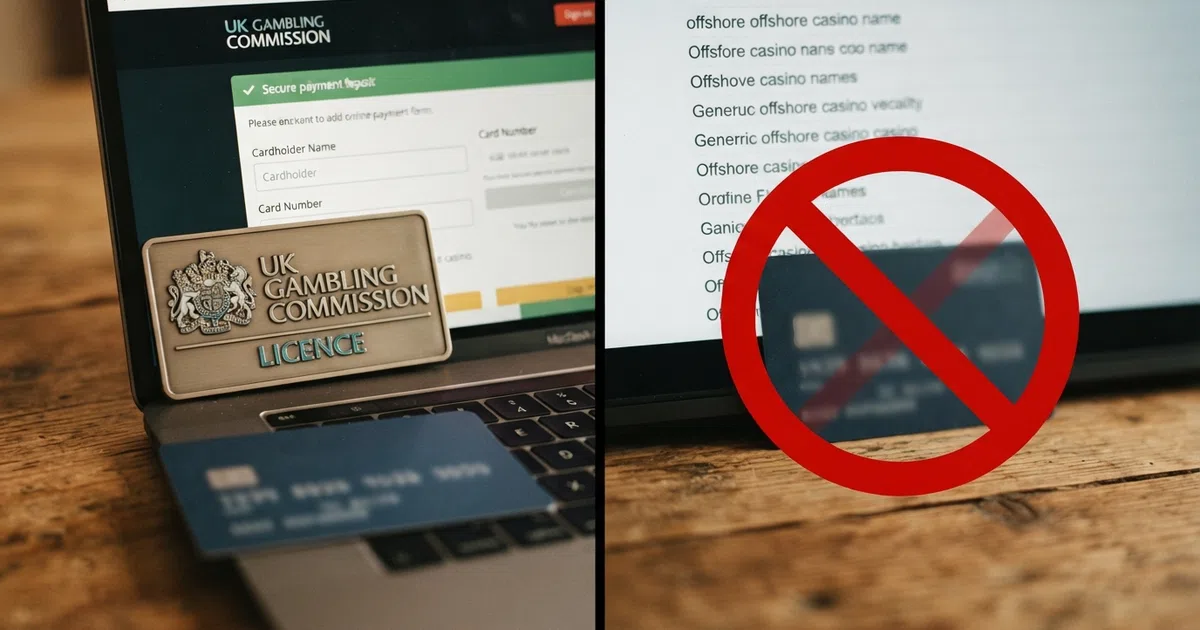
Data current as of 9 September 2026, verified against the UK Gambling Commission’s public register of licence holders and operator terms published on their websites.
Searching for a Casino That Takes Your Card in 2026: The Landscape the Ban Reshaped
What the Phrase “Credit Card Casino UK” Actually Refers To
The phrase names a thing that no longer exists in the licensed market. A “credit card casino” in the UK context can only mean one of two things: a casino licensed somewhere outside Britain that still takes Visa or Mastercard credit, or a search-results page that has not caught up to the 2020 rule change. Inside the UK licensing perimeter, the term is an oxymoron — the operator would lose its licence before it processed the first transaction.
The oddity is that the search term has not faded. People still type it in, and pages still rank for it, because the alternative — a sober list of debit-card, e-wallet and Open Banking deposit methods with their actual limits — is not what most of those pages offer. The 2024 NatCen evaluation of the credit card ban flagged this directly: the ban was “successfully implemented” in the licensed market, but “communications about the ban did not reach all people who gamble.” Some readers arriving at this page are looking for a category that has been emptied out and replaced with something else.
The Credit Card Casino Landscape Before and After April 2020
Before 14 April 2020, credit card deposits at UK-facing casinos were routine. The same Visa and Mastercard rails that paid for groceries and flights funded slots, blackjack and roulette sessions. The UK Gambling Commission announced the prohibition in January 2020, gave the industry a three-month run-up, and enforced it from the April date. The cut-off was clean at any operator holding a GB licence.
The 2024 NatCen evaluation found the ban “perceived to be a positive change” by gamblers, their families and treatment providers. It also found that it “did not always result in changed patterns of gambling” and that it remained “unclear whether people who gamble moved to unlicensed or black-market gambling operators.” That uncertainty is the gap offshore casinos fill, and the scale is not small: Between April 2024 and June 2025 the Commission issued 3,140 disruption notices against illegal gambling, referred 447,778 URLs to search engines for delisting, and achieved 287,961 URLs removed, with an average 32% fall in engagement across 160 disrupted sites. The unlicensed market is large enough to merit a sustained enforcement effort.
Why You Are Still Seeing Casino Sites Promising Credit Card Deposits
The search-results page is dominated by affiliate sites listing casinos that are not GB-licensed. These pages work because the search term still has volume and the affiliate model rewards listings, not accuracy. The sites they list are typically licensed in Curaçao, Malta or Gibraltar, and they accept credit cards because their home regulator does not forbid it. What they do not offer is the set of protections that come with a UK Gambling Commission licence: no GAMSTOP coverage, no UKGC complaints route, no ADR (alternative dispute resolution) provider, and no British consumer redress if a withdrawal is delayed or refused.
The reading is straightforward. Any casino claiming to accept credit card deposits from a UK customer is, by definition, not licensed by the UKGC. The UKGC register of licence holders is searchable by business name, trading name or domain, and is updated daily. A two-minute check tells you which side of the line a site is on.
The 2020 Credit Card Ban Explained: Why No UK-Licensed Casino Can Take Your Card
The credit card ban sits in Licence Conditions and Codes of Practice (LCCP) condition 6.1.2, and its scope is wider than the headline suggests. It covers all remote gambling — betting, gaming and lotteries conducted online — and all non-remote betting, meaning the high-street bookmaker as well as the casino site. It also reaches payments routed through e-wallets: operators must ensure that money service businesses (Skrill, Neteller, PayPal and the rest) have blocked credit-card-funded gambling transactions, typically via Issuer Identification Number checks on the first six to nine digits of the card.
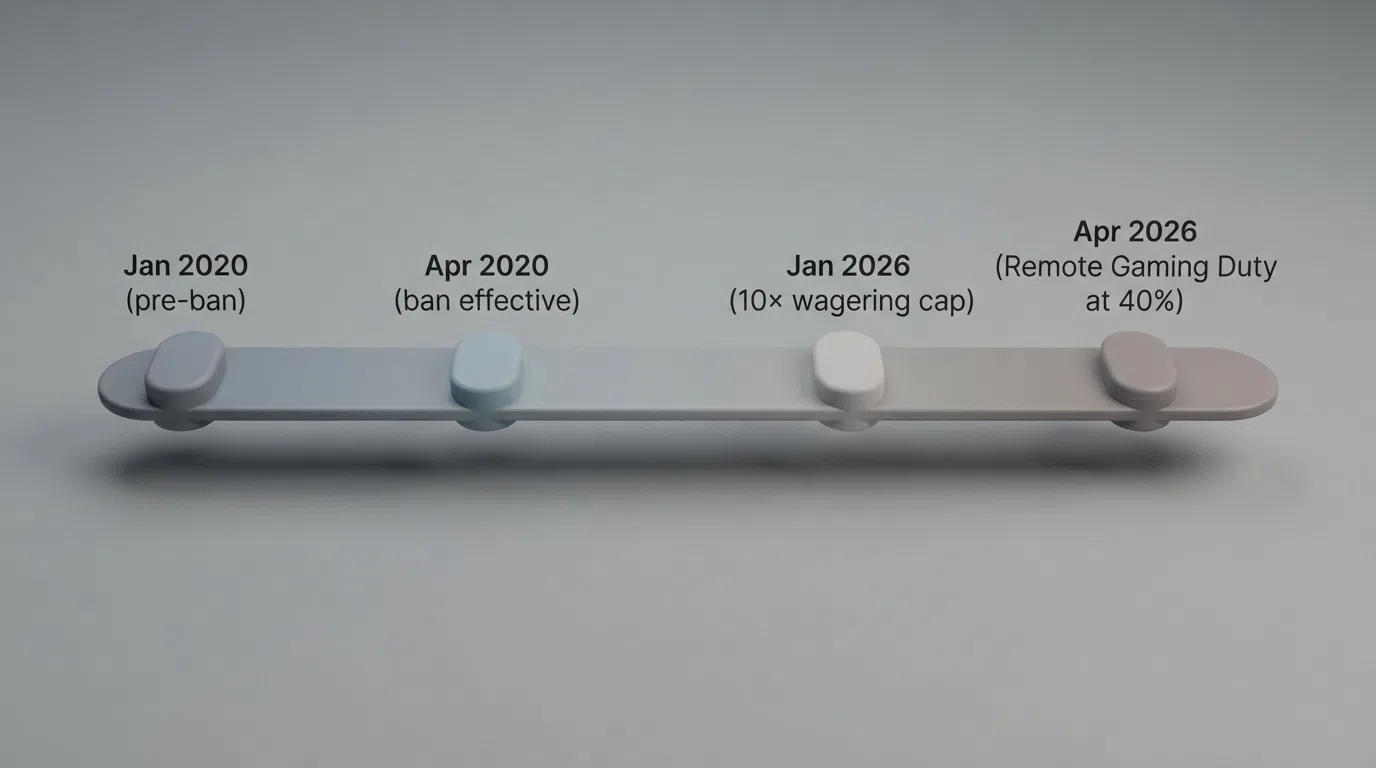
The stated ground for the ban, in the Commission’s own words, was the harm of gambling with money players do not have. “The ban aims to reduce the risks of harm to consumers from gambling with money they do not have.” The figure behind that framing: 22% of online gamblers who used credit cards were classified as problem gamblers, against a base rate well below that in the general online gambling population. The rule followed the data.
The 2024 NatCen evaluation gave the ban a mixed report card. Implementation was clean and the policy was well received. Whether it changed behaviour was less clear, and whether it pushed some players toward the unlicensed market is still uncertain. The ban is enforced, the market response is visible, and the displacement question is the one NatCen could not close.
Can I Still Use a Credit Card at a UK Casino? The Definitive Answer
By channel:
- Online gambling: No. All forms. Slots, live dealer, sports betting, poker, bingo, lottery — none of them take a credit card at any GB-licensed operator.
- Non-remote betting (high-street bookmaker): No. The credit card ban reaches the betting shop as well as the app.
- Non-remote casino and bingo: No. These venues were already barred from accepting credit cards before 2020; the 2020 rule extended the bar to betting and remote gambling.
- Non-remote lottery (buying a ticket in a shop): Yes. This is the one remaining exception. The ban does not cover physical lottery ticket sales at a retailer.
- Slots specifically: No, at any GB-licensed operator, online or on the high street.
The question most readers actually have is whether there is a workaround. There is not, inside the licensed market.
Non-Gamstop and Offshore Casinos That Still Accept Credit Cards
They exist, they are legal to access from the UK (the player faces no criminal penalty for gambling at an unlicensed site), and they sit outside every protection the UK system provides. A Curaçao, Maltese or Gibraltar licence is not a substitute for a UKGC licence. Under section 33 of the Gambling Act 2005, it is a criminal offence for the operator to transact with a British customer without a GB point-of-consumption licence — up to 51 weeks’ imprisonment, an unlimited fine, or both. The player is not the one prosecuted; the player is the one exposed.
The trade-off at the offshore casino is sharp. What you gain is credit card acceptance and, often, larger headline bonuses. What you give up is the full UK protection layer: no GAMSTOP (a self-excluded player can register and deposit the same day), no UKGC complaints route, no ADR provider, no British consumer redress if funds are withheld, and no automatic application of the UKGC’s game-design rules. The UKGC’s enforcement approach against unlicensed sites is disruption — issuing takedown notices, referring URLs to search engines, working with payment providers — not ISP-level blocking, which the Commission does not currently have the statutory power to compel.
What the Ban Means for You as a Player
Inside the licensed market, the ban sits inside a wider infrastructure built to limit harm. Every GB-licensed online operator must participate in GAMSTOP, the national self-exclusion scheme, which has been mandatory since 31 March 2020. GAMSTOP periods run six months, one year, five years, or five years with auto-renewal, and cannot be cancelled early. Operators must prompt new customers to set a financial deposit limit before their first deposit — that requirement took effect on 31 October 2025 — with decreases taking effect immediately. Financial vulnerability checks trigger at a net deposit of £150 in a rolling 30-day period, drawing on publicly available data only (bankruptcy orders, county court judgments, IVAs, DROs), not a credit check. A standardised gross deposit limit terminology takes effect on 30 September 2026.
Outside the licensed market, none of this applies. GAMSTOP does not reach an offshore casino. The operator sets its own deposit-limit policy, if it offers one at all. The complaints route is whatever the operator publishes in its terms — there is no ADR provider behind it. And UK banks may still decline or flag transactions to offshore gambling processors, even where the casino itself accepts the card.
The Rules Beyond the Credit Card Ban: Stake Caps, Bonus Limits and the Levy
The credit card ban was the first of a wave, not the last. Six years on, the UK slot and casino market carries a stack of new rules worth knowing.
- Online slots stake cap (SI 2025/215): £5 per game cycle for players aged 25 and over (from 9 April 2025); £2 per game cycle for players aged 18 to 24 (from 21 May 2025). The cap applies to slots only — not to other casino games.
- Bonus wagering cap: From 19 January 2026, LCCP Social Responsibility Code 5.1.1 caps bonus wagering requirements at 10× and bans mixed-product promotional offers. An offer can no longer condition a casino bonus on playing bingo, lottery or betting products.
- Statutory gambling levy: From April 2025, 1.1% of gross gambling yield for remote casino, remote bingo, remote general betting and gambling software licences. Proceeds split 50% treatment, 30% prevention, 20% research.
- Remote Gaming Duty: Increased from 21% to 40% from 1 April 2026 under Finance Act 2026, section 86. This is a tax on the operator, not the player, but it shows up in how the market prices its offers.
- Game-design rules (since 31 October 2021): Auto-play banned; spin speed minimum 2.5 seconds; losses disguised as wins banned; reverse withdrawals permanently banned; session losses, wins and time must be displayed.
The 10× bonus cap is the rule that has reshaped the welcome-offer market most visibly. Most of the wager-free offers in the ranking below sit comfortably inside it; the older 30×, 40× and 65× packages are being unwound.
How to Fund Your Casino Account in 2026: Every Payment Alternative That Actually Works
Credit cards are out. Eight rails are in. The table below covers the deposit methods that UK-licensed casinos accept today — speed, typical limits, withdrawal time, and whether the method keeps you eligible for the welcome offer.
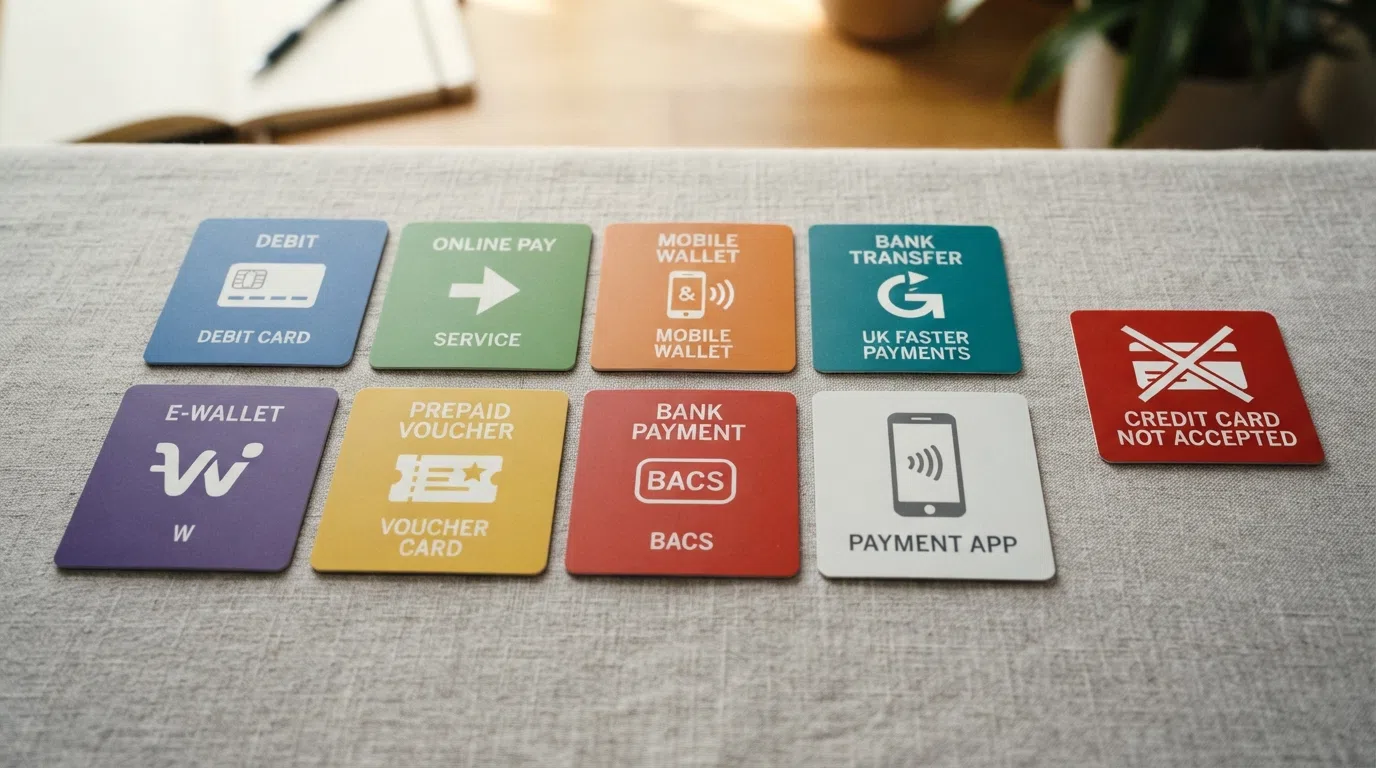
| Method | Deposit Speed | Typical Min–Max Deposit | Withdrawal Speed | Bonus-Eligible? |
|---|---|---|---|---|
| Debit card (Visa/Mastercard) | Instant | £10–£5,000 | 1–5 business days | Yes |
| PayPal | Instant | £10–£5,500 | 2–48 hours | Varies by operator |
| Apple Pay | Instant | £5–£99,000 (William Hill) | 1–3 business days | Varies by operator |
| Trustly / Open Banking | Instant (Faster Payments) | £5–£25,000+ | Under 24 hours | Usually yes |
| Skrill / Neteller | Instant | £10–£25,000 | Under 24 hours | Often excluded |
| Paysafecard | Instant | £5–£1,000 | No withdrawal possible | Often excluded |
| Bank transfer | 1–3 days | £10–£35,000 | 1–3 business days | Yes |
| Pay-by-phone (Boku) | Instant | £10–£30 | No withdrawal possible | Usually excluded |
The pattern in the column on the right is the one to watch. E-wallets and prepaid vouchers process instantly and let players move money without sharing card details with the operator, which is the reason they are popular — and the reason several operators exclude them from welcome-offer eligibility. The two-column trade is speed for bonus access. At William Hill, bet365 and Betfair, the welcome offer is gated to deposits made by debit card or specific methods; at Betfair, e-wallet deposits are not eligible at all.
Open Banking via Trustly is the fastest-growing rail. It runs on the Faster Payments network, bypasses the card-issuer checks that can stall a debit card transaction, and is increasingly the default for high-limit deposits. Apple Pay’s range is striking — up to £99,000 at William Hill — but the cards that fund it are debit-only, the same way the credit card ban closes off the credit rails.
Credit Card Deposit Mechanics at Offshore Casinos
The transaction flow at an offshore casino that accepts Visa or Mastercard credit is similar in form to a debit card payment, different in what it does to the player. The casino’s payment processor routes the transaction through a card network. The transaction is then classified by the card issuer under a merchant category code (MCC) for gambling, and the issuer decides whether to authorise it. Some UK banks decline all gambling transactions by default; others allow debit and decline credit; others flag the transaction and let the customer override. Cash-advance coding is the trap: if a transaction is treated as a cash advance rather than a purchase, it can attract a cash-advance fee and start accruing interest from the transaction date.
The 2020 ban reaches into this flow through the e-wallet route. Operators must block credit-card-funded deposits even when the player tries to disguise the source by funding a Skrill or Neteller wallet with a credit card. The mechanism is an IIN (Issuer Identification Number) check on the first six to nine digits of the funding card. A player who tries to use a credit card to top up a Skrill wallet and then deposit from Skrill will find the deposit refused at the operator’s cashier.
Pay-by-Credit-Card vs Traditional Deposit: What the Difference Is
Some offshore casinos market credit card deposits as a “pay-by” option distinct from a wallet deposit. The distinction is largely in the label. Under the surface, the transaction is the same: a credit card authorisation routed through a payment processor. The framing matters because “pay by credit card” is occasionally presented as a method of its own, but the player experience — entering a card number, completing 3-D Secure, seeing the deposit land — is identical to a standard card deposit. The terminology is marketing, not a technical difference.
Debit Cards: The Most Common Post-Ban Default
Debit cards are the path of least resistance at every GB-licensed casino. Visa and Mastercard debit are accepted everywhere on this page’s ranking, deposits are instant, typical limits run £10 to £5,000, and withdrawals return to the same card in one to five business days. Debit cards do not trigger the credit card ban because the funding source is the player’s own current account, not a line of credit. The deposit-limit prompt, the GAMSTOP coverage, the financial vulnerability check at £150 net deposits in 30 days — all of these apply on the same basis as for any other method.
E-Wallets and Open Banking: The Fastest-Growing Alternatives
PayPal, Apple Pay, Trustly, Skrill and Neteller make up the e-wallet and instant-payment cluster. The trade-off is speed against bonus eligibility. PayPal is the most widely accepted e-wallet and is the fastest withdrawal route outside Open Banking — often inside 48 hours, sometimes inside two. Apple Pay offers the widest single-transaction limits but only links to debit cards, so it inherits the credit card ban by construction. Trustly, running on Open Banking and Faster Payments, is the fastest-growing rail and the one that most reliably keeps a player bonus-eligible. Skrill and Neteller are the specialist e-wallets for higher-stakes play, with limits reaching £25,000 to £50,000, but at several featured operators their deposits do not qualify for the welcome offer. The audit is in the small print: the bonus page lists the eligible methods, and the cashier shows what is and is not included.
The Best UK-Licensed Casino Sites for 2026: Our Deposit-Flexibility Ranking
The table below ranks the ten GB-licensed operators reviewed on this page. All ten are confirmed on the UK Gambling Commission’s public register; none accepts a credit card. The ranking reflects the value of the current welcome offer (free spins, wagering, cap on winnings) alongside the breadth of the deposit-method range.
| Operator | UKGC Licence | Welcome Offer | Free Spins | Wagering | Bonus Validity |
|---|---|---|---|---|---|
| bet365 Casino | Confirmed | 500 wager-free spins | 500 FS at £0.10 | 0× | 30 days to claim; 7 days per batch |
| Sky Vegas | Confirmed | 250 wager-free spins (50 no-deposit) | 250 FS | 0× | 7 days per batch; 30 days to deposit |
| Paddy Power Games | Confirmed | 260 wager-free spins (60 no-deposit) | 260 FS | 0× | 7 days per batch |
| Betfair Casino | Confirmed | 150 wager-free spins (50 no-deposit) | 150 FS at £0.10 | 0× | 7 days |
| Coral Casino | Confirmed | 100 wager-free spins | 100 FS at £0.10 | 0× | No promo code needed |
| Betfred Casino | Confirmed | 200 wager-free spins | 200 FS | 0× | 14 days from registration |
| William Hill Vegas | Confirmed | 200 free spins on Big Bass Splash | 200 FS at £0.10 | 10× | 72-hour spin expiry; offer to 31/12/2026 |
| Gala Bingo | Confirmed | £50 bonus + 40 free spins | 40 FS on Big Banker | 4× on £50 | 7 days |
| Ladbrokes Casino | Confirmed | Bet £10, get £30 (terms unconfirmed) | — | — | — |
| 888 Casino | Confirmed | Terms not confirmed this run | — | — | — |
The bonus-cost calculation behind the most capped offer on this table — William Hill’s 200 free spins at 10× wagering and a £30 max cashout — works out as follows. Assuming the full 200 spins are taken at £0.10 each, gross spin value is £20. The 10× wagering applies to the winnings on those spins, not to the spin value itself, and the £30 cap is what the player can actually withdraw regardless of the wagering outcome. The 72-hour expiry on the spins is the tighter constraint: a player who does not open the game and claim the spins within three days of credit loses them. The 10× wagering cap introduced from 19 January 2026 is exactly the rule this offer sits under; the £30 max-cashout ceiling is operator-set and is what makes the offer materially less generous than the wager-free alternatives higher up the table.
bet365 Casino — 500 Wager-Free Spins and the Widest Deposit Rail
The headline number is 500 free spins at zero wagering. bet365 credits the spins as 10 daily selections over 10 days, starting at 5 and rising to 20, 50 and beyond; each spin is worth £0.10; the player has 30 days to claim and 7 days per batch to use them. There is no cap on free-spin winnings, which is the single biggest difference between this offer and the rest of the market.
On the deposit side, bet365 accepts debit card, PayPal (£25 to £5,500), Trustly (£5 to £25,000), Apple Pay (£5 to £5,000) and Paysafecard (£5 to around £1,000). Paysafecard deposits are not eligible for the welcome offer — the player has to deposit by debit card, PayPal, Trustly or Apple Pay to claim the 500 spins. No credit card, by licence condition.
The 500-spin count is the largest in the featured set. Zero wagering is the standard the rest of the wager-free operators have followed. The 30-day claim window is generous; the 7-day per-batch expiry is the only friction. This 500-spin welcome package stands as the most valuable on the GB-licensed market for any player with a debit card and a routine to log in daily.
Sky Vegas — 250 Free Spins, 50 with No Deposit, Zero Wagering Throughout
The most transparent welcome offer on the market. Sky Vegas credits 50 free spins on sign-up, no deposit required, then a further 200 spins once the player has deposited and staked £10. Wagering is 0× on every spin; winnings carry no playthrough requirement. The 7-day expiry applies per batch, and the deposit-and-stake must be completed within 30 days of registration.
The deposit mix—including debit card, PayPal, Apple Pay and bank transfer—is narrower than bet365’s, but it covers the methods a typical UK player uses. Apple Pay and PayPal keep the experience fast; bank transfer is the fallback for higher limits. No credit card, no Paysafecard in the welcome-offer mix.
For a player who wants to try a casino without committing a deposit first, the 50 no-deposit spins are the entry point. The 200-spin follow-up is the part that rewards the £10 stake. The whole offer is wager-free, which is the one number that decides the comparison.
Paddy Power Games — 260 Free Spins, 60 No-Deposit, All Wager-Free
The biggest no-deposit spin count in the featured set: 60 free spins on registration, then 200 more on deposit and a £10 wager. The full 260 are wager-free. The first 50 credited are on a slot of the player’s choice; the rest are on Paddy’s Mansion Heist. Spins expire after 7 days, and an e-wallet deposit minimum of £30 is noted in the small print.
The deposit range covers debit card, PayPal, Apple Pay, Trustly and Skrill. The library runs to over 1,000 slots, with daily must-drop jackpots. Paddy Power’s slot count is one of the larger ones in the Flutter stable, and the must-drop jackpots add a time-limited prize pool on top of the standard slot return.
The 60 no-deposit spins are the headline; the 200-spin follow-up is the substantive value. Paddy Power’s 60-spin no-deposit offer edges out the 50-spin alternatives at Sky Vegas and Betfair, securing its spot as the strongest entry point among the Flutter brands.
Betfair Casino — 150 Free Spins, 50 No-Deposit, £5 Minimum Deposit
The lowest deposit barrier in the ranking. Betfair credits 50 free spins on registration, then 100 more once the player has deposited and wagered £10. Wagering is 0×. The minimum deposit is £5 — lower than any other operator on the page. The 7-day expiry on the spins is the standard Flutter cadence.
The catch is on the deposit method. E-wallet deposits — PayPal, Skrill, Apple Pay — are not eligible for the welcome offer at Betfair. The qualifying deposit has to come through a debit card or bank transfer. This is a different rule from Sky Vegas, where PayPal is fine, and from Paddy Power, where Skrill is on the eligible list.
For a player paying with a debit card and willing to deposit as little as £5, the entry point is the easiest in the set. For a player who prefers e-wallets, the offer is not available, and the comparison runs against Sky Vegas or Paddy Power instead.
Coral Casino — 100 Wager-Free Spins, Simple Trigger
Coral’s offer is the cleanest structure on the page: 100 free spins at £0.10 each, triggered by depositing £10 and wagering £10 on slots. Wagering is 0×. No promo code. The operator is part of the Entain group alongside Ladbrokes and Gala, which means the same compliance and payments infrastructure underpins all three.
The deposit range covers debit card, PayPal, Apple Pay, Skrill and bank transfer. Coral does not publish an e-wallet exclusion for the welcome offer in the same way Betfair does, though the qualifying wager requirement of £10 on slots means a player depositing via Skrill still has to run the £10 through a slot to trigger the spins.
For a player who wants a single, uncomplicated offer with no deposit-method gating, Coral is the straightforward choice. The 100-spin count is smaller than the Flutter operators, but the 0× wagering keeps the value comparison honest.
Betfred Casino — 200 Wager-Free Spins, Debit Card Recommended
Betfred’s 200 wager-free spins are triggered by staking £10 or more on slots within 14 days of registration. The wagering is 0×. The deposit range covers debit card (£10 minimum), PayPal and bank transfer. PayPal and e-wallet deposits may not be eligible for the welcome offer — the small print recommends depositing by debit card to ensure the spins credit.
The 14-day window is longer than the 7-day per-batch expiry at the Flutter brands, which gives the player more time to meet the staking requirement. The trade-off is the e-wallet exclusion: a player who pays by PayPal may need to switch to a debit card to claim the 200 spins.
For a player who is happy to deposit by debit card and stake £10 on slots within a fortnight, this is one of the higher-value wager-free offers. The deposit-method caution is the only friction.
William Hill Vegas — 200 Free Spins, 10× Wagering, £30 Cashout Cap
The biggest brand name on the page with the tightest terms. William Hill’s 200 free spins are on Big Bass Splash at £0.10 each, triggered by a £10 deposit and stake. The wagering is 10× on spin winnings — the new UKGC cap — and there is a £30 cap on what the player can actually withdraw from the spins, regardless of the wagering outcome. The 72-hour spin expiry is the shortest on the page. The offer runs until 31 December 2026.
The deposit range is the widest in the ranking. Debit card, PayPal, Apple Pay (£5 to £99,000), Trustly (£10 to £10,000), Skrill and Neteller (£10 to £25,000) are all accepted. Apple Pay’s £99,000 ceiling is the highest single-method limit on the page, reflecting the high-roller end of the operator’s customer base. E-wallet deposits may not be eligible for the welcome offer — the qualifying deposit and stake for the spins should be made by debit card.
The brand recognition and the deposit range are the strengths. The 10× wagering and the £30 max cashout are the costs. A player who clears the wagering and hits a good run on Big Bass Splash still walks away with £30, not the full spin winnings. Compared to the wager-free 200-spin offers at Betfred and Coral, the headline count is the same and the realised value is much lower. The calculation is straightforward: under the 10× wagering rule, a player who wins £50 from the spins must stake £500 before withdrawing; under the £30 cap, even clearing the wagering leaves a £30 ceiling on what comes out. William Hill Vegas is the operator to choose when brand and deposit range matter more than the welcome-offer value.
Gala Bingo — £50 Bonus + 40 Free Spins, 4× Wagering (Bingo-First)
The only bingo-first operator in the ranking, with the lowest cash-bonus wagering multiplier. Gala Bingo’s welcome offer is a £50 bonus plus 40 free spins on Big Banker, triggered by a £10 qualifying deposit and bingo ticket spend. The wagering on the £50 bonus is 4× — £200 in wagering within 7 days — well inside the 10× UKGC cap that took effect on 19 January 2026. The 40 free spins are at £0.10 each and expire after 7 days. No bonus code is required.
The deposit range covers debit card, PayPal, Apple Pay and Skrill. The bingo-first focus means the qualifying spend is on bingo tickets rather than slots, which is the structural difference from the casino-first operators higher up the table.
For a player whose interest is bingo with a casino-spin side order, the 4× wagering on the cash bonus is the most favourable cash-bonus term on the page. For a player looking for a pure slots welcome, the casino-first operators offer more spins for the same £10 stake.
Ladbrokes Casino — Bet £10 Get £30, Terms Partially Unconfirmed
One of the UK’s oldest bookmakers, part of the Entain group alongside Coral and Gala. The headline welcome offer is “bet £10, get £30,” but the full terms — wagering, validity, eligible games — were not fully surfaced during this page’s research and should be verified on the operator’s site before claiming. Ladbrokes accepts debit cards, PayPal, Skrill, Apple Pay, and bank transfers, with no credit cards permitted.
For a player already inside the Entain ecosystem, Ladbrokes sits alongside Coral and Gala with the same compliance and payments infrastructure. The welcome-offer value here is presented qualitatively because the terms were not confirmed at the time of writing; the comparison against Coral’s 100 wager-free spins should be made on the basis of the player’s preference for a £30 cash bonus versus 100 free spins.
888 Casino — Proprietary Games and a Broad Deposit Range, Welcome Offer Unconfirmed
888 runs its own in-house game studio alongside NetEnt, Playtech, Pragmatic Play and Evolution, which means a chunk of the 888 library is not available at any other GB-licensed casino. The welcome-offer terms were not surfaced during this page’s research and are presented qualitatively only. 888 accepts debit cards, PayPal, Apple Pay, bank transfers, Skrill, and Neteller. The operator is now part of evoke plc, the group that also runs William Hill.
For a player interested in 888’s proprietary titles, the operator is the only licensed route to them. The welcome-offer value cannot be ranked against the rest of the set on the basis of what is published; the player should check the current terms on the operator’s site before comparing.
Playing Slots on Borrowed Money in 2026: What the Prohibition Means for Your Favourite Game
The credit card ban covers slots because slots are the vertical the UKGC data flagged as highest risk. The 22% problem-gambler rate among credit card users was concentrated in online slots play, which is the product mix where borrowed money does the most damage. The 2020 ban, the 2025 stake cap, and the October 2021 game-design rules (auto-play ban, 2.5-second minimum spin speed, no losses disguised as wins) are all aimed at the same product.
At a GB-licensed casino, the post-ban slot experience runs on a debit card or e-wallet deposit, a £5 or £2 stake cap depending on age, and a session display showing time, losses and wins. The slot library is the same set of providers — NetEnt, Pragmatic Play, Playtech, Microgaming, Blueprint, Red Tiger, IGT, Evolution — that supplies both the licensed and offshore markets. The difference is the regulatory wrapper: at a licensed casino the games are run under UKGC RTP (return to player) and fairness-audit requirements, and the game-design rules apply; at an offshore casino the audit regime depends on the licence jurisdiction and the UKGC rules do not apply.
Slot Sites That Accept Credit Cards — Only Offshore
Any slot site that accepts a credit card deposit from a UK customer is not GB-licensed. The tell-tale signs are the absence of a UKGC licence number in the footer, the absence of a GAMSTOP registration link, a Curaçao or Malta licence reference, and the presence of credit card logos in the cashier. The slot experience at these sites can be technically equivalent — the same providers, the same games — but the regulatory framework around it is not. No GAMSTOP coverage means a self-excluded player can register and play. No UKGC complaints route or ADR means a dispute over a delayed withdrawal has no British backstop. No UKGC game-design rules means the spin-speed floor, the auto-play ban and the loss-disguised-as-win ban do not apply.
The slot connection to the credit card ban is the central fact. The 22% problem-gambler rate that drove the rule was concentrated in slot play. Borrowing to spin is the pattern the regulator was looking to interrupt.
RNG vs Live-Dealer Games with Credit Card Deposits
Both RNG (random number generator) slots and live-dealer tables are available at offshore credit-card casinos. The provider mix at the top of the market — Evolution for live dealer, Pragmatic Play Live, the NetEnt and Pragmatic Play slot catalogues — is largely the same as at GB-licensed sites. The differences are in the regulatory layer. At a licensed casino, the UKGC audits the RNG and the live-dealer studio, enforces the game-design rules, and requires the operator to display session data. At an offshore casino, the audit regime depends on the licence jurisdiction, and the UKGC’s game-design rules do not bind the operator. A UK player who moves from a licensed casino to an offshore credit-card casino keeps the same games and loses the UKGC’s rules around how those games are presented.
Game Providers at Credit-Card-Friendly Casinos
NetEnt, Pragmatic Play, Playtech, Microgaming, Blueprint, Red Tiger, IGT and Evolution all supply both UK-licensed and offshore operators. 888 adds its own proprietary studio on top. The provider name does not, by itself, guarantee the same audit regime or RTP reporting standards across jurisdictions. A NetEnt slot at a Curaçao-licensed casino is the same game engine as a NetEnt slot at a UKGC-licensed casino; what differs is the regulator looking over the operator’s shoulder.
Staying in Control: The Player Protections You Keep by Staying Licensed
The responsible-gambling infrastructure is not a footnote. It is the difference between a regulated market and an unregulated one, and it is the reason the credit card ban sits inside a wider toolkit rather than standing alone. The prevalence data behind the rules is the reason the rules exist: 2.7% of GB adults aged 18 and over scored 8+ on the PGSI (Problem Gambling Severity Index) in the 2024 Gambling Survey for Great Britain, a figure described as statistically stable against 2023. A wider sweep — the GambleAware Treatment and Support Survey 2024 — found 15.6% of GB adults classified at PGSI 1+ (any level of problem gambling), up from 13.1% the year before. The numbers are large enough to justify the infrastructure.
The UKGC Player-Protection Toolkit: Deposit Limits, Reality Checks and Time-Outs
Every GB-licensed casino must offer a deposit-limit prompt before the customer’s first deposit. The rule took effect on 31 October 2025. Decreases to the limit take effect immediately; increases are subject to a cooling-off period. A standardised gross deposit limit terminology comes into force on 30 September 2026, with the gross limit offered at equal prominence to the net limit. Financial vulnerability checks trigger at a net deposit of £150 in a rolling 30-day period (from 28 February 2025) and use publicly available data only — bankruptcy orders, county court judgments, IVAs, DROs — not a credit check or an income assessment.
Reality checks, time-out facilities and session displays of time, losses and wins complete the in-product layer. The offer is mandatory; the level is the player’s choice. Britain caps the stake per spin and compels the offer of a limit; the regulator does not set a nationwide deposit, loss or spend ceiling.
GAMSTOP Self-Exclusion: What It Covers and What It Cannot Reach
GAMSTOP is the UK’s most powerful self-exclusion tool, and it stops at the licensed border. The exclusion periods are six months, one year, five years, or five years with auto-renewal. The exclusion cannot be cancelled early; if not deactivated after the minimum period, it continues for up to seven further years. GAMSTOP has been mandatory for all GB-licensed online operators since 31 March 2020.
GAMSTOP covers online gambling only. It does not reach high-street bookmakers, casinos or bingo halls. It does not reach unlicensed or offshore sites — a player who has self-excluded through GAMSTOP can register and deposit at a non-Gamstop casino using a credit card the same day. The self-exclusion covers the licensed market it was designed to cover; the unlicensed market sits outside it.
Where to Get Help: GamCare, NHS Clinics and the National Gambling Helpline
The free, confidential support infrastructure in Britain is built around the National Gambling Helpline, operated by GamCare. The helpline takes over 52,000 calls per year, and the National Gambling Support Network (NGSN) reports that nine in ten people who complete treatment see an improvement in their condition. NHS gambling harm clinics operate in England, Scotland and Wales. Gamblers Anonymous runs peer-support groups. GambleAware commissions treatment, prevention and research and is funded by the statutory levy. The 2024 Gambling Survey for Great Britain provides the prevalence backdrop: 2.7% of GB adults scored 8+ on the PGSI, the threshold for moderate-to-severe problem gambling.
For a player who is worried about their own play or someone else’s, the National Gambling Helpline is the single number to know. The call is free, the conversation is confidential, and the network behind it covers treatment, counselling and self-exclusion support.
Offshore vs Licensed on Player Protection: The Side-by-Side Gap
The gap between the licensed and offshore markets on player protection is not a matter of degree; it is a matter of presence.
The gap between the licensed and offshore markets on player protection is substantial. Every GB-licensed online operator offers GAMSTOP coverage, a UKGC complaints route and ADR, mandatory deposit-limit tools (as of 31 October 2025), and financial vulnerability checks triggered at £150 in net deposits over 30 days (as of 28 February 2025). Furthermore, game-design protections—including auto-play bans, spin-speed floors, and bans on losses disguised as wins—are mandatory for licensed operators, as is session tracking. Offshore sites lack these consumer protections entirely, providing neither GAMSTOP access nor independent complaint resolution, and they are not bound by the same game-design or financial-check requirements.
The list runs one way. Every protection on it is a feature of the licensed market, and every gap is what an offshore casino does not provide. A player who moves from a GB-licensed casino to an offshore credit-card casino does not just change payment rails; they change the set of rules that apply to them.
How We Chose and Ranked the Casino Sites on This Page
The ten operators on this page are GB-licensed, confirmed on the UK Gambling Commission’s public register of licence holders. The register is searchable by business name, trading name or domain and is updated daily. Each operator’s licence status was checked against the register during this page’s research.
The ranking is built from three inputs: the breadth of the deposit-method range, the structure of the current welcome offer (free-spin count, wagering multiplier, cap on winnings, validity), and the bonus validity window. Operators whose current welcome-offer terms could not be confirmed during research are included in the ranking with qualitative notes rather than in the comparison table, because a half-confirmed offer is not a fair basis for a ranking position.
The page covers the licensed market in full and the offshore alternative with honest risk framing. It does not recommend any unlicensed operator. A reader who wants credit card acceptance will find offshore sites through their own search; the page’s job is to set out what that path costs in protections, not to send the reader down it. The evaluation basis is the public register, the operators’ published terms, and the regulatory data behind the 2020 ban and the 2025–2026 rule changes.
What This Means for Your Next Casino Deposit: Our Verdict
The credit card ban is real, enforced, and near-total. There is no workaround at a GB-licensed casino, and there will not be one as long as LCCP condition 6.1.2 stands. The payment alternatives — debit card, PayPal, Apple Pay, Trustly, Skrill, Neteller, Paysafecard, bank transfer — are fast, widely available, and at most operators bonus-eligible. The welcome offers on this page run from 500 wager-free spins at bet365 to a £30 cap at William Hill, and the gap between the two is exactly the gap the 10× bonus cap and the £30 max-cashout ceiling describe.
If credit card acceptance is non-negotiable, the path leads offshore, and the cost of that path is the full UK protection layer: no GAMSTOP, no UKGC complaints route, no ADR, no financial vulnerability check, no UKGC game-design rules. Banks may still decline the transaction at the issuer level. The player is not breaking the law; the player is gambling outside the framework that exists to limit harm. The 22% problem-gambler rate among credit-card-using online gamblers is the reason the framework exists in the first place.
The reader’s next step is to decide which trade-off they are making. If the answer is the licensed market, the operators in the ranking above are the comparison set, and the deposit-limit prompt at first deposit is the tool to set before any money moves. If the answer is the offshore market, the absence of every protection listed in the section above is the price of admission. The page presents both paths; it does not push the reader down either.
Frequently Asked Questions
What are the risks of gambling at offshore casinos that accept credit cards?
The player is not committing a criminal offence, but the protections available inside the UK licensing perimeter do not apply. There is no GAMSTOP coverage, no UKGC complaints route, no ADR provider, no financial vulnerability check, and no automatic application of the UKGC’s game-design rules. UK banks may decline or flag transactions to offshore gambling processors, and any dispute over a delayed or refused withdrawal has no British backstop.
Does the credit card ban apply to e-wallets like PayPal and Skrill?
Yes. The 2020 ban extends to credit-card-funded deposits routed through e-wallets. Operators must ensure that money service businesses have blocked credit-card-funded gambling transactions, typically via IIN checks on the first six to nine digits of the funding card. A deposit from a PayPal or Skrill wallet that was itself funded by a credit card is refused at the cashier.
What is the UKGC’s 10x wagering requirement cap and when did it start?
From 19 January 2026, LCCP Social Responsibility Code 5.1.1 caps bonus wagering requirements at 10× and bans mixed-product promotional offers. An offer can no longer condition a casino bonus on playing a different product type. The 10× ceiling applies to all GB-licensed online operators.
How does GAMSTOP self-exclusion work if I play at an offshore casino?
It does not. GAMSTOP covers GB-licensed online operators only. A player who has self-excluded through GAMSTOP can register and deposit at a non-Gamstop casino the same day. The exclusion does not bind the offshore operator, and the offshore operator is not part of the GAMSTOP scheme. Self-exclusion through GAMSTOP applies to the licensed market it was designed to cover.
Do I pay tax on gambling winnings in the UK?
No. Players pay no tax on gambling winnings in the UK. Player-side betting duty was abolished in 2001 and has not been reinstated. The Remote Gaming Duty, which increased from 21% to 40% from 1 April 2026, is a tax on the operator, not the player.
Payments – topratedonlinecasinos-uk
Content created by the «topratedonlinecasinos-uk» team