
Casinos That Accept WebMoney in the UK: What Actually Works in 2026
 Available in GB
There is a short version of this answer and a longer one. The short version: no UK-licensed casino accepts WebMoney in 2026, and the e-wallet’s own UK regulatory standing ended in 2022. Anyone telling you otherwise is pointing you at an offshore site that carries none of the consumer protections a British player is used to. The longer version is what this page covers — what WebMoney was, why the door closed, what replaced it, and where a UK player depositing today actually gets the best of what is left.
This article is current as of 9 September 2026 and the operator licence claims below have been verified against the Gambling Commission’s public register of licence holders.
Why You Won’t Find WebMoney at Any UK-Licensed Casino in 2026
What WebMoney Actually Is and How It Worked at Online Casinos
WebMoney is a long-established e-wallet, founded in 1998 and widely used across Russia and the CIS. The product sat in a family of accounts known as WebMoney Keeper — purses held in different currencies, with a funding buffer between the player’s bank or card and the casino cashier. A typical flow was: register a Keeper account, top it up from a bank card or bank transfer, then send funds from the wallet to the casino cashier in a single transaction. Withdrawals worked the reverse way — winnings returned to the wallet, then out to a bank account.
That design is the same one Skrill, Neteller and PayPal use. It is what made WebMoney a tempting option for casino players who wanted to keep the casino separate from their main bank statement, and why searches for “casinos that accept WebMoney UK” exist in the first place. The mechanics still work in much of the world. They no longer work in the United Kingdom.
WebMoney’s Regulatory Status in the UK — What Changed
WebMoney Europe Ltd held FCA registration as an e-money institution until 2022. That registration is now discontinued, and the position taken from current source material is that official UK access via WebMoney is no longer possible. The FCA register is the public record of who is allowed to issue e-money in the UK; once a firm drops off it, UK-facing integrations stop being viable.
There is a second layer. Every casino operating in Great Britain needs a UK Gambling Commission remote operating licence — what the 2014 Act introduced is called a point-of-consumption licence. Unlicensed provision is criminal under section 33 of the Gambling Act 2005, carrying penalties of up to 51 weeks’ imprisonment, an unlimited fine, or both. A UKGC-licensed operator integrating an FCA-discontinued payment rail would be taking on regulatory risk for no commercial gain. None of them have done it. That is why the cashier page at a Sky Vegas, a Betway or an 888casino does not list WebMoney — it lists debit cards, PayPal, Apple Pay, occasionally Trustly, and never WebMoney.
What This Means for UK Players Searching for WebMoney Casinos
The search results that promise “WebMoney casinos UK” are dominated by affiliate pages pointing at offshore brands. The pages are well-written. The brands they list typically operate under Curaçao or Anjouan licences, accept players from the UK by design rather than by UKGC authorisation, and ship their cashier with WebMoney at the top of the list precisely because the UK rail is shut. What they do not ship is the British protection stack. No GAMSTOP. No UKGC complaints route. No approved alternative dispute resolution. No slot stake cap. No 10× wagering ceiling. No mandatory deposit-limit prompts. If something goes wrong at one of those sites, the player has no domestic regulator to escalate to.
There is one UK-specific gap worth naming. The visible search results for this keyword are full of pages asserting WebMoney acceptance at UK-facing casinos, but the assertions are rarely backed by UKGC-licensed operator evidence. Where the research looked for that evidence, it was not found. So the gap is not on this page — it is on the affiliate pages that fill the gap by listing offshore brands as if they were domestic choices.
10 UK Casinos Ranked — Where E-Wallet Players Get the Best Value in 2026
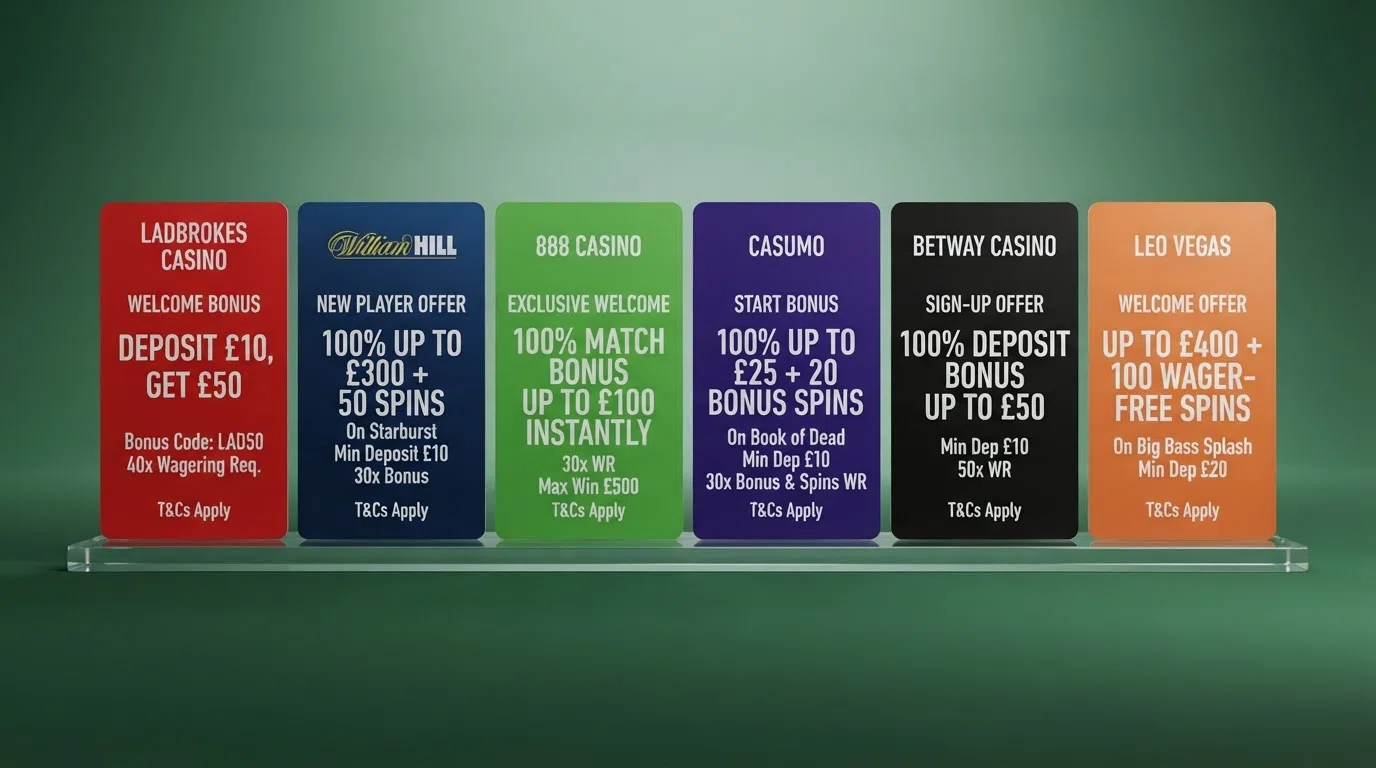
The honest comparison here is not “which casinos accept WebMoney” — none of them do. It is “which UKGC-licensed casinos give an e-wallet-using player the best package right now”. The table ranks on licence status, the shape of the welcome offer, free-spin count and the wagering attached. Several of the licence “Active” entries below come from the Gambling Commission’s public register; entries marked “not confirmed” are operators the plan routes into the ranking on the strength of their bonus and brand track record, but for which a direct register entry was not captured this run — a reader should verify before depositing.
| Operator | UKGC Licence Status | Welcome Bonus | Free Spins | Wagering |
|---|---|---|---|---|
| Sky Vegas | Active (register updated 29 July 2026) | Deposit and stake £10 to qualify | 200 | 0× |
| Betway | Active (Casino Remote from 1 Nov 2014) | Stake £10 on Big Bass Hold & Spinner | 125 | 0× |
| 888casino | Active (Casino Remote from 1 Nov 2014) | 100% up to £100 | — | 10× |
| Betfair | Active (Betfair Casino Limited licence 039435-R-319329-007) | — | 50 | 0× |
| Paddy Power | Not confirmed this run | £10 deposit unlocks 200 additional spins | 260 (60 no-deposit + 200 on deposit) | 0× |
| Virgin Games | Not confirmed this run | £10 deposit + £10 cash wager on slots | 70 on Big Bass Splash | 0× |
| Ladbrokes | Not confirmed this run | Play £10 | 100 | 0× |
| Coral | Not confirmed this run | Play £5 + £10 bonus | 100 | 10× |
| Bet365 | Present in UKGC business register | Sports welcome only captured (Bet £10 Get £30 in Free Bets) | — | — |
| BetVictor | Not confirmed this run | Not captured this run | — | — |
Six of the ten featured operators now offer zero-wagering free spins. The shift from deposit-match bonuses to no-wagering spin packages is the most important change in the UK bonus market in years — it happened because of the 10× wagering cap, and it is the single biggest reason a UK player does not need WebMoney to get value from a casino cashier.
Sky Vegas — 200 No-Wagering Free Spins with a Proven UKGC Track Record
Sky Vegas sits at the top of this ranking on the strength of one number: 200 free spins with zero wagering, after a £10 deposit and a £10 stake. That is a generous spin count, a low entry barrier and a clean payout — what you win is what you keep. The licence is Active on the Gambling Commission’s public register (the register entry was updated 29 July 2026), which means the operator answers to the UKGC’s day-to-day rules and is subject to the complaints and ADR process if anything goes wrong. The 7-day free-spin expiry is the tight constraint here; the qualifying deposit and stake must happen within 30 days, but the spins themselves must be used inside a week.
The provider list is broad: NetEnt, Playtech, Play’n GO, Blueprint, Evolution, IGT and Pragmatic Play. That covers mainstream slots, live dealer and the Big Time Gaming–adjacent catalogue. For an e-wallet-using player who has decided to skip PayPal or Skrill and fund the account by debit card, Sky Vegas is the standout choice of the set.
Betway — 125 No-Wagering Free Spins on Big Bass Hold & Spinner
Betway’s offer is narrower but transparent. Stake £10 and you receive 125 free spins on a named slot — Big Bass Hold & Spinner — at £0.10 per spin. The wagering on spin winnings is zero, which means whatever the spins produce is paid as cash. Betway’s Casino Remote licence has been active since 1 November 2014 — a decade of regulatory compliance, complaint handling and player-fund protection, which is what the UKGC framework is built to deliver.
The trade-off is the qualification method. Stake £10 on the qualifying game before the spins unlock, and the funding method matters — the offer is debit-card only. A player who prefers to fund by e-wallet will need to switch rails for this one, or pass on the offer entirely.
888casino — 100% Up to £100 with the Capped 10× Wagering
888casino is the strongest match-bonus option in the ranking. A 100% deposit match up to £100 sits at exactly the statutory ceiling for UK bonus wagering — 10× on the bonus amount — and is the reason the offer is structured this way: the cap is a hard ceiling, and 888casino has built to it. The minimum deposit is £10; the bonus carries 90 days of validity from credit, which is generous relative to the 7-day window most free-spin offers impose.
This is the right pick for a player who prefers a deposit match to free spins and is happy to play through a wagering requirement. The 10× ceiling makes the math predictable: a £100 bonus means £1,000 of wagering on selected slots, and the calculation further down this page works that example through in detail.
Betfair — 50 No-Wagering Free Spins from a Flutter-Owned Operator
Betfair runs on a Betfair Casino Limited licence (039435-R-319329-007) and the UKGC register shows the trading name as Active. The welcome offer captured this run is 50 free spins with no wagering on the winnings. The full qualification terms — the exact deposit, stake and eligible slot — were not fully captured in the source material, so the safe move is to verify the current mechanics on the operator’s own site before claiming.
For a player who values regulatory standing over headline spin count, Betfair fits. The Flutter group operates Paddy Power as well, and Betfair’s casino product draws on the same platform.
Paddy Power — 60 No-Deposit Spins Plus 200 More After Deposit
Paddy Power is the only featured operator with a genuine no-deposit free-spin layer. Sixty spins land before a penny changes hands, then 200 more unlock after a £10 deposit. The wagering on spin winnings is zero across both stages. The 30-day validity window applies to the spin credits once issued. The provider mix is Pragmatic Play, Blueprint and Inspired Entertainment, with additional studios referenced.
The trade-off is real and worth naming. A no-deposit layer is rare in the UK because the regulator discourages anything that looks like inducement without a financial commitment from the player. Paddy Power’s version exists, but it sits alongside a deposit step, and the wagering-free nature of both layers is what makes it worth the registration friction. UKGC KYC still applies before any play, so anonymous registration is not the offer’s nature.
Virgin Games — 70 Free Spins on Big Bass Splash, Zero Wagering
Virgin Games’ welcome is 70 free spins on Big Bass Splash after opt-in, a £10 deposit and a £10 cash wager on slots. The wagering on spin winnings is zero, and the spin credits carry 30 days of validity once issued. The spin value is 1p per spin across 10 lines, totalling about £1 per spin set.
The provider list is the most extensive in the featured set: Pragmatic Play, NetEnt, Games Global, Blueprint, Play’n GO, Evolution, Red Tiger, Push Gaming, Relax Gaming and IGT. That breadth is the offer’s quiet strength — even if a player does not want to play the named Big Bass title, the catalogue behind it is large.
Ladbrokes — 100 No-Wagering Free Spins from an Entain High-Street Name
Ladbrokes’ offer is 100 no-wagering free spins for a £10 play, and the funding-method constraint is explicit: debit card, Apple Pay or Google Pay are the eligible rails. No e-wallet funding. That is the same constraint the operator’s retail and app presence has carried for years — Ladbrokes is one of the high-street names that has hardened its online welcome offer around payment rails it can verify cleanly. The provider mix covers NetEnt, Pragmatic Play, Big Time Gaming and Play’n GO, which is the mainstream UK slots backbone.
For a player who funds by debit or mobile wallet and is happy to stake £10 to clear the qualification, this is one of the cleaner entries in the ranking.
Coral — 100 Free Spins Plus a £10 Bonus, With 10× Wagering Attached
Coral’s offer is the lowest entry barrier in the set: play £5, get 100 free spins and a £10 cash bonus. The wagering is 10×, which sits exactly at the UKGC statutory ceiling — Coral is offering the most aggressive bonus-bundle structure the cap allows.
A reader needs to weigh the math. £5 in, 100 spins plus £10 bonus. The £10 bonus carries 10× wagering, so £100 of qualifying turnover is required to clear it. The spins themselves are zero-wagering, so their winnings pay as cash. Two structures in one offer, and the 10× component is the part that costs time rather than money.
Bet365 — Limited Casino Bonus Data, but a UKGC-Registered Heavyweight
Bet365 appears in the UKGC business register search results for “Bet365”, and the brand’s standing in British gambling is established. What was not captured this run is the casino-specific welcome offer — the source material surfaced only the sports welcome of Bet £10 Get £30 in Free Bets with a 7-day expiry on the free bets. Game providers were not confirmed.
A reader looking at Bet365 for casino should check the operator’s own promotions page for the current casino welcome. The licence presence is not in doubt.
BetVictor — Bonus Data Not Captured, Included for Completeness
BetVictor is included so the set of recognised UK brands is complete, but the welcome bonus, free spins, wagering multiplier, bonus validity, game providers and spin value were not captured in this research run. The honest reading is that BetVictor’s current casino welcome is not documented here. A reader comparing the major UK names should check the operator’s own terms page for the current package.
How UK Casino Payments Actually Work — Deposits, Withdrawals and What Replaces WebMoney
WebMoney is gone from the UK. What replaces it is a tightly regulated set of rails — debit cards, the major e-wallets that still hold UK regulatory standing, open-banking transfers and a few mobile-first options. The mechanics below are what every UKGC-licensed casino runs in 2026.
Depositing at a UK-Licensed Casino — the Steps and the Rules
Every deposit at a UKGC-licensed casino runs through identity verification first. The UK Gambling Commission requires online operators to verify the customer’s name, address and date of birth before the customer can deposit, gamble or use a free bet. Anonymous play is not available at GB-licensed sites — the KYC and AML framework closes that door.
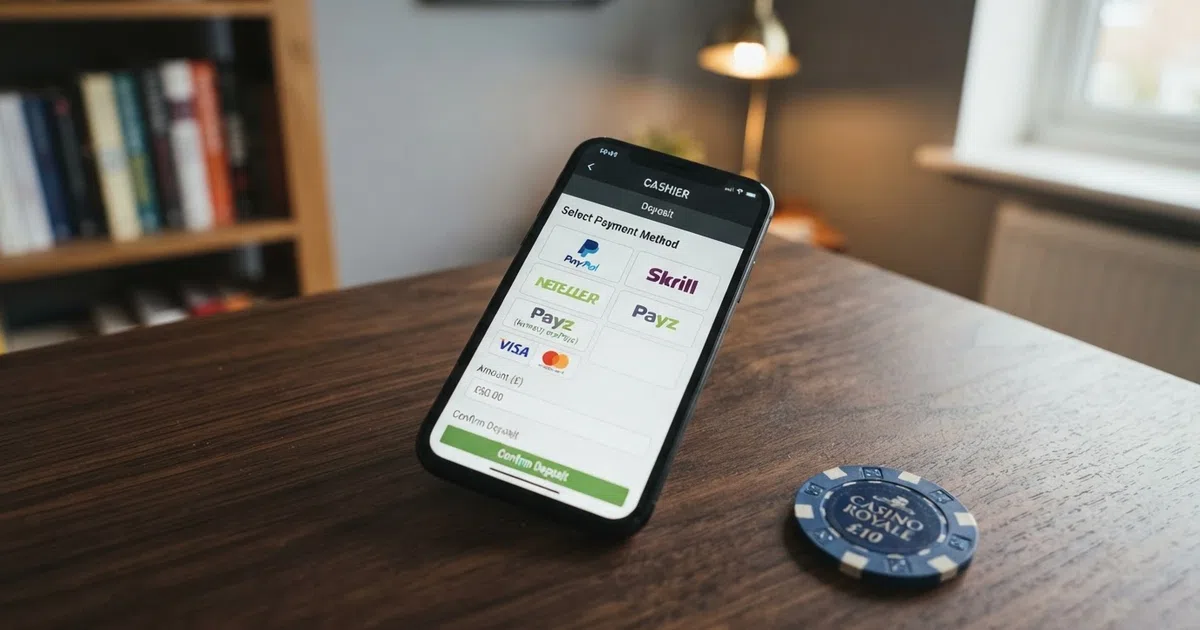
Once verification is complete, the deposit itself runs through one of a handful of rails. Debit cards are the baseline. PayPal, Skrill, Neteller and Trustly are the e-wallet options most operators carry. Apple Pay and Google Pay appear at mobile-first brands. Paysafecard fills the prepaid niche. Minimum deposits typically sit in the £5 to £10 range.
One rail is conspicuously absent from every UKGC cashier: the credit card. Since 14 April 2020, UK-licensed remote gambling operators have been prohibited from accepting credit card payments — and the prohibition extends to credit-card-funded e-wallets. A Skrill or Neteller deposit that is itself funded by a credit card falls within the ban. This is the rule that catches out the most players and the one that explains why some bonus offers explicitly require a debit card.
Withdrawing Your Money — Methods, Speed and What to Expect
The withdrawal is where the payment method matters most. The operator processes the request internally first — and from 31 October 2021 the UKGC slots design rules banned reverse withdrawals, so a withdrawal request cannot be cancelled by the player mid-process to keep playing. Once approved, the funds route through the same payment method used to deposit wherever possible.
Speed varies by rail. E-wallets lead: a PayPal or Skrill withdrawal at a well-run UKGC casino can land within hours, often the same day. Debit cards take longer — typically one to three working days once the operator has approved the request. Bank transfers sit at the back of the queue, particularly for larger amounts. The reverse-withdrawal ban means there is no “let me think about it” pause once the request is in.
Cashout caps are not a feature of the UK bonus market the way they were five years ago. The shift to no-wagering free spins has removed most of the cap-on-winnings clauses, because there is no bonus balance to attach a cap to. Where caps still exist — on a small no-deposit bonus, for instance — they sit on the operator’s terms page.
WebMoney withdrawals are no longer an option for UK players, because WebMoney deposits are no longer an option at UKGC-licensed casinos.
The E-Wallet Alternatives — PayPal, Skrill, Neteller and Trustly
Four e-wallets dominate the UK casino cashier. PayPal is the most widely integrated — its presence at a casino is itself a signal of regulatory standing, because PayPal’s merchant policies screen gambling operators carefully. Skrill and Neteller are the closest analogues to WebMoney in operating model — a funding buffer between bank and casino, fast withdrawals, broad currency support — and most UKGC casinos that take one take both. Trustly is the open-banking rail: a direct bank-to-casino transfer authenticated by the player’s own bank, no separate wallet account required.
Apple Pay sits alongside these as a mobile-first deposit option rather than a true e-wallet — it funds from a linked debit card, and withdrawals are routed back through the card rather than to Apple Pay directly. The same applies to Google Pay at Android-first operators.
Each e-wallet carries trade-offs the operator’s terms page will spell out: minimum deposit thresholds, bonus eligibility exclusions (some casinos exclude e-wallet deposits from welcome bonuses), and processing-time statements. Research did not capture per-method fees or per-operator acceptance lists at the depth a side-by-side comparison would need, so the right move for a reader is to check the cashier page for the specific brand and method.
Debit Cards, Bank Transfers and Paysafecard — the Non-E-Wallet Options
For a player who prefers not to use an e-wallet, debit cards are the UK default. Visa Debit and Mastercard Debit are accepted at every UKGC-licensed casino. Some welcome offers — Betway’s and Ladbrokes’ among them — require a debit card deposit to qualify for the bonus. The credit card ban means the deposit cannot be funded from a credit line even via an e-wallet.
Bank transfer is the rail for larger withdrawals and for players who do not use cards or e-wallets. Processing time is the slowest of the available options — typically two to five working days — but the method itself has no funding-source restriction beyond standard AML checks.
Paysafecard is the prepaid option. A player buys a Paysafecard voucher with cash at a retail outlet or online, then redeems the 16-digit code at the casino cashier. The deposit does not require a bank account. Withdrawals are not supported through Paysafecard — winnings must come back through a different rail.
Fees, Limits and Minimum Deposits — What Comes Out of Your Pocket
Most UKGC-licensed casinos do not charge deposit or withdrawal fees on their side. The payment provider might. Some e-wallets apply a top-up fee or a currency-conversion fee; some banks apply a cash-advance fee if the deposit is treated as a gambling transaction; bank transfers sometimes carry a flat fee on smaller amounts. The operator’s terms page spells out the casino-side position, and the payment provider’s own fee schedule spells out the provider-side position.
Minimum deposits typically run £5 to £10. Coral’s £5 qualifying stake is at the floor of the set; most of the featured operators anchor at £10. Maximum deposits are subject to the customer’s own deposit-limit setting, which the UKGC’s October 2025 framework requires to be prompted before the first deposit — the player sets the ceiling, decreases apply immediately, and the operator cannot lift a limit without a cooling-off period.
WebMoney-specific fee data does not exist on this side of the rail’s withdrawal from the UK. There is no published UK casino fee for a payment method that no UKGC casino offers.
Bitcoin, Crypto and WebMoney — Where They Overlap and Where They Don’t
Crypto casinos sometimes list WebMoney alongside Bitcoin and Ethereum at the cashier, and the search results for “WebMoney casino” overlap meaningfully with the search results for “Bitcoin casino”. The overlap is offshore-only. UKGC-licensed casinos do not accept crypto deposits — there is no UKGC-licensed crypto casino in the British market.
The implication for a UK player is straightforward. A site that takes Bitcoin and WebMoney at the same cashier is, by definition, not a UKGC-licensed site. The 2014 Act requires a point-of-consumption licence to offer remote gambling to UK customers, and the LCCP and KYC framework that comes with that licence is incompatible with anonymous crypto funding. The bitcoin-and-WebMoney overlap is a marker of an offshore brand, not a feature. A reader who wants the UKGC protection stack — KYC, GAMSTOP, ADR, the 10× wagering cap, the slot stake limits — chooses a UKGC-licensed casino and funds it with a regulated rail.
Why Your 2026 Casino Bonus Is Smaller Than It Looks — UK Rules and Real Value
The UK bonus market in 2026 is defined by one number and one absence. The number is 10 — the maximum wagering multiple the Gambling Commission permits on a bonus. The absence is mixed-product promotional offers, banned from 19 December 2025 under LCCP social responsibility code 5.1.1, which means a casino welcome bonus cannot be conditioned on bingo play or sports betting or anything outside the casino product itself.
Both rules have reshaped the UK bonus landscape. The 10× cap, in force from 19 January 2026, killed the 40× and 50× wagering monsters that once dominated affiliate listicles — the kind of bonus where a £100 match required £4,000 or £5,000 of playthrough. The mixed-product ban ended cross-vertical offers, where a casino signup unlocked free sports bets as well. What is left is a tighter, cleaner product.
Welcome Bonuses at UK Casinos — Deposit Match vs Free Spins
Two formats now define the UK welcome. The deposit-match bonus, anchored by 888casino’s 100% up to £100 at 10× wagering, is the older format. A player deposits, gets a percentage match, and works through the wagering. The free-spin welcome, anchored by Sky Vegas (200 spins, 0×) and Betway (125 spins, 0×), is the newer format — and the one most UKGC operators have moved to. The reason is structural. A no-wagering free spin pays its winnings as cash. A 10× match bonus pays its winnings as bonus funds, which the player must work through. The marketing word “free” applies more honestly to the first format than to the second.
No-Deposit Bonuses — Free Spins Before You Pay a Penny
Paddy Power’s 60 no-deposit free spins are the sole confirmed example in the featured set. The format is rare in the UK — the UKGC framework discourages anything that looks like an inducement to register without a financial commitment, and KYC still applies before the no-deposit spins can be used. The remaining nine featured operators are all deposit- or stake-triggered. A reader looking specifically for a no-deposit layer has a narrow set to choose from.
Where a no-deposit bonus exists, the terms that matter are the wagering on the no-deposit winnings (zero in Paddy Power’s case), the maximum cashout if any, and the eligible slot. The wagering term is the one that turns “free” into something else.
Free Spins and No-Wagering Deals — the UK’s New Bonus Standard
Six of the ten featured operators offer zero-wagering free spins: Sky Vegas (200), Betway (125), Betfair (50), Virgin Games (70), Ladbrokes (100) and Paddy Power (60 + 200). The free-spin value is the count multiplied by the spin value, and the eligible slot is the constraint. Spin value is not always published — Sky Vegas and Paddy Power do not state it, while Betway and Virgin Games do (£0.10 and 1p respectively).
Expiry windows are the second key variable. Sky Vegas’ 7-day expiry is the tightest in the set. Virgin Games and Paddy Power run to 30 days. 888casino’s deposit-match bonus is the outlier at 90 days from credit. A reader who can only play at weekends needs the longer windows; a reader who plays daily can absorb the shorter ones.
Bonus Terms That Actually Matter — Wagering, Cashout Caps and Game Eligibility
Three terms determine whether a bonus is worth claiming. The wagering multiplier, capped at 10× since 19 January 2026. Game-weighting, which restricts the wagering contribution of different game types — slots typically contribute 100%, table games often contribute less or zero. And the validity period, which sets the deadline for completing the playthrough.
Cashout caps used to be the dominant bonus term. In the current UK market, with most offers migrated to no-wagering free spins, cashout caps have receded. Where they still appear, they tend to sit on no-deposit layers or on bonus-funded winnings from a 10× match. The 888casino example below illustrates the math.
The Real Cost of a UK Match Bonus — Working the 10× Wagering
Take the 888casino welcome: 100% up to £100 at 10× wagering, with a 90-day validity and a £10 minimum deposit. The arithmetic of “how long to clear the bonus” turns the headline number into a time cost. Required turnover is the bonus multiplied by the wagering factor — £100 × 10 = £1,000. The number of spins depends on the stake per spin, which is itself capped by the UKGC slot stake limits: £2 per game cycle for players aged 18 to 24, £5 for players aged 25 and over. Using the £2 stake, £1,000 of turnover at £2 per spin is 500 spins. At a 5-second spin interval — the minimum allowed under the slots design rules — 500 spins take 2,500 seconds, or roughly 42 minutes of continuous play. At the £5 stake, the same turnover is 200 spins and roughly 17 minutes.
That is the headline: a £100 match bonus at the 10× cap and the £2 stake is about three quarters of an hour of slot play. The wagering cap and the slot stake cap combine to make UK bonuses smaller in headline and quicker to clear than the offers of five years ago. The cap is a cap on the operator’s ability to inflate the wagering, and the stake limit is a cap on the operator’s ability to inflate the spin count. Both push toward the same place — a cleaner, shorter product. The reader’s win is time; the reader’s loss is headline size. The wagering cap itself is the protective mechanism, and the calculation above is what it actually saves.
Playing on the Go — Mobile Casino Apps and Browser Play
Every featured operator in this ranking runs a mobile-ready site. A modern UKGC-licensed casino is built on an HTML5 framework that adapts to a phone screen — the lobby, the game filters and the cashier are all touch-ready, and the game library is functionally identical to the desktop version.
Mobile-Optimised Casino Sites — No Download, Same Lobby
A player who opens a UK casino in a phone browser today sees the same game catalogue they would see on a laptop. Slots, live dealer and table games all render through the browser. The cashier accepts deposits and processes withdrawals through the same rails. Bonus claiming works through the same opt-in flow. The only meaningful constraint is screen size, and the operators have built their lobbies around it.
The mobile experience is the default experience for most UK players in 2026. The download is no longer the entry point. The browser is.
Dedicated Casino Apps — Android, iOS and What They Add
Native apps offer faster loading, biometric login and push notifications for promotions and account activity. The bonus terms, the payment rails and the game library are identical to the mobile site — the app is a different front door to the same casino, not a different casino. Availability varies by operator; Sky Vegas, Paddy Power, Betfair, Bet365 and the Entain brands (Ladbrokes, Coral) all carry apps at one or both app stores.
A reader who wants an app should check the operator’s site for the current download link. iOS apps route through the App Store; Android apps sometimes route through the Google Play Store and sometimes through direct APK download from the operator’s site. The choice of method does not change the product.
Slots, Blackjack and Live Dealer — What UK Casino Players Can Actually Play
The UK slots experience is shaped by design rules that took effect on 31 October 2021. Auto-play is banned. Spin speed cannot be faster than 2.5 seconds. Speed-up features are banned. Losses disguised as wins are banned. Reverse withdrawals are banned. These rules apply to every UKGC-licensed slot product — NetEnt, Pragmatic Play, Play’n GO, Blueprint, IGT, Games Global and the rest.
Online Slots at UK Casinos — the Limits, the Providers and the Play
The slot stake limits are age-banded. Players aged 18 to 24 are capped at £2 per game cycle, in force from 21 May 2025. Players aged 25 and over are capped at £5 per game cycle, in force from 9 April 2025. A “game cycle” is the total staked across all spins in a single bonus round or feature — the cap cannot be circumvented by splitting stakes across spins. The stake limit applies to slots only; table games run on a different rails.
The provider mix across the featured operators covers the mainstream UK slots catalogue. NetEnt, Pragmatic Play, Play’n GO, Blueprint, IGT, Big Time Gaming, Red Tiger, Push Gaming, Relax Gaming and Games Global appear across the set. Demo or fun-mode play is age-gated at UKGC casinos — even free-to-play games require the operator to confirm the player is 18 or over before they load.
Table Games — Blackjack, Roulette and the RTP Advantage
Table games bypass the slot stake limits and the auto-play ban. Blackjack and roulette operate on the player’s pace, with stakes set per hand or per spin rather than per game cycle. The RTP range for blackjack sits higher than the typical slot RTP, depending on the rule variant — basic-strategy blackjack at a standard ruleset returns more of every pound wagered than the average online slot. Roulette sits lower than blackjack but higher than most slots.
The bonus contribution differs. Many UK casino bonuses count slot wagering at 100% and table game wagering at a reduced percentage or zero. A player trying to clear a 10× match bonus by playing blackjack will find the wagering meter moving slowly or not at all. Slots are the bonus-clearance game; table games are the bonus-completed game.
Live Dealer Games — Real Streams, Real Dealers, Real Money
Live casino streams from Evolution and Pragmatic Play studios — both appear in the provider lists at Sky Vegas and Virgin Games, and Evolution is the dominant live-dealer provider across the UK market. The product covers live blackjack, live roulette, baccarat and the game-show formats that have grown rapidly in the last three years. The deposit and withdrawal rails are the same as the rest of the casino; the live-dealer product does not bring its own payment method.
The pace is the main difference from RNG table games. Live dealer runs at the dealer’s pace, with other players at the table, and the experience is closer to a floor casino than a software simulation. Stakes range from low-limit to high-roller, and the live format has become the standard for UK players who want the table-game experience without leaving home.
Bingo and Other Games — a Separate Licence, a Different Bonus
Bingo at UKGC casinos runs under a separate licence category with its own bonus terms and its own rules. A casino welcome bonus cannot be conditioned on bingo play — the mixed-product promotional offer ban, in force from 19 December 2025, prohibits cross-vertical bonus structures. A casino player who wants bingo will need a bingo-specific operator or a bingo product within a dual-licensed casino, and the bonus terms will sit separately.
The search results for “WebMoney casino” sometimes overlap with “WebMoney bingo” — the two queries share a payment-method intent even though the products are differently licensed. A reader who arrived looking for casino bonuses and finds themselves on a bingo page should treat the bingo product as a separate decision.
New UK Casino Sites — What’s Launched and What’s Worth Your Time
New UKGC casino launches in 2026 compete on bonus freshness and provider breadth, but the payment rails are the same regulated set across every launch. WebMoney will not appear in any new UKGC application’s cashier because WebMoney’s own UK regulatory standing ended in 2022.
Latest UK Casino Launches — What’s New in 2026
Each new UKGC casino adds another debit-and-e-wallet cashier to the market. The payment story does not change. The bonus and game catalogue might. New launches often run larger welcome packages than established brands — a bigger spin count, a higher match ceiling, more aggressive expiry windows — because they need to attract first-time players rather than retain existing ones.
To find new UKGC-licensed casinos, the Gambling Commission’s public register is the right starting point. Every active operator appears there. The licence number, the trading name and the licence status are all public. A new launch’s terms and game library are worth comparing against an established operator’s on the dimensions a reader cares about — bonus terms, payment rail coverage, provider breadth and the quality of the responsible-gambling tools.
The Safety Net You Actually Have — UK Casino Regulation, Licensing and Your Rights
A UK Gambling Commission licence is the single most important differentiator on this page. It brings the full British regulatory stack: identity verification before play, the credit card ban, the slot stake limits, the 10× wagering cap, GAMSTOP, financial vulnerability checks, a public complaints route and approved alternative dispute resolution. An offshore operator without a UKGC licence brings none of these.

| Protection | What It Means | Applies To |
|---|---|---|
| UKGC licence | Operator regulated under Gambling Act 2005 and 2014 Act, subject to LCCP and RTS | All GB-licensed online and retail operators |
| Identity verification (KYC) | Name, address and DOB verified before deposit, gambling or free-bet use | All UKGC-licensed remote operators |
| Credit card ban | No credit card deposits, including credit-card-funded e-wallets, since 14 April 2020 | All UKGC-licensed remote operators |
| Slot stake limits | £2 (18–24) and £5 (25+) per game cycle | All UKGC-licensed online slots |
| 10× wagering cap | Maximum bonus wagering multiple, in force 19 January 2026 | All UKGC-licensed bonus offers |
| Mandatory deposit-limit prompts | Player sets a deposit limit before first deposit; decreases immediate | All UKGC-licensed remote operators |
| GAMSTOP | Self-exclusion register, 6 months to 5 years | GB-licensed online operators only (not land-based, not unlicensed) |
| Financial vulnerability checks | Public-data checks at £500 (from 30 Aug 2024) and £150 (from 28 Feb 2025) net deposit thresholds | All UKGC-licensed remote operators |
| Mixed-product offer ban | Bonus cannot be conditioned across bingo, lottery, casino and betting | All UKGC-licensed bonus offers |
| Remote Gaming Duty | 40% on operator profits from remote gaming with UK persons, from 1 April 2026 | All UKGC-licensed and certain other remote operators |
How UKGC Licensing Protects Your Money and Your Play
The Gambling Commission is an executive non-departmental public body sponsored by the Department for Culture, Media and Sport. Its statutory basis is the Gambling Act 2005, amended by the Gambling (Licensing and Advertising) Act 2014 to introduce the point-of-consumption regime that requires every operator serving UK customers to hold a UKGC licence. The day-to-day rules sit in the Licence Conditions and Codes of Practice (LCCP) and the Remote Gambling and Software Technical Standards (RTS).
The three licensing objectives are: preventing crime and disorder, ensuring gambling is fair and open, and protecting children and other vulnerable persons from being harmed or exploited by gambling. The minimum age is 18. The public register of licence holders lists every licensed operator with the licence number, the trading names covered, the licence status and the date the licence came into effect. The register is the verification tool — a reader should check it before depositing anywhere.
GAMSTOP, Self-Exclusion and the Tools That Keep You in Control
GAMSTOP is mandatory for every GB-licensed online operator. Since 31 March 2020, no UKGC-licensed remote operator can accept a customer who has registered with GAMSTOP. The exclusion periods are six months, one year, five years, or five years with auto-renewal. An active exclusion cannot be cancelled early. After the period expires, the exclusion continues for up to seven years unless the customer actively removes it, and the auto-renewal toggle is only available during the final six months of a five-year period.
The critical limitation is scope. GAMSTOP covers GB-licensed online operators only. It does not cover land-based venues — a self-excluded customer can still enter a betting shop or a physical casino. It does not cover unlicensed offshore operators. A self-excluded customer who plays at an offshore WebMoney casino bypasses GAMSTOP entirely, which is one of the reasons the offshore risk discussion further down this page matters.
The Statutory Limits — Slot Stakes, Bonus Wagering and Deposit Caps
Three hard limits define what every UKGC casino can offer, and they apply regardless of payment method. The slot stake limits (£2 for 18 to 24, £5 for 25+) cap the maximum a player can wager on a slot game cycle. The 10× wagering cap on bonuses, in force from 19 January 2026, caps the maximum wagering multiple the operator can attach to a bonus. The mandatory deposit-limit prompt, in force from 31 October 2025, requires the operator to ask the player to set a deposit limit before the first deposit — decreases apply immediately, and the limit cannot be increased without a cooling-off period.
The financial vulnerability check framework sits alongside these. From 30 August 2024, operators must run public-data-only affordability checks at a £500 net deposit threshold. From 28 February 2025, the same check applies at a £150 threshold. The check looks at public records — court judgments, insolvency registers, high-risk debt indicators — and flags the customer for review if a marker appears. More detailed financial risk assessments have been announced but not yet commenced.
Offshore WebMoney Casinos — the Risk You Take When You Play Outside the UKGC
The sites that DO accept WebMoney from UK IP addresses are nearly all offshore. They operate under Curaçao or Anjouan licences, which are not UK consumer-protection frameworks. They carry no GAMSTOP coverage, no UKGC complaints route and no approved ADR. If a withdrawal stalls or a bonus term is disputed, the player has no domestic regulator to escalate to.
Unlicensed provision is criminal under section 33 of the Gambling Act 2005 — up to 51 weeks’ imprisonment, an unlimited fine, or both. The enforcement model is disruption rather than ISP blocking. The Commission issues cease-and-desist notices, refers offending brands to search engines for delisting, applies pressure to registrars and payment providers, and pursues civil action where appropriate. ISP blocking powers have been proposed but not enacted. The risk for the player is not a criminal prosecution — it is the absence of the protection stack and the difficulty of recovering funds if the operator fails to pay.
The honest calculus for a UK player who lands on an offshore WebMoney casino is that the site may well pay out. The lack of a UKGC licence is not a guarantee of failure. But the absence of a domestic regulator, the absence of GAMSTOP, the absence of a complaints route and the absence of an ADR mechanism mean the player is relying entirely on the offshore operator’s own integrity. That is a different bet from the one a UKGC-licensed casino offers.
Verification, KYC and No-Account Play — What the Law Requires
Every UKGC casino must verify the customer’s identity before deposit or play. The verification covers name, address and date of birth. The “no-account casino” model — popular in Nordic markets, where a player deposits and plays without a registration step — does not work in the UK. KYC is mandatory. The age-gating applies to free-to-play games as well as real-money games, so even a demo slot cannot be loaded without age confirmation.
The verification is typically run through a third-party provider — a credit-reference-style check on the customer’s name and address against public records, sometimes supplemented by a document upload for borderline cases. The friction is real but it is the price of the protection stack. Anonymous play at a UKGC casino is not available, and any site that offers it is not UKGC-licensed.
Responsible Gambling — the Resources, the Numbers and Where to Get Help
The UK responsible-gambling infrastructure is funded by the industry and delivered through public-facing services. GamCare runs the National Gambling Helpline on 0808 8020 133 — free, confidential, available 24 hours a day, with a live chat option at gamcare.org.uk. BeGambleAware (begambleaware.org) provides advice, self-assessment tools and treatment referrals. The NHS runs gambling harm clinics in England, Scotland and Wales, and supports the National Gambling Support Network. Gamblers Anonymous (gamblersanonymous.org.uk) runs local and online support groups.
The player-protection tools sit alongside these services. Deposit limits — the customer-set ceiling that the UKGC framework requires to be prompted before the first deposit. Reality checks, which pop up during a session to remind the player how long they have been playing. Time-outs, which lock the account for a short period. GAMSTOP self-exclusion, for the longer exclusion periods. Each tool is mandatory at every UKGC-licensed operator; together they form the practical side of the safer-gambling framework.
How We Evaluate and Rank UK Online Casinos
The ranking on this page is built on three sources: the Gambling Commission’s public register of licence holders, the operators’ own published terms pages, and an analysis of search results from competing affiliate content. The criteria that ordered the ranking are licence status, the shape and quality of the welcome bonus, the wagering terms attached to it, the breadth of the payment-method range, the breadth of the provider catalogue and the brand’s track record.
Licence status is the filter that separates a UK-facing recommendation from an offshore one. The 10× wagering cap and the no-wagering free-spin trend are the criteria that decide which bonus format sits at the top of the ranking. The payment-method range matters because the page is built around the search for a payment rail — and the rail in question is no longer available, so the range that remains is the basis on which the e-wallet-using player chooses. Provider breadth matters because a wider catalogue gives the player more places to put a welcome bonus.
The ranking does not assign numeric weights to these criteria. It does not claim an algorithm. The order is editorial — what the source material supports, what the UKGC framework rewards and what an e-wallet-using player actually gets from each operator. Where research did not capture a field — bonus validity at Betfair, game providers at Coral, the casino welcome at Bet365 — that absence is on the page, not hidden.
What UK Players Searching for WebMoney Casinos Should Actually Do
The honest summary is short. WebMoney is no longer a UK payment option. The FCA registration ended in 2022. UKGC-licensed casinos do not integrate a rail that no longer has UK regulatory standing. The search results that promise WebMoney casinos UK point at offshore brands that carry none of the British protection stack. The right move is to choose a UKGC-licensed casino — Sky Vegas, Betway, 888casino, Betfair, Paddy Power, Virgin Games, Ladbrokes, Coral or another — fund it with a debit card or a regulated e-wallet, and claim a no-wagering welcome offer.
Before depositing anywhere, the reader should check the Gambling Commission’s public register and confirm the operator’s licence is Active. The register lists every licensed operator with its licence number and trading names. A licence number that does not appear there, or that is marked as suspended or revoked, is a sign to walk away. The protection stack — KYC, the credit card ban, the slot stake limits, the 10× wagering cap, GAMSTOP, the complaints route and the ADR mechanism — is what a UKGC licence delivers. Without it, the reader is on their own.
The bonus landscape in 2026 favours no-wagering free spins, and six of the ten featured operators on this page offer them. A reader who wants the cleanest possible payout chooses from that set. A reader who wants a deposit match accepts the 10× wagering ceiling that comes with it. A reader who wants a no-deposit layer has Paddy Power in the featured set, with the caveat that no-deposit offers are rare in the UK and the KYC process still applies before play. The decision tree is short, the verifications are public, and the right answer sits on the Gambling Commission’s register.
Frequently Asked Questions
How do I deposit and withdraw using an e-wallet at a UK online casino?
Fund the e-wallet from a UK bank account or debit card first — never from a credit card, since the credit card ban since 14 April 2020 covers credit-card-funded e-wallet deposits. Then choose PayPal, Skrill, Neteller or Trustly at the casino cashier, enter the deposit amount, and authenticate through the wallet. Withdrawals reverse the same route, typically landing within hours for e-wallets and one to three working days for debit cards.
How fast are e-wallet withdrawals compared with debit cards and bank transfers?
E-wallets like PayPal and Skrill offer the fastest payouts, often landing within hours of operator approval. Debit cards typically follow with one to three working days, while bank transfers can take up to five. Because UK casinos no longer allow reverse withdrawals, once a request is processed, funds move directly to your chosen method without delay.
What bonus terms should I check before claiming a UK casino welcome offer?
Three terms matter most. The wagering multiplier — capped at 10× for all UKGC-licensed bonuses since 19 January 2026. The game-weighting, which determines what counts toward clearing the wagering. And the validity window, which sets the deadline for completing the playthrough — typically 7 to 90 days depending on the operator and offer. No-wagering free spins remove the first and third entirely; only game eligibility remains.
Do UKGC rules limit how much I can stake on slots and how casino bonuses work?
Yes, on both. Online slots carry statutory stake limits of £2 per game cycle for players aged 18 to 24 (from 21 May 2025) and £5 for players aged 25 and over (from 9 April 2025). Casino bonuses carry a maximum wagering multiple of 10×, in force from 19 January 2026. Mixed-product promotional offers are banned under LCCP social responsibility code 5.1.1, in force from 19 December 2025. All three rules apply to every UKGC-licensed operator.
Which e-wallets do UK-licensed casinos actually accept for deposits and withdrawals?
PayPal, Skrill, Neteller and Trustly are the four most widely integrated. PayPal’s presence at a casino is itself a signal of regulatory standing, because PayPal screens gambling operators carefully. Skrill and Neteller are the closest analogues to WebMoney in operating model. Trustly runs through open banking and authenticates against the player’s own bank. Apple Pay and Google Pay sit alongside these as mobile-first debit card rails, not true e-wallets. WebMoney is not on any UKGC cashier.
Are there any UK casinos that still accept WebMoney deposits in 2026?
No. WebMoney Europe Ltd’s FCA registration as an e-money institution was discontinued in 2022, and official UK access via WebMoney is no longer possible. No UKGC-licensed casino integrates the rail. Sites that do accept WebMoney from UK IP addresses are offshore operators without GB licensing protections — no GAMSTOP coverage, no UKGC complaints route and no approved ADR. The credit card ban and the KYC framework that comes with a UKGC licence are incompatible with the offshore WebMoney model.
New vs Established — Does a Younger Casino Mean a Better Deal?
A newer casino may offer a fresher welcome package. An established operator brings a longer track record of payout consistency, regulatory compliance and player-volume data. The two are not directly comparable — a 2024 launch with a 300-spin welcome has not yet processed the volume of withdrawals that Sky Vegas or Betway has processed in a decade.
The right comparison for a reader is the same one they would apply to any regulated financial product. Look at the licence standing first, then at the bonus terms, then at the payment rail coverage, then at the provider breadth and game catalogue. The licence standing is the part that protects the player; the rest is the part that makes the casino fun. A new launch with a UKGC licence and a clean bonus structure is a fine choice; a new launch without verifiable licence information is not.
Payments – topratedonlinecasinos-uk
Content created by the «topratedonlinecasinos-uk» team