
Where UK Players Stand on E-Wallet Casino Choices in 2026
 Available in GB
The welcome offer is the headline, but the payment method is what actually decides whether you can claim it, how fast you get paid and what fees you pay along the way. Among the 10 UKGC-licensed casinos reviewed here, every one accepts e-wallets for deposits and withdrawals, and the differences between them sit in three places: whether your chosen e-wallet qualifies you for the welcome bonus, how quickly the casino releases your winnings, and the small print on fees. The deposit method is the first decision a player makes. It is also the one the welcome offer page spends the least time on.

Verified against the UK Gambling Commission public register as of 9 September 2026.
E-Wallet Casinos in the UK: What They Are and Why Your Payment Method Defines Your Experience
An e-wallet casino is, in the strictest sense, any online casino licensed by the UK Gambling Commission that accepts deposits and processes withdrawals through a digital wallet — PayPal, Skrill, Neteller, MuchBetter and a handful of others. The term does not name a product category the way “live casino” or “slots site” does. It names a payment rail. The casino underneath is the same product it would be if a player funded it with a debit card; what changes is the friction at the cashier, the speed at the withdrawal end and, in many cases, whether the welcome bonus is even reachable.
How E-Wallet Payments Work at UK Online Casinos
The flow at the cashier is a three-party dance. The player selects an e-wallet from the deposit menu, logs into the e-wallet to authorise the transfer, and the funds appear in the casino balance within seconds. The casino never sees the player’s bank account or card number; it sees only the e-wallet provider’s confirmation. On the way out, the casino releases the winnings to the same e-wallet, the e-wallet credits the player’s account, and the player decides whether to spend it back into another casino, hold it in the wallet or push it to a bank.
The UK regulator inserts itself at one specific point. Since 7 May 2019, every GB-licensed operator must verify the customer’s name, address and date of birth before any deposit is accepted. Anonymous play is not possible at a licensed site, regardless of which payment rail the player chooses. The verification step adds minutes to hours on a first deposit — photo ID, proof of address, sometimes a bank statement — but once it is on file, subsequent e-wallet deposits are effectively instant.
The credit card ban, in force since 14 April 2020, sits on top of this. UK casinos cannot take credit card deposits directly, and the same ban extends to credit-card-funded e-wallet payments. The e-wallet provider is expected to block the transaction at its own end, and the operator is required to ensure compliance. The result, for the player, is that any e-wallet funding path involving a credit card fails before the money moves.
E-Wallet vs Debit Card: The Trade-Off for UK Players
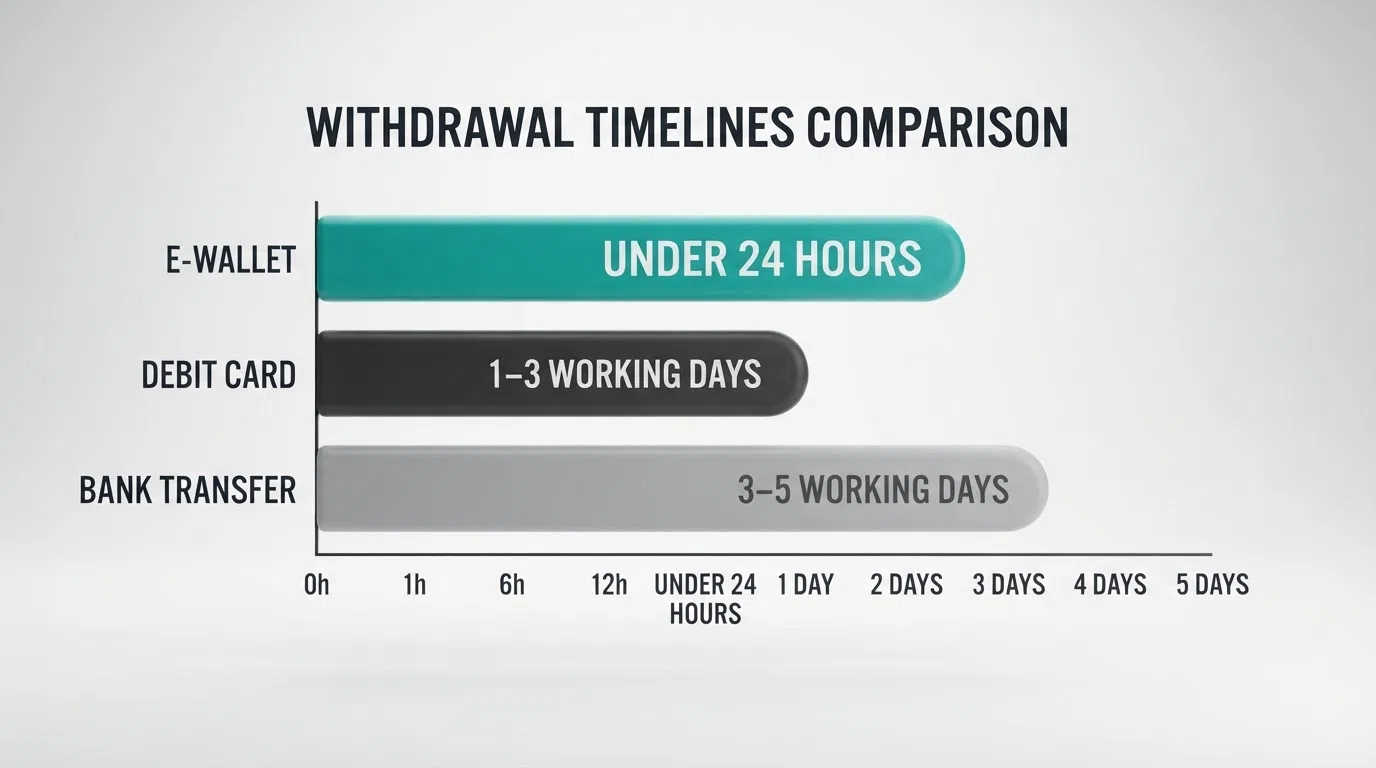
The four points a player should weigh are withdrawal speed, privacy, bonus eligibility and deposit limits. On the first, e-wallets win decisively. PayPal withdrawals at the fastest UK operators clear within two hours once the casino releases funds, and almost all of them arrive within 24 hours; debit card withdrawals take one to three working days because the bottleneck is the card network, not the casino. On privacy, e-wallets also win — the casino never sees the player’s bank details, only the wallet provider’s confirmation.
The trade-off sits on bonus eligibility. Skrill and Neteller deposits are commonly excluded from welcome bonuses at UKGC sites, while debit cards always qualify and PayPal usually does. The exclusion is a commercial anti-abuse decision by the operator, not a regulatory rule. A player who funds with Skrill to chase the welcome bonus is, at most of these casinos, funding it for nothing.
Deposit limits and minimums are roughly comparable. Both rails typically allow deposits from £5 or £10, and the operator-set deposit cap is the same regardless of method. The e-wallet does not give the player a higher ceiling; the operator does, or does not.
Why E-Wallet Withdrawals Are the Fastest Way to Get Paid by a UK Casino
The e-wallet’s central practical advantage is speed, and the data for PayPal at the fastest operators bears it out. Casumo, Mr Vegas and Betfred all show PayPal withdrawals completing in under two hours; Betfair processes them the same day. The reason is structural. Once the casino releases the funds, the e-wallet credit is essentially instant — the bottleneck is the casino’s internal processing, not the payment rail. Debit card withdrawals, by contrast, move through card networks and bank clearing cycles that take one to three working days at most UK operators.
How to Deposit with an E-Wallet at a UK Casino
The mechanics are simple. Log in, open the cashier, choose the e-wallet from the deposit menu, enter the amount, and the cashier hands off to the e-wallet’s login screen. Authorisation is typically a tap or a password. The casino balance updates within seconds. There is no fee on the casino side at the great majority of UKGC-licensed operators, and the minimum deposit is usually £5 or £10.
The pre-deposit identity check sits in front of all of this. Because the casino must verify name, address and date of birth before a first deposit clears, a brand-new account cannot bypass KYC by choosing an e-wallet. The casino asks for photo ID and a proof of address, runs the check, and only then unlocks the cashier. The time cost is minutes for automated checks or up to 48 hours for a manual review. Either way, it happens once.
How Fast Are E-Wallet Withdrawals? It Depends on the Casino
The honest answer is that e-wallet withdrawal speed has two stages. The first is the casino’s internal processing window — the review, anti-money-laundering checks and finance-team sign-off — and the second is the e-wallet credit, which is essentially instant. The spread between operators lives almost entirely in stage one.
The fastest operators on the page clear PayPal in under two hours; the median is somewhere between six and 24 hours, and the slowest stragglers sit at the 24-hour ceiling. Sky Vegas and Betfred have historically reported within six hours, Betway logged a PayPal withdrawal at 1 hour 47 minutes in a published test, and Betfair processes them the same day. William Hill, 888casino, Ladbrokes, BoyleSports, Virgin Games and 32Red all publish a within-24-hour window. The genuinely slow operators — those that hold withdrawals past 24 hours — are not on this page.
What slows a withdrawal is rarely the e-wallet. A first-time withdrawal triggers a fresh verification pass; a large withdrawal triggers a manual review; a weekend deposit misses Monday’s processing window. None of this is hidden — it is in the cashier terms — but it is the reason the speed claim on the casino site never quite matches the speed the player experiences.
Withdrawal Limits: What UK Casinos Cap and Why
UKGC-licensed casinos set their own per-transaction and daily withdrawal caps, and the published range across competitor pages runs roughly £4,000 to £10,000 per day. The cap exists for anti-money-laundering reasons, not because the e-wallet cannot handle larger sums; the e-wallet will happily move £50,000 in a single transfer. It is the operator’s risk-based controls that limit the player.
Casual players never notice. A £4,000 daily ceiling means a £200 win is paid in one instalment with no friction. High-rollers — the players most likely to care about the difference between £5,000 and £10,000 — may need to plan withdrawals across multiple days, or to negotiate a higher cap with the operator’s VIP team. No UKGC rule sets a uniform ceiling; the operator decides, and the decision is part of the offer, not part of the regulation.
The same is true of per-transaction minimums. A £10 minimum withdrawal is standard; a £20 minimum is not unusual. None of this changes by e-wallet. Skrill and Neteller withdrawals are subject to the same caps as PayPal at any given operator.
E-Wallet Fees: What the Casino Takes vs What the Provider Charges
The casino side is the easy half. Most UKGC-licensed operators charge nothing for e-wallet deposits, and withdrawal fees are rare. The handful of operators that do charge a withdrawal fee tend to apply it across all methods, not just e-wallets, and to publish it in the cashier.
The provider side is where the costs land. Skrill charges 1.45% on currency conversion and 1.75% on credit-card top-ups, and a £5.50 fee on a UK bank withdrawal. Neteller mirrors the structure, with a £6.27 fee on UK bank withdrawals. PayPal charges nothing for standard UK domestic transactions, though currency conversion and international receiving fees do apply for cross-border use.
The practical reading: fees hurt when money leaves the e-wallet, not when it enters the casino. A player who funds a Skrill account from a UK bank, plays through it, and withdraws back to Skrill pays nothing on the casino leg; the £5.50 fee only appears when the winnings are pushed out to a UK bank account. Holding a balance inside Skrill or Neteller to spend on the next deposit is one way to defer that cost.
The Bonus Eligibility Catch: Why Skrill and Neteller Deposits Often Miss Out
This is the single most important practical fact for any e-wallet-first player, and it is the one most welcome-offer headlines gloss over. Skrill and Neteller deposits are excluded from welcome bonuses at most UKGC-licensed casinos. The exclusion is a commercial decision by the operator, framed as anti-bonus-abuse — e-wallets make it cheaper to open multiple accounts and chase offers — and the regulator does not require it. Operators that exclude these methods include Betfair (for its deposit-triggered bonus), Ladbrokes (whose terms name Neteller, PayPal, Skrill, Paysafe and prepaid cards), and several of the operators on this page that simply require a debit card for the welcome.
PayPal is the partial exception. PayPal deposits usually qualify for welcome bonuses at UK casinos, though not always — Sky Vegas has removed PayPal entirely, and BoyleSports’s terms ask the player to check. Where PayPal is accepted, it is the cleanest single e-wallet to fund a bonus-hunting bankroll from.
The workaround is simple. Deposit by debit card to claim the welcome offer, then switch to an e-wallet for ongoing play and withdrawals. A player who plans a single deposit to grab a 200-spin welcome, then settles into PayPal for the rest of their play, captures both the bonus and the speed.
How to Pick the Right E-Wallet for Casino Play
PayPal is the right choice for a player who values bonus eligibility and speed and who can live with the slightly narrower acceptance at some operators. Skrill and Neteller are the right choice for a player who values near-universal casino acceptance and lower friction on international transfers, who accepts the bonus-exclusion rule, and who plans to keep a balance inside the wallet to defer the bank-withdrawal fee. MuchBetter is the right choice for a player at a casino that takes it and who wants a smaller, simpler fee structure. Trustly and Pay by Bank are the right choice for a player who does not want to fund a separate e-wallet account at all and is happy to skip the welcome bonus.
The two-e-wallet strategy is the practical answer for most players. One e-wallet for bonus eligibility via debit-card deposit, one e-wallet for fast withdrawals once the bonus is cleared. PayPal plus Skrill is the most common pairing. A player who already has a PayPal account and a debit card does not need to do anything else.
| E-Wallet | Bonus Eligibility at UK Casinos | Typical Withdrawal Speed | Casino Deposit Fee | Provider Withdrawal Fee |
|---|---|---|---|---|
| PayPal | Usually qualifies for welcome bonuses | 1–24 hours; fastest under 2 hours | None at most UK casinos | None for standard UK transactions |
| Skrill | Commonly excluded from welcome bonuses | Hours to 24 hours | None at most UK casinos | £5.50 UK bank withdrawal; 1.45% currency conversion |
| Neteller | Commonly excluded from welcome bonuses | Hours to 24 hours | None at most UK casinos | £6.27 UK bank withdrawal; similar fee structure |
The table is a snapshot. The provider fees hit on the way out, not the way in.
What a Welcome Bonus Actually Costs to Clear
The arithmetic on a typical deposit-match bonus is straightforward, and it usually surprises players. Take 888casino’s offer: a 100% match up to £100 on first deposit, with 10× wagering on the bonus funds — the UKGC’s regulatory ceiling, in force since 19 December 2025. A player depositing £100 and claiming the full £100 bonus must wager £1,000 before the bonus converts to withdrawable cash.
At £0.10 per spin — the typical free-spin stake across the operators on this page — clearing £1,000 means 10,000 individual spins. At the writer’s assumed 5-second interval between spins, that is 50,000 seconds, or roughly 13.9 hours of continuous play. The UKGC’s own 2.5-second minimum spin speed, in force since October 2021, would compress that to about 7 hours; the realistic session length for a player with breaks is somewhere between the two. The headline offer looks generous. The hour count behind it is the number a player should budget.
10 UKGC-Licensed Casinos That Accept E-Wallets: Compared on Speed, Value and Fair Terms
The 10 casinos below are drawn from the UK market’s top 20 operators by share, filtered for online casino relevance and confirmed e-wallet acceptance, and verified against the UK Gambling Commission public register as of 29 July 2026. Each one is GB-licensed. The comparison that follows ranks them on welcome bonus, e-wallet bonus eligibility, e-wallet withdrawal speed and wagering terms — the four factors the payment-method trade-offs in the section above actually move.
| Operator | Welcome Bonus | E-Wallet Bonus Eligibility | E-Wallet Withdrawal Speed | Wagering |
|---|---|---|---|---|
| Betfair Casino | 50 no-deposit FS + 100 FS on £10 deposit | E-wallets excluded from deposit offer | Same day (PayPal) | 0× |
| Sky Vegas | 200 FS on £10 deposit & spend | Debit card / Apple Pay / Pay by Bank only for promo; PayPal removed | Within 6 hours (historical) | 0× |
| William Hill Vegas | 200 FS on £10 deposit & stake | Method restrictions may apply | Within 24 hours (PayPal) | 10× on FS winnings |
| Ladbrokes Casino | 100 FS + 300 LadBucks on £10 deposit & stake | Excludes Neteller, PayPal, Skrill, Paysafe, prepaid | 0–24 hours (e-wallets) | 0× |
| 888casino | 100% up to £100 on first deposit | Debit card required | Within 24 hours (PayPal) | 10× on bonus |
| Betfred Casino | Stake £10 get up to 200 FS | Debit card for welcome bonus | Within 6 hours (PayPal) | 10× on FS winnings |
| Betway Casino | 100% up to £50 + 150 FS on £20 deposit & stake | Debit card only for FS offer | 1 hour 47 minutes reported (PayPal) | 10× (verify current terms) |
| BoyleSports Casino | Up to 100 FS on same-day stake tiers | Method restrictions may apply | Within 24 hours (PayPal) | 0× |
| Virgin Games | 100 FS on £10 deposit & wager | Debit card / Apple Pay / Google Pay for welcome | Within 24 hours (PayPal) | 0× |
| 32Red Casino | 320 FS on £30 deposit & stake | Debit card or instant bank transfer only | Within 24 hours (e-wallets) | 0× |
The table is a snapshot. The operator write-ups beneath it explain the columns a row at a time.
How We Ranked These 10 E-Wallet Casinos
The ranking weighs four factors in this order: e-wallet bonus eligibility, withdrawal speed, wagering fairness and the absence of punitive caps. A bonus a player cannot claim with their payment method is not a bonus; a withdrawal that takes three days is not a fast withdrawal. The UKGC’s 10× wagering cap, in force since 19 December 2025, is the ceiling above which a bonus terms page should be read sceptically; anything claiming 30× or 50× is either pre-reform data or non-compliant.
Max-cashout caps are weighted down. A £30 cap on winnings from 200 free spins turns a generous-looking offer into one whose expected return is bounded by the cap, and several of the operators on this page carry exactly that constraint. Wagering-free offers are weighted up. Validity windows are weighted too: a 90-day window on a 10× bonus, like the one 888casino publishes, is materially more usable than a 72-hour window on a 200-spin offer, because most players do not clear bonuses in three days.
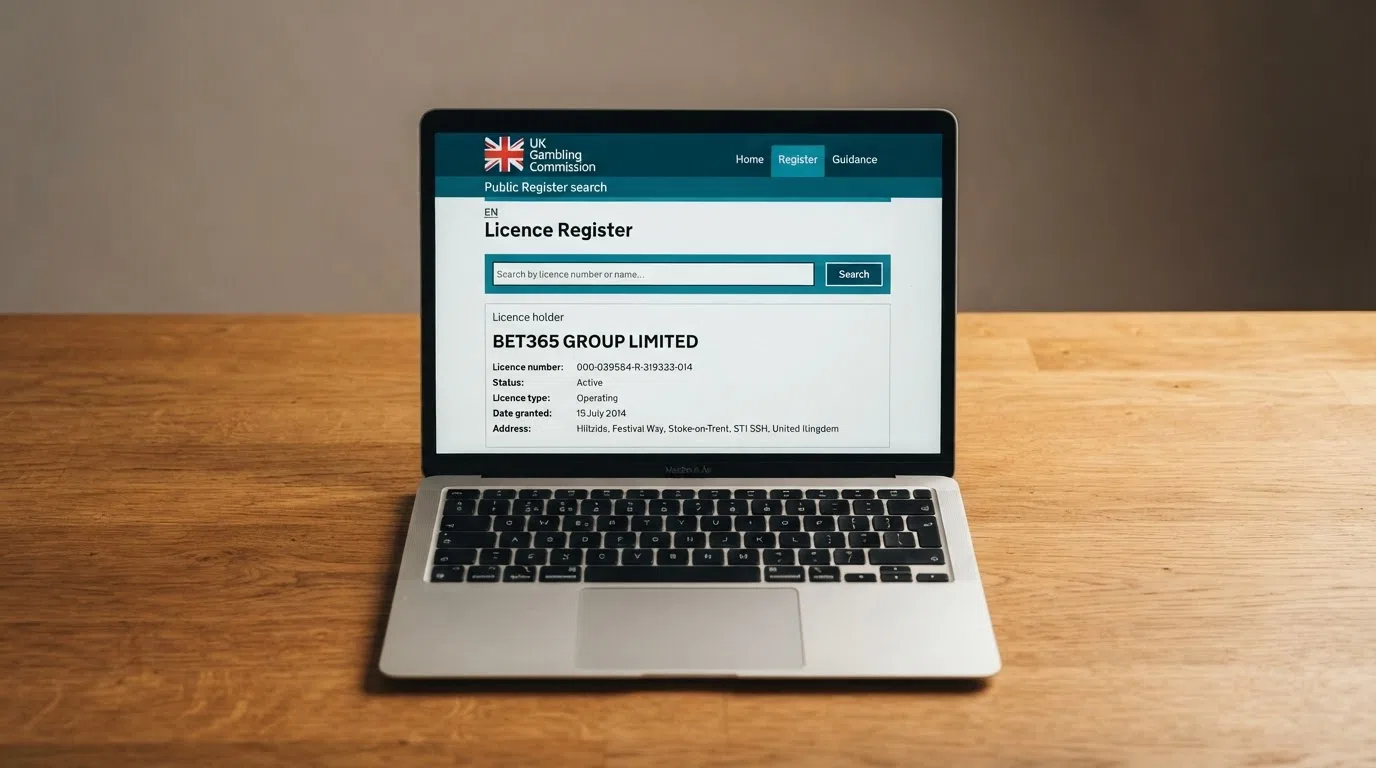
The licence check is non-negotiable. Every operator on this page has been verified against the UK Gambling Commission public register. The register is the only authoritative source; the welcome-offer page on the casino site is not.
Betfair Casino: 50 No-Deposit Spins, Wager-Free — but E-Wallets Miss the Deposit Bonus
Betfair offers 50 no-deposit free spins alongside a 100-spin deposit-triggered bonus on a £10 deposit. Both are wager-free, both have a seven-day validity, and both carry no cap on cash winnings — which is rare at this end of the market. The 50 no-deposit spins can be claimed with any payment method, including e-wallets; the 100 deposit-triggered spins are gated to deposits that are not Skrill, Neteller or any of the other routinely excluded methods. PayPal withdrawals process the same day.
The combined offer is a strong choice for those using a debit card, while e-wallet users get 50 no-deposit spins — a solid starting point, even if it is not the headline offer.
Sky Vegas: 200 Wager-Free Spins, but PayPal Has Left the Building
Sky Vegas’s headline is 200 wager-free spins on a £10 deposit and spend, with a seven-day validity and unlimited cashout of winnings. The wagering-free structure is a clear advantage over the 10× wagering offers elsewhere on the page. The problem is the payment method. Sky Betting & Gaming has removed PayPal and Google Pay across its brands and replaced them with Pay by Bank; the welcome promo requires a debit card, Apple Pay or Pay by Bank.
A player with Pay by Bank or Apple Pay gets one of the strongest wager-free packages on the page. A PayPal-first player gets the fast withdrawal and little else, because Sky Vegas now treats PayPal as a post-bonus funding rail rather than a welcome-bonus one.
William Hill Vegas: 200 Free Spins with a £30 Winnings Cap and a 72-Hour Clock
William Hill Vegas’s offer is 200 free spins on a £10 deposit and stake, with the eligible slot being Big Bass Splash. The headline looks strong. The small print is not. There is a 10× wagering requirement on free-spin winnings — at the UKGC’s regulatory ceiling — and a £30 cap on those winnings. The spins expire 72 hours after credit. The offer is valid through 31 December 2026.
The £30 cap turns a generous-looking welcome into a constrained one, and the 72-hour window is tight for a wagering-bearing offer. PayPal within 24 hours keeps the brand in the conversation; the welcome bonus is not the reason to open a William Hill Vegas account.
Ladbrokes Casino: No-Wagering Free Spins and LadBucks, but E-Wallets Are Excluded
Ladbrokes offers 100 free spins and 300 LadBucks on a £10 deposit and stake, both wager-free, with a 48-hour free-spin validity and unlimited cashout. LadBucks are bonus funds usable across the casino with no wagering attached. The e-wallet problem is explicit: Ladbrokes’ terms name Neteller, PayPal, Skrill, Paysafe and prepaid cards as excluded from the welcome bonus, and the offer cannot be claimed by any e-wallet funding path. E-wallet withdrawals process within 0–24 hours once the casino releases funds.
For a player who can deposit by debit card, this is one of the strongest no-wagering packages on the page. For an e-wallet player, the offer is unreachable — Ladbrokes is on this list because of its withdrawal speed and its UK position, not because its welcome bonus is reachable from an e-wallet.
888casino: A Straight 100% Deposit Match with the Full 90 Days to Clear It
888casino offers a 100% deposit match up to £100 on the first deposit, with 10× wagering on the bonus funds and a 90-day validity. It is the only pure cash-match bonus on the page; everything else is free-spin-led. Debit card is required for the welcome bonus — e-wallet restrictions apply — and PayPal withdrawals process within 24 hours. Game providers include NetEnt, Playtech and Red Tiger.
The 90-day validity is the standout feature on a 10× wagering bonus, and a player who can deposit by debit card gets the most usable welcome package on the page. The trade-off is the e-wallet exclusion: Skrill and Neteller cannot fund the bonus, and PayPal eligibility should be verified against current terms before depositing.
Betfred Casino: Fast PayPal Withdrawals from a High-Street Name — but Verify the Current Terms
Betfred’s offer is stake £10 get up to 200 free spins on selected games, with 10× wagering on free-spin winnings — the UKGC ceiling — and an estimated £0.10 per spin. The precise validity window and max-cashout figure should be checked on the operator’s terms page, because the published data flags gaps in both. Debit card is required for the welcome bonus; e-wallets are accepted for general play and for withdrawals. PayPal withdrawals reportedly process within six hours.
Long-established high-street brand, PayPal withdrawals in under six hours, and a stake-£10 welcome that is straightforward to claim with a debit card. A stable, fast e-wallet choice for a player who values the name and the speed over a flashy headline.
Betway Casino: 150 Free Spins Across Five Slots — Check the Wagering Before You Commit
Betway offers a 100% match up to £50 on the first deposit plus 150 free spins on a £20 deposit and stake. The free spins are distributed as 50 per day for three days across five slot titles, at £0.10 per spin. PayPal withdrawals have been logged at 1 hour 47 minutes in published tests. Game providers include Microgaming, NetEnt and Pragmatic Play. Debit card is required for the free-spin offer.
The complication is wagering. The 50× figure in published research almost certainly pre-dates the UKGC’s 10× cap, effective 19 December 2025. Until a player reads the current terms, the wagering number is a flag rather than a definitive value. The 1 hour 47 minute PayPal withdrawal is the strongest single speed claim on this page, and the operator is worth opening for that alone once the bonus terms are confirmed.
BoyleSports Casino: Tiered Free Spins, Wager-Free, with In-Shop Cash Withdrawal via BoyleXtra
BoyleSports offers up to 100 free spins across three same-day stake tiers — £20, £50 and £100 — with zero wagering, a 72-hour expiry and PayPal and Skrill listed among the accepted methods. PayPal withdrawals process within 24 hours. The stand-out feature is BoyleXtra, which lets a player withdraw online casino winnings as cash in a physical BoyleSports shop — a unique bridge between online and retail among the operators on this page.
BoyleXtra turns an e-wallet withdrawal into a same-day cash pickup at a physical shop, and that capability is genuinely rare in the UK market. For a player near a BoyleSports shop, this offer’s three-tier structure and wager-free terms add a retail bridge most UK casinos cannot match.
Virgin Games: 100 Wager-Free Spins and Three Welcome Options to Choose From
Virgin Games offers new players a choice of three welcome options: 100 free spins on a £10 deposit and wager, free bingo tickets, or live casino cashback. The free spins carry zero wagering, a 30-day validity, and unlimited cashout of winnings. The spin value is 1p at 10 lines (£0.01 per spin — the smallest on the page). Debit card, Apple Pay or Google Pay is required for the welcome bonus; PayPal withdrawals process within 24 hours. Game providers include IGT and NetEnt.
The three welcome options are the most flexible on the page, and the 30-day wager-free window is the longest outside 888casino. For a player who values choice and time over the largest spin count, this is the cleanest no-wagering offer on the page.
32Red Casino: 320 Wager-Free Spins — but the £30 Qualifying Stake and Debit-Card-Only Bonus Deserve a Hard Look
32Red offers 320 free spins on a £30 deposit and stake, with zero wagering, a 30-day free-spin validity, unlimited cashout of winnings and the eligible slot being Big Bass Splash. The spin value is £0.10. Debit card or instant bank transfer is required for the welcome bonus — all e-wallets are excluded — and e-wallet withdrawals process within 24 hours for general play. Microgaming is among the providers.
The headline 320 spins is the page’s largest, but the £30 qualifying stake is three times the £10 floor at most operators, and the e-wallet exclusion shuts Skrill, Neteller and PayPal out of the welcome. The wager-free structure is genuinely generous for a player who can deposit by debit card; for a £10-stake e-wallet player, 32Red is one of the weaker fits.
Are E-Wallet Casinos Safe? What UK Licensing Actually Guarantees — and the Gaps It Cannot Close
A UKGC operating licence is the strongest player-protection framework among major gambling jurisdictions, but it is not a guarantee of perfect outcomes. Understanding where the protection ends and the player’s own responsibility begins is the point of this section.
UKGC Licensing: What the Regulator Actually Requires
The Gambling Commission, an executive non-departmental public body sponsored by the Department for Culture, Media and Sport, licenses operators, personnel and software under the Gambling Act 2005. Section 1 of that Act sets three licensing objectives: preventing gambling from being a source of crime, ensuring gambling is fair and open, and protecting children and vulnerable persons. The point-of-consumption reform of 2014 extended the licensing requirement to any operator serving GB players, wherever the operator is based — a Curaçao, Maltese or Gibraltar licence is not a substitute.
In practice, a UKGC licence imposes five obligations a player can rely on. Identity is verified before any deposit or wager. Player funds must be held in segregated accounts at a medium or high protection rating. Games must pass the Commission’s Remote Technical Standards for fairness. An alternative dispute resolution (ADR) provider must be available for unresolved complaints. The operator must be a member of the national online self-exclusion scheme for online play. Each of these is a licence condition, not a marketing claim, and the public register at gamblingcommission.gov.uk is where any of them can be verified for any operator in under a minute.
E-Wallet KYC: Why You Must Verify Before You Deposit
Since 7 May 2019, every GB-licensed operator must verify the customer’s name, address and date of birth before accepting a first deposit. The casino verifies the player, not the e-wallet provider — funding an account via PayPal, Skrill or Neteller does not bypass the requirement, because the casino needs the same documents it would for a debit-card deposit. Typically this means a photo ID (passport or driving licence), a proof of address (utility bill or bank statement), and sometimes a source-of-funds check on larger balances.
The time cost is minutes for automated checks and up to 48 hours for a manual review. A player who signs up, opens the cashier, and tries to deposit before the verification clears will be stopped at the deposit step, not at the withdrawal step. The point of doing it at the deposit end is to make anonymous play impossible at a licensed site — and to put safer-gambling controls in place before money moves.
UKGC-Licensed vs Offshore: What You Lose Playing Without a GB Licence
An offshore licence is not a GB licence, and the player who gambles on an unlicensed site loses the protections the UKGC regime provides. There is no national online self-exclusion coverage. There is no Commission complaints route. There is no ADR provider. There is no fund segregation under British rules. There is no recourse under British consumer law.
The Commission does not currently hold statutory powers to block unlicensed sites at the ISP or DNS level. Enforcement against unlicensed operators is carried out through disruption notices (a 48-hour deadline to cease), search-engine referrals, domain registrar work, and payment-provider referrals — 208,088 enforcement actions on illegal online gambling were reported for the period October 2024 to September 2025. The player who uses an unlicensed site is not breaking the law — no criminal penalty attaches to the act of gambling on such a site — but is opting out of every protection the licensing regime provides.
Northern Ireland is outside the Gambling Commission’s remit. The Gambling Act 2005 covers Great Britain only, and the Commission’s protections do not extend there. A page that says “UK-licensed” is talking about England, Scotland and Wales.
The Credit Card Ban and E-Wallets: What It Means in Practice
The credit card ban, in force since 14 April 2020, sits on top of the KYC requirement. UK-licensed online casinos cannot take credit card deposits, and the ban extends to credit-card-funded payments routed through e-wallets — the Commission’s own wording is that the ban covers “payments for gambling made by credit card through any money service business (MSB) such as an e-wallet or other fintech and electronic money institutions that enable e-money transfers.”
The compliance obligation sits with the operator and the e-wallet provider, not the player. In practice, the e-wallet provider is expected to block the credit-card top-up at its own end before the funds reach the gambling operator. A player who tries to fund a Skrill or Neteller account with a credit card and then deposit to a casino will hit the block on the funding step. The result is that credit-card-funded e-wallet gambling is not a route that opens at any GB-licensed site.
The 2025–2026 Regulatory Overhaul: Wagering Caps, Stake Limits and the Statutory Levy
The UK online casino market has been reshaped by a wave of regulatory changes between April 2025 and late 2026, and each one touches the welcome offers and the deposit flows this page compares.
The 10× wagering cap on bonus funds took effect on 19 December 2025 under LCCP Social Responsibility Code 5.1.1. The same change banned mixed-product promotional offers — no more “bet £10 on football, get free spins” packages — and reset what counts as a fair bonus in the UK market. Several offers on this page are wager-free, which is the cleanest possible position; several others are at the 10× ceiling, which is the regulatory maximum; one offer carries 50× wagering that almost certainly pre-dates the reform and should be verified against current terms.
Online slots carry a statutory maximum stake per game cycle: £5 for players aged 25 and over (in force 9 April 2025) and £2 for players aged 18 to 24 (in force 21 May 2025), imposed by SI 2025/215. The cap applies to the total staked in a single game cycle, not to a single spin in isolation, but it constrains the maximum effective stake per spin at any UK-licensed slots site.
The statutory levy, effective 6 April 2025, charges remote casino operators 1.1% of gross gambling yield, with proceeds split 50% to treatment, 30% to prevention and 20% to research. Remote Gaming Duty — the operator’s tax, not the player’s — rose from 21% to 40% effective 1 April 2026. Neither is paid by the player, but both affect the licensed market’s economics and, by extension, the welcome-offer sizes the market can sustain.
RTS 12, in force from 31 October 2025, requires operators to prompt customers to set a financial limit before the first deposit, and to action any request to decrease a limit immediately. From 30 September 2026, only a “gross deposit limit” — based on money paid into the account over a set period — may be called a “deposit limit.” The terms and the substance have changed together.
Game-design rules, in force since October 2021, ban auto-play, set a minimum 2.5-second spin speed, ban features that disguise losses as wins, and permanently ban reverse withdrawals. The operator must display total losses, total wins and time played during a slots session. These are structural protections — they apply whether or not the player sets a deposit limit.
A light-touch financial vulnerability check, effective 28 February 2025, is run automatically when a customer reaches £150 in net deposits over a rolling 30-day period, using publicly available data — bankruptcy orders, county court judgments, high-court judgments, individual voluntary arrangements, debt relief orders and administration orders. Most players pass without noticing. The more thorough financial risk assessment framework — Stage 1 thresholds announced at £5,000 in 24 hours (25+) or £2,500 (under 25), with final thresholds at £1,000 to £3,000 (25+) and £750 to £2,000 (under 25) — has been announced but is not yet mandatory.
E-Wallets Alone Will Not Keep You in Control: The Safer-Gambling Tools Every UK Player Should Set
An e-wallet is a payment tool, not a safer-gambling tool. The UK’s mandatory player-protection infrastructure — deposit limits, the national self-exclusion scheme, reality checks, financial vulnerability checks — is what keeps play within the player’s own chosen boundaries. This section walks through each control a player should set before funding an account.
Deposit Limits and the RTS 12 Mandate: What Every E-Wallet Player Must Set
Since 31 October 2025, every UK operator must prompt a player to set a financial limit before accepting a first deposit. The limit can be expressed in any form the player chooses, but the offer itself is mandatory, and any request to decrease an existing limit must be actioned immediately. From 30 September 2026, the term “deposit limit” is restricted to a gross deposit limit — money paid into the account over a set period — and that is the only form of limit an operator may market under that label.
The e-wallet angle is the speed of deposit. A PayPal or Skrill deposit clears in seconds, which makes an unplanned top-up easier than a bank transfer would. A deposit limit set during the registration prompt — even a modest one — is the single most useful safer-gambling control a player can configure. The operator must offer it; the player’s job is to take it.
GAMSTOP: How Self-Exclusion Follows You Across E-Wallets
GAMSTOP is the national multi-operator online self-exclusion scheme for Great Britain, mandatory for every GB-licensed online operating licence since 31 March 2020. A player who registers with GAMSTOP is excluded from every GB-licensed online operator for the chosen period — six months, one year, five years, or five years with auto-renewal — and the exclusion cannot be cancelled early.
The e-wallet is irrelevant to the block. GAMSTOP sits at the operator level: when a player opens a new account, the operator checks the GAMSTOP register before allowing play. Changing e-wallets does not bypass the check, because the check runs on the player’s identity, not the funding method. The block does, however, have two limits a player should know about. GAMSTOP does not cover unlicensed sites — a player who self-excludes and then opens an offshore account is not protected by the scheme. GAMSTOP does not cover land-based venues — a player who wants retail exclusion needs to ask individual operators or use the multi-operator land-based schemes they offer.
Registration is at gamstop.co.uk.
Financial Vulnerability Checks: What Triggers a Review
A light-touch financial vulnerability check is triggered automatically when a customer reaches £150 in net deposits over a rolling 30-day period, effective since 28 February 2025. The check uses only publicly available data — bankruptcy orders, county court judgments, high-court judgments, individual voluntary arrangements, debt relief orders and administration orders. Most players pass without noticing.
A flagged check leads to operator intervention of some kind, the specific shape of which is not defined in the published rules. The check is light-touch by design; a heavier financial risk assessment — Stage 1 thresholds of £5,000 in 24 hours (25+) or £2,500 (under 25) — has been announced but is not yet commenced, and the final thresholds are framed as £1,000 to £3,000 (25+) and £750 to £2,000 (under 25) in the Commission’s published position.
Reality Checks, Time-Outs and Session Tracking
Beyond deposit limits and self-exclusion, every UK operator must offer reality checks — pop-ups at set intervals showing time played and net position — and time-outs of typically 24 hours to six weeks. Since October 2021, the operator must display total losses, total wins and time played during a slots session, and the structural rules ban auto-play, enforce a 2.5-second minimum spin speed, ban features that speed up play, ban losses disguised as wins, and permanently ban reverse withdrawals.
These controls complement, rather than replace, the e-wallet transaction history a player can already see. The e-wallet shows what was deposited and withdrawn; the operator’s session display shows what was won and lost inside a single session. A player who uses both has a full picture of where the money went.
Where to Get Help: Helplines, Clinics and Support Services
The UK has a publicly funded treatment and support infrastructure, and the prevalence data shows why accessible help matters.
- National Gambling Helpline (GamCare): 0808 8020 133, free 24/7, live chat available.
- GamCare — counselling, treatment referrals, online support.
- NHS gambling harm clinics — in England, Scotland and Wales.
- Gamblers Anonymous — peer support groups.
- GambleAware — funds research, prevention and treatment; over 52,000 calls to the National Gambling Support Network in 2024–25.
The prevalence data behind the headlines: the NHS Adult Psychiatric Morbidity Survey 2023–24 found 0.4% of adults with problem gambling (PGSI 8+) and 1.6% with at least moderate risk (PGSI 3+); the Health Survey for England 2024 put the at-risk share at 5%. GamCare reported 996 referrals to treatment in January 2026 — a 48% year-on-year increase — and 81.5% of people contacting the National Gambling Helpline in 2026 disclosed online gambling, the highest proportion in five years.
How We Chose and Ranked These E-Wallet Casinos
The 10 operators on this page were drawn from the UK market’s top 20 by share, filtered for online casino relevance and confirmed e-wallet acceptance, and verified against the UK Gambling Commission public register (last updated 29 July 2026, 2,663 records). The register is the only authoritative source for whether a GB casino operator holds a valid operating licence, and each licence was checked there before the operator was added to the ranking.
Evaluation criteria, in order of weight: e-wallet bonus eligibility (a bonus unreachable by the player’s payment method is no bonus); e-wallet withdrawal speed (under six hours scores higher than within 24 hours); wagering terms (wager-free beats 10×, which beats anything above 10×); max-cashout caps (a £30 cap on a 200-spin offer penalises the offer’s value); validity window (a 90-day window on a 10× bonus scores higher than a 72-hour window on a 200-spin offer). Data sources were operator T&Cs and the independent review sites gogambling.co.uk, Casinohawks.com, casino.org/uk, casinolyze.co.uk and Betsquare.org. No proprietary weightings or percentages were applied beyond what the data carries.
What the ranking does not measure: the quality of the game library, the mobile-app experience, the live-casino offering, or the loyalty programme. Players with priorities outside the four weighted criteria should treat the ranking as one input among several.
What UK Casino Players Should Actually Do About E-Wallets: The Verdict
The honest answer is that there is no single right e-wallet. PayPal is the right choice for a player who values bonus eligibility and speed and who can live with the slightly narrower acceptance at some operators. Skrill and Neteller are the right choice for a player who values near-universal casino acceptance, is comfortable being excluded from welcome bonuses, and plans to keep a balance inside the wallet to defer the £5.50 or £6.27 bank-withdrawal fee. MuchBetter is the right choice for a player at a casino that takes it. Trustly and Pay by Bank are the right choice for a player who does not want to fund a separate wallet account at all.
The two-method strategy is the practical answer for most players. Deposit by debit card to claim the welcome offer, then switch to an e-wallet for ongoing play and withdrawals. A £10 debit-card deposit at Betfair, Ladbrokes, 888casino, BoyleSports, Virgin Games or 32Red unlocks a wager-free or 10× wagering welcome package; the subsequent PayPal or Skrill withdrawals clear in hours, not days. The marketing word for welcome offers in 2026 is “generous.” The arithmetic behind them is more interesting. The 10× wagering cap has reset the floor; bonus terms are smaller, fairer and faster to clear than they were two years ago, and the right offer is the one the player can actually claim with the payment method they prefer.
Set a deposit limit during the registration prompt. The operator is required to offer one; the player’s job is to take it. Register with GAMSTOP if play is moving from a chosen budget into something else. The block follows the player across every e-wallet and every operator, and the exclusion cannot be undone early. The National Gambling Helpline — 0808 8020 133, free 24/7 — is one call away at any point the player feels the boundary starting to move.
No single operator on this page is the right answer for every reader. The right answer is the one that matches the player’s e-wallet, the player’s tolerance for bonus-exclusion rules, and the player’s willingness to deposit by debit card once to claim a welcome offer.
Frequently Asked Questions
Which digital wallets do UK casinos actually accept for deposits and withdrawals?
PayPal, Skrill, Neteller and MuchBetter are the four most consistently accepted. Trustly, Pay by Bank, Apple Pay and Google Pay appear at some operators, though acceptance varies. Always check the casino’s payments page before signing up, because welcome-offer pages do not always list every accepted method.
Will I still get a welcome bonus if I deposit with Skrill or Neteller?
At most UKGC-licensed casinos, no. Skrill and Neteller are commonly excluded from welcome bonuses as a commercial anti-abuse measure, not because the regulator requires it. PayPal usually qualifies. The practical workaround is to deposit by debit card for the welcome, then switch to an e-wallet for ongoing play.
How much faster is an e-wallet cashout than waiting for a bank transfer?
At the fastest operators — Casumo, Mr Vegas, Betfred — PayPal withdrawals clear in under two hours once the casino releases funds; the median across UKGC-licensed casinos is within 24 hours. Debit card and bank withdrawals typically take one to three working days because of card-network and bank-clearing cycles, not casino policy.
Is my money safe when I use an e-wallet at a UK-licensed casino?
Yes, at the licensed end. Player funds must be held in segregated accounts under UKGC rules, games must pass Remote Technical Standards, and an ADR provider is available for unresolved complaints. The e-wallet is a payment rail; the protection comes from the licence. An unlicensed site offers none of these.
Can a casino tell if I topped up my e-wallet with a credit card?
The casino is not expected to detect this; the e-wallet provider is. The UKGC’s credit-card ban extends to credit-card-funded e-wallet payments, and providers are required to block credit-card top-ups used for gambling. In practice, the block sits on the funding step, before the money reaches the casino.
What happens to my GamStop block if I sign up to a casino with a different e-wallet?
Nothing changes. GAMSTOP operates at the player-identity level, not the payment-method level. Switching from PayPal to Skrill, or opening a new wallet, does not bypass the check — every GB-licensed operator queries GAMSTOP before allowing a new account to play. The exclusion periods are six months, one year, five years or five years with auto-renewal.
What Is an E-Wallet Casino?
The cleanest definition is the one the UK Gambling Commission itself operates against. Every operator serving British players must hold a GB operating licence, and the Commission’s public register — last updated 29 July 2026, with 2,663 records of licensed gambling businesses — is the only place a player needs to look to confirm one. An “e-wallet casino” in the UK market is therefore any operator on that register that has wired its cashier to one or more recognised e-wallet providers.
That last clause matters. A casino that accepts e-wallets for deposits but not withdrawals is half an e-wallet casino. A casino that takes Skrill but blocks Neteller is narrower still. Among the operators covered in this guide, every one accepts at least one e-wallet end-to-end — in for play, out for cash — though the specific e-wallets differ, and the welcome offer treats them differently.
The phrase is also used loosely to describe mobile-wallet payments through Apple Pay and Google Pay, and to describe open-banking services such as Trustly and Pay by Bank. Those are not e-wallets in the technical sense — they are card-replacement rails or direct bank-to-bank transfers — but UK casino cashiers tend to group them in the same menu, and the player experience is close enough that the conflation is forgivable.
Which E-Wallets Do UK Casinos Accept?
The short answer is PayPal, Skrill and Neteller everywhere, with MuchBetter, Trustly, Pay by Bank, Apple Pay and Google Pay appearing at some sites. The slightly longer answer is that acceptance is operator-specific and changes more often than the welcome bonus page suggests. Sky Vegas has removed PayPal and Google Pay from all Sky Betting & Gaming brands, for instance, and replaced them with Pay by Bank — a change invisible to anyone who only checks the welcome terms.
- PayPal — the widest acceptance among the featured operators and the e-wallet most likely to qualify for a welcome bonus.
- Skrill — near-universal acceptance at UKGC sites, but routinely excluded from welcome bonuses as an anti-abuse measure.
- Neteller — similar pattern to Skrill: accepted almost everywhere, routinely excluded from welcome bonuses.
- MuchBetter — growing acceptance; lower fee structure than Skrill or Neteller, but a smaller footprint.
- Trustly and Pay by Bank — open-banking services, not strictly e-wallets; typically grouped together in cashier menus.
- Apple Pay and Google Pay — mobile-wallet rails that sit alongside e-wallets at several operators, sometimes the only fast option when a casino has dropped PayPal.
A player’s best move before signing up is the casino’s own payments page, not the welcome offer page. The offer tells the reader what they get; the payments page tells them whether they can actually claim it.
Payments – topratedonlinecasinos-uk
Content created by the «topratedonlinecasinos-uk» team