
Casinos That Accept eCheque in the UK: Bank Transfer Casinos Tested
 Available in GB
Data current as of 9 September 2026 and cross-checked against the UK Gambling Commission’s public licence register.
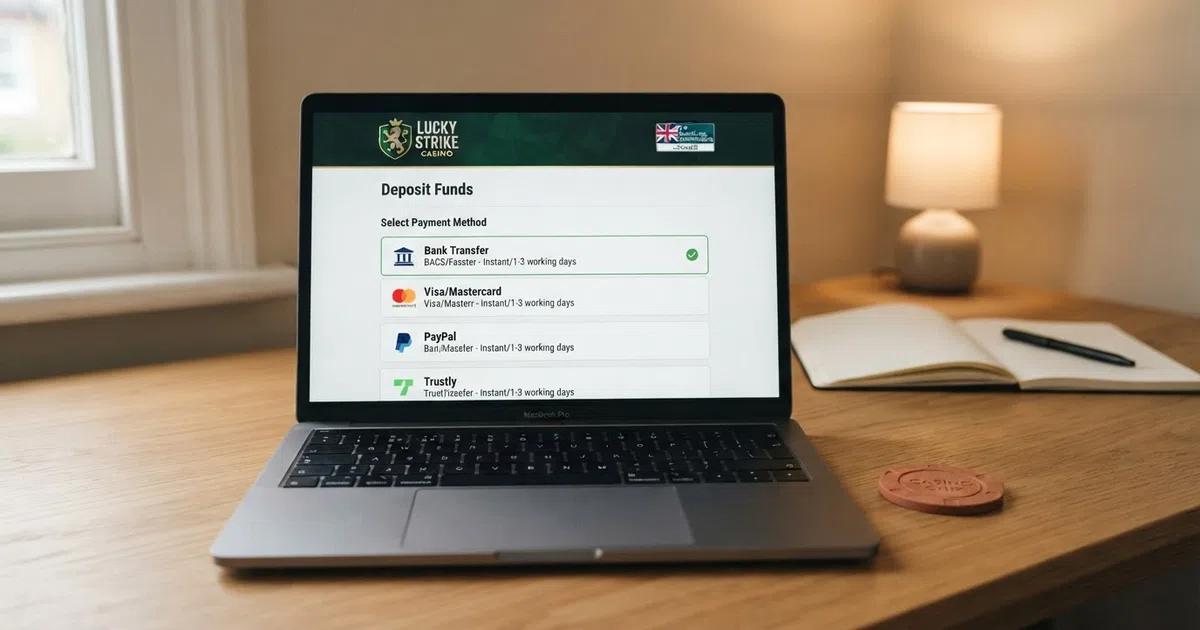
Search the term “eCheque casino UK” and the first page is almost entirely American. The pages that rank highest describe an ACH-powered payment rail, quote dollar figures, and name operators that are not licensed in this country at all. A UK player looking for the same thing at a British casino lands in the wrong shop. This page is written for the player who already knows the difference, or wants to — and wants to know which British casino brands actually support bank-account-based deposits, what those deposits really cost, and which welcome offer is worth the eCheque route.
The short version: in the UK, eCheque and bank transfer are the same payment rail. UKGC-licensed casinos list it under “Bank Transfer” almost without exception. Every operator on this page accepts that rail, every one holds an active GB licence, and every one has a casino welcome package worth comparing — though for the sportsbook-first half of the list, the casino-specific offer is not the part the brand advertises.
What eCheque Actually Means at a UK Online Casino — and Why It’s So Hard to Find
eCheque in the UK is not what the American pages describe. It is not the Automated Clearing House eCheck system that powers US debit and credit rails. A UK eCheque is an electronic funds transfer initiated through the Bacs or Faster Payments network — the same infrastructure that handles direct debits, standing orders, and one-off bank-to-bank payments. It is the digital equivalent of a paper cheque, processed by the same banks that already hold the player’s current account.
That technical detail is the reason the term is hard to find on UK casino sites. The brands do not advertise “eCheque” because the label does not exist in their cashier pages the way it does in the US market. They advertise bank transfer, or direct bank payment, or sometimes a specific provider such as Trustly. The functionality sits underneath. A player who can deposit by bank transfer at a UK casino can, in practical terms, deposit by eCheque — and most will not notice the difference between the two, because there is no meaningful difference to notice.
This is also why US search results mislead UK players. The American eCheck casino pages describe a payment method that takes five to seven business days, often carries a flat percentage fee, and is restricted to a handful of state-licensed operators. The UK version is faster, fee-light, and supported by every operator on this page. The transfer still rides the banking system, but Faster Payments compresses what ACH stretches out, and the major UK banks do not levy a percentage fee the way some US issuers do.
The fees worth knowing about are the bank-side ones. UK banks occasionally charge £0.30 to £1.50 per transaction for certain payment types, or a percentage in the 0.5% to 1% band for cross-border or unusual transfers. Inside the UK, these are uncommon for a sterling bank transfer between two UK accounts. Casinos almost never add their own fee on top. The 888casino cashier, the bet365 banking page, and the standard Ladbrokes and William Hill deposit screens all show bank transfer as a free deposit method, and the same holds for withdrawals. The few pounds that may disappear are a banking artefact, not a casino charge.
What a UK player actually sees, then, is a cashier page that lists bank transfer, a prompt for the deposit amount, and a redirect to the player’s own online banking portal. Authorising the payment in the banking app or browser tab completes the deposit. From the player’s seat, the experience is the same as paying a bill. From the casino’s side, the funds clear through Faster Payments or Bacs depending on the amount and the operator’s banking partner. The word “eCheque” does not appear in the workflow at all.
What an eCheque Actually Is — and How It Differs from What US Sites Describe
A UK eCheque is a Bacs or Faster Payments electronic funds transfer. The Bacs network handles scheduled and bulk payments — three-day clearing by design, which is why salary payments and direct debits land on predictable days. Faster Payments is the instant or near-instant layer, settled in seconds for the bulk of UK transactions, subject to bank-side fraud checks that can occasionally delay a payment by an hour or two. An eCheque can route through either, depending on the operator and the amount.
The American version rides the Automated Clearing House — a network designed for batch settlement, typically clearing in one to three business days, with some banks holding funds longer as a fraud precaution. The US eCheck casino pages describe that system. Their step-by-step guides assume the player will enter a routing number and a bank account number into a web form, then wait several days. That is the world the high-ranking US Casino.org platform and actionnetwork pages are written for.
A UK player trying to use the same instructions at a UK casino will find nothing that fits. The cashier will not ask for a routing number. The banking redirect will be to a UK bank’s online portal. The funds will land faster than the US pages suggest, because Faster Payments is faster than ACH for almost all consumer payments. And the term eCheque will not appear anywhere on the screen, because the UK operator calls the same thing “bank transfer” and considers the job done.
This is the disconnect. The keyword exists, the player is real, and the product exists — but the terminology and the technical context do not line up across the Atlantic. A page that documents only the US system leaves a UK player with an irrelevant guide. A page that documents bank transfer at a UKGC-licensed casino answers the question they actually asked.
How to Deposit with eCheque at a UK Online Casino
The deposit flow is straightforward, even if the label is not. A player sits down to deposit, opens the casino cashier, and looks for bank transfer rather than eCheque — because that is what UK casinos call it. The next steps are the same at every featured operator, with small variations in the amount field and the redirect target.
- Open the casino’s banking or cashier page, select “Deposit,” then choose “Bank Transfer” from the list of payment methods. The method may sit under a sub-menu such as “Bank,” “Direct Bank,” or “Other,” depending on the operator’s interface.
- Enter the deposit amount, usually £10 as the minimum, and confirm. The casino then displays its own bank details — a sort code and account number — or, more commonly, opens a redirect to a payment provider that handles the bank-to-bank leg.
- Authorise the transfer through the player’s own online banking app or browser. This is where Faster Payments kicks in, or Bacs if the amount is large enough to require the older network. The bank may ask for confirmation via fingerprint, face ID, or a one-time code.
- Wait for the funds to land. Verified accounts at most UKGC-licensed casinos see bank-transfer deposits within minutes via Faster Payments, or within one to three business days where Bacs is the rail. The casino’s confirmation screen typically shows the expected window.
- The balance appears in the casino account. At that point the standard UKGC verification rules apply: if the player has not yet completed age and identity checks, the casino will hold withdrawals until those checks are complete, regardless of the deposit method.
That last point is worth dwelling on. UKGC rules require every remote operator to verify a customer’s name, address and date of birth before any deposit or gambling can take place — that rule has been in force since 7 May 2019. A first-time bank-transfer deposit will trigger the verification flow, and the funds may be available to play before verification is complete, but withdrawals will not be released until the documents are in. Plan for that, especially if a same-day withdrawal is the goal.
The mandatory pre-deposit financial-limit prompt, in force from 31 October 2025, also sits in the deposit flow. Before the first deposit goes through, the casino will ask the player to set a financial limit — daily, weekly, or monthly. The prompt cannot be skipped, and a player who sets a limit can adjust it later but not raise it without a cooling-off period. The limit applies to eCheque and bank-transfer deposits the same way it applies to debit-card deposits. Once it is set, the cashier enforces it on every subsequent deposit.
eCheque Withdrawals: Speed, Limits, and What Slows Them Down
Withdrawals are slower than deposits, and almost never for the reason players expect. The bank-transfer rail clears a deposit in minutes via Faster Payments or hours via Bacs. A withdrawal goes through the same rails in reverse, but the casino’s own internal pending queue sits in front of the bank transfer. That queue is where the time goes.
The standard timeline for a UKGC-licensed casino is: the player requests a withdrawal, the request enters a pending state for 24 to 72 hours while the casino runs anti-fraud and source-of-funds checks, then the funds are released to the bank. Once the bank receives the instruction, the credit typically lands within one to three business days — Faster Payments often faster, Bacs at the upper end. The total window from request to bank credit is usually three to five business days. A clean withdrawal at a fully verified account with no affordability questions outstanding will land at the fast end. A first withdrawal to a new bank account, or a withdrawal during a financial-vulnerability check, will land at the slow end.
Limits on bank-transfer and eCheque withdrawals vary by operator and by player status. A standard player at most featured operators can withdraw between £10 and £50,000 per transaction, with daily and monthly caps above that. VIP tiers raise the ceiling. There is no UKGC-mandated minimum or maximum withdrawal amount; the limits are operator-set, and the cashier page shows the player’s personal limit before the withdrawal is requested. Players who expect to move larger amounts should check the limit before requesting — a partial withdrawal is the only workaround when the cap binds, and it adds a day or two to the timeline.
The reverse-withdrawal ban is what makes the pending queue matter in the first place. Since 31 October 2021, UKGC rules have prohibited reversing a withdrawal once it is requested. A player cannot ask for the funds back, change their mind, and send the money back to the casino balance. The rule exists to break the impulse loop that the old “cancel withdrawal” button used to feed. The cost is that the 24 to 72 hour pending window is now load-bearing — the player cannot undo a request once the pending period has elapsed and the funds are queued for the bank. The benefit is that no operator can stall a withdrawal by leaving it in pending indefinitely.
What slows a withdrawal down, in practice, is verification. A player who has not completed full identity and source-of-funds checks will see a withdrawal sit in pending until the documents are reviewed. A player who has been flagged by the £150 net-deposit vulnerability check will see the same. A player who simply requests the withdrawal on a Friday evening may find the casino’s processing team is closed over the weekend, which adds two business days. None of this is about eCheque as a method — it is about the operator’s internal processes — but the method does not save the player from any of it.
Using eCheque on Mobile Casino Apps
The mobile experience is the desktop experience, compressed. The cashier page renders the same deposit options, the redirect to the player’s banking app happens in the same way, and the authorisation step lands in the same online banking portal — or, on a phone, in the banking app itself. The bank-authorisation step is where the smaller screen shows its limits. A two-factor confirmation, a fingerprint prompt, or a one-time code entry that takes seconds on a laptop can feel slower on a phone, and the constant switching between the casino app and the banking app is the awkward part.
The featured operators each offer a mobile path. bet365, 888casino, Sky Vegas, Betway, Paddy Power, Betfred, Ladbrokes, William Hill, Coral and Betfair all have dedicated casino apps or mobile-optimised sites that handle the bank-transfer deposit flow. The UKGC licence covers mobile and desktop equally, so the same regulatory protections apply — a player depositing by bank transfer through an iPhone app is depositing through the same licensed operator as a player on a desktop browser. The cashier does not get a different rulebook.
What does vary is the smoothness of the banking redirect. A casino that integrates with a payment provider such as Trustly or TrueLayer can open the bank portal inside a single browser view, with the casino’s deposit screen remaining in the background. A casino that hands the player a sort code and account number to type into their banking app has added two manual steps. The featured operators differ on this; the difference is interface polish, not regulatory coverage.
New UK Casinos That Accept eCheque in 2026
Genuinely new UKGC-licensed casino brands are scarce. The Commission issues remote operating licences to a handful of operators each year, and most of those licences go to established brands entering the GB market or to existing operators adding a new product vertical under a new entity. A player looking for a new casino specifically because it accepts eCheque is searching for a very short list.
The reason is structural. The Commission’s suitability checks for new remote licensees now take between six and twelve months from application to grant, and the operating capital required to launch a casino in the UK — combined with the 40% Remote Gaming Duty from 1 April 2026 — has pushed several would-be entrants out of the market. The few new casino brands that have launched in the past year have done so on a sportsbook-led template, with a casino product bolted on. None of them has differentiated on payment methods; all of them offer the standard bank transfer, debit card, and e-wallet set, and any of them will accept eCheque functionality through the bank-transfer option.
A player who wants to verify a new casino’s eCheque compatibility can do so in two steps. First, check the Commission’s public register to confirm the licence is active — a search by operator name returns the licence status, the licence number, and the trading names covered. Second, open the new casino’s banking page and look for bank transfer. If bank transfer is there, eCheque functionality is there. The cashier label is the only check the player can do from the outside; the rest is the operator’s internal integration.
A new entrant is unlikely to offer better eCheque terms than the established brands, for one reason: the rail is the rail. Bacs and Faster Payments charge the same fees and clear at the same speed regardless of the operator. A new casino cannot offer faster eCheque withdrawals than bet365, because both are sending payments through the same banking network. What a new casino can offer is a different welcome package, a different game library, and a different loyalty programme — and those are the differentiators worth checking, not the payment method.
Why Your eCheque Casino Bonus Looks Smaller Than You Would Expect
UK welcome bonuses in 2026 are smaller than they were a year ago, and the reason is regulatory. Two policy changes have compressed what an operator can afford to put on the table, and the second one is still landing.
The first change is the 10× wagering cap, in force from 19 December 2025. Before that date, a UK casino could attach a wagering requirement of 30×, 40×, or 50× to a deposit match. The Commission’s view, expressed in LCCP SR Code 5.1.1, is that anything above 10× is structurally punitive — the player is unlikely to clear it within the validity window, and the bonus is therefore a marketing artefact rather than a genuine promotion. The 10× cap puts a ceiling on the worst offenders and forces a market-wide recalibration. A 100% match up to £100 with 10× wagering is now the rough ceiling, because anything more generous to the player (lower wagering) costs the operator in real margin, and anything less generous (lower match percentage or smaller cap) looks weak in the comparison.
The second change is the 40% Remote Gaming Duty, in force from 1 April 2026. Operators now pay 40 pence in tax for every pound of gross gaming yield — up from 21% — and the difference comes straight out of the marketing budget. The RGD does not, by itself, change the headline number on a welcome offer. What it does is shrink the operator’s appetite for the free-spin-and-match bundles that defined the UK market in 2023 and 2024. The shift is toward no-wagering free spins, where the operator’s cost is capped at the spin value rather than a percentage of the player’s eventual winnings. Sky Vegas’s 50 no-deposit free spins, bet365’s 500 free spins with 0× wagering, and Paddy Power’s 60 no-wagering spins are all expressions of that shift. The marketing claim of “free spins” still works; the underlying cost to the operator is now bounded in a way that a 30×-wagering deposit match never was.
The third, smaller effect is on eCheque and bank-transfer deposits specifically. Some welcome offers exclude certain payment methods — the Betway match bonus is debit-card only, and a player depositing by bank transfer would not qualify. That exclusion is the operator’s choice, not a UKGC rule, and the terms of each offer should be checked before the deposit is made. No featured operator in this ranking excludes bank transfer from every welcome component; the exclusions are offer-specific.
The result for an eCheque player is a welcome market that looks thinner on paper but is more honest in practice. A 10×-wagering match up to £100, or 200 no-wagering free spins, is a smaller headline than the offers that ran in 2023, but the player is more likely to clear it, more likely to withdraw the winnings, and less likely to lose the bonus in a steep wagering requirement. The 40% RGD is a blunt tool and the 10× cap is a blunt tool, but together they have pushed the market toward offers the player can actually use.
UK Casinos for eCheque Players in 2026 — Strong Offers, and Where the List Thins Out
The ten operators below all hold an active UKGC licence, all support bank transfer, and all sit on the public register as confirmed current. They split into two groups. The first group — bet365, 888casino, Sky Vegas, Betway, Paddy Power, Betfred — is casino-first: each one has a confirmed casino welcome offer on its own page or in its terms, and the bonus is the reason a player would pick the brand. The second group — Ladbrokes, William Hill, Coral, Betfair — is sportsbook-first: each one holds a full casino licence and supports bank transfer, but the advertised welcome package is for sports betting, with the casino-specific offer not confirmed this run. They are still in the ranking because the licence, the payment method, and the casino product are all there; the missing piece is the welcome headline, not the underlying offering.
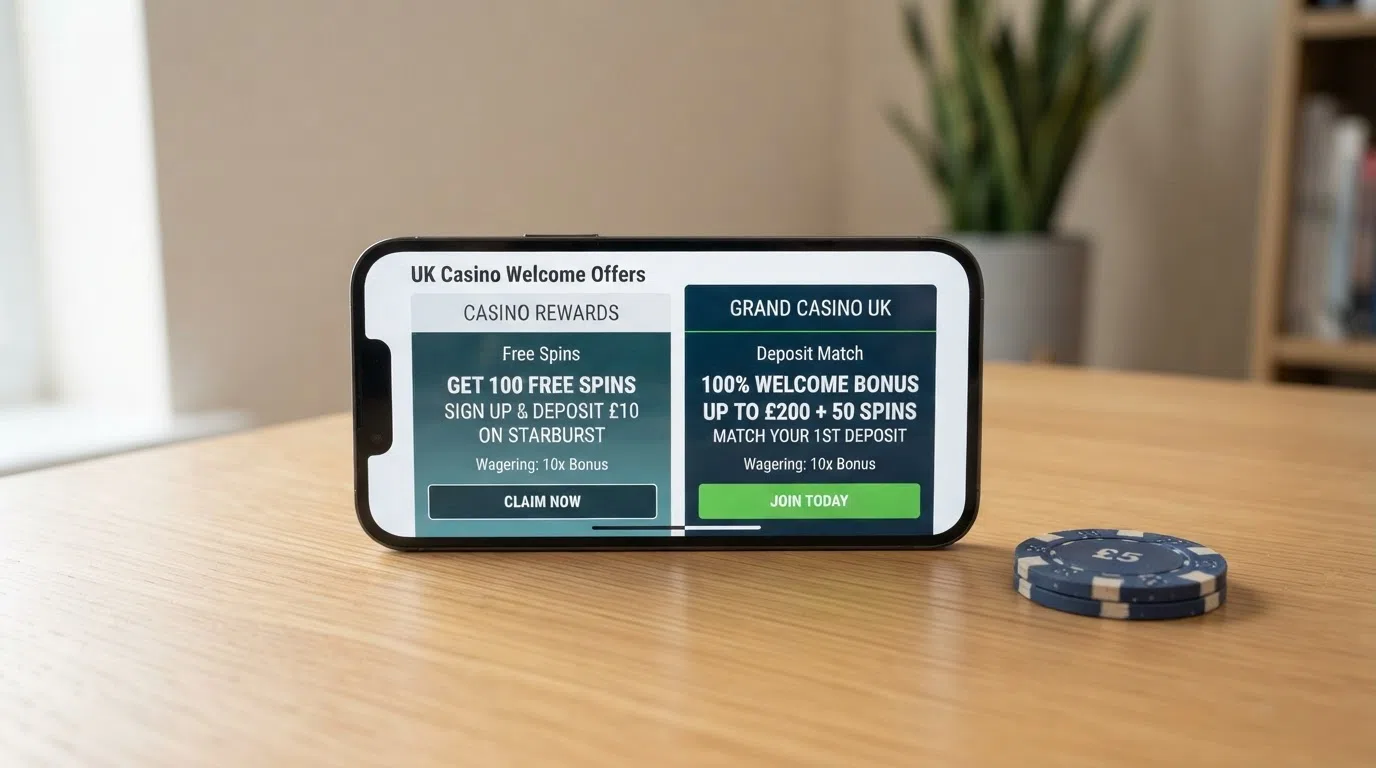
The table below shows where each operator sits. The Free Spins column is blank where the operator’s confirmed welcome offer does not include a spin component; the Wagering Requirement column is blank where the offer is not confirmed this run. Honest gaps are the point — a column filled with guesses would be worse than a column with dashes.
| Operator | UKGC Licence Status | Welcome Offer | Free Spins | Wagering Requirement |
|---|---|---|---|---|
| bet365 | Active | Up to 500 free spins, £10 min lifetime deposit | Up to 500 | 0× on free spin winnings |
| 888casino | Active | 100% deposit match up to £100 | — | 10× on selected slots |
| Sky Vegas | Active | 50 no-deposit free spins + 200 free spins after £10 deposit and stake | 250 | 0× on all free spin winnings |
| Betway | Active | 100% match up to £50 (debit card) OR stake £10 get 150 free spins | 150 | 10× on match / 0× on free spins |
| Paddy Power | Active | Deposit and play £10 get 200 free spins + 60 no-wagering free spins | 260 | 0× on the 60 no-wagering spins |
| Betfred | Active | Stake £10+ for up to 200 free spins | Up to 200 | — |
| Ladbrokes | Active | Sportsbook offer (bet £5 get £30) — casino offer not confirmed this run | — | — |
| William Hill | Active | Sportsbook offer (£30 in free bets) — casino offer not confirmed this run | — | — |
| Coral | Active | Sportsbook offer (bet £5 get £30) — casino offer not confirmed this run | — | — |
| Betfair | Active | Bingo offer (play £10 get £60) — casino offer not confirmed this run | — | — |
The split is real and it is worth saying plainly. A player looking for a casino welcome package available on a first bank-transfer deposit has six operators to choose from. A player who already has an account with one of the sportsbook-first brands and is happy to use the casino product without a headline bonus has ten. The ranking reflects the real choice: casino-first brands ranked by the strength of the confirmed offer, sportsbook-first brands included because the licence and the payment method are there even where the bonus is not.
bet365 Casino: 500 Free Spins with Zero Wagering
bet365 runs two UKGC licences for its UK operations: Hillside (UK Gaming) ENC, account 39166, covering the casino product, and Hillside (UK Sports) ENC, account 55149, covering sports betting. Both are confirmed active on the public register. The casino welcome offer in 2026 is up to 500 free spins, distributed across 10 daily selections of between 5 and 50 spins each, valued at £0.10 per spin. The headline number is the largest free-spin count in the featured set, and the wagering term is 0× — free-spin winnings are withdrawable cash from the moment they land.
The £10 minimum lifetime deposit requirement is the one condition that disqualifies the offer from the “no deposit needed” label. A player who has never deposited with bet365 must make a single lifetime deposit of at least £10 to unlock the spins; the deposit itself is not part of the bonus, but it is the gate. Once the deposit is in, the daily spin selections become available over the following 20 days, with 7-day expiry on each daily batch. The bonus slots — Book of Horus, Curse of the Bayou, Magic Forge, Wrath of the Deep — are the eligible games for the free spins, and the player claims the offer within 30 days of registration.
What makes bet365 stand out is the combination of spin count and zero wagering. A 500-spin offer at £0.10 is a £50 headline value; with 0× wagering, the player can withdraw the winnings immediately. That maths is the offer’s appeal, and it sits comfortably with the wider market direction toward no-wagering spins. Bank transfer is supported for both deposits and withdrawals, the deposit lands through Faster Payments or Bacs depending on the amount, and the withdrawal goes through the same rails. The licence is the most heavily verified in the UK market, and the casino product carries the same regulatory protections as the sportsbook.
888casino: The Classic 100% Match Up to £100
888casino operates under 888 UK Limited, account 39028, confirmed active on the public register. The welcome terms in 2026 offer a 100% deposit match up to £100, with a minimum first deposit of £10 and a wagering requirement of 10× on selected slots within 90 days of credit. There are no free spins in the primary welcome package; the offer is a straight deposit match, and the wagering term sits at the regulatory maximum.
The 90-day validity is the long end of the standard window and is worth weighing. A player who deposits £100 receives a £100 bonus, must wager £1,000 in total on selected slots within 90 days, and has roughly 130 slots excluded from the wagering contribution. The bonus contribution rules are standard: 100% on selected slots, less on other game types, zero on excluded titles. The math, for the player who clears the bonus on eligible slots at the £5 maximum stake per game cycle, runs to about 200 spins — a reasonable workload, but a workload nonetheless, and one that the player must complete within three months.
The offer is reliable rather than inventive. It is the closest thing the market has to a benchmark match bonus, and the 10× wagering cap means no player is being asked to do anything more demanding than the regulatory ceiling. The 90 days is generous compared to the 7-day windows on most free-spin offers. What the offer lacks is a creative hook: no free spins, no game-specific bonus, no tiered structure. It is a match bonus at the regulatory maximum, and that is its appeal for a player who values a known quantity.
Bank transfer is supported for deposits and withdrawals, the same Bacs and Faster Payments rails as the rest of the market, and the casino product sits under the same UKGC licence as 888’s poker and sports offerings. The brand is one of the longest-established in the UK online casino market, and the operator’s record on regulatory compliance is unblemished. For a player who wants a deposit match without the spin-game mechanics, 888casino is the operator the offer is written for.
Sky Vegas: 50 Free Spins with No Deposit and No Wagering
Sky Vegas operates under Bonne Terre Limited, account 38718, confirmed active on the public register. The sign-up package for new customers in 2026 is the only genuinely deposit-free package in the featured set: 50 free spins on registration, with no deposit required, plus 200 additional free spins after the player deposits and stakes £10. Every spin is valued at £0.10, every spin carries 0× wagering, and the winnings are withdrawable cash from the first no-deposit spin.
The 50 no-deposit spins are the headline, and the absence of a deposit gate is the reason. A player who registers at Sky Vegas receives 50 free spins immediately, plays them on an eligible game from a list that includes The Goonies, Eye of Horus, Fishin’ Frenzy, King Kong Cash, and Deal or No Deal Megaways, and can withdraw any winnings without ever making a deposit. The 7-day expiry is the only constraint, and the eligible games are the only restriction. After the no-deposit spins are played, the player has 30 days from registration to deposit and stake £10 to unlock the additional 200 free spins, with the same 7-day expiry from credit.
Sky Vegas is the right operator for a player who wants to test the casino before committing a deposit. The no-deposit spins are a real offer, not a “deposit to claim” marketing trick — the spins land in the account on registration, the wagering term is 0×, and the cash-out path is the standard bank transfer or e-wallet withdrawal. The deposit-stake requirement for the larger 200-spin batch is the gate; the 50-spin batch is the genuine no-deposit component.
What the offer costs Sky Vegas is bounded. The 50 no-deposit spins at £0.10 each, played to a typical 96% RTP, return roughly £4.80 in expected value. The 200-spin batch costs the operator the same. The 40% RGD takes its cut on the gross winnings, but the operator’s exposure is limited to the spin value rather than a percentage of an unknown winning total. That is why this offer exists in 2026: the no-wagering free-spin template is what survives the 40% RGD and the 10× wagering cap, and Sky Vegas has leaned further into it than any other featured brand.
Betway Casino: 100% Match or 150 Free Spins — Player’s Choice
Betway operates under Betway Limited, account 39372, confirmed active on the public register. The available bonus in 2026 is the only one in the featured set that offers a genuine choice between a deposit match and a free-spin package, with two distinct mechanics and two distinct wagering structures.
The deposit match is 100% up to £50, with a 10× wagering requirement on the bonus, and a critical restriction: the match is debit-card only. A player who deposits by bank transfer or eCheque will not trigger the match bonus. The free-spin package is the alternative: stake £10 on eligible slots within the qualifying window and receive 150 free spins, valued at £0.10 each, credited 50 per day over 3 days, with 0× wagering on the free-spin winnings. The eligible games include Gold Blitz Ultimate, Eruption Blaze, Cashingo, 12 Pots of Gold Drum Frenzy, Area Link Phoenix Firestorm, and Squelin Riches 2.
The choice is a player-type fork. The deposit match suits a player who would rather have a single up-front bonus to clear with a 10× wagering workload on selected slots; the free-spin package suits a player who would rather have a flat spin count with no wagering on the winnings. The debit-card restriction on the match bonus is the only friction in the offer, and it is the reason the free-spin alternative exists as a separate track rather than a stacked bonus. A player depositing by bank transfer who wants the 150 free spins has them, and that is the offer the eCheque player can actually use.
The 7-day expiry on each batch of spins is standard. The bonus slot list is shorter than bet365’s and Sky Vegas’s, with six named games, and the value of one spin is fixed at £0.10. The licence is clean, the operator’s record is unblemished, and the regulatory coverage is the same as every other UKGC-licensed casino in the ranking. The decision point is the choice itself, and the right pick depends on whether the player prefers a 10×-wagering match or a 0×-wagering spin package.
Paddy Power Casino: 260 Free Spins with a No-Wagering Core
Paddy Power operates under PPB Counterparty Services Limited, part of Flutter Entertainment, account 39439, confirmed active on the public register. The promotional deal in 2026 is the largest total spin count in the featured set, with 260 free spins split into a no-wagering core and a deposit-triggered batch.
The breakdown is 60 no-wagering free spins upfront — 50 on eligible slots plus 10 on Paddy’s Mansion Heist — and 200 additional free spins after the player deposits and stakes £10. The 60-spin no-wagering component is the headline: every win is withdrawable cash from the moment the spin lands, and the only constraints are the 7-day expiry and the eligible game list. The 200-spin batch carries standard terms (the specific wagering multiplier is not confirmed this run, but the standard Flutter structure applies), and the deposit-and-stake £10 trigger is the gate.
The no-wagering core is the offer’s distinguishing feature. Sky Vegas has a larger no-deposit component in absolute terms, but Paddy Power’s 60 no-wagering spins carry the same 0× multiplier on the winnings, with the additional 200 spins as a stacker. The total expected value at 96% RTP across 260 spins at £0.10 is roughly £25, and the player who converts the no-wagering portion into a withdrawal has done so without any wagering workload.
Paddy Power’s position in the Flutter family — shared with Betfair under PPB Entertainment Limited — means the operator’s compliance, safer-gambling, and payment infrastructure are the same. Bank transfer is supported for deposits and withdrawals, the cashier is the standard Flutter template, and the UKGC licence covers the casino product the same way it covers the sportsbook and the exchange. The 60 no-wagering spins are the part of the offer to play first, and the 200-spin batch is the part to play once the no-wagering component is cashed out or expired.
Betfred Casino: Up to 200 Free Spins After a £10 Stake
Betfred operates under Petfre (Gibraltar) Limited, account 39544, confirmed active on the public register. The casino promotion in 2026 is up to 200 free spins, with the player opting in and staking £10 or more on casino slots within 30 days of registration. The spins are credited within 48 hours of the qualifying stake, expire after 7 days, and require a debit card for the qualifying deposit.
The specific wagering multiplier on the free-spin winnings is not confirmed this run. The offer’s structure — stake £10, receive spins, play them within 7 days — is a standard UKGC-licensed casino template, and the absence of a confirmed multiplier is the one gap in the data. The £10 minimum stake is the entry point, the 48-hour credit window is the operator’s processing target, and the 30-day claim window gives the player reasonable time to meet the condition.
The debit card requirement is the friction point. A player depositing by bank transfer or eCheque to qualify for the spins needs to check the offer terms carefully: some Betfred welcome offers require the qualifying stake on a debit card, others accept bank transfer. The standard position is that the qualifying stake — the bet that triggers the spin credit — must come from a debit card deposit, not a bank-transfer deposit, and the spins themselves are credited to the player’s casino account rather than as cash.
Betfred’s licence is clean and the brand’s UK presence is one of the deepest in the market, with a long history on the high street and a comprehensive online product. The casino welcome offer is functional rather than headline-grabbing, and the player who values a familiar brand with a straightforward spin welcome will find the offer fits. The gap in the wagering data is the one open question, and a player considering Betfred should confirm the multiplier on the operator’s terms page before staking the qualifying £10.
Ladbrokes Casino: A Sportsbook-First Brand with an Unconfirmed Casino Welcome Offer
Ladbrokes operates under LC International Limited, part of Entain, account 54743, confirmed active on the public register. The advertised welcome package this run is a sportsbook offer: bet £5, get £30 in free bets. The casino-specific welcome bonus was not verified this run. The absence is the reason Ladbrokes sits in the second half of the ranking rather than the first.
The licence is full, the casino product is real, and bank transfer is supported for deposits and withdrawals. A player who already has a Ladbrokes account, or who prefers the Ladbrokes brand for the casino product, can deposit by bank transfer, play slots, and use the standard safer-gambling tools the same way they would at any other UKGC-licensed casino. The welcome headline is the missing piece, not the underlying offering. The Entain group’s compliance record is clean, the licence is active, and the casino product sits under the same regulatory coverage as the sportsbook.
The reason a sportsbook-first brand belongs in an eCheque casino ranking is the payment rail, not the welcome offer. A player who wants to deposit by bank transfer and is happy to forgo a casino welcome bonus has every reason to use Ladbrokes. A player who wants a casino welcome headline to claim on a first bank-transfer deposit has six better-supported options in the first half of the ranking. The choice is the player’s, and the offer’s absence is not a regulatory failure — it is a brand positioning decision.
William Hill Casino: A Heritage Brand Where the Casino Offer Needs a Closer Look
William Hill operates under two UKGC entities: William Hill Organization Limited, account 2752, and WHG (International) Limited, account 39225, both confirmed active on the public register. The advertised welcome package this run is a sportsbook offer: £30 in free bets (3 × £10) on a £10 deposit and stake at odds of 1/2 or greater. The casino-specific welcome offer was not confirmed this run.
The brand is one of the oldest in the UK gambling market, with a history on the high street that stretches back to the 1930s. The online casino product is comprehensive, the licence is clean, and the payment infrastructure supports bank transfer for deposits and withdrawals. A player who values the brand’s heritage, or who already has a William Hill account, can deposit by eCheque, play slots, and use the same safer-gambling framework as every other UKGC-licensed casino. The casino welcome headline is the missing piece, and the sportsbook offer is not a substitute for a casino player who wants a casino welcome.
The same logic applies as for Ladbrokes: a sportsbook-first brand with a full casino product and a clean licence is a legitimate eCheque casino, and the absence of a casino welcome offer is a positioning choice, not a regulatory or technical issue. The 1/2 odds requirement on the qualifying sportsbook bet is the entry point for that offer, and the casino player who skips the sportsbook altogether can still deposit, play, and withdraw through the bank-transfer rail.
Coral Casino: An Entain Brand with Bank Transfer Support and an Unconfirmed Casino Bonus
Coral operates under LC International Limited, part of Entain, account 54743, the same licence entity as Ladbrokes. The advertised welcome package this run is a sportsbook offer: bet £5, get £30 in free bets. The casino-specific welcome offer was not confirmed this run.
The shared licence entity with Ladbrokes is worth flagging. A player who already has a Ladbrokes account will not be able to register a second account with Coral under the same licence — the UKGC’s rules on duplicate accounts and the safer-gambling framework treat operators under the same group as connected for these purposes. The casino product itself is a separate experience, the game library is distinct, and the payment infrastructure supports bank transfer the same way it does at Ladbrokes.
The position in the ranking is the same as Ladbrokes: a player who values the Coral brand, or who has a Coral account already, can deposit by bank transfer and play the casino product under a full UKGC licence. The welcome offer’s absence is the gap, and the sportsbook offer is not a casino welcome. A player looking for a casino welcome to claim on a first bank-transfer deposit has better-supported options elsewhere in the ranking.
Betfair Casino: A Flutter-Owned Exchange Brand Where the Casino Bonus Was Not Confirmed
Betfair operates under PPB Entertainment Limited, part of Flutter Entertainment, account 39439, the same licence entity as Paddy Power. The advertised welcome package this run is a bingo offer: play £10, get £60 in bingo bonus. The casino-specific welcome offer was not confirmed this run.
The shared licence entity with Paddy Power is the same kind of connection as the Ladbrokes-Coral pairing. A player who already has a Paddy Power account will find the Betfair product sits under a different operator brand but a connected regulatory framework, and the safer-gambling tools — GAMSTOP registration, deposit limits, time-outs — apply across the group. The casino product is real, the game library is distinct from Paddy Power’s, and the payment infrastructure supports bank transfer for deposits and withdrawals.
The bingo welcome offer is the reason Betfair sits in the second half of the ranking rather than the first. A player looking for a casino welcome headline to claim on a first bank-transfer deposit has six stronger options in the casino-first half of the ranking. A player who values the Betfair brand, the exchange heritage, or the casino product for its own sake has a full UKGC-licensed operator to play at, and bank transfer is a supported payment method throughout. The bingo offer is not a casino welcome, and the absence of a casino-specific welcome this run is the gap in the data.
Is eCheque Legal at UK Online Casinos? What Your GB Licence Protects — and What It Does Not
eCheque is fully legal at UKGC-licensed casinos. The Gambling Commission’s rules do not name eCheque, but they do not need to: the credit card ban under LCCP 6.1.2 prohibits credit cards and credit-card-funded e-wallet deposits, and the rules permit debit cards, bank transfers, and direct bank payments including eCheque. A UKGC-licensed casino that supports bank transfer supports eCheque functionality, and the legal position is the same as for any other bank-to-bank payment.

The GB licence is the only safety check that matters. The Gambling Commission is the single statutory regulator for online gambling in Great Britain — England, Scotland and Wales — operating under the Gambling Act 2005 and the Gambling (Licensing and Advertising) Act 2014. The 2014 Act made a GB licence compulsory at the point of consumption: any operator serving GB customers must hold one, regardless of where the operator is based. Northern Ireland operates under separate, older legislation and is not covered by the GB licence regime.
What the GB licence actually requires of an operator is a substantive compliance programme. The Commission’s three licensing objectives, set out in section 1 of the Gambling Act 2005, are: preventing gambling from being a source of crime or disorder, ensuring gambling is conducted in a fair and open way, and protecting children and other vulnerable persons from being harmed or exploited. Each objective translates into licence conditions, social responsibility codes, and reporting requirements. An operator that fails to meet them faces licence suspension or revocation, financial penalties, and — in the most serious cases — criminal prosecution.
The protections the GB licence gives an eCheque player are concrete. Player funds must be segregated from operating funds, with the level of segregation disclosed to the customer. Identity verification is mandatory before any deposit or gambling. The £150 net-deposit vulnerability check fires within a rolling 30-day period. The pre-deposit financial-limit prompt appears before a first deposit. GAMSTOP participation is mandatory. Reverse withdrawals are banned. The 10× wagering cap and the mixed-product promotion ban apply. Every one of these rules is enforceable against the operator by the Commission, and a player who experiences a breach can complain to the operator and, if the complaint is not resolved, to an independent adjudicator or to the Commission itself.
The limits of UKGC enforcement are worth being clear about. The Commission uses disruption — cease-and-desist notices, search-engine delisting, domain suspension, payment-provider referrals — to target unlicensed offshore operators, and the published figures for April 2024 to June 2025 show 3,140 disruption notices, 447,778 URLs referred to search engines, and 287,961 URLs removed. The Commission does not currently hold statutory ISP or DNS blocking powers, though legislation has been proposed. An unlicensed offshore casino serving GB customers is operating illegally, but a UK player reaching one is outside the Commission’s protective framework. The single non-negotiable rule for a UK eCheque player is therefore the same as for any other payment method: check the public register, confirm the licence is active, and do not deposit at any operator that does not hold one.
UK Gambling Commission Licensing: What It Means for eCheque Players
Every casino on this page holds an active GB licence, verified on the public register. The register at gamblingcommission.gov.uk is the authoritative source: a search by operator name returns the licence status, the licence number, the trading names covered, and any conditions attached. The featured operators were confirmed active on the register in August 2026.
The three licensing objectives do most of the work. Preventing crime means the operator runs know-your-customer and anti-money-laundering checks, reports suspicious activity, and is subject to fit-and-proper tests for its directors and key personnel. Fair and open gambling means games are independently tested, payout percentages are published, and the operator’s terms and conditions are clear and not misleading. Protecting children and vulnerable persons means age and identity verification is mandatory, GAMSTOP participation is compulsory, and the operator must run affordability and vulnerability checks on players whose play indicates risk.
The minimum age is 18 across all commercial gambling in Great Britain. Since 7 May 2019, remote licensees have been required to verify a customer’s name, address and date of birth before any deposit or gambling can take place. The verification typically uses a combination of document checks and database lookups, and a player who cannot verify is barred from depositing and playing. The rule applies equally to eCheque and bank-transfer deposits; the payment method does not change the verification obligation.
GAMSTOP participation is the single most important safer-gambling tool at the eCheque player’s disposal. Since 31 March 2020, every GB-licensed online operator must be part of the GAMSTOP self-exclusion scheme, and a player who registers with GAMSTOP is blocked from accessing every GB-licensed online gambling site at once. The exclusion periods are six months, one year, five years, or five years with auto-renewal, and the registration cannot be cancelled early. A player who has self-excluded via GAMSTOP cannot deposit by eCheque at any of the featured operators for the duration of the exclusion.
How UK Regulation Protects Your Money When You Deposit by eCheque
Player funds must be segregated from operating funds under UKGC rules. The level of segregation varies — some operators hold player funds in a separate client account with a major UK bank, others use trust arrangements — but the principle is the same: player balances are not part of the operator’s assets and are not available to creditors in the event of insolvency. The exact segregation level is disclosed to the customer before the first deposit, and the player is asked to acknowledge it.
The £150 net-deposit vulnerability check is the next layer of protection. In force from 28 February 2025, the check fires when a customer’s net deposits — deposits minus withdrawals — cross £150 within a rolling 30-day period. The check is light-touch: it uses publicly available data (bankruptcy orders, county court judgments, high-court judgments, individual voluntary arrangements, debt relief orders) and is not a credit check. A flag does not automatically mean the player is barred; it means the operator must conduct further assessment before accepting further deposits. The check applies equally to eCheque, bank transfer, and debit-card deposits.
The pre-deposit financial-limit prompt, in force from 31 October 2025, is the most visible change for an eCheque player. Before a first deposit, the operator must ask the player to set a financial limit — daily, weekly, or monthly — and the limit must be acknowledged before the deposit goes through. The limit can be adjusted after the first deposit, but increases are subject to a cooling-off period. From 30 September 2026, the operator must offer a gross deposit limit with at least equal prominence, and the term “deposit limit” may only be used for that form. The framework is mandatory, and the eCheque player sits inside it the same way every other player does.
Financial risk assessments — the affordability checks that have been the subject of prolonged industry debate — are announced but not yet commenced. The UKGC Board confirmed on 7 July 2026 that it will proceed with a staged rollout, with the first stage triggering at £5,000 in net deposits within 24 hours for players aged 25 and over, and £2,500 for players aged under 25. The start date is not yet confirmed. Until the rollout begins, the £150 vulnerability check is the only mandatory check, and the operator’s discretion governs anything above that threshold.
The Rules That Shape Every eCheque Casino Session in 2026
The £5 statutory maximum stake per game cycle is the rule eCheque players notice first, because it sets the pace of play. In force from 9 April 2025 for players aged 25 and over, and from 21 May 2025 for players aged 18 to 24, the cap applies to the total staked within a game cycle on an online slot. Two adults at the same casino can face different maximum bets on the same slot, depending on age. The £2 cap for under-25s is roughly 60% lower than the £5 adult ceiling, and the rule applies regardless of the payment method used to fund the balance.
The 2.5-second minimum spin speed is the rule players notice second, because it slows what used to be instant. Auto-play has been banned since 31 October 2021, the minimum spin interval is 2.5 seconds, features that speed up play are banned, and losses disguised as wins are banned. The reverse-withdrawal ban — also from 31 October 2021 — prevents a player from cancelling a withdrawal once it has been requested. Each of these rules shapes a slot session in a way the eCheque player experiences directly, even if the deposit method is invisible to the rule.
The 10× wagering cap, in force from 19 December 2025, is the rule that has reshaped welcome offers. LCCP SR Code 5.1.1 caps wagering requirements at 10× and bans mixed-product promotional offers — an offer may not condition a bonus on playing a different product type. A casino welcome offer cannot require a player to play slots to clear a sportsbook bonus, or vice versa. The cap puts a ceiling on the worst offenders and forces a market-wide recalibration toward offers the player can actually clear.
The 40% Remote Gaming Duty, in force from 1 April 2026, is the rule that has reshaped what operators are willing to offer. RGD rose from 21% to 40% at the start of the 2026 financial year, and the difference is taken directly from operator margins. The visible effect is a shift toward no-wagering free spins, where the operator’s cost is bounded at the spin value rather than a percentage of an unknown winning total. The bonus-cost calculation that follows later in this article illustrates the math in detail.
Staying in Control: The Safer Gambling Tools Every eCheque Player Should Know About
eCheque links directly to the player’s bank account, and that link is the reason the UK’s mandatory safer-gambling framework is not optional. A debit card sits behind a chargeback mechanism; an e-wallet sits behind a separate account. A bank transfer sits in the current account, alongside the rent, the bills, and the rest of the player’s financial life. The mandatory tools exist because the link is direct.
The 2026 data from the National Gambling Helpline, run by GamCare, makes the case in numbers. In 2026, 81.5% of helpline contacts cited online gambling — a five-year high — and the helpline made 996 referrals to treatment in January 2026 alone, a 48% increase year-on-year. The Gambling Survey for Great Britain (Year 3, 2025) found 47% of adults had gambled in the past four weeks, with 38% gambling online. GambleAware’s 2024 survey classified 13.1% of adults — approximately 6.8 million GB adults — as experiencing any level of gambling problems (PGSI 1+). The infrastructure is responding to that scale: the statutory levy, in force from April 2025 at 1.1% of gross gambling yield for remote casino operators, splits its proceeds 50% to treatment, 30% to prevention, 20% to research.
For an eCheque player, the practical implication is that the safer-gambling framework is the primary safeguard between the current account and the casino balance. A player who sets a deposit limit, registers with GAMSTOP if needed, and uses the operator’s time-out and reality-check tools is using the system as designed. A player who does not is not protected by the framework’s existence; they are simply within it.
| Tool | Applicable To | Function |
|---|---|---|
| GAMSTOP | All GB-licensed sites | Multi-operator self-exclusion |
| Deposit Limits | Individual operators | Caps on daily/weekly deposits |
| Financial Vulnerability Check | All licensed operators | Automated monitoring for risk |
| Reality Checks | Individual operators | Session time and spend alerts |
The pre-deposit financial-limit prompt, in force from 31 October 2025, is the first tool every eCheque player encounters. Before the first deposit, the casino asks the player to set a financial limit — daily, weekly, or monthly. The prompt cannot be skipped. The limit is acknowledged, the deposit goes through, and the limit applies to every subsequent deposit, including bank-transfer and eCheque deposits. The limit can be tightened at any time and loosened after a cooling-off period.
The gross deposit limit requirement, in force from 30 September 2026, is the next layer. From that date, the operator must offer a gross deposit limit with at least equal prominence to other financial controls, and the term “deposit limit” may only be used for that form. The framework reserves the label to prevent marketing language from obscuring the actual control.
A player who wants a second layer of protection can also set a limit on the banking side. UK banks allow customers to set gambling-blocker controls on debit cards and on certain types of bank transfer, and the major banks’ mobile apps include gambling-category transaction blocks. The bank-side limit is independent of the casino-side limit; the two stack, and a player who sets both has a tighter overall envelope than either alone. The casino’s limit does not override the bank’s, and the bank’s does not override the casino’s.
The £150 net-deposit vulnerability check is the third layer, and the one the player does not set. The operator runs it automatically once the player’s net deposits cross £150 in a rolling 30-day period. A flag does not mean the player is barred; it means the operator must assess further before accepting additional deposits. The check uses publicly available data only and is not a credit check. Players who experience repeated flags at the same operator should expect enhanced due-diligence contact, and the operator is within its rights to request source-of-funds documentation.
Self-Exclusion and Time-Out Tools for eCheque Players
GAMSTOP is the single most important self-exclusion tool for an eCheque player, because it covers every GB-licensed online operator at once. A player who registers with GAMSTOP is blocked from accessing every featured operator on this page, every other UKGC-licensed online casino, every UKGC-licensed online sportsbook, and every UKGC-licensed online bingo site. The exclusion periods are six months, one year, five years, or five years with auto-renewal, and the registration cannot be cancelled early.
The distinction between GAMSTOP and single-operator self-exclusion matters for an eCheque player. GAMSTOP blocks the player across all GB-licensed sites, which is the correct scope for a player who wants to step back from online gambling entirely. Single-operator self-exclusion, available at every featured casino, blocks the player at one brand only. A player who has self-excluded at bet365 is still able to access 888casino, Sky Vegas, and every other GB-licensed site, unless they have also registered with GAMSTOP.
Time-out tools, available at every UKGC-licensed casino, allow a player to take a short break — 24 hours, one week, one month, six weeks — from a single operator. The break is reversible at the end of the period. Reality-check tools, also mandatory under UKGC rules, interrupt a slot session at intervals the operator sets and display the player’s total staked, total won or lost, and time played during the session. Both tools operate at the operator level, and an eCheque player who wants a casino-level break should use them in addition to, not instead of, GAMSTOP if a longer exclusion is needed.
Direct marketing is opt-in per product and per channel since 1 May 2025, under LCCP SR Code 5.1.12. A player who opts out of casino marketing will not receive casino promotional emails or SMS from any featured operator, and the opt-in must be presented as unticked by default. The eCheque player who does not want promotional traffic from a casino should check the marketing preferences after registration and untick every channel they do not want to receive.
Where to Get Help: Helplines, Resources and Treatment
- National Gambling Helpline (GamCare): free, confidential support 24 hours a day. The helpline received a record 55,228 calls and online chats in 2023–24 and made 996 referrals to treatment in January 2026 alone, a 48% year-on-year increase.
- National Gambling Support Network (NGSN): delivers free treatment across Great Britain with waiting times under two weeks from referral; funded by the statutory levy.
- NHS gambling harm clinics: specialist treatment available in England, Scotland and Wales; referrals accepted from GamCare, GPs, or self-referral.
- GambleAware: self-assessment tools, information on treatment options, and the Annual Treatment and Support Survey that tracks prevalence and unmet treatment demand.
- GAMSTOP: the multi-operator self-exclusion register, covering every GB-licensed online operator; registration is free and irreversible for the chosen period.
- Gamblers Anonymous: peer-support meetings in person and online; a long-established fellowship model.
The statutory levy, in force from April 2025 at 1.1% of gross gambling yield for remote casino operators, is the funding mechanism behind most of this infrastructure. The proceeds split 50% to treatment, 30% to prevention, 20% to research, and the 2025 introduction marked a generational shift from voluntary contributions to mandatory levy. The expansion of treatment capacity, the rise in helpline contacts, and the growth in referrals are all downstream of the same funding decision.
The demand data is the part worth sitting with. GambleAware’s 2024 survey found 30% of adults experiencing any level of problems want treatment, support or advice — up from 17% in 2020. The infrastructure is being built to meet that demand, and the eCheque player who feels their own play tipping into harm has a free, confidential, expanding network to reach.
How We Selected and Ranked the Best eCheque Casinos
The selection process is three steps, in order. First, every operator was checked against the UK Gambling Commission’s public register, and only operators with an active GB licence as of August 2026 were carried forward. Second, every carried-forward operator was checked for a casino product with bank transfer support, and only operators that accept bank transfer on both deposits and withdrawals were ranked. Third, every ranked operator was checked for a casino welcome offer, and the offer was verified on the operator’s own terms page or on a recognised UK-facing review source.
The three steps explain the split in the ranking. The first six operators pass all three checks, with a confirmed casino welcome offer. The last four operators pass the first two and the third is marked as not confirmed this run — the casino product is there, the licence is there, the bank transfer is there, and the welcome offer is the missing piece. Both groups are in the ranking because both groups are legitimate eCheque casinos; the ranking reflects the real choice between a confirmed casino welcome and a sportsbook-first brand with an unconfirmed casino offer.
The sources used were the UKGC public register, the operators’ own websites, and independent UK-facing review data. The public register is the authoritative source for licence status; the operator websites are the authoritative source for the current welcome offer; the review data fills gaps where the operator’s own page is ambiguous. No operator was included on the basis of an affiliate relationship or a paid placement. The ranking criteria are licence status, payment-method support, casino product depth, and welcome-offer strength, in that order.
What this ranking does not measure is also worth being clear about. Game-level RTP and volatility for individual slots are not part of the ranking; the player who cares about a specific title’s return should check the operator’s game information page. Withdrawal speed beyond the standard window is not part of the ranking; the player who needs a same-day payout should contact the operator’s customer service. Loyalty programmes and VIP tiers are not part of the ranking; the player who values ongoing rewards should check the operator’s promotions page after registration. The ranking is a starting point, not the final word.
Should You Use eCheque at UK Online Casinos? The 2026 Verdict
eCheque at a UK online casino is a bank transfer. That sentence is the verdict, and the rest of this section is what flows from it.
The advantages are direct. The payment comes from the player’s current account, with no intermediary, no e-wallet account to fund, and no debit card to hand over. The deposit is authorised through the player’s own banking portal, which means the bank’s fraud controls sit in front of the casino’s. The player sees the payment in their banking app at the moment of authorisation, and the casino balance updates once the funds clear. For a player without a debit card, or one who prefers not to use a card for gambling, eCheque is the most direct payment method the UK market offers.
The drawbacks are the same as for any bank transfer. Deposits take one to three business days on Bacs, sometimes faster on Faster Payments for verified accounts. Withdrawals take three to five business days from request to bank credit, with the casino’s own pending queue in front of the bank. The speed is slower than a debit card and slower than an e-wallet, and a player who needs same-day access to winnings will find the rail too slow. The fees are light on the player side, but the bank-side fees that occasionally apply are a small drag.
The one non-negotiable rule is the licence. Every operator on this page holds an active GB licence, verified on the public register. A player who chooses any of them has chosen a regulated operator with segregated player funds, mandatory verification, mandatory GAMSTOP participation, and the full UK safer-gambling framework behind the deposit. A player who steps outside the licensed market — to an offshore operator without a GB licence — loses every one of those protections. The payment method is the same; the regulatory cover is not. The licence is the only safety check that matters, and it is the check the player must do for themselves.
The kind of player eCheque suits is the player who already prefers bank-to-bank payments, who is comfortable with the one-to-three-day deposit window, who does not need same-day withdrawals, and who values the direct link between their current account and their casino balance. The kind of player who is better off with a debit card is the player who wants the fastest deposit and the fastest withdrawal, who is comfortable handing over card details, and who is happy to rely on the chargeback mechanism for disputed transactions. Neither is wrong; the rail is the rail, and the right choice depends on what the player is optimising for.
The bonus-cost math is the last piece worth running. An 888casino-style 100% match up to £100 carries 10× wagering, which is the regulatory maximum and the current market ceiling. The required turnover is £100 × 10 = £1,000, played on selected slots at the £5 maximum stake per game cycle, which yields 200 spins. At a 5-second spin interval, the clear-the-bonus workload is 1,000 seconds, or roughly 17 minutes of continuous play — a workload that the 90-day validity window absorbs easily. The expected loss on the wagering, assuming a 96% RTP on the eligible slots, is £1,000 × (1 − 0.96) = £40. The headline “£100 bonus” therefore has a real cost of £40 in expected value lost to the house edge during the wagering, and the player who clears the bonus and withdraws is ahead by £60 minus the deposit. That math, applied to every bonus on this page, is the lens to use when comparing the offers. The smaller the wagering multiplier, the smaller the expected loss. The zero-wagering free spins at bet365, Sky Vegas, and Paddy Power’s no-wagering core carry no expected loss on the wagering itself — the only cost is the house edge on the spins played.
The conclusion is the one the math supports. eCheque is a legitimate, fully regulated payment method at UK casinos, functionally identical to bank transfer, and the right choice for a player who values the direct bank-to-casino link. The licensed operators on this page offer it, the welcome bonuses are honest under the 10× cap, and the safer-gambling framework is the strongest in the world. The slower speed is the cost, the £5 stake cap is the constraint, and the licence is the only safety check that matters. The rest is the player’s call.
Frequently Asked Questions
How long does an eCheque deposit take to clear at a UK casino?
An eCheque deposit at a UKGC-licensed casino typically clears within one to three business days through the Bacs network, and often within minutes or hours through Faster Payments for accounts that have already completed identity verification. A first deposit at a new casino will usually take longer than subsequent deposits, because the operator runs know-your-customer checks before the funds are released to the playable balance. Withdrawals take longer — three to five business days from request to bank credit is the standard window, with the casino’s own pending queue responsible for most of that time.
Are there any fees for using eCheque at UK online casinos?
UK online casinos almost never add their own fee on eCheque or bank-transfer deposits and withdrawals. The fees that may apply are bank-side: a few UK banks levy £0.30 to £1.50 per transaction for certain payment types, or 0.5% to 1% for cross-border or unusual transfers. Inside the UK, these are uncommon for a sterling bank transfer between two UK accounts. A player who is uncertain can check their own bank’s transaction-fee schedule, or contact the bank’s customer service before making the first deposit.
Can I get my casino winnings back to my bank account with eCheque?
Yes. Every featured operator on this page supports bank-transfer withdrawals, and the winnings land in the player’s current account through the same Bacs and Faster Payments rail that handles the deposit. The withdrawal request enters the casino’s pending queue for 24 to 72 hours, is then released, and reaches the bank within one to three business days. A player who deposited by debit card and wants to withdraw by bank transfer can usually do so, though some operators require the withdrawal to go back to the original deposit method for anti-fraud reasons.
What should I do if my eCheque deposit is declined at a UK casino?
A declined eCheque deposit is most often a bank-side block rather than a casino-side one. UK banks apply gambling-category transaction controls, and the player may need to authorise the payment through their banking app or contact the bank to lift the block. The second most common cause is a name mismatch — the name on the casino account must match the name on the bank account. The third is a casino-side verification hold, where the operator has not yet completed the player’s identity check. In each case, the next step is to contact the casino’s customer service for a specific reason and a resolution path.
Will I still get a sign-up offer if I pay by eCheque?
It depends on the operator and the offer. Most featured operators on this page accept bank transfer for the welcome offer; the Betway deposit match is the clear exception, restricted to debit-card deposits only, and a player using eCheque would not qualify for that specific component. The Sky Vegas 50 no-deposit free spins, bet365’s 500 free spins, Paddy Power’s 260 free spins, and the 888casino deposit match are all confirmed as available to bank-transfer depositors. The terms of each offer should be checked on the operator’s page before the first deposit, because payment-method exclusions are offer-specific and can change between promotions.
eCheque vs Bank Transfer at UK Casinos: Is There Any Difference?
No. Not in the way the player experiences it, not in the rails the money travels on, and not in the way the casino processes it. UKGC-licensed casinos list “bank transfer” and mean Bacs and Faster Payments. An eCheque is a Bacs and Faster Payments transfer. The two labels describe the same product.
The distinction is a marketing artefact. The UK gambling pages that exist on this topic — to the extent any do — tend to copy the US eCheck vocabulary because that is the vocabulary the search engines have indexed. The actual UK casino cashier does not echo it back. A player who searches for eCheque and finds only bank transfer on the cashier page has not found a different method; they have found the same method, in the only label UK operators use.
This matters for one reason: the player who insists on the word “eCheque” in the cashier may bounce off perfectly good UKGC-licensed brands because the label is absent. The pragmatic check is to look for bank transfer, confirm that the method supports deposits and withdrawals, and proceed. The UKGC licence is the real safety test; the label on the button is not.
There is a secondary reason the distinction collapses at the operator level. The Gambling Commission’s own rules treat bank transfer and direct bank payment — including eCheque — as permitted payment methods under the same regulatory regime. The credit card ban does not touch them. The deposit-limit framework applies to them. The player fund protection rules apply to them. From the Commission’s perspective, the player’s bank account is the player’s bank account, however the payment is initiated.
Payments – topratedonlinecasinos-uk
Content created by the «topratedonlinecasinos-uk» team