
Casinos Without Swedish Licence: What a UK Player Is Really Choosing
 Available in GB
The phrase “casino without Swedish licence” reads like a question about Sweden, but the searches come from Britain. A UK player typing the words into Google is not asking what Spelinspektionen thinks; they are asking where the looser rules live. The looser rules live at offshore operators, and that is the entire question this page takes apart.
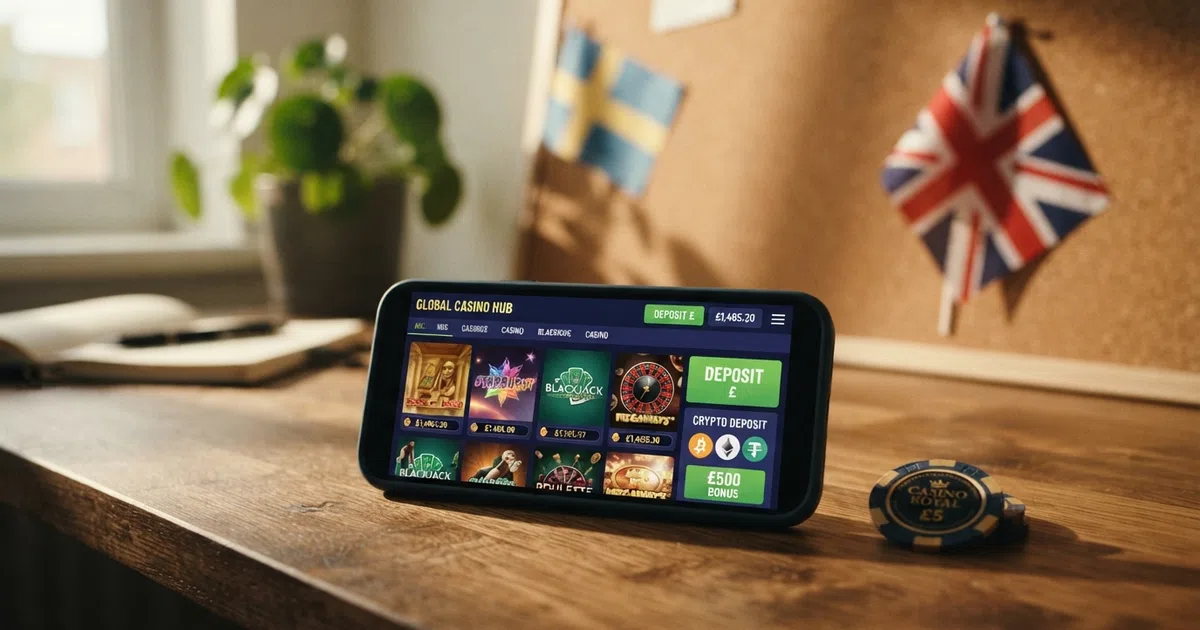
UK-facing readers should know what they are stepping into before depositing. There is no criminal liability on the player’s side. There is also no UK Gambling Commission cover, no GamStop block to lean on, no statutory dispute route if a withdrawal stalls, and no audit trail on the games themselves. The rest of the page walks the trade: what “casino without Swedish licence” means, what UK regulation actually costs a player, who the ten featured offshore brands are, what the bonuses do once you read the terms, and where a player in trouble can get help that the licence jurisdiction does not control.
Data current as of 9 September 2026, checked against the UK Gambling Commission’s published regulation, the Curaçao Gaming Control Board register, the Anjouan Gaming Board register, and the Spelinspektionen situation reports for 2024–2025.
What “Casino Without Swedish Licence” Actually Means — and Why UK Players Search for It
The keyword is borrowed from Swedish regulation, but the audience is British. Two regulators, two enforcement priorities, and one set of operators that quietly serve the readers of both pages. The first task is to set the Swedish frame in its proper place — as background, not as the subject — and then explain what UK players are actually choosing when they pick an offshore brand.
The Swedish Licence at a Glance — Spelinspektionen and What It Governs
The Swedish Gambling Act (2018:1138) came into force on 1 January 2019 and applies to gambling for money provided in Sweden. Spelinspektionen, the Swedish Gambling Authority, licenses operators, vets games, and enforces the rule that any gambling directed at the Swedish market without a Swedish licence is illegal, and that aiding and abetting such gambling is prohibited alongside it. The channelisation rate — the share of gambling spend that ends up at licensed Swedish operators — has slipped: it fell to 84% in 2025, below the 90% target for a third consecutive year, and online casino channelisation alone sat at 81%. Where unlicensed spend goes is well-mapped: in 2024, around 45% of traffic to unlicensed gambling sites in Sweden went to third-country-licensed brands, with Curaçao accounting for 38% and Anjouan for 5%.
None of that governs a UK player directly. It explains, though, where the page’s framing comes from and why the operator set below is the same set that shows up in any Swedish-facing guide to offshore brands.
Why a UK Player Types “Casino Without Swedish Licence” into a Search Engine
The real driver sits across the North Sea. The UK Gambling Commission has spent the last three years tightening the rules that govern its own licensees, and the tightening has been visible, public, and consequential. Online slots now carry a statutory maximum stake of £5 per game cycle for players aged 25 and over (in force 9 April 2026) and £2 for players aged 18 to 24 (in force 21 May 2026), imposed by SI 2025/215. Wagering requirements on bonuses were capped at 10x from 19 December 2025, with mixed-product promotional offers banned alongside the cap. Credit cards have been banned for gambling since 14 April 2020, and the ban reaches e-wallets funded by credit cards.
Each of those measures has pushed a slice of UK players — the high-stake slots player, the bonus hunter, the credit-card-funded casual — to look for operators outside the UK perimeter. The “casino without Swedish licence” search is a roundabout way of typing “casino outside the UKGC”, and the rest of this page is written for the reader who has already noticed that and is now asking what to make of it.
The Offshore Casino Landscape — Curaçao, Anjouan and the Brands That Serve UK Players
The operators that UK players actually use sit under two licences, mainly. Curaçao remains the dominant offshore jurisdiction for the brands featured on this page, and Anjouan is the second jurisdiction showing up in the UK-facing traffic that Spelinspektionen reports. A few operators carry an MGA seal (the Malta Gaming Authority, generally considered the stricter of the three), and none of the ten brands below holds a Gambling Commission licence. A Curaçao, Maltese or Gibraltar licence is not a substitute for a GB licence — the Gambling Commission has been clear on this since the 2014 point-of-consumption rule — so every featured operator here is, in the strict UK sense, unlicensed. The practical effect of that is the subject of the next section.
The Legal Reality: What You Give Up When You Play Outside the UK Licensed System
UK players do not face criminal liability for gambling at an offshore site. They do give up every layer of British consumer protection that the Gambling Commission has spent twenty years building, and the giving up is the actual cost of the choice. The following blocks walk what that means in practice: who the Commission actually goes after, why GamStop stops at the waterline, what the alternative licences do and do not require, and what the absence of an approved dispute resolution route looks like when a withdrawal is held.
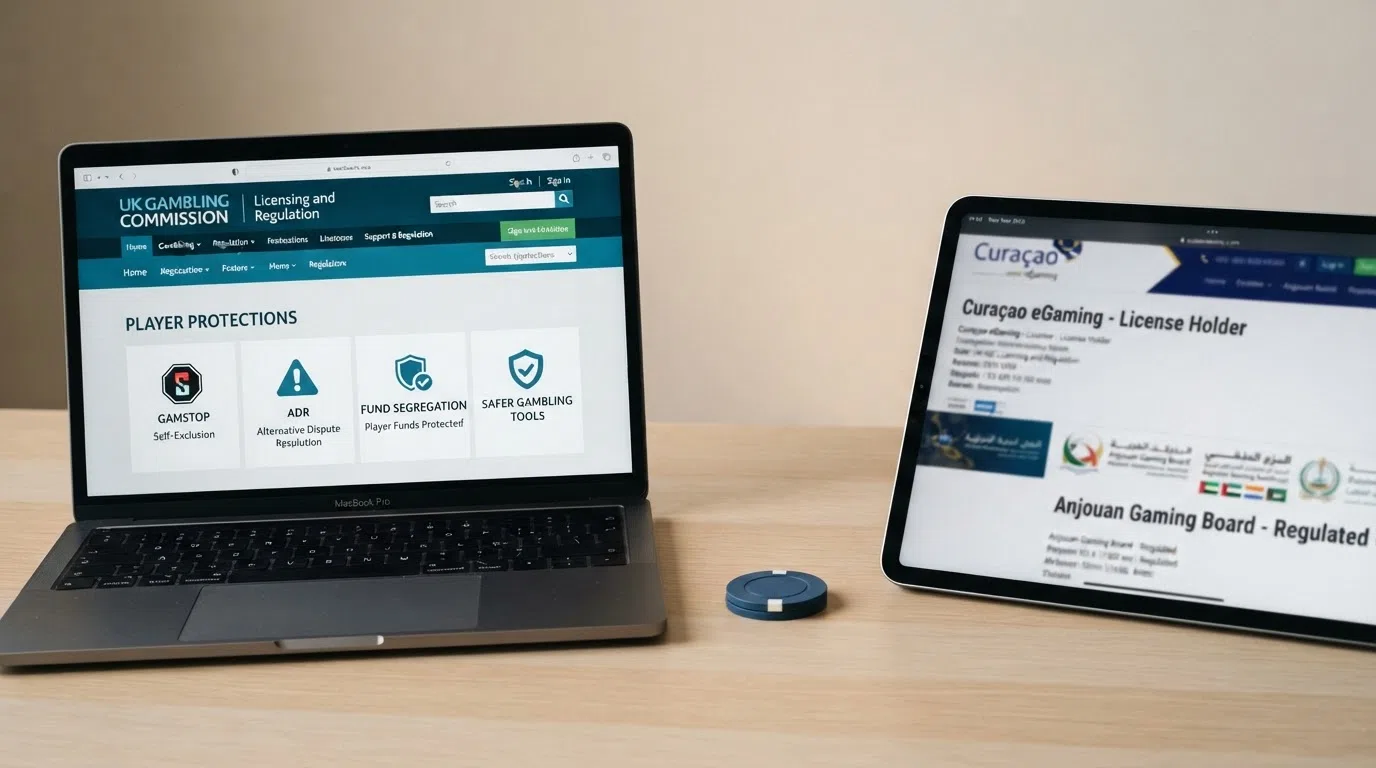
The UKGC Licensing Requirement — One Regulator, One System
A GB licence is compulsory for any operator serving GB customers, regardless of where that operator is based. The Gambling (Licensing and Advertising) Act 2014 closed the point-of-consumption loophole; an offshore operator taking a single pound from a player in Manchester is providing facilities for gambling in Great Britain and needs a Gambling Commission licence to do it. The Gambling Act 2005 sets three licensing objectives that the Commission holds licensees to: preventing gambling from being a source of crime or disorder, ensuring gambling is conducted in a fair and open way, and protecting children and other vulnerable persons from being harmed or exploited. Identity verification before any deposit, mandatory participation in GamStop, and ADR membership all sit downstream of those three objectives. None of those obligations reach an operator that has not taken a GB licence.
How the Gambling Commission Enforces the Line — Disruption, Not Prosecution of Players
The Commission’s enforcement runs at the operator, advertiser, and intermediary layer, not at the player. Section 33 of the Gambling Act 2005 makes unlicensed provision a criminal offence — up to 51 weeks’ imprisonment, a level-5 fine, or both — but the sanction lands on the operator. The Commission’s working toolkit is disruption: cease-and-desist notices, search-engine delisting referrals, domain registrar pressure, payment-provider referrals. The published numbers for April 2024 to June 2025 tell the story in volume: 3,140 disruption notices issued, 447,778 URLs referred to search engines, 287,961 URLs removed, and an average 32% fall in engagement across 160 disrupted sites. There is no established penalty for a UK player who merely gambles on an unlicensed site, and the Commission’s action record bears that out — every traced sanction aims at the supply side, not the demand.
Not on GamStop — What Skipping the UK Self-Exclusion Register Means
GamStop is the single strongest self-exclusion tool a UK player has, and it stops at the UKGC border. Since 31 March 2020, participation in GamStop has been a mandatory condition of every UKGC online operating licence, and the register covers GB-licensed sites only. An operator holding a Curaçao or Anjouan licence cannot be enrolled in GamStop, has no obligation to honour a GamStop self-exclusion, and the register cannot reach its servers. The practical consequence for a player who has self-excluded and then registered at an offshore brand is that the self-exclusion has no force there. That is the single most consequential gap between the two systems, and it is worth weighing on its own before any other consideration.
Offshore and Alternative Licences — Curaçao, MGA, Anjouan and What They Actually Provide
The four licence regimes that matter to a UK-facing reader do different amounts of work. The table below sets them side by side on the protections a UK player is most likely to lose or keep.
| Protection | UKGC (GB) | Curaçao (GCB) | MGA (Malta) | Anjouan |
|---|---|---|---|---|
| Identity verification before deposit | Required since 7 May 2019 | Not required | Required | Not required |
| GamStop self-exclusion | Mandatory, covers all licensees | Not required, not reachable | Operator-level only, not UK-linked | Not required, not reachable |
| Deposit limits | Prompt before first deposit (from 31 October 2026); gross deposit limit standardisation 30 September 2026 | Not required | Required | Not required |
| Statutory ADR route | Approved ADR provider required | None statutory | Required | None statutory |
| Audit trail on RTP / game outcomes | Required | Not required | Required | Not required |
| Auto-play ban | In force since 31 October 2021 | Not banned | Generally aligned | Not banned |
| Spin speed minimum | 2.5 seconds per game cycle | None | Generally aligned | None |
| Credit cards accepted | Banned (14 April 2020) | Accepted | Generally restricted | Accepted |
| Cryptocurrency accepted | None as of 2026 | Accepted | Limited | Accepted |
| Bonus wagering cap | 10x maximum (from 19 December 2025) | No cap (30x–50x common) | Operator-set, often lower | No cap (10x seen) |
| Slot stake cap | £5 (25+) / £2 (18–24) | None | None | None |
| Statutory levy / duty | 1.1% GGY levy + 40% RGD from 1 April 2026 | None | MGA fees | None |
The MGA column is the closest any offshore-style licence gets to UK-style obligations; even so, the dispute resolution route runs through Maltese-approved providers, not through a UK ADR body. The Curaçao and Anjouan columns are honest about what they do not require: anything an operator chooses to offer — deposit limits, self-exclusion, reality checks, time-out tools — is voluntary, and what is voluntary at one operator may not be voluntary at the next.
What a UK Player Gives Up — No UKGC Protection, No ADR, No Guaranteed Redress
The practical cost of the choice, item by item:
- No statutory dispute route. If an offshore operator refuses a withdrawal, the player has no UK ADR provider to escalate to. The dispute is contract law in whatever jurisdiction the operator is registered in, and pursuing it costs the player, not the operator.
- No FSCS cover on player funds. The Financial Services Compensation Scheme protects deposits at UK-regulated banks, not balances held in offshore operator accounts. If the operator becomes insolvent, the player is an unsecured creditor.
- No GamStop-linked block. A self-exclusion choice has no force at an offshore operator, and there is no cross-border mechanism to enforce one.
- No Commission complaints route. The UK Gambling Commission will not take a complaint from a player about an unlicensed operator; the operator is, from the Commission’s perspective, outside its jurisdiction.
- No audit trail on RTP or game outcomes. UKGC licensees submit to game testing and return-to-player audits; offshore operators can claim equivalent testing without it being independently verified.
- No automatic protection under the UK auto-play, spin-speed, or stake-cap regime. Offshore sites are not bound by any of these; the player sets their own limits, or does not.
- No recourse under UK consumer credit rules. If a credit card is charged in error, the player is dealing with a card issuer outside the UK Gambling Commission’s perimeter.
What the player keeps is the absence of a criminal record, the right to use cryptocurrency, the right to stake above the £2 or £5 cap, and the right to claim bonuses with wagering multiples the UK no longer permits. That is the trade in full.
The Offshore Operator Shortlist: 10 Casinos Serving UK Players Without a GB Licence
The ten operators below are the brands that recur most prominently across UK-facing searches for offshore casino options. Every one is licensed outside the UK — nine under the Curaçao Gaming Control Board and one under the Anjouan Gaming Board — and none holds a Gambling Commission licence. The ranking is informed by licence validity, bonus terms, breadth of game selection, the provider mix, and whether a no-deposit entry point exists.
| Operator | Licence (jurisdiction) | Welcome bonus | Wagering on bonus | Free spins included |
|---|---|---|---|---|
| MyStake | Curaçao (OGL/2024/1798/1048) | 150% + 100% + 50% up to £1,500 (3 deposits) | 30x | 30 no-deposit + deposit-linked |
| GoldenBet | Curaçao | 300% up to £1,500 (3 deposits) | 35x | 100 FS |
| FreshBet | Curaçao | 100% up to £500 (first deposit) | 30x | 25 no-deposit |
| Rolletto | Curaçao | 150% up to £500 + 200 FS first deposit; up to £5,500 (3 deposits) | 35x | 200 FS |
| DonBet | Curaçao (OGL/2024/250/0115, issued 1 July 2024) | 150% up to €750 + 50 FS | 30x | 50 FS |
| Rollino | Curaçao | 450% up to €6,000 (4 deposits) | — | 425 FS |
| Velobet | Curaçao | 150% up to £500 + 70 free spins (under £500); 100% up to £1,000 + 70 free spins (deposits £500+) | 30x (35x on FS winnings, £100 cap) | 70 FS |
| CosmoBet | Curaçao | 150% up to €500 + 50 FS (3 deposits) | — | 50 FS |
| Seven Casino | Anjouan | 450% up to €7,500 (4 deposits) | 10x | — |
| BassWin | Curaçao | 375% up to £500 + 300 FS | — | 300 FS |
Dashes mark what the published terms for that operator do not state explicitly. The wagering column reads honestly because the spread — 10x at one end, 35x at the other — is the single most useful number on the page; an operator that does not state its multiple is not offering a number a reader can use.
MyStake — 6,800+ Games and a No-Deposit Free Spin Entry Point
MyStake is the largest game library in the featured set. The Curaçao licence (OGL/2024/1798/1048) was issued in 2024, the operator launched in 2020, and the count of 6,800+ games across 96 providers includes the major studios a UK player would expect — Evolution Gaming for live tables, Pragmatic Play and Play’n GO for slots, Nolimit City and Hacksaw Gaming for the high-volatility end of the market. The welcome package is a 150% / 100% / 50% match across three deposits, capped at £1,500 in total, with 30 no-deposit free spins on sign-up and 30x wagering on the bonus amount over a 30-day validity window. Demo play is available without registration, which is itself a small departure from the UKGC norm of pre-deposit verification. Operated by Santeda International B.V. (later GTW B.V.), MyStake is the operator a UK player chooses when game selection matters more than anything else, and the no-deposit route makes it the lowest-friction entry on the list.
GoldenBet — The 300% Welcome Match That Turns Heads
GoldenBet’s headline is the 300% match up to £1,500 across three deposits, with 100 free spins included in the package. The 35x wagering on bonus funds is where the match earns its real cost: a £500 deposit cleared at 35x requires £17,500 of slot turnover before any of the bonus balance is withdrawable, and that work has to be done in the 30-day validity window. The minimum deposit is £20, the provider list covers Pragmatic Play, Evolution Gaming, Play’n GO and Hacksaw Gaming, and demo mode is available. GoldenBet shares the Santeda International B.V. ownership with most of the Curaçao entries on this list. The verdict: the percentage is the draw, the multiple is the catch, and a player picking GoldenBet is picking the percentage over a lower-multiple competitor.
FreshBet — No-Deposit Free Spins and a Straightforward 100% First-Deposit Match
FreshBet is one of only two operators in the set offering a genuine no-deposit registration bonus, and the 25 free spins on sign-up are the cleanest such offer in the featured group. The deposit side is a 100% match up to £500, with 30x wagering on bonus only and a £20 minimum deposit. The 4,800+ game count is the smallest of the Curaçao entries that disclose it, and the provider list — Pragmatic Play, Evolution Gaming, Play’n GO — is shorter than the leaders. Operated by Santeda International B.V. For a player seeking to test an offshore brand with a manageable multiple before committing a deposit, FreshBet offers a straightforward 100% match.
Rolletto — A £5,500 Welcome Package Across Three Deposits
Rolletto carries the largest aggregate welcome figure in the set, with the package totalling up to £5,500 across three deposits (150% on the first, 50% on the second, 25% on the third) and 200 free spins bundled into the first deposit. The 35x casino wagering matches GoldenBet’s, and the 30-day validity is the same. The sportsbook side carries a separate 6x wagering, which is light by industry standards but outside the scope of a casino-focused page. The 6,500+ game count sits second only to MyStake, and the provider list adds Nolimit City to the standard Curaçao roster. Demo mode is available. Operated by Santeda International B.V. The verdict: the package is the largest in the set and the multiple is on the high side; for a player planning to deposit across all three tranches, this offer presents the most value on game breadth.
DonBet — 7,000+ Slots and a Fresh Curaçao Licence from Mid-2024
DonBet holds the largest slot count in the featured group at 7,000+ games, and the licence is one of the most recent — OGL/2024/250/0115 was issued on 1 July 2024, well after the 2024 Curaçao regulatory overhaul. The welcome offer is a 150% match up to €750 plus 50 free spins, with 30x wagering and a £20 minimum deposit. Operated by Santeda International B.V. / GTW B.V., the provider list (Pragmatic Play, Evolution Gaming, Play’n GO) is the standard Curaçao trio. DonBet is a solid choice for those prioritising catalogue breadth and recent licensing, with bonus terms that sit comfortably in the middle of the current market.
Rollino — A 450% Four-Deposit Welcome Package With 425 Free Spins
Rollino is the second of two 450% match offers in the featured set, and the only one operated outside the Santeda group — the operator is Fortuna Games N.V. The headline is a 450% package up to €6,000 plus 425 free spins across four deposits, and the 5,000+ game count is mid-table. The published terms reviewed do not state a wagering multiple or validity window, which is the single most important number on any bonus page and the one Rollino leaves blank. A player depositing here is being asked to take the percentage on trust and read the live terms before committing. The verdict: the highest percentage in the set makes this a compelling prospect for those comfortable with a non-standard operator, provided they are prepared to verify the wagering terms directly with support.
Velobet — Tiered Welcome Bonus With a £100 Free-Spin Winnings Cap
Velobet runs a tiered welcome: 150% up to £500 plus 70 free spins for deposits under £500, or 100% up to £1,000 plus 70 free spins for deposits of £500 or more. The bonus wagering is 30x, but the free-spin winnings carry a separate 35x requirement with a £100 maximum cashout written into the terms. The minimum deposit is £20, the licence is Curaçao, and the operator is Santeda International B.V. The £100 free-spin cap is the distinctive feature here — generous spin counts elsewhere in the set are not always paired with a written cashout ceiling, and Velobet’s written ceiling is a more honest document than the alternatives. For players who value transparency, Velobet’s explicit cashout ceiling on free spins provides a clearer view of the actual bonus value than many of its competitors.
CosmoBet — A Three-Deposit 150% Package From the Santeda Stable
CosmoBet runs a 150% match up to €500 plus 50 free spins across three deposits under a Curaçao licence, with the Santeda International B.V. ownership and demo play available. The published terms do not state a wagering multiple or validity window, which is the same gap as Rollino — a reader is being asked to read the live terms before committing. The provider list is not separately disclosed in the reviewed sources, and the game count is not stated. The verdict: a mid-range offer from a familiar operator group with the wagering question left open, and a player who wants the multiple written down should not deposit here without checking first.
Seven Casino — The Anjouan-Licensed Outlier With a 10x Wagering Requirement
Seven Casino is the only Anjouan-licensed operator in the featured set, and the only one whose 10x wagering requirement matches the UKGC cap that took effect on 19 December 2025. The package is a 450% match up to €7,500 across four deposits (200% / 100% / 100% / 50%), which makes the percentage and the ceiling the largest in the set even though the multiple is the lowest. The operator, the full provider list, the game count, and demo mode availability are not confirmed in the sources reviewed for this page — a player should expect to verify those before depositing. The verdict: the lowest wagering in the featured group paired with a high-percentage multi-deposit offer, and the only operator here whose terms are honest about cost in a way that resembles a UK bonus — provided the reader accepts that Anjouan’s framework is lighter than Curaçao’s and that the game catalogue behind the offer has not been independently verified here.
BassWin — 375% Welcome Bonus and 300 Free Spins From a Newer Operator
BassWin is the most recent operator in the set, having launched in 2023 under a Curaçao licence held by Cerberlot N.V. The welcome offer is a 375% match up to £500 plus 300 free spins, the 2,500+ game count is the smallest of the Curaçao entries that disclose one, and the 90+ provider list is the broadest in the set for the size. The minimum deposit is £10 — the lowest in the featured group. The published terms do not state a wagering multiple or validity window, and demo mode is not confirmed in the sources reviewed. The verdict: a high-percentage offer from the newest operator, on the lowest deposit floor in the set, with the wagering and catalogue questions a reader should answer before depositing £10.
Why Offshore Bonuses Look Bigger — and What the Terms Actually Cost You
The percentages above are larger than anything a UKGC-licensed casino can offer from 19 December 2025 onward, and the multiples are higher than anything a UKGC site is allowed to demand. The two facts are linked: the headline is what an operator can pay for, and the wagering is what it costs the player. The blocks below walk the four bonus shapes that recur in the featured set and lay out the arithmetic, in pounds, of what a representative offer actually costs to clear.

To take one offer as an example: FreshBet’s 100% match up to £500 carries 30x wagering on the bonus amount, which means a player claiming the full £500 bonus must turn over £15,000 in slot bets before the bonus balance becomes withdrawable. At an illustrative stake of £1 per spin and a 5-second interval between spins, that is 15,000 individual bets taking 75,000 seconds, or just over 20.8 hours of continuous slot play. The bonus is not free money; it is paid for in volume, and the volume is what the percentage is actually buying. The expected loss from the wagering requirement alone is the £15,000 turnover multiplied by (1 − RTP). At a slot RTP of 96%, that gives a £600 expected loss on the bonus clearing, before any of the £500 bonus has been won back. The house edge is the same on every spin; the bonus just made the player commit to 15,000 of them.
No-Deposit Offers — Free Spins With Zero Upfront Cash, and Their Real Limits
Two operators in the set offer a genuine no-deposit route. MyStake gives 30 free spins on sign-up; FreshBet gives 25. The no-deposit offer is the lowest-barrier entry to an offshore casino, and the cashout caps and wagering multiples shrink its actual value dramatically. Across the wider no-deposit market the typical terms sit at 30x to 70x wagering on spin winnings, maximum cashout caps of £50 to £200, and spin values of £0.10 to £0.20. Worked through: a £5 win from 25 free spins at £0.20 each, wagered 50x, requires £250 of further play before withdrawal, and the eventual cashout is capped at whatever the operator’s ceiling is — often £100, sometimes less. A player who sees a no-deposit offer as a way to win real money is reading the wrong clause. The honest framing is that it is a free test of the casino’s cashier and game-loading speed, and the £5 win is a sample, not a salary.
Welcome Bonuses and Deposit Matches — The Headline Numbers vs the Fine Print
The range of welcome structures across the set runs from 100% (FreshBet) to 450% (Rollino, Seven Casino), with most operators sitting between 150% and 300%. A higher percentage at the same multiple does more arithmetic work for the player: a £500 deposit at 100% matched at 30x needs £15,000 of turnover to clear a £500 bonus; the same £500 deposit at 300% matched at 35x needs £52,500 of turnover to clear a £1,500 bonus. The percentage is what the offer pays; the multiple is what the offer costs. Validity windows run 30 days where stated; Rolletto, DonBet and GoldenBet all use the 30-day figure, and Rollino, CosmoBet, Velobet, Seven Casino and BassWin do not state a window in the sources reviewed. Game contribution weightings follow the standard pattern: slots usually count 100% toward wagering, table games often count 10% to 20%, and live dealer games are frequently excluded entirely. A player who plans to clear a bonus at the blackjack table is, in most cases, reading the wrong column.
Free Spins as a Standalone Offer — What “100 Free Spins” Actually Delivers
Free spins are the most common bonus component in the set, and the count varies by an order of magnitude: 25 at FreshBet, 50 at DonBet and CosmoBet, 70 at Velobet, 100 at GoldenBet, 200 at Rolletto, 300 at BassWin, 425 at Rollino. The number is the headline, but the value is set by four other numbers: spin denomination, game eligibility, the wagering requirement on winnings, and the maximum cashout cap. The £0.10 to £0.20 typical spin value means a 100-spin offer is worth £10 to £20 in nominal bets before any multiplier is applied. If the wagering on winnings is 35x and the cashout is capped at £100, the realistic upper-bound value of those 100 spins is £100 minus the expected loss on the clearing volume, which at a 96% RTP is £4 — and that is on a best-case spin pattern, with the 100 spins taking 8 minutes to complete. Velobet’s published terms make the cap explicit: 35x wagering with a £100 maximum cashout on free-spin winnings, written into the bonus page rather than buried in a footer.
How Offshore Wagering Terms Compare to the UKGC’s 10x Cap
The UKGC’s 19 December 2025 cap on wagering requirements at 10x, paired with the ban on mixed-product promotional offers, is the single biggest structural change to UK bonuses in years. The featured offshore operators sit between 10x (Seven Casino, matching the UKGC) and 35x (GoldenBet, Rolletto), with the bulk of the set at 30x. The arithmetic makes the gap concrete: a £100 bonus at 10x requires £1,000 of turnover; the same £100 bonus at 35x requires £3,500. At a 96% RTP, the expected loss on clearing is £40 at 10x and £140 at 35x. The bonus is the same size, and the player pays a £100 premium in expected loss for the higher multiple. The operators where wagering is not stated — Rollino, CosmoBet, BassWin — are operators where the player cannot run that calculation from the public terms. That silence is the cost of the headline.
Getting Money In and Out: How Offshore Casino Payments Really Work
The payment side of the offshore-versus-UKGC divide is the cleanest contrast on the page. Offshore sites accept methods the UKGC has banned — credit cards and cryptocurrency — and they typically impose lighter verification at deposit, but the same light touch can slow withdrawals at cashout when an operator decides to verify late. The blocks below walk the three payment shapes a UK player is most likely to encounter and explain what is and is not regulated on each.
Crypto at Offshore Casinos — Bitcoin, Ethereum and Stablecoins
Cryptocurrency is the defining payment difference between the two markets. No UKGC-licensed casino accepts cryptocurrency as a deposit or withdrawal method as of 2026, and the UKGC’s position has been consistent: digital assets sit outside the regulator’s permission set. The Commission opened an exploratory review of a potential crypto pathway at the Betting and Gaming Council’s AGM in February 2026, which is the first formal step in that direction but not a route any UKGC site is offering today. Offshore operators, by contrast, accept Bitcoin, Ethereum and USDT as standard, with settlement times that routinely outpace bank transfer. The trade for a UK player is speed and privacy on the way in, against the absence of any UK-regulated route to recover funds if the cashier does not pay out — once a withdrawal leaves the casino’s wallet, the player has no statutory dispute resolution body to escalate to.
Credit Cards, E-Wallets and Bank Transfer — Payment Methods UKGC Sites Cannot Offer
The UK credit card ban has been in force since 14 April 2020 under LCCP licence condition 6.1.2, and it extends beyond card-present transactions to credit-card-funded payments routed through Skrill, Neteller or PayPal. An e-wallet deposit at a UKGC site will be blocked if the underlying funding source is a credit card; the operator checks the funding path before the deposit lands. Offshore sites typically accept credit cards directly and are not subject to the e-wallet funding rule, which is one of the practical reasons a UK player might end up at an offshore cashier in the first place. Bank transfer remains the slowest route at either end of the market, but it is the most universal and the one most likely to leave a paper trail a UK player can use in a later dispute.
Deposit Speed and Withdrawal Timelines Without UKGC Verification Hurdles
Since 7 May 2019, GB licensees have been required to verify a customer’s name, address and date of birth before any deposit or any gambling. Offshore operators often skip this step at deposit and run verification at withdrawal instead, which speeds up the time from registration to first spin but introduces a different kind of friction: a player can deposit, play, request a withdrawal, and then be asked for the documentation the operator could have asked for at the start. A withdrawal that triggers late verification stalls the cashier, and a UK player has no statutory dispute route if the operator refuses to pay. The cleaner offshore operators verify at the same point the UKGC requires; the less clean ones move the step to the moment it costs the player the most.
Safer Gambling Without the UK Safety Net — What Is Left and Where to Get Help
The UK safer-gambling infrastructure is among the most developed in the world, and playing offshore removes most of it. The tools that do remain are uneven across operators and are strongest at the MGA-licensed end of the market, which is not the end of the market a UK-facing reader is most likely to land on. The blocks below lay out what is lost, what is left, and where a UK player in trouble can get help regardless of which jurisdiction the casino is licensed in.
The Protections You Leave Behind — GamStop, Deposit Limits and ADR
GamStop is the headline loss, and it is the one the rest of the page returns to: a self-exclusion choice has no force at an offshore operator, and the register cannot reach a Curaçao- or Anjouan-licensed brand. The mandatory deposit-limit prompt before first deposit, in force from 31 October 2025, does not reach offshore sites either; neither does the gross deposit limit standardisation taking effect on 30 September 2026, nor the approved ADR provider requirement that gives UK players a free route to dispute resolution, nor the statutory levy (1.1% of GGY for remote casino from 6 April 2025) that funds treatment, prevention and research. The 40% Remote Gaming Duty from 1 April 2026 is an operator-side tax, not a player-side one, but it is the structural reason UKGC bonuses look smaller — the operator is paying more in duty per pound staked than any offshore competitor pays. None of that structure follows a UK player across the UKGC border.
What Remains — Safer-Gambling Tools Still Available at Reputable Offshore Casinos
MGA-licensed operators are required to offer deposit limits and self-exclusion options; Curaçao-licensed platforms are not required to do so. That is the single most useful distinction to draw when looking at any offshore casino’s safer-gambling page. A Curaçao-licensed brand may still offer deposit limits, session timers, reality checks and time-out tools — several of the operators in the featured set do — but the offering is voluntary, and what one Curaçao brand provides the next may not. The ten operators on this page are Curaçao-licensed (with one Anjouan outlier), which puts them on the lighter-regulation side of that divide. A UK player who plans to use an offshore brand long-term should look for deposit limits, session reminders, self-exclusion options, and reality checks before depositing, and should treat their absence as a signal rather than a minor detail.
Where to Get Help — GamCare, GambleAware and Support That Works Regardless of Licence
The help services a UK player can reach do not ask which licence jurisdiction the casino is registered in, and the help line is the same whether the casino is Curaçao-licensed, MGA-licensed, or UKGC-licensed. The list below covers the main routes:
- GamCare National Gambling Helpline: 0808 8020 133, available 24/7, free and confidential advice and support for anyone affected by problem gambling in the UK.
- GambleAware: tools, self-assessment questionnaires, and a treatment service finder at gambleaware.org for UK residents.
- NHS gambling harm clinics: specialist NHS treatment for gambling harm, available in England, Scotland and Wales via referral from a GP or directly through the clinic websites.
- Gamblers Anonymous: peer-support meetings running across the UK, modelled on the twelve-step programme.
- MyGamCare: a personalised self-help app for mood tracking, goal setting, and tracking gambling-related urges.
- SENSE: the self-exclusion scheme for land-based UK casinos, run separately from GamStop and covering physical premises rather than online operators.
The single most important number on this list is the GamCare helpline. The rest of the support infrastructure is in place regardless of which offshore brand a player is registered at, and reaching out to it is the move that the casino’s licence jurisdiction cannot help or hinder.
How We Evaluated These Operators
The ranking above draws on casino.guru, pamtree.com, the operator sites themselves, the Gambling Commission’s public register, the Curaçao Gaming Control Board’s published licence register, ICLG’s regulatory reports, and Spelinspektionen’s situation reports for 2024 and 2025. Each featured operator was checked against the Gambling Commission’s public register to confirm it does not hold a GB operating licence. The Curaçao licence numbers (OGL/2024/1798/1048 for MyStake, OGL/2024/250/0115 for DonBet) were verified against the Curaçao Gaming Control Board register; Seven Casino’s Anjouan licence was checked against the Anjouan Gaming Board’s published list. Where a published licence number was not visible in the reviewed sources, the operator has been entered in the comparison table by jurisdiction only.
The ranking criteria, in order of weight: licence validity and jurisdiction (a verifiable, current licence above a soft or unverifiable one); bonus terms (wagering multiple, validity window, max cashout — a written 30x above an unwritten multiple); game selection breadth and provider quality (a 6,800-game library above a 2,500-game one, with the standard Curaçao provider trio as a baseline); and the presence or absence of a no-deposit entry point (a genuine no-deposit offer above a deposit-only welcome). Where two operators tied on those criteria, launch date and ownership stability were used as tiebreakers — older operators with continuous operation ranking above newer entrants.
The methodology has one limit worth naming. The published terms reviewed for this page are the terms visible in the sources cited. An operator can change its terms between review and a reader’s visit, and several operators on the list do not state every relevant number in publicly indexed sources. Where a number is missing, the table above shows a dash rather than a guess, and the operator write-up names what is and is not stated.
What a UK Player Should Check Before Depositing at Any Offshore Casino
The page has walked the trade, and the decision sits with the reader. The list below is the set of checks that turn the trade into a choice a reader can stand behind.
First, the legal position. A UK resident faces no criminal liability for gambling at an offshore site; the Gambling Commission’s enforcement record bears that out, and the absence of a player-side penalty is well established. That is the only piece of the trade that does not need a cost-benefit calculation. Everything else does.
Second, the protection gap. The list in the section on what a UK player gives up is the single largest cost: no statutory dispute route, no FSCS cover, no GamStop-linked block, no Commission complaints route, no audit trail on RTP. A player who is comfortable giving all of that up is making a different decision from a player who is giving it up because the alternative feels worse, and only the first of those two is a settled choice. The check is honest self-assessment: read the list, and decide which of those seven items a player would actually miss.
Third, the bonus math. The arithmetic in the section on wagering terms is the one that turns a marketing headline into a pound figure. A 300% match at 35x wagering on a £500 deposit requires £52,500 of slot turnover to clear, which is roughly 146 hours of continuous play at £1 per spin, with an expected loss of around £2,100 on the clearing alone. A 100% match at 30x on the same £500 deposit requires £15,000 of turnover and an expected loss of £600. The bonus sizes are different (£1,500 versus £500), but the gap in cost is wider than the gap in size, and the player who runs the arithmetic before clicking “claim” is the one who knows what the offer is worth.
Fourth, the safer-gambling setup. The safer-gambling page on any offshore casino should be visited before the cashier, and the check is what is offered: deposit limits, session timers, reality checks, self-exclusion. A casino that does not offer those voluntarily is signalling what it considers optional, and the absence of a GamStop-linked block makes the in-casino tools the only self-exclusion route a UK player has. A player who plans to set a deposit limit and stick to it should set it at the casino before the first deposit, not after the first withdrawal request.
Fifth, the practical pre-deposit checks. Verify the licence on the regulator’s own register — the Curaçao Gaming Control Board and the Anjouan Gaming Board both publish licence holder lists. Read the bonus terms in full before clicking claim, including the wagering multiple, the validity window, the game contribution weighting, and any max cashout clause on free-spin winnings. Read the withdrawal terms in full before depositing, including the verification steps, the processing time, and the withdrawal ceiling. Save the GamCare number — 0808 8020 133 — in the phone before the first deposit, not after the first session. None of those checks take more than ten minutes, and they convert an offshore casino from a leap of faith into a documented decision.
The page is written for the reader who has already decided to look offshore. It does not argue against that decision and it does not argue for it. What it does is walk what the decision costs, what it buys, and what the reader should have lined up before paying for either.
Frequently Asked Questions
Is it legal for UK players to gamble at casinos without a Swedish licence?
There is no established penalty for a UK player who merely gambles at an offshore casino, and the Gambling Commission’s enforcement record bears that out — every sanction the Commission has published is aimed at operators, advertisers and intermediaries, not at players. The Swedish licence is a separate regime that does not directly govern a UK player; what governs a UK player is the UK Gambling Commission’s point-of-consumption licensing requirement, which is the operator’s obligation, not the player’s. The legal exposure is on the supply side.
Do UK players pay tax on winnings from offshore casinos?
No. UK players pay no tax on gambling winnings of any kind, whether the operator is UKGC-licensed, Curaçao-licensed, MGA-licensed, or Anjouan-licensed. Player-side betting duty was abolished in 2001 and the burden moved wholly to operators; the current Remote Gaming Duty of 40% from 1 April 2026 is an operator-side tax. A UK player who withdraws a five-figure sum from an offshore brand keeps the full amount, with no further tax owed to HMRC on the win.
What is the difference between UKGC-licensed and Curaçao-licensed casinos?
A UKGC-licensed casino operates under a Gambling Commission GB licence, which requires identity verification before deposit, participation in GamStop, an approved ADR provider, fund segregation, and compliance with the UK’s stake caps, wagering cap, credit card ban and auto-play ban. A Curaçao-licensed casino operates under the Curaçao Gaming Control Board framework, which sets lighter requirements and does not require GamStop, deposit limits, self-exclusion tools, or any of the UKGC’s product rules. The difference a UK player feels most is in the safer-gambling tools and the dispute resolution route: at a Curaçao brand, neither is guaranteed, and the player has no UK statutory fallback.
How do welcome bonuses at non-GamStop casinos compare to UKGC sites?
The headline percentage is higher at non-GamStop casinos — 300% to 450% is common in the featured set, against a 100% to 200% typical at UKGC sites — and the wagering multiple is also higher, at 30x to 35x against the UKGC’s 10x cap from 19 December 2025. The arithmetic of the two together is the trade: a larger bonus at a higher multiple, where the cost of clearing is set by the multiple and not the percentage. Mixed-product promotional offers are banned at UKGC sites, which is the second structural change in the UK bonus market; non-GamStop casinos can still bundle sportsbook and casino bonus funds.
Are crypto deposits accepted at UKGC-licensed casinos?
No. No UKGC-licensed casino accepts cryptocurrency as a deposit or withdrawal method as of 2026. The UKGC opened an exploratory review of a potential crypto pathway at the Betting and Gaming Council’s AGM in February 2026, which is the first formal step in that direction but not a live product. All of the offshore operators on this page accept cryptocurrency — Bitcoin, Ethereum and USDT are the standard list — and crypto is one of the practical reasons a UK player ends up at an offshore cashier in the first place.
Licence – topratedonlinecasinos-uk
Content created by the «topratedonlinecasinos-uk» team