
The honest guide to UK casino VIP programmes in 2026
 Available in GB
Current as of 9 September 2026 and verified against the UK Gambling Commission public register.

The word “VIP” at a UK online casino no longer means what it used to. A decade ago, a player could climb a public loyalty ladder — Bronze to Silver to Gold to Platinum — earning comp points on every wager and watching a status bar inch upward. That model is finished in Britain. Since the UK Gambling Commission’s post-2020 crackdown on high-value customer schemes, no major UK-licensed operator runs a public earn-your-way-up VIP programme anymore. Real VIP at a UK casino is now a relationship, not a ladder. The threshold is high, the access is by invitation, and the regulatory obligations on the operator are heavy. LCCP Social Responsibility Code 5.1.1 makes that explicit: when a licensee designates a customer as “high value”, “VIP” or any equivalent label, the scheme must be operated in a manner consistent with the licensing objectives — preventing crime, ensuring fairness, and protecting vulnerable people.
That distinction — between a marketing-friendly loyalty programme anyone can join and a regulated VIP relationship an operator grants at its discretion — is the single most important thing a UK player needs to understand before chasing tier status. Most of what gets marketed as “VIP” in the UK is actually mid-tier loyalty, the kind of structured points scheme anyone depositing can access. The genuinely restricted tier, the one with a named account manager, personalised bonus terms and dedicated withdrawal handling, sits behind a turnover gate that most players will never cross.
What a UK Casino VIP Programme Actually Is
A VIP programme at a UKGC-licensed casino is an operator-designated status, not a loyalty card and not a tier you reach by collecting points. The distinction matters because the legal obligations that attach to the two are different. Standard loyalty schemes, where every depositing customer earns comp points from their first wager, are product features. A VIP designation, by contrast, puts the operator under enhanced due-diligence and affordability obligations, with senior management sign-off required for certain offers and interventions triggered when spending patterns suggest harm.
In practice, this means the visible top of a UK VIP programme — the named host, the tailored offers, the instant withdrawals — is preceded by an internal assessment the player never sees. Operators monitor monthly turnover, deposit frequency, game choice and session length. When those metrics cross internal thresholds — typically somewhere between £5,000 and £10,000 in monthly turnover, though the figure is not published — a flag goes to the VIP team. Someone from that team reaches out. The player’s account is reviewed for affordability, source of funds, and any responsible-gambling history. If everything checks out, the player receives an invitation. If anything does not, the operator has a positive obligation not to extend VIP treatment to someone whose financial circumstances do not support that level of play.
This is why UK VIP programmes look so different from their offshore counterparts. Offshore crypto casinos routinely advertise multi-tier rakeback, anonymous VIP managers and instant crypto withdrawals to anyone willing to deposit. None of those operators falls under LCCP 5.1.1, and none of them performs the checks the UKGC requires. The trade-off is real: a UK player gives up anonymity and the headline rakeback rate, and in exchange receives consumer protection, dispute resolution, GAMSTOP coverage and fund segregation. Both choices have consequences; the rest of this page lays them out.
High Roller, VIP, Premium Player — What These Labels Mean in Britain
Three terms get used interchangeably in casino marketing, and they should not be. A high roller describes a betting behaviour — someone who wagers large amounts per spin, hand or session. A VIP is a formal operator designation with regulatory consequences. A “premium player” is a softer marketing term that some operators apply to mid-tier loyalty members who do not meet the threshold for true VIP status.
The regulatory gulf between these labels is large. A high roller wagering £500 a hand on live blackjack is not automatically a VIP. They are a customer whose play the operator monitors; the operator may or may not extend VIP treatment, depending on affordability, tenure, and the operator’s own commercial judgement. Conversely, a player who has been with an operator for years, deposits moderately but regularly, and has been flagged by the responsible-gambling team for a period of concern will not receive a VIP invitation, because the regulatory framework does not permit extending enhanced benefits to someone whose circumstances have triggered concern.
The thresholds are also different from what a player might assume. The UK’s light-touch financial vulnerability check kicks in at £150 in net deposits over a rolling 30-day period — a deliberately low bar designed to catch struggling players early. The VIP threshold, by contrast, sits an order of magnitude higher, in the £5,000 to £10,000 monthly turnover range. The first figure is a safety net; the second is a commercial trigger. A player who crosses the first but not the second is being protected; a player who crosses the second will likely be invited into a closer commercial relationship. The distinction matters because it shows that the UK system is built to identify harm at low spend and reward volume at high spend — and to handle those two identifications through entirely different processes.
How UK VIP Programmes Actually Work — Tiers, Perks and the Catch
Once a player is inside a UK VIP programme, the experience varies enormously by operator. Some run clearly published multi-tier structures with named cashback percentages at each level. Others operate informal loyalty with no published tiers at all, leaving the player to discover what they qualify for through an account manager. The unifying feature is that every benefit above the welcome offer is now constrained by a hard regulatory framework — the 10× wagering cap on bonuses, the mandatory affordability checks, the GAMSTOP opt-out, the £5 slot stake ceiling — and that framework applies to VIP players in exactly the same way it applies to everyone else. The perks change; the rules do not.
The Tier System — From Bronze to Invite-Only Black Card
UK VIP tiers are not standardised. Every operator builds its own ladder, names it differently, and decides what each rung pays. The broad pattern is a four- to five-tier structure running from an entry-level “Bronze” or equivalent up to a top tier that is almost always invitation-only, never earned purely through points accumulation.
Grosvenor Casinos runs one of the clearest published structures with its Play Points programme: four tiers starting at Bronze, with Silver requiring 1,000+ points, Gold requiring 5,000+, and the top tier being an invite-only Black Card. The Black Card is not something a player can grind toward; it is offered at the operator’s discretion. 888 Casino runs a five-tier structure with cashback at each level: Bronze pays 5% cashback, Silver 7% plus free spins, Gold and above 10% plus VIP perks including personalised hosts and weekly rebates up to 10%. The published specificity is unusual in the UK market and gives 888 a credibility edge with players who want to know what they are working toward.
Most other operators on this list are less transparent. Betway, Ladbrokes and Coral run tiered loyalty programmes whose specific thresholds and benefits are not published in detail. Virgin Games runs a V-Points system with no public tier ladder at all, but maintains an invite-only VIP tier above it for relationship-managed customers. The practical lesson is that the visible tier structure is not always the whole story; the more interesting benefits at most UK operators sit above whatever the published ladder shows.
How You Join — Qualification, Invites and the Numbers That Matter
You cannot sign up for a UK VIP programme. The post-2020 model is that the operator identifies you, not the other way around. The internal threshold sits in the £5,000 to £10,000 monthly turnover range, and crossing it does not guarantee an invitation. It puts the account on the VIP team’s radar. From there, an operator considers tenure, deposit pattern, game mix, responsible-gambling history, and affordability documentation. A player who clears the turnover bar but is also flagged for erratic deposits, late-night play, or chasing losses is not going to be invited into a closer relationship. The regulatory framework forbids it.
For most UK players, this means the practical path to VIP runs through consistent, moderate-to-high play over months rather than a single big deposit. Operators are looking for a pattern, not a moment. That pattern also has to be one the operator can document and defend in an affordability review. A player whose deposits spike after a salary payment is a different case from one whose deposits climb steadily across a quarter. Both clear the turnover bar; only one looks like a sustainable commercial relationship.
The invite-only nature of UK VIP is a direct consequence of LCCP 5.1.1. Public earn-your-way-up programmes created a regulatory problem: operators were effectively marketing VIP status to anyone with the bankroll to grind toward it, including players who could not afford the resulting spend. The Commission’s response was to make VIP designation an operator judgement, not a player achievement, and to hold the operator accountable for that judgement.
Loyalty Points, Comps and Rewards — What You Earn and How to Spend It
Every UK online casino runs some form of points or comps system, but the earning rates and redemption mechanics differ sharply. The benchmark at the non-VIP end is bet365, where casino players earn one comp point for every £10 wagered and convert at 100 points to £1, with no tiers and no cashback. The flat rate tells you what a baseline loyalty scheme looks like: a thin, mechanical accrual that exists more for accounting reasons than for player benefit. It is also why bet365, despite being the UK’s largest online operator by market share, has no published casino VIP programme and was deliberately excluded from this ranking.
At the other end, Virgin Games runs a V-Points model that is the only UK loyalty currency with a crossover into a real-world travel programme. V-Points earn at 1 per £5 won on bingo and 1 per £20 on other games, convert at 100 V-Points to £1, and can be transferred into Virgin Atlantic Flying Club miles. The conversion rate is poor on a per-pound basis, but for a Virgin Atlantic customer the value is real in a way a generic bonus never is. It is also the only UK loyalty scheme that gives the player something outside the casino ecosystem.
The practical lesson on loyalty points is to read the earning rate carefully and to check whether the points convert to withdrawable cash, bonus credit with wagering attached, or merchandise. Cash conversion at 100 points per £1 is the most useful. Bonus conversion that requires further wagering is the least. And points that expire after a period of inactivity — which most do — are worth less than they look on day one.
Cashback, Reloads and Exclusive Perks — The Benefits That Matter
Cashback is the most valuable ongoing VIP benefit available in the UK, and the 10× wagering cap that took effect in January 2026 has made it more important than it used to be. A welcome bonus is a one-off; cashback compounds weekly. 888 Casino publishes cashback rates from 5% at Bronze through 10% at Gold and above, paid weekly. Betfred runs a Bonus Back promo that pays 5% on weekly bingo stakes over £5, capped at £25. Both figures are modest, but they are recurring, they apply to the player’s net position rather than to a single deposit, and they sit outside the 10× wagering cap on bonuses — cashback is treated as a rebate, not a bonus, and is not subject to the same turnover requirement.
Reload bonuses, free spins on subsequent deposits, and exclusive tournament access are the second tier of VIP benefits. Wager-free free spins have become the most player-friendly version: Betfred offers 200 wager-free spins on a £10 stake, and Paddy Power offers 50 wager-free spins, both at 0× wagering. A wager-free spin is what its name says — the winnings are withdrawable cash, not bonus credit. After the 10× cap, the relative value of wager-free promotions has risen sharply, because every conventional bonus now requires turnover that cuts into any edge the player might have had.
Seasonal gifts and event invitations are the perks operators use to make VIP feel personal, and they are the hardest to value on a spreadsheet. A hospitality package at a Premier League match has a real market value but is not cash. A “birthday bonus” is a number, but its size depends on tier. The honest assessment is that these perks are real but variable, and a player considering a VIP programme should weight the published cashback and withdrawal benefits more heavily than the experiential ones, because the latter depend on what the operator chooses to offer in a given year.
Account Managers, Priority Support and the Payment Edge
The two benefits VIP players notice in everyday play are the human contact and the faster money. A dedicated account manager — sometimes called a VIP host — gives the player a single point of contact for tailored offers, bonus negotiations, and problem resolution. Standard players deal with a rotating queue of customer-service agents. VIP players deal with someone who knows their account. The difference is not just convenience; it is leverage. A player with a relationship can sometimes negotiate a bonus term or a withdrawal limit that an anonymous customer cannot.
Faster withdrawals are the more measurable benefit. Betway publishes a VIP withdrawal time of approximately one hour via PayPal, against a standard processing window of several hours to a day at most UK operators. Higher withdrawal ceilings — typically negotiated individually rather than published — and higher deposit limits are standard at VIP level. Betway’s published £10,000 maximum live blackjack bet is the most concrete example of a VIP-scale table limit at any UK operator in this ranking.
The practical value of these payment privileges depends on the player’s play volume. For a player withdrawing a few hundred pounds a week, the difference between a one-hour and a 24-hour payout is convenience. For a player moving five figures, it is material. The point is that VIP payment benefits are not abstract; they are felt every time the player cashes out.
Best VIP Casino Programmes UK: 2026 Comparison
| Operator | UKGC Licence Status | VIP Programme | Wagering on Offers | Core VIP Perk |
|---|---|---|---|---|
| Grosvenor Casinos | Active (UKGC public register, 29 Jul 2026) | Play Points — 4 tiers, invite-only Black Card | 10× | 52 UK venue integration |
| 888 Casino | Active (UKGC public register, 29 Jul 2026) | Five tiers: Bronze 5% / Silver 7% / Gold+ 10% cashback | 10× | Personalised hosts at Gold+ |
| Virgin Games | Active (UKGC public register, 29 Jul 2026) | V-Points + invite-only VIP; Flying Club miles conversion | 10× | Airline miles conversion |
| Betway | Active (UKGC public register, 29 Jul 2026) | Tiered loyalty; VIP withdrawal ~1 hr PayPal | 10× | £10,000 max live blackjack bet |
| Ladbrokes | Active (UKGC public register, 29 Jul 2026) | Entain Rewards (shared with Coral) | 10× | Shared Entain loyalty backbone |
| Coral | Active (UKGC public register, 29 Jul 2026) | Entain Rewards; Connect Club; Bet & Get Club | 10× | Sports-casino crossover |
| Betfred | Active (UKGC public register, 29 Jul 2026) | Informal loyalty; Bonus Back 5% weekly | 0× on free spins | 200 wager-free spins |
| Sky Vegas | Active (UKGC public register, 29 Jul 2026) | Sky Bet Club — weekly free bet mechanic | 10× | Simple weekly reward |
| Paddy Power | Active (UKGC public register, 29 Jul 2026) | No formal casino VIP; Paddy’s Bingo Club (bingo only) | 0× on free spins | 50 wager-free spins |
| Betfair | Active (UKGC public register, 29 Jul 2026) | Informal loyalty; no published VIP tiers | 10× | Exchange product crossover |
All ten operators above are confirmed Active on the UK Gambling Commission public register as of 29 July 2026. The ranking is by the substance and clarity of each programme’s VIP offering, not by market share. bet365, the UK’s largest online operator, is deliberately excluded because it has no casino VIP programme at all.

Grosvenor Casinos — Play Points and the UK’s Only Venue-Linked VIP
Grosvenor runs the only UK VIP programme that spans online play and a national estate of 52 land-based casinos, and that integration is genuinely distinctive. The Play Points scheme has four published tiers — Bronze, Silver at 1,000+ points, Gold at 5,000+ points, and an invite-only Black Card at the top. Points accrue across both channels, so a player who plays online and visits a venue can move through the tiers faster than a single-channel player.
The welcome offer is a 200% match up to £40 on a first deposit of £20, with 100 free spins on Big Bass Splash (RTP 96.71%, Pragmatic Play). The 10× wagering requirement is standard post-cap, and the 30-day validity is the most generous window in this ranking — most operators offer seven days. The headline number is small, but the venue integration is what separates Grosvenor from the rest. A player who values being able to walk into a physical casino and have their status recognised is not going to find that combination anywhere else in the UK licensed market.
For a player whose gambling is primarily online, the appeal is more limited. The free spin game is one title on one provider, and the points-earning rate at the lower tiers is unremarkable. The verdict: best for the player who splits time between online and land-based play, less compelling for a purely digital customer.
888 Casino — Five Tiers, Up to 10% Cashback, Personalised Hosts
888 runs the most clearly structured VIP programme in this ranking, with published cashback rates at every tier and a named host available from Gold upward. The five-tier system moves from Bronze (5% cashback) through Silver (7% cashback plus free spins) to Gold and above (10% cashback, weekly rebates up to 10%, VIP perks, and personalised hosts). The provider line-up is among the deepest in the UK — Evolution, NetEnt, Playtech, Pragmatic Play, and Red Tiger — which means the cashback and bonus play can be used across a wide game library.
The welcome offer runs up to £3,000 across multiple deposit tiers, with 10× wagering. That headline number is the largest in this ranking by a wide margin, but the multi-tier structure means the player has to deposit repeatedly to unlock the full value, and each tier carries its own turnover obligation. The 10× cap applies throughout.
The cashback publication is the differentiator. Most UK operators keep their cashback rates vague; 888 publishes them, which gives a player something to plan around. The trade-off is the multi-tier welcome offer, which is less straightforward than a single-deposit match. Verdict: best for the player who wants published benefit specifics and a provider library broad enough to use them across.
Virgin Games — V-Points That Convert to Actual Airline Miles
Virgin Games’ V-Points scheme is the only UK loyalty currency with a crossover into a real-world travel programme. Points earn at 1 per £5 on bingo and 1 per £20 on other games, convert at 100 V-Points to £1, and can be transferred into Virgin Atlantic Flying Club miles. The conversion rate is poor measured purely in cash terms, but for a Virgin Atlantic customer — particularly one who flies upper class — the miles carry real value that a cash equivalent does not.
Above the published V-Points scheme sits an invite-only VIP tier with personalised promotions, monthly Cash Drop entries, and seasonal gifts. The structure mirrors what the rest of the UK market does at the relationship-managed level: invite-only, individually tailored, and not publicly documented. The offer wagering sits at 10×.
The honest limitation is the game weighting. V-Points earn faster on bingo than on other games, which means a casino-first player is earning at the slower rate. A bingo player earns at a rate four times faster. Verdict: best for the Virgin Atlantic customer or the bingo-skewed player, less so for the slots-and-tables customer who values earning rate over travel conversion.
Betway — Tiered Loyalty With ~1-Hour VIP Withdrawals
Betway’s standout is speed. The published VIP withdrawal time is approximately one hour via PayPal, against a standard processing window of several hours to a day at most UK operators. For a player moving significant sums, that gap is the difference between a payment that feels immediate and one that feels like a wait. Betway also publishes a £10,000 maximum live blackjack bet, the highest table limit in this ranking and a concrete marker of where its VIP product actually sits.
The welcome offer is a 100% match up to £50, with 10× wagering and a 7-day validity window. That window is tight — the shortest in this ranking aside from the wager-free-spin offers — so the bonus has to be cleared quickly. The provider line-up includes Evolution, Microgaming, NetEnt and Pragmatic Play, covering the bulk of the UK live and slots market.
Betway’s tiered loyalty programme exists but is less transparently published than 888’s or Grosvenor’s. The published benefits — withdrawal speed, table limits — speak for themselves; the rest of the tier structure is implicit rather than displayed. Verdict: best for the live casino and table-games player who values withdrawal speed and high table limits over published tier progression.
Ladbrokes — Entain Rewards Across Britain’s Biggest Betting Brand
Ladbrokes runs Entain Rewards, the shared loyalty programme it operates with Coral. The shared backbone means a player with accounts at both brands accumulates points in the same pool, which is useful for a player who uses both. The published specifics of Entain Rewards are thin compared to 888 or Grosvenor; the benefits are real but the player is trusting the operator to deliver them rather than reading a published tier chart.
Ladbrokes’ position in the UK market is retail-led — the brand has one of the largest high-street betting footprints in the country — and its online VIP product is best understood as a complement to that retail presence rather than a standalone offering. The offer wagering sits at 10×. The provider line-up is Evolution, Playtech, Pragmatic Play, and NetEnt.
The honest assessment is that Ladbrokes’ VIP programme is competent rather than distinctive. A player who already has a Ladbrokes account for sports betting and wants to consolidate casino loyalty into the same wallet will find it convenient. A player choosing purely on casino VIP quality has stronger options elsewhere in this ranking. Verdict: best for the cross-product Entain customer, less compelling for a casino-only player.
Coral — Entain Rewards With Sports Betting Crossover
Coral shares Ladbrokes’ Entain Rewards backbone but layers two sports-facing clubs on top: the Coral Connect Club for sports betting and the Bet & Get Club with weekly free bets. For a player who splits time between casino and sports — and many UK players do — the crossover is the point. A casino VIP who also bets on football is not getting two separate loyalty relationships; they are getting one pool that recognises both activities.
The offer wagering is 10×. The provider line-up matches Ladbrokes — Evolution, Playtech, Pragmatic Play, NetEnt. The casino-specific VIP structure is implicit, as it is at Ladbrokes; the published specificity is in the sports crossover rather than the casino tiers.
The honest assessment mirrors Ladbrokes’: competent, consolidated, and best suited to the cross-product player. A player who wants a casino-first VIP programme with published cashback rates will find more transparency at 888. Verdict: best for the player who wants one loyalty relationship across casino and sports, particularly if they already use Coral for sports betting.
Betfred — Wager-Free Spins and Weekly Bonus Back Cashback
Betfred’s 200 wager-free spins on a £10 stake are the most player-friendly free-spin offer in this ranking, because wager-free means exactly what it says: the winnings are cash, withdrawable, with no turnover requirement. The 0× wagering sits in stark contrast to the 10× cap that applies everywhere else, and it is the single biggest reason a value-conscious player should look at Betfred.
The Bonus Back promo adds a recurring 5% weekly cashback on bingo stakes over £5, capped at £25. The cap is low and the qualifying product is bingo, which limits the appeal for a casino-first player, but the cashback is real and recurring. The loyalty model is informal — no published multi-tier VIP structure — which puts Betfred in a different category from 888 or Grosvenor for the player who values published benefit specifics.
The provider line-up is Playtech, IGT, and Pragmatic Play. The depth is narrower than 888 or Betway, but it covers the core UK slots and live casino market. Verdict: best for the player who prioritises wager-free value over published tier structure, particularly for a player who also plays bingo.
Sky Vegas — Sky Bet Club Rewards Without Formal VIP Tiers
Sky Vegas has no formal VIP programme. The Sky Bet Club is a weekly reward mechanic: stake £25 or more from Monday to Saturday to earn a £5 free bet. It is a loyalty scheme in the sense that it rewards consistent play, but it is not a VIP programme in the UK regulatory sense — there are no tiers, no cashback, no account manager, and no invitation-only top tier. The offer wagering sits at 10×.
For a player who wants a simple, predictable weekly reward without the complexity of a tiered VIP system, Sky Bet Club delivers exactly that. For a player who wants the substantive VIP features covered elsewhere in this ranking — dedicated hosts, personalised offers, high table limits, published cashback — Sky Vegas does not have them.
The honest verdict: Sky Vegas is in this ranking because it is a major UKGC-licensed operator with a functional reward mechanic, not because it offers VIP features comparable to the rest of the list. A player choosing Sky Vegas for VIP reasons is choosing wrong; a player choosing it for other reasons and accepting the absence of VIP is making a clear-headed trade. Verdict: best for the player who wants a simple weekly reward and does not need a formal VIP relationship.
Paddy Power — Wager-Free Spins, No Formal Casino VIP Programme
Paddy Power’s 50 wager-free spins are a strong welcome offer by the same logic that makes Betfred’s stand out: 0× wagering means the winnings are cash. The spins are fewer than Betfred’s 200, but the principle is the same and the maths is in the player’s favour relative to any 10× bonus.
Beyond the welcome offer, Paddy Power has no formal casino VIP programme. The brand runs ad hoc promotions and maintains Paddy’s Bingo Club for bingo loyalty — tiered by weekly spend — but the casino product is not served by a comparable scheme. A casino player who deposits consistently will not be invited into a relationship-managed tier; they will receive occasional promotional offers and nothing more.
The provider line-up is Evolution, Playtech, and Pragmatic Play, covering the core live and slots products. Verdict: best for the player who values wager-free spins as a welcome offer and does not need a long-term VIP relationship, or for the bingo player who can use Paddy’s Bingo Club.
Betfair — Informal Loyalty, Strong Exchange but No VIP Tiers
Betfair’s distinctive feature is the exchange, which no other operator in this ranking matches. The exchange product is genuinely different from a standard casino: it lets players bet against each other rather than against the house, and it carries a different skill profile and a different mathematical edge. For a player whose gambling spans casino and exchange, Betfair is the only UK-licensed option that offers both under one licence.
The casino loyalty is informal. There are no published VIP tiers, no published cashback, and no published account-manager programme. The offer wagering sits at 10×. The provider line-up is Evolution, Playtech, and NetEnt. For a casino-first player, the absence of a published VIP programme is a real gap; for an exchange player who uses the casino as a side product, it is not.
The honest verdict: Betfair is in this ranking as a UKGC-licensed operator with a distinctive exchange product, not as a VIP destination. A player choosing Betfair for VIP reasons is choosing a brand whose strengths lie elsewhere. A player choosing it for the exchange and accepting the absence of casino VIP is making a clear-eyed trade. Verdict: best for the exchange-first player who needs a UKGC-licensed casino as a complement, not for the casino-VIP shopper.
Why Your 2026 VIP Bonus Is Smaller Than It Looks
The headline number on a UK casino welcome bonus is no longer a reliable guide to what the offer is worth. Since 19 January 2026, the Gambling Commission has capped wagering requirements on all casino bonuses at 10× the bonus amount, under LCCP Social Responsibility Code 5.1.1. The Commission’s stated rationale is that “capping the wagering requirement to ten decreases the likelihood of harm, reduces complexity, and improves transparency while maintaining consumer choice.” That is true as far as it goes. What it also does is shrink the headline value of every bonus a UK player sees, because the wagering multiplier is the single biggest factor in what a welcome offer actually returns.
The cap works simply: a £40 bonus requires £400 of qualifying turnover before the bonus and any associated winnings become withdrawable. A £3,000 multi-tier welcome offer requires £30,000 of turnover across the same structure. Both are achievable, in the sense that a player who deposits and plays will eventually clear them. The question is what the player’s expected loss is during that clearing, because that loss is the real cost of the bonus.
Take the Grosvenor welcome offer: a £40 bonus on a first £20 deposit, with 100 free spins on Big Bass Splash (RTP 96.71%). The bonus itself requires £400 of turnover at the 10× cap. At a representative slot stake of, say, £1 per spin — the highest comfortable stake for a player clearing a small bonus — that is 400 spins. At Big Bass Splash’s published RTP of 96.71%, the expected loss on £400 of wagering is £400 multiplied by (33 minutesus 0.9671), which is £13.16. That is the statistical cost of clearing the bonus, before any winnings from the free spins. The free spins themselves, at a typical value of £0.10 per spin across 100 spins, contribute another £10 of wagering at the same RTP, for an expected loss of about £0.33.
The total expected cost of clearing the Grosvenor welcome offer, in statistical terms and assuming the player wagers only the bonus amount, is therefore around £13 to £14. Against a bonus headline of £40, that is a real cost of roughly a third of the bonus value. The arithmetic is illustrative rather than guaranteed — actual outcomes will scatter around that figure — but it gives a player a usable sense of what the offer costs. Pre-2026, with higher wagering multipliers and higher bonus matches, the same calculation produced larger expected losses, which is exactly why the Commission capped the multiplier: the player was being asked to risk more to clear offers that returned less.
The broader consequence is that the post-2026 UK bonus market is structurally less generous than the pre-2026 market, even though the headline numbers look familiar. A 200% match up to £40 sounds like a meaningful offer. After the 10× cap, the clearing cost eats a third of it. The player who treats the bonus as the headline value and ignores the turnover is being misled by the marketing.
Welcome Bonuses and the 10× Wagering Ceiling
The 10× cap is the single biggest determinant of welcome-bonus value in the UK market today, and its effect varies by offer type. A 200% match up to £40 (Grosvenor) requires £400 of turnover. A 100% match up to £50 (Betway) requires £500 of turnover and clears in seven days, the tightest validity window in this ranking. An up-to-£3,000 multi-tier welcome (888) requires up to £30,000 of turnover across multiple deposits, with each tier carrying its own obligation.
What the cap does not do is eliminate welcome bonuses. Every operator in this ranking still offers one. What it does is flatten the differences between offers. A 200% match on a small deposit and a 100% match on a medium deposit produce comparable clearing costs relative to the bonus value. The player who shops by headline percentage is shopping on a dimension the regulator has compressed.
The practical advice is to read the wagering multiplier and the validity window before reading the headline number. A 10× bonus with 30 days to clear (Grosvenor) is more achievable than a 10× bonus with seven days (Betway), even at a lower headline. A wager-free spin offer (Betfred, Paddy Power) sidesteps the calculation entirely, because there is no turnover obligation and the winnings are cash from the moment they land. After the 10× cap, wager-free promotions have become the most player-friendly welcome structure available at any UK-licensed casino.
Cashback, Free Spins and Reloads — The Perks That Keep Paying
Welcome bonuses are a single transaction: the player deposits, the operator matches, the player clears. Cashback and free-spin promotions are recurring, and their value compounds in a way a one-off welcome cannot. 888’s weekly cashback of 5% to 10% depending on tier, paid on net losses, is the clearest example. A player at the Gold tier losing £1,000 in a week receives £100 back; over a year of consistent play, that single perk returns more than most welcome offers.
Wager-free free spins occupy a similar position. Betfred’s 200 wager-free spins and Paddy Power’s 50 wager-free spins are welcome offers, but the same structure recurs in ongoing promotions at most UK operators. A weekly drop of 10 or 20 wager-free spins is now a standard VIP-tier benefit at several brands, and its value relative to a deposit-match bonus has risen sharply since the 10× cap took effect. The reason is mechanical: a 10× bonus carries an expected cost of roughly a third of the bonus value, while a wager-free spin carries an expected cost equal to the house edge on the spin value alone, with no turnover on top.
The post-2026 conclusion is that cashback and wager-free spins are the perks to weight most heavily when comparing UK VIP programmes. Welcome bonuses still matter, but their relative contribution to long-term value has shrunk. A player choosing between two operators should look first at the recurring cashback rate and the availability of wager-free promotions, and only then at the welcome offer. The ranking above reflects that weighting: the operators with published, recurring cashback (888, Grosvenor, Betfred) are positioned higher than those whose value proposition rests primarily on a single welcome number.
VIP Games and Live Casino: Where the Real Money Plays
The UK’s online slots stake cap, £5 per game cycle for players aged 25 and over and £2 for players aged 18 to 24, took effect in 2025 under SI 2025/215. For a high roller, that cap reshapes what “premium slots” actually means. A player who used to wager £50 or £100 per spin is now limited to £5, and the differentiator between a high-stakes and a casual slots player is largely gone. What survives is game selection: higher-RTP titles, volatility preferences, and bonus-feature design all matter more than spin size, because the stake ceiling is uniform.
Table games and live casino are the products without a statutory stake cap. Roulette, blackjack, baccarat, and live-dealer games carry no per-spin ceiling under UKGC rules, because the cap applies to online slots only. That is where UK VIP players find genuinely high limits. Betway’s published £10,000 maximum live blackjack bet is the concrete marker: a stake size that no UK slots player can reach at any operator, available at a UKGC-licensed live table.
VIP Slots — High-Stakes Spins Under the £5 Cap
The stake cap took effect in two stages: £5 for players aged 25 and over from 9 April 2025, and £2 for players aged 18 to 24 from 21 May 2025. The age-banded structure is deliberate; the Commission treats younger players as a higher-risk group and limits their stake accordingly. The cap applies per game cycle, which on a standard slot means per spin including any gamble features that follow a win.
For a VIP player, the cap removes the ability to size bets to bankroll in the way that was standard before 2025. A player with a £5,000 bankroll used to be able to wager £100 per spin for 50 spins, or £500 per spin for 10 spins, against a single title. The same bankroll now produces 1,000 spins at the £5 ceiling, which is a different play profile entirely: longer sessions, smaller variance per spin, and a stronger dependence on the game’s mathematical structure rather than on stake sizing.
The practical consequence is that game selection matters more than it did. Big Bass Splash (RTP 96.71%, Pragmatic Play), the bonus slot at Grosvenor in this ranking, is a mid-to-high volatility title with a published RTP above the UK online slots average of around 95% to 96%. For a VIP slots player working within the £5 cap, choosing a higher-RTP title is now one of the few remaining ways to improve the mathematical position. The other lever is volatility: a high-volatility slot produces fewer but larger wins, which suits a player who values session length and is comfortable with variance. A low-volatility slot produces more frequent smaller wins, which suits a player who values session stability.
VIP Roulette, Blackjack and Table Games — Limits Without a Cap
Table games are where the UK VIP market still offers genuinely high stakes. Roulette, blackjack, and baccarat carry no statutory stake cap, because the cap was deliberately scoped to online slots only. The Commission treated slots as the highest-risk product for harm — fast cycle time, no decision points, intense audiovisual feedback — and the cap is calibrated to that risk profile. Table games, with their decision points and slower cycle times, sit outside it.
The practical effect is that a UK VIP player seeking high-stakes play moves from slots to live casino. Betway’s £10,000 maximum live blackjack bet is the most concrete published figure in this ranking, but it is not unusual at the high end of the UK live casino market. Evolution Gaming, the dominant live-dealer provider at every operator in this ranking, supports VIP-limit tables across its product range, and operators configure the table maximums to match their customer base.
Roulette and baccarat at VIP limits are typically offered via Evolution’s Salon Privé product or via dedicated VIP tables, both of which carry higher minimum and maximum stakes than the standard live lobby. A player moving from slots to live tables at the same bankroll is unlikely to feel stake-constrained; if anything, the live environment is more accommodating to a large-wager player than the slots lobby has become.
VIP Live Casino and Salon Privé — Private Tables, Real Dealers
Salon Privé is Evolution Gaming’s top-tier live product: a single-table environment with a dedicated dealer, no other players, and bet limits configured for VIP customers. It is the closest a UK online player gets to a private casino floor, and it is available at most of the operators in this ranking through Evolution’s standard integration. Pragmatic Play runs a competing live product with its own VIP-tier tables, and Playtech offers a third option, though Evolution’s market position in the VIP segment is dominant.
The practical difference between a standard live table and a Salon Privé table is the experience: a single dealer, no waiting for other players to act, configurable bet limits, and a level of personal service that mirrors a land-based VIP room. The mathematical edge is the same as a standard live table; the experience is not. For a player who values the atmosphere of a private gaming floor, Salon Privé is the closest equivalent available in the UK licensed market.
Provider breadth matters here. Operators that integrate multiple live providers — Evolution plus Pragmatic Play plus Playtech, as most in this ranking do — give the VIP player more table-game choice, more dealer styles, and more bet-limit configurations than a single-provider setup. 888’s five-provider line-up (Evolution, NetEnt, Playtech, Pragmatic Play, Red Tiger) is the broadest in this ranking; Betway and Grosvenor are close behind.
VIP Casino on Mobile: Apps and Experience Compared
A UK VIP programme lives in the account, not the download. The mobile experience at every UKGC-licensed operator in this ranking is broadly equivalent: a native app on iOS and Android, or a responsive browser version, with the same account, the same balance, the same loyalty status, and the same access to support and withdrawals as the desktop product. The differences between operators on mobile are in the details of the app — speed, navigation, the placement of key features — rather than in the VIP offering itself, which is account-linked and platform-agnostic.
The practical consequence is that a player who qualifies for VIP status at a given operator will see the same benefits on their phone as on their desktop. Faster withdrawals, where the operator offers them, work the same way. Cashback, where it is published, credits the same account. A personalised offer from an account manager arrives by email or in-app message and is redeemable on either platform. There is no “mobile VIP” tier that is separate from or superior to the standard VIP programme, and there is no operator in this ranking that offers a mobile-specific perk that cannot also be accessed on desktop.
The exception, where it exists, is in the user experience of the app itself. Some operators have invested more heavily in app performance than others; some offer biometric login, faster loading, or a more streamlined cashier. None of that is a VIP feature in the regulatory sense, but it is the difference a player feels in daily use. A player who plays primarily on mobile should download the apps for their shortlisted operators and test the cashier and support flows before committing to a programme, because the small differences in app design show up immediately and accumulate over weeks of use.
Crypto VIP Casinos: The Offshore Trade-Off UK Players Make
Every UKGC-licensed operator in this ranking accepts debit cards, bank transfers, and a defined set of e-wallets. None of them accepts cryptocurrency. The reason is not commercial preference; it is regulatory prohibition. The UK Gambling Commission does not allow its licensed operators to accept direct cryptocurrency deposits or bets, on the grounds that crypto payments are incompatible with the AML and KYC obligations that govern every GB-licensed site. Identity is verified before the first deposit, source of funds is documented at higher spend levels, and anonymous play is not possible at any operator that holds a GB licence. Crypto, by design, undermines all three of those requirements.
That prohibition is what creates the offshore crypto VIP market that advertises to UK players. Those operators are not UKGC-licensed. They hold Curaçao, Anjouan, or other non-GB licences that do not impose the same AML and KYC obligations, and they offer features the UK market cannot: anonymous registration, crypto deposits and withdrawals, instant payouts, and rakeback structures that often exceed UK cashback rates. The marketing is appealing. The trade-offs are not visible in the advertising.
Why UKGC-Licensed Casinos Cannot Accept Cryptocurrency
The UKGC’s position is rooted in the Money Laundering Regulations and the licensing objectives of the Gambling Act 2005. Licensed operators must verify customer identity before accepting a first deposit — that requirement has been in force since 7 May 2019 — and must perform source-of-funds enquiries at higher spend levels. Cryptocurrency transactions, particularly those routed through mixers or non-custodial wallets, do not produce the audit trail that AML compliance requires. The Commission’s view is that a licensed operator cannot meet its obligations while accepting crypto, and it has not licensed any operator to do so.
For a UK player, the practical consequence is that any casino offering crypto deposits to GB customers is operating without a GB licence. The Gambling Act 2005 makes providing gambling without a licence a criminal offence under section 33, carrying up to 51 weeks’ imprisonment, an unlimited fine, or both. The risk falls on the operator, but the player loses the protections a UKGC licence confers: no GAMSTOP coverage, no ADR dispute resolution, no fund segregation, no obligation on the operator to refer a player showing signs of harm.
The offshore operators marketing crypto VIP programmes to UK players know this. They rely on the enforcement gap — the Commission does not hold statutory ISP or DNS blocking powers, so blocking legislation has been proposed but not enacted — and on the fact that most UK players will not encounter enforcement at the individual level. The 3,140 disruption notices, 447,778 URLs referred to search engines, and 287,961 URLs removed between April 2024 and June 2025 show that enforcement exists; it is also clear that it has not stopped the market.
Offshore Crypto VIP Programmes — What They Offer and What You Risk
The pitch from an offshore crypto VIP programme is straightforward: anonymous registration, crypto deposits and withdrawals that clear in minutes, rakeback rates that often exceed 20% of house edge, and personal account managers reachable through encrypted messaging apps. None of those features are available at a UKGC-licensed operator, and for a player who values speed and privacy, the appeal is understandable.
The risks are equally straightforward and equally invisible in the marketing. A player at an offshore crypto casino has no recourse to an ADR provider if the operator withholds a payout. There is no fund-segregation requirement, so player balances are not ringfenced from operating capital. GAMSTOP does not reach unlicensed sites, so a player who has self-excluded can still deposit at an offshore crypto casino — the exclusion only blocks GB-licensed operators. Source-of-funds and affordability checks do not exist, so a player whose spending would trigger concern at a UK site faces no equivalent intervention offshore. And the consumer protections that apply to UKGC-licensed marketing — the CAP and BCAP codes enforced by the ASA, the prohibition on mixed-product offers, the 10× wagering cap — do not apply.
The Commission does not advise players on whether to use offshore operators. It does enforce against the operators themselves, and the enforcement data shows a sustained programme of disruption notices, search-engine referrals, and payment-provider pressure. None of that reaches the individual player who has already deposited. The honest framing is that offshore crypto VIP is a different market with different rules, and a player choosing it is choosing those rules knowingly.
UK Gambling Commission and VIP Programmes: What the Rules Actually Say
| Protection Dimension | UKGC-Licensed VIP Casino | Offshore Crypto VIP Casino |
|---|---|---|
| Identity verification before first deposit | Mandatory (since 7 May 2019) | Not required |
| Source-of-funds enquiries | Required at higher spend levels | Not required |
| Affordability assessment for VIP status | Mandatory under LCCP 5.1.1 | Not performed |
| Senior management sign-off for VIP offers | Required | Not required |
| Wagering requirement cap | 10× maximum on all bonuses (since 19 Jan 2026) | No cap |
| Mixed-product offer prohibition | Banned (since 19 Jan 2026) | Permitted |
| Credit card deposits | Banned (since 14 April 2020) | Permitted |
| Auto-play on slots | Banned (since 31 October 2021) | Permitted |
| Reverse withdrawals | Banned | Permitted |
| GAMSTOP self-exclusion | Mandatory (all GB-licensed online operators) | Not applicable |
| ADR dispute resolution | Required | Not available |
| Fund segregation | Required | Not required |
| Statutory levy contribution | 1.1% of GGY (from 6 April 2025) | Not applicable |
| Remote Gaming Duty | 40% of GGY (from 1 April 2026) | Not applicable |
| Responsible gambling referrals | Operator obligation | Not required |
| Criminal liability for operating without a licence | N/A — operator is licensed | Section 33 Gambling Act 2005: up to 51 weeks’ imprisonment, unlimited fine, or both |
The table above is not a moral judgement on offshore operators. It is a description of the regulatory environment each player is choosing. The Gambling Commission’s LCCP Social Responsibility Code 5.1.1 is the operative rule: any scheme an operator designates as “high value”, “VIP” or equivalent must be consistent with the licensing objectives, which means it must include affordability checks, enhanced monitoring, and senior management oversight. None of those obligations transfer to an unlicensed operator, and the protections they confer — dispute resolution, fund segregation, intervention when play patterns suggest harm — are not available offshore.
The financial architecture of the UK market shapes what operators can spend on VIP perks. From 6 April 2025, a statutory levy of 1.1% of gross gambling yield funds treatment (50%), prevention (30%), and research (20%) for problem gambling. From 1 April 2026, Remote Gaming Duty on online casino operators rose from 21% to 40%. Together, those costs compress the margin operators have available for cashback, account management, and personalised bonuses. The 10× wagering cap further constrains the headline value of welcome offers. A UK VIP player is receiving a smaller, more regulated product than a player at an offshore operator; the player is also receiving consumer protections, treatment funding, and a regulatory backstop that the offshore market does not provide.
The enforcement data between April 2024 and June 2025 — 3,140 disruption notices issued, 447,778 URLs referred to search engines, 287,961 URLs removed — shows the Commission’s sustained pressure on the offshore market. The Commission does not hold statutory ISP or DNS blocking powers, so the enforcement is disruption-based rather than access-blocking. For a UK player considering an offshore crypto VIP programme, the practical reality is that the operator may disappear, the domain may be removed, and the player’s balance may become unrecoverable, with no UK regulator to appeal to.
High-Stakes, High Risk: Responsible Gambling for VIP Players
The same deposit volume that earns VIP status is also the strongest predictor of gambling harm. The UK data is unambiguous on this: a small percentage of customers account for a large share of Gross Gambling Yield, and the spending pattern that flags a player for VIP review is the same pattern that triggers concern in the responsible-gambling team. The tension is structural, not accidental. The Commission has chosen to manage it by making VIP designation an operator judgement subject to affordability and harm-prevention obligations, rather than by abandoning VIP programmes outright.
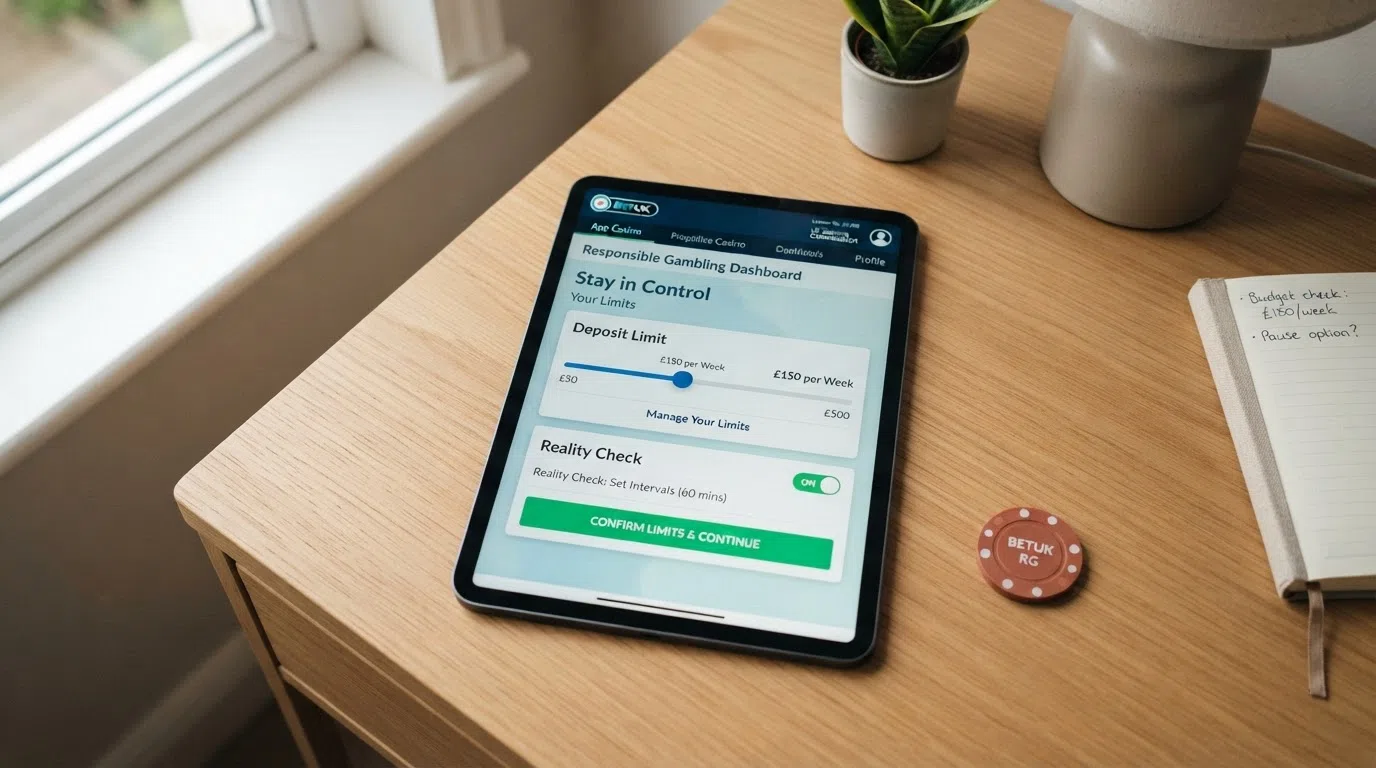
The tools exist, and they apply to VIP players exactly as they apply to everyone else. GAMSTOP self-exclusion blocks access across every GB-licensed operator simultaneously, and VIP status is irrelevant once exclusion is in force. Deposit limits are customer-set but mandatory-offered since 31 October 2025, with the further requirement that only gross deposit limits may carry the “deposit limit” label from 30 September 2026. Reality checks and time-outs are operator obligations. The credit card ban has been in force since 14 April 2020. None of these tools offer an exemption for VIP players, and none of them should be treated as optional by anyone playing at VIP stakes.
The Numbers — How Many High-Stakes Players Develop Problems
The headline prevalence figure — 0.5% of English adults experience problem gambling, with 3.8% at elevated risk — understates the population that is affected. An estimated 7% of the British population is negatively affected by someone else’s gambling, which means the harm footprint extends well beyond the player who is actually placing bets. For a VIP audience specifically, the more relevant figures are the helpline data: 996 referrals to treatment and peer support in January 2026, up 48% from 674 in January 2025, with 81.5% of those disclosing a form of gambling citing online gambling specifically.
The Gambling Survey for Great Britain (2025, Year 3) found that 47% of adults had gambled in the past four weeks — 27% excluding lottery-only players — and that 2.7% of adults scored 8+ on the Problem Gambling Severity Index in 2024, a figure statistically stable year-on-year. The 2.7% figure is the population that the responsible-gambling infrastructure is built to reach. For a high-stakes player, the question is not whether they are in that 2.7%; the question is whether the tools available will catch a developing problem before it becomes entrenched.
The honest framing for a VIP player is that high-volume play carries elevated risk by definition. The data does not say that every high-stakes player develops problems, and it does not say that harm is inevitable. It does say that the spending pattern which earns VIP status overlaps with the spending pattern which triggers concern, and that the responsible-gambling framework exists precisely because that overlap is real.
GAMSTOP, Deposit Limits and Reality Checks — What They Mean for VIPs
GAMSTOP is the single most consequential responsible-gambling tool available to a UK player, and it applies without exception to every GB-licensed operator. Registration is free, exclusion periods run from six months to five years (or five years with auto-renewal), and the exclusion cannot be cancelled early. If the player does not contact GAMSTOP after the chosen period expires, exclusion continues for up to seven further years. During an active exclusion, the player cannot deposit, play, or access their account at any GB-licensed online operator. VIP status is irrelevant; the block is uniform.
For a player considering GAMSTOP, the practical implication is that exclusion ends VIP status immediately and comprehensively. There is no “VIP exemption”, no negotiated return, and no way for an account manager to reinstate access. The block applies across every GB-licensed brand, which means a player who has self-excluded cannot circumvent the exclusion by opening an account at a different UKGC-licensed operator. Offshore operators fall outside GAMSTOP entirely, which is one of the structural reasons the Commission warns against using them as an alternative during a self-exclusion period.
The deposit-limit framework has been tightened in two stages. From 31 October 2025, every operator must prompt the customer to set a financial limit before their first deposit; a decrease request must be actioned immediately, and an increase request must be subject to a cooling-off period and a responsible-gambling interaction. From 30 September 2026, only a gross deposit limit may be called a “deposit limit” — net limits, which can mask spending by offsetting deposits against withdrawals, are no longer permitted under that label. Both changes are designed to make the limit-setting interaction more honest and harder to game.
The broader game-design rules, in force since 31 October 2021, shape the playing environment itself: auto-play is banned, slot spin speed cannot be faster than 2.5 seconds, features that artificially speed up play are banned, losses disguised as wins are banned, and reverse withdrawals are banned. None of these are VIP-specific, and all of them apply to VIP players. The combined effect is a playing environment that is materially less intensive than the pre-2021 market, and the Commission continues to layer additional rules as the evidence base evolves.
Where to Get Help — Helplines, Treatment and Support
- National Gambling Helpline (run by GamCare): 0808 80 20 133 — free, confidential, available 24 hours a day. The Helpline recorded 996 referrals to treatment and peer support in January 2026, a 48% year-on-year increase from 674 in January 2025. In 2026, 81.5% of those disclosing a form of gambling cited online gambling specifically, the highest rate since 2021.
- GamCare treatment services: between April 2024 and March 2025, GamCare supported 7,100 referrals into further treatment and delivered 8,100 treatment sessions, with an average wait time of 1.3 days from referral to first appointment. Nine in ten people who complete treatment report improvement.
- GambleAware and the National Gambling Support Network: 52,000+ calls and online messages per year to the Helpline, with signposting to local treatment services across England, Scotland, and Wales.
- NHS gambling harm clinics: commissioned in England, Scotland, and Wales, providing specialist treatment within the NHS for moderate to severe gambling harm. Referrals are typically made via the National Gambling Helpline or a GP.
- Gamblers Anonymous: a peer-support fellowship modelled on the 12-step approach, with meetings across the UK and online. Free to attend, no referral required, anonymity within the group is the norm.
- GAMSTOP: the national self-exclusion register, free to use, and mandatory for every GB-licensed online operator. Once registered, the player cannot access any GB-licensed online gambling site for the chosen exclusion period.
How We Evaluated These VIP Casino Programmes
The ranking on this page is built on the UK Gambling Commission public register as the licence-verification source, last updated 29 July 2026, with 2,663 records of licensed operators. Every operator in the table is confirmed Active on the register. The register does not publish per-brand licence grant dates; it shows status, and the date of the register snapshot is the date used for licence confirmation throughout.
The operator-specific data is drawn from each operator’s published terms, the UK operators skill, and independent review sources including Casino Buddies, MayfairCasino, CoinGape, and GambleMind. Where a published figure exists — a wagering multiplier, a cashback rate, a withdrawal time, a tier threshold — it is reproduced in the table and the operator write-up. Where a figure is not published — a max-cashout cap, a bonus validity window, a detailed tier-by-tier cashback breakdown — the table carries the no-data marker and the write-up states the gap qualitatively.
The evaluation criteria, applied qualitatively rather than as a scored formula, are: UKGC licence status (confirmed Active for all ten operators), the existence and structure of a VIP or loyalty programme, the specificity of published benefits, the substance of the programme versus a purely informal loyalty arrangement, and the breadth of game providers. The deliberate exclusions are bet365 — the UK’s largest online operator by market share, but without a casino VIP programme as of March 2026, with only a flat comp-point scheme and no tiers, no cashback, and no account manager — and the bingo-centric operators (Gala Bingo, Foxy Bingo, JackpotJoy), whose VIP structures are built around bingo rather than casino. BoyleSports, 32Red, BetVictor, and AdmiraL were considered and excluded on the basis of an absent or unconfirmed structured VIP programme.
The ranking order reflects the substance and clarity of each programme’s VIP offering. Operators with published, multi-tier VIP structures and named cashback rates (888, Grosvenor) sit at the top. Operators with substantive loyalty infrastructure and distinctive features (Virgin Games for the Flying Club conversion, Betway for withdrawal speed and table limits) sit next. Operators with shared Entain loyalty (Ladbrokes, Coral) and operators with strong wager-free welcome offers (Betfred, Paddy Power) sit in the middle. Operators whose loyalty offering is informal or absent (Sky Vegas, Betfair) sit at the bottom, included because they are UKGC-licensed and functional but without the VIP-specific substance the page is built to compare.
What UK VIP Casino Players Should Actually Prioritise in 2026
The evidence on this page points to four priorities, in order.
First, accept that VIP at a UKGC-licensed casino is a relationship, not a ladder. No major UK operator runs a public earn-your-way-up programme anymore, and the threshold — somewhere between £5,000 and £10,000 in monthly turnover — is higher than most players assume. A player whose gambling does not reach that band is not going to receive a VIP invitation, and a player who clears it should expect an affordability review, not an automatic upgrade. The honest framing is that UK VIP is what the operator decides to offer a player the operator has decided to invest in, and the player’s job is to be a sustainable long-term customer, not to grind toward a tier.
Second, weight cashback and wager-free promotions above welcome bonuses. The 10× wagering cap has compressed the value of every conventional welcome offer, and the calculation in the Grosvenor example — a real cost of roughly a third of the bonus headline — holds across the market. Cashback at 5% to 10% weekly (888) and wager-free free spins (Betfred, Paddy Power) deliver more value over time than a one-off welcome match, because they recur and because they sidestep the turnover obligation. A player choosing between operators should look first at the recurring perks and only then at the welcome number.
Third, recognise the split in the market. Three operators in this ranking — 888, Grosvenor, and Virgin Games — offer structured VIP or relationship-managed programmes with published or semi-published benefit specifics. Three more — Betway, Ladbrokes, and Coral — offer substantive loyalty infrastructure without the same published transparency. Three — Betfred, Sky Vegas, and Paddy Power — focus on wager-free value or weekly reward mechanics rather than tiered VIP, and Betfair rounds out the list with an exchange-led product whose casino loyalty is informal. None of these structures is wrong; they serve different player profiles. The player who wants published benefit specifics and a relationship-managed top tier will be best served by the first group. The player who wants a strong welcome offer and ongoing wager-free value will be best served by the third. The player who wants withdrawal speed and high table limits will find Betway’s offering distinctive.
Fourth, use the responsible-gambling infrastructure regardless of tier. GAMSTOP, deposit limits, reality checks, and the National Gambling Helpline exist because the Commission has concluded that the spending pattern which earns VIP status is also the spending pattern which can produce harm. A VIP player who does not set a deposit limit, who does not use reality checks, and who has not registered with GAMSTOP is leaving the protective framework unused. The tools are free, they are mandatory-offered, and they apply to VIP players in the same way they apply to everyone else. The single most useful thing a UK VIP player can do, before evaluating any programme on this page, is to set a deposit limit they can afford to lose and to keep it.
The actionable next step, without recommending a single operator, is this: assess your own play volume honestly against the £5,000 to £10,000 monthly turnover threshold. If you are below it, you are not a VIP candidate at any UK operator, and the right comparison is between the mid-tier loyalty programmes (Entain Rewards, Sky Bet Club, Paddy Power’s ad hoc promos, Betfred’s wager-free offers). If you are above it, focus on the operators with published VIP benefit specifics (888, Grosvenor) and on those with the practical advantages that matter to your play style (Betway for table limits and withdrawal speed, Virgin Games for the Flying Club conversion if you fly Virgin Atlantic). In either case, set a deposit limit before your first deposit, register with GAMSTOP if you have ever felt your play was difficult to control, and use the National Gambling Helpline (0808 80 20 133) if you need to talk.
Frequently Asked Questions
Do UK casino VIP programmes have wagering requirements on bonuses?
Yes. Since 19 January 2026, the UK Gambling Commission caps wagering requirements on all casino bonuses at 10× the bonus amount under LCCP Social Responsibility Code 5.1.1. That cap applies to VIP offers in the same way it applies to standard bonuses, so a £40 bonus requires £400 of qualifying turnover before withdrawal, and a £50 bonus requires £500. Some promotions — notably Betfred’s 200 wager-free spins and Paddy Power’s 50 wager-free spins — sit outside the cap by carrying 0× wagering, and these have become the most player-friendly welcome structures in the UK market.
Are VIP casino programmes regulated by the UK Gambling Commission?
Yes. LCCP Social Responsibility Code 5.1.1 requires that any scheme an operator designates as “high value”, “VIP” or equivalent must be operated in a manner consistent with the licensing objectives, with enhanced monitoring, affordability checks, and senior management oversight. The Commission took enforcement action against operators for VIP scheme failures in the years after 2020, which produced the current regulatory framework. An operator running a VIP programme at a UKGC-licensed casino is operating under specific compliance obligations that do not exist for standard loyalty schemes.
Can I use crypto deposits at a UKGC-licensed VIP casino?
No. The UK Gambling Commission does not allow its licensed operators to accept direct cryptocurrency deposits or bets, on the grounds that crypto payments are incompatible with the AML and KYC obligations that govern every GB-licensed site. Identity is verified before the first deposit, source-of-funds enquiries are required at higher spend levels, and anonymous play is not possible at any UKGC-licensed operator. Any casino offering crypto deposits to UK players is operating without a GB licence, which means it falls outside the UKGC’s regulatory framework and outside the protections that framework confers, including GAMSTOP coverage and ADR dispute resolution.
What happens to my VIP status if I self-exclude via GAMSTOP?
GAMSTOP self-exclusion blocks access across every GB-licensed online operator simultaneously, and VIP status is irrelevant once exclusion is in force. The minimum exclusion periods are six months, one year, five years, or five years with auto-renewal, and the exclusion cannot be cancelled early. If you do not contact GAMSTOP after the chosen period expires, the exclusion continues for up to seven further years. There is no VIP exemption, no negotiated return, and no way for an account manager to reinstate access during an active exclusion. Offshore operators fall outside GAMSTOP entirely, which is one of the structural reasons the Commission advises against using them as an alternative during self-exclusion.
What is the maximum stake for high-roller slots players in the UK?
£5 per game cycle for players aged 25 and over, and £2 per game cycle for players aged 18 to 24. The age-banded stake cap took effect under SI 2025/215, with the £5 limit in force from 9 April 2025 and the £2 limit in force from 21 May 2025. The cap applies to online slots only and does not extend to roulette, blackjack, baccarat, or live casino products, which is where UK players seeking genuinely high stakes now play. Betway’s published £10,000 maximum live blackjack bet is the concrete marker of where the table-game market sits in the absence of a stake cap.
Promotions – topratedonlinecasinos-uk
Content created by the «topratedonlinecasinos-uk» team