
Best Online Casinos No Limits: What UK Players Actually Get in 2026
 Available in GB
“No limits” is a pitch. At every UK-licensed casino it sits next to a wall of statutory ceilings, and the size of those ceilings depends on which game you load and which rule you bump against. The marketing phrase is real; the absolute version of it is not. A casino that promises “no limits” in Britain is promising a relative high — raised tables, generous bonuses, fast withdrawals — not an absence of rules.
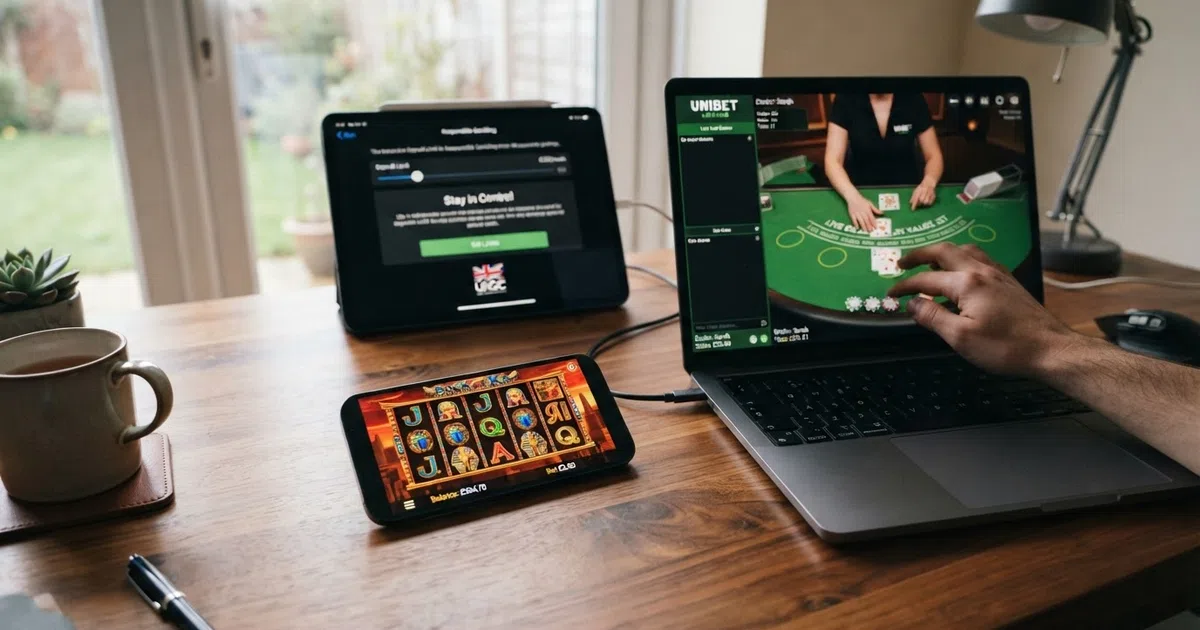
The structure below sets out what those rules actually are, which operators stretch them furthest within the law, and where the genuine ceiling sits for a player who wants to stake more, win more, or withdraw more.
Current as of 9 September 2026 and verified against the UK Gambling Commission’s public register of licence holders.
Why “No Limits” Means Something Different at Every UK Casino
What “No Limits” Actually Means at an Online Casino
The phrase is doing two jobs at once. On the marketing layer, it tells a high-spending player that this casino will not flinch at a five-figure deposit or a £25,000 table session. On the regulatory layer, every UK-licensed operator lives under the same Gambling Commission rules, and those rules cap the spin, cap the session length, and demand identity checks before the first pound goes in. The two meanings never collapse into one.
A casino calling itself “no limits” inside the UK system is making a comparative claim, not an absolute one. It is positioned against mass-market operators with tighter default ceilings, not against the offshore sites that genuinely remove every cap. Those offshore sites exist, and they are illegal to offer to British customers — a point the rest of this article returns to.
No-Limits vs High-Limit: The Spectrum from Zero Caps to Raised Ceilings
The spectrum runs from genuinely uncapped offshore brands through high-limit UKGC-licensed casinos to standard mass-market sites. A genuinely uncapped operator is, by definition, unlicensed in Britain — the £5 slot stake ceiling is statutory and no GB licence can override it. High-limit UK operators sit on the next rung: same regulatory floor, higher ceilings on live tables and VIP programmes, faster withdrawals, and bonus terms that don’t grind winnings down through wagering. Standard UK casinos close the lower end: tighter table maximums, smaller bonus caps, deposit limits set at modest defaults.
WageringTimes puts it plainly: “high roller in the UK doesn’t mean unlimited stakes or wild VIP privileges anymore. It usually refers to fully UK Gambling Commission-licensed casinos that accommodate high-spending players within strict safeguards.” That redefinition is the real shape of the UK market.
Bet, Deposit, Withdrawal, Stake: The Four Ceilings Every Player Faces
Four different limit types live at a UK casino, and a “no limits” claim usually targets one of them while leaving the other three in place.
Stake limits are the per-spin or per-hand cap on a single game. The £5 slot ceiling for players aged 25 and over — £2 for 18-to-24-year-olds — is the headline number and applies to online slots only, not to table games or live dealer rooms.
Deposit limits are customer-set in the normal course, but operators must prompt a player to set one before the first deposit from 31 October 2025. Decreases must be actioned immediately. From 30 September 2026, only a gross deposit limit can carry the label “deposit limit.”
Withdrawal limits are the area where the regulator has drawn the clearest line: operators cannot cap withdrawals from your deposit balance. They can — and do — apply processing rhythms, daily batches, and caps on promotional winnings.
Bet limits on live tables are operator-set per table. A typical high-end live blackjack room caps a single position at £5,000–£10,000; a single roulette number at £2,500–£5,000; combined table action across multiple positions can clear £25,000.
Why Casinos Set Limits: Risk Management, Regulation, and Player Protection
Limits are not a nuisance bolted onto gambling. They are the structural feature of licensed play in Britain.
Regulatory compliance is the primary driver. The statutory £5 slot cap removes any operator discretion on online slots — no VIP override, no marketing exception, no seasonal loosening. The mandatory deposit-limit prompt from October 2025 is the same kind of structural requirement, this time aimed at the customer side of the transaction.
Operator risk management sits underneath the regulation. A live casino table with a £10,000 position cap exists because the operator is hedging its liability against any single hand. Without that cap, a run of bad outcomes would hit the operator’s balance sheet before it hit the player’s.
Responsible-gambling obligations require the limit tools themselves. Reality checks, time-outs, the £150 financial-vulnerability check threshold from February 2025 — these are not operator preferences but licence conditions, and they exist because the government has classified slots as “one of the most addictive forms of gambling,” to quote the Department for Culture, Media and Sport.
The UK Picture: What “No Limits” Looks Like Under a UKGC Licence
A UKGC-licensed casino in 2026 lives inside a specific set of constraints. The £5/£2 slot stake cap is the defining one — every other limit flows from it. From April 2020 credit cards are banned for all remote gambling, which removes a payment rail that used to soften the deposit ceiling for some players. From 19 December 2025, wagering requirements on bonuses are capped at 10× and mixed-product promotions are banned. The withdrawal rule is the positive counterpart: your deposited funds and winnings are withdrawable on demand, no term in the T&Cs may restrict that right.
The picture is one of a tightly regulated market where the consumer’s protection floor is unusually high and the operator’s discretion over stakes, deposits, bonuses and withdrawals is correspondingly narrow. A “no limits” casino in this market is an operator that has found the maximum room to move within that floor — not one that has escaped it.
Real-Money Play at No-Limit Casinos: What Changes When You Are Playing for Cash
Demo play has no ceiling. Real-money play does. The first £5 you stake loads a different set of obligations onto the operator — and onto you.
Identity verification runs before any deposit. Since 7 May 2019, remote licensees must verify name, address and date of birth before the first pound goes in. The deposit-limit prompt appears in that same flow: from 31 October 2025, you cannot reach the cashier without being asked to set a financial limit. Once you are playing for cash, the £5 per-spin ceiling kicks in on slots, the 2.5-second minimum spin cycle applies, and the operator is recording your session time and net position. None of this is optional, and none of it depends on which casino you chose.
Summary of UK Casino Limits
| Limit Type | Statutory/Operator Rule | Scope |
|---|---|---|
| Slot Stake (25+) | £5 per spin | Online slots only |
| Slot Stake (18-24) | £2 per spin | Online slots only |
| Live Dealer | Operator-set maximums | Blackjack, Roulette, Baccarat |
| Deposit Limit | Customer-set (Mandatory prompt) | All play |
Withdrawal & Deposit Policies
| Policy | Regulatory/Operational Status | Impact on Player | |
|---|---|---|---|
| Deposit Balance | Regulatory entitlement to withdraw | Access to own funds per UKGC rules | |
| Promotional Winnings | Subject to T&Cs/wagering caps | Conditional withdrawal | |
| Processing Time | Daily batches/E-wallet speed | Variable payout speed | |
| Closed-Loop | Anti-fraud requirement | Return to deposit source only | : Bonuses and Limits |
The ten operators below all hold an active UKGC licence. Seven carry a confirmed welcome bonus; three do not — Betfair, William Hill and Grosvenor have current welcome offers that this research did not surface, and the reader should check the operator’s promotions page for up-to-date terms. The headline finding from the table: no UKGC-licensed casino is genuinely “no limits,” and six of the seven confirmed bonuses now carry zero wagering — a structural change that began with the December 2025 cap at 10×.
How We Ranked These Ten Casinos
The ranking rests on four criteria. UKGC licence status is the entry requirement — every brand below holds an active licence, and the licence account number is verifiable on the public register. Bonus value is measured by free-spin count and face value where spins are the offer, and by deposit-match percentage where cash is the offer. Wagering burden is the real cost of claiming a bonus, and the December 2025 cap at 10× has reset the field — six of seven confirmed bonuses now carry 0×. Limit generosity is the differentiator: how high the live tables run, how the withdrawal policy treats VIPs, how fast a payout lands.
The 10× wagering ceiling is the regulatory backstop; the 0× offers below it are voluntary moves by operators competing on bonus terms. Where the operator stopped at the ceiling — 888 Casino’s 10× match — that operator is now alone in the featured set.
The Zero-Wagering Shift: Why the Best UK Bonuses Now Carry No Playthrough
The LCCP Social Responsibility Code 5.1.1 capped wagering requirements at 10× from 19 December 2025 and banned mixed-product promotional offers in the same change. Six of the seven confirmed bonuses in the table below went further and dropped wagering to zero. That is a deliberate competitive move — when the regulator sets a ceiling, the operators at the top of the market treat it as a floor they can beat.
The practical effect for the player: free-spin winnings are now cash. A 200-spin offer at £0.10 per spin carries £20 of face value; under the old regime, that £20 might have required £200 of playthrough before withdrawal. Under 0× wagering, the £20 — minus any per-spin maximum cashout — is withdrawable immediately. The shift changed what a “free spins” headline number is worth.
bet365: Up to 500 Free Spins with Zero Wagering
bet365 carries the largest free-spin count in the featured set: up to 500 spins across ten daily reveals of between five and fifty spins each. Winnings are paid as cash, with no playthrough required. The qualification is a £10 minimum lifetime deposit, and the offer must be claimed within thirty days of registration. Each daily reveal carries a seven-day validity. The eligible slots are four Book of Horus-family titles — Book of Horus, Curse of the Bayou, Magic Forge, Wrath of the Deep — none of which carries a confirmed RTP in the current research.
The Hillside (UK Gaming) ENC licence (account 38721, remote casino from 17 October 2019) is active on the UKGC register. With a massive library of daily reveals and zero-wagering requirements, bet365 delivers one of the most streamlined bonus experiences currently available to UK players.
Sky Vegas: 50 No-Deposit Spins Plus 200 More
Sky Vegas holds the most accessible entry in the featured set: 50 free spins requiring no deposit at all, plus 200 additional spins on a £10 stake. Both tranches carry 0× wagering, and both expire seven days from credit. The Flutter-group licence is active; the provider roster spans NetEnt, Evolution, Playtech, Pragmatic Play and Play’n GO.
The no-deposit tranche matters because it removes the qualifying deposit from the test. A player can register, claim 50 spins, and walk away with whatever they have won before staking a penny of their own. The deposit-triggered 200 spins require a £10 stake — modest by the standards of the set, and a low barrier to the full 250-spin total.
Paddy Power: 60 No-Deposit Spins with the Largest Free-Spin Total
Paddy Power carries the highest total free-spin count in the featured set: 260, with 60 requiring no deposit and 200 triggered by a £10 deposit and wager. All 260 spins carry 0× wagering and a seven-day expiry.
The Flutter-group licence is active. The no-deposit tranche here is larger than Sky Vegas’s — 60 against 50 — and the total exceeds Sky Vegas by ten spins. For a player who values the no-deposit portion specifically, Paddy Power leads the set; the difference is small enough that the two Flutter brands are best read as a choice within the same family rather than a clear winner.
Ladbrokes: 100 Free Spins on Big Bass Bonanza at 96.71% RTP
Ladbrokes is the only operator in the featured set whose bonus slot carries a confirmed RTP. Play £10, receive 100 free spins at £0.10 each on Big Bass Bonanza (RTP 96.71%, high volatility) plus 300 LadBucks — a separate Entain loyalty token. Winnings on the free spins are paid as cash under 0× wagering.
The acceptance window is the tightest in the set: 48 hours to opt in, then seven days to use the spins. The Entain licence (account 1611, remote casino from 1 November 2014) is active. Ladbrokes stands out by offering a specific, high-RTP slot choice, making this bonus a preferred pick for players who prioritise game transparency over sheer spin volume.
Coral: 200 Free Spins Straightforward
Coral’s offer is the simplest read in the table: 200 free spins at £0.10 each for £20 of face value, 0× wagering, deposit-triggered. The Entain licence is active; the typical seven-day expiry applies.
Coral sits in the Entain stable alongside Ladbrokes, and the two offers are best read as a family choice. Ladbrokes carries the named slot and the higher RTP; Coral carries twice the free-spin count and a simpler structure. A player who values transparency on the bonus game chooses Ladbrokes; a player who values spin volume chooses Coral.
Betfred: 200 Free Spins with a Longer Claim Window
Betfred offers up to 200 free spins on selected titles, 0× wagering, with the most generous claim window in the featured set: 14 days from registration to opt in, then seven days from credit to use the spins. The deposit requirement is a debit-card transaction of £10 or more staked on Betfred Games or Vegas — e-wallet deposits may be excluded.
The Petfre (Gibraltar) Limited licence is active. For a player who wants time to think before claiming, Betfred is the most accommodating brand in the table. The debit-card restriction is the trade-off: a player funding their account through Skrill or Neteller cannot reach the qualification threshold here.
888 Casino: The Only Deposit-Match Bonus in the Set — With 10× Wagering
888 Casino stands alone on offer type: a 100% deposit match up to £100 plus 100 free spins on Pragmatic slots. The match bonus carries 10× wagering on the bonus funds within 90 days of credit; the free spins carry the standard seven-day expiry. Skrill and Neteller deposits are excluded from qualification.
The evoke plc licence is active. The 10× wagering sits at the statutory ceiling — the December 2025 cap, with no voluntary drop to zero. For a player comparing offers by what is left after playthrough, 888 Casino is the most expensive bonus in the set to clear, and it is the only bonus where the playthrough actually applies. The upside is the deposit-match structure itself: a player depositing £100 plays with £200 of bankroll, and only the bonus half carries the wagering requirement.
Betfair: UKGC-Licensed with an Unconfirmed Welcome Offer
Betfair holds an active UKGC licence under Flutter Entertainment. The provider roster spans NetEnt, Evolution, Playtech, Pragmatic Play and Play’n GO — a full-stack supplier set that covers slots, live dealer and table games at the highest tier. The current welcome bonus was not confirmed in this research run; readers should check Betfair’s promotions page for the offer available at the point of registration.
For a player prioritising provider depth and Flutter-group infrastructure over a confirmed headline bonus, Betfair remains a credible choice on the table. The licence status is verifiable on the UKGC public register; the bonus terms are not, and that gap matters when comparing it to the seven operators above.
William Hill: A Heritage Brand Whose Current Bonus Was Not Confirmed
William Hill holds an active UKGC licence under evoke plc (account 2752, non-remote from 1 January 2009, remote casino active). The provider roster spans NetEnt, Evolution, Playtech, Pragmatic Play and Play’n GO. The current welcome bonus was not confirmed in this research run; readers should check William Hill’s site for current promotions.
The non-remote licence dating to 2009 is the longest continuous gambling licence in the featured set. For a player who values that heritage and the evoke-group backing, William Hill is a credible name to consider once the current bonus terms are verified. The gap between the licence’s age and the absence of a confirmed bonus is the practical reason this write-up does not rank William Hill against the seven confirmed offers above.
Grosvenor: The Only Land-Based Operator in the Set, with Confirmed Live-Table Limits
Grosvenor is the Rank Group’s casino brand and the only operator in the featured set that runs both land-based and online casinos. The UKGC licence is active. The welcome bonus was not confirmed in this research run; readers should check Grosvenor’s site for current promotions.
What Grosvenor offers that the rest of the set does not is confirmed live-table data. Blackjack Gold Live runs at 99.3% RTP. Live Grosvenor Roulette takes straight-up bets up to £500 and outside chances up to £10,000. Live Baccarat Squeeze takes side bets of £1–£2,500 at 98.94% RTP. For a live-dealer player who wants to see the table maximums before signing up, Grosvenor is the cleanest read in the table — and the only read in this section where the live numbers are published rather than inferred.
The £5 Barrier: What UK Slot Stake Caps Mean for Your Play
Online Slots: The Hard £5 and £2 Caps
The statutory slot stake cap is the single most important number on this page for any UK player who plays slots. It is also the number that most “no limits” marketing copy is built around without ever naming it.
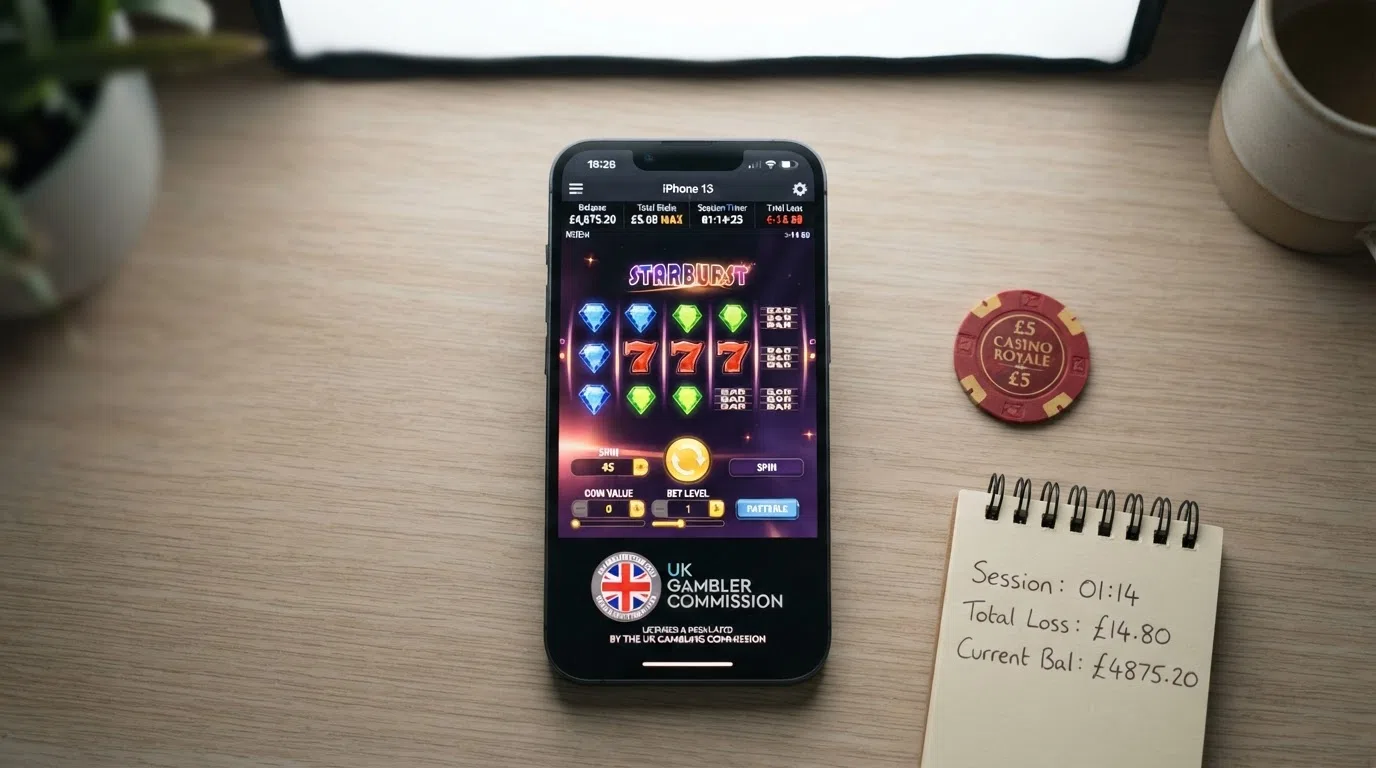
The cap is age-banded and it is hard. £5 per spin for players aged 25 and over, in force from 9 April 2025. £2 per spin for players aged 18 to 24, in force from 21 May 2025. Both caps were imposed under SI 2025/215 and apply to the total staked within a single game cycle — not to a single bet button press, but to every stake the slot accepts during one spin’s full sequence.
The cap cannot be circumvented by speed. From 31 October 2021, auto-play is banned, spin speed carries a 2.5-second minimum per game cycle, features that speed up play are banned, and losses disguised as wins are banned. A casino offering “turbo spin” or “quick spin” on a UK slot is in breach of its licence conditions, and a player using those features is playing a game the regulator considers unsafe by design.
The practical impact per session: at £5 per spin and a 2.5-second minimum cycle, the maximum theoretical spend rate on a UK slot is £1,200 per hour. A 100-spin session at the cap stakes £500 across roughly four and a half minutes of spin time. That is the ceiling the regulator set, and the UKGC’s own data shows slots sessions lasting more than one hour fell 12% year-on-year to 8.9 million in the fourth quarter since the cap took effect.
Live Dealer Tables: Where the Real High-Stakes Action Lives
The £5 cap applies to online slots only. Table games and live dealer rooms are not covered. That is where a player looking for higher stakes finds room to move.
No statutory stake cap sits on roulette, blackjack or baccarat. The maximums are operator-set per table. Live blackjack typically caps a single position at £5,000–£10,000 at top-tier live tables; live roulette caps a single number at £2,500–£5,000; combined action across multiple positions can clear £25,000. Grosvenor publishes concrete numbers: straight-up roulette bets up to £500, outside chances up to £10,000.
For a high-stakes player, the slot cap is irrelevant once they move to the live dealer floor. The £5-per-spin ceiling that defines UK slot play does not apply to a £10,000 blackjack hand. The trade-off is volatility profile: live tables carry a lower house edge than slots on most titles, but they also run longer sessions and require a different bankroll structure.
The Slot Titles High Rollers Actually Play — and What They Cost
Four UK-available slots carry confirmed RTP data in the current research, and they sit across the volatility spectrum. Book of Dead (Play’n GO) runs at 96.21% RTP with high volatility and a 5,000× max win. Starburst (NetEnt) runs at 96.09% RTP with low volatility and a ~500× max win. Big Bass Bonanza (Pragmatic Play) runs at 96.71% RTP with high volatility and a 2,100× max win. Mega Moolah (Games Global) runs at ~88.12% RTP with very high volatility and a progressive jackpot ceiling in the millions.
The arithmetic matters more than the RTP label. At the £5 statutory cap, a 100-spin Book of Dead session at 96.21% RTP carries an expected loss of £18.95 — turnover of £500 multiplied by the 3.79% house edge. The same 100 spins at the £2 cap for an 18-to-24-year-old carries £7.58 of expected loss on £200 of turnover. The session is a statistical estimate, not a guaranteed outcome; the figure assumes average play across many sessions and promises no win, no payout and no return.
Mega Moolah is the outlier. Its 88.12% RTP reflects the jackpot contribution — the trade for the chance at a seven-figure payout is a higher house edge on every other spin. A player chasing the progressive is buying a lottery ticket priced at 11.88% per spin. That is the real cost of the dream.
When You Win Big: Withdrawal Limits and How to Beat Them
The UKGC Withdrawal Rule: Your Deposit Balance Is Yours
The UKGC’s position on withdrawal limits is the clearest regulatory guarantee on this page. Operators cannot impose any maximum limit on the amount a consumer may withdraw from their deposit balance. The Commission’s own guidance is verbatim: “Players are entitled to withdraw money from their deposit balance, including their winnings, at any time. Operators must allow players to withdraw funds from their deposit balance and there must be no term in place that restricts this.”
That rule applies to deposited funds and winnings alike. No term in the operator’s T&Cs may restrict the right. A casino that tries to cap your withdrawal from your own deposited balance is in breach of its licence conditions, and the Commission’s complaints route exists for exactly that case. The guarantee does not stretch to promotional winnings in the same way — see below — but it covers every pound the player has put in and every pound won on deposited funds.
Where Withdrawal Caps Still Apply: Promotions, Jackpots, and Processing
The real-world picture is more complicated than the rule. Three areas sit outside the deposit-balance guarantee, and a player who treats them as the same thing will be surprised.
Promotional winnings carry their own caps. A free-spin bonus may carry a maximum-cashout limit that sits well below the deposit-balance rule. A no-deposit bonus almost always does. Reading the bonus T&Cs for the cap is the difference between cashing out a full win and cashing out a fraction of it.
Progressive jackpots pay in instalments. Mega Moolah’s seven-figure top prize is not paid as a single bank transfer; it is structured over a payment schedule that the operator sets. The instalments are not a withdrawal cap — they are a payout structure — but they read the same way to a player waiting on the money.
Processing limits are operational, not regulatory. A casino may process withdrawals in daily batches, may hold funds over a weekend, may apply a per-transaction ceiling that is a back-office rhythm rather than a T&Cs term. None of these is a withdrawal cap in the regulatory sense; all of them affect when the money lands. E-wallet withdrawals typically clear within hours; bank transfers typically take one to three working days.
High-Limit Withdrawals: VIP Treatment and Closed-Loop Policies
VIP players negotiate terms that standard accounts do not get. Dedicated withdrawal handlers, same-day processing, raised per-transaction ceilings, and direct contact with a payments team are standard perks at UK operators’ high tiers. The negotiation happens after the player is identified as high-volume — not at the point of registration.
Closed-loop policies return funds to the deposit source. A deposit made by debit card comes out to the same debit card; a deposit made via PayPal comes out to PayPal. This is an anti-fraud and anti-money-laundering measure, and it is standard across UKGC-licensed operators. The practical effect: a player cannot route a withdrawal to a different account to bypass a per-method processing cap.
The credit-card ban from April 2020 applies on the withdrawal side too — no UK operator will route a gambling payout back to a credit card. That rail is closed. The practical ceiling for fast withdrawals at a UK casino is e-wallet speed, and the typical floor is the bank-transfer working day.
Licensed vs Offshore: The Real Cost of “No Limits”
The UKGC Framework: What a GB Licence Actually Requires
A Great Britain licence is compulsory at the point of consumption since the Gambling (Licensing and Advertising) Act 2014. The Gambling Commission is the single statutory regulator, sponsored by the Department for Culture, Media and Sport, and it publishes a public register of every operator it licences. A brand is either on the register or it is not, and that is the only check that matters.

Three licensing objectives sit at the top of the framework under section 1 of the Gambling Act 2005: preventing gambling from being a source of crime or disorder, ensuring gambling is conducted in a fair and open way, and protecting children and other vulnerable persons from being harmed or exploited by gambling. Day-to-day obligations sit in the Licence Conditions and Codes of Practice (LCCP) and the Remote Technical Standards (RTS). Minimum age across all commercial gambling is 18. Since 7 May 2019, remote licensees must verify name, address and date of birth before any deposit or any gambling.
The verification route is the public register. Every operator named in the table above carries an active UKGC licence with a verifiable account number. Every casino that promises “no limits” without appearing on that register is making a different kind of promise — and the next section is about what kind.
Offshore “No Limits”: The Promise and the Trap
A casino that lets you spin for £50 on an online slot is, by definition, not UKGC-licensed. The £5 cap is statutory. No GB licence can override it; no operator on the public register will offer higher slot stakes because doing so would cost them the licence.
Offshore operators carry licences from Malta, Curaçao or Gibraltar. None of those is a substitute for a GB licence at the point of consumption. Providing gambling to British customers without the required licence is a criminal offence under section 33 of the Gambling Act 2005 — up to 51 weeks’ imprisonment, an unlimited fine, or both. The penalty falls on the operator, not the player, but the player loses every protection the UK regime provides.
What the player loses: no GAMSTOP self-exclusion coverage, no UKGC complaints route, no alternative dispute resolution (ADR), no British consumer redress if funds are withheld, no guarantee that customer deposits are segregated from operating funds. Comparasino puts it plainly: “If a casino lets you spin for £50, they are breaking the law. It’s not a VIP feature, rather a warning sign that your money isn’t safe.” The trade is real stakes for real protections, and the protections are not optional extras.
How the UKGC Enforces: Disruption, Not Blocking
The UKGC has no statutory power to block websites at the ISP or DNS level. Legislation to grant that power has been proposed but not enacted. What the Commission does have is a disruption toolkit, and the published numbers for April 2024 to June 2025 are large.
The Commission issued 3,140 disruption notices against unlicensed sites, referred 447,778 URLs to search engines for delisting, and saw 287,961 URLs removed. Across 160 disrupted sites, average engagement fell 32%. The tools are disruption notices, search-engine delisting, payment-provider referrals and domain suspension. They work on the supply side — cutting off the operator’s reach — rather than the demand side.
For a player, the practical implication is that an offshore site advertised today may be unreachable next month. The £50 slot spin is not a stable offer. The funds deposited with the operator are not protected by British regulation. And the UKGC’s enforcement record shows the regulator is actively working to shrink the offshore market — not because the player is at fault, but because the operator is operating illegally in GB.
How to Set Your Own Limits (and Why You Should)
Deposit Limits, Reality Checks, and Time-Outs: The Full Toolkit
Personal limit-setting is the most powerful tool a UK player has, and it sits alongside — not underneath — the operator’s obligations.
Deposit limits are customer-set: daily, weekly or monthly caps on the amount that can be deposited. From 31 October 2025, UKGC-licensed operators must prompt a customer to set a financial limit before the first deposit, and decreases to that limit must be actioned immediately. From 30 September 2026, only a gross deposit limit may carry the label “deposit limit.” A player who wants to tighten their ceiling can do so at any time and see the change apply instantly; raising the limit carries a cooling-off period the operator sets.
Reality checks surface time and spend during a session. They pop up at intervals the operator configures, and they display total staked, total won or lost, and session length. The regulatory floor is one hour; most operators default to it.
Time-outs run from 24 hours to six weeks. They block access to the account without committing to the longer self-exclusion route. A player who feels a session running hot can use a time-out to step out without losing their account.
The financial vulnerability check at the £150 net-deposit threshold (in a rolling 30-day period, from 28 February 2025) runs on publicly available data only — county court judgments, individual voluntary arrangements, bankruptcy orders. It is not a credit check. A player whose public record triggers it will be asked to set a deposit limit before proceeding.
GAMSTOP, GamCare, and Where to Get Help
GAMSTOP is the national multi-operator online self-exclusion scheme. Since 31 March 2020, participation is a mandatory condition of every UKGC online operating licence. A player who registers with GAMSTOP is excluded from every UK-licensed online gambling site for the period they select: six months, one year, five years, or five years with auto-renewal. The exclusion cannot be cancelled early.
The National Gambling Helpline, run by GamCare, is free, available 24 hours a day on 0808 8020 133. In January 2026, GamCare made 996 referrals to treatment and peer-based support services — up 48% year-on-year. The NHS gambling treatment clinics received 4,355 referrals in 2024/25, up from 2,284 the year before. The National Gambling Support Network treated 11,960 clients in Great Britain between April 2024 and March 2025, with over 52,000 calls to the helpline in the same period. The infrastructure exists because the demand exists.
Gamblers Anonymous UK runs peer-support meetings across the country. The NHS runs gambling clinics in England, Scotland and Wales. The prevalence figures behind that infrastructure are stark: roughly 0.5% of the adult English population experience problem gambling, roughly 3.8% sit at elevated risk, and roughly 7% of the British population are negatively affected by someone else’s gambling. A player who feels any of those numbers apply to them is not the player this page is built for — and the right next step is the helpline, not another casino.
How We Evaluate UK No-Limits Casinos
Every licence claim on this page was verified against the UK Gambling Commission’s public register of licence holders. The bonus and free-spin data was drawn from the operators’ published terms and the current research run; the live-table data for Grosvenor was drawn from the operator’s own published table limits. Where a research figure is missing — the welcome bonus for Betfair, William Hill and Grosvenor, the RTP for several bonus slots — the gap is named in the operator’s write-up and the reader is directed to the operator’s site for current terms.
The ranking criteria were licence status (entry requirement), bonus value and free-spin count, wagering burden (with the December 2025 cap at 10× as the regulatory backstop), and limit generosity across stakes, deposits and withdrawals. No invented weightings or percentage scores were applied; the order reflects the confirmed bonus data in the table. Offers change. The UKGC’s enforcement record, the regulatory floor, and the structural features of the UK market do not.
This research was conducted in 2026. Readers should verify current terms directly with the operator before claiming any offer.
Beyond the Limits: What Really Matters When You Choose a UK Casino
The page’s central finding is also its most uncomfortable one for the marketing layer: no UKGC-licensed casino is genuinely “no limits,” and that is a feature of the system, not a failure of the operators. The £5 slot cap is the structural floor that protects the player who would otherwise stake more than they should. The withdrawal rule is the structural ceiling that guarantees access to the player’s own money. The 10× wagering cap is the structural ceiling on what a bonus can cost to clear. Each of those floors and ceilings is doing work.
A player choosing between the ten operators above should weigh what the limits actually cap for them. A slots player at age 25+ is bound by £5 per spin, period — the operator’s identity makes no difference to that number. A live-dealer player can chase the highest table maximums, and Grosvenor’s published figures give the clearest read. A bonus-focused player should rank by 0× wagering first, then by free-spin count: six of the seven confirmed offers now pay winnings as cash, and the only operator still charging the 10× ceiling is 888 Casino.
The offshore temptation is real, and the calculation is straightforward. Higher slot stakes cost the player every UKGC protection — GAMSTOP coverage, complaints route, ADR, segregated funds, British consumer redress. The £50 spin is not a perk; it is the marker of an unlicensed operator. The arithmetic the rest of this page runs is built on the assumption that the player prefers the protections.
The last word belongs to the regulator. “Players are entitled to withdraw money from their deposit balance, including their winnings, at any time.” That line is the single best reason to play at a UK-licensed casino rather than offshore, and it is the line no offshore operator will replicate.
Frequently Asked Questions
Are there any UK-licensed casinos that allow truly unlimited bets?
No. Because the UKGC sets a hard statutory cap of £5 per spin on online slots (for players 25+), no licensed site can operate without limits. While live dealer tables allow high-stakes action—often reaching five figures per hand—these are still constrained by the operator’s own table maximums.
What is the difference between a deposit limit and a stake limit?
A deposit limit caps the amount you can fund your account with over a period — daily, weekly or monthly. From 31 October 2025, UKGC-licensed operators must prompt you to set one before your first deposit, and decreases apply immediately. A stake limit caps the amount you can wager on a single game action — the £5 per-spin cap on UK slots is a stake limit. The two limits work on different sides of the same transaction: one on money in, one on money at risk per spin.
Can high rollers bypass the UK slot stake cap?
No. The £5/£2 cap is statutory under SI 2025/215 and applies to every UKGC-licensed operator without exception. VIP status, deposit size, or marketing tier does not override it. A high roller who wants higher per-spin action moves to live dealer tables — where the cap does not apply and operator-set maximums run into five figures — or plays at an unlicensed offshore site, which loses every UKGC protection.
What happens if I play at an offshore casino with no limits?
The operator commits a criminal offence under section 33 of the Gambling Act 2005 by offering unlicensed gambling to GB customers, but the player faces no criminal penalty. What the player loses is every UK protection: no GAMSTOP coverage, no UKGC complaints route, no alternative dispute resolution, no guarantee of segregated funds, and no British consumer redress if the operator withholds winnings. The UKGC’s enforcement toolkit — 3,140 disruption notices and 287,961 URL removals between April 2024 and June 2025 — targets exactly these sites.
What is GAMSTOP and does it apply to all UK casinos?
Yes, it covers every UK-licensed site. Operated by the National Online Self-Exclusion Scheme Limited, GAMSTOP lets you register once to be blocked from all participating operators. You choose an exclusion period—six months, one year, or five years—which cannot be lifted early. Crucially, it does not apply to land-based venues or offshore casinos.
Limits – topratedonlinecasinos-uk
Content created by the «topratedonlinecasinos-uk» team