
The offshore casino sites UK players actually use — and what they trade away
 Available in GB
Verified against the current register of Curaçao, Anjouan and dual-licence operators, 9 September 2026.
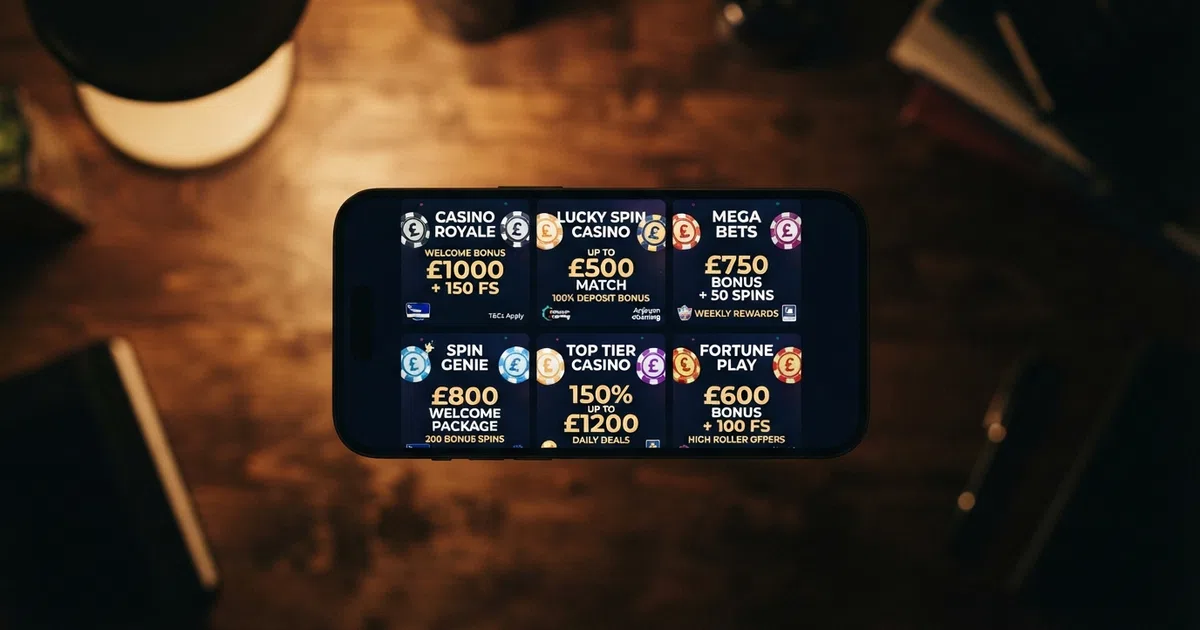
An offshore casino, for the purposes of this page, is a gambling site that takes UK customers without holding a Gambling Commission licence. The offshore label is a legal description, not a marketing one. A site can call itself “international”, “worldwide” or “for UK players” and still be offshore in the sense the Gambling Commission uses: serving Great Britain without the point-of-consumption licence that the Gambling (Licensing and Advertising) Act 2014 made compulsory. Every operator reviewed below falls into that category. None holds a UKGC licence.
That is the only sensible place to start, because the rest of the page reads very differently once the legal frame is fixed. The bonuses get louder, the wagering multiples heavier, the spin caps absent and the responsible-gambling tools thinner. The reason UK players end up on these sites is a compound of what UK rules forbid and what the offshore market offers instead: higher stakes, credit cards still welcome, no mandatory pre-deposit identity check, and bonus structures that a 10× wagering cap would never permit at home.
The page below ranks ten of those operators side by side, then unpacks the welcome-offer maths, the cashout process, the crypto question, the UK legal position, the safety net the reader is leaving behind, and finally what a UK player should actually do with the picture. The numbers come from operator pages, the Curaçao Gaming Authority and Anjouan Gaming Board registers, the UK Gambling Commission’s published data, and the National Health Service and GamCare datasets. The words are an editor’s; the arithmetic is the page’s.
What an offshore casino is — and the gap it fills for UK players
The definition: licensed abroad, serving British players
A casino is offshore, in the UK regulatory sense, the moment it accepts a customer in Great Britain without a Gambling Commission licence. The location of the company, the location of its servers and the location of its licence do not change that: the Gambling (Licensing and Advertising) Act 2014 made the licence requirement point-of-consumption, so a Curaçao licence held by a Maltese company running servers in Ireland still does not satisfy UK law if GB players are being served. Section 33 of the Gambling Act 2005 makes providing gambling facilities without the required licence a criminal offence, carrying up to 51 weeks’ imprisonment, an unlimited fine, or both.
That sounds severe, and it is. The legal weight falls on the operator. The player is in a different position: nobody has been prosecuted in the UK for the act of gambling on an unlicensed site, and the practical risk for the person depositing is that every UKGC protection evaporates at the point of access. No GAMSTOP coverage, no approved alternative dispute resolution provider, no British consumer-redress route, and no Commission-backed complaints channel if a withdrawal stalls. The reader can use these sites; the page’s job is to be clear about what using them costs.
Why the UK punter turns to these sites
Three domestic rules push British players offshore, and the pages that follow keep coming back to them.
The first is the stake cap. Since the spring of 20265, online slots at UK-licensed sites have carried a statutory maximum per game cycle: £5 for players aged 25 and over, £2 for those aged 18 to 24. Offshore, there is no such cap; a player with the bankroll can stake whatever the operator accepts. For high-stake slots players, that is the single biggest reason the market exists.
The second is the credit-card ban. Since 14 April 2020, UK rules have forbidden credit cards for any remote gambling, including credit-card-funded e-wallet deposits. Offshore operators sit outside that rule. Cards are widely accepted, both for deposits and for the credit-funded e-wallet routes that UK sites now block.
The third is the identity check. UK-licensed sites must verify identity before any deposit, and a registered player is checked against GAMSTOP. Offshore sites, especially the crypto-led ones, frequently accept a deposit and start a session without an ID upload at all. The verification commonly triggers later, at withdrawal, but the moment of first deposit is frictionless in a way UK sites no longer are.
Behind those three rules sits a tax one. Remote Gaming Duty on online casino operators rose from 21% to 40% on 1 April 20266 — a near-doubling, announced in the Autumn Budget 20265. The statutory levy on remote operators runs at 1.1% of gross gambling yield from 6 April 20265. UK operators are now paying roughly half their GGY in duty before the cost of compliance, the affordability check, the stake cap and the £150 net-deposit vulnerability check. Some respond by thinning their bonus offerings; others decide the GB market is no longer worth the licence. Both responses shrink what a UK-licensed casino can offer a UK player, and the offshore market exists to fill the gap.
The games an offshore lobby actually carries
The lobby size is one of the loudest numbers offshore sites publish, and the larger ones are genuinely vast. BC.Game carries 10,000+ titles; 7Bit’s count sits above 5,000; GoldenBet passes 4,000; Cloudbet claims 3,000+. Most of these catalogues are built on the same provider backbone, which means a Pragmatic Play, Evolution, NetEnt, Play’n GO, Hacksaw Gaming or Nolimit City title on a UK-licensed site is usually on these sites as well. Stake adds its own proprietary layer of Stake Originals — in-house games with provably fair mechanics, which are the only category of content not drawn from a third-party studio. Ignition, the outlier of the ten, runs on a RealTime Gaming / Rival / Betsoft stack that is closer to the older US-facing offshore scene.
The practical reading: the slot the reader is looking for is almost certainly present, the live dealer lobby will be Evolution- or Pragmatic-Live-led, and the only material difference from a UK-licensed lobby is that offshore titles ship without the slot-design restrictions that the UK has layered on since 2021 — auto-play, the 2.5-second minimum spin speed, the losses-disguised-as-wins ban. Those are explained in the section on UK rules offshore sites skip.
Sites, platforms and directories, defined
A reader searching for “best offshore casino sites” is usually served two different things and rarely told which is which. A casino site is the operator itself — the place where a player registers, deposits and plays. A casino directory is a third-party page that lists operators, sometimes with affiliate links, sometimes with editorial write-ups. The ten operators reviewed below are casino sites, not directory entries; they were chosen as the operators themselves, not as picks from a listicle.
The ranking itself lives in the comparison table that follows. Every figure in that table comes from the operators’ own published terms or from a third-party listing cross-referenced against the operator’s site. Where a figure could not be confirmed this run, the cell is left as the no-data marker rather than guessed. The bonus amounts, wagering multiples and free-spin counts are taken from the operators’ own pages at the time of writing, and the rest of the page treats them as the working numbers.
Ten offshore operators, tested side by side
The ten operators are presented in three layers. The table compares them on the four numbers a reader is most likely to scan for: licence jurisdiction, welcome offer, wagering multiple and the free spins in the welcome package. The ten blocks under the table walk through each operator in turn and add the figures the table cannot carry — the game count, the verification practice, the withdrawal route, the verdict.
| Operator | Licence jurisdiction | Welcome offer | Wagering requirement | Free spins in welcome |
|---|---|---|---|---|
| Stake.com | Curaçao (GCB) | — | — | — |
| BC.Game | Anjouan (ALSI-202410011-FI1) | Up to $4,000 + 400 FS | 35× | 400 |
| MyStake | Curaçao (OGL/2024/1798/1048) | 150% up to £200 | 30× | 25 |
| GoldenBet | Curaçao (eGaming) | 300% up to £1,500 | 30× casino / 10× sports | — |
| Cloudbet | Curaçao + Anjouan | Up to $2,500 + 200 FS | 0× | 200 |
| Donbet | Curaçao (365/JAZ) | 150% up to £750 + 50 FS | 30× combined | 50 |
| VeloBet | Curaçao (eGaming) | 150% up to £500 + 70 FS | 30× bonus / 35× FS winnings | 70 |
| Freshbet | Curaçao (eGaming) | 100% up to £500 | 30× bonus only | 25 no-deposit |
| 7Bit Casino | Curaçao (OGL/2023/174/0082) | — | — | — |
| Ignition | Curaçao | — | — | — |
All ten operators are unlicensed in Great Britain. The licence jurisdiction column shows where each one does hold a licence. Where the welcome offer, wagering multiple or spin count could not be confirmed this run, the cell carries the no-data marker rather than a guessed number.
Stake.com: rakeback and races instead of a welcome bonus
Stake is the operator of the set that does not run a traditional welcome bonus at all. The brand was built on a different model: rakeback on every bet, daily races with a fixed prize pool, reload promotions and a sportsbook-led promo calendar. That structure is the offer. It sits under a Curaçao GCB licence — the licence number was not confirmed this run against the CGA register, and a player planning to deposit should check the register before relying on the licence badge.
The game library is wide and unusually well integrated. Stake’s own Stake Originals sit alongside the same Pragmatic Play, Evolution, Hacksaw Gaming, Nolimit City and Push Gaming catalogue every other large offshore casino runs, which means the games are familiar and the RTP numbers on slots like Gates of Olympus and Sweet Bonanza match what those providers publish. The 0× wagering the brand is famous for applies to the rakeback and the race prize pool, not to a first-deposit bonus that does not exist.
For a UK player who would rather be paid in cashback than chase a bonus that needs to be turned over 30 times, Stake reads as the cleanest offer on the page. The trade is the absence of a first-deposit match, which the table shows as no data. Stake.com remains the strategic choice for players who prefer rakeback over a traditional welcome package.
BC.Game: the four-deposit package under an Anjouan licence
BC.Game runs the largest multi-deposit welcome of the ten: up to $4,000 plus 400 free spins spread across the first four deposits, with a 35× wagering requirement applied to the bonus. The licence is Anjouan, not Curaçao, which puts it a tier lower on the consumer-recourse hierarchy (the section on licences behind the logos explains why that matters), but the licence number is published: ALSI-202410011-FI1, and a player can check it on the Anjouan register rather than take the operator’s word.
The lobby is the largest in the set at 10,000+ games, and the coin coverage is unusually wide — 150+ supported cryptocurrencies. Pragmatic Play and Evolution anchor the live dealer and slots side; BGaming and the platform’s own titles fill in the rest. The combined effect is a casino that feels less like a single product and more like an aggregator: a player who wants variety above polish tends to land here.
The honest read on the bonus: $4,000 spread across four deposits means the headline is generous only if the player is depositing at full stretch on every leg. A first-deposit match of 100% up to $1,000 with 100 free spins is more typical; later deposits are smaller and the player has to keep the chain going to reach the headline figure. The 35× wagering on a $1,000 bonus means $35,000 of qualifying turnover before withdrawal, which the next section puts against an RTP to give a real cost.
MyStake: a 150% match capped at £200
MyStake is the smallest headline bonus in the set, and that is a virtue, not a vice. The offer is 150% up to £200 on a casino first deposit, with 25 free spins attached and a 30× wagering multiple on the bonus. Some listings also mention a cashback component up to £300, which is worth checking on the operator’s own promo page. The licence is Curaçao GCB, OGL/2024/1798/1048, operator Santeda International B.V., and the OGL number is one of the two Curaçao licence numbers the research confirmed this run.
The provider backbone is the standard offshore stack: Pragmatic Play, Evolution, NetEnt, Play’n GO, Microgaming. None of the games the player already plays at a UK-licensed site will be missing; none of the game-design restrictions the UK has imposed since 2021 will be in force. That is the most concrete meaning of an offshore lobby in practice.
The 30× wagering on a £200 bonus means £6,000 of qualifying turnover. Against the 96.50% RTP of Gates of Olympus, that is roughly £174 of expected house-edge cost over the clearing period — a small fraction of the bonus’s headline value, and a useful baseline against which the bigger bonuses below can be measured. MyStake suits players who prefer a straightforward bonus structure with a low wagering requirement.
GoldenBet: a 300% headline on a 4,000-game lobby
GoldenBet’s headline is the loudest in the set: 300% up to £1,500. The wagering is 30× on casino bonuses and 10× on the sportsbook, and the lobby is a serious 4,000+ games. The licence is Curaçao eGaming — the licence number could not be confirmed this run, so the OGL badge should be checked before deposit.
The shape of the offer is what makes it worth reading carefully. A 300% match on a £500 deposit returns £1,500 in bonus funds, and at 30× wagering that is £60,000 of qualifying turnover before withdrawal. At 96.50% RTP, the expected house-edge cost sits near £1,740 — a number that the marketing page does not show next to the 300% headline. The arithmetic the next section runs in full applies directly.
The 4,000-game count is real but not differentiated: the providers are Pragmatic Play, Evolution, Play’n GO, the same mix as elsewhere. What GoldenBet adds over a smaller lobby is breadth in the mid-tier providers — less-popular slots, niche live-dealer variants, regional table games — which matters to a player who has already exhausted the obvious catalogue at other sites. GoldenBet is our recommendation for those prioritising lobby size over the ease of meeting wagering requirements.
Cloudbet: the zero-wagering outlier
Cloudbet runs the only zero-wagering welcome in the set: up to $2,500 in real cash plus 200 free spins, with no playthrough conditions on either. The 0× is the headline and the entire reason Cloudbet is on this list. The licence is dual Curaçao + Anjouan; the licence numbers could not be confirmed this run, but the operator has been in the market since 2013 and is one of the more established crypto-led brands.
The catch sits in the small print, and the small print is in the T&Cs. Cloudbet’s terms restrict the United Kingdom, which is the kind of restriction an offshore operator publishes but does not always enforce at the deposit page. A UK player who can register and deposit from a UK IP, or who chooses to use a VPN, is betting against the operator’s right to void winnings if the player is later judged to be a restricted territory. This is the single sharpest risk on the page, and it sits at Cloudbet specifically.
For a UK player who reads the T&Cs, accepts the restriction, and is using a payment route the operator does not later dispute, the 0× is unbeatable. A 200-free-spin grant on a 96.50% slot has an expected value the wagering-cleared bonuses cannot match. Cloudbet represents a high-risk, high-reward option that hinges entirely on the player acknowledging the UK-restriction clause.
Donbet: a £750 match on a £20 deposit
Donbet runs 150% up to £750 plus 50 free spins on a £20 minimum deposit, with a 30× combined wagering requirement on the deposit-plus-bonus. The licence is Curaçao GCB, number 365/JAZ — the second of the two Curaçao numbers confirmed this run. There is a separate crypto welcome (170% up to £1,000 plus 100 free spins) and a sports welcome (120% up to £600), which is worth noting because the research picks the casino track by default.
The provider stack is the standard offshore mix: Pragmatic Play, Evolution, Play’n GO, NetEnt. Nothing on the game side is differentiating; what Donbet adds is the structure — a casino welcome that is larger than MyStake’s £200 but with the same 30× combined structure, which means the player is paying the wagering on the deposit as well as the bonus. That is more onerous than 30× on the bonus alone, and the table reflects it.
The £20 minimum deposit is the practical entry point for the set’s typical UK player. Donbet serves as a balanced option for players who favour traditional currency deposits and a moderate wagering burden.
VeloBet: 70 spins with a £100 cashout cap
VeloBet runs 150% up to £500 plus 70 free spins on deposits under £500, with a different shape on deposits above that line (100% up to £1,000 plus 70 free spins). The wagering is 30× on the bonus and 35× on free-spin winnings, which is the heaviest spin-wagering in the set alongside the headline figure. The free-spin wins also carry a £100 maximum cashout — a cap that, more than any other line in the table, decides what the bonus is actually worth.
The maths is harsh. 70 free spins at 96.50% RTP and a 10p-per-spin stake (a common free-spin stake on offshore welcome offers) has an expected return of roughly £3.46, and the 35× wagering on the winnings multiplies that small base by 35 before any of it can be withdrawn. The £100 cashout cap means the most a player can ever take from the free-spin component is £100, no matter what the spins actually return — and a 35× playthrough on a small win is hard to clear at that cap. The bonus percentage is competitive; the free-spin component is the part a reader should be honest about.
The licence is Curaçao eGaming, number not confirmed this run. VeloBet is a compelling choice for bonus seekers who view free spins as a secondary benefit rather than the headline feature.
Freshbet: 25 no-deposit spins to start
Freshbet is the only operator in the set with a confirmed no-deposit welcome component: 25 free spins credited before the first deposit, alongside a 100% up to £500 first-deposit match. The wagering is 30× on the bonus only, not on the deposit, which is a meaningfully lighter structure than the 30× combined at Donbet. The minimum deposit is £20; the licence is Curaçao eGaming, number not confirmed this run.
The no-deposit spins are the only confirmed no-deposit offer among the ten, which is why the table flags them. Most “no-deposit bonus” claims on offshore listings turn out, on closer reading, to require a deposit before the spins are credited. Freshbet’s 25 spins are credited on registration, which is rare and worth stating plainly.
The 100% up to £500 first-deposit match is mid-table; 30× on bonus only is competitive; the no-deposit spins are the part that should be the deciding factor. Freshbet stands out as an ideal starting point for players who want to test the lobby without an initial financial commitment.
7Bit Casino: a 2014 veteran under Dama’s ownership
7Bit is the longest-running operator in the set, live since 2014, and one of the better-known Dama N.V. brands — Dama runs a SoftSwiss platform stack and operates a string of Curaçao-licensed casinos under the OGL/2023/174/0082 umbrella. The licence number is published, which is the practical reason to take the brand seriously: it can be checked on the CGA register rather than taken on trust.
The 5,000+ game count is real and the SoftSwiss platform is one of the more established aggregator stacks, which means the Pragmatic Play / Evolution / BGaming / Betsoft backbone is properly wired rather than lightly bolted on. The minimum deposit on the crypto side is 0.22 mBTC, which is a small entry point for a bitcoin-led player.
The welcome offer specifics — match amounts, free-spin counts, wagering multiple — could not be confirmed this run, so the table leaves those cells as the no-data marker. 7Bit is a strong candidate for players seeking a decade of operational stability and a verifiable licence number.
Ignition: crypto payouts in hours, cards for deposits only
Ignition is the operator that does not run on the standard offshore stack at all. The game providers are RealTime Gaming, Rival and Betsoft — the US-facing software houses that dominated the early offshore market. The lobby is smaller than the rest of the set and the slots are not the same Pragmatic Play / Hacksaw / Nolimit titles the other nine run. The licence is Curaçao, number not confirmed this run.
The differentiating feature is the cashout speed on crypto. Ignition’s payouts clear in 4–12 hours when paid in bitcoin or another supported coin — meaningfully faster than the typical 24–72 hours the rest of the set quotes. The constraint is on the other side: cards are accepted for deposits but not for withdrawals, and a player who deposited with a card has to move to crypto or to a bank transfer to get the money out. Welcome-bonus specifics could not be confirmed this run.
Ignition caters specifically to crypto users who prioritise rapid payouts over the standard library of titles.
Why the headline bonus is rarely the real bonus
The “300% up to £1,500” line on a welcome page is the marketing cost of the bonus, not its value to the player. Two numbers decide what the bonus is actually worth: the wagering requirement and the RTP of the games the wagering must be cleared on. The UK caps wagering at 10× on bonuses as of 19 December 20265. Offshore, 30× is standard and 35× is the upper edge; Cloudbet is the only zero. The arithmetic that turns the headline into a real cost is straightforward and worth running.
The expected-loss formula is: required turnover × (1 − RTP). Take MyStake’s 150% up to £200 at 30× wagering on a £133 deposit (the amount that returns a £200 bonus at 150%). Required turnover: £200 × 30 = £6,000. At 96.50% RTP — the figure for Gates of Olympus, a typical bonus-locked slot — the expected house-edge cost over the clearing period is roughly £6,000 × 0.035 = £210. The bonus pays £200; the expected cost of clearing it is £210. The bonus, on average, costs more than it pays.
Run the same calculation against BC.Game’s $4,000 headline at 35×: required turnover is $4,000 × 35 = $140,000. At 96.50% RTP, the expected house-edge cost is roughly $140,000 × 0.035 = $4,900. The bonus pays up to $4,000; the expected cost of clearing it is up to $4,900. The bigger the bonus, the bigger the turnover, and the bigger the cost — and the marketing page does not run those two numbers side by side.
The UK 10× cap is not an arbitrary threshold. At 10× on a £200 bonus (£2,000 turnover), the expected house-edge cost is roughly £70 — well below the £200 bonus and a genuinely positive-EV offer before the player has even accounted for the chance of a clean cashout. Offshore, where 30× and 35× are normal, the EV flips negative as soon as the bonus gets large enough. A player who is choosing between a 300% up to £1,500 at 30× and a 150% up to £200 at 30× is choosing between an offer that costs roughly £1,575 to clear and an offer that costs roughly £210 to clear. The smaller bonus is the better deal in expectation.
The “0×” at Cloudbet is the structural exception. A bonus with no wagering pays the bonus amount in cash, with no playthrough, and the expected house-edge cost is zero on the bonus itself. The risk shifts entirely to the T&Cs — the country restriction, the maximum bet during the bonus, the game-weighting rules. The next sections walk through those mechanics in full.
Welcome offers and deposit matches, decoded
The deposit match is the most common shape of offshore welcome, and the terms on which it is offered matter more than the headline percentage. MyStake’s 150% up to £200 is paired with 30× wagering on the bonus; the 25 free spins are an attached extra and the cashback component up to £300 is a separate promo. GoldenBet’s 300% up to £1,500 is paired with 30× on casino bonuses, with 10× on the sportsbook as a separate track. Donbet’s 150% up to £750 plus 50 free spins runs at 30× combined, meaning the wagering applies to the deposit-plus-bonus, which is materially heavier than 30× on the bonus alone. VeloBet’s 150% up to £500 plus 70 free spins runs at 30× on the bonus and 35× on free-spin winnings, with a £100 cashout cap on the spin returns. Freshbet’s 100% up to £500 runs at 30× on the bonus only, with 25 no-deposit free spins attached.
BC.Game’s $4,000 plus 400 free spins is the multi-deposit exception: the headline is reached across four deposits, with 35× wagering on each leg. The 400 free spins are the largest spin grant in the set, and the slots they apply to are typically the Pragmatic Play titles that the slot table below prices.
The single-number contrast with the UK is sharp. The UK caps wagering at 10× as of 19 December 20265; the standard offshore multiple is 30× to 35×; Cloudbet is 0×. The Cloudbet outlier is the only welcome on the page that pays the bonus as cash, and it is the only one whose small print a UK player must read most carefully because of the country restriction.
No-deposit bonuses: the free look that comes with strings
A no-deposit bonus is the marketing term for free spins or free cash credited on registration, before the first deposit. Freshbet’s 25 no-deposit free spins are the only confirmed no-deposit offer in the ten-operator set. Most “no-deposit” claims attached to offshore casino listings, on closer reading, require a deposit before the spins are credited, or apply the wagering multiple to a deposit that must be made before any withdrawal.
The real cost of a no-deposit bonus is in the terms the marketing page does not show next to the word “free”. 25 free spins at 10p per spin on a 96.50% slot have an expected return of roughly £0.86 before wagering. At 30× wagering on the winnings, the player needs to turn over roughly £26 before any withdrawal is possible. A £10 maximum cashout cap — common on no-deposit offers — turns the bonus into a small taste of the lobby rather than a meaningful stake. The honest framing: a no-deposit offer is a way to see whether the lobby and the cashout process work for the player, not a way to win anything material.
The five slots behind the free spins, and their real RTP
The free-spin grants in this set are most often attached to a small group of Pragmatic Play, Play’n GO and NetEnt slots. The RTP figures below are the published defaults for each title; the volatility is the provider’s own classification; the max win is the slot’s ceiling per spin.
| Slot title | Provider | RTP (default) | Volatility | Max win |
|---|---|---|---|---|
| Gates of Olympus | Pragmatic Play | 96.50% | High | 5,000× stake |
| Sweet Bonanza | Pragmatic Play | 96.48–96.51% | High | 21,100–21,175× stake |
| Big Bass Bonanza | Pragmatic Play | 96.71% | High | 2,100× stake |
| Book of Dead | Play’n GO | 96.21% | High | 5,000× stake |
| Starburst | NetEnt | 96.09% | Low | 500× stake |
The five slots cluster tightly between 96.09% and 96.71% RTP, which means the per-spin house edge sits between 3.29% and 3.91%. Against a 30× wagering requirement on a £200 bonus, that house edge is what the expected-loss calculation above uses to put a real cost on the clearing. The volatility column matters for the player experience: a high-volatility slot can return nothing for long stretches and then pay a large multiple of stake on a single spin, which is the shape of the game that the wagering requirement interacts with worst. A player clearing a 30× bonus on a high-volatility slot is more likely to hit zero before clearing than a player clearing the same bonus on a low-volatility slot at the same RTP.
The max win column sets the ceiling on a single spin’s return. Sweet Bonanza’s 21,100× is the largest of the set; a 10p spin can return up to £2,110, which is a real number against a 30× playthrough — but the probability of hitting that ceiling is the kind of figure the marketing page does not show next to the free-spin grant.
Cashouts are where an offshore casino proves itself
A welcome bonus is what gets a player through the door. The cashout is what decides whether the casino was worth visiting. Offshore cashouts are not the same as UK-licensed ones: there is no GAMSTOP check, no £150 net-deposit vulnerability trigger, and no Commission-backed complaints route if a withdrawal stalls. The verification still happens, but it usually triggers at withdrawal rather than at first deposit. The section below walks through the routes and the timelines.
How money goes in: the deposit methods that work from the UK
The three working deposit routes from a UK IP are cards, e-wallets and crypto. Cards are widely accepted; Visa and Mastercard are the standard, and several operators also accept credit cards directly, which the UK banned for remote gambling in April 2020. That ban is a UK rule; offshore sites sit outside it, which is why a UK player with no other option can still fund an offshore account with a credit card in a way a UK-licensed site will not allow. E-wallets — Skrill, Neteller, MuchBetter, MiFinity — are standard, though the e-wallet-to-card credit-funding route is also restricted under the UK rule; offshore operators vary on whether they enforce the underlying funding source. Crypto is the default at the crypto-led brands: bitcoin, ethereum, tether, litecoin and a wider altcoin range at BC.Game specifically.
Ignition’s deposit policy is the unusual one: cards are accepted for deposits but not for withdrawals, so a card-funded player has to switch payment route at the cashout step. That constraint is the practical reason Ignition’s 4–12 hour crypto payout reads as fast rather than normal — it is normal for crypto, but the card-funded player never gets to use it.
The UK credit-card ban and the UK mandatory pre-deposit identity check are both UK rules, not offshore rules. A UK player moving from a UK-licensed site to an offshore site gives up both of those constraints at the deposit step and only re-encounters them — partially — at the withdrawal step.
How money comes back: withdrawal routes and realistic timelines
Three routes: crypto, e-wallets and cards. Crypto is the fastest of the three at every operator that supports it. Ignition’s 4–12 hour clearance is the confirmed figure in the set; BC.Game and the other crypto-led brands publish similar windows, though the exact figure was not confirmed in research for those operators. E-wallet withdrawals typically clear within 24 hours once the operator has approved them. Card withdrawals run 1–5 business days, depending on the issuer, and the UK card schemes have been tightening their stance on gambling-related transactions on both sides of the licence line.
The verification that does not happen at deposit happens at withdrawal. A first withdrawal typically triggers a KYC request: a photo ID, a proof of address, and sometimes a screenshot of the payment method used to deposit. Approval time on a first KYC submission is 24–72 hours at most well-run operators, and longer at the others. A player who has been told the casino is “no KYC” because it allowed an unverified deposit is being told the truth about the deposit step, not the truth about the cashout step.
There is no UK-style £150 net-deposit vulnerability check offshore. That check is a UK rule under LCCP Social Responsibility Code 3.4.4, in force from 28 February 20265, and the offshore operators do not run it. The player who would be flagged for a vulnerability check at a UK site is not flagged at an offshore one — which is the upside for some readers and the downside for others, and is part of the section on the safety net the UK player leaves behind.
Real-money play: what cashouts at these sites cost in time
The end-to-end cashout journey at an offshore site is a sequence: play, request withdrawal, complete KYC if first time, wait for approval, wait for the payment rail. At an operator with crypto and a 4–12 hour payout window, the realistic end-to-end time from “request” to “funds in wallet” is 24–48 hours, including the KYC step on a first withdrawal. At an operator paying by card, the realistic end-to-end time is 3–7 business days, with KYC on top. The numbers in research are mostly qualitative; the only confirmed quantitative figure in the set is Ignition’s 4–12 hour crypto clearance.
What the reader is paying for the speed is the absence of the UK protections. No GAMSTOP, no UKGC complaints route, no approved ADR provider, and no British consumer-redress lever if the operator declines the withdrawal. The next subsection covers the recourse that does remain.
Chargebacks and disputes: the recourse a UK player keeps
A UK player at an offshore casino has no UKGC complaints channel and no approved alternative dispute resolution provider. The UKGC’s oversight stops at the border, and the approved ADR providers — IBAS, for example — only handle disputes with UK-licensed operators. The one formal lever a UK player keeps is a card chargeback through the card issuer, under the chargeback rules of the card scheme.
A chargeback can recover a deposit that was not wagered, in cases where the merchant is unresponsive. A chargeback cannot reverse a wager that lost, and a chargeback initiated after the player has wagered the funds is treated by most operators as a breach of the bonus terms and can result in the account being closed and winnings confiscated. The practical reading: a chargeback is the right tool for an unresponsive operator that refuses to release a verified withdrawal, and the wrong tool for a player who lost and wants the money back. The card issuer’s evidence requirements are strict, and the operator’s right to produce a play-log and bonus-terms acceptance is what the dispute will be decided on.
The deeper point: the absence of a UKGC complaints channel means there is no independent third party to escalate to. A player who has tried the operator’s own support, then the operator’s complaints email, then the card chargeback, has reached the end of the formal UK-anchored routes. The next step is a lawyer, and the cost-benefit rarely justifies it for a disputed withdrawal under a few hundred pounds.
Crypto and no-KYC play: anonymity with strings attached
A study linked to the University of Bristol looked at 40 crypto casinos accessible from the UK and found that 92.5% of them allowed deposits without identity checks, and roughly half were reachable directly from the UK or via a free VPN. The headline “no KYC” is real at the deposit step. The qualifier is what happens next.
Bitcoin and altcoin casinos: why crypto is the offshore default
Crypto is the offshore default because it solves a problem the offshore market has: the card networks and e-wallets have been tightening around unlicensed gambling. Bitcoin, ethereum and stablecoins move on rails that do not require the card schemes’ cooperation, and a deposit in tether settles in minutes without a UK bank being in the loop. The offshore market migrated there first, and the crypto-led brands are the ones that built their entire operation around it.
Cloudbet, BC.Game and Ignition are the three crypto-led operators of the set. Cloudbet runs on bitcoin and a range of altcoins; BC.Game supports 150+ coins, which is the widest range in the set; Ignition’s distinguishing feature is the 4–12 hour crypto payout rather than the coin range. Each of them is built around a payment rail that does not interact with a UK bank, which is the structural reason they can serve UK customers without a UKGC licence in a way that a card-led operator increasingly cannot.
No-KYC promises versus the verification that still triggers
The “no KYC” branding is real at the deposit step and conditional at the withdrawal step. A player can register with an email, deposit in bitcoin, and play a session without an ID upload on the operators that allow it. The moment the player requests a withdrawal above a threshold — typically around €1,000–€2,000 equivalent, varying by operator — the KYC request triggers: photo ID, proof of address, source-of-funds in some cases. A withdrawal that hits the threshold without KYC will be held, not processed.
The pseudonymous nature of crypto wallets is what makes this practical. A wallet address is a string, not a name, and the operator cannot cross-check it against GAMSTOP. A UK player who has self-excluded via GAMSTOP and then opens an offshore account with a new wallet address is invisible to the GAMSTOP register. The research study’s finding is that this is exactly what happens: self-excluded players resume gambling on offshore sites within minutes of the self-exclusion going live. The “anonymity” the crypto marketing page sells is the same anonymity that lets a self-exclusion be bypassed in under five minutes.
The honest framing: crypto at an offshore casino is a payment rail, not an identity shield. The deposit is anonymous; the withdrawal is not, by the time the operator’s compliance step runs. A player who plans to withdraw a meaningful amount should expect to complete KYC at that point, and the offshore operator that says otherwise is the operator whose terms need to be read most carefully.
Is it legal? The UK position and where the risk really sits
The UK legal position splits cleanly between the operator and the player, and the split is what makes this market exist.

The licences behind the logos: Curaçao, Anjouan and the tiers
The licences on the ten operators fall into three tiers. Tier 1 is the strong end: Malta (MGA), Gibraltar and the Isle of Man. Heavy compliance, strong bank and payment-service-provider trust, EU-facing operators, the kind of licence a UK bank is comfortable settling with. None of the ten operators reviewed here holds a Tier 1 licence. Tier 2 is Curaçao, reformed under the National Ordinance on Games of Chance (LOK). The Curaçao Gaming Authority now issues direct B2C licences; the old sub-licence model has been abolished; the CGA Certificate of Operation orange seal transition ended on 15 October 20265 and only the green seal is now valid. A Curaçao licence under the LOK costs €47,450 a year in total fees — €4,592 application, €24,490 government licence, €22,960 CGA supervisory — and takes three to six months to issue. The result is a light-touch regime with weaker consumer recourse than MGA or UKGC, but with a real register a player can check at portal.cga.cw. Tier 3 is the bottom: Anjouan, Kahnawake, Costa Rica. Cheaper, faster, weaker banking access, very weak consumer protection.
Most of the set sits in Tier 2 (Curaçao) or Tier 3 (Anjouan). BC.Game is Anjouan (ALSI-202410011-FI1, the only licence number in the Tier 3 cluster confirmed this run). MyStake and 7Bit are Curaçao with confirmed OGL numbers (OGL/2024/1798/1048 and OGL/2023/174/0082 respectively). Donbet is Curaçao 365/JAZ, which is a sub-licence number from the pre-LOK era and sits in a grey zone the operator should clarify. Stake, GoldenBet, VeloBet, Freshbet and Ignition are Curaçao with the licence number not confirmed this run against the CGA register.
The reader’s working assumption: a Curaçao OGL number that resolves on the CGA portal is a real licence; a Curaçao badge with no number is a marketing badge until the register says otherwise. The same applies to Anjouan.
What ‘regulated’ and ‘legit’ actually buy you offshore
“Regulated” and “legit” are the words offshore marketing uses most, and they are also the words that mean the least until they are tied to a specific register and a specific consumer-recourse route. A Curaçao or Anjouan licence buys a registered operator, a published rulebook, and a regulator that can revoke. It does not buy a UKGC complaints channel, an approved ADR provider, a British consumer-redress route, or any of the player-protection tools the UK has built over the last five years. The contrast is sharp in the next subsection.
The UKGC’s response to the offshore market is disruption rather than blocking. Between April 20264 and June 20265, the Commission issued 3,140 cease-and-desist and disruption notices, referred 447,778 URLs to search engines for removal, and reported 287,961 URLs removed, with an average 32% fall in engagement across 160 disrupted sites. In June 20266, the government confirmed £26 million in additional UKGC funding over three years to scale up and automate the disruption, and the regulator is exploring court-backed ISP-level blocking powers that it does not yet have. For the reader, the practical effect is that the offshore sites a UK player reaches through a search engine today may not be the same sites a UK player reaches through a search engine in a year’s time. The operators themselves persist; the URLs do not.
The UK rules offshore sites skip
The table below is the sharpest contrast on the page. Each UK rule, against the offshore position. The UK column is the result of the Gambling Act 2005, the LCCP and the various statutory instruments that have layered on since 2020; the offshore column is the absence of any equivalent rule.
| Rule | UK-licensed casino | Offshore casino |
|---|---|---|
| Online slot stake cap (age 25+) | £5 per game cycle | No cap |
| Online slot stake cap (age 18–24) | £2 per game cycle | No cap |
| Bonus wagering requirement | Capped at 10× | Typically 30×–35× (Cloudbet 0×) |
| Credit-card deposits | Banned | Accepted |
| Pre-deposit identity check | Mandatory | Not required (KYC may trigger at withdrawal) |
| Auto-play on slots | Banned | Permitted |
| Minimum spin speed | 2.5 seconds | No minimum |
| Losses disguised as wins | Banned | Permitted |
| Reverse withdrawals | Banned | Permitted |
| GAMSTOP self-exclusion | Mandatory and checked | Not checked |
| Vulnerability check at £150 net deposits/30 days | Mandatory | Not run |
| Deposit limit prompt before first deposit | Mandatory | Not required |
| Approved ADR provider | Available | Not available |
The table is the policy gap in one view. Every UK rule on the left exists because the UK decided, through statute and Commission code, that player protection required it. Every cell on the right is what a UK player gives up by moving offshore. The cells that are most often marketed as benefits — no stake cap, credit cards accepted, no pre-deposit ID — are the cells that the policy gap is about.
The protections a UK player loses
The lost protections are not abstract. GAMSTOP is the most concrete: a self-exclusion that registers the player across every UK-licensed online operator for 6 months, 1 year, 5 years, or 5 years with auto-renewal, and that cannot be cancelled early. An offshore operator does not check GAMSTOP, and a self-excluded player can be playing on a Curaçao-licensed site within minutes. That is the protection that matters most to the players who need it most, and it is the protection that the offshore market most directly undermines.
The UKGC’s enforcement picture is the larger context. Between October 20264 and September 20265, the Commission reported 208,088 enforcement actions on illegal online gambling, the largest category being search-engine referrals. The black market is forecast to reach £33 billion in stakes by 20268, which is the same market the offshore casino page is one entry point into. A UK player using these sites is using a market the UK regulator is actively trying to shrink, and the policy environment around that market — funding, ISP-blocking proposals, levy increases — is moving in the direction of more enforcement rather than less.
UKGC-licensed alternatives, if you want them
A UKGC-licensed alternative is the simpler version of this page. The £5/£2 stake cap is the cost; the credit-card ban is the cost; the mandatory pre-deposit ID and the GAMSTOP check are the cost. In return, the player gets a 10× wagering cap, an approved ADR route, a Commission complaints channel, a vulnerability check at £150 net deposits, a deposit-limit prompt before the first deposit, a 2.5-second minimum spin speed, no losses-disguised-as-wins, no auto-play, no reverse withdrawals, and a regulator that is funded to disrupt the offshore market. A player who does not need any of the things the offshore market offers — the high stakes, the credit cards, the no-deposit ID, the larger bonus — does not need to be on an offshore site at all.
The honest read for a UK player who is choosing: the offshore market is not a higher-reward version of the UK market; it is a different market, with a different rulebook, a different protection set, and a different enforcement environment. The bonuses are larger because the rules are looser, and the rules are looser because the protections are absent. The next section lays out which of those protections the player is most likely to want back.
Playing offshore without the UK’s safety net
The responsible-gambling layer the UK has built over the last five years is the layer that stops at the border. The help resources the UK funds still exist for UK residents, and the rest of this section explains what the offshore lobby will not hand the player and where the UK-based help is when it is needed.
Self-exclusion: why GAMSTOP stops at the UK border
GAMSTOP is the national self-exclusion register for online gambling in Great Britain, mandatory for every UKGC-licensed operator since 31 March 2020. The exclusion periods are 6 months, 1 year, 5 years, or 5 years with auto-renewal; the exclusion cannot be lifted early; the operator must check the register before allowing an account to be opened or a deposit to be made. A player who has self-excluded is, at a UK-licensed site, locked out for the chosen period.
The same player on an offshore site is not. The offshore operator is not on the GAMSTOP register, has no obligation to check it, and the pseudonymous wallet the offshore site accepts as a deposit route carries no name the operator could cross-check. The research cited earlier found self-excluded players resuming on offshore sites within minutes of the GAMSTOP exclusion going live. That is the GAMSTOP gap in plain terms, and it is the protection most directly lost.
The offshore site’s own self-exclusion tool is the alternative, and it is the weaker one. A self-exclusion at an offshore site applies to that one site; it does not follow the player to the next offshore site; and the player can open a new account at a different offshore operator with a different email and a different wallet. The single-register model that GAMSTOP provides does not exist offshore.
Deposit and session limits: tools the offshore lobby will not hand you
UK-licensed operators must prompt the customer to set a financial limit before the first deposit, and the limit decrease must be actioned immediately. The standardisation of gross deposit limits is being extended to 30 September 20266, which tightens the model further. Offshore, the equivalent prompt does not exist. The player who wants a deposit limit has to set it themselves in the responsible-gambling settings of whichever site they are using, and the limit is only as strong as the operator’s compliance team is willing to enforce it.
Session limits — time-out reminders, forced logouts after a configured session length — are similarly absent as a UK-style mandate. The tools exist at the better-run offshore sites, but they are tools the player has to find, configure and trust. The UK model makes them a default; the offshore model makes them an opt-in.
Reality checks and time-outs: the safeguards missing offshore
The UK has banned auto-play on slots, set a minimum spin speed of 2.5 seconds, banned losses-disguised-as-wins audio and visual cues, and banned reverse withdrawals. None of those four rules apply offshore. A player at an offshore site can run slots on turbo mode at 1-spin-per-second, can hear the celebratory sound on a spin that returned less than the stake, and can reverse a withdrawal request to keep the funds in the playable balance. The “reverse withdrawal” lever is the most directly harmful of the four, because it is the lever that lets a player, in a single click, undo a decision that was made to take the money out.
The combined effect is that the offshore slot experience is faster, louder, and more frictionless than the UK-licensed equivalent, and a player moving from a UK-licensed site to an offshore one is moving from a slower, more deliberate slot experience to a faster, more reinforcing one. The bonus structures described above are tuned to that faster pace, and the wagering multiples are calibrated to a session length the UK has actively constrained.
Where to get help: the UK support services that still exist
- National Gambling Helpline (GamCare): 0808 8020 133 — free, confidential, available 24/7. 996 referrals to treatment in January 20266, up 48% on January 20265.
- GAMSTOP: national self-exclusion register for every UK-licensed online operator — 6 months, 1 year, 5 years, or 5 years with auto-renewal.
- NHS gambling treatment clinics: 15 specialist clinics in England, Scotland and Wales, with 4,355 referrals in 20264/20265 — a 91% increase on the prior year.
- GambleAware: charity funding prevention, research and treatment; the 2024 survey found 30% of problem gamblers want treatment, up from 17% in 2020.
- Gamblers Anonymous: peer-support meetings nationwide.
- Problem gambling prevalence (APMS 20263–20264): 0.4% of adults at PGSI 8+, 1.6% at moderate risk PGSI 3+; approximately 2 million children in households affected by an adult’s problem gambling.
These services are available to any UK resident, regardless of where they gamble. The offshore operator does not need to be involved; the help is direct.
How we chose and checked the operators on this page
The ten operators were selected as the offshore brands that publish clear bonus terms, clear licence jurisdiction, and a UK-facing product, and that are named consistently across the major affiliate listings in this market segment. The data on each operator was sourced from the operator’s own published terms, the Curaçao Gaming Authority portal where the OGL number was available, the Anjouan register where the licence number was available, and the major third-party casino-listings pages where the operator’s page could be cross-referenced.
The licence numbers that resolved against the CGA portal or the Anjouan register are stated next to the operator in the comparison table and in the write-up. The numbers that could not be confirmed this run are stated as “number not confirmed” rather than left blank, so a reader who is comparing the table can see which licences have been verified against a register and which have not.
The ranking criteria used to order the ten are qualitative, not weighted. The headline-bonus size, the wagering multiple, the free-spin count, the game-provider depth, the licence jurisdiction, and the payment-route coverage all weighed in. The order is editorial; the data is what it is, and the comparison table is the place to read across the ten.
What to do next: the verdict this page reaches
The verdict the page reaches is the one the data has been building towards from the first section. A UK player who does not need the things the offshore market offers — the higher stakes, the credit cards, the no-deposit ID, the larger bonus, the zero-wagering offer — does not need to be on an offshore site, and the UK’s safety net, the 10× wagering cap, the ADR route and the GAMSTOP coverage are the protections a UK-licensed site provides for reasons the offshore market exists to bypass.
A UK player who does want what the offshore market offers should pick on the wagering multiple first, the bonus size second, and the licence jurisdiction third. The wagering multiple is the number that decides what the bonus is worth in real money, the bonus size is the number the marketing leads with, and the licence jurisdiction is the number that decides what recourse exists if a withdrawal stalls. Cloudbet’s 0× is the structural winner on wagering but the country restriction is the reason to read the small print twice. MyStake’s 30× on a £200 bonus is the cleanest combination of size and burden. Donbet’s 30× combined is heavier than MyStake’s 30× on bonus, and the difference shows up in the cashout time. BC.Game’s $4,000 headline is the largest and the most expensive to clear. Freshbet’s no-deposit spins are the only confirmed no-deposit in the set. Stake’s rakeback-and-races model is the offer the player picks when the bonus is the part to be skipped.
A UK player who has self-excluded via GAMSTOP and is reading this page has already made the decision the rest of this page is built around, and the offshore market is the market that is most directly built against that decision. The National Gambling Helpline is 0808 8020 133, GAMSTOP is the register the offshore operator does not check, and the NHS clinics are the treatment route that does not depend on where the gambling happened. The offshore casino does not unmake a self-exclusion; it just lets the next session start without one. The reader who needs that line is the reader the page was written for.
Frequently asked questions
How does an offshore casino differ from a UKGC-licensed one?
A UKGC-licensed casino holds a Gambling Commission licence, is subject to the LCCP and the Gambling Act 2005, and provides the full UK player-protection set: GAMSTOP, ADR, £5/£2 stake caps, 10× wagering cap, mandatory pre-deposit ID, no credit cards, auto-play ban and 2.5-second spin speed. An offshore casino holds a Curaçao, Anjouan, Malta or other foreign licence, does not hold a UKGC licence, and is not subject to the UK rules. The legal risk sits with the operator, not the player.
Can I be prosecuted for playing at an offshore casino?
No UK player has been prosecuted for the act of gambling at an offshore casino. The criminal offence under section 33 of the Gambling Act 2005 is committed by the operator providing gambling facilities without a GB licence, not by the customer using them. The maximum penalty is up to 51 weeks’ imprisonment and/or an unlimited fine, and it is the operator that faces it. The player’s loss is the protection set, not the legal exposure.
What bonuses do offshore casinos offer compared to UK-licensed sites?
Offshore bonuses are larger and carry heavier conditions. A 300% match up to £1,500 at 30× wagering is a standard offshore shape; the UK caps wagering at 10× on bonuses as of 19 December 20265, which is the structural reason the offshore headlines are bigger. The Cloudbet 0× is the structural exception and the reason the small print on the country restriction is the part of the page to read most carefully. The expected-loss arithmetic on the heavier bonuses turns the headline negative in real money.
What happens if an offshore casino refuses to pay — can I complain to the UKGC?
No. The UKGC’s complaints route is for UK-licensed operators only, and there is no approved alternative dispute resolution provider covering offshore sites. A UK player’s only formal lever is a card chargeback through the card issuer, which is a real lever for an unverified deposit and a weak lever for a wagered-and-lost balance. The next step beyond the chargeback is a lawyer, and the cost-benefit rarely justifies it for a disputed withdrawal under a few hundred pounds.
Do I pay tax on winnings from an offshore casino in the UK?
No. UK gambling winnings are not subject to income tax or capital gains tax on the player side; the player-side betting duty was abolished in 2001. The tax that applies to offshore operators is the operator-side Remote Gaming Duty, which rose from 21% to 40% on 1 April 20266, plus the 1.1% statutory levy from 6 April 20265. Neither of those is a player-side charge, and a UK player withdrawing from an offshore casino pays no UK tax on the winnings.
Are crypto casinos safe for UK players and do they require KYC?
Crypto casinos are the offshore default for UK players, and the deposit step is typically KYC-free: a 2024 study of 40 UK-accessible crypto casinos found 92.5% allowed deposits without identity checks. The withdrawal step is a different question; KYC is commonly triggered at withdrawal above a threshold (typically €1,000–€2,000 equivalent), and the “no-KYC” branding is conditional, not absolute. Crypto wallets are pseudonymous, which means the operator cannot cross-check the player against GAMSTOP — the same anonymity that makes crypto deposits frictionless is the mechanism by which a self-excluded player can resume within minutes. “Safe” depends on the operator’s compliance and the player’s own controls.
Licence – topratedonlinecasinos-uk
Content created by the «topratedonlinecasinos-uk» team