
Anonymous crypto casinos UK players actually reach — and what 'no KYC' really costs
 Available in GB
*Verified against the UK Gambling Commission public register on 9 September 2026.*
There is no such thing as a UK-licensed anonymous crypto casino. The combination the phrase promises — a Great Britain Gambling Commission licence, a crypto deposit rail and no identity check at the door — does not exist in 2026, and it has not existed at any point in the past seven years. Every brand marketed to British players under that label is offshore-licensed, unlicensed in the strict GB sense, and operates outside the protections a GB licence attaches.
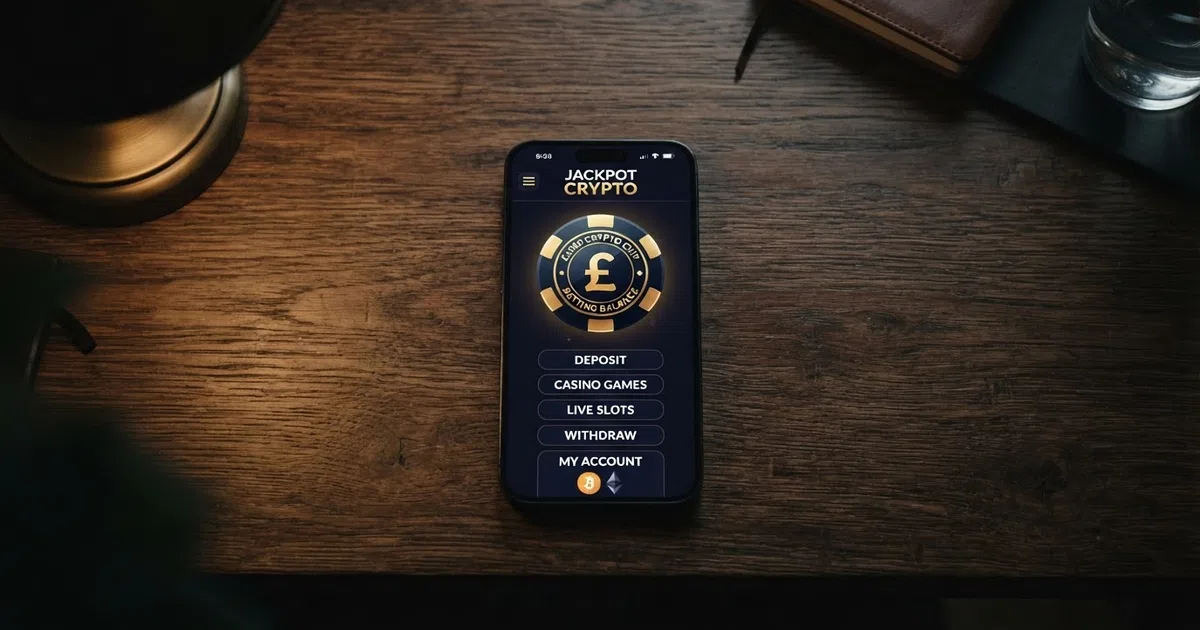
That is the gap this page sits inside. The ten brands UK players actually encounter in this niche are ranked and reviewed below. None carries a GB licence. Most are Curaçao-, Costa Rica- or Anjouan-licensed, and at least two of them now refuse British players outright. The legal position, the welcome bonuses that look larger than they pay, and what you give up when no regulator in Britain is checking who you are are all on the page.
What an “anonymous casino” really means — and what it doesn’t
The label is doing two things at once, and the second one is the part operators do not print.
In marketing, “anonymous casino” means the brand lets you open an account, deposit and play without uploading a passport or driving licence up front. In legal terms, the same label means something narrower: no GB licence, no UK Gambling Commission supervision, and no automatic right to a British complaints route if the operator withholds a withdrawal. The two readings are not the same promise. One is about how the sign-up form looks. The other is about who is on the other side of it.
A genuinely anonymous casino, in the sense the word wants to imply, would not exist in any jurisdiction that takes anti-money-laundering rules seriously. AML obligations apply everywhere an operator takes real-money bets from identifiable customers, and crypto rails do not waive them. What “no KYC” actually delivers at these offshore brands is a higher threshold — typically $4,000 to $8,000 in cumulative crypto activity — before identity checks kick in. The label means “minimal friction up front”, not “anonymous forever”.
Anonymous online vs anonymous land-based: only one exists
Anonymity in this niche is an online-only phenomenon, and the reason sits at the first gate of the British licensing regime. Since 7 May 2019, every UKGC-licensed operator has had to verify a customer’s name, address and date of birth before they can deposit a penny or place a bet. The pre-2019 grace period — 72 hours to send documents after first deposit — is gone. Land-based casinos in Britain check identity at the door through the same framework, and that part is not new.
What removing the GB licence does is remove that first gate. An offshore crypto casino can ask for an email and a password, take a Bitcoin deposit, and let a player start spinning within minutes. The speed is real. What follows from removing the gate is what the rest of this page measures: no GAMSTOP coverage, no UKGC complaints route, no British-approved alternative dispute resolution, and no recourse if a withdrawal stalls.
Staking real money at the anonymous casinos that aim at Britain
Real money is what is at stake at every brand on this page. These are not sweepstakes or social-casino shells. A £100 or a 0.01 BTC deposit buys real-money play, real-money returns, and real-money loss.
Seven of the ten brands reviewed below take UK players through the front door. Two of the most recognisable names in the wider crypto-casino market now block Britain at the IP layer, and a third excludes the UK explicitly in its own terms. The result is a niche where the headline brands and the brands UK players can actually reach are no longer the same list. Jack.com, Flush, Betpanda, Cryptorino, Wild.io, Betplay and TrustDice are the operators a British reader can sign up at today without a VPN. The others are background context for how the market has moved.
Crypto doesn’t make you anonymous — it just moves the verification
Crypto is a payment rail, not a mask. It moves money from a wallet to a casino without a card network in the middle, and that is the entire content of the “anonymous” claim that gets attached to it.

What it does not do is erase identity. Every Bitcoin transaction is recorded on a public ledger. Every exchange that converts pounds to BTC keeps the KYC trail that bought the coin in the first place. The wallet hides your card number from the casino. It does not hide you from the chain, and it does not hide you from the operator’s own KYC prompt the moment your cumulative activity crosses the threshold.
Around 12% of UK adults now own some form of cryptocurrency, up from 10% in earlier surveys, and that is the population the offshore niche is selling to. The buyer pool exists. What the marketing does not tell the buyer is what they are buying.
Crypto, cryptocurrency, bitcoin, BTC — four names, one rail
The four words are interchangeable in this context. Bitcoin is a cryptocurrency. BTC is the ticker. Crypto is the umbrella term for the asset class. The casino does not care which word the player uses, because the underlying flow is the same: wallet address, deposit amount, network confirmation, balance credit.
The coin menu varies by operator. Some brands take only Bitcoin. Most take the majors — Bitcoin, Ethereum, Litecoin, USDT — and a handful accept Bitcoin Lightning or Monero for the players who want the lighter on-chain footprint. The cashier page serves as the source of truth for accepted coins, as the menu varies by brand.
What “truly anonymous” actually takes — and why no operator is
A truly anonymous casino would need three things: no customer identification on file, no transaction trace on a public ledger, and no threshold at which the operator re-introduces itself to the player. None of the ten brands on this page clears that bar.
What they do is delay the verification — sometimes by tens of thousands of pounds of cumulative play, sometimes only by a few hundred — and call the gap “no KYC”. The threshold is the entire product. Below it, the player sees a frictionless lobby. Above it, source-of-funds checks and document requests arrive in the way they would at any licensed site, and the operator holds the withdrawal while the player waits.
The honest label for this is “no verification up to a threshold”, and that label is what the offshore niche does not put on its homepage.
The 2026 UK picture: a licensed site still cannot take crypto
No UKGC-licensed casino accepts cryptocurrency deposits in 2026. The bar is not an express statutory prohibition; it is the practical effect of the UKGC’s source-of-funds, anti-money-laundering and licence-conditions-and-codes-of-practice requirements. The Commission’s published guidance is direct: applications from operators proposing crypto funding will not be considered without a complete source-of-funds history.
That posture is moving, slowly. In February 2026 the UKGC announced it will explore permitting crypto payments at licensed operators, driven by the Financial Services and Markets Act 2000 (Cryptoassets) Regulations 2025, which are expected to take effect in October 2027. The Commission’s own framing is that the illegal offshore market will continue to evolve around crypto-based payments, AI-generated branding and targeted social media, and that licensed reform is one of the responses.
In the meantime, the gap between what UK players can play at legally and what the offshore niche offers is the gap this page sits inside.
The 10 anonymous crypto casinos UK players actually encounter, ranked
The set is the ten brands a British reader meets most often in the no-KYC affiliate ecosystem. All are offshore-licensed. None is on the UK Gambling Commission’s public register, which held 2,663 licence records on 29 July 2026. None is GB-legal in the strict sense.
Ranking order reflects what each brand offers a UK player who can actually reach the site: the wagering shape, the threshold at which KYC kicks in, and whether the operator still accepts British sign-ups at all.
| Operator | UK access | Licence & legal status | Welcome offer | Wagering |
|---|---|---|---|---|
| Flush | Open to UK players | Curaçao; not on UKGC register | 100% up to $200 (Tier 1) or 150% up to $1,500 (Tier 2) | 30× (Tier 1), 35× (Tier 2) |
| Jack.com | Open to UK players | Curaçao OGL/2024/1562/1139 (Data Link Digital B.V., granted July 2025); not on UKGC register | 100 wager-free spins on Hot Chilli Bells, £50 min deposit, $100 max cashout | Wager-free |
| Betpanda | Open to UK players | Costa Rica (data-processing licence); not on UKGC register | 100% up to 1 BTC | 80× on bonus |
| CoinCasino | Terms exclude UK (clause 4.1.3) | Anjouan (Comoros); not on UKGC register | 200% up to $30,000 + 50 Super Spins | 60× bonus (10% per 6× deposit), 35× spin winnings |
| BC.Game | Geo-blocked at IP | UKGC licence revoked Dec 2024; now Anjouan; not on UKGC register | $BC token reward model, no conventional deposit match | — |
| Stake.com | Geo-blocked since March 2025 | Curaçao; not on UKGC register | No standard welcome package | — |
| Cryptorino | Open to UK players | Costa Rica (data-processing licence, Star Bright Media S.R.L.); not on UKGC register | 100% up to 1 BTC | — |
| Wild.io | Open to UK players | Curaçao; not on UKGC register | 400% up to $10,000 + 300 free spins (multi-deposit) | — |
| Betplay | Open to UK players | Costa Rica; not on UKGC register | 100% up to 50,000 uBTC | 80× |
| TrustDice | Open to UK players | Curaçao; not on UKGC register | 30 no-deposit free spins + 100% up to 3 BTC across deposits | — |
An em dash indicates that no confirmed figure is available for that operator. The brands without a wagering multiplier either do not run a conventional welcome match or do not provide that figure.
Flush: a Curaçao welcome that reads bigger than it pays
Flush offers two tiers on the first deposit: 100% up to $200 at 30× wagering, or 150% up to $1,500 at 35×. The minimum deposit is $10, and the bonus carries a 30-day validity. Tier 2 looks the more generous number on paper. It is also the more expensive one to clear.
Flush is licensed in Curaçao, sits outside the UKGC register, and accepts British sign-ups. The 30-day window is generous by offshore standards; the seven-day and fourteen-day windows elsewhere on the set are the more common pattern. Flush’s longer runway is a genuine plus for casual play. The bigger number — Tier 2’s $1,500 at 35× — is the more expensive one to clear.
Jack.com: the wager-free spins outlier
Jack.com — recently renamed from Jackbit — runs a different offer entirely: 100 wager-free spins on Hot Chilli Bells after a £50 first deposit, with a $100 maximum cashout on spin winnings. The spins activate within 24 hours and must be used within the same window. There is no wagering requirement on the spin winnings, which is rare in this niche.
The catch is the cashout cap. A player who hits a meaningful line on Hot Chilli Bells is funnelled into a $100 ceiling, regardless of what the spin screen displays. The £50 minimum deposit also prices out the smaller-stake player, who would have to commit £50 to test an offer capped at $100 in winnings. Jack.com’s licence is a Curaçao OGL/2024/1562/1139, granted to Data Link Digital B.V. in July 2025 — a clean, recently issued licence by Curaçao’s current standards. For a player who values a wager-free offer over a long bonus ladder, Jack.com is the only entry on the page that pays out without a multiplier.
Betpanda: email-only sign-up and an 80× catch
Betpanda’s sign-up is the lightest on the page: an email address and a password, with no KYC prompt on registration and no verification on withdrawals at standard amounts. The 5,000–6,000+ game library runs across more than 80 studios.
The welcome bonus is a 100% match up to 1 BTC at 80× wagering, with a 7-day clearance window. That combination is the marketing word being one thing and the operator’s own terms being another. Eighty times the bonus is a heavy multiplier against a one-week timer, and the cost arithmetic is in the section on bonus cost. For a crypto-native player who values the lightweight sign-up enough to clear an 80× requirement inside a week, Betpanda is the most accessible brand on this list. For a player who values a reachable bonus more than the sign-up flow, it is the most punishing.
CoinCasino: the biggest match — and a UK block in the fine print
CoinCasino’s headline is the largest on the list: 200% up to $30,000 plus 50 Super Spins on a first deposit of $10 or more. The wagering is 60× on the bonus, releasing in 10% installments for every 6× of deposit wagered; the 50 Super Spins carry a separate 35× on spin winnings. The whole package has 14 days to clear.
The fine print that matters most is clause 4.1.3 of the terms: CoinCasino explicitly excludes UK players. The brand is here because it appears in the affiliate reviews UK readers search, but the operator’s own contract is the contract that wins if there is a dispute. A British reader who opens an account at CoinCasino is, on the operator’s own terms, an account that should not exist. UK readers do not belong at CoinCasino.
BC.Game: a revoked UK licence and a token model
BC.Game once held a UKGC licence. That licence was revoked in December 2024. The operator re-emerged under an Anjouan (Comoros) offshore licence and now runs a $BC token reward model in place of a conventional deposit match. Unclaimed bonuses expire after 60 days.
The history matters because it tells a reader what the regulator did with a brand that was once inside the GB regime. BC.Game’s path out of UKGC supervision is the path several others have begun walking. The current $BC model is unproven against the wagering multiples the rest of this set carries, and a player evaluating BC.Game on bonus value alone is comparing a token mechanism against a percentage match. BC.Game is on this page as a regulatory footnote, not as a reachable option.
Stake: geo-blocked since March 2025
Stake.com geo-blocks UK players since March 2025. VPN use is forbidden under the terms of service, and funds can be confiscated where circumvention is detected. There is no standard welcome package advertised in the way the other brands carry.
Stake is one of the two names that dominate the international crypto-casino conversation and one of the two that British readers cannot actually reach. The brand appears on this list so that a reader searching for “Stake UK” lands on a page that explains why the search returns no working option. Stake is a name to remember and a brand not to chase through a VPN.
Cryptorino: 6,000 games on a data-processing licence
Cryptorino is operated by Star Bright Media S.R.L. under a Costa Rican data-processing licence — not a gambling-specific licence — and runs 6,000+ games from 70+ providers. The welcome offer is a 100% match up to 1 BTC.
The licensing point is the most important one on the operator’s profile. A Costa Rican data-processing registration is not the same instrument as a Curaçao gaming control board licence or an Anjouan gaming licence. It is a corporate registration that lets the operator process data in that jurisdiction; it does not audit games, segregate player funds, or attach a dispute resolution route. Cryptorino’s no-KYC sign-up runs on the same lighter-KYC model as the rest of the set, but the regulator behind it has the lightest regulatory touch of any operator on the page.
Wild.io: a 400% package built for volume
Wild.io’s welcome is a 400% match up to $10,000 plus 300 free spins, distributed across the first few deposits. The match is the largest percentage on the list.
A 400% match at this scale is built for high-volume play. It is the offer for a player who plans to deposit the maximum across multiple top-ups and grind through the rollover. For a player who deposits $50 and plays casually, the same headline reads as a misleading promise — the percentage applies to whatever is deposited, not to a fixed $10,000. Wild.io is licensed in Curaçao.
Betplay: a bitcoin match with an 80× requirement
Betplay runs a 100% match up to 50,000 uBTC (micro-bitcoin) at 80× wagering, under a Costa Rican licence.
The uBTC denomination is the same number as a Bitcoin welcome bonus, scaled down by a factor of a million. At 80× wagering, the cost arithmetic is the same in either unit. The Costa Rican licence raises the same flag as Cryptorino’s: a corporate registration rather than a gambling-specific instrument. Betplay remains a primary destination for players targeting Bitcoin-denominated bonuses, assuming they can satisfy the 80× requirement.
TrustDice: the only no-deposit spins in the set
TrustDice offers 30 no-deposit free spins after sign-up and a crypto faucet that lets a player accrue small balances without depositing. The welcome package also includes a 100% match up to 3 BTC across multiple deposits.
The no-deposit spins are the only ones on the list. They are the closest thing in the set to a free trial, and they are also the clearest marker of a brand that wants a player inside the door before any money changes hands. TrustDice is Curaçao-licensed. It is the only entry on this page that does not ask for a deposit first.
Playing is legal — but only offshore, where UK rules don’t reach
The split between player risk and operator legality is the most-misunderstood part of this niche, and it is where most of the questions at the foot of this page are pulling from.

Online casino gambling is legal and licensable in Great Britain. The Gambling Act 2005 and its 2014 extension govern it, and the UK Gambling Commission is the single statutory regulator. A British player can play at any GB-licensed casino without committing an offence under UK law.
What a British player cannot do at a GB-licensed casino is the subject of this page: deposit in cryptocurrency, or open an account without a pre-deposit identity check. Both are barred by the structure of the licensing regime, not by an explicit statute aimed at crypto. The result is a parallel offshore market that takes British players without checking them and without bringing British protections with them.
No-KYC, no verification, anonymous sign-up — three names for one thing
The three phrases do the same work in affiliate copy: each one promises the player that the operator will not ask for documents at sign-up. What they all describe is the same lighter-KYC offer — registration with an email and password, deposit in crypto, play without uploading a passport — until cumulative activity hits a threshold in the $4,000–$8,000 range and the operator introduces itself properly.
The threshold is the only meaningful difference between the three labels. “Anonymous” implies the absence of the check entirely. “No KYC” implies the absence of the check at the front. “No verification” implies the absence of the check today. The reality is the second of these, with the first and third being marketing.
What you lose when no one checks who you are
The GB licence is not just a tax arrangement. It is the instrument that attaches four specific protections to a player, and none of them follows the player offshore.
First, no GAMSTOP coverage. Self-exclusion has been a mandatory condition of every GB-licensed online operating licence since 31 March 2020; an offshore casino is not on GAMSTOP, and the exclusion does not reach it. Second, no UKGC complaints route — a player cannot file a complaint with the Commission about an operator it does not regulate. Third, no approved alternative dispute resolution — the GB ADR providers operate against licensed operators only. Fourth, no British consumer redress — if funds are withheld, the player is in the operator’s home jurisdiction, under the operator’s home rules, with whatever dispute mechanism that licence offers.
These four protections are not abstract. They are the difference between a complaint that goes somewhere and a complaint that does not.
The UKGC in 2026: crypto under review, anonymity permanently off
The UKGC’s position in 2026 is moving on crypto and unmoving on pre-deposit verification. The February 2026 announcement that the Commission will explore permitting crypto payments at licensed operators is the most significant regulatory signal since the 2019 verification rules came into force.
The horizon is late 2027. The FCA’s Cryptoassets Regulations 2025 are expected to take effect around October 2027, and licensed UK operators may be in a position to take crypto deposits from that point — under source-of-funds, KYC and LCCP conditions that match the existing framework. None of that changes the pre-deposit verification requirement. A licensed crypto casino in late 2027 will still check a player’s name, address and date of birth before the first deposit.
For the offshore niche, that means the regulatory window for anonymous crypto play at a GB-licensed operator stays closed indefinitely. The Commission has not proposed weakening the verification gate, and the policy logic — preventing crime, protecting vulnerable players — does not invite a relaxation. The UKGC’s register, which held 2,663 licence records on 29 July 2026, is the source of those dates and is the place a reader can check whether a brand they meet elsewhere is in fact GB-licensed. None of the ten on this page are.
The limits a GB licence imposes — none of which apply offshore
The licensed GB market caps what operators can offer in several specific ways. None of these caps travel with a player who signs up at an offshore brand. The table below summarises the GB framework; the right-hand column is also a list of the protections that vanish at an unlicensed operator.
| Limit | What it sets | In force since |
|---|---|---|
| Online slot stake cap (age 25+) | £5 maximum per game cycle | 9 April 2025 |
| Online slot stake cap (age 18–24) | £2 maximum per game cycle | 21 May 2025 |
| Wagering requirement cap | 10× maximum on bonus funds | 19 December 2025 |
| Credit card ban | No credit card for any remote gambling | 14 April 2020 |
| Remote Gaming Duty | 21% → 40% of operator gross gambling yield | 1 April 2026 |
| Statutory levy | 1.1% of remote casino GGY | 6 April 2025 |
| Mandatory financial limits prompt | Required before first deposit | 31 October 2025 |
| Standardised gross deposit limit | Operator-mandated at registration | RTS 12, effective 30 September 2026 |
A player at an offshore brand sees none of these caps. The 80× wagering at Betpanda and Betplay would not be legal at a GB-licensed operator. The 60× at CoinCasino would not be legal. The unverified 400% at Wild.io would not be legal. The licensed market’s framework is what these offshore offers are priced against, and the absence of that framework is what the headline percentages sit on top of.
Why your 2026 anonymous-casino bonus is smaller than it looks
The headline number on every welcome offer in this niche is a percentage. The number that decides whether the offer is worth taking is the wagering multiple, and the multiple is the part the marketing does not feature.
The arithmetic behind it is straightforward. Take the bonus amount. Multiply it by the wagering factor. That is the cumulative turnover the player has to generate through qualifying play before any of the bonus becomes withdrawable. Multiply that turnover by the house edge (1 minus the return-to-player percentage, where a typical slot runs at 96%) and the result is the expected loss over the clearing period — the statistical cost of releasing the bonus. This is an estimate averaged over many spins under the stated assumptions, not a guaranteed outcome for any single player.
Welcome matches: the % up to X that costs more than it pays
Take Flush’s Tier 1: $200 at 30×. The required turnover is $200 multiplied by 30, which is $6,000. At a $1 stake per spin, that is 6,000 spins. At the 5-second-per-game-cycle minimum, the clearing time is 30,000 seconds, or roughly 8.3 hours of unbroken play. At 96% RTP, the expected loss on that $6,000 turnover is $240 — meaning a $200 bonus that costs $240 in expected play to clear is, on average, a $40 net loss to claim.
Push the same calculation to CoinCasino’s headline: $30,000 at 60× is $1,800,000 in turnover. At $1 per spin and 5-second cycles, that is 1.8 million spins and 9 million seconds — about 2,500 hours, or roughly 104 days of play without sleep. The expected loss at 96% RTP is $72,000. A $30,000 bonus with an expected clearing cost of $72,000 is, on average, a $42,000 net loss.
Betpanda’s 1 BTC at 80× is 80 BTC of turnover and, at 96% RTP, an expected loss of 3.2 BTC. The bonus pays 1 BTC; the expected cost of clearing it is 3.2 BTC. The same shape: a bonus that pays less, on average, than it costs.
These figures assume only the bonus amount is wagered and that the slot runs at its published RTP. Some operators deploy lower RTP configurations — 92% or 94% rather than 96% — without surfacing that change in the lobby. At 92% RTP, the same $30,000 CoinCasino bonus clears with an expected loss of $144,000. The configuration sits inside the in-game help panel, but a player who does not check will not see it.
Free spins and no-deposit offers: the wager-free rare ones vs the usual
Free spins split into two camps. Wager-free spins are the rare ones: Jack.com’s 100 spins on Hot Chilli Bells carry no wagering requirement on spin winnings, and the only ceiling is the $100 maximum cashout. That is the wager-free product in its cleanest form — a fixed maximum return, no rollover, no further exposure.
Wagered spins are the rest. CoinCasino’s 50 Super Spins carry 35× wagering on whatever they pay, on top of the 60× on the deposit match. TrustDice’s 30 no-deposit spins after sign-up require no deposit but typically carry their own rollover on winnings; research does not confirm the figure in this run.
The wager-free / wagered split is the single biggest separator in the bonus landscape. A wager-free spin that pays $50 is $50. A wagered spin that pays $50 is the start of another clearing cycle.
Bonus codes and promo codes: what the token never changes
Bonus codes do not change the shape of an offer. They alter which version of an offer a player sees — sometimes a larger match, sometimes extra spins — but the underlying terms (wagering, expiry, max cashout, eligible games) stay the same. The offer shape is what determines the offer’s value, not the string a player types into a field.
This page describes what each offer is worth. It does not print codes. Where the research carries a validity window, that window is on the page: 30 days for Flush, 7 days for Betpanda, 14 days for CoinCasino, 24 hours for Jack.com, 60 days unclaimed for BC.Game. Where the window is tight, that tightness is the offer’s main risk.
Withdrawals are instant until the KYC threshold hits
The marketing word on every offshore brand is “instant withdrawal”. Below the threshold, the marketing is accurate. Above the threshold, the marketing is a description of what the player used to be.
The threshold at most of these brands sits in the $4,000–$8,000 range of cumulative crypto activity. Below that line, withdrawals clear in minutes to hours, and the player sees the funds on-chain before they have closed the casino tab. Above that line, the operator introduces itself. Source-of-funds requests arrive. Document uploads are requested. The withdrawal holds.
“Payout when we verify”: the KYC gate that turns instant into days
The mechanism is not unique to offshore brands. The same pattern applies at licensed GB operators, where it is wrapped in regulatory language and tied to a customer-set deposit limit prompt. The difference is that the licensed version is the same on day one and day one hundred, and the offshore version shifts the moment the threshold is crossed.
For a player depositing $200 and withdrawing $300, the gate never trips. The marketing word and the player’s experience line up. For a player withdrawing $5,000 after a run, the gate trips, and the same operator that processed the deposits in minutes takes days to clear the payout while the verification queue works through.
The mechanics above are shared by every brand on this set; specific minutes-to-clear figures vary by operator.
Huge slot libraries, and RTP settings you can’t see from the lobby
The catalogues on this set are large. Jack.com runs 7,000+ games. Betpanda carries 5,000–6,000+ across more than 80 studios. CoinCasino lists 4,000+. Cryptorino carries 6,000+ from 70+ providers. Wild.io runs another 6,000+. A player comparing the catalogue scale would have to compare five-figure numbers against five-figure numbers.
What the scale hides is the RTP configuration. A 96% slot and a 92% slot look the same from the lobby. The 4-percentage-point gap is the entire house edge on most of the catalogue, and the gap between a 96% slot and a 94% slot doubles the house edge that matters.
Slots at anonymous casinos: thousands of titles, two fairness models
The fairness models split into two camps. Provably fair games — usually the in-house “originals” — let a player verify each spin’s outcome using a server seed, a client seed and a nonce. The verification proves the casino did not manipulate the result after the bet was placed. It does not prove the game has a lower house edge than the certified-RNG equivalent. Provably fair is a transparency claim about manipulation; it is not a generosity claim about the maths.
Third-party slots and live-dealer tables run on certified RNGs from named studios — Pragmatic Play, Evolution, Hacksaw and others — and the configuration of those RNGs is set per platform. Some operators deploy lower RTP settings (92% or 94%) without surfacing the change in the lobby. A player who wants to know which configuration they are playing must check the in-game help panel or the provider’s published RTP list; neither of which sits on the casino’s homepage.
The catalogue size and the RTP gap are not unrelated. The bigger the library, the more titles a player has to inspect, and the more places a lower RTP can sit without being noticed.
App or browser? What this check could and couldn’t confirm
Mobile access at these brands is browser-first. None of the ten operators maintains a native app. The browser experience is the standard access method.
A mobile browser at any of these brands carries the full lobby, the deposit flow and the wallet connection through to MetaMask, WalletConnect or a similar provider. Crypto wallets are mobile-native, which means the deposit and withdrawal flows are usually cleaner on a phone than they would be on a desktop at a card-based casino.
Native apps vs mobile browser play at these operators
The friction that native apps would solve — faster login, push notifications, biometric security — is partially addressed by the mobile wallet layer. A player with Face ID on their phone and a wallet app already installed does not need a casino app to be three taps from a deposit.
What research does not confirm is which, if any, of the ten operators ships a native iOS or Android app. The honest position is that the page cannot confirm one. A player who finds an app store listing for any brand on this page should treat the listing as something to verify independently, not as evidence that the brand maintains the app.
New anonymous casinos in 2026: a “newest” tag worth less than you’d hope
The word “new” is doing a lot of work in the affiliate ecosystem around this niche. “Newest crypto casinos 2026” is a page type that ranks operators by launch date and treats recency as a quality signal.
It is not one. Recency tells a player nothing about the licence, the operator’s track record, the dispute resolution record or the wagering shape of the welcome bonus. It tells the player that the brand exists and that it has been marketed.
How to read a “newest casinos” list without trusting it
The test is licence date, not launch date. A brand that surfaced in 2026 under a Curaçao licence granted in 2025 — Jack.com’s OGL/2024/1562/1139, granted July 2025 — is older as a corporate entity than its affiliate-page launch position suggests. A brand that surfaced in 2024 under a UKGC licence and then had that licence revoked in December 2024 is a brand with a recent regulatory failure on file.
The BC.Game story is the most useful caution in the niche. It is a brand that held the licence a UK player should look for, lost it, and re-emerged offshore. A reader looking for “new” brands would not see that history on a launch-date ranking. A reader who checked the licence date would.
What to check before you deposit at an anonymous casino
Three tests separate the brands in this set from each other. They do not require any fee, any deposit or any sign-up to run.
The first test is the licence. Curaçao, Costa Rica and Anjouan are the three regimes on this page. Curaçao is the most common and the most consumer-tested; Anjouan is the lightest of the three by published standards. Costa Rica is the most ambiguous, because a “data-processing licence” is not the same instrument as a gambling-specific licence. The licence type does not guarantee player protection, but it is the only window into the operator’s home jurisdiction.
The second test is the wagering multiple. A 10× bonus at a GB-licensed operator is the legal ceiling. The set on this page runs from wager-free (Jack.com) to 80× (Betpanda and Betplay). The multiple is the single biggest determinant of the bonus’s real cost.
The third test is the threshold at which KYC kicks in. If the operator publishes one, the player knows where the verification gate sits. If the operator does not, the player finds out at the first large withdrawal.
Fairness, speed, safety: the three tests that actually separate these sites
Fairness covers the two fairness models and the RTP configuration question in the slot catalogue section above. A player who wants to verify a spin needs to know whether the title is a provably fair original or a certified-RNG third-party slot, and at what RTP the platform is running the latter.
Speed covers the KYC threshold. Below it, withdrawals are fast. Above it, withdrawals are gated by verification that can take days. The honest read of “instant withdrawals” at any brand on this set is “instant below the threshold”.
Safety covers the licence and the redress route. A Curaçao licence attaches a Curaçao dispute process. An Anjouan licence attaches an Anjouan process. A Costa Rican data-processing licence attaches less than either. None attaches a British process.
The three tests are not new. They are the same three a player should run at any licensed casino. The difference is that at a GB-licensed operator the tests come back with answers from a regulator the player can appeal to. At an offshore brand, the tests come back with answers the player has to take on trust.
GAMSTOP stops at the UK border — and these sites know it
GAMSTOP is the national self-exclusion register for online gambling in Great Britain. Since 31 March 2020 it has been a mandatory condition of every GB-licensed online operating licence. A player can self-exclude for six months, one year, five years, or five years with auto-renewal. The exclusion cannot be cancelled early.
The exclusion applies to GB-licensed operators. It does not apply to offshore brands, and the offshore niche markets specifically to players whose exclusion makes them unreachable at licensed sites.
Self-exclusion doesn’t reach offshore — the bypass Forbes described
The mechanism is the same one the gambling-harm literature has been documenting for years: a self-excluded player cannot deposit at a GB-licensed casino because the operator’s payment system blocks the deposit. Crypto rails skip the banking layer that enforces the block, and the offshore casino accepts the deposit without checking the GAMSTOP register.
Forbes has reported on this bypass in detail. The UKGC’s response is the disruption programme: more than 287 cease-and-desist notices to crypto gambling operators since April 2024, alongside 447,778 URL referrals to search engines and 287,961 URL removals between April 2024 and June 2025. The Commission does not currently hold statutory ISP or DNS blocking powers; the enforcement runs at the payment, advertising and registrar layer.
A self-excluded player who opens an account at an offshore brand is not protected by the GAMSTOP exclusion. The exclusion is doing what it was designed to do at the licensed end; the offshore end is outside its design.
Where to get help: GamCare, GambleAware and the numbers behind them
The British support infrastructure for gambling harm is funded, multi-channel and free at the point of use. GamCare runs the National Gambling Helpline on 0808 8020 133. In January 2026 the helpline made 996 referrals to treatment and peer support, a 48% increase on the 674 referrals made in January 2025. GambleAware, which funds the National Gambling Support Network, reported 11,960 clients treated across Great Britain between April 2024 and March 2025, up 11% on the previous year.
The prevalence figure behind these services is the 2.7% problem-gambling rate (PGSI 8+) among GB adults in the Gambling Survey for Great Britain 2024, statistically stable year-on-year. The population of players who may need these services is not shrinking.
NHS gambling-harm clinics operate in England, Scotland and Wales. Gamblers Anonymous runs peer-support meetings across the country. The four channels — helpline, treatment network, NHS clinics, peer support — are the routes to help that a player in this niche can reach from Britain regardless of where they have been playing.
How we selected and checked these operators
The selection basis is the brands a British reader actually meets in the no-KYC crypto-casino niche, as surfaced by the affiliate review sites ranking for the “anonymous crypto casino UK” query. That set is ten brands. Each was checked against the UK Gambling Commission’s public register, which held 2,663 licence records on 29 July 2026; none of the ten appears on that register.
Where a figure is available, it is included. Where no figure is available, the page uses an em dash or omits the column. Where a marketing claim cannot be independently verified, it is excluded.
The ranking reflects what each brand offers a UK player who can actually reach it: the wagering shape, the threshold, and the openness to British sign-ups. The three brands that do not take UK players — CoinCasino by terms, Stake and BC.Game by geo-block — are on the page as context, not as reachable options.
The decision that stays yours: what the numbers actually weigh
Three numbers settle this page. The first is the absence of a GB licence across the entire set: no operator on this list is on the UK Gambling Commission register, and no operator can offer a British player the four protections a GB licence attaches. The second is the wagering arithmetic: a bonus at 30× costs the player, on average, more than it pays, and the higher multiples push the expected cost past the bonus by multiples of itself. The third is the GAMSTOP boundary: self-exclusion stops at the GB border, and the offshore niche markets specifically to the players the exclusion was designed to protect.
The legal position for the player is not a criminal one. Gambling is legal in Great Britain, and the law targets operators, advertisers and intermediaries. The protections the player loses are the ones they would have had at a licensed operator: pre-deposit verification, GAMSTOP coverage, a UKGC complaints route, and an ADR provider.
What the numbers add up to is a market where the welcome bonus is a smaller number than its headline, the licence is lighter than it would be at home, and the recourse route runs through an overseas jurisdiction under a different legal tradition. The decision is whether the speed and the lighter sign-up are worth the protections they cost. That is the calculation no operator’s homepage runs for the player.
Frequently asked questions
Which cryptocurrencies do these sites take for deposits?
Bitcoin, Ethereum and the major stablecoins — USDT and USDC — form the common baseline across this set, with some brands also accepting Litecoin, Bitcoin Lightning or Monero for the lighter on-chain footprint. The cashier page serves as the source of truth for accepted coins, as the menu varies by brand.
Can I verify that a spin wasn’t rigged before I trust it?
For provably fair originals, yes — the casino exposes a server seed, a client seed and a nonce, and the player can re-run the hash to confirm the result was not altered after the bet. That verification proves no manipulation; it does not change the house edge. Third-party slots run on certified RNGs at the platform-configured RTP, and the figure in the in-game help panel is the one to check.
Who do I complain to if an offshore casino withholds my winnings?
The operator first, under its own dispute process. If that fails, the regulator in the operator’s home jurisdiction — Curaçao Gaming Authority, the Anjouan gaming authority, or the equivalent under the licence’s stated territory. The UKGC has no jurisdiction over unlicensed operators. None of these brands is signed up to a British ADR provider.
Can a UK player get into legal trouble for using these sites?
No criminal liability for the player has been established. The Gambling Act 2005 and its 2014 extension target operators, advertisers and intermediaries; the player’s exposure is the loss of GB-licensed protections — no GAMSTOP coverage, no UKGC complaints route, no ADR provider, no British consumer redress — rather than prosecution.
How fast do withdrawals actually arrive — and when do they stall?
Below the operator’s KYC threshold — typically $4,000–$8,000 of cumulative activity — withdrawals clear in minutes to a few hours and arrive on-chain. Above the threshold, the operator introduces verification: source-of-funds requests, document uploads, manual review. A gated withdrawal takes days, not minutes. Research does not carry per-operator payout speed figures for this set.
Do these casinos cap how much you can deposit or withdraw?
Every operator sets its own limits, and they vary. The 30 no-deposit spins at TrustDice are the only zero-deposit entry. The largest welcome packages — Wild.io at $10,000, CoinCasino at $30,000 — are matched by the highest deposit expectations. Withdrawal caps typically follow the payment rail and the KYC threshold, not a flat operator ceiling.
Account – topratedonlinecasinos-uk
Content created by the «topratedonlinecasinos-uk» team