
Payforit mobile casinos in the UK: what the retired brand became, and the ten phone-bill sites that replaced it
 Available in GB
The Payforit name has been off the cashier for six years, and the search term still pulls thousands of UK players every month. They are not chasing a ghost product. They are naming, by an old label, a thing that still works: a deposit charged to your mobile phone bill, accepted at a large slice of UK-licensed casinos, capped at the payment layer, and used by people who want a small, controlled stake without typing in a card. This page ranks the ten operators in the UK market that serve those players in 2026, explains how the phone-bill rail actually works, and shows where its rules stop, because the same payment layer that makes the deposit simple is the one that prevents a withdrawal ever going back to it.
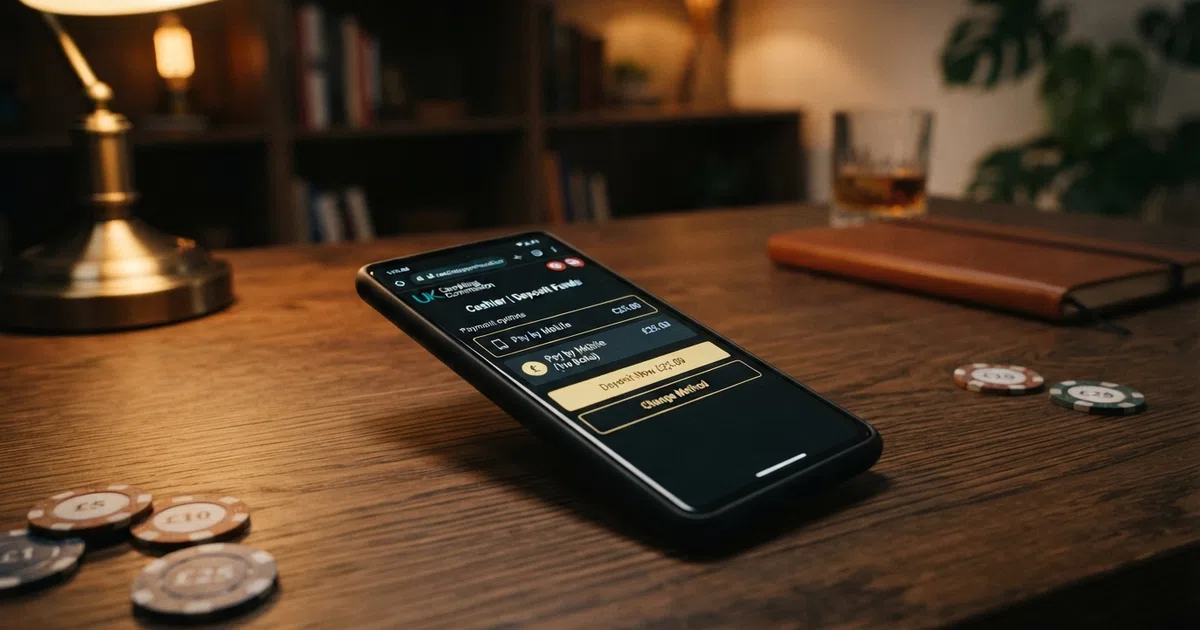
Current as of 9 September 2026 against the UK Gambling Commission’s public register of licence holders and account numbers.
The Payforit name retired — pay-by-phone casino deposits didn’t
The Payforit brand retired — carrier billing still runs the same phone-bill flow
Payforit was a premium-rate phone-billing brand, and the brand itself was retired in 2019. What players used when they tapped “Pay by Mobile” at a UK casino cashier is still alive, only it now sits under carrier-billing providers such as Boku and a handful of competitors running the same charge-to-mobile flow. The mark is gone, the rail is not. Anyone searching for “Payforit casino” in 2026 is searching for a category, not a product that still answers to that name, and the page that follows uses “pay-by-mobile” for exactly that category throughout.
What real-money play with phone-bill deposits looks like
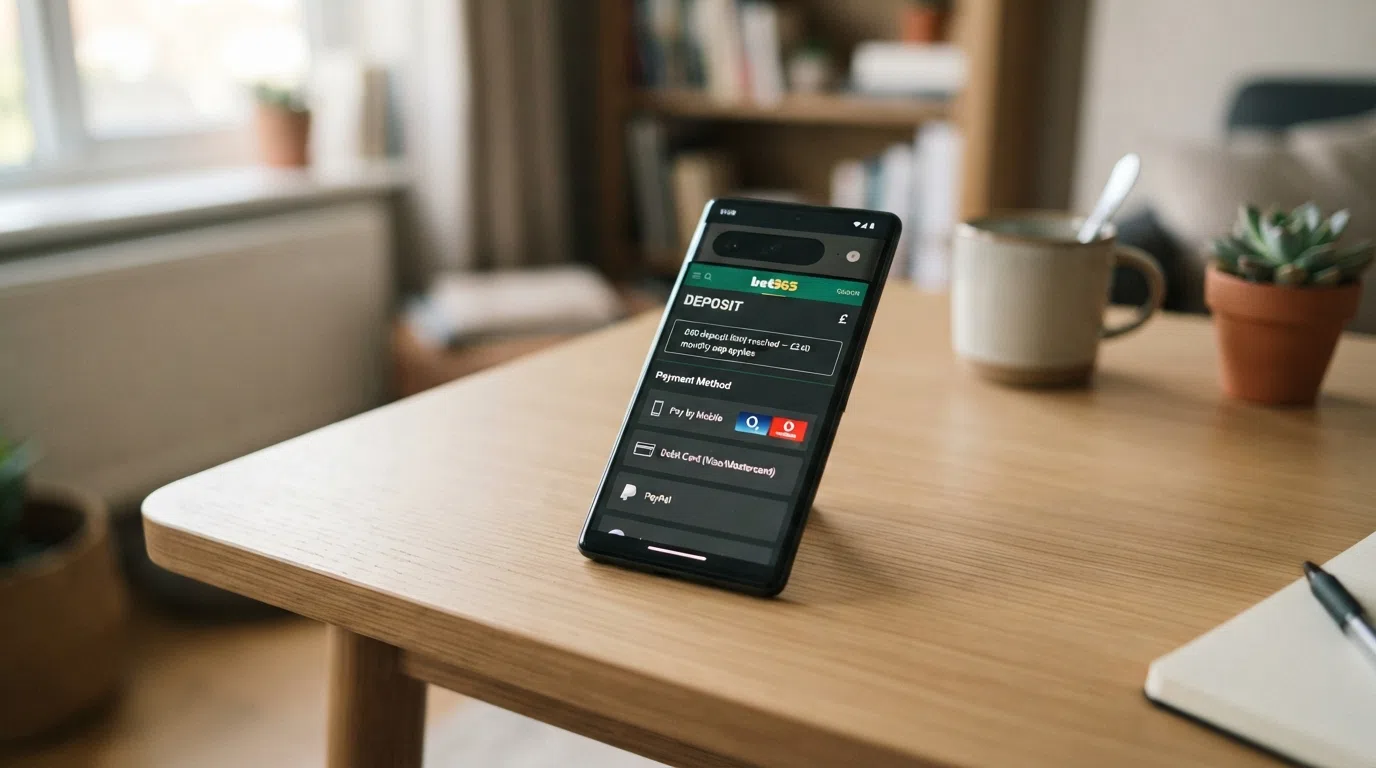
A phone-bill deposit is real money. The casino balance it creates is indistinguishable from one created by a debit card, an Apple Pay tap, or a bank transfer. The phone-bill rail only enters the picture at the moment of funding, and it only ever enters it one way. You can put money in. You cannot pull winnings out the same way. The mechanics of how that charge clears, and why no refund ever lands back on the bill, sit in the section on how carrier-billing deposits work, and the ten UK-licensed casinos that accept it sit in the ranking that follows.
Real-money play is safe only where the licence is real
The safety of a phone-bill deposit rests entirely on the casino’s Gambling Commission licence. The payment rail itself is capped at the payment layer, and the brand being retired changes nothing about that fact. A player who checks the UK Gambling Commission’s public register before depositing has done the only safety check that actually works; a player who has not has not. The section on licensing spells out the rest of the GB safety frame, and the section on the difference between UKGC casinos and “not on GamStop” sites spells out what falls away the moment that licence is missing.
The best pay-by-mobile casinos in the UK: ten operators ranked
Ten operators, ranked below on the two things research could verify for each: GB licence status and the terms of the free-spins welcome offer where one is confirmed. Research did not confirm pay-by-mobile acceptance per operator in the surface data, so the table below names the licence signal and the bonus terms; a player who has decided to deposit by phone bill should still confirm the phone-bill option is present at the cashier before staking. Where a casino’s free-spins welcome was not confirmed, the table says so, because a comparison cell that papered over a missing entry with a guess would be the most expensive kind of cell on the page. The order below rests on verified licence status first, then on free-spins terms (spin count, wagering, cashout cap), not on payout speed, which research does not confirm in the surface data for this set.
| Operator | GB licence status | Welcome free-spins offer | Wagering on spin winnings |
|---|---|---|---|
| Bet365 | Active (Hillside (UK Sports) ENC, accounts 55148/55149) | Up to 500 free spins at £0.10 on selected titles | 0x |
| William Hill (Vegas) | Active (WHG (International) Limited, account 39225) | 200 free spins at 10p on Big Bass Splash after £10 deposit and £10 stake | 10x within 72 hours |
| Paddy Power | Flutter licence 39439 referenced (PPB GE Limited) | 260 spins total: 60 no-deposit plus 200 after a £10 stake | 0x |
| Betfair | Flutter licence 39439 referenced | 150 spins total: 50 no-deposit plus 100 after a £10 deposit | No wagering stated |
| MrQ | Lindar Media licence 51250 referenced | 100 free spins on Big Bass Splash for a first deposit of £10 | No wagering mentioned |
| PlayOJO | Licence not confirmed in this run’s research | 80 free spins on Big Bass Bonanza for a first deposit of £10 | 0x, unlimited max cashout per the operator’s own page |
| Betfred | Licence not confirmed in this run’s research | 200 wager-free spins at £0.10 on selected titles (Debit Card deposit, £10 stake within 14 days) | 0x |
| Ladbrokes | Active (Ladbrokes Betting & Gaming Limited, account 1611) | No casino free-spins welcome confirmed in research | — |
| Sky Bet (Sky Vegas) | Licence not confirmed in this run’s research | No casino free-spins welcome confirmed (sports offers confirmed) | — |
| Betway | Licence not confirmed in this run’s research | No casino free-spins welcome confirmed (sports offers confirmed) | — |
A note the table cannot carry on its own: the order above does not rank payout speed, because research does not confirm a per-operator phone-bill-to-withdrawal time in this set. Payout speed is a property of the withdrawal rail a player picks afterwards, not of the phone-bill rail that got the deposit in. A second thing the table cannot show: the difference between a 0x no-wagering offer and a 10x offer is not a percentage. It is a multiplier on every penny of spin winnings that has to be churned back through the slot before it can be withdrawn, and at a 10x multiple with a 72-hour clock, a small spin win becomes a much larger problem to clear.
Bet365
Up to 500 free spins at £0.10 each is the largest spin count in the featured set, and the only number beside it that matters is the 0x wagering. Spin winnings land as real cash from the first spin, with no multiplier and no game restriction, and the 7-day validity gives most players more than enough time to use them. The offer is claimable within 30 days of registration, which makes it forgiving for a player who registers one evening and deposits the next, and the £10 lifetime deposit minimum is a low bar. Bet365 is UKGC-active under Hillside (UK Sports) ENC, with licence accounts 55148 and 55149 visible on the public register, which is the strongest licence signal of the ten brands on this page.
Bet365 remains the strongest choice in this set: it offers the highest spin count combined with a 0x wagering policy and a 30-day window to claim, making it the most balanced offer for those who have confirmed the cashier options.
William Hill (Vegas)
William Hill (Vegas) gives 200 free spins at 10p on Big Bass Splash after a £10 deposit and a £10 stake. Spin winnings carry a 10x wagering requirement and must be cleared within 72 hours, with total redeemable winnings from the offer capped at £30, and the offer runs to 31 December 2026. The 10x multiple is the legal ceiling on bonus wagering in the GB market, and the 72-hour clock plus the £30 ceiling are the two sharp edges. A player who wins £30 from the spins has to turn that £30 into £300 of qualifying wagering inside three days, and anything over the £30 ceiling is forfeit, not just deferred. The licence is active under WHG (International) Limited, account 39225, which is verifiable on the public register.
William Hill provides a competitive spin count on a flagship title, though its 10x wagering requirement and 72-hour validity window make it a more time-sensitive choice than the 0x offers ranked higher here.
Ladbrokes
Ladbrokes is UKGC-active under Ladbrokes Betting & Gaming Limited, account 1611, with sports and bet-builder offers visible in research. No casino free-spins welcome was confirmed in this run’s research, so there are no casino bonus terms to compare alongside the other nine brands. The licence signal is one of the strongest in the set, and a player who already has a Ladbrokes sports account and wants the same brand for casino play has a clear path in, but the table is honest about the gap: the casino welcome offer is the one column that is empty here for a reason, and not a research oversight.
For a sports bettor who wants casino play on the same balance and is not choosing on free spins, Ladbrokes is the licence signal in the set.
Betfred
Stake £10 and Betfred returns 200 wager-free spins at £0.10 each, with 0x wagering on whatever the spins land. The qualifying path is a Debit Card deposit and a £10 stake within 14 days, which is the one friction point: a phone-bill-only player cannot qualify for this offer. UKGC licence status was not confirmed in this run’s research, so the licence cell stays at “not confirmed” in the table rather than being filled in from a guess, and a player considering Betfred should run the public register check themselves before depositing.
Betfred presents a straightforward wager-free incentive that rewards a higher initial commitment, though the requirement for a debit card deposit means phone-bill players will need to pivot to qualify.
Paddy Power
Paddy Power offers 260 spins in total, split 60 with no deposit and 200 after a £10 deposit and stake. All 260 carry 0x wagering, and the spins expire 7 days after being claimed. The 60 no-deposit spins are the rarest thing in this ranking, and the operator’s own framing of the no-wagering offer is unusually plain about what 0x means in cash terms: “pays every penny you win from these spins as real cash so that you can withdraw it straight away.” PPB GE Limited is part of Flutter, with licence 39439 referenced for the Flutter ecosystem that also covers Betfair.
Paddy Power stands out by offering both no-deposit and deposit-linked spins, and its commitment to paying out winnings as real cash makes it a top-tier operator for value-conscious players.
Betfair
Betfair offers 150 spins in total, 50 with no deposit and 100 after a £10 deposit, with no wagering requirement stated on the offer. Spin validity is not stated in research, and Flutter’s licence 39439 covers the Betfair side of the same Flutter group that covers Paddy Power, so the licence signal is the same one. The 50 no-deposit batch is the second no-deposit offer in the ranking, and the comparison with Paddy Power is the one the table invites: smaller batches than Paddy Power, and the same 0x treatment on both halves.
Betfair is a reliable partner to Paddy Power for players who value no-deposit access, though the total spin volume is more modest than what its sister brand offers.
MrQ
MrQ offers 100 free spins on Big Bass Splash for a first deposit of £10, with no wagering requirement stated on the offer page. The 8-minute window from qualification to use is the shortest validity clock in the ranking, and the only one tighter than the 72 hours at William Hill. Lindar Media, licence 51250, is the operator on the register, and MrQ has long marketed itself around the no-wagering model, so the absence of a stated wagering requirement is consistent with the brand.
MrQ delivers a pure no-wagering experience on a popular slot, though the very tight 8-minute turnaround for the spin volume requires quick play to ensure the full offer is utilized.
PlayOJO
PlayOJO offers 80 free spins on Big Bass Bonanza for a first deposit of £10, with 0x wagering and, per the operator’s own page, no maximum cashout hidden behind the offer. The headline RTP on Big Bass Bonanza is 96.71%, though the operator may deploy a lower configuration. UKGC licence status was not confirmed in this run’s research, and the cell says so. The combination of no wagering and no cashout ceiling is rare in the set: every other brand in the table with a stated cap puts a number on the maximum redeemable, and PlayOJO’s own framing is that there is no such number.
For a player who values a 0x no-cap structure over raw spin count, PlayOJO is the right offer; the missing licence confirmation is the one cell to clear before staking.
Sky Bet (Sky Vegas)
Sky Bet’s surface data in research is sports-led, with a £50 free football bets offer from a £10 qualifying bet, and no casino free-spins welcome was confirmed. Bonus-fund terms in the surfaced data include a max bet limit of 30% of the bonus amount or £15 per slot spin, whichever is lower, which is a rule that bites hardest on larger bonus balances. UKGC licence status was not confirmed for Sky Vegas in this run’s research, and the table cell is empty for the same reason Ladbrokes’ is: no casino welcome was confirmed, so the comparison would be invented, not made.
For a player already using Sky Bet for sports, the brand is on the page for completeness; the casino welcome is not the reason to pick it.
Betway
Betway’s surface data is also sports-led, with a £40 free bets offer from a £10 stake and a 7-day bonus expiry. No casino free-spins welcome was confirmed in research, and UKGC licence status was not confirmed in this run’s research, so the table cell for the casino offer is empty. Betway belongs in a ten-brand ranking of UK phone-bill casinos for the same reason Sky Bet does: a player who already uses the brand for sports may want it for casino too, and the page should say what is and is not confirmed.
For a sports bettor considering Betway for casino play, the bonus cell being empty is the honest answer; the brand is here, the offer is not.
How carrier-billing deposits work — and where they stop
The phone-bill charge, and who regulates it now
Pay-by-mobile sits under UK premium-rate regulation, and that regulation changed hands on 1 February 2025. The Phone-paid Services Authority, which had day-to-day oversight of charge-to-mobile services for years, ceased, and Ofcom took over under the Regulation of Premium Rate Services Order 2024. The change is administrative rather than consumer-facing, in the sense that a player at a casino cashier does not see a new logo, but it is the regulator a complaint would now go to if a charge dispute ever arose. Premium-rate status is what makes the rail subject to the £40 and £240 caps covered below, and what makes the operator of the rail subject to a complaints process at all.
The caps that stop phone-bill gambling running away
The phone-bill rail caps a deposit at £40 per single transaction and at £240 per calendar month per subscriber. Both numbers sit at the payment layer, not the casino, which is the structural reason they are uniform across operators: a casino cannot raise them, and a casino cannot waive them. The cap makes phone-bill a small-stakes deposit method by design, and the design is the protection. A player who would have happily deposited £500 with a debit card and regretted it by the next morning cannot, with a phone-bill deposit, get within hailing distance of that number. The £240 monthly ceiling in particular is the number to remember: a player who hits it in a week has run out of rail until the calendar turns, regardless of what the casino’s own deposit limits say.
Where your winnings go after a phone-bill deposit
UK mobile networks do not provide a standard merchant refund route that credits casino winnings back to a phone bill. The deposit that went in via Boku or a similar carrier-billing provider came in as a premium-rate charge, and a refund to a premium-rate service is not a flow the networks have built. Withdrawals therefore use a different rail entirely: a debit card, a bank transfer, or an e-wallet. Fast payouts come from rails such as PayPal and Visa Direct, which is why payout speed is a property of the withdrawal method a player picks, not of the phone-bill rail that handled the deposit. A player who picked phone-bill for the speed of the deposit will not, by that same choice, get a fast withdrawal.
Vodafone, O2, EE and Three all carry it — and how it compares to other methods
Vodafone, O2, EE and Three all support pay-by-mobile deposits, and the rail’s coverage of the major UK networks is what makes it a category rather than a niche. Compared with a debit card, phone-bill is deposit-only where a debit card works both ways. Compared with an e-wallet or a bank transfer, phone-bill is faster at the deposit step and slower at the withdrawal step, because the latter two methods can do the return leg that phone-bill cannot. The phone-bill’s own caps of £40 per transaction and £240 per calendar month also set it apart from debit and e-wallet rails, which carry no premium-rate ceiling at all. Phone-bill deposits effectively force a disciplined, small-stakes approach, allowing players to work within strict financial caps that are hard-coded into the payment rail itself.
The bonuses phone-bill players can actually claim
No-deposit spins: rare, and only two of the featured ten offer them
Paddy Power carries 60 no-deposit spins and Betfair carries 50 no-deposit spins, and those are the only two featured operators with a no-deposit offer in research. The other eight are deposit-gated. The rarity is worth naming, because no-deposit offers are the part of the bonus market players most often overestimate. Two out of ten in a ranking of the best phone-bill casinos in the UK is the actual count, and the rest of the table is deposit-gated, deposit-and-stake-gated, or wager-gated in some combination.
Free-spins welcome offers, from 80 to 500 spins
Among the eight operators with a confirmed welcome offer, spin counts run from 80 at PlayOJO to 500 at Bet365. Paddy Power totals 260 (60 no-deposit plus 200), William Hill offers 200, Betfred offers 200, Betfair totals 150, MrQ offers 100, and Ladbrokes, Sky Bet and Betway have no confirmed casino free-spins welcome in research. The range is wide enough that the spin count alone is not the comparison; a 500-spin offer at 0x wagering sits at a very different value from a 200-spin offer at 10x within 72 hours and a £30 ceiling, and the table above is built so the wagering column is visible next to the count, not buried below it.
Wagering runs from 0x to the 10x legal cap
The wagering spectrum across the featured set runs from 0x at Bet365, Betfred, Paddy Power and PlayOJO, through “no wagering stated” at Betfair and MrQ, to 10x at William Hill, which is the legal ceiling on bonus wagering in the GB market from 19 January 2026. The Paddy Power framing of its no-wagering offer is unusually clear: “pays every penny you win from these spins as real cash so that you can withdraw it straight away.” Max cashout caps are stated where research carries them, notably £30 at William Hill and unlimited per the operator’s page at PlayOJO, and the absence of a stated cap at other offers is not the same as a confirmed unlimited cashout. The 10x legal cap is the line above which no UKGC-licensed casino can go, which is the part of the bonus market a stat on its own can quietly misrepresent: a “high wagering” offer that exceeds 10x is not legal, so any number above 10x is not a comparison point, it is a red flag.
A worked example on the PlayOJO offer, using Big Bass Bonanza’s headline 96.71% RTP and the operator’s stated 80 free spins at £0.10: 80 spins at £0.10 stakes is £8.00 in total wagering. At a 96.71% RTP, the expected return over those 80 spins is roughly £7.74, which puts the expected loss from the session at about £0.26. The number that came out of the arithmetic is small because the offer is small: 80 spins at a ten-pence stake is an £8 session by design, and the expected loss is the house edge on £8, not on a £100 deposit. The deployed RTP at PlayOJO may be lower than 96.71%, which would push the expected loss up by the same arithmetic, and a player who wants the headline figure should know it is the provider default, not a guaranteed configuration at any one casino.
When the payment method disqualifies the bonus
Some promotions require a debit card or Apple Pay, and phone-bill deposits can be excluded from a promotion outright. The Betfred offer above is the clearest example in the ranking: a Debit Card deposit is the qualifying path, and a phone-bill-only player cannot claim it. Research does not carry a full exclusion list for the rest of the offers, so the rule of thumb is the one that holds everywhere: check the offer’s own terms before depositing, and look for the payment-method line specifically, because that is where the disqualification is most often written. A player who deposits by phone bill first and then reads the bonus terms is paying twice for the same mistake, in the time spent depositing and in the offer missed.
The slots worth knowing before you pay by phone
Three slots worth knowing by RTP before you spin
Three titles carry researched RTP figures, and they are the only three the table below can show without inventing a value. The column is the comparison a player can actually make, and the note under it is the one the table cannot carry on its own: operators may deploy a lower RTP than the provider maximum, and the headline figure is a ceiling, not a guarantee.
| Slot | Provider | RTP | Volatility | Max win |
|---|---|---|---|---|
| Book of Dead | Play’n GO | 96.21% | High | ~5,000x |
| Starburst | NetEnt | 96.09% | Low | ~500x |
| Big Bass Bonanza | Pragmatic Play | 96.71% (headline) | High | Up to 2,100x |
The shape of the table tells the rest. Book of Dead and Big Bass Bonanza are both high volatility, which means longer quiet stretches punctuated by larger wins, and Starburst is low volatility, which means smaller, more frequent returns. A player who prefers the latter will not get it from a 200-spin offer on Big Bass Splash, and the title named in the bonus is part of the offer’s value, not an afterthought. Max win is the upper bound per spin and is not a return expectation; the RTP is the average over many spins, and the section on the worked example above shows what that average looks like in pounds on a small free-spin session.
Mobile slots are the same games — and slot sites vs casinos
A mobile slot and a desktop slot are the same game, and the £40 phone-bill cap applies to a spin on a phone exactly the same way it applies on a laptop. Slot sites and casino sites are not separate categories for this comparison, and a player who is choosing between them is choosing between a marketing wrapper and a cashier, because the games underneath are the same. No-deposit and free-spins slot offers are routed to the bonuses section, and the research does not carry dedicated slot-site specifics that would let this page rank slot sites and casino sites side by side. The one RTP nuance research does support is the gap between provider-default RTP and deployed RTP at a specific operator, which is the only RTP detail a player can act on before depositing.
New pay-by-mobile casinos demand a verify-first approach
There is no dependable list — check the register before you sign up
There is no stable, durable list of “new pay-by-mobile casinos” carried in research, and the relaunches and progress-play platforms that do exist as examples do not constitute a list a player should rank. Betsuna’s 2026 relaunch is named in research as one such example, and progress-play platforms are mentioned as offering pay by phone, but neither example is durable as a recommendation. The only durable check is the UK Gambling Commission’s public register, and any “new casino” list that is not anchored to a register match is a marketing list, not a verified one. A player who wants a new brand should pick it on the register first and read the bonus second, in that order, because the register does not lie and the bonus page sometimes does.
What to check before funding a new phone-bill casino
Three checks, in order. First, the UKGC licence on the public register, which is the only durable trust signal. Second, the game selection, which is what a player is actually paying for, and which is the easiest part of a casino to verify by opening the lobby before depositing. Third, the bonus terms, including the wagering multiple, the cashout cap, and the payment-method line, because a phone-bill exclusion is the most common reason a player claims an offer that is not actually theirs to claim. The £40 per-transaction and £240 per-calendar-month phone-bill caps still apply regardless of how new the brand is, and a new casino cannot raise the rail’s ceiling any more than an established one can.
Licensing decides safety: the split between UKGC casinos and “not on GamStop” sites
A GB licence is compulsory — here’s what it guarantees
A remote operator offering casino play to players in Great Britain needs a Gambling Commission licence at point of consumption, and the statute is the Gambling Act 2005, extended to remote operators by the Gambling (Licensing and Advertising) Act 2014. The licence is verifiable on the UKGC’s public register, and a brand that refuses to show its account number is a brand that has already failed the first check. Northern Ireland sits outside the Gambling Act 2005 framework, and the GB protections below do not extend there in the same form. The licence is the single trust signal, and every safety claim a casino makes that does not point at a register entry is a marketing claim, not a regulatory one.

The statutory caps and rules, in one table
The table below names the rules a UKGC-licensed casino is bound by, with the figure and the date research carries for each. It is the GB safety frame in one view, and the rules it lists apply only to operators licensed under this regime, which is the qualifier the table cannot print in a single cell.
| Rule | What it caps or requires |
|---|---|
| Slot stake cap (age 25+) | £5 per game cycle |
| Slot stake cap (age 18–24) | £2 per game cycle |
| Bonus wagering cap | 10x, from 19 January 2026 |
| Credit card gambling | Banned since 14 April 2020 (including via e-wallets) |
| Pre-gamble verification | Name, address and date of birth required before play or deposit, since 7 May 2019 |
| Auto-play | Banned since 31 October 2021 |
| Spin speed | Not faster than 2.5 seconds, since 31 October 2021 |
| Mixed-product incentives | Banned from 19 January 2026 |
The age-banded stake cap is the sharpest edge in the table. A player aged 18 to 24 cannot stake more than £2 per game cycle, full stop, regardless of how large their balance is or how generous the casino feels like being, and a casino that lets them do so is breaking the law, not bending its own rules.
“Not on GamStop” means the GB protections are gone
GamStop is the GB self-exclusion scheme, and a site marketed as “not on GamStop” is by definition outside the GB licence, because the licence is what obliges the operator to integrate with GamStop in the first place. The protections that fall away are not abstract: there is no GAMSTOP coverage, no Commission complaints route, no approved ADR, and the KYC checks are weaker by design, because the operator is not bound by the Commission’s verification rules. Players search for “not on GamStop” for specific reasons, and the risks are real for those same reasons, and the page should name both rather than pretend the search does not happen.
No-ID casinos are a myth — and playing offshore is a real risk
Anonymous play is impossible in the GB market. Remote licensees have had to verify name, address and date of birth before play or deposit since 7 May 2019, and the “no-ID casino” pitch is a pitch about a product that does not exist in GB. Unlicensed provision is a criminal offence under section 33 of the Gambling Act 2005, with penalties of up to 51 weeks’ imprisonment, an unlimited fine, or both. Enforcement is disruption-based rather than ISP-block-based, and the Commission uses search-engine delisting and domain and payment-provider referrals because it does not have a statutory ISP or DNS blocking power. The risk to a player is not the absence of a feature; it is the absence of every protection the table above lists, plus the absence of a regulator who can compel a payout.
Responsible gambling: the limits built in, and the ones you set
The caps are a brake — your own limits are the second one
The £40 per-transaction and £240 per-calendar-month phone-bill caps are the rail’s own brake on spending, and they sit at the payment layer regardless of what a casino’s own deposit limits say. From 31 October 2025, operators must prompt customers to set financial limits before the first deposit, and a decrease to a financial limit takes effect immediately, while an increase carries a cooling-off period so that a player cannot raise a limit in the heat of a losing session. From 30 September 2026, a “gross deposit limit” standardisation comes into force, which is the rule that says the same limit applies across the operator’s whole product, not per vertical. The built-in brake handles the deposit moment; the self-set limit handles the longer arc, and the player who uses only one of the two is leaning on the weaker leg.
Self-exclusion, and the people who are asking for help
GamStop is the GB self-exclusion register, and operator-level tools such as time-outs and product-level blocks run alongside it. Help is available through GamCare’s National Gambling Helpline, through GambleAware’s self-assessment tools, through NHS gambling harm clinics, and through Gamblers Anonymous. The demand signal is real: GamCare recorded 996 referrals to treatment and peer support in January 2026, up 48% from 674 a year earlier, and GambleAware’s 2024 treatment and support survey reported that almost 1 in 3 adults who gamble and experience any level of problems want treatment, support or advice, up from 17% in 2020. The NHS’s self-assessment is the brief check most players skip: a total score of 8 or higher indicates likely gambling-related harms, and the score is free, anonymous, and takes longer to find than to complete, which is the part of the page that is most worth a player’s time.
How we checked every operator in this review
Sources were the UK Gambling Commission’s public register, operator sites, Racing Post, several comparison sites, SlotGamer, Slotfruit, and casinowithdrawal.co.uk. Each operator was checked against the UKGC public register where a licence account number was surfaced, and the ranking orders by verified licence status first, then by free-spins terms across spin count, wagering, and cashout cap. No weightings or percentages are invented, because research carries none, and a weighting that was not in the source would be the kind of detail that gives a comparison page the look of authority and the substance of nothing. The sections on licensing and on new pay-by-mobile casinos carry the register check itself, because the page is not the only place a player should be doing it, and the section on responsible gambling carries the prevalence and referral figures because they are the part of the safety frame a player cannot see from a cashier.
What pay-by-mobile is actually worth using for
Phone-bill is a small, capped, deposit-only convenience, and the numbers that make it that are £40 per transaction and £240 per calendar month, set at the payment layer rather than by the casino. The safety of a phone-bill deposit rests entirely on the UKGC licence, and the bonus market the rail leads into is modest: no-deposit offers are rare, free-spins welcomes run from 80 to 500 spins, and wagering is capped at 10x by law. The rail will never be a withdrawal rail, so a player who treats it as a deposit method and picks a real withdrawal method afterwards is using it the way it works, and a player who treats it as a withdrawal method is asking it to be something the networks do not offer. Verify the licence on the UKGC public register before depositing, and the rest of the page is what the rail is, not what its marketing says it is.
Frequently asked questions about pay-by-mobile casinos in the UK
Is Payforit still available at UK casinos in 2026, or has it been replaced by other pay-by-mobile providers?
The Payforit brand was retired in 2019 and the mark is no longer in use at UK casino cashiers. Carrier-billing providers such as Boku now run the same charge-to-mobile flow that Payforit used to, and most “Payforit” search traffic is naming the same flow by an old label. A player who deposits by phone bill in 2026 is using the successor rail, not a revived one.
What are the deposit limits for pay-by-mobile casino deposits in the UK (per transaction and monthly)?
Pay-by-mobile deposits are capped at up to £40 per single transaction and at up to £240 per calendar month per subscriber. Both caps sit at the payment layer, not the casino, so they apply uniformly across UK operators and cannot be raised by the casino’s own settings.
Can I withdraw casino winnings back to my phone bill if I deposit with Payforit / pay by mobile?
No. UK mobile networks do not provide a merchant refund route that credits casino winnings back to a phone bill, and the phone-bill rail is deposit-only. Withdrawals must use a different method such as a debit card, a bank transfer, or an e-wallet, and the payout speed depends on the rail chosen for the withdrawal, not on the phone-bill rail.
Do pay-by-mobile deposits qualify for welcome bonuses and free spins at UK casinos?
Some do and some do not. Paddy Power and Betfair offer no-deposit spins in the featured set, and the other deposit-gated offers can exclude phone-bill as a qualifying method. Betfred’s 200 wager-free spins, for example, require a Debit Card deposit, so a phone-bill-only player cannot claim that offer. The payment-method line in the offer’s own terms is the part to read before depositing.
How do I check whether a pay-by-mobile casino is licensed by the Gambling Commission and connected to GamStop?
The UK Gambling Commission publishes a public register of licence holders and account numbers, and a casino’s GB status is verifiable there by name. A casino that refuses to show its account number has already failed the check. GamStop coverage is automatic for UKGC-licensed operators, and a site that markets itself as “not on GamStop” is by definition outside the GB licence, not an alternative to it.
What are the risks of using casinos that are not licensed by the UKGC?
A non-UKGC casino has no GB licence and no obligation to integrate GamStop, accept Commission complaints, or submit to an approved ADR. KYC checks are weaker by design, the statutory caps in the licensing section above do not apply, and the Commission cannot compel a payout from an operator it does not regulate. The search for these sites is real, and the risks are real, and the right comparison is between licensed and unlicensed rather than between one offshore brand and another.
Payments – topratedonlinecasinos-uk
Content created by the «topratedonlinecasinos-uk» team