
Pay by Phone Casinos UK: The 2026 Ranking of the Best Mobile Bill Deposit Sites
 Available in GB
A pay by phone casino lets a UK player fund a slot session by charging the deposit to a mobile bill or PAYG credit instead of a debit card. The method is built around speed and privacy: no bank or card details pass through the casino, the deposit lands in seconds, and the charge shows up on the next monthly statement. Everything else on this page is what that trade-off actually costs the player who chooses it.
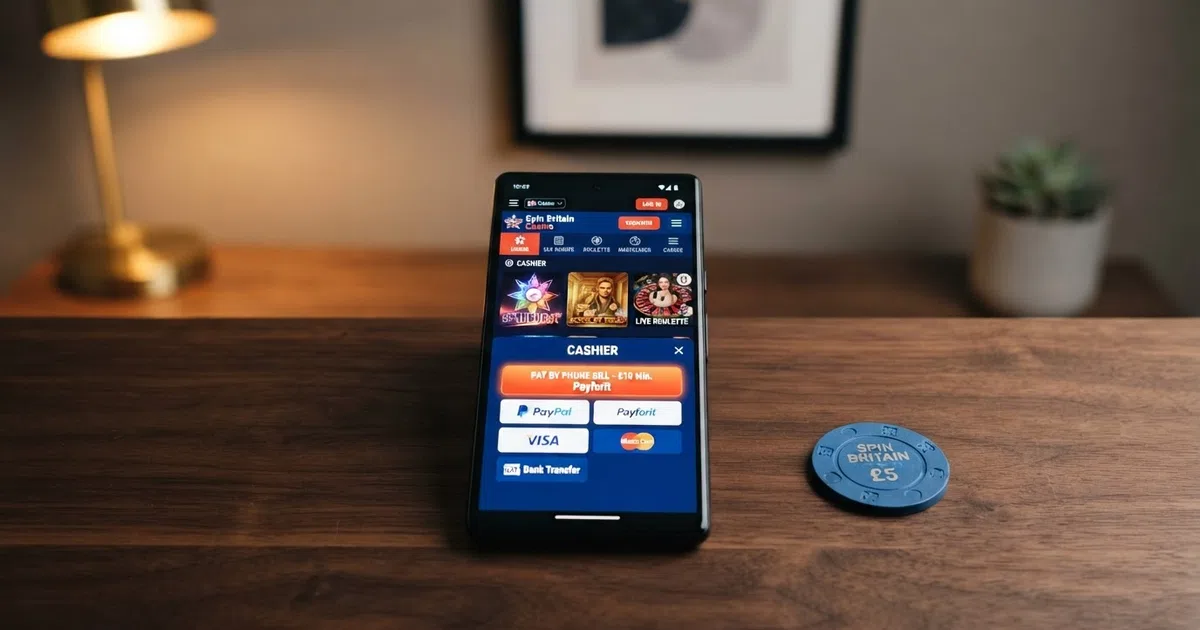
Current as of 9 September 2026, checked against the UK Gambling Commission’s public register.
What a Pay by Phone Casino Delivers — and the One Thing It Cannot
A pay by phone casino is an online casino that accepts deposits through a carrier-billing processor rather than a card, e-wallet or bank transfer. Three processors carry almost the whole UK market: Fonix, Boku and Payforit, with PayviaPhone and Siru Mobile taking the smaller corners. Fonix, Boku and Payforit each route a deposit through the player’s mobile network, but they do it differently under the bonnet, and the player notices: Boku sends an SMS confirmation code, Fonix verifies in the background without asking the customer to read or type anything, and Payforit’s old trust-mark branding still surfaces in older reviews even though the label was retired in 2019.
The thing the marketing copy does not lead with is the limitation. Phone-bill deposits are deposit-only. UK mobile networks do not offer a standard merchant refund route, which means a casino cannot credit winnings back to the phone. A withdrawal always has to go somewhere else — a debit card or a bank transfer, usually registered at signup before the first deposit.
The wider UK market for this category is also narrower than the search results suggest. Phone-bill acceptance is concentrated among UKGC-licensed casino and slot brands; sportsbook-first operators rarely run it as a headline payment option. The processor split reflects that concentration: eight of the ten featured operators on this list use Fonix or Boku, and two use Siru Mobile. Payforit, retired as a trust-mark in 2019, no longer carries a current name on a cashier — but the carrier-billing technology underneath the old Payforit label still does the work, which is why a player who has been away from UK casinos for a few years will see references that no longer match a live product.
The Phone-Bill Deposit Model Explained
The full chain is shorter than a player expects. From the cashier, the player selects pay-by-phone as the deposit method, enters a mobile number and a deposit amount, and confirms. The processor then routes the charge to the mobile network. The network either adds the amount to the next monthly bill or deducts it from PAYG credit, and the casino balance updates in seconds. At no point does a bank account number, sort code or card long-number touch the casino’s systems.
Fonix handles the verification step in the background, so the player is not asked to read a text and tap a confirmation link back. Boku sends an SMS confirmation code that has to be entered before the deposit goes through. Both routes are instant on the casino side once the network has signed off the charge. The privacy advantage is real: a casino that never sees a card number cannot, in practice, store one, and a data breach at the casino does not leak the player’s bank details because the casino never had them.
The deposit-only nature of the method is what defines its limits. There is no parallel mechanism for paying a player back through the phone. Winnings, when they come, leave by debit card or bank transfer. That single asymmetry is the reason the rest of this page exists.
The UK Pay by Phone Casino Landscape in 2026
The category is small and concentrated. UKGC-licensed operators that accept phone-bill deposits cluster around a handful of well-known casino and slot brands; the long tail of new entrants running pay-by-phone is short, because adding a carrier-billing integration to a UKGC-compliant platform is one of the slower items in a launch checklist. The processor split mirrors that shape: Fonix and Boku between them cover most of the operators a UK player will see, and Siru Mobile picks up the rest, with a different limit profile that the section on processors covers in detail.
Payforit deserves a second mention because the name persists in older reviews and SEO copy. The trust-mark was retired in 2019, but the underlying carrier-billing technology continues — a fact that explains why a current casino’s help page may reference Payforit in passing while the cashier uses Fonix or Boku under the bonnet. Treat the word “Payforit” in any current review as a label for the technology, not a live product.
The category’s centre of gravity is slot-first sites. Casino and slot brands that built their mobile experience around single-tap deposits tend to be the ones that integrated pay-by-phone earliest and most thoroughly. The wider generalist brands — sportsbook-led operators with a casino tab attached — usually offer the method, but rarely make it a headline feature.
Paying by Mobile Is a One-Way Street — How the Method Works in Practice
The deposit flow is the easy half. The harder half is everything that comes after, because every winning hand, every bonus payout and every cash-out request has to leave the casino by a different route. That asymmetry is the central fact about paying by mobile bill at a UK casino, and the rest of this section is what it looks like in practice.
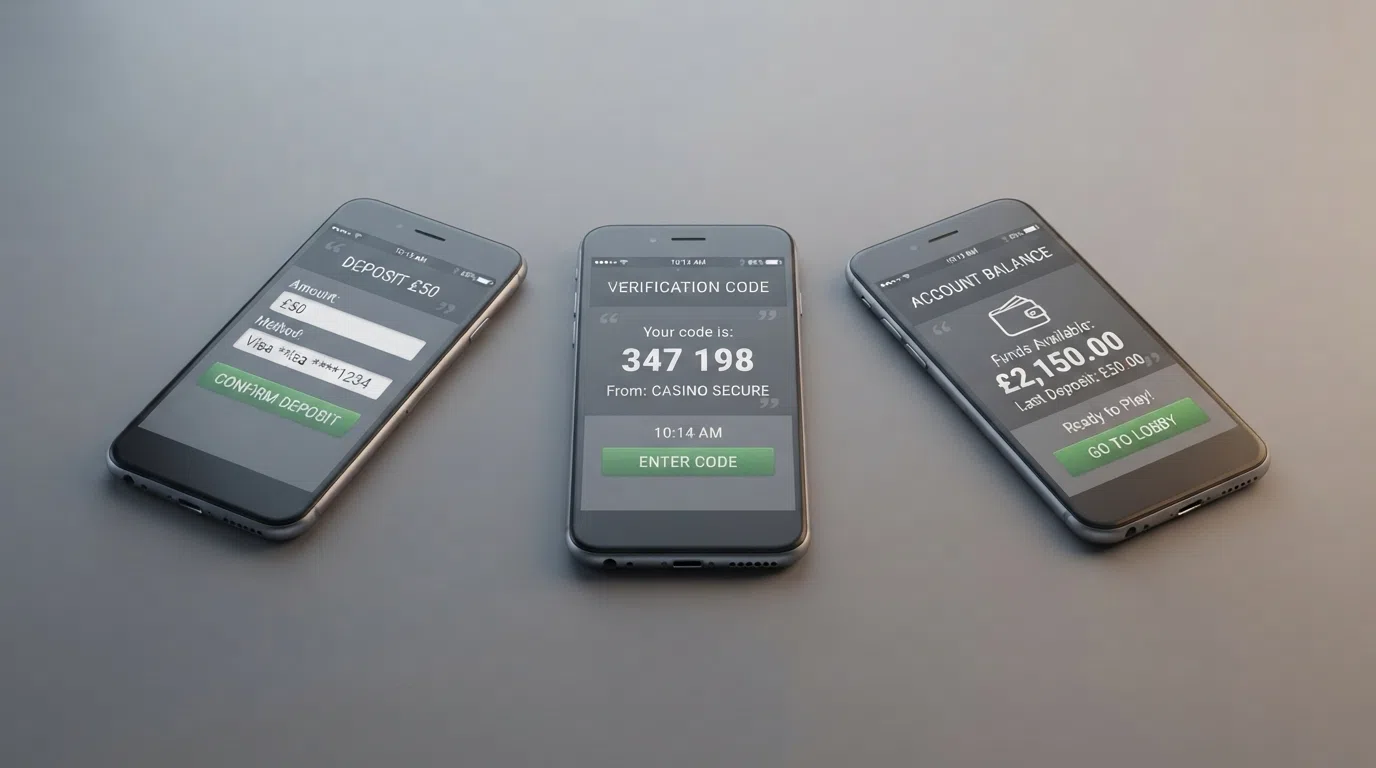
Boku operates under the statutory £40-per-transaction and £240-per-calendar-month limits that apply to UK charge-to-mobile services as a whole. Fonix runs against the same regulatory ceiling, which is why a player who tries to deposit £50 by phone bill at any UKGC-licensed casino will be told the amount is over the limit regardless of which processor sits behind the cashier. The caps are not casino-set and cannot be raised by a customer request: they are baked into the carrier-billing model.
Because the deposit is one-way, every UK player who funds a casino by phone bill needs a withdrawal method set up before the first spin that could win. The standard pattern is to register a debit card during account creation, deposit by phone, and withdraw back to that same card or a bank account when the time comes. A player who skips this step and later wins will not be able to cash out until the verification is done, and verification is faster when it is done in advance.
From Casino Lobby to Phone Bill — Each Stage of a Deposit
Tap deposit. Select pay-by-phone. Enter a mobile number and an amount up to £40. Confirm. The casino hands the request to the processor. If the processor is Boku, an SMS confirmation code arrives, the player types it back, and the network authorises the charge. If the processor is Fonix, no SMS lands — the verification happens on the network side while the casino balance updates in the background. The deposit appears in the casino wallet within seconds either way.
The charge then surfaces on the player’s next monthly statement, or the deduction hits the PAYG credit immediately, depending on the contract. EE, O2, Vodafone and Three all support the model, and MVNOs that piggyback on those networks inherit the support automatically. There is no network-level exclusion specific to gambling transactions — the carrier-billing integration does not filter by merchant type, only by the regulatory caps.
One observation from the operator side: a TalkSPORT Betting review of the three main processors notes that Fonix “generally offers the smoothest experience” precisely because it removes the SMS step. That single UX difference is why most of the featured operators in this guide have standardised on Fonix, and why Boku tends to appear as a fallback rather than the primary integration.
Boku, Fonix and PayviaPhone — How the Three Processors Compare
- Boku — Sends an SMS confirmation code that the player must enter before the deposit completes. Widely supported across UKGC-licensed casinos. Operates under the statutory £40-per-transaction and £240-per-calendar-month caps. The default for many operators as a fallback when Fonix is not enabled.
- Fonix — Verifies in the background without an SMS confirmation code, which is why operators and reviewers describe it as the smoothest of the three. The deposit completes inside a single tap after the amount is entered. Used by the majority of the featured operators on this list.
- PayviaPhone — A third active processor that appears at selected UKGC sites. Functions similarly to Boku in flow but is less widely integrated. The caps mirror the same statutory ceiling.
- Payforit (legacy) — A trust-mark label that was retired in 2019. The carrier-billing technology underneath it continues, which is why the name still surfaces in older reviews. A player who sees “Payforit” in current copy is looking at a brand reference, not a live product.
- Siru Mobile — A separate provider rather than a variant of the three above, with its own deposit limits — typically £5.12 to £30 per transaction. Operates outside the Boku/Fonix regulatory cap because it is a different product. Used by Mr Vegas and Videoslots in the featured set.
The £40 Transaction Cap and £240 Monthly Limit — Where the Numbers Come From
Both numbers are statutory, not promotional. The £40-per-single-transaction and £240-per-calendar-month limits apply to UK charge-to-mobile services as a regulatory ceiling under the carrier-billing model, and Boku operates within them. Fonix sits under the same regulatory umbrella. Siru Mobile’s lower £5.12-to-£30 range is a separate product design rather than a regulatory lower bound.
Mobile networks can set their own day-to-day limits below the statutory ceiling, which is why a player on a particular PAYG tariff may find the per-transaction maximum sitting at £30 or lower even though the cap allows £40. The reverse does not happen: no operator can raise a player’s effective cap above the statutory numbers, because the network will refuse the charge at the carrier-billing layer.
The practical effect is that a player who wants to fund £200 of slot play in one session by phone bill is going to make at least five deposits to reach it, and any one of those will hit the £40 ceiling. Compared to a debit-card deposit ceiling at a UKGC casino — typically several hundred pounds per transaction and several thousand per month — the phone-bill model is constrained by roughly an order of magnitude. The constraint is the point: a low frictionless cap is what makes the method suitable for casual, low-stakes play, and what makes it unsuitable for high-volume play.
When a player hits the £240 monthly cap, the network refuses further charge-to-mobile deposits for the rest of that calendar month. The casino cashier will return an error. The only way to keep playing is to switch payment method — typically to a debit card — or wait for the calendar month to roll over.
Minimum Deposits — Can You Really Fund a Casino with £5 by Phone?
Some UKGC-licensed casinos accept deposits as low as £5 or £10 via phone bill, and £5 is the smallest realistic figure across the market. Most operators sit at a £10 minimum for pay-by-phone, including Duelz, where the phone-bill deposit floor is £10 even though the welcome bonus requires a £25 minimum to qualify.
The gap between the deposit floor and the bonus floor is where players get caught out. A player who deposits £10 by phone bill at Duelz is playing with real money, but is not eligible for the 140 free spins on offer — the welcome bonus needs a £25 minimum, and a phone-bill deposit of that amount is well within the £40 statutory per-transaction cap. The general rule: read the bonus T&Cs for the minimum qualifying deposit before paying by phone, because the welcome offer’s qualifying amount and the cashier’s minimum are not always the same number.
The trade-off is simple. A £5 deposit is a cheap way to test a casino’s slots, game speed and withdrawal flow without committing a meaningful amount. A £10 deposit unlocks the same experience with a bit more runway. A £25 deposit is the threshold at most operators for a welcome offer, and a £40 deposit is the per-transaction ceiling, after which the network will refuse the charge. Players who want a longer session will run out of monthly headroom before they run out of session appetite, because £240 across a calendar month is six £40 top-ups at most.
Why You Cannot Withdraw Casino Winnings Back to a Phone Bill
UK mobile networks do not offer a standard merchant refund route for casino winnings. The same carrier-billing integration that accepts a deposit cannot reverse the direction and credit a player’s phone account with a payout, because that mechanism was never built. From the casino’s side, there is no API to call. From the network’s side, there is no product to bill against in reverse.
The practical consequence is that every pay-by-phone player needs a separate withdrawal method registered before the first deposit. The standard is a debit card, with bank transfer as a fallback. A player who skips the registration step will hit it as soon as a withdrawal is requested, and the verification process that follows is faster when the card details are already on file.
This asymmetry is the single biggest reason that phone-bill deposits are not a fit for every player. A high-volume player who wants one payment method for both directions is better served by a debit card or an e-wallet, where the same rail handles deposits and withdrawals. A casual player who values frictionless, low-cap deposits more than withdrawal symmetry gets exactly the trade-off they are looking for from the phone-bill model.
Which UK Mobile Networks Carry Casino Phone-Bill Charges?
All four major UK networks — EE, O2, Vodafone and Three — support carrier billing for casino deposits. MVNOs that piggyback on those networks inherit the support automatically, which is why a player on a sub-brand of one of the Big Four does not normally see a network-level rejection. There is no operator-level blacklist of gambling merchants at the carrier-billing layer, so the same deposit that works at one UKGC casino will work at another as long as both use the same processor.
PAYG and monthly contract customers are treated differently at the point of charge: a monthly contract sees the deposit added to the next bill, and a PAYG customer sees the amount deducted from credit immediately. Both routes are instant on the casino side, and the player does not need to choose between them — the network decides based on the account type.
The one variation worth flagging is the day-to-day limit. Networks can set per-transaction or daily limits below the £40 statutory cap, and a PAYG tariff is more likely to enforce a lower ceiling than an unlimited monthly contract. A player who hits a per-transaction refusal below £40 is hitting a network-level floor, not a regulatory one.
The Best Pay by Phone Casinos in the UK — 2026
The ranking below covers ten UKGC-licensed operators that accept phone-bill deposits and have a current casino product. Every operator has been verified on the UKGC public register for licence status, and every pay-by-phone availability figure comes from current UK review sources. The UK wagering cap of 10x the bonus amount, in force from 19 December 2025 under LCCP Social Responsibility Code 5.1.1, is the regulatory ceiling that bounds the wagering column.
| # | Operator | Pay-by-Phone Provider | UKGC Licence | Welcome Bonus | Free Spins | Wagering | Bonus Validity |
|---|---|---|---|---|---|---|---|
| 1 | Bet365 Casino | Fonix | Verified | Deposit match typical | Promotional | ≤10x | Varies |
| 2 | William Hill Casino | Fonix | Verified | Deposit match typical | Promotional | ≤10x | Varies |
| 3 | Betway Casino | Boku / Fonix | Verified | 100% match typical | Promotional | ≤10x | 7 days |
| 4 | 888casino | Boku / Fonix | Verified | Deposit match or free spins | Promotional | ≤10x | 14 days |
| 5 | Duelz Casino | Fonix | Verified | Deposit £25 & play | 140 (20/day, 7 days, 10p) | ≤10x; 10x on FS winnings | 7 days |
| 6 | MrQ Casino | Fonix | Verified | Free spins on deposit | Varies | ≤10x | 7 days |
| 7 | Peachy Games | Pay by phone | Verified | 100% deposit bonus | 100 | 10x | 30 days bonus; 7 days FS |
| 8 | Ladbrokes Casino | Pay by phone | Verified | Deposit match typical | Promotional | ≤10x | Varies |
| 9 | Mr Vegas | Siru Mobile | Verified | 100% up to £200 | 11 wager-free (Pink Elephants 2) | 0x on welcome spins | 30 days welcome spins |
| 10 | Videoslots | Siru Mobile | Verified | 100% match typical | Promotional | ≤10x | 7 days |
Bet365 Casino — Market Leader with Fonix Phone-Bill Deposits
Bet365 is the largest UK operator by market share, and the casino product carries Fonix phone-bill deposits alongside the standard card and e-wallet options. The welcome offer structure rotates around deposit-match bonuses with promotional free spins attached, and the wagering requirement sits at or below the 10x UKGC cap. Game providers run the full breadth of the UK market: NetEnt, Microgaming, Playtech and IGT all feature in the casino lobby, and the live casino runs on Playtech’s studio. Bonus validity varies by promotion, which is why the table above shows it as “varies” rather than a single window.
The Fonix integration is the same as the rest of the featured set: enter a mobile number and an amount, confirm, and the deposit lands in the casino balance without an SMS code. A player who values brand stability and the broadest possible game library will find Bet365 hard to argue with; a player who wants a high free-spin welcome offer has better fits elsewhere on the list.
William Hill Casino — The High-Street Name with Phone-Bill Support
William Hill brings a high-street heritage to the online casino space, and the UKGC licence has been in place across the brand’s transition from betting shop to online. Fonix handles phone-bill deposits at the cashier, and the welcome offer structure is a deposit match with promotional free spins, with wagering at or below the 10x cap. Game providers run Playtech, NetEnt, Microgaming and Evolution across the casino and live casino products. Bonus validity varies by promotion, in line with the rest of the market.
A William Hill customer who values the brand’s history and the option to drop into a physical shop when one is nearby gets a coherent experience; a player who is comparing welcome offers in isolation will find sharper numbers lower down this list, particularly at Duelz and Mr Vegas.
Betway Casino — 100% Match Bonus with Boku and Fonix
Betway runs dual phone-bill integrations — Boku and Fonix — which gives the cashier a useful redundancy: if one processor is unavailable, the other steps in. The 100% deposit match is a typical headline offer, paired with promotional free spins and ≤10x wagering under the UKGC cap. The bonus validity window is 7 days, which is short for a match offer at this scale and worth factoring into the choice. Game providers are Microgaming, NetEnt and Pragmatic Play, with a smaller live casino footprint than some of the larger brands.
A player who wants both Boku and Fonix as fallbacks at the same cashier will find Betway the cleanest fit on this list; a player who needs more than a week to clear a 100% match offer is better served by a longer-validity operator.
888casino — Proprietary Games Meet a 14-Day Bonus Window
888casino stands out for two reasons: the proprietary 888 game platform, which runs alongside NetEnt, Playtech, IGT and Evolution content, and the 14-day bonus validity, which is the longest among operators with stated terms in the featured set. Phone-bill deposits run through Boku and Fonix, and the welcome offer sits in either the deposit-match or free-spins structure depending on the current promotion. Wagering stays at or below the 10x UKGC cap.
The 14-day validity is the practical edge here. A player who cannot clear a bonus in seven days but does not want to wait 30 days for Peachy Games’ longer window will find 888’s middle position useful. A player who wants the absolute largest free-spin welcome offer in the set will look at Duelz instead.
Duelz Casino — 140 Free Spins for a £25 Phone-Bill Deposit
Duelz offers the highest free-spin count among the featured operators: 140 bonus spins at 10p each, distributed 20 per day over 7 days on selected games. The welcome structure is “deposit £25 and play” — a deposit of £25 by phone bill (well within the £40 statutory per-transaction cap) is the qualifying amount, and the spins land once the player has staked the deposit. Free-spin winnings carry 10x wagering, and the spins themselves expire at midnight each day rather than at the end of the 7-day window. The phone-bill minimum is £10, lower than the bonus minimum. Game providers are NetEnt, Play’n GO and Pragmatic Play.
The framing of “deposit and play” matters. Unlike a pure free-spins offer where the bonus activates on deposit, Duelz’s spins are tied to having staked the qualifying deposit through the casino, so a player who deposits and withdraws without playing does not trigger the offer. The daily expiry is also unusual — a player who does not log in on day three forfeits that day’s 20 spins, and they do not roll over.
MrQ Casino — Free Spins First, No Wagering Surprises
MrQ runs a free-spins-led welcome offer under a Fonix phone-bill integration, with wagering at or below the 10x cap. The exact free-spin count varies by promotion, and the 7-day validity window is the standard. Game providers are NetEnt, Pragmatic Play and Play’n GO across the slot library. The brand’s pitch is a clean, no-frills approach to casino play, and the welcome offer reflects that: fewer headline numbers than Duelz, but a simpler structure to clear.
A player who prefers free spins over a deposit match and wants a small, focused casino experience will find MrQ a sensible choice; a player who wants the largest possible spin count will look at Duelz, and a player who wants wager-free spins will look at Mr Vegas.
Peachy Games — A 700-Slot Library Built for Phone-Bill Players
Peachy Games is one of the very few UK slot sites with phone billing integrated at the cashier. The library is curated to 700 titles from Pragmatic Play, Play’n GO and NetEnt, and the welcome offer is a 100% deposit bonus plus 100 free spins, with 10x wagering and a 30-day bonus window — the longest stated in the featured set — paired with 7 days for the free spins. The 30-day validity is the practical edge for a player who plays occasionally rather than in concentrated sessions.
The 700-slot library is the right size for a curated slot experience: deep enough to cover every theme and mechanic the major providers ship, narrow enough that a player can browse it without scrolling through thousands of titles. A player who wants a slot-first casino with the longest bonus window in the set has found the right fit; a player who wants live casino or sports betting will need to look elsewhere.
Ladbrokes Casino — Apple Pay, Google Pay and Phone-Bill Deposits
Ladbrokes runs pay-by-phone alongside Apple Pay and Google Pay, which makes the cashier unusually broad for a UKGC-licensed casino. The welcome offer is a deposit match with promotional free spins, wagering at or below the 10x cap, and validity varies by promotion. Game providers are Playtech, NetEnt and Microgaming, with a strong live casino product underneath. Bonus validity varies, in line with the rest of the market.
A player who wants payment flexibility at the cashier — phone bill for casual deposits, Apple Pay for one-tap top-ups, Google Pay as another route — gets that breadth here. A player who is comparing welcome offers in isolation will find sharper numbers lower on the list.
Mr Vegas — 11 Wager-Free Spins via Siru Mobile
Mr Vegas is the only featured operator offering wager-free welcome spins, and it runs on Siru Mobile rather than Fonix or Boku. The welcome offer is a 100% deposit match up to £200 plus 11 wager-free welcome spins on Pink Elephants 2, with no wagering requirement on the spins and 30 days to use them. Siru Mobile’s deposit limits differ from the Fonix/Boku ceiling — typically £5.12 to £30 per transaction — so a player used to funding £40 at a time will need to adjust to the lower per-transaction maximum. Game providers are NetEnt, Play’n GO and Pragmatic Play.
The wager-free structure is the headline. A player who has cleared a 35x or 40x wagering requirement at a non-UK casino will find 0x wagering on 11 welcome spins a small number with a disproportionate effect on the actual value of the offer. A player who values high free-spin counts will still look at Duelz; a player who values the wagering position will find Mr Vegas the only fit on this list.
Videoslots — The Library Giant with Siru Mobile Deposits
Videoslots runs on Siru Mobile, with deposit limits in the same £5.12-to-£30-per-transaction range as Mr Vegas. The welcome offer is a 100% deposit match with promotional free spins, ≤10x wagering under the UKGC cap, and a 7-day validity window typical for the set. Game providers run NetEnt, Microgaming, Play’n GO and Pragmatic Play, and the slot library is the deepest in the featured set — the brand’s pitch is catalogue depth rather than a tight welcome offer.
A player who values sheer volume of slot titles over a sharp welcome offer has found the right fit; a player who wants the largest free-spin count or a longer bonus window will look at Duelz or Peachy Games respectively.
Your Phone Deposit Might Not Qualify for That Welcome Bonus
Phone-bill deposits do not automatically qualify for every welcome offer at every UKGC-licensed casino. Some operators explicitly exclude phone-bill deposits from welcome bonus eligibility, and the exclusion is buried in the bonus T&Cs rather than flagged at the cashier. A player who deposits by phone bill and then wonders why a welcome offer has not activated is almost always reading a T&Cs page after the fact, when the qualifying deposit has already been spent.
The UKGC 10x wagering cap, in force from 19 December 2025 under LCCP Social Responsibility Code 5.1.1, is the regulatory ceiling on bonus wagering. The cap binds every GB-licensed operator’s bonus terms, but it does not guarantee that a phone-bill deposit will be a qualifying deposit for a specific offer. The check is at the operator’s discretion within that regulatory framework.
The defence is straightforward: read the bonus terms before depositing. Most operators publish a “minimum deposit” figure and a “payment method eligibility” line in the welcome offer T&Cs. If phone billing is excluded, the T&Cs will say so. If the T&Cs are silent, the cashier will accept the deposit and the bonus will activate on the standard terms.
Which Bonus Types Accept Phone Billing — and Which Exclude It
Deposit-match bonuses are the most common welcome offer structure, and most of the featured operators accept phone-bill deposits as qualifying. Free-spins offers, including Duelz’s 140-spin and Peachy Games’ 100-spin packages, also accept phone-bill funding — Duelz’s £25 minimum and Peachy Games’ standard qualifying deposit are both well within the £40 per-transaction cap. Mr Vegas’s wager-free spins are funded through Siru Mobile, which is a different processor and a different limit profile.
No-deposit bonuses are independent of payment method by definition. A no-deposit offer activates on signup or verification, before any deposit has been made, and the question of phone-bill eligibility does not arise. The featured set does not run a no-deposit offer as a headline welcome, but the rule is worth knowing for any future promotion.
The clearest reading method is to check the bonus T&Cs for a “payment method exclusion” line. The exclusion is usually phrased as something like “deposits via Skrill, Neteller or pay-by-phone do not qualify”, and it is the single line that turns a welcome offer from qualifying to non-qualifying for a phone-bill player.
Free Spins at Pay by Phone Casinos — What 2026 Offers Actually Deliver
Duelz offers 140 free spins at 10p each, distributed 20 per day over 7 days, with the spins expiring at midnight each day. Mr Vegas runs 11 wager-free welcome spins on Pink Elephants 2 with a 30-day validity. Peachy Games offers 100 free spins with 7-day expiry on top of a 100% deposit bonus. MrQ’s free-spin count varies by promotion but sits in the same low-double-digit range, with 7-day validity.
Bet365, William Hill, Betway, 888casino, Ladbrokes and Videoslots all run promotional free spins that attach to the welcome offer or to a recurring promotion. The exact counts, spin values and game lists vary by current promotion and are not pinned to a single headline number in the same way as Duelz, Peachy Games or Mr Vegas.
The structural difference between the two groups matters. Duelz, Peachy Games and Mr Vegas publish specific, fixed welcome-spin offers that a player can plan around. The larger brands publish promotional spins that attach to whatever welcome offer is current that month, which means the value of the offer depends on the timing of the signup. A player who wants a known quantity should pick from the first group; a player who is comparing welcome offers broadly should check the current terms at each operator’s site.
No-Wagering Bonuses and Phone-Bill Deposits — Do They Overlap?
Mr Vegas is the only featured operator running wager-free welcome spins, and the 11 spins on Pink Elephants 2 carry 0x wagering — what is won is withdrawable, subject to standard verification. The 30-day validity gives a player a full month to use the spins, and the Siru Mobile deposit required to qualify is in the £5.12-to-£30 range rather than the £40 Fonix/Boku ceiling.
The 10x wagering cap under LCCP Social Responsibility Code 5.1.1 is the regulatory ceiling for bonuses that do carry wagering. Wager-free offers sit below that floor. The rarity of 0x wagering at UKGC-licensed casinos is partly a function of the regulatory cost base: Remote Gaming Duty rose to 40% from 1 April 2026, applying to accounting periods beginning on or after that date, which is a substantial operator-side cost that compresses the room for generous promotional offers. The 1.1% statutory levy on gross gambling yield for remote casino licences, in force from 6 April 2025, sits on top of that duty.
The net effect for a player is that wager-free offers are rare, and the one example in the featured set is small in absolute terms — 11 spins is a modest headline number. The value is in the position: 0x wagering on any win is a structural advantage that a 100-spin offer with 10x wagering does not match spin-for-spin.
The Slots You Can Actually Play with a Phone-Bill Deposit
Phone-bill casinos carry the same slot libraries as their card-funded equivalents. The deposit method does not restrict the game list; it restricts the deposit size. A player who funds a casino with £40 by phone bill and another player who funds it with £400 by debit card see the same slot lobby.
The statutory online slots stake caps shape what a player can do with a phone-bill-funded balance. From 9 April 2025, the cap is £5 per game cycle for players aged 25 and over, and from 21 May 2025 the cap is £2 per game cycle for players aged 18 to 24, imposed by The Gambling Act 2005 (Operating Licence Conditions) (Amendment) Regulations 2025, SI 2025/215. A “game cycle” runs from the moment a spin is initiated to the moment all money staked is lost or all winnings are delivered — the cap applies to the total staked within that cycle and cannot be defeated by splitting a spin.
The interaction with the phone-bill model is direct. A player who deposits £40 by phone bill and plays a slot at £5 per spin has 8 spins maximum before the deposit is gone; a player at £2 per spin has 20 spins. The monthly cap of £240 on phone-bill deposits means that even a high-frequency player is funding slot play at a rate that the stake cap absorbs naturally.
Slot Titles and Providers at Phone-Bill Casinos
NetEnt, Pragmatic Play and Play’n GO are the most widely represented providers across the featured set. Bet365 carries NetEnt, Microgaming, Playtech and IGT, and William Hill adds Evolution for live casino. Betway runs Microgaming, NetEnt and Pragmatic Play. 888casino layers its proprietary 888 platform on top of NetEnt, Playtech, IGT and Evolution. Duelz, MrQ, Mr Vegas and Videoslots share a Pragmatic Play / Play’n GO / NetEnt base. Ladbrokes runs Playtech, NetEnt and Microgaming. Peachy Games curates a 700-title library from Pragmatic Play, Play’n GO and NetEnt.
The operators do not publish per-title RTP figures in a way that allows a side-by-side comparison at the lobby level. A player who wants a specific title’s RTP should open the game info panel within the slot itself — the figure is usually listed under “Help” or “Paytable” alongside the volatility rating. Online slot RTPs typically sit in the 94% to 97% range, with the top end dominated by the providers named above; the exact figure for any given title is set by the developer and verified by the UKGC as part of the game’s certification.
Peachy Games’ 700-slot curated library is the most focused slot proposition in the set. The library is large enough to cover the full thematic and mechanical range the major providers ship, but curated rather than aggregated, which means a player browsing the lobby is not wading through hundreds of near-duplicates to find a quality title.
Slot Sites Built Around Phone Billing
Peachy Games is the clearest slot-site-with-phone-billing proposition in the featured set, with a 700-title curated library, a 100% deposit bonus plus 100 free spins, and a 30-day bonus window. MrQ runs a slot-first free-spins welcome offer with a no-frills approach. Duelz layers a gamified slot experience on top of a 140-spin welcome offer, with leaderboards and duels driving engagement beyond the standard casino frame.
The generalist brands in the set — Bet365, William Hill, 888casino, Ladbrokes — offer a slot library inside a wider casino and live casino product, with phone billing sitting at the cashier as one option among many. A player who wants a slot-first site with phone billing integrated as a core feature has the cleanest fit at Peachy Games; a player who wants a larger brand with a deeper game library but phone billing as a supporting option will find that at the generalist end of the list.
Mobile Slots and the £5 Stake Cap — What It Means for Phone-Bill Players
A player aged 25 or over faces a £5-per-game-cycle stake cap on online slots, and a player aged 18 to 24 faces £2. A “game cycle” runs from initiation to all money staked being lost or all winnings being delivered, and the cap applies to the total staked within that cycle — splitting a spin across multiple lower-stake bets does not defeat the cap. The £40 phone-bill per-transaction limit and the £5 or £2 stake cap interact directly: at £5 per spin, a £40 phone-bill deposit yields 8 spins maximum; at £2 per spin, 20 spins. The £240 monthly phone-bill cap at the same stake rates yields 48 spins per month for a 25+ player and 120 spins for an 18-24 player.
The numbers are the trade-off. Phone-bill players are constrained by an order of magnitude on both deposit and stake, which means session length is bounded by the smaller of the two caps. A casual player who wants a short, capped session and values the privacy of never sharing card details with a casino will find the math works in their favour. A high-volume player will find the constraints binding.
Mobile Apps with Phone Billing — Still a Short List in 2026
App support for phone-bill deposits is limited across the featured set. Bet365, William Hill, Betway, 888casino and Ladbrokes have established iOS and Android apps, but the in-app deposit menus do not always mirror the desktop cashier one-to-one, and phone-bill availability inside the app is not uniformly documented. Mr Vegas and Videoslots run on Siru Mobile, whose app-compatibility profile is narrower than the larger brands’. The remaining operators rely on mobile-browser play as the default.
The practical effect is that most phone-bill players end up depositing through a mobile browser rather than a dedicated app, even at operators that have an app. The deposit flow is the same — enter a number, confirm, see the balance update — and the app-versus-browser distinction matters more for the broader casino experience than for the deposit step itself.
Casino Apps That Accept Phone-Bill Deposits
Bet365, William Hill, Betway, 888casino and Ladbrokes are the operators with established iOS and Android apps, available through the App Store and Google Play. Whether the pay-by-phone option appears in the in-app cashier varies by app version and current build, and the in-app deposit menu may differ from the desktop version. A player who wants to confirm phone-bill availability in-app should check the cashier after logging in, rather than assuming parity with the desktop site.
The operators without a dedicated app — Peachy Games, MrQ, Duelz, Mr Vegas, Videoslots — run on mobile browser, which is where the phone-bill deposit is most reliably available. The browser experience is the canonical phone-bill deposit flow at these brands, and the lack of an app is not a deposit-method limitation.
Mobile Browser vs Dedicated App — Which Suits Phone Billing Better?
Mobile-browser play is universal across the featured set: every operator that takes phone-bill deposits supports the browser flow, and the deposit experience is the same regardless of whether the player is on a dedicated app. A browser-based player does not need to install anything, does not use device storage, and can switch between operators without a download step.
A dedicated app offers faster return visits, push notifications for promotions, and biometric login. The deposit flow is the same as the browser, but the app may remember the player’s last payment method and skip the cashier navigation. The trade-off is that an app takes storage, requires updates, and ties the player to a single operator’s binary. For a phone-bill player who is spreading play across multiple operators, the browser is the lower-friction default; for a player who concentrates play at one brand, the app is the smoother experience.
There is no research-carried performance comparison of app versus browser for phone-bill casino deposits. The choice is a UX preference, not a measured speed difference.
New Pay by Phone Casinos — Fewer Launches, Tougher Standards
Genuinely new UKGC-licensed pay-by-phone casinos are rare, and the regulatory bar keeps rising. The 2025 to 2026 wave of changes — deposit-limit reform, the Remote Gaming Duty rise, the online slots stake caps — has raised the cost of compliance for any new entrant, and the carrier-billing integration that a pay-by-phone casino needs is one of the slower items in a launch checklist. The result is a category dominated by established brands, with the long tail of new entrants running shorter than the search results suggest.
A player who sees a brand-new UK pay-by-phone casino advertised should weigh the newness against the verification cost. The UKGC public register is the first check, and any operator that holds a current GB licence is bound by the same LCCP and RTS framework as the established brands on this list. A new entrant that has integrated Fonix or Boku correctly and is offering a competitive welcome bonus is competing on the same terms as the established set, with a thinner track record.
The Newest UKGC-Licensed Pay-by-Phone Casino Launches
The UK pay-by-phone casino market is dominated by established brands; genuinely new UKGC-licensed entrants offering phone billing are uncommon. The featured set on this page is drawn from that established pool, and the operators listed have been on the UKGC register long enough that their compliance history is verifiable.
A player who spots a new entrant should check three things before depositing. First, the UKGC licence number on the casino’s footer, verified against the public register. Second, the processor — Fonix, Boku, PayviaPhone or Siru Mobile — and whether it matches the deposit flow at the cashier. Third, the welcome offer T&Cs, particularly the minimum qualifying deposit and the payment method eligibility clause. A new operator that passes all three checks is on the same regulatory footing as the established set; a new operator that fails any of them is not worth the risk.
What to Check Before Joining a New Phone-Bill Casino
The UKGC public register is the first verification — any operator serving GB customers must hold a current GB operating licence, and the register is searchable by name and licence number. The footer of any legitimate UK casino carries the licence number and a clickable link to the register entry.
GAMSTOP participation is mandatory for every operator licensed in GB as of 31 March 2020, and a player who has self-excluded via GAMSTOP cannot play at any of the operators on this list. The exclusion periods — 6 months, 1 year or 5 years with auto-renewal — cannot be cancelled early, and a casino that offers a way around a GAMSTOP exclusion is operating outside the GB licensing system.
The deposit-limit prompt, mandatory from 31 October 2025, is a sign of compliance: a GB-licensed operator will ask a new player for a financial limit upon registration, with decreases taking effect immediately. The gross deposit limit, mandatory from 30 September 2026 under RTS 12, is the next step. A new operator that does not prompt for a limit is either unlicensed or non-compliant, and a player should not deposit.
Withdrawal method registration before the first deposit is the practical pre-flight check. A player who sets up a debit card at signup avoids the verification delay when the first win lands, and the deposit-by-phone / withdraw-to-debit-card pattern is the standard.
A GB Licence Is Not Optional — What Makes a Pay by Phone Casino Legal
Every pay-by-phone casino serving GB customers must hold a current GB operating licence from the Gambling Commission. The Gambling Act 2005 set the framework, and the Gambling (Licensing and Advertising) Act 2014 extended it to remote operators on a point-of-consumption basis: a GB licence is required for any operator serving GB customers regardless of where the operator is based. A Curaçao, Maltese or Gibraltar licence is not a substitute.
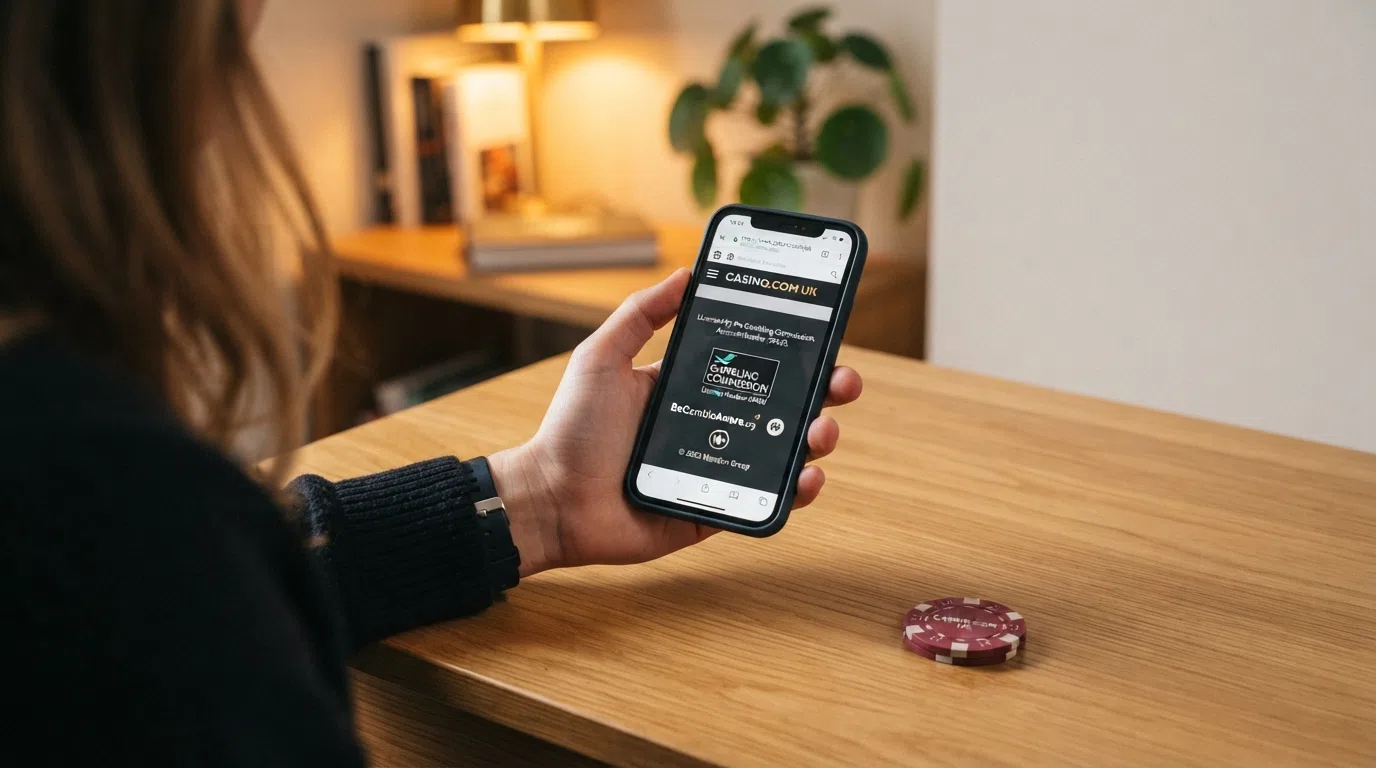
The protections a GB licence locks in are concrete. GAMSTOP is mandatory, so a player who has self-excluded cannot play at any GB-licensed operator. The statutory online slots stake caps — £5 per game cycle for 25+, £2 for 18-24 — are enforced. The 10x wagering cap on bonuses is enforced. The credit card ban is enforced. The mandatory deposit-limit prompt is enforced. ADR access is available for disputes. None of these protections apply at an offshore operator without a GB licence.
| Protection | GB-Licensed Casino | Offshore (Non-GB) Casino |
|---|---|---|
| UKGC licence required | Yes | No |
| GAMSTOP coverage | Mandatory since 31 March 2020 | Not covered |
| Statutory slots stake caps (£5 / £2) | Enforced | Not enforced |
| 10x wagering cap on bonuses | Enforced | Not enforced |
| Credit card ban | Enforced | Not enforced |
| Deposit-limit prompt | Mandatory | Not mandatory |
| ADR route for disputes | Available | Not available |
| Vulnerability checks at £150 net deposits | Required | Not required |
| Game-design rules (no auto-play, 2.5s spin) | Enforced | Not enforced |
| UK consumer protection if funds withheld | Available | Not available |
The UKGC Licensing Framework — What a GB Licence Guarantees the Player
The Gambling Act 2005 sets three licensing objectives: preventing gambling from being a source of crime or disorder, ensuring gambling is conducted in a fair and open way, and protecting children and other vulnerable persons from harm or exploitation. The day-to-day obligations sit in the Licence Conditions and Codes of Practice (LCCP) and the Remote Technical Standards (RTS), and the Gambling Commission enforces them through licence reviews, compliance audits and enforcement action.
GAMSTOP is mandatory for every GB-licensed online operator since 31 March 2020. The exclusion periods are 6 months, 1 year, 5 years, or 5 years with auto-renewal, and exclusions cannot be cancelled early. A player who has self-excluded cannot play at any of the featured operators in this guide.
The deposit-limit prompt has been mandatory from 31 October 2025, requiring operators to prompt players to set a financial limit before first deposit, with decreases taking effect immediately. From 30 September 2026 a gross deposit limit — based solely on money paid into the account — must be offered with at least equal prominence to other financial limits, and only that form may be called a “deposit limit” under RTS 12.
The statutory online slots stake caps — £5 per game cycle for players aged 25 and over, £2 for players aged 18 to 24 — are imposed by The Gambling Act 2005 (Operating Licence Conditions) (Amendment) Regulations 2025, SI 2025/215, and enforced by every GB-licensed operator. The 10x wagering cap on bonuses is enforced under LCCP Social Responsibility Code 5.1.1, in force from 19 December 2025. Credit cards have been banned for gambling since 14 April 2020 under LCCP licence condition 6.1.2. ADR access is mandatory.
Game-design rules in force since 31 October 2021 ban auto-play, enforce a 2.5-second minimum spin speed, ban features that speed up play, ban losses disguised as wins, ban reverse withdrawals, and require operators to display total losses, wins and time played during a slots session.
GamStop and Pay by Phone Casinos — Is Every Operator Covered?
GAMSTOP is mandatory for every GB-licensed online operator since 31 March 2020, which means every operator on this page’s ranked list is GAMSTOP-covered by default. The exclusion periods are 6 months, 1 year, 5 years, or 5 years with auto-renewal, and the exclusion cannot be cancelled early. A player who has self-excluded via GAMSTOP cannot deposit, play or withdraw at any GB-licensed casino for the duration of the exclusion.
GAMSTOP is online-only and licence-bound. It cannot reach operators outside the GB licensing system, which is why a “not on GamStop” cluster of casinos exists at all — those operators are not on GAMSTOP because they are not GB-licensed, not because GAMSTOP has chosen to exclude them. The exclusion is enforced at the licence layer, not the player layer, and a player who has self-excluded and then joins an offshore site has voluntarily stepped outside the protection.
The four featured operators on this list who take the question most seriously — Mr Vegas, Videoslots, Duelz and Peachy Games — are bound by the same GAMSTOP rules as the larger brands. There is no GAMSTOP exemption by processor; the binding is at the licence level.
“Not on GamStop” Pay by Phone Casinos — What You Actually Risk
Operators licensed only in Curaçao, Malta or Gibraltar without a GB licence are operating illegally in GB. A GB licence is compulsory at the point of consumption under the Gambling (Licensing and Advertising) Act 2014, and unlicensed operation is a criminal offence under section 33 of the Gambling Act 2005, with penalties of up to 51 weeks’ imprisonment, an unlimited fine, or both. The sanctions target operators, advertisers and intermediaries; no penalty has been traced for a player who merely gambles on an unlicensed site, but the player loses every GB protection.
GAMSTOP coverage does not apply. The UKGC complaints route does not apply. ADR does not apply. The statutory online slots stake caps do not apply. The 10x wagering cap does not apply. The deposit-limit prompt does not apply. Game-design rules do not apply. If the operator withholds funds, the player has no British consumer protection to fall back on. The privacy advantage of phone-bill deposits — no card details shared with the casino — is real, but the protections that come with a GB licence are the reason that advantage is worth something in the first place.
The Commission enforces through disruption, not ISP blocking. Published figures for April 2024 to June 2025: 3,140 disruption notices, 447,778 URLs referred to search engines, 287,961 URLs removed. For October 2024 to September 2025: 208,088 enforcement actions on illegal online gambling. The Commission does not currently hold statutory ISP or DNS blocking powers, and the proposed powers are not yet enacted. The disruption is real but partial, and a determined player who is looking for an offshore route will find one.
The right framing is the one the regulator itself uses: an offshore phone-bill casino is not a parallel choice to a GB-licensed one. It is a different product, in a different legal jurisdiction, with a different set of protections and a different enforcement chain. A player who chooses it is choosing all of those at once.
Phone-Bill Deposits Make Spending Easy — Staying in Control
The frictionless deposit flow that makes phone-bill casinos attractive is the same frictionless flow that demands active limit-setting from the player. A £40 deposit is a single tap. A second £40 deposit is another single tap. The £240 monthly cap is the regulatory brake, but it is a high one — six £40 deposits in a month before the network refuses further charges.
The UKGC’s mandatory player-protection tools exist precisely for this pattern. The deposit-limit prompt, mandatory from 31 October 2025, requires operators to ask the player to set a financial limit before the first deposit. From 30 September 2026 the gross deposit limit under RTS 12 is the only form that can be called a “deposit limit” in operator copy, and it must be offered with at least equal prominence to other financial limits. Financial vulnerability checks, required from 28 February 2025 at £150 net deposits in a rolling 30-day period under LCCP Social Responsibility Code 3.4.4, are a light-touch check using publicly available data — County Court Judgments, IVAs, bankruptcy orders — and not an income or credit check.
The National Gambling Helpline, operated by GamCare on 0808 8020 133, is available 24/7. GambleAware runs a parallel information resource. NHS gambling harm clinics operate in England, Scotland and Wales. The statutory levy, in force from 6 April 2025, funds treatment at 50% of the 1.1% of gross gambling yield collected from remote casino licences, prevention at 30%, and research at 20%. The levy is separate from the Remote Gaming Duty, which rose to 40% from 1 April 2026.
How the Mandatory Deposit-Limit Prompt Protects Phone-Bill Players
From 31 October 2025, GB-licensed operators must prompt every new player to set a financial limit before the first deposit, and decreases to a limit must take effect immediately. From 30 September 2026 — extended from the original 30 June 2026 target — a gross deposit limit based solely on the amount paid into the account must be offered with at least equal prominence to other financial limits, and only that form may be called a “deposit limit” under RTS 12. The Commission has been explicit: “From 30 June 2026 all online operators must provide customers with the opportunity to set a ‘deposit limit’ which is based solely on the amount a customer pays into their account over a set duration. To avoid confusion, only this form of limit may be called a ‘deposit limit’.”
The interaction with the phone-bill model is direct. The £240 monthly statutory cap on charge-to-mobile services is a per-subscriber ceiling, not a per-casino ceiling, and it is enforced at the network layer rather than the casino layer. A player who sets a personal deposit limit of £100 per week at the casino level is operating well below the network’s £240-per-month cap, and the personal limit will trigger first if the player is on a streak. A player who sets no personal limit is relying on the network cap alone, which is a high ceiling for a frictionless deposit flow.
Financial vulnerability checks at £150 net deposits in a rolling 30-day period are a light-touch regime using publicly available data — County Court Judgments, IVAs, bankruptcy orders, debt relief orders, High Court judgments, administration orders — and are not income or credit checks. The operator is required to look, not to ask. Financial risk assessments — the heavier “affordability checks” — have announced thresholds but not a start date: Stage 1 at £5,000 (25+) or £2,500 (under-25) net deposits in 24 hours, and final thresholds between £1,000 and £3,000 (25+) or £750 and £2,000 (under-25). The two regimes are separate; they are not the same check.
Self-Exclusion, GamCare and the NHS — Where to Get Help
GAMSTOP is the national multi-operator self-exclusion scheme, mandatory for every GB-licensed online operator since 31 March 2020. A player can self-exclude for 6 months, 1 year, 5 years, or 5 years with auto-renewal. The exclusion cannot be cancelled early. GAMSTOP covers online gambling only — it does not reach retail betting shops, casinos or bingo halls — and it does not reach operators outside the GB licensing system. A player who has self-excluded and then joins an offshore casino has stepped outside the protection.
The National Gambling Helpline, on 0808 8020 133, is operated by GamCare and available 24/7. The line is the single UK-wide route for anyone affected by their own or someone else’s gambling. GambleAware runs the parallel information resource at gambleaware.org. NHS gambling harm clinics operate in England, Scotland and Wales, offering specialist treatment rather than information.
The statutory levy, in force from 6 April 2025, funds the system that delivers these services. The levy is 1.1% of gross gambling yield for remote casino, bingo and betting licences, and the split is 50% for treatment, 30% for prevention and 20% for research. The levy is separate from Remote Gaming Duty, which is a tax on operators rather than a funding stream for harm-reduction services.
How We Selected and Ranked Every Pay by Phone Casino on This List
The ranking is built from four criteria, applied in order. First, UKGC licence status, verified against the public register — every operator on this list holds a current GB operating licence. Second, confirmed pay-by-phone deposit support, sourced from current UK review outlets and from the operator’s own cashier rather than from a single aggregator. Third, bonus-term transparency — operators that publish a clear welcome offer with stated wagering and validity score higher than operators whose bonus terms are buried in T&Cs. Fourth, game-provider breadth, weighted toward operators that carry a meaningful selection of NetEnt, Pragmatic Play, Play’n GO and the major live casino studios.
The exclusion list is also explicit. Sportsbook-only brands — those whose primary product is betting rather than casino — were excluded. Operators without confirmed phone-bill support at the time of research were excluded. No quantitative weighting formula was applied: the ranking reflects a qualitative assessment against the four criteria above, and the table is the result.
The sources are the UKGC public register, the operators’ own websites and current UK review outlets (Casino.org UK, The Independent, TalkSPORT, Racing Post, OLBG, Bojoko, Compare.bet).
Is Paying by Phone the Right Way to Fund Your Casino Play?
The deposit-only limitation is the deciding fact. A player who values withdrawing the same way they deposited — one rail, both directions — is better served by a debit card or an e-wallet. A player who is happy to deposit by phone bill and withdraw to a registered debit card or bank account gets the trade-off the phone-bill model is built for.
The £40-per-transaction and £240-per-calendar-month caps are the built-in spending brake. A casual, low-stakes player who wants a capped deposit flow with no card details shared with a casino will find the phone-bill model fits. A high-volume player who needs to fund hundreds of pounds in a single session will hit the network ceiling before the casino balance runs out, and the friction of multiple £40 deposits will quickly outweigh the privacy advantage.
The privacy advantage is real and worth taking seriously. A casino that never sees a card number cannot store a card number, and a data breach at the casino does not leak the player’s bank details because the casino never had them. For a player who is uncomfortable sharing card details with a casino — and that is a reasonable position to take — the phone-bill model is the cleanest available alternative.
The bonus-eligibility risk is the one to check before depositing. Some operators exclude phone-bill deposits from welcome offers, and the exclusion is buried in T&Cs. A two-minute read of the welcome offer terms before paying in is the difference between a qualifying and a non-qualifying deposit.
The verdict, then, is a position rather than a recommendation. Phone billing is the right choice for UK players who want capped, private, low-friction deposits and accept that withdrawals go to a separate method. It is the wrong choice for high-volume players and for anyone who wants a single payment method for deposit and withdrawal. The decision is not about which casino is best; it is about whether the trade-off the phone-bill model offers fits the way a particular player wants to fund and run a casino session.
Frequently Asked Questions
Who actually caps my phone-bill casino deposit — the casino, the network, or the law?
The £40-per-transaction and £240-per-calendar-month caps are statutory, set at the level of UK charge-to-mobile services rather than by individual casinos. Your mobile network enforces the limits, which is why the cashier may accept a £50 amount and the deposit still fails — the network is the gate, not the casino. Individual networks may also set lower day-to-day limits, particularly on PAYG tariffs.
Does a phone-bill deposit lock me out of a casino’s sign-up offer?
Not automatically, but some operators explicitly exclude phone-bill deposits from welcome offer eligibility, and the exclusion sits in the bonus T&Cs rather than the cashier. Read the welcome offer terms before depositing, and look for a “payment method exclusion” clause. If the T&Cs are silent on payment methods, the phone-bill deposit will qualify under the standard terms.
Do Boku and Fonix work the same way, or does one give me a smoother deposit?
They are functionally similar but the UX is different. Boku sends an SMS confirmation code that the player must enter before the deposit completes. Fonix verifies the player in the background without an SMS step, which is why operator and reviewer experience describes it as the smoother route. Both sit under the same £40 / £240 statutory cap.
How do I check whether a pay-by-phone casino actually holds a UKGC licence?
The UKGC public register is searchable by operator name and licence number. The licence number appears in the footer of any legitimate UK casino’s homepage, alongside a clickable link to the register entry. If a casino does not publish a UKGC licence number, or the number does not resolve on the register, the casino is not GB-licensed.
How do I set a deposit limit at a UK pay by phone casino?
Every GB-licensed online operator must prompt new players to set a financial limit before the first deposit, under a UKGC requirement in force from 31 October 2025. The limit can usually be set daily, weekly or monthly. Decreases take effect immediately; increases can be subject to a cooling-off period. From 30 September 2026, the gross deposit limit is the only form that can be called a “deposit limit” under RTS 12.
What is the smallest amount I can load into a casino by phone bill?
Some UKGC-licensed casinos accept as little as £5 by phone bill, and £10 is the more common floor. Duelz, for example, sets a £10 minimum for pay-by-phone deposits, even though the welcome bonus requires £25 to qualify. The casino’s cashier minimum and the bonus’s qualifying minimum are not always the same number, and a player should check both before paying in.
Payments – topratedonlinecasinos-uk
Content created by the «topratedonlinecasinos-uk» team